



Table of Contents
- What "Specialty Coffee" Means
- Why a Big First Step Can Backfire
- Start From Their Current Preferences
- The Bridge Method: Three Gradual Steps
- Step 1: Upgrade the Familiar
- Step 2: Introduce One Variable
- Step 3: A Small Side-by-Side Tasting
- Myths About Specialty Coffee Gatekeeping
- Simple First Brews That Create Curiosity
- French Press (Full Immersion)
- Pour-Over (Paper Filter)
- AeroPress (Quick and Adjustable)
- What Not to Say (And What to Say Instead)
- Frequently Asked Questions
- What is the best first specialty coffee for a beginner?
- Is it fine to add milk and sugar to specialty coffee?
- Which brewer is easiest for a first try at home?
- How fresh should the beans be?
To introduce someone to specialty coffee at home without overwhelming them, start from the coffee they already drink, change one thing at a time, and let them describe what they taste in their own words. Brew a better version of their usual cup first: fresh beans, ground just before brewing, made with a measured recipe. Save the side-by-side tasting and the unfamiliar roasts for later, once they are curious.
This guide explains what “specialty” means, how to choose the first coffee from the person’s current habits, and three simple brewing recipes taken from the National Coffee Association (NCA) and AeroPress. Daily Home Coffee does not run hands-on taste tests; the recipes and definitions come from those named sources.
What “Specialty Coffee” Means
The Specialty Coffee Association (SCA) defines specialty coffee as “a coffee or coffee experience recognized for its distinctive attributes, and because of these attributes, it has significant extra value in the marketplace.” The SCA says those attributes can be intrinsic, such as flavor, aroma and mouthfeel, or extrinsic, such as origin, producer, growing practices and processing methods.
The SCA also notes that what makes coffee special can differ between people and markets. That is a useful starting point for a newcomer: there is no single correct taste to aim for. The specialty coffee definition guide covers the older 80-point cupping score and the newer assessment in more detail.
Why a Big First Step Can Backfire
A light roast served black can be a large jump for someone used to dark roast with milk. The NCA’s roast guide says that the lighter the roast, the more acidic the brewed coffee will be, and that dark roast has a pronounced bitterness and less acidity. Someone who expects the taste of a dark roast may read that brightness as sour.
Several habits make the gap wider:
- Choosing the lightest, most unusual coffee for the first cup.
- Describing the coffee in jargon before it has been tasted.
- Serving black coffee to someone who always drinks it with milk.
- Explaining the whole brewing process before the first sip.
- Criticizing the coffee they normally buy.
None of these is wrong in itself. Each adds something new at the same time, which makes it hard for the other person to tell what they actually like.
Start From Their Current Preferences
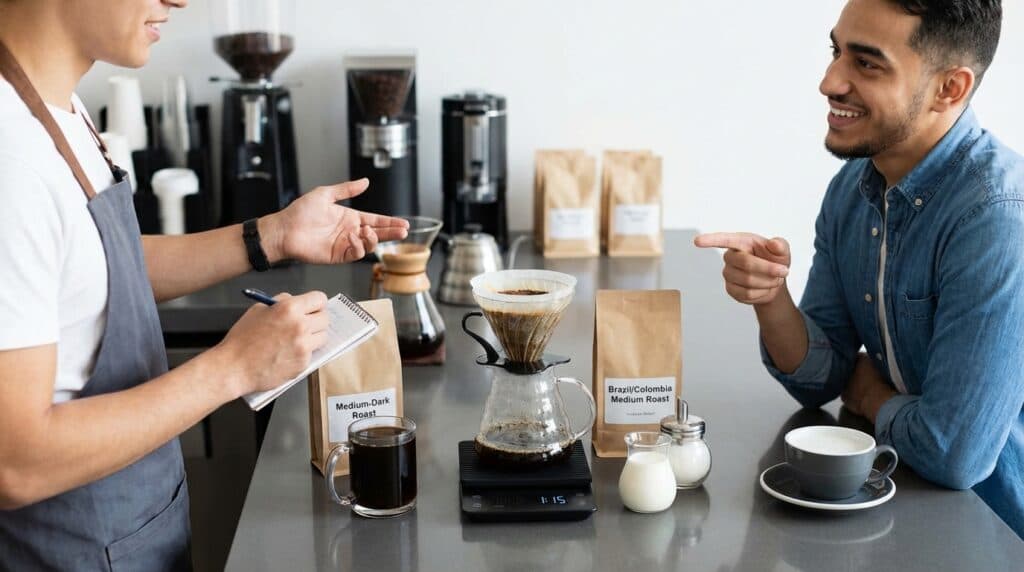
Ask one question before brewing anything: how do you usually take your coffee? The answer suggests where to start.
| Their usual coffee | A gentle first step | Why |
|---|---|---|
| Dark roast, black | A medium roast, black | The NCA links lighter roasts with more acidity, so a medium roast is a smaller change than a light one |
| With milk, sugar or both | Fresh beans brewed their usual way, served their usual way | Keeps the familiar format; only the coffee changes |
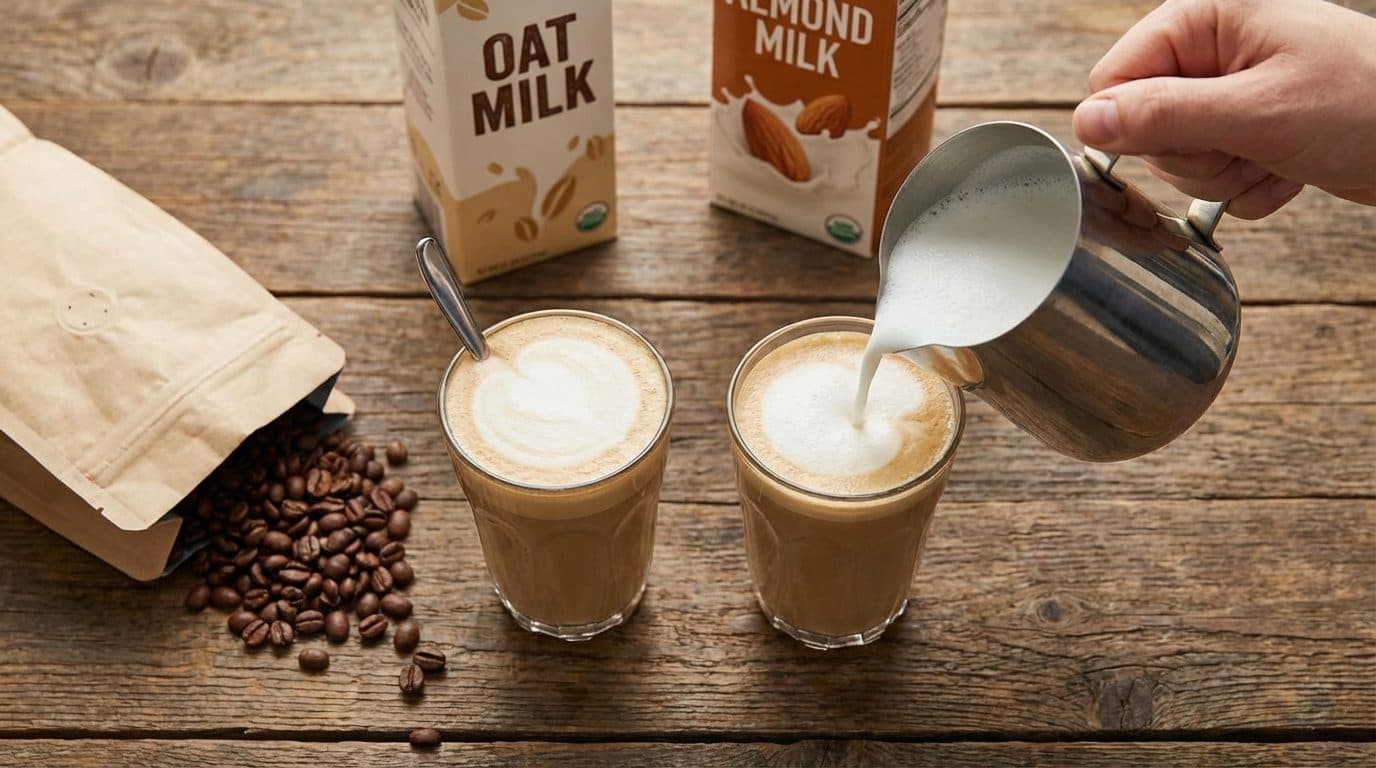
| Lattes and milk drinks | A latte made with fresh beans | Same drink, better coffee |
| “I don’t really like coffee” | Ask what they dislike first | Knowing what puts them off tells you what to change first |
The NCA says that roasters’ names for roast levels vary, and that one roaster’s dark roast may be different from another’s. Read the label as a rough guide, not a guarantee of taste. The roast level comparison explains the differences between light, medium and dark in more depth.
The Bridge Method: Three Gradual Steps
Step 1: Upgrade the Familiar
Make the coffee they already like, but with fresher beans and a measured recipe. The NCA recommends buying smaller batches of freshly roasted coffee, enough for one or two weeks, and grinding immediately before brewing. Its storage guide says that stale beans brew coffee that will lack flavor and may taste stale.
Grind for the brewer. The NCA grind chart gives coarse (like rock salt) for French press, medium (like kosher salt) for drip, medium for pour-over and fine (like table salt) for espresso. If the cup tastes bitter, the NCA says it may be ground too fine, so try coarser; if it tastes flat or watery, it may be ground too coarse, so try finer.
Step 2: Introduce One Variable
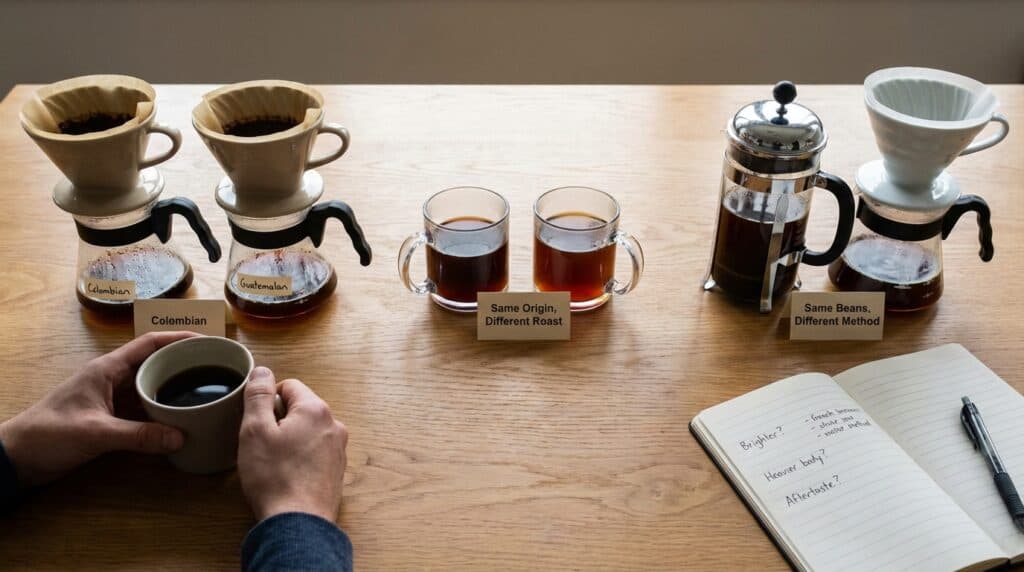
Once they enjoy the upgraded cup, change one thing and keep the rest the same:
- The same roast level from a different origin.
- The same origin at a slightly lighter roast.
- The same beans brewed in a different brewer.
Then ask open questions. Is this one brighter or heavier? Does the aftertaste last longer? Let them choose their own words. Changing a single variable is what makes their answer useful, because it tells you what caused the difference.
Step 3: A Small Side-by-Side Tasting
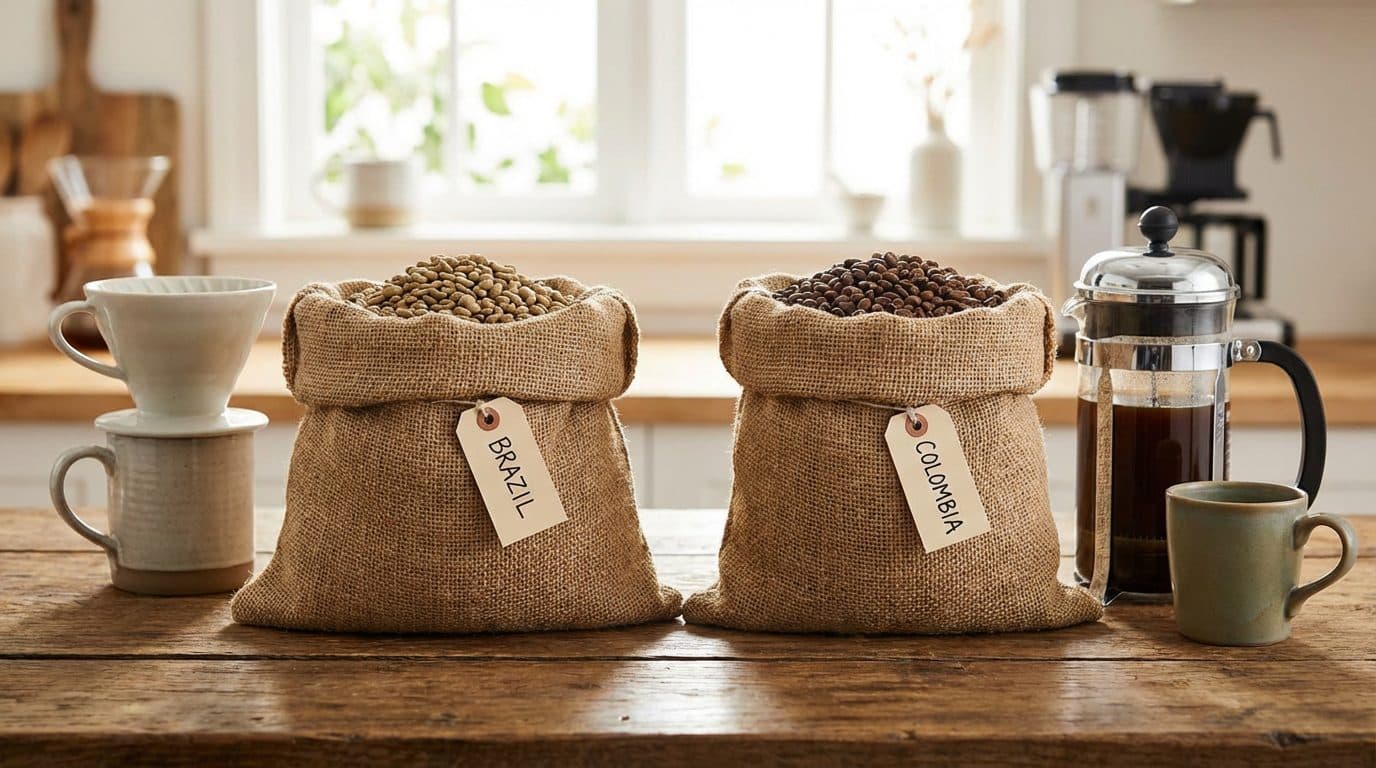
When they are curious, brew two coffees in the same way and taste them side by side in small cups. Pick two that differ in one clear way, such as a light roast and a darker roast, or two origins at the same roast. Share what you notice without correcting what they notice.
Myths About Specialty Coffee Gatekeeping
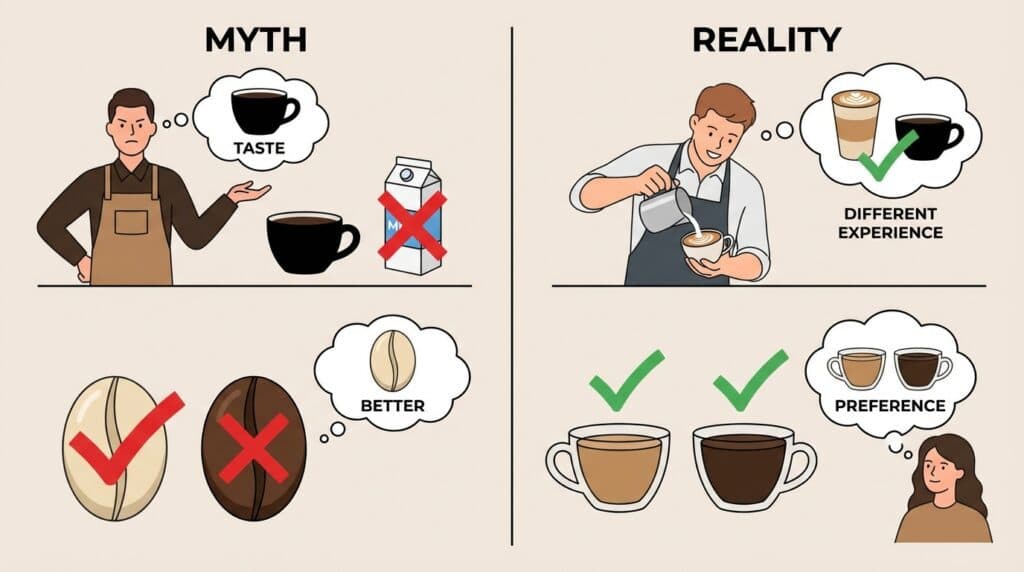
- Myth: specialty coffee has to be drunk black. The SCA’s definition does not mention how the coffee is served. Its examples of intrinsic attributes are flavor, aroma and mouthfeel; milk changes the drink but does not change how the coffee was grown or roasted.
- Myth: light roast is objectively better. The NCA says the perfect roast is a personal choice and suggests simply trying different roasts. It notes that lighter roasts preserve more of a coffee’s unique qualities, which is a difference in character rather than a ranking.
- Myth: you need expensive equipment. The NCA’s three basics for French press and pour-over are suitable beans, the right grind as close to brewing as possible, and good water. None of them requires a costly machine.
- Myth: if they do not like it at once, they never will. Preferences are personal, and the SCA notes that what people value differs. A first cup that does not land is information about what to try next.
Simple First Brews That Create Curiosity
The NCA advises cold water, filtered if possible, avoiding distilled or softened water, for both of its methods below.
French Press (Full Immersion)
The NCA describes French press coffee as known for bold flavor and a full body, and says medium to dark roasts tend to work well in it. That makes it a gentle bridge for a dark-roast drinker. The NCA’s quick numbers:
- Coffee-to-water ratio: 1:10 to 1:16.
- Water: 93 ± 3°C. Bring water to a boil and let it rest about 30 seconds, then check with a thermometer.
- Grind: coarse, like rock salt.
- Time: about 4 minutes. Stir the crust after about one minute, then steep about three more minutes.
Press gently and serve at once. The NCA warns that coffee left in the press will continue to brew and turn bitter. The French press vs pour-over explains how the two cups differ.
Pour-Over (Paper Filter)
A pour-over gives a cleaner, lighter cup, which suits a newcomer who is ready to taste a lighter roast. The NCA’s quick numbers:
- Coffee-to-water ratio: 1:13 to 1:16.
- Water: 93 ± 3°C; let boiled water rest for about a minute.
- Grind: medium.
- Bloom: pour twice the coffee’s weight in water (30 g of water for 15 g of coffee), wait 30–45 seconds, then pour the rest slowly. Total contact time is 2–4 minutes.
AeroPress (Quick and Adjustable)
AeroPress’s own Signature Brew uses 16–18 g of medium-fine coffee and water at 85°C, or boiling water if you do not have a temperature-control kettle. Fill water to the 4 mark on the chamber, stir for about 3 seconds, insert the plunger slightly to stop the drip, wait 30 seconds, then press gently until you hear a hiss. It is a quick way to make a single cup for one guest.
What Not to Say (And What to Say Instead)
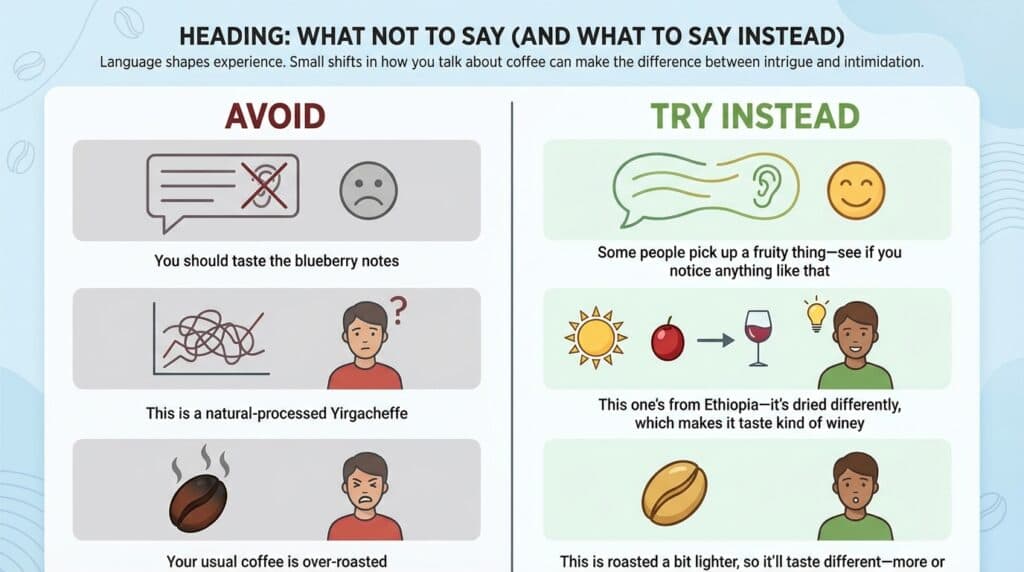
The words you use can make the coffee sound like a test. Keep descriptions plain and invite the other person’s opinion.
| Avoid | Try instead |
|---|---|
| “You should taste the blueberry notes.” | “Some people find this fruity. What do you notice?” |
| “This is a natural-processed single origin.” | “This one comes from a single region; the bag says how it was processed.” |
| “Your usual coffee is over-roasted.” | “This one is roasted lighter, so it will taste different.” |
| “You have to drink it black.” | “Try a sip black if you like, then add milk if you want.” |
Frequently Asked Questions
What is the best first specialty coffee for a beginner?
The one closest to what they already drink. A dark-roast drinker may find a medium roast an easier step than a light roast, because the NCA links lighter roasts with more acidity and dark roasts with less. Brew it the way they normally drink coffee.
Is it fine to add milk and sugar to specialty coffee?
Yes. The SCA’s definition is about the coffee’s attributes and the value people place on them, not about how it is served. Milk changes the drink; it does not undo how the coffee was grown, processed or roasted.
Which brewer is easiest for a first try at home?
The NCA calls French press brewing simple and straightforward, and the NCA says medium to dark roasts tend to work well in it. A pour-over gives a lighter, cleaner cup. An AeroPress makes a single cup quickly.
How fresh should the beans be?
The NCA suggests buying enough freshly roasted coffee for one or two weeks and grinding just before brewing. Its storage table gives one to three weeks for roasted beans kept at room temperature in an airtight container.
For the first cup, pick one change: fresher beans, a measured recipe, or a slightly different roast. Pour the coffee, and ask what they think before saying what you think.


Comments