


Table of Contents
- Practical Buying Approach
- Flavor Profiles: What to Expect in Your Cup
- Brazilian Coffee Characteristics
- Colombian Coffee Characteristics
- Myth vs. Reality
- Brewing Methods to Compare by Origin
- Brazilian Beans: Starting Methods
- Colombian Beans: Starting Methods
- Which Origin Fits Your Taste Preferences?
- Compare Brazilian Coffee When You Want To Test:
- Compare Colombian Coffee When You Want To Test:
- Roast Level Considerations
- Freshness and Storage: Same Rules Apply
- Frequently Asked Questions
- Key Takeaways
Practical Buying Approach
Affiliate disclosure: As an Amazon Associate I earn from qualifying purchases.
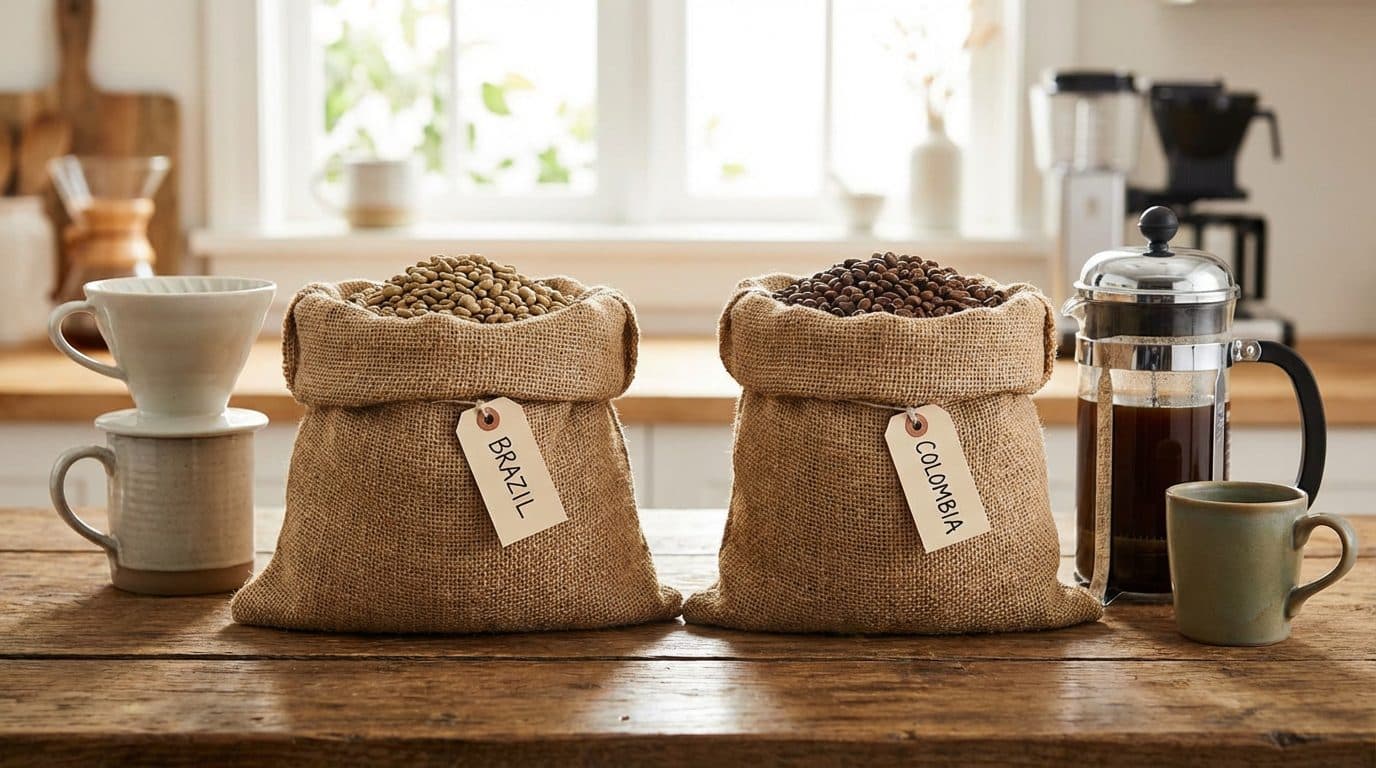
Compare two bags at a similar roast level and note the region, variety, process, and roast date. A side-by-side brew reveals more about your preference than choosing by country name alone.
Quick answer: Brazilian and Colombian coffees can show different common tasting-note patterns, but the specific lot, variety, process, roast, and recipe matter more than country alone. Compare bags at a similar roast level when possible.
Brazilian vs Colombian coffee comes down to the specific cup you want to compare: Brazilian lots are often described with smooth, nutty, or lower-acid notes, while Colombian lots are often described with brighter acidity or fruit notes. Those descriptions are not guarantees, and neither origin is objectively “better”—they are different starting points for tasting.
Brazil and Colombia are important coffee origins with substantial regional and processing variation. Origin can help frame a tasting comparison, but it does not establish quality, flavor, or the best brewing method for every bag. Use the variety, process, roast date, and tasting notes to choose beans for your routine.
Flavor Profiles: What to Expect in Your Cup
Taste differences can reflect soil, climate, variety, processing, roast, and brewing; country name alone does not predict the finished cup.
Brazilian Coffee Characteristics
- Body: Tasting notes may describe medium to heavy body, sometimes as creamy or syrupy
- Acidity: Tasting notes may describe low to moderate acidity
- Primary flavors: Chocolate, nuts, caramel, or mild fruit may appear depending on the lot
- Aftertaste: Some lots are described as sweet or cocoa-led
- Processing: Natural (dry) processing is common in some Brazilian coffees; check the individual bag
Some Brazilian lots are described as lower-acid and chocolate-led, but variety, region, process, roast, and recipe can change the result. Treat those notes as a starting point for a side-by-side brew rather than a guarantee.
Colombian Coffee Characteristics
- Body: Tasting notes may describe medium body and a clean or balanced profile
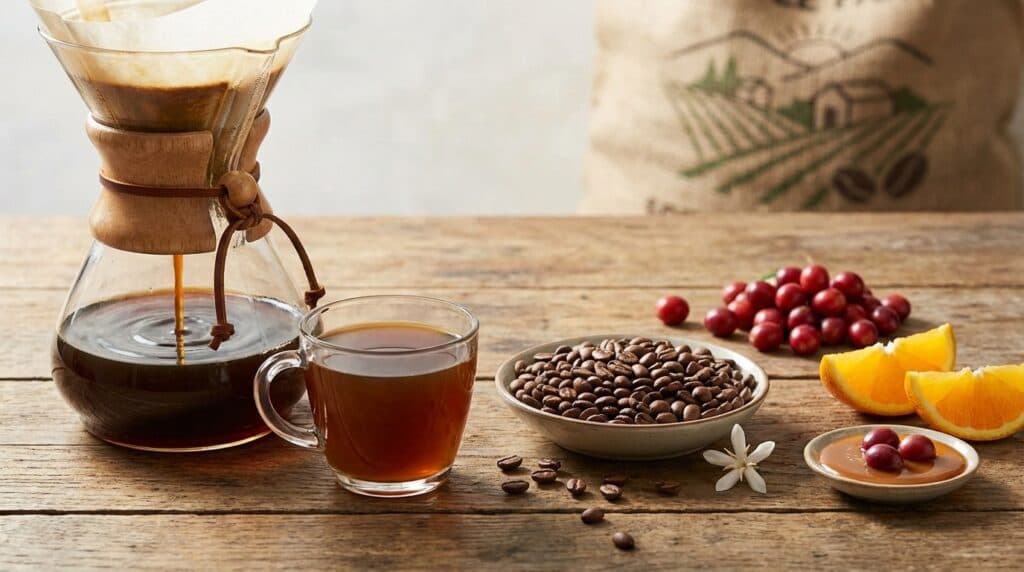
- Acidity: Some lots are described as bright, crisp, or sparkling
- Primary flavors: Citrus, red fruit, floral notes, or caramel may appear depending on the lot
- Aftertaste: Some lots are described with a clean or fruit-led finish
- Processing: Washed processing is common in some Colombian coffees; check the individual bag
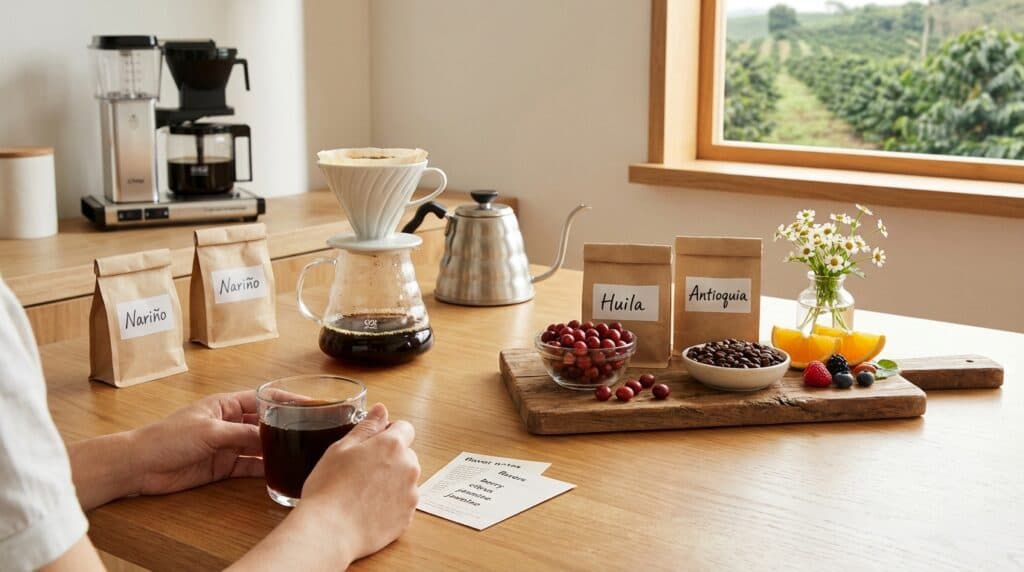
Acidity can be polarizing: some drinkers prefer a brighter profile, while others prefer lower-acid cups. Regions such as Huila, Nariño, and Antioquia can also vary by variety, process, roast, and producer.
Myth vs. Reality
- Myth: Colombian coffee is always “better” or more premium than Brazilian.
Reality: Both origins include specialty and commodity lots. Price and quality depend on the specific farm, processing method, roast, lot, and seller—not just the country of origin. - Myth: Brazilian coffee is only good for espresso blends.
Reality: Brazilian coffees are often used in espresso blends, but a single-origin Brazilian coffee can also be tested in French press, AeroPress, or pour-over when its roast and tasting notes fit the recipe. - Myth: Higher acidity means higher caffeine.
Reality: Acidity refers to taste (brightness, tartness), not caffeine content. Caffeine depends on species, variety, dose, roast, extraction, dilution, and serving size; country alone does not establish it. - Myth: You need expensive equipment to taste the difference.
Reality: A basic French press or pour-over setup can support a side-by-side comparison. The size of any origin difference depends on the beans and recipe, not only the gear.
Brewing Methods to Compare by Origin
Compare each coffee across a brew method that fits its roast, process, and tasting notes, then adjust the recipe from the cup.
Brazilian Beans: Starting Methods
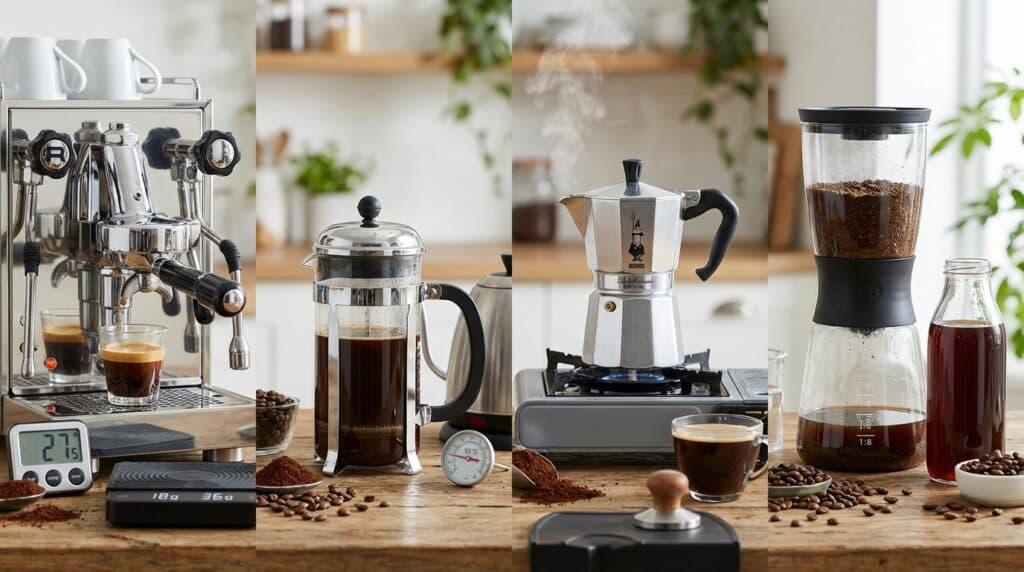
- Espresso starting trial: Try a 1:2 ratio (18g in, 36g out) in 25-30 seconds, then adjust grind, dose, and time. Shot balance and crema depend on the coffee and equipment.
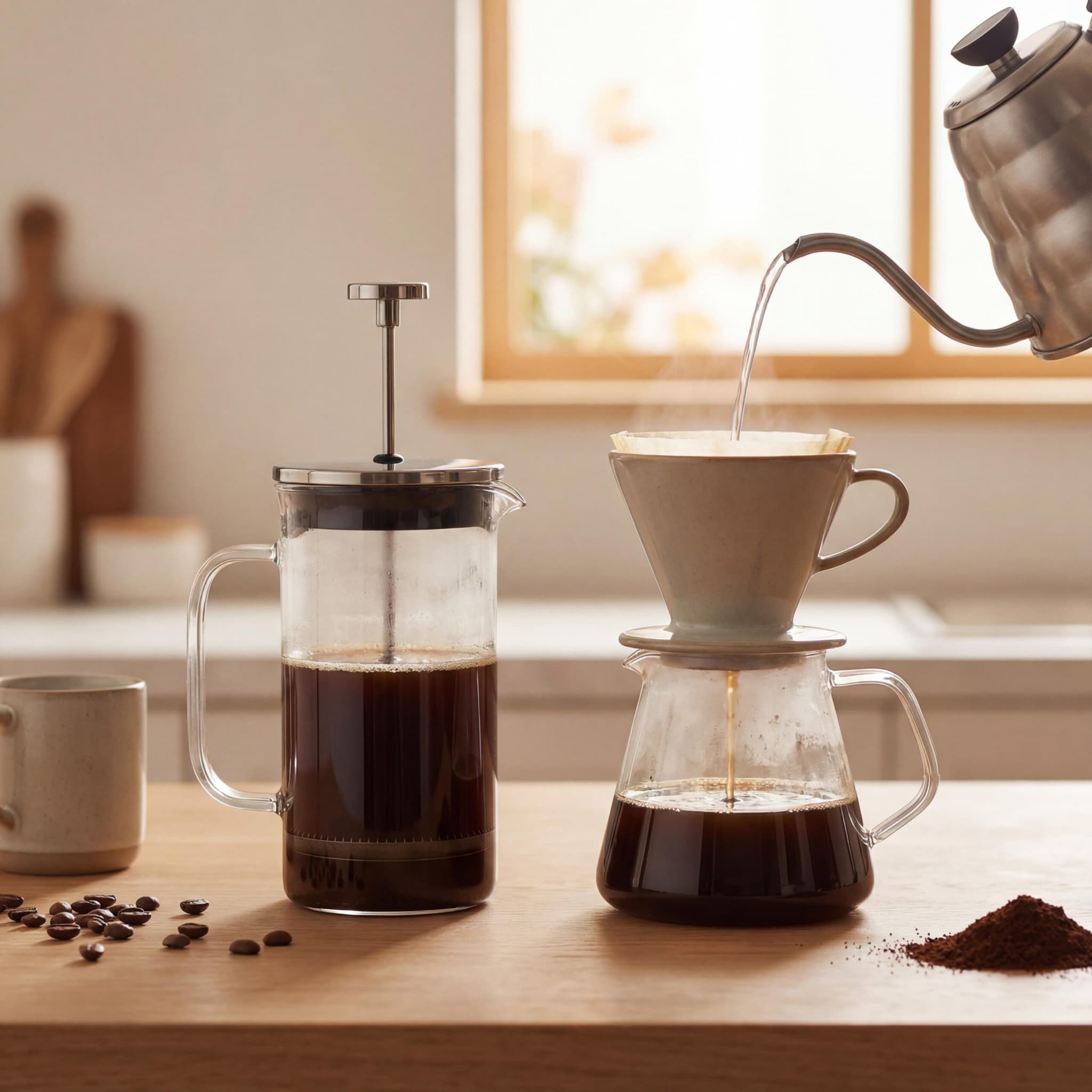
- French press starting trial: Try about 60g coffee per liter of water at roughly 93°C with a four-minute steep, then adjust dose, grind, temperature, and time from taste.
- Moka Pot: A concentrated brew can help you compare nutty or caramel notes; adjust heat and grind from taste.
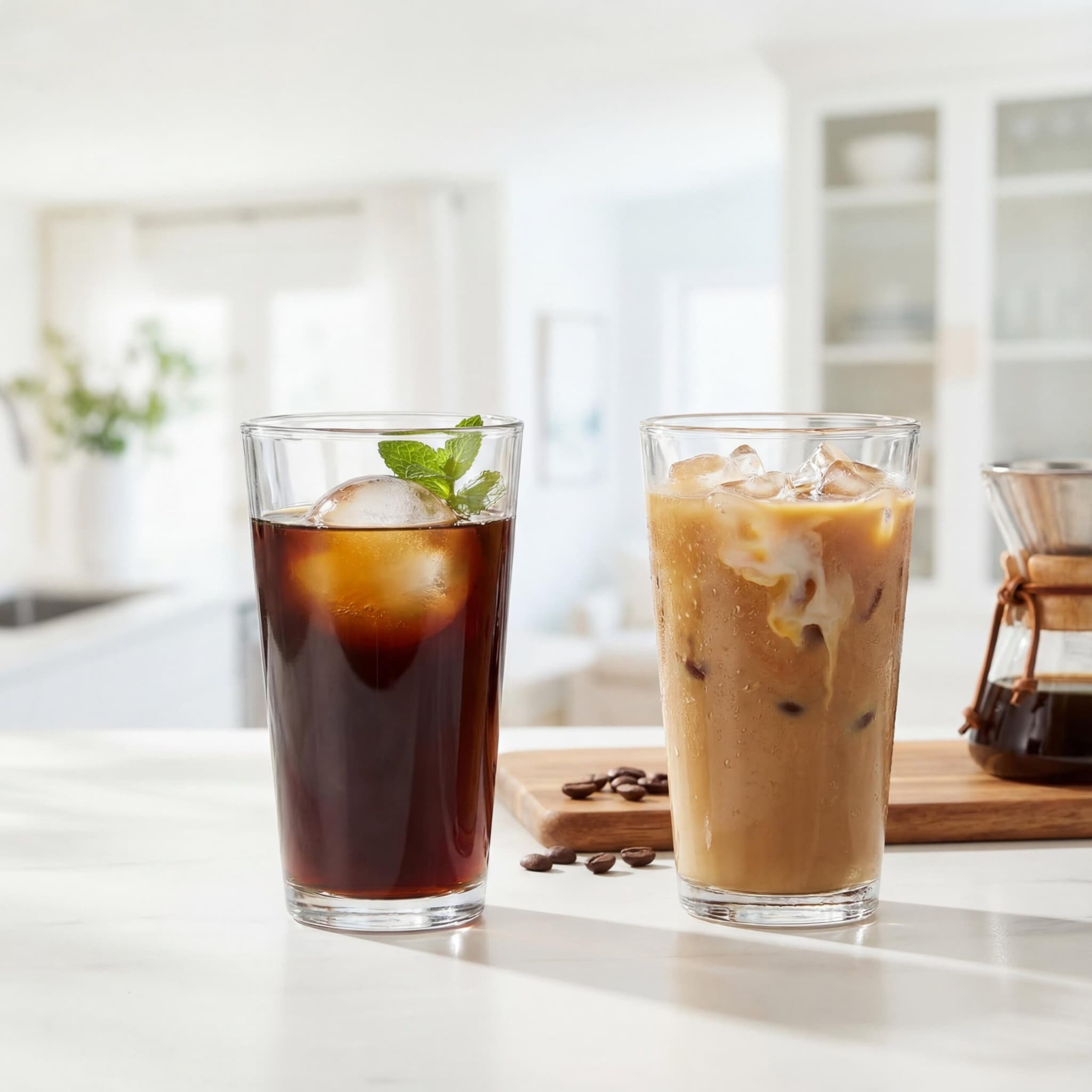
- Cold Brew starting trial: Natural-processed beans can be tested with a 1:8 coffee-to-water ratio and a 12-18 hour steep, then adjusted for the specific coffee.
Colombian Beans: Starting Methods
- Pour-over starting trial: Try 15g coffee with 250ml water at roughly 92-94°C, then adjust grind, temperature, and pouring from taste; origin alone does not guarantee brightness or fruit notes.
- AeroPress starting trial: Try a shorter brew time (1:30-2:00 minutes), then adjust to the specific coffee and preferred body.
- Drip Coffee Maker: Use automatic brewing as a comparison method and record how the specific lot presents in the cup.
- Black Coffee: Without milk or sugar, compare acidity, body, aroma, and finish directly.
Controlled trial: If a Colombian pour-over tastes too sharp, try a small temperature reduction while keeping dose, grind, water, and pouring stable. Treat 90-91°C as an experiment, not a guaranteed chemical or sweetness outcome.
Which Origin Fits Your Taste Preferences?
Forget about which is “best”—focus on which matches how you actually drink coffee.
Compare Brazilian Coffee When You Want To Test:
- How a chocolate, nut, or caramel tasting note works with milk, cream, or sugar
- Whether a lower-acid profile suits your palate better than a brighter one
- How the coffee performs in espresso-based drinks such as lattes, cappuccinos, or flat whites
- Whether the recipe remains enjoyable as an everyday brew
- How the lot presents in French press or cold brew
- How origin interacts with the roast and process in an immersion method
Compare Colombian Coffee When You Want To Test:
- How the coffee tastes black without milk or sugar
- Whether bright, fruity, or floral tasting notes suit your palate
- How the lot behaves in pour-over or drip brewing
- How regional variation within Colombia changes the cup
- Whether you prefer a clean or crisp finish to a heavier one
- How a light roast changes the expression of the specific lot
Roast Level Considerations
Origin characteristics interact with roast level in important ways.
When Brazilian beans are roasted medium to dark, roast character may become more prominent. Evaluate the specific roast for sweetness, bitterness, body, and aroma instead of assuming the origin will prevent an ashy or bitter result.
A Colombian coffee can work across roast levels. Variety, process, green-coffee quality, and roast development shape the cup, so a darker roast may emphasize roast character but does not prove that origin character is absent or wasted.
Roast level can shift the cup substantially: a light roast may preserve more origin-linked acidity, while a dark roast may emphasize roast character. Compare roast level alongside origin rather than ranking one country.
Freshness and Storage: Same Rules Apply
Use the same freshness checks for both origins, while recognizing that roast, packaging, and storage change how each coffee ages:
- Freshness check: use the roast date, packaging, storage, aroma, and brewed result rather than a universal peak window
- Storage check: keep the bag sealed away from heat and moisture, then replace it when aroma and cup quality decline
- Storage: Cool, dark place. Avoid the freezer for beans you’re actively using.
- Grinding: Grinding shortly before brewing can help preserve aroma; adjust to your workflow
Freshness and storage can outweigh broad origin expectations, and neither country has an automatic advantage. Compare bags at a similar roast level and age with the same recipe.
Frequently Asked Questions
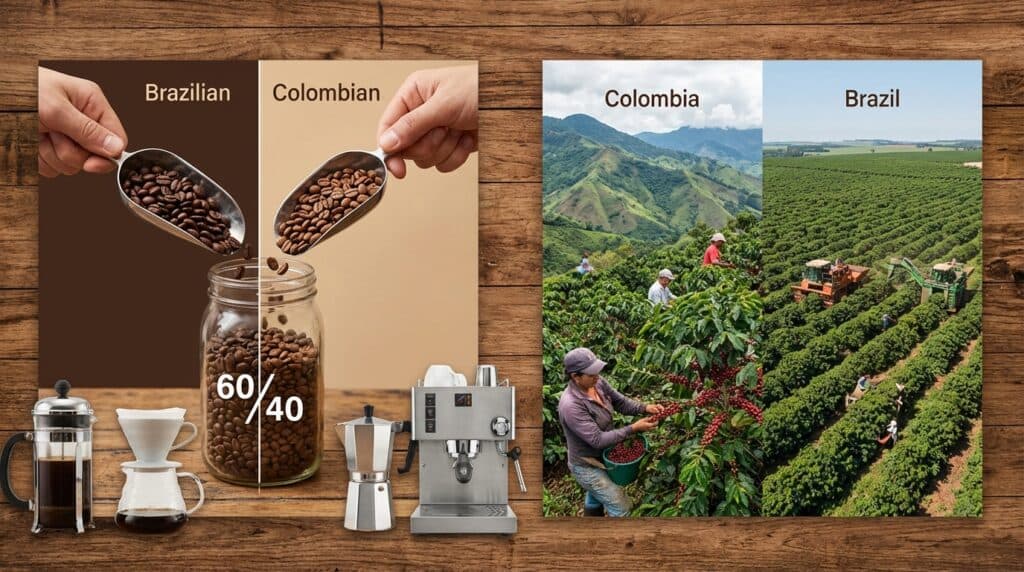
Can I blend Brazilian and Colombian beans at home?
A Brazil/Colombia blend is one experiment, not a guaranteed flavor result. Try 60/40 or 70/30 only as starting ratios, keep the brew recipe stable, and compare the finished cup before changing the blend.
Why might Colombian coffee cost more?
Retail price reflects farm and regional conditions, lot quality, processing, certification, logistics, roast level, package size, and seller margin. Country of origin alone does not explain why one bag costs more.
Which origin has more caffeine?
Country name alone does not determine caffeine intake. Species, variety, dose, roast, extraction, dilution, and serving size all matter, so compare the actual coffee and recipe rather than assuming the origins are identical.
Are single-origin beans better than blends?
Not necessarily. Single-origin beans showcase specific regional characteristics, while blends aim for balance and consistency. Neither approach is superior—it depends on what you’re looking for in your cup.
Key Takeaways
- Many Brazilian selections emphasize chocolate, nuts, and fuller body, but variety, process, region, and roast can produce brighter profiles.
- Many Colombian selections emphasize caramel, fruit, or a brighter finish, but darker roasts and different processes can change that profile.
- Use origin, process, roast, and brew method together; compare both origins in immersion and filtration
- Roast level can amplify or mask origin characteristics; include roast level in side-by-side tests
- Check the roast date and use the beans while their aroma and cup quality remain acceptable
Tomorrow morning, try brewing the same method with both origins side by side. Use identical ratios, water temperature, and timing. That direct comparison will teach you more about your preferences than any article can. Once you know which direction your palate leans, you can explore regional variations within that origin—and that’s where the real fun begins.


Comments