


Table of Contents
- Oat Milk in Coffee: What to Expect
- Best Uses for Oat Milk
- Potential Downsides of Oat Milk
- Almond Milk in Coffee: What to Expect
- Best Uses for Almond Milk
- Potential Downsides of Almond Milk
- Frothing Performance: A Side-by-Side Comparison
- Oat Milk Frothing
- Almond Milk Frothing
- Flavor Profile: Which Tastes Better in Your Latte?
- Quick Taste Comparison
- Nutritional Differences Worth Knowing
- Cost and Availability Comparison
- Final Verdict: Which Should You Choose?
You’ve finally invested in a decent espresso machine or maybe you’re perfecting your pour-over technique at home. But here’s the dilemma that keeps popping up every time you reach for the fridge: should you grab the oat milk or the almond milk for your latte? Both are popular dairy-free options, but they behave very differently when they hit hot coffee. If you’ve ever ended up with a curdled mess or a watery disappointment, you know exactly what I’m talking about.
Compare oat and almond milk by formulation, flavor, foam stability, heat behavior, allergens, nutrition label, and current local price. Barista oat milk is often easier for creamy foam; almond milk provides a lighter, nuttier result but varies more by product.
Oat Milk in Coffee: What to Expect
Oat and almond drinks vary substantially by brand and formulation. Barista-style oat products are often formulated for a creamier texture, while almond products commonly taste lighter and nuttier. Compare ingredients and the finished drink rather than assuming every carton behaves the same way.
Foam quality depends on the exact formulation, starting temperature, heating method, and frothing technique. For a fair comparison, chill both products, use equal volumes and the same tool, stop at the same temperature, and record separation and foam stability.
Best Uses for Oat Milk

- Lattes and cappuccinos where you want rich, creamy texture
- Sweeter coffee drinks that benefit from oat milk’s natural sweetness
- Medium to dark roast coffees where the oat flavor won’t overpower the beans
- Cold brew with frothed oat milk for an iced latte
Hypothetical comparison: For a vanilla latte, observe whether the exact oat product forms fine foam and blends without separating. Record the product, temperature, tool, and result instead of assuming a café-style outcome.
Potential Downsides of Oat Milk
Nutrition and texture vary by product. Compare equal serving sizes and the exact labels for calories, carbohydrates, protein, fat, added sugar, oils, and other ingredients; roast and recipe can also change the finished flavor.
Almond Milk in Coffee: What to Expect
Almond milk was one of the first plant-based milks to become mainstream, and it’s still a go-to option for many coffee drinkers. It has a lighter, more watery consistency than oat milk, and the flavor leans slightly nutty with varying degrees of sweetness depending on the brand.
Almond-drink foam depends on the exact formulation, temperature, and tool. Compare equal volumes under the same method and record bubble size, separation, stability, and mouthfeel instead of predicting performance from the plant category alone.
Best Uses for Almond Milk
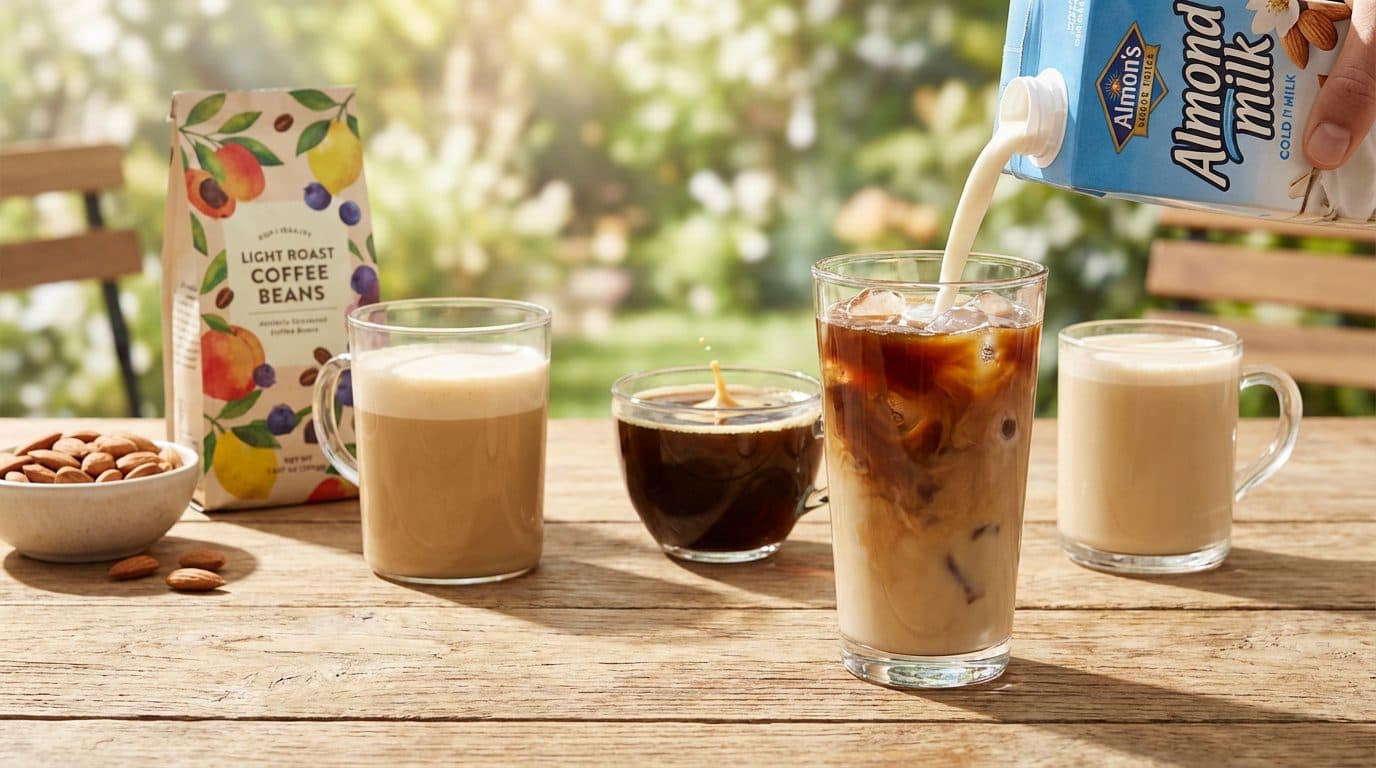
- Iced coffees where frothing isn’t necessary
- Light, fruity coffee roasts that pair well with nutty notes
- Simple black coffee with a splash of something creamy
- Lower-calorie lattes where you’re prioritizing nutrition over texture
Hypothetical comparison: In an iced latte, frothing performance matters less. Test equal volumes of the exact almond and oat products with the same coffee, then choose by flavor, separation, ingredients, and nutrition label.
Potential Downsides of Almond Milk
Beyond the frothing limitations, almond milk has a tendency to curdle when it hits very hot coffee. This happens because the acidity in coffee combined with high temperatures causes the proteins in almond milk to separate. The result is those unappetizing white clumps floating in your cup. You can minimize this by letting your coffee cool slightly before adding the milk, but it’s an extra step that can feel annoying during a busy morning.
Frothing Performance: A Side-by-Side Comparison
Let’s get specific about what happens when you try to froth these two milks at home. Your frothing success depends on fat content, protein levels, and the overall composition of the milk alternative.
Oat Milk Frothing
Some barista-style oat products include fats, stabilizers, or emulsifiers intended to change texture, but ingredients and results vary. Check the exact label and compare foam size, separation, and stability using the same starting temperature and frothing method.
Almond Milk Frothing
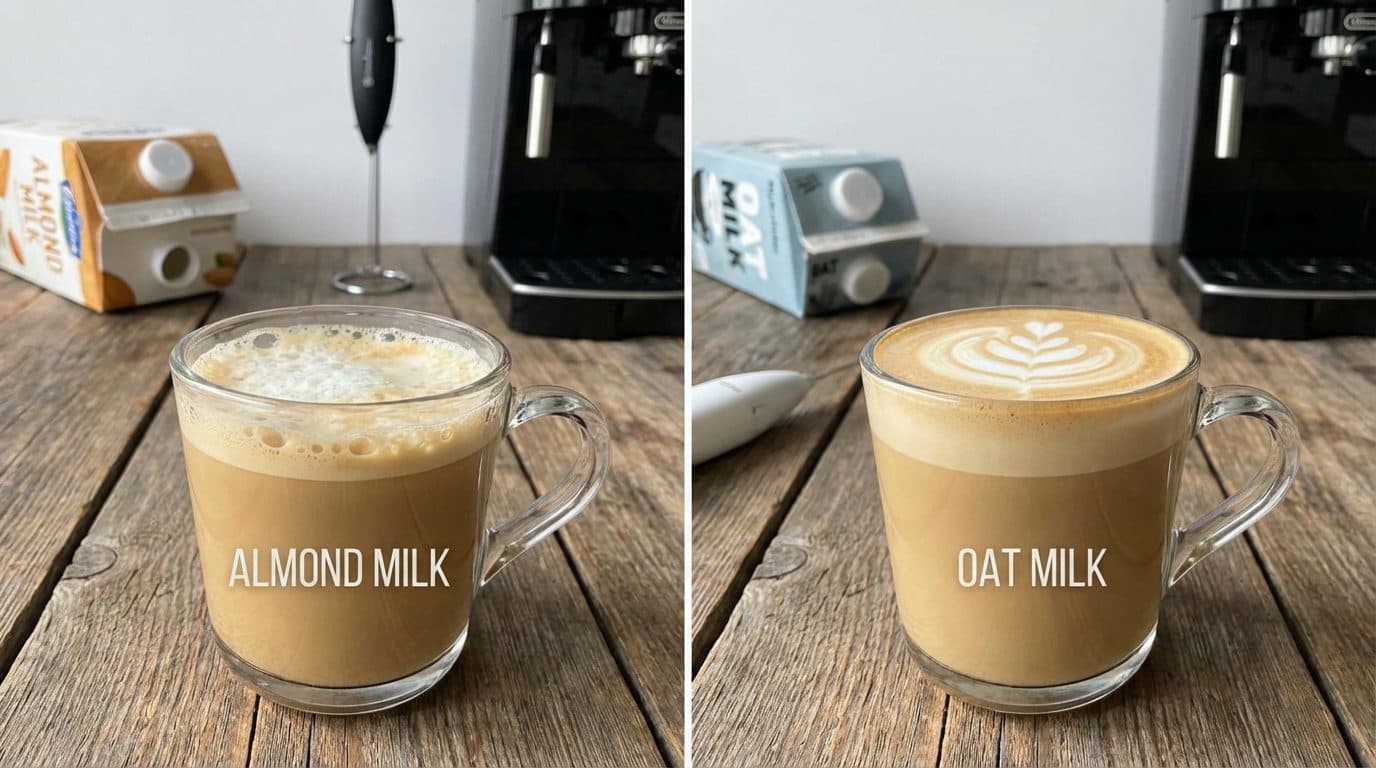
Almond-drink foam varies by formulation, temperature, and tool. Compare equal volumes with the same method and record bubble size, separation, and stability; the label “almond” or “oat” alone does not determine the winner.
No plant-milk category wins every frothing comparison. A barista-style oat product is a practical first trial for a creamy drink, but an almond product may perform better or taste preferable depending on its formulation and the method used.
Flavor Profile: Which Tastes Better in Your Latte?
Taste is subjective, but there are objective differences in how these milks interact with coffee. Understanding these can help you decide which one matches your preferences.
Oat milk brings a rounder, sweeter flavor that enhances coffee without fighting it. Many people describe it as the most “neutral” dairy-free option because it doesn’t add strong competing flavors. The sweetness is natural and not overpowering, which means you might find yourself using less added sugar in your drinks.
Almond milk, on the other hand, adds a distinct nuttiness. Depending on the brand, this can range from mild to pronounced. Some coffee drinkers love this because it creates a unique flavor combination. Others find that the almond taste distracts from the coffee itself. If you’re drinking high-quality single-origin beans and want to appreciate their specific flavor notes, almond milk might interfere with that experience.
Quick Taste Comparison
- Oat milk: Creamy, slightly sweet, blends smoothly with coffee
- Almond milk: Light, nutty, can taste thin in hot drinks
Here’s a helpful test you can try at home: make two identical lattes, one with each milk. Taste them side by side without any added sweeteners. This direct comparison often makes the differences immediately obvious and helps you figure out your personal preference faster than any article ever could.
Nutritional Differences Worth Knowing
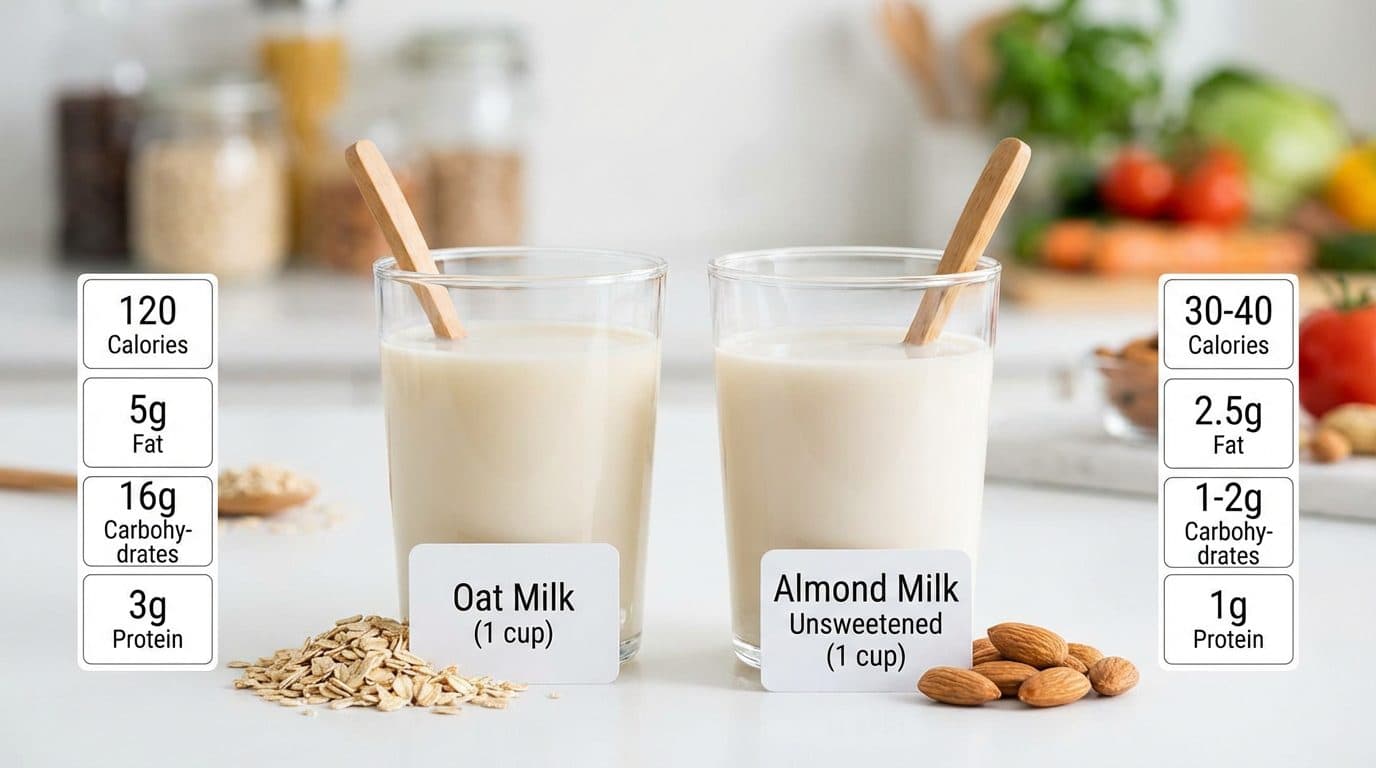
While taste and texture drive most decisions, nutrition plays a role for many people. Here’s a general breakdown, though exact values vary by brand.
- Oat milk: Calories, fat, carbohydrates, protein, and added sugar vary by product; compare the serving size and nutrition label.
- Almond milk: Unsweetened and flavored products can differ substantially; compare the serving size, protein, and added sugar on the label.
For any carbohydrate or calorie target, compare the nutrition labels of the exact products and equal serving sizes. Sweetened, flavored, and barista formulations can differ enough that the plant category alone does not determine the suitable choice.
Keep in mind that many flavored or sweetened versions of both milks contain added sugars, which changes the nutritional picture significantly. Always check labels if this matters to you.
Cost and Availability Comparison
Availability and price differ by region, retailer, carton size, formulation, and promotion. Compare current local unit prices for products that meet the same use case instead of assigning a permanent budget winner.
Compare current local prices by equal volume and include how much of each carton you actually use before it expires. Barista formulations may cost more, but brand, size, retailer, and promotions can reverse the difference.
Final Verdict: Which Should You Choose?
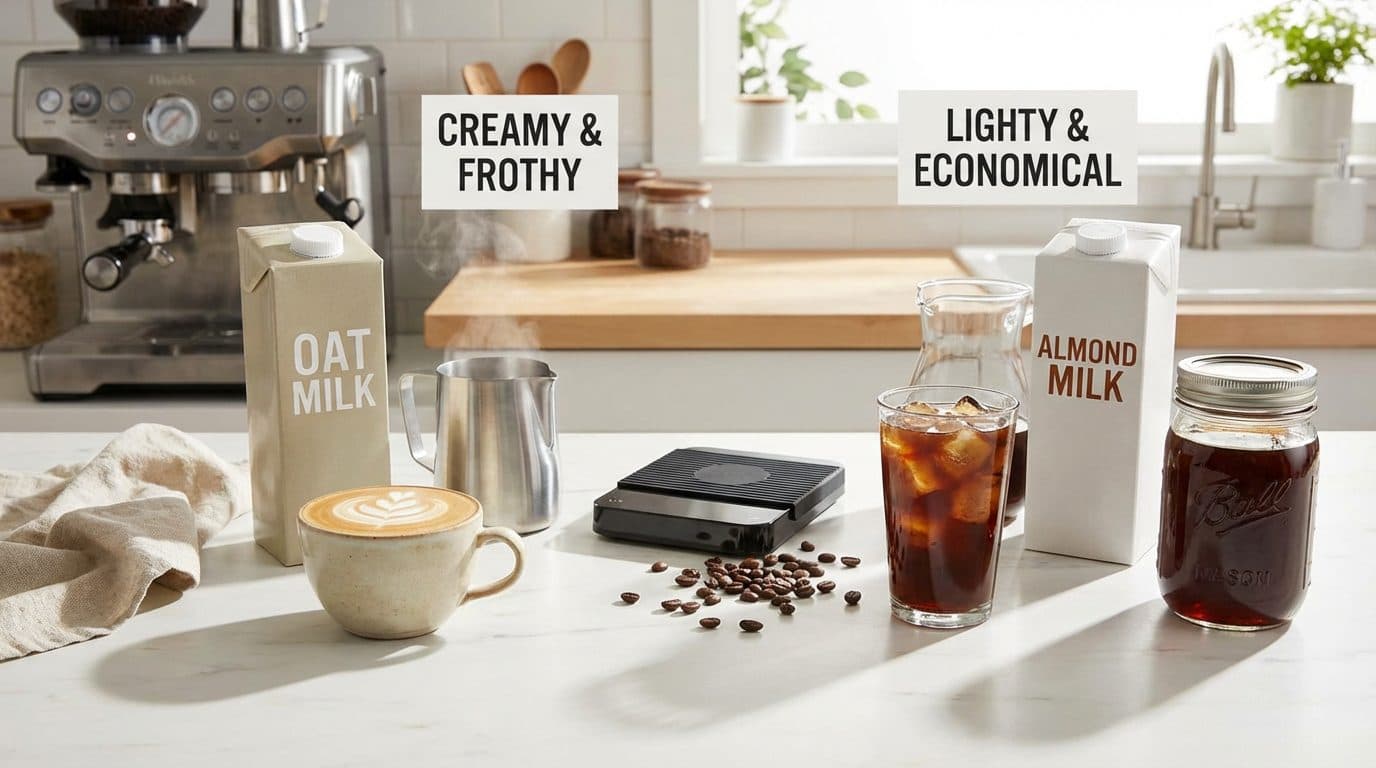
Oat milk is often the easier starting choice for a creamy latte, especially in a barista formulation. Almond milk remains a reasonable choice for a lighter, nuttier drink. Formulation, freshness, temperature, and frothing method matter more than the plant name alone.
Almond milk can still suit a lighter or nuttier drink. Nutrition and price are product-specific, so compare equal serving sizes, ingredient labels, current local price, and how much of each carton is used before it expires.
The best approach? Buy a carton of each and experiment. Your taste buds and your coffee setup are unique, and the only way to know for certain which works better for you is to try both. Start with your usual latte recipe, swap the milk, and pay attention to how each version makes you feel about your morning routine. That personal experience will tell you everything you need to know.



Comments