


Table of Contents
- Quick Verdict: Pour Over
- How Each Method Affects Taste
- French Press: Full Immersion Brewing
- Pour Over: Precision Extraction
- French Press vs. Pour Over: Side-by-Side Comparison
- Pros and Cons Breakdown
- French Press
- Pour Over
- Who Is Each Method For?
- French Press Is For You If:
- French Press Is NOT For You If:
- Pour Over Is For You If:
- Pour Over Is NOT For You If:
- The Bean Factor: Matching Roasts to Methods
- Practical Tips for Better Results
- Conclusion: Which Wins the Taste Battle?
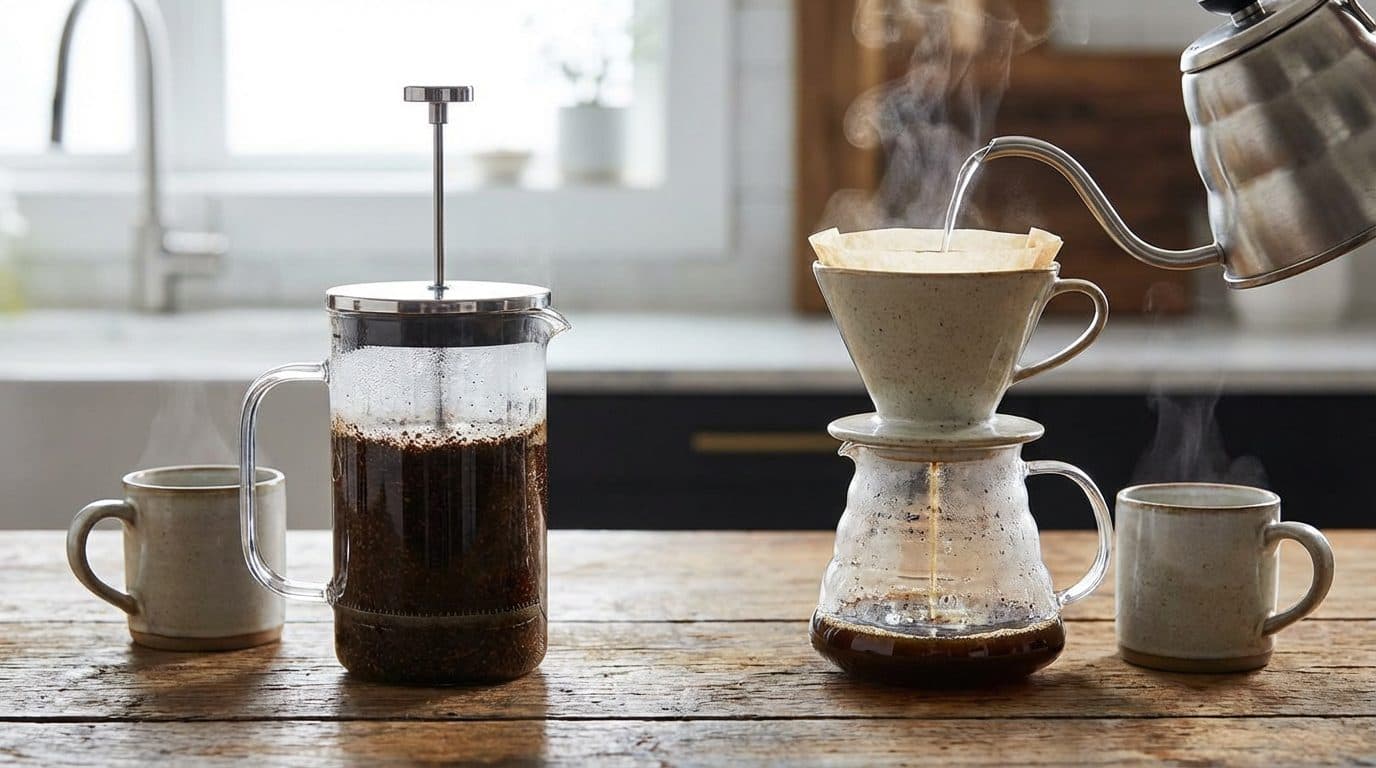
You’ve got your freshly roasted beans, your kettle is heating up, and now comes the big question: French press or pour over? Both methods have passionate fans, and both can produce exceptional coffee. But when it comes to taste, they deliver surprisingly different experiences in your cup. If you’ve been wondering which brewing method will satisfy your palate, you’re in the right place.
In this taste battle, we’ll break down exactly how French press and pour over differ in flavor, body, and overall drinking experience. By the end, you’ll know which method matches your personal coffee preferences—and maybe you’ll discover you need both in your life.
Quick Verdict: Pour Over
If you love clean, bright, and nuanced flavors that let you taste every origin note in your beans, pour over is your winner. However, if you prefer a rich, full-bodied cup with bold intensity and don’t mind a bit of sediment, French press takes the crown. In my experience, pour over rewards patience with clarity, while French press delivers comfort and depth. There’s no wrong choice here—just different paths to great coffee.
How Each Method Affects Taste
The fundamental difference between these two methods comes down to one thing: filtration. This single factor shapes everything about how your coffee tastes, feels, and finishes on your palate.
French Press: Full Immersion Brewing
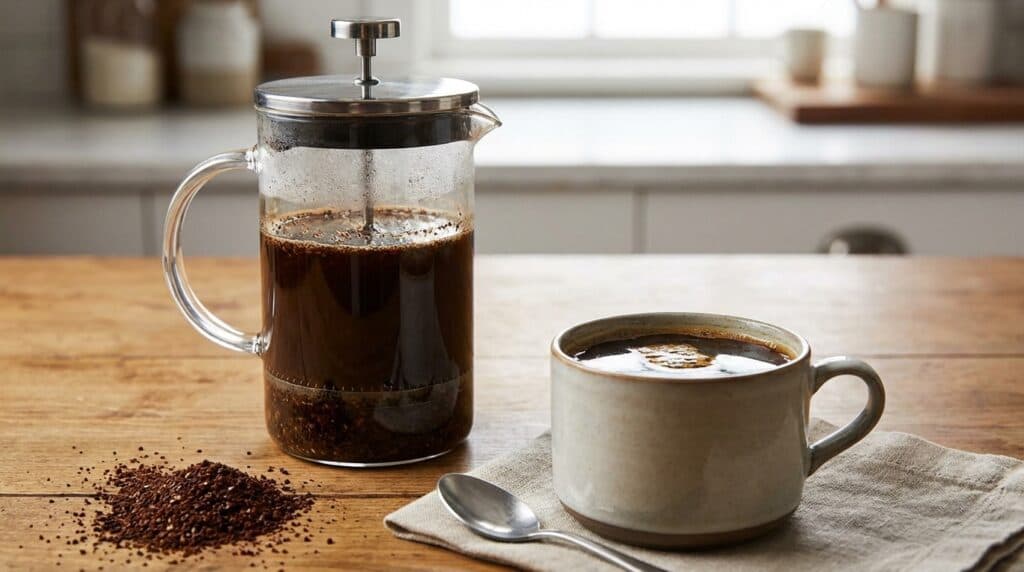
French press uses a metal mesh filter, which allows coffee oils and fine particles to pass through into your cup. These oils carry flavor compounds that create that signature rich, heavy mouthfeel. The immersion method means your grounds steep directly in hot water for several minutes, extracting a wide range of flavors—including some of the heavier, earthier notes.
Here’s what you can expect from a well-made French press:
- Bold, robust flavor with pronounced body
- Slightly gritty texture from fine sediment
- Rich mouthfeel thanks to retained coffee oils
- Deeper, sometimes chocolatey or nutty undertones
- Less brightness and acidity compared to filtered methods
Pour Over: Precision Extraction
Pour over uses a paper filter (or very fine cloth), which traps oils and sediment while letting the coffee’s more delicate compounds shine through. The water passes through the grounds rather than sitting with them, giving you more control over extraction time and temperature.
A properly brewed pour over typically delivers:
- Clean, crisp taste with no sediment
- Lighter body with a tea-like smoothness
- Bright acidity that highlights origin characteristics
- Complex flavor notes like fruit, floral, or citrus
- A more refined, nuanced drinking experience
French Press vs. Pour Over: Side-by-Side Comparison
Let’s put these two methods head-to-head so you can see exactly where they differ:
| Factor | French Press | Pour Over |
|---|---|---|
| Body | Full, heavy, syrupy | Light to medium, clean |
| Clarity | Slightly cloudy with sediment | Crystal clear |
| Flavor Profile | Bold, earthy, chocolatey | Bright, fruity, floral |
| Acidity | Low, muted | Pronounced, vibrant |
| Oils | Present in cup | Filtered out |
| Brew Time | 4 minutes | 3-4 minutes |
| Grind Size | Coarse | Medium to medium-fine |
| Skill Required | Beginner-friendly | Moderate learning curve |
Pros and Cons Breakdown
French Press
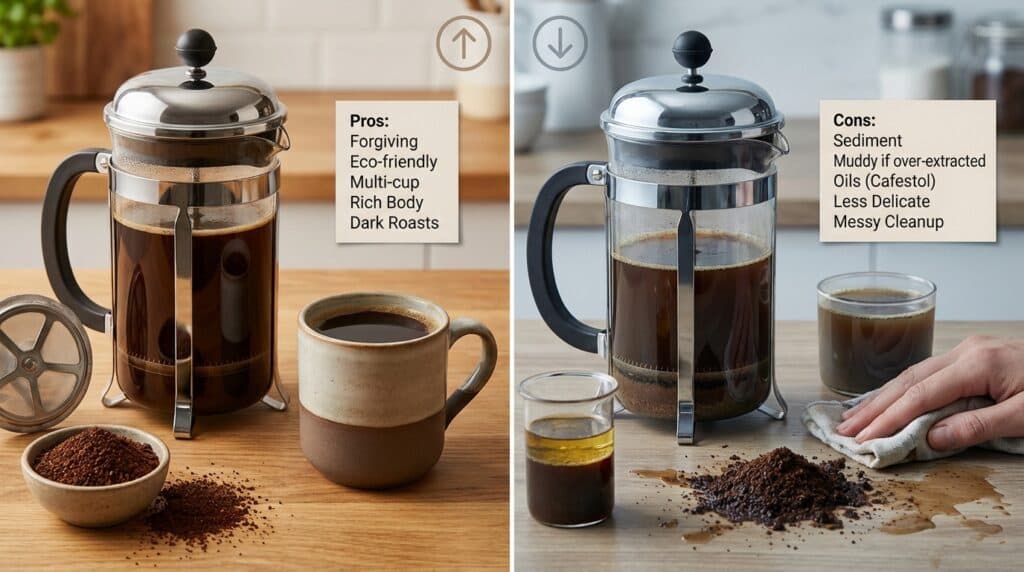
Pros:
- Forgiving technique—hard to mess up completely
- No need for paper filters (more economical and eco-friendly)
- Brews multiple cups at once
- Delivers maximum body and richness
- Great for darker roasts and blends
Cons:
- Sediment at the bottom of your cup
- Can taste muddy if over-extracted
- Coffee oils may raise cholesterol for heavy drinkers (cafestol compound)
- Harder to highlight delicate single-origin flavors
- Cleanup is messier than pour over
Pour Over
Pros:
- Exceptionally clean and clear cup
- Showcases complex, subtle flavor notes
- Total control over brewing variables
- Perfect for light roasts and single-origin beans
- Easy cleanup—just toss the filter
Cons:
- Requires more attention and technique
- Ongoing cost of paper filters
- Usually brews one cup at a time
- Less forgiving of grind inconsistencies
- Can taste thin if you prefer bold coffee
Who Is Each Method For?
French Press Is For You If:
- You love bold, rich coffee that feels substantial
- You prefer darker roasts or classic blends
- You want a simple, no-fuss morning routine
- You’re brewing for multiple people at once
- You enjoy that slightly rustic, unfiltered character
Picture this: It’s a lazy Sunday morning, you want a big mug of comforting coffee to enjoy with breakfast, and you’re not interested in fussing over technique. French press is your friend here. I’ve found it’s also fantastic for coffee cocktails or recipes where you want that bold coffee flavor to punch through milk or other ingredients.
French Press Is NOT For You If:
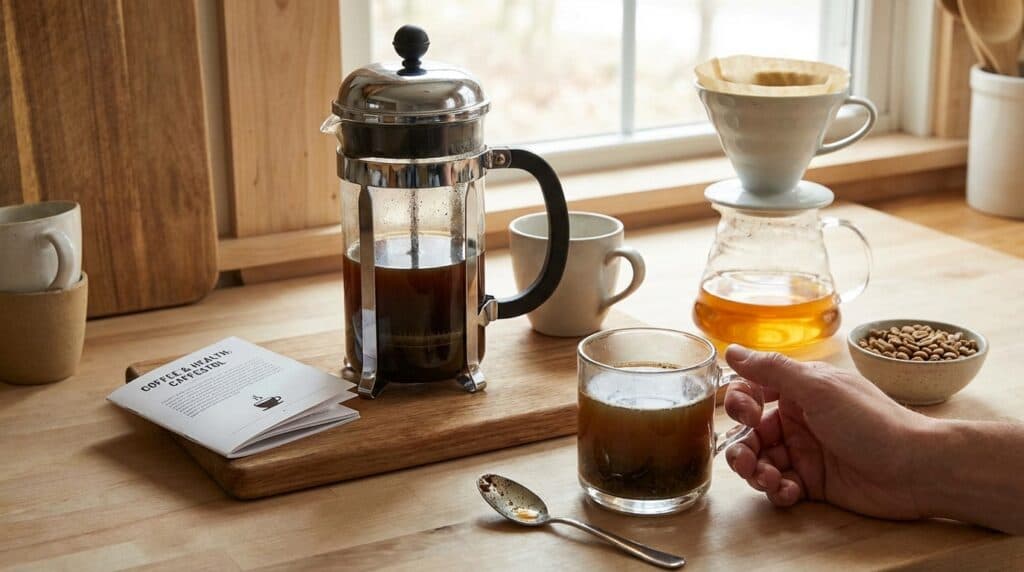
- You dislike any sediment or grit in your cup
- You want to taste bright, fruity notes in your beans
- You drink more than 4-5 cups daily (due to cafestol)
- You prefer a lighter, more refreshing coffee experience
Pour Over Is For You If:
- You appreciate subtle, complex flavors
- You enjoy the ritual and craft of brewing
- You buy specialty single-origin beans
- You prefer lighter roasts with bright acidity
- Clean, sediment-free coffee is non-negotiable
Imagine you just picked up an Ethiopian natural process coffee with tasting notes of blueberry and jasmine. Pour over is how you’ll actually taste those notes. The paper filter removes everything that would muddy those delicate flavors, letting the bean’s true character shine through.
Pour Over Is NOT For You If:
- You want coffee ready with minimal effort
- You’re brewing for a crowd
- You find light-bodied coffee unsatisfying
- You don’t want to invest time in perfecting technique
The Bean Factor: Matching Roasts to Methods
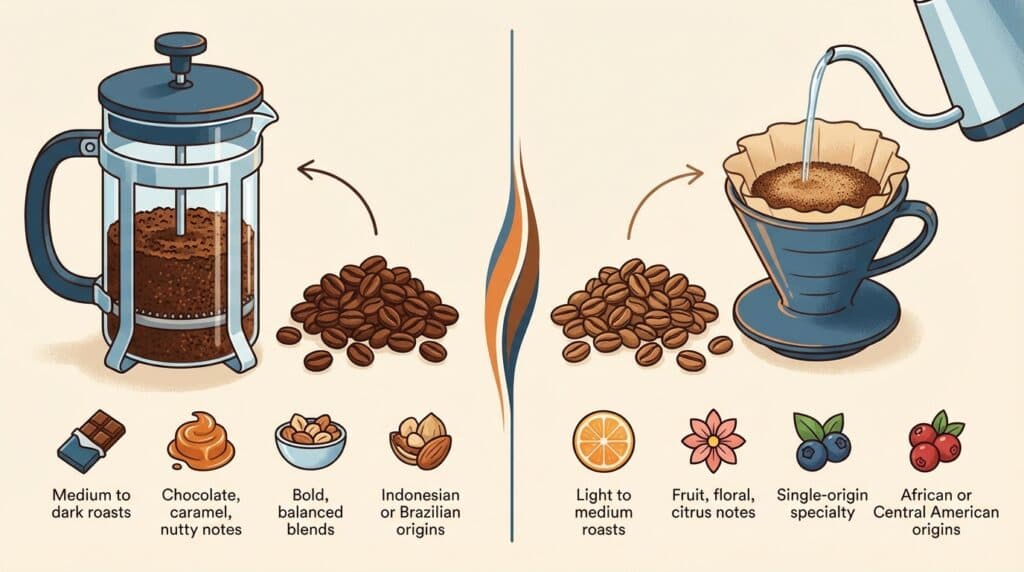
Here’s something many coffee lovers overlook: the beans you use matter just as much as the method. In my experience, certain roasts pair better with each brewing style.
French press shines with:
- Medium to dark roasts
- Beans with chocolate, caramel, or nutty notes
- Blends designed for bold, balanced flavor
- Indonesian or Brazilian origins
Pour over excels with:
- Light to medium roasts
- Beans with fruit, floral, or citrus notes
- Single-origin specialty coffees
- African or Central American origins
Using a delicate Kenyan light roast in a French press? You’ll likely lose those bright berry notes in the heavy body. Brewing a dark Sumatran in a pour over? It might taste flat and one-dimensional. Matching your method to your beans is the secret to getting the best from both.
Practical Tips for Better Results
Whichever method you choose, these tips will help you brew better coffee:
For French Press:
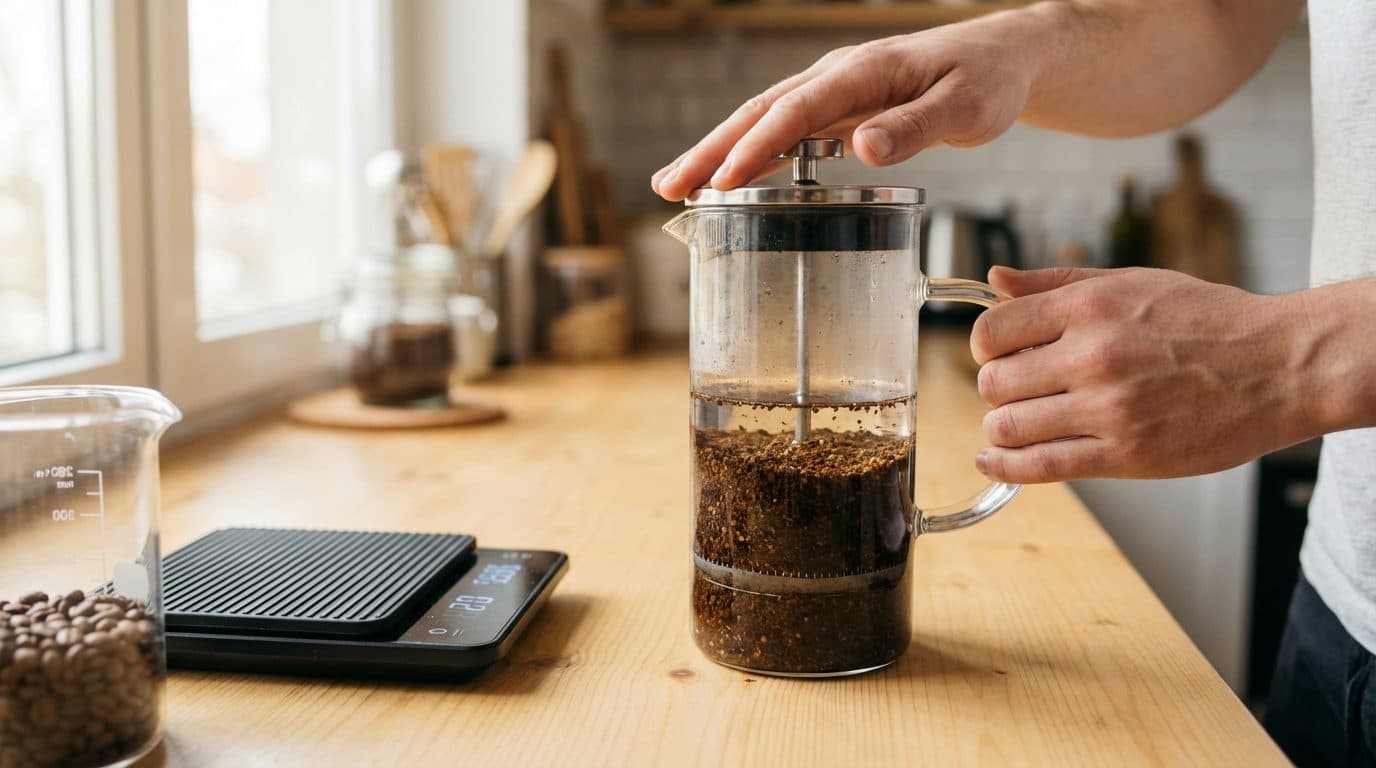
- Use a coarse grind—think sea salt texture
- Steep for exactly 4 minutes, then plunge and pour immediately
- Don’t press the plunger too hard; gentle pressure prevents over-extraction
- Decant all the coffee right away to stop extraction
For Pour Over:
- Rinse your paper filter first to remove papery taste
- Bloom your grounds with a small amount of water for 30-45 seconds
- Pour in slow, steady circles—avoid the edges
- Aim for a total brew time of 3-4 minutes
Barista Tip: Water temperature matters for both methods. Aim for 195-205°F (90-96°C). Too hot and you’ll over-extract; too cool and your coffee will taste weak and sour.
Conclusion: Which Wins the Taste Battle?
There’s no universal winner in the French press vs. pour over debate—only the winner for your personal taste. If you crave bold, rich, full-bodied coffee with deep flavors and don’t mind a bit of texture, French press delivers that cozy, satisfying experience. If you want clean, bright, complex cups that highlight every nuance in your beans, pour over is your path to coffee enlightenment.
The beautiful thing? You don’t have to choose just one. Many home baristas keep both methods in rotation, reaching for the French press on relaxed weekends and the pour over when they want to savor a special single-origin. Life is too short for bad coffee—so why not enjoy the best of both worlds? Start with whichever method matches your current coffee preferences, master it, and then explore the other. Your taste buds will thank you.

Comments