



Table of Contents
- What Makes Cold Brew Different from Iced Coffee?
- Taste and Flavor: Which One Wins on Hot Summer Days?
- Cold Brew's Smooth Character
- Iced Coffee's Bold Brightness
- Caffeine Content: Which Gives You More Energy?
- Making Cold Brew and Iced Coffee at Home
- How to Make Cold Brew at Home
- How to Make Iced Coffee at Home
- Cost Comparison: Which Is More Budget-Friendly?
- Which Is Better for Your Stomach?
- Choose by Time, Flavor, and Dilution
The temperature is rising, and you’re standing in your kitchen wondering which coffee drink will actually help you survive the heat. Cold brew and iced coffee both promise refreshment, but they’re surprisingly different in taste, caffeine content, and how easy they are to make at home. So which one deserves a permanent spot in your summer routine?
If you already have brewed coffee sitting around, here is the easiest way to turn leftover hot coffee into iced coffee without ending up with a flat, stale drink.
Choose cold brew for a long, cool-water extraction and a rounder flavor profile; choose iced coffee for a hot-brewed drink that can be prepared and chilled quickly. Caffeine and acidity depend on the coffee, dose, recipe, dilution, and serving size.
What Makes Cold Brew Different from Iced Coffee?
Despite both being cold coffee drinks, cold brew and iced coffee are made using completely different methods. This affects everything from flavor to caffeine levels.
Iced coffee is simply regular hot-brewed coffee that’s been cooled down and poured over ice. You brew it the same way you’d make your morning cup, then chill it. The whole process takes about 10-15 minutes if you’re in a hurry.
Cold brew, on the other hand, never touches hot water. Coarse coffee grounds steep in cold or room-temperature water for 12-24 hours. This slow extraction creates a concentrate that you dilute with water or milk before drinking.
Here’s a quick breakdown of the key differences:
- Brewing time: Iced coffee takes minutes; cold brew takes 12-24 hours
- Water temperature: Iced coffee uses hot water; cold brew uses cold water
- Flavor profile: Iced coffee is brighter and more acidic; cold brew is smoother and sweeter
- Shelf life: Iced coffee should be consumed same day; cold brew concentrate lasts up to two weeks refrigerated
Taste and Flavor: Which One Wins on Hot Summer Days?

Flavor is often the deciding factor when choosing between cold brew and iced coffee for your summer refreshment. The brewing method dramatically impacts what ends up in your glass.
Cold Brew’s Smooth Character
Cold brew often tastes smoother and less sharply acidic than the same coffee brewed hot, but no single percentage applies to every bean, roast, recipe, dilution, or measurement method. Treat the difference as a flavor comparison, not a medical or universal acidity claim.
Cold brew uses cool water and a long extraction, which often produces a rounder cup with lower perceived acidity. Iced coffee is brewed hot and cooled over or with ice, preserving more of the bright aroma associated with hot extraction.
Iced Coffee’s Bold Brightness
Iced coffee retains the familiar, punchy flavor of your regular morning brew. It has more pronounced acidity and those bright, fruity notes that coffee enthusiasts love. When you pour it over ice, some of that intensity mellows out, but you still get a more traditional coffee experience.
If you enjoy the classic taste of coffee and want something that feels familiar but cold, iced coffee delivers exactly that. It’s like your favorite morning cup, just refreshingly chilled.
In short: Choose cold brew if you prefer smooth and mellow. Go with iced coffee if you like bold and bright flavors.
Caffeine Content: Which Gives You More Energy?
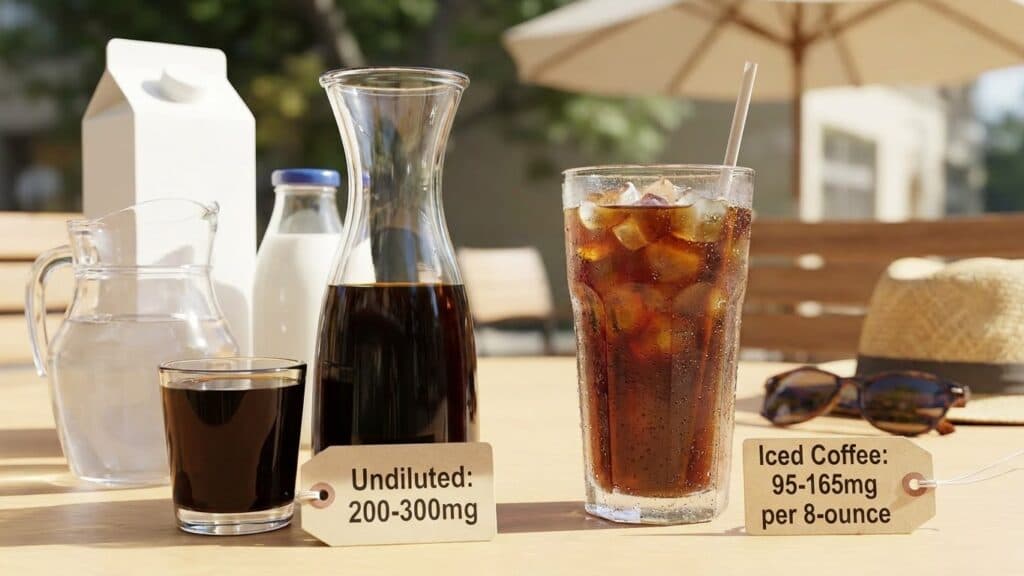
When you need that afternoon pick-me-up during a hot summer day, caffeine content matters. Here’s where things get interesting.
Cold brew concentrate can contain more caffeine per ounce when it uses a high coffee dose, but the finished drink depends on the recipe, extraction, dilution, and serving size. Calculate from the actual product label or recipe instead of assuming a fixed range.
Iced coffee retains the caffeine extracted during brewing. Melting ice lowers concentration but does not remove caffeine already in the glass; total intake changes only if the recipe or the amount consumed changes.
Consider this scenario: You make a batch of cold brew on Sunday night. Throughout the week, you can control exactly how strong each glass is by adjusting the concentrate-to-water ratio. Need more energy for a busy Monday? Use less water. Want something lighter for a lazy Saturday? Dilute it more.
- Cold brew concentrate: caffeine depends on coffee dose, extraction, and measured serving size
- Diluted cold brew: dilution changes concentration; total caffeine depends on how much concentrate is used
- Iced coffee: caffeine depends on the hot-brew recipe and final serving size
- Melted ice: lowers concentration but does not remove caffeine already extracted into the drink
Making Cold Brew and Iced Coffee at Home
Both drinks are easy to make at home, but they require different approaches and time commitments. Let’s break down what you’ll need for each.
How to Make Cold Brew at Home
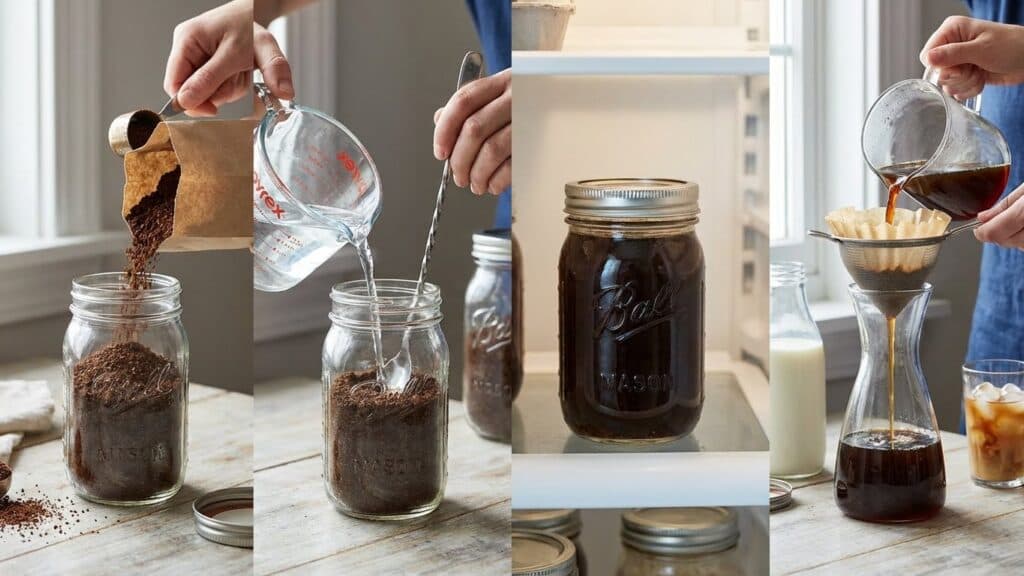
You don’t need fancy equipment to make excellent cold brew. A mason jar or any large container works perfectly fine.
- Use coarsely ground coffee (about the texture of raw sugar)
- Mix 1 cup of grounds with 4 cups of cold water
- Stir gently and cover
- Refrigerate for 12-24 hours
- Strain through a fine mesh sieve or coffee filter
- Dilute concentrate with equal parts water or milk
Cold brew works well as a batch recipe. Keep the equipment clean, refrigerate the finished brew promptly in a sealed container, make an amount you will use while it still tastes fresh, and discard it if storage conditions or quality are uncertain.
How to Make Iced Coffee at Home
Iced coffee is the faster option when you need something cold right now.
- Brew coffee at double strength (use twice the grounds you normally would)
- Let it cool for a few minutes
- Pour over a glass full of ice
- Add milk or sweetener if desired
The double-strength brewing compensates for the ice dilution. Some people brew a pot in the morning and refrigerate it for later use, which also works well.
A practical tip: Freeze leftover coffee in ice cube trays. Use these coffee ice cubes instead of regular ice, and your drink won’t get watered down as they melt.
Cost Comparison: Which Is More Budget-Friendly?
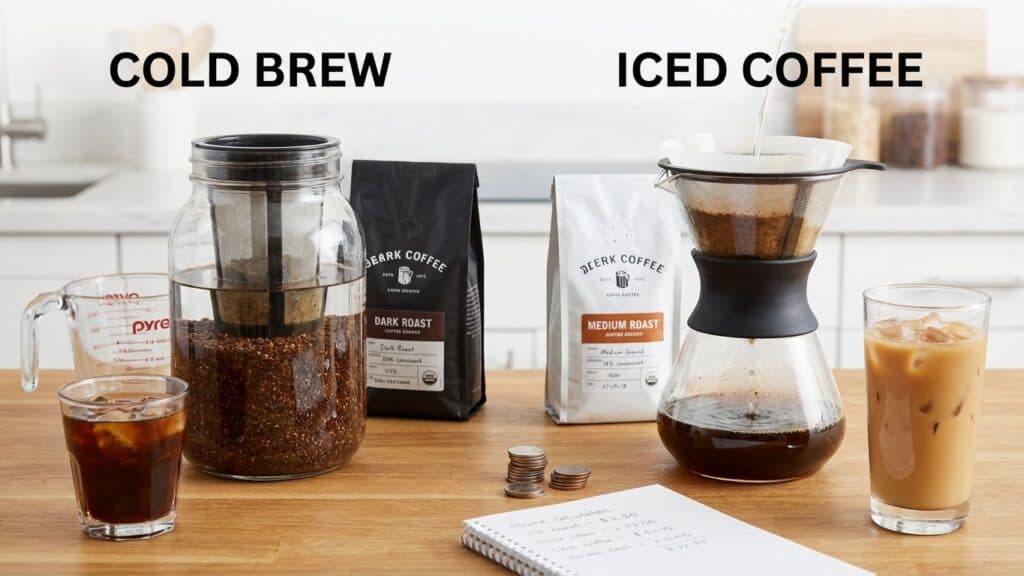
Making either drink at home saves significant money compared to buying from coffee shops. But there are some cost differences worth considering.
Cold brew uses more coffee grounds per serving than iced coffee. You’ll typically need about 1 cup of grounds to make 4 servings of concentrate. However, because you’re making a batch that lasts all week, you might actually waste less coffee overall.
Iced coffee uses your regular coffee-to-water ratio (doubled for strength), which means slightly less grounds per serving. But if you’re making it fresh each time, you might end up brewing more than you need and throwing some away.
Here’s a rough cost breakdown for a week of daily cold coffee:
- Cold brew at home: calculate beans, water, filters, dilution, and waste at current local prices
- Iced coffee at home: calculate beans, water, ice, filters, and waste at current local prices
- Café cold brew: multiply the current local menu price by actual weekly purchases
- Café iced coffee: multiply the current local menu price by actual weekly purchases
Home brewing can cost less at sufficient volume, but the result depends on current local ingredient and café prices, serving size, waste, equipment, and how often each drink is made.
Which Is Better for Your Stomach?
Sensory acidity, measured pH, and individual tolerance are different questions; tolerance varies by person and recipe.
Cold brew may taste less sharply acidic, but perceived acidity, measured pH, and digestive tolerance are different questions. Individual tolerance varies, so choose it for flavor and workflow rather than treating it as a digestive or medical promise.
Iced coffee starts as hot-brewed coffee, but its measured acidity and perceived sharpness still depend on the bean, roast, recipe, cooling, and dilution. Choose by the finished drink rather than a health promise.
That said, everyone’s digestive system is different. Some people tolerate both drinks equally well. If you’re unsure, try cold brew first and see how your body responds.
Choose by Time, Flavor, and Dilution
Both cold brew and iced coffee have their place in your summer routine. The best choice depends on your priorities and preferences.
Choose cold brew if you:
- Prefer smooth, less acidic coffee
- Like to batch-prepare drinks for the week
- Have a sensitive stomach
- Enjoy customizing caffeine strength
- Don’t mind waiting 12-24 hours for your coffee
Choose iced coffee if you:
- Love traditional bold coffee flavor
- Want your drink ready in minutes
- Prefer making fresh coffee each time
- Enjoy the bright, acidic notes of coffee
- Already have a coffee maker at home
Choose cold brew when you can prepare a batch ahead and prefer a rounder cup. Choose iced coffee when you want a drink in minutes with more hot-brew aroma. Record coffee dose, water, ice, and dilution so either recipe can be repeated.



Comments