


Table of Contents
- Why Coffee Spending Is Easy to Lose Track Of
- Three Simple Methods to Monitor Coffee Expenses
- The Dedicated Spreadsheet
- The Receipt Envelope
- The Annual Audit
- What to Track
- Setting a Realistic Coffee Budget Without Killing the Joy
- Cost per Cup
- Smart Strategies for Guilt-Free Gear Purchases
- Wait Before You Buy
- Upgrade the Grinder Before the Brewer
- Buy Used, Sell What You Don't Use
- Buy Gear That Covers Several Methods
- Check Subscriptions Against Single Bags
- Frequently Asked Questions
- What is the easiest way to start tracking coffee spending?
- Is it worth tracking small purchases like filters?
- Should café coffee count as part of the hobby?
- How do I decide whether a gear upgrade is worth it?
- Where to Start
Tracking what you spend on coffee gear takes one list, one review date and an honest look at the totals. You do not need special software or a strict budget. Log every coffee purchase in one place, sort each one as gear, beans, consumables, or parts and repairs, and total the categories at the end of each month. The aim is not to spend less at any cost. It is to know where the money goes, so the next purchase is one you chose rather than one that happened.
This guide adapts the Consumer Financial Protection Bureau’s (CFPB) free spending tracker to a coffee hobby. Daily Home Coffee does not test products, and this page lists no prices, because gear and bean prices vary by shop and change too often to be useful. It is general information, not financial advice.
Why Coffee Spending Is Easy to Lose Track Of
A coffee setup is rarely bought in one go. A grinder one month, a dripper the next, a bag of beans every week or two, a pack of filters when the last one runs out. Each purchase is small enough to feel like it does not count. The CFPB describes the same pattern for spending in general: people who track their spending for a month often “discover that they’re spending money in small ways that add up and sometimes don’t match their priorities.”
Coffee spending also splits into two kinds that behave differently:
- One-off gear: a brewer, grinder, kettle, scale, storage container. These are large, rare and easy to remember.
- Recurring purchases: beans, filters, cleaning products and replacement parts. Each one is small, they repeat, and they are the easiest to forget.
Record both kinds in the same tracker.
Three Simple Methods to Monitor Coffee Expenses
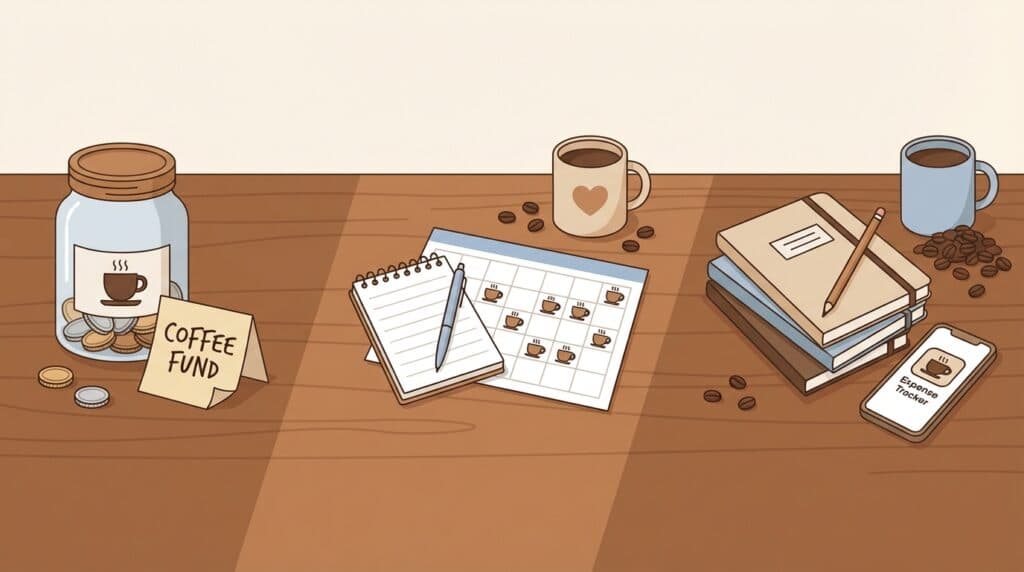
Choose the method you will actually keep up. The CFPB’s advice is to “create a way that’s easy for you to track income and spending in real time, whether that’s a daily journal or putting receipts in a folder that you review at the end of each week.”
The Dedicated Spreadsheet
Make one sheet with five columns: date, item, category (gear, beans, consumables, or parts and repairs), amount and a short note. Add a row whenever you buy something coffee-related. At the end of the month, total each category. The CFPB’s tracker works the same way: enter the weekly amounts per category, add them up in a “Category totals” column, and add the totals together for the month.
Use the note column too. Writing “replaced the cracked carafe” or “tried a new roaster” next to a purchase tells you later which spending you would repeat.
The Receipt Envelope
The CFPB’s tracker starts with an envelope: every time you spend money, put the receipt in it. If the receipt does not say what you bought, write it on the receipt, and if there is no receipt, write the amount and item on a slip of paper. For coffee, keep one envelope (or one folder in your email) just for coffee purchases, and empty it into a list at the end of each month.
The Annual Audit
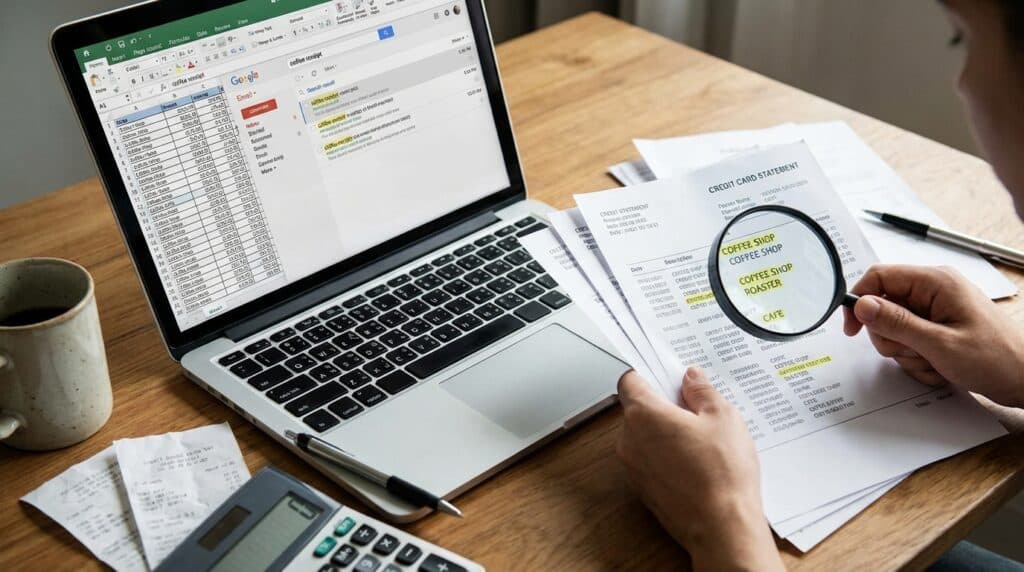
If logging every purchase is not going to happen, do one review a year. Go back through bank and card statements and order-confirmation emails, and pull out every coffee purchase: roasters, coffee shops’ bean sales, kitchen shops and online orders for gear. It is less precise than a running list, because purchases without a clear description are easy to miss, but it gives you a yearly total and shows which categories grew.
If a full month feels like too much, the CFPB suggests starting smaller: “If tracking your spending for a whole month seems too difficult, try it for just one or two weeks.”
What to Track
| Category | Examples | Why it is easy to miss |
|---|---|---|
| Gear | Brewer, grinder, kettle, scale | Rarely missed; large and memorable |
| Beans | Bags from shops, roasters or a subscription | Repeats often, so each bag feels small |
| Consumables | Paper filters, cleaning tablets, descaler | Bought with groceries or in bulk |
| Parts and repairs | Gaskets, carafes, replacement burrs | Irregular and easy to file as “household” |
Coffee bought in cafés is a separate line. The CFPB’s own categories put “any meals or beverages purchased outside of the home” under eating out, and beans brought home under groceries. Keeping café coffee as its own row lets you compare the two later without mixing them up.
Setting a Realistic Coffee Budget Without Killing the Joy
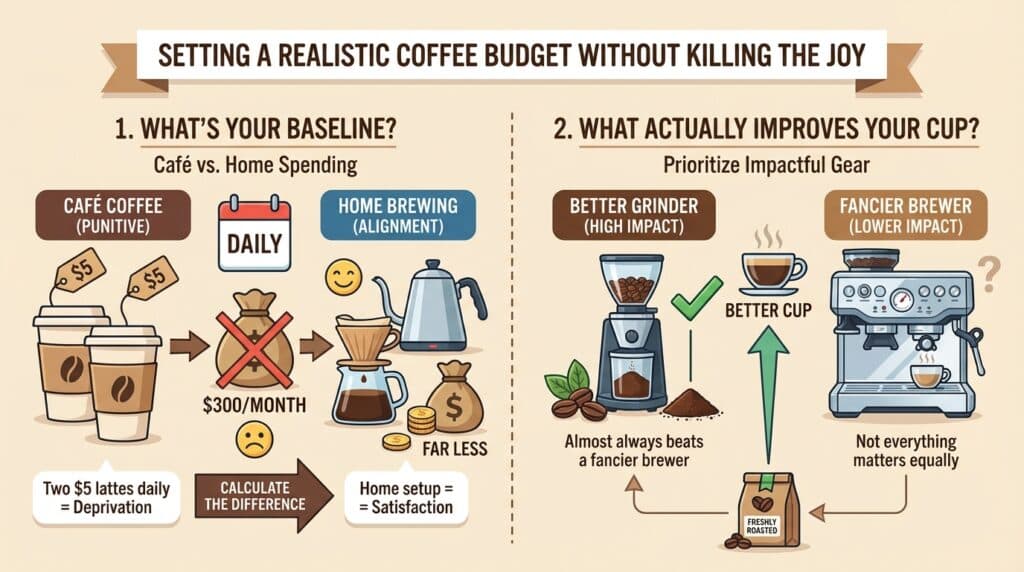
A budget works best after you have a few months of real figures. Before that, any number is a guess. Once you have them, follow the CFPB’s next step: circle the items that are the same every month, which are often your needs and obligations, and look for the areas you could cut back, which “will generally be wants.”
For a coffee hobby, that usually sorts out like this:
- Steady costs: beans and filters. These are what you drink every day, so plan for them first.
- Planned upgrades: one specific item you have a reason to buy, saved for over a few months.
- Experiments: a new origin, a different roaster, a second brewer. Decide how much room these get, so they are a choice rather than a surprise.
Spending on beans is not waste if they are fresh when you drink them. The National Coffee Association (NCA) says coffee “begins to lose freshness almost immediately after roasting” and suggests buying smaller batches, enough for one or two weeks. Buying beans in amounts you finish while they are fresh means less of that spending goes to coffee that has gone stale.
Cost per Cup
To judge a large purchase, divide its price by the number of cups you expect to make with it. For beans, divide the bag price by the number of cups it makes at your ratio. The result is only as good as your guess at the number of cups, but it puts gear and beans on the same scale and makes a comparison with café prices easier.
Smart Strategies for Guilt-Free Gear Purchases
Tracking shows you what you spend. These habits shape what you spend next.
Wait Before You Buy
The CFPB’s advice for impulse spending is to “create a plan that’s doable to help you limit that spending.” For gear, a simple plan is a waiting period of your own choosing: write the item on a wish list with the date and the problem it would solve, and come back to it later. If you can still name the problem, buy it. If not, you have saved the money.
Upgrade the Grinder Before the Brewer
If you are deciding between upgrades, the grinder usually comes first. The NCA recommends a burr grinder because burrs give “a consistent grind, extracting the flavor of the coffee more evenly”, while with a blade grinder “you can’t ensure a consistent grind, which impacts taste.” The site’s budget coffee setup plan puts a burr grinder as the first upgrade for the same reason.
Buy Used, Sell What You Don’t Use
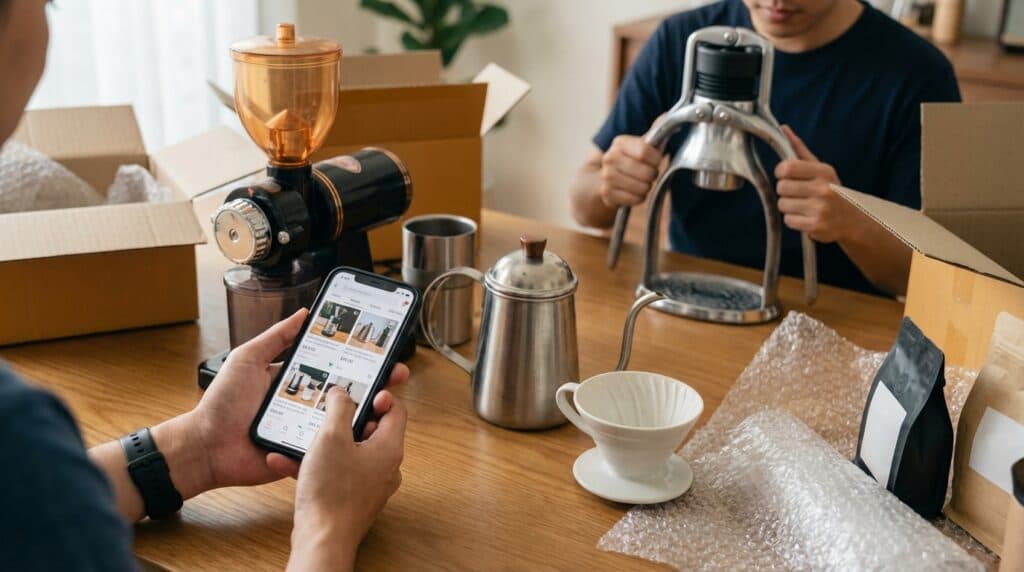
Simple manual gear such as kettles, scales, drippers and French presses is easy to inspect before you buy it second-hand: look for cracks, a damaged mesh filter or a scale that will not tare. For a used grinder, follow the manufacturer’s instructions for cleaning before the first use. Selling something you no longer use can pay for the next item, and recording the sale in your tracker shows your net spending, not just the gross.
Buy Gear That Covers Several Methods
A kettle and a scale serve every manual method, and one grinder can serve several brewers if it adjusts across the grind sizes they need. The NCA’s grind chart runs from coarse for French press and cold brew to fine for espresso. Gear that covers more of your routine means fewer separate purchases.
Check Subscriptions Against Single Bags
A bean subscription is convenient, but it is still a recurring cost. Compare the price per bag, including delivery, with buying the same coffee one bag at a time, and check that the delivery schedule matches how fast you drink it. A subscription that delivers faster than you finish the coffee leaves you with beans going stale.
Frequently Asked Questions
What is the easiest way to start tracking coffee spending?
Keep every coffee receipt in one envelope or email folder for a month, then total it by category. The CFPB’s tracker uses the same envelope approach, and it suggests one or two weeks if a whole month is too much.
Is it worth tracking small purchases like filters?
Yes, at least at first. Filters and cleaning products are the purchases most likely to be forgotten, and they are exactly the “small ways that add up” the CFPB describes. Once you know how much they come to, you can track them less closely.
Should café coffee count as part of the hobby?
Track it, but keep it on its own line. The CFPB counts drinks bought outside the home as eating out and food brought home as groceries, so keeping the two separate makes it easier to compare them.
How do I decide whether a gear upgrade is worth it?
Name the problem it solves, then work out a rough cost per cup over the number of cups you expect to make with it. If the problem is grind consistency, the NCA recommends a burr grinder because it gives a more consistent grind.
Where to Start
Start a list today with five columns: date, item, category, amount and note. Add the gear you already own if you know roughly what it cost, then log every coffee purchase from now on. At the end of the month, total each category, circle what repeats, and decide what the next purchase should be. Fresh beans bought in small amounts, a burr grinder before other upgrades, and a waiting period before any new gear will cover most of the decisions the list turns up.

Comments