


Table of Contents
- Why Home Coffee Saves Real Money
- Choosing Affordable Beans Without Wasting Money
- Buy Whole Beans When It Makes Sense
- Look for Roast Dates, Not Just Pretty Bags
- Use Store Brands Carefully
- Low-Cost Brewing Methods That Actually Work
- French Press
- Pour-Over
- Moka Pot
- AeroPress
- Small Technique Changes That Improve Flavor
- Use the Right Water Temperature
- Get the Ratio Close
- Store Beans Properly
- Clean Your Equipment
- Budget Specialty Drinks at Home
- Frothing Milk Without an Espresso Machine
- Make Simple Syrups
- Cold Brew on a Budget
- Frequently Asked Questions
- What is the cheapest way to make good coffee at home?
- Is pre-ground coffee always bad?
- How long do coffee beans stay fresh?
- Can I make espresso without an espresso machine?
- Does expensive coffee always taste better?
- Bottom Line
Good coffee at home does not require a luxury machine or a monthly bean subscription. It does require a few unglamorous choices: fresh enough coffee, clean equipment, decent water, a repeatable recipe, and a brew method that fits your morning instead of fighting it.
The fastest way to make low-cost but great-tasting coffee at home is to stop paying for convenience in the wrong places. Buy coffee you can finish while it is fresh, grind close to brewing when possible, use a simple brewer well, and measure your recipe at least until your hands learn it.
Why Home Coffee Saves Real Money
A daily cafe drink adds up quickly. One $4.50 coffee every weekday is about $90 per month before tips, snacks, delivery fees, or the occasional larger specialty drink. A bag of beans at home can bring the per-cup cost far lower, even after filters, milk, and a basic grinder.
The exact math depends on what you buy. A 12-ounce bag of coffee might make roughly 18 to 25 brewed cups, depending on dose. A two-pound warehouse bag can cost much less per cup, though only if you can use it before it tastes stale. That is the quiet budget trap: cheap coffee that sits too long stops being a bargain.
- Cafe coffee is convenient but expensive per serving.
- Home coffee is cheaper, but only if your setup is simple enough to use daily.
- The biggest savings usually come from replacing routine drinks, not occasional treats.
Think of cafe visits as the special version. Home coffee should be the reliable version: not perfect, not precious, just genuinely good for the cost.
Choosing Affordable Beans Without Wasting Money

Expensive beans can be excellent, but price alone does not guarantee flavor. Freshness, roast quality, storage, and whether the coffee matches your taste matter more for daily drinking.
Buy Whole Beans When It Makes Sense
Whole beans hold aroma longer than pre-ground coffee because less surface area is exposed to oxygen. If you can afford a basic burr grinder, whole beans are usually the better long-term move.
If you cannot buy a grinder yet, pre-ground coffee is not a moral failure. Buy smaller bags, choose a grind that matches your brewer, close the bag tightly, and use it quickly. Good pre-ground coffee brewed well can beat whole beans ground badly.
Look for Roast Dates, Not Just Pretty Bags
A roast date tells you more than vague freshness language. Many coffees taste best after a short rest and within a few weeks of roasting, though the exact window depends on roast level and packaging. For budget buying, the practical rule is simple: avoid dusty bags with no date if you have better options nearby.
Use Store Brands Carefully
Warehouse and grocery store coffees can be good values. They can also be old, oily, or roasted darker than you prefer. Start with medium roasts, smaller bags, and coffees that show a roast date or high product turnover.
Bulk buying only saves money when your household drinks enough coffee. If a giant bag takes two months to finish, split it with someone or freeze unopened portions in airtight bags.
Low-Cost Brewing Methods That Actually Work

You do not need an espresso machine to make satisfying coffee. The best budget brewers are cheap because they are simple, not because they are bad.
French Press
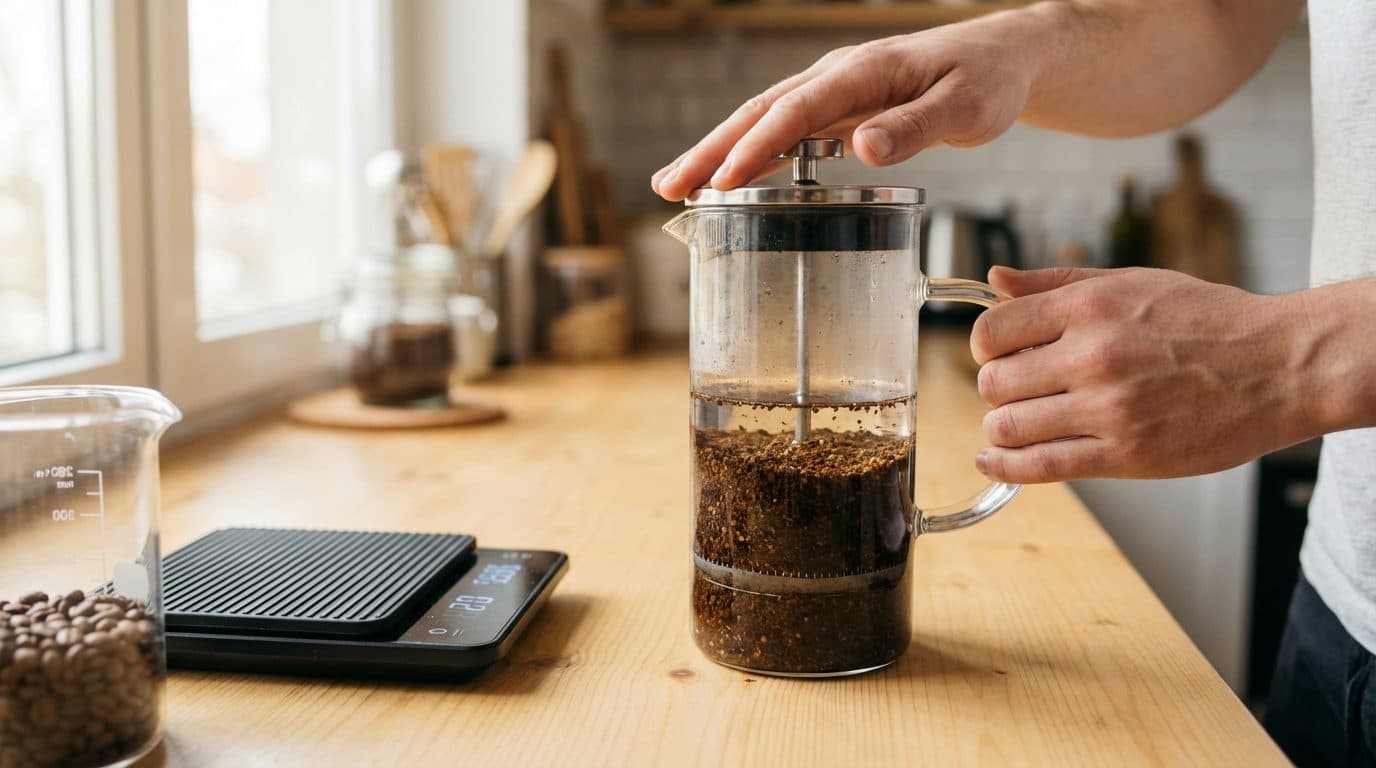
A French press is affordable, forgiving, and good for people who like full-bodied coffee. Use coarse grounds, hot water, and a four-minute steep as a starting point. Pour the brewed coffee into a mug or carafe after pressing so it does not keep sitting with the grounds.
The downside is cleanup and sediment. If you hate gritty last sips, choose paper-filtered brewing instead.
Pour-Over
A basic cone dripper can cost very little and make clean, sweet coffee. Paper filters add a small ongoing cost, but they also make cleanup easy and remove sediment. Pour-over asks more from your grinder and pouring technique than French press, so start simple: medium grind, steady pour, and a consistent ratio.
Moka Pot
A Moka pot makes strong, concentrated coffee on the stove. It is not true espresso, but it works well for milk drinks and short, intense cups. Use medium-fine coffee, do not pack the basket like espresso, and remove the pot from heat before it sputters harshly.
AeroPress
The AeroPress costs more than the cheapest drippers, but it is fast, durable, and forgiving. It is a strong value for one-cup brewing, travel, and small kitchens. It also handles ordinary beans well, which matters when you are trying to keep costs down.
The best budget setup for many people is a burr grinder plus one simple brewer. More gear usually adds clutter before it adds better flavor.
Small Technique Changes That Improve Flavor
Cheap coffee tastes much better when the basics are controlled. These changes cost little or nothing.
Use the Right Water Temperature

For most hot brewing, water around 195 to 205°F works well. Without a thermometer, boil water and let it sit briefly before pouring. Very dark roasts may taste smoother with slightly cooler water. Very light roasts may need hotter water and a little more extraction.
Get the Ratio Close
A good starting range is 1:15 to 1:17 coffee to water by weight. That means 20 grams of coffee with 300 to 340 grams of water. If you do not own a scale, use the same scoop and same mug every time, then adjust by taste.
Store Beans Properly
Keep beans sealed, cool, dry, and away from light. A cabinet beats a sunny counter. Avoid the refrigerator because condensation and odors can hurt flavor. Freezing can work for extra unopened portions, but only if they are sealed tightly and thawed while still sealed.
Clean Your Equipment
Old coffee oil turns stale and bitter. Rinse brewers after each use, wash parts regularly, and clean grinders with a brush. If every cup tastes flat or rancid no matter which beans you buy, dirty equipment may be the hidden problem.
- Use filtered water if tap water tastes strongly of chlorine or minerals.
- Grind close to brewing when possible.
- Do not keep brewed coffee cooking on a hot plate.
- Change one variable at a time when troubleshooting.
Budget Specialty Drinks at Home
Cafe-style drinks become much cheaper when you stop buying them every day. The goal is not to copy a commercial espresso bar perfectly. It is to make a drink you enjoy without turning breakfast into a project.
Frothing Milk Without an Espresso Machine

A handheld frother is cheap and useful. A French press can foam warm milk by pumping the plunger. A jar can work in a pinch, though the foam will be large-bubbled and less silky. For milk drinks, use strong coffee from a Moka pot, AeroPress, or concentrated drip brew.
Make Simple Syrups
Store-bought syrups are convenient but expensive. Heat equal parts sugar and water until dissolved, then add vanilla, cinnamon, cocoa, or another flavor. Keep it refrigerated and use a small measured amount so your budget drink does not quietly become dessert every morning.
Cold Brew on a Budget
Cold brew is easy to make in a jar or pitcher. Combine coarse-ground coffee and cold water, steep 12 to 18 hours, then strain well. A 1:8 coffee-to-water ratio creates a concentrate for many people, but adjust based on strength and dilution.
Cold brew is smooth, but it can hide caffeine strength. Measure your concentrate if you are sensitive to caffeine or drinking it later in the day.
Frequently Asked Questions
What is the cheapest way to make good coffee at home?
A basic pour-over cone or French press paired with fresh coffee is the lowest-cost starting point. If you can add one bigger upgrade, make it a burr grinder rather than a fancy brewer.
Is pre-ground coffee always bad?
No. It loses freshness faster, but it can still be good if it is recently ground, sealed well, and used quickly. Whole beans are better when you have a decent grinder. Bad grinding can waste good beans.
How long do coffee beans stay fresh?

Many beans taste best within a few weeks of roasting, but packaging, roast level, and personal taste all matter. Once opened, buy amounts you can finish reasonably quickly. If a bag smells flat, papery, or oily-rancid, freshness is probably gone.
Can I make espresso without an espresso machine?
You can make strong coffee for milk drinks with a Moka pot or AeroPress, but it is not true espresso. Real espresso requires pressure, a capable grinder, and more precision. For budget drinks, concentrated coffee is usually enough.
Does expensive coffee always taste better?
No. Higher price can reflect rarity, farm pricing, certification, packaging, or brand positioning. Some expensive coffee is excellent. Some affordable coffee is more enjoyable for daily use. Taste, freshness, and fit matter more than price alone.
Bottom Line
Low-cost home coffee gets good when you stop chasing shortcuts and control the basics. Buy fresh enough coffee, brew with clean gear, use a consistent ratio, and choose a simple method you will actually repeat.
Start with one upgrade: a better bag, a burr grinder, a scale, filtered water, or a cleaner brewer. Do not buy everything at once. The cheapest path to better coffee is learning which small change improves your actual cup.

Comments