


Table of Contents
- What Actually Happens During Coffee Roasting?
- The Stages of Roasting
- Light Roast Coffee: Bright, Complex, and Origin-Forward
- Flavor Profile of Light Roasts
- Did You Know?
- Medium Roast Coffee: The Balanced Middle Ground
- Flavor Profile of Medium Roasts
- Dark Roast Coffee: Bold, Smoky, and Full-Bodied
- Flavor Profile of Dark Roasts
- Key Takeaway
- Light vs Medium vs Dark Roast: Quick Comparison
- Which Roast Level Is Right for You?
- Choose Light Roast If:
- Choose Medium Roast If:
- Choose Dark Roast If:
- Frequently Asked Questions
- Does dark roast coffee have more caffeine than light roast?
- Why does light roast coffee taste sour sometimes?
- Is dark roast coffee easier on the stomach?
- Can I use any roast level for espresso?
- How should I store different roast levels?
- Summary and Your Next Step
Ever stared at a coffee bag trying to figure out whether to grab the light, medium, or dark roast? You’re not alone. The roast level of your coffee beans is one of the biggest factors determining what ends up in your cup—affecting everything from flavor and aroma to caffeine content and body. Yet it’s also one of the most misunderstood aspects of coffee for home brewers.
In this guide, we’ll break down exactly what happens during the roasting process, how each roast level tastes, and which one might be your perfect match. By the end, you’ll walk into any coffee shop or grocery aisle with confidence, knowing precisely what you want and why.
What Actually Happens During Coffee Roasting?
Before we dive into the differences between light, medium, and dark roast coffee, let’s quickly understand what roasting actually does to those little green beans. Raw coffee beans are dense, grassy-smelling, and honestly pretty unappetizing. The magic happens when heat transforms them into the aromatic brown beans we know and love.
During roasting, beans go through several chemical reactions. Sugars caramelize, acids break down, and oils develop. The longer beans roast, the more these changes occur. Think of it like cooking a steak—a rare steak tastes completely different from a well-done one, even though it’s the same cut of meat.
The Stages of Roasting
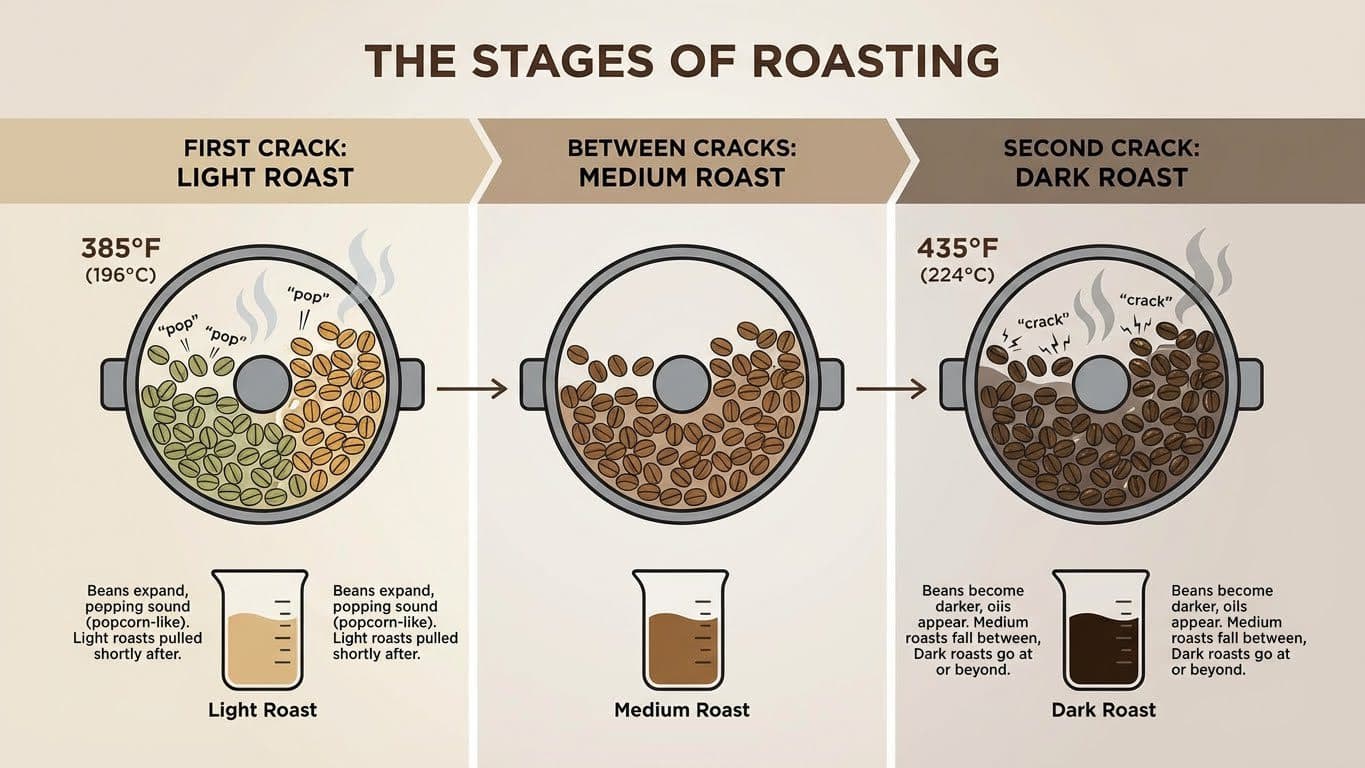
Roasters listen for two important moments called “cracks.” The first crack happens around 385°F (196°C) when beans expand and make a popping sound—similar to popcorn. Light roasts are typically pulled shortly after this first crack.
If roasting continues, a second crack occurs around 435°F (224°C). This is when beans become darker and oils start appearing on the surface. Medium roasts fall between the two cracks, while dark roasts go at or beyond the second crack.
- First crack: Light roast territory begins
- Between cracks: Medium roast sweet spot
- Second crack and beyond: Dark roast realm
Light Roast Coffee: Bright, Complex, and Origin-Forward
Light roast coffee is roasted for the shortest time, typically pulled just after the first crack. The beans look light brown with no oil on the surface, and they’re denser than their darker counterparts.
In my experience, light roasts are where you really taste the coffee’s origin. A light roast Ethiopian coffee will taste wildly different from a light roast Colombian. The shorter roasting time preserves the unique characteristics of where the beans were grown—their terroir, if you want to get fancy about it.
Flavor Profile of Light Roasts
Expect bright acidity, floral notes, and fruit-forward flavors. You might taste citrus, berries, or even tea-like qualities. Light roasts often have a lighter body and a more delicate mouthfeel. Some people describe them as “crisp” or “vibrant.”
Here’s a real-world example: I once served a light roast Kenyan coffee to a friend who only drank dark roasts. Her first reaction was “This tastes like blueberries—is this actually coffee?” That’s the light roast experience in a nutshell. It can be surprising if you’re used to more traditional roast flavors.
- Highest acidity of all roast levels
- Complex, nuanced flavors
- Lighter body and mouthfeel
- Best for tasting origin characteristics
Did You Know?
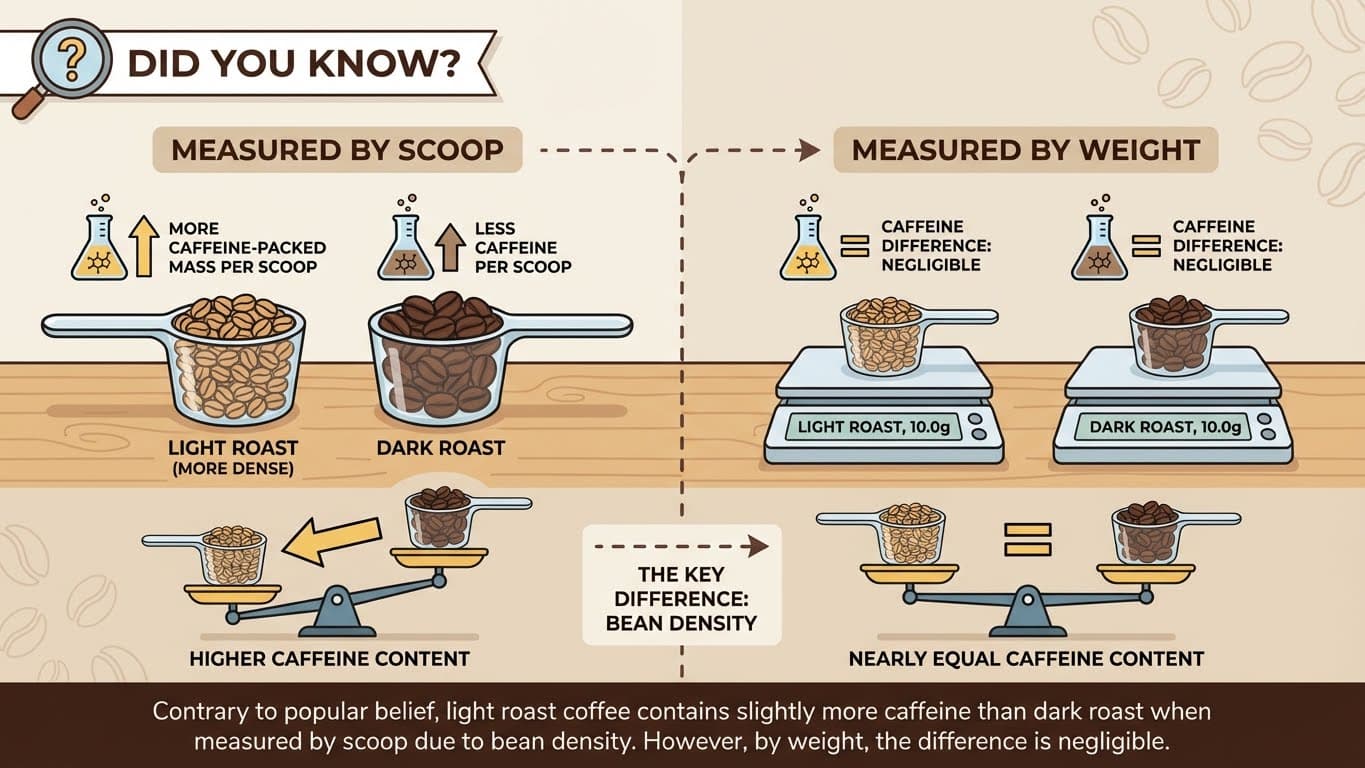
Contrary to popular belief, light roast coffee actually contains slightly more caffeine than dark roast when measured by scoop. The beans are denser, so you get more caffeine-packed mass per scoop. However, if you measure by weight, the difference is negligible.
Medium Roast Coffee: The Balanced Middle Ground
Medium roast coffee hits that sweet spot between origin flavors and roast flavors. The beans are medium brown with little to no oil on the surface. This is often called “American roast” because it’s historically been the most popular choice in the United States.
I’ve found that medium roasts work as excellent crowd-pleasers. When I have guests over and don’t know their preferences, a quality medium roast rarely disappoints anyone. It’s approachable while still being interesting.
Flavor Profile of Medium Roasts
You’ll find a balance of acidity, body, and flavor. The brightness of light roasts is toned down, while you start getting hints of caramel, nuts, and chocolate. The body is fuller than light roasts but not as heavy as dark roasts.
Medium roasts are versatile in brewing methods too. They work beautifully in drip coffee makers, pour-overs, and even espresso. In short, if you’re unsure where to start your coffee journey, medium roast is a solid launching point.
- Balanced acidity—neither too bright nor too flat
- Mix of origin and roast flavors
- Medium body with smooth mouthfeel
- Notes of caramel, chocolate, and nuts
Dark Roast Coffee: Bold, Smoky, and Full-Bodied
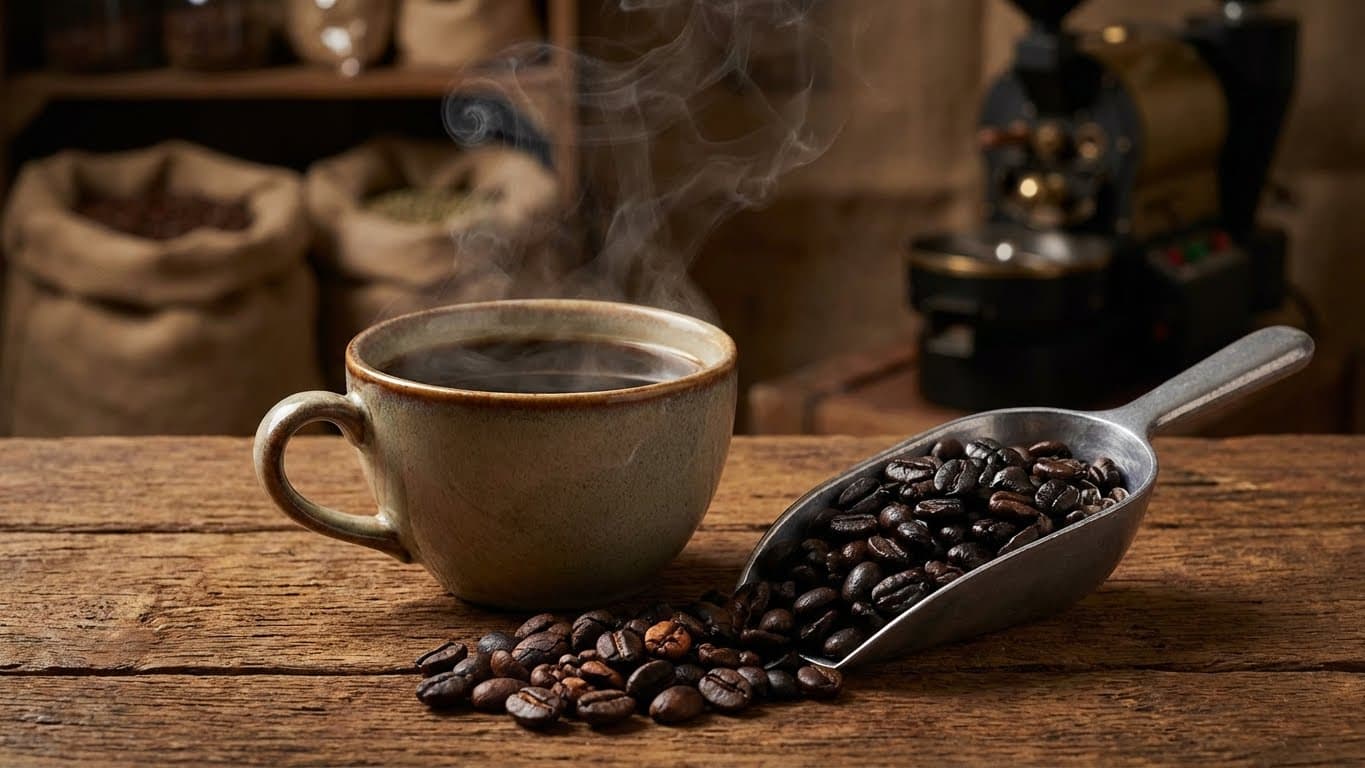
Dark roast coffee undergoes the longest roasting time. Beans are dark brown to almost black, with visible oils on the surface. Names like French roast, Italian roast, or espresso roast typically refer to dark roasts, though the exact definitions can vary between roasters.
Here’s something that might surprise you: dark roasts taste more like “roast” than like coffee origin. The extended roasting process burns away many of the unique origin characteristics, replacing them with smoky, toasty, and sometimes bitter flavors. This isn’t necessarily bad—it’s just a different experience.
Flavor Profile of Dark Roasts
Expect bold, robust flavors with low acidity. You’ll taste smokiness, dark chocolate, charred wood, and sometimes a pleasant bitterness. The body is heavy and the mouthfeel is often described as thick or syrupy.
A practical example: if you love your coffee with milk and sugar, dark roasts tend to punch through those additions better than lighter roasts. The bold flavors don’t get lost in a latte or a sweetened cup. This is partly why many coffee shops use dark roasts for their espresso-based drinks.
- Lowest acidity of all roast levels
- Bold, pronounced roast flavors
- Heavy body with thick mouthfeel
- Smoky, chocolatey, sometimes bitter notes
Key Takeaway
Dark roast doesn’t mean “stronger” coffee. The strength of your brew depends on the coffee-to-water ratio, not the roast level. A light roast brewed with plenty of grounds will be stronger than a weak dark roast brew.
Light vs Medium vs Dark Roast: Quick Comparison
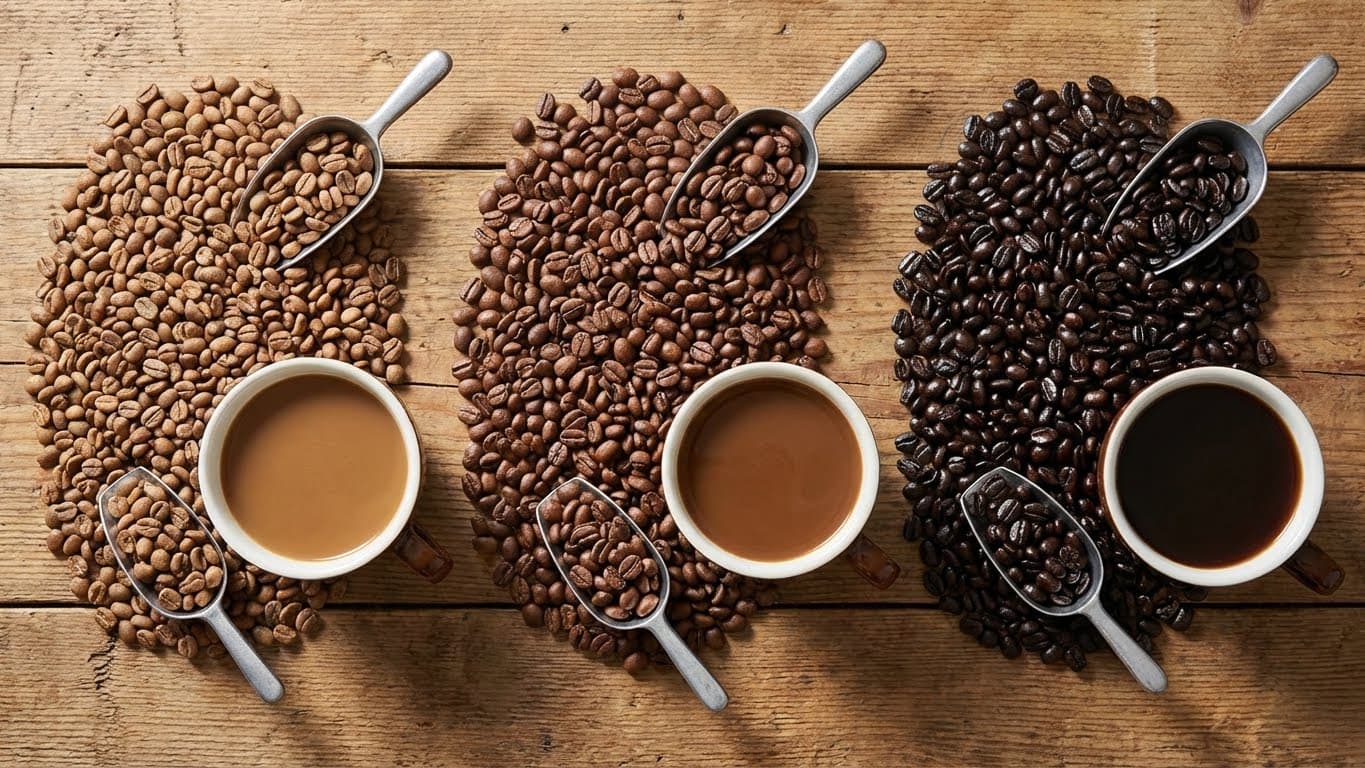
Let’s put everything side by side so you can see the differences at a glance:
| Characteristic | Light Roast | Medium Roast | Dark Roast |
|---|---|---|---|
| Color | Light brown | Medium brown | Dark brown to black |
| Oil on Surface | None | Little to none | Visible, shiny |
| Acidity | High (bright) | Medium (balanced) | Low (smooth) |
| Body | Light | Medium | Heavy |
| Flavor Focus | Origin characteristics | Balance of origin and roast | Roast characteristics |
| Caffeine (by scoop) | Slightly higher | Moderate | Slightly lower |
Which Roast Level Is Right for You?
Choosing between light, medium, and dark roast coffee ultimately comes down to personal preference. But here are some guidelines to help you decide.
Choose Light Roast If:
- You enjoy exploring different coffee origins and their unique flavors
- You prefer tea-like, bright, or fruity notes in your coffee
- You drink your coffee black or with minimal additions
- You’re interested in specialty coffee and single-origin beans
Choose Medium Roast If:
- You want a balanced, crowd-pleasing cup
- You’re new to exploring different roast levels
- You enjoy both the coffee’s origin flavors and some roast character
- You brew with various methods and want versatility
Choose Dark Roast If:
- You love bold, intense coffee with smoky or chocolatey notes
- You typically add milk, cream, or sugar to your coffee
- You prefer low-acidity coffee that’s easy on the stomach
- You enjoy traditional espresso-based drinks
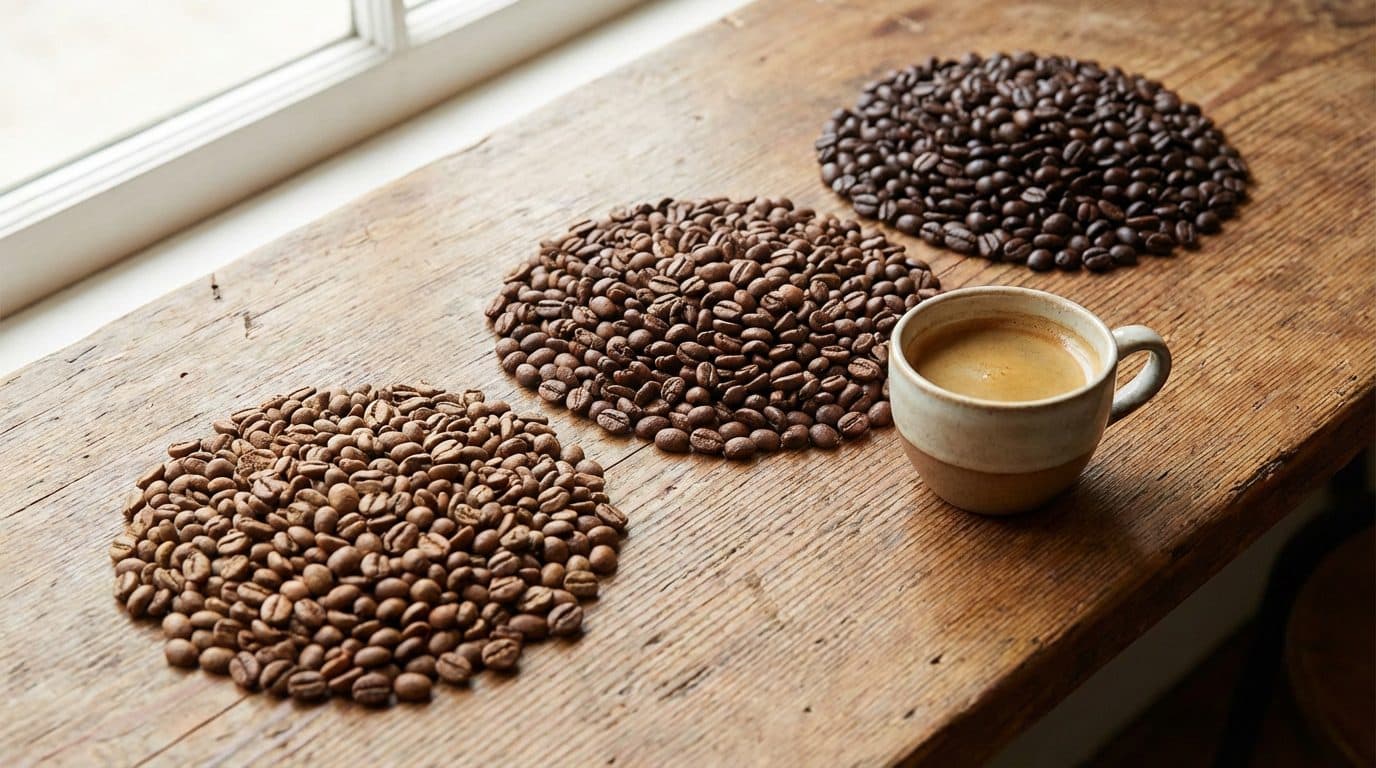
Barista Tip: Don’t be afraid to experiment. Buy small quantities of each roast level and taste them side by side. Your palate might surprise you. I’ve seen many self-proclaimed “dark roast only” drinkers fall in love with a bright Ethiopian light roast once they actually tried it.
Frequently Asked Questions
Does dark roast coffee have more caffeine than light roast?
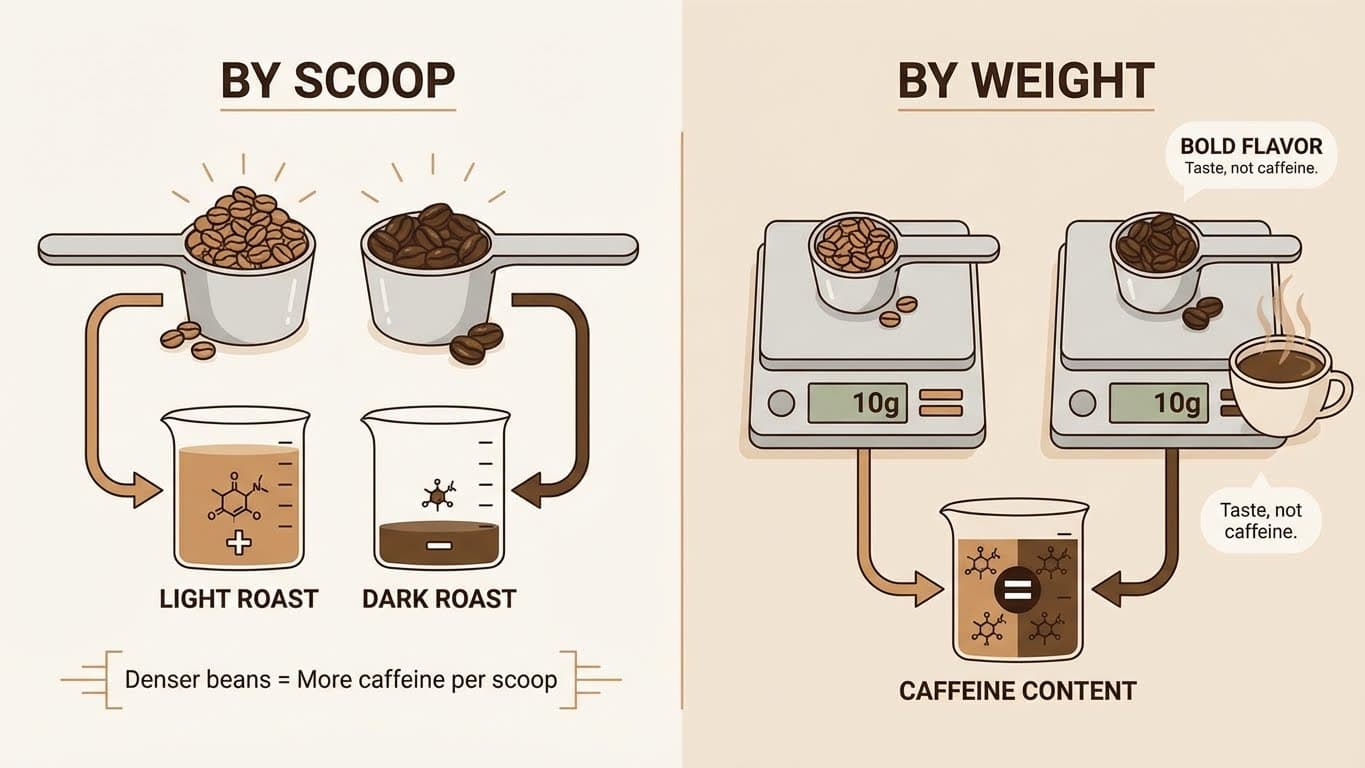
This is one of the biggest coffee myths out there. Dark roast doesn’t have more caffeine. If you measure by scoop, light roast actually has slightly more caffeine because the beans are denser. By weight, the caffeine content is nearly identical across all roast levels. The bold flavor of dark roast can make it feel stronger, but that’s about taste—not caffeine content.
Why does light roast coffee taste sour sometimes?
Light roasts have higher acidity, which can taste sour—especially if the coffee is under-extracted or brewed incorrectly. If your light roast tastes unpleasantly sour, try using hotter water, a finer grind, or a longer brew time. Good light roast coffee should be bright and fruity, not harsh or sour.
Is dark roast coffee easier on the stomach?
For many people, yes. Dark roasts contain compounds created during the longer roasting process that may help reduce stomach acid production. If regular coffee bothers your stomach, dark roast might be a gentler option. However, individual responses vary, so this isn’t a universal rule.
Can I use any roast level for espresso?
You can make espresso with any roast level, though traditionally dark roasts have been preferred for their bold flavors that balance well with milk. Light roast espresso is gaining popularity in specialty coffee circles for its bright, complex shots. Medium roast offers a nice middle ground. The key is adjusting your grind and extraction to match your beans.
How should I store different roast levels?
Storage is the same regardless of roast level: keep beans in an airtight container away from light, heat, and moisture. Dark roasts with their oily surfaces can go stale a bit faster, so use them within a few weeks of roasting. Light roasts tend to stay fresh slightly longer but still benefit from quick consumption.
Summary and Your Next Step
The difference between light, medium, and dark roast coffee comes down to roasting time and the resulting flavor profiles. Light roasts preserve origin characteristics with bright acidity and complex flavors. Medium roasts balance origin and roast flavors with moderate acidity. Dark roasts emphasize bold, smoky flavors with heavy body and low acidity.
None of these roast levels is objectively “better” than the others—they’re simply different experiences. Life is too short for bad coffee, but it’s also too short to limit yourself to just one roast level. My suggestion? Grab a bag of each roast type this week and do your own taste comparison. Pay attention to what you enjoy and why. That’s how you become a more confident, more satisfied home barista.

Comments