


Table of Contents
- What Is Retention in Coffee Grinders?
- Where Does Retained Coffee Hide?
- Why Retention in Coffee Grinders Matters for Your Brew
- Freshness Takes a Hit
- Consistency Becomes Unpredictable
- You're Wasting Coffee (and Money)
- How Much Retention Is Acceptable?
- Blade Grinders
- Entry-Level Burr Grinders
- Mid-Range and Premium Grinders
- Practical Tips to Reduce Retention in Your Grinder
- The Bellows Method
- The "Purge" Technique
- Single-Dose Grinding
- Regular Cleaning
- Reduce Static
- Frequently Asked Questions
- Does retention matter more for espresso or filter coffee?
- Can I just ignore retention if I grind daily?
- Are hand grinders better for retention than electric grinders?
- How do I measure my grinder's retention?
- Is zero-retention worth paying extra for?
- Summary and Your Next Steps
Ever ground fresh beans, brewed a cup, and wondered why it tasted a bit stale or inconsistent? The culprit might not be your beans or your brewing technique—it could be your grinder. Specifically, something called retention in coffee grinders. This often-overlooked factor can quietly sabotage your morning cup without you even realizing it.
In this guide, I’ll break down what grinder retention actually means, why it matters for your daily brew, and how you can minimize it—especially if you’re working with budget-friendly gear. Life is too short for bad coffee, so let’s make sure your grinder isn’t holding you back.
What Is Retention in Coffee Grinders?
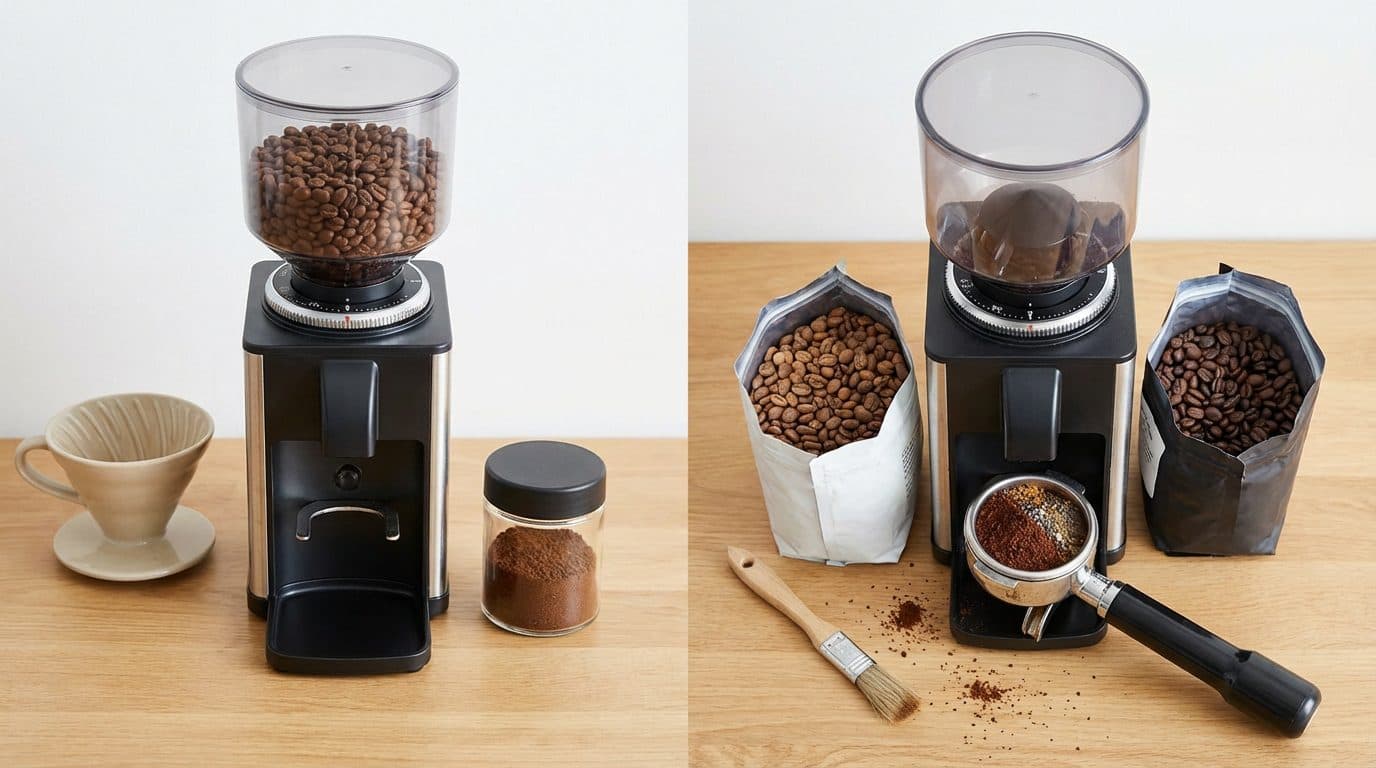
Retention refers to the amount of ground coffee that gets stuck inside your grinder after each use. Instead of all your freshly ground coffee falling into your portafilter or container, some of it stays behind—trapped in the burrs, the chute, or other internal parts.
This retained coffee doesn’t just disappear. It sits there, slowly going stale, and then gets pushed out during your next grind. The result? Your “fresh” grounds are actually mixed with yesterday’s (or last week’s) leftovers.
Key Takeaway: Retention is measured in grams. A grinder with 0.5g retention is considered excellent, while anything above 2-3g can noticeably affect your coffee quality.
Where Does Retained Coffee Hide?
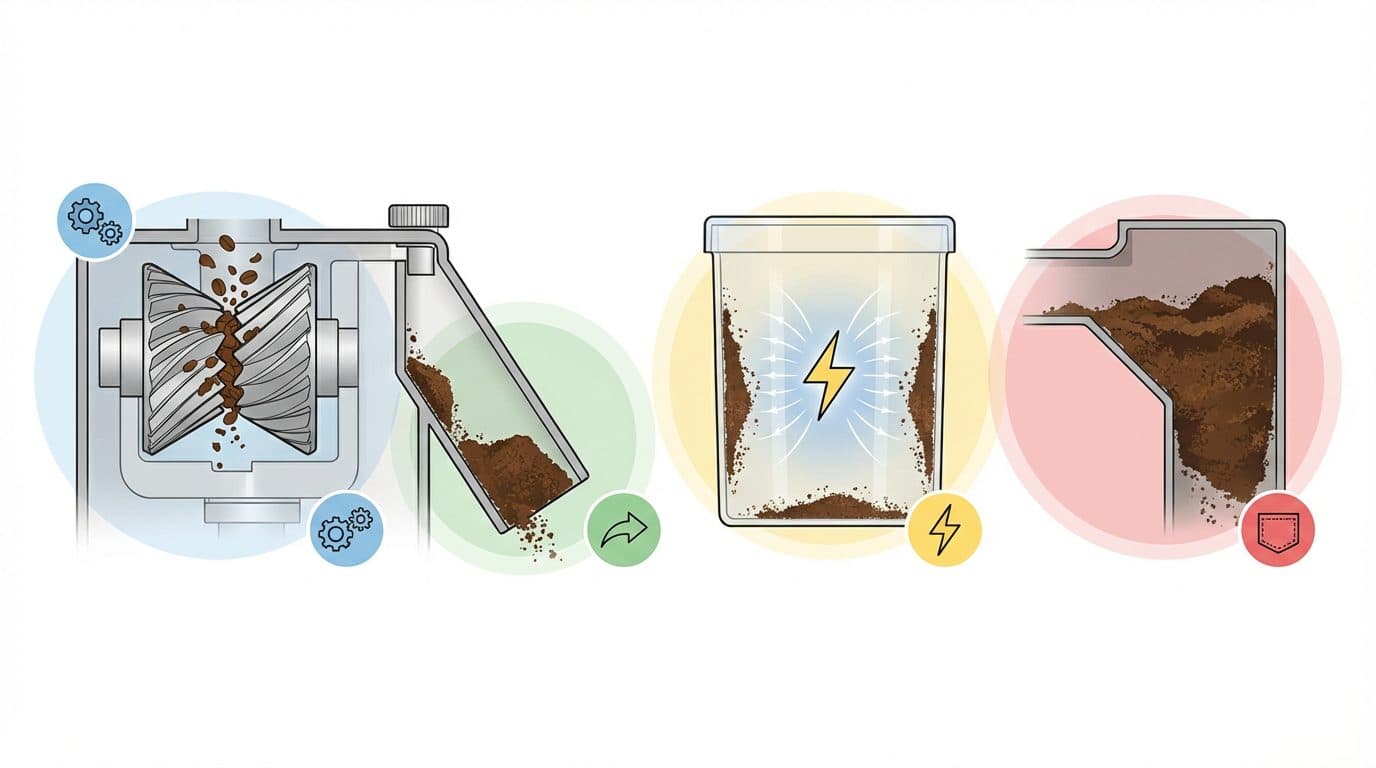
Understanding where coffee gets trapped helps you tackle the problem. Here are the usual suspects:
- Between the burrs: Fine particles wedge themselves in the grinding mechanism
- In the grind chute: The pathway from burrs to exit often collects grounds
- Static cling: Dry conditions cause grounds to stick to plastic surfaces
- Dead spaces: Poorly designed grinders have pockets where coffee accumulates
Why Retention in Coffee Grinders Matters for Your Brew
You might think a gram or two of old coffee is no big deal. But in my experience, even small amounts of stale grounds can throw off your entire cup. Here’s why retention deserves your attention.
Freshness Takes a Hit
Coffee begins losing its aromatic compounds within minutes of grinding. Those trapped grounds? They’re oxidizing and going stale while waiting for your next brew. When they mix with your fresh grounds, you’re diluting the vibrant flavors you paid good money for.
Imagine buying specialty single-origin beans, grinding them fresh, and then unknowingly mixing in week-old commodity coffee. That’s essentially what high retention does to your cup.
Consistency Becomes Unpredictable
If you’re trying to dial in your espresso or perfect your pour-over ratio, retention throws a wrench in your calculations. You weigh out 18 grams of beans, but only 16.5 grams make it to your portafilter. Where did the rest go? Into the retention void.
This inconsistency makes it nearly impossible to replicate that perfect shot. One day your espresso sings, the next day it’s sour or bitter—and you can’t figure out why.
You’re Wasting Coffee (and Money)
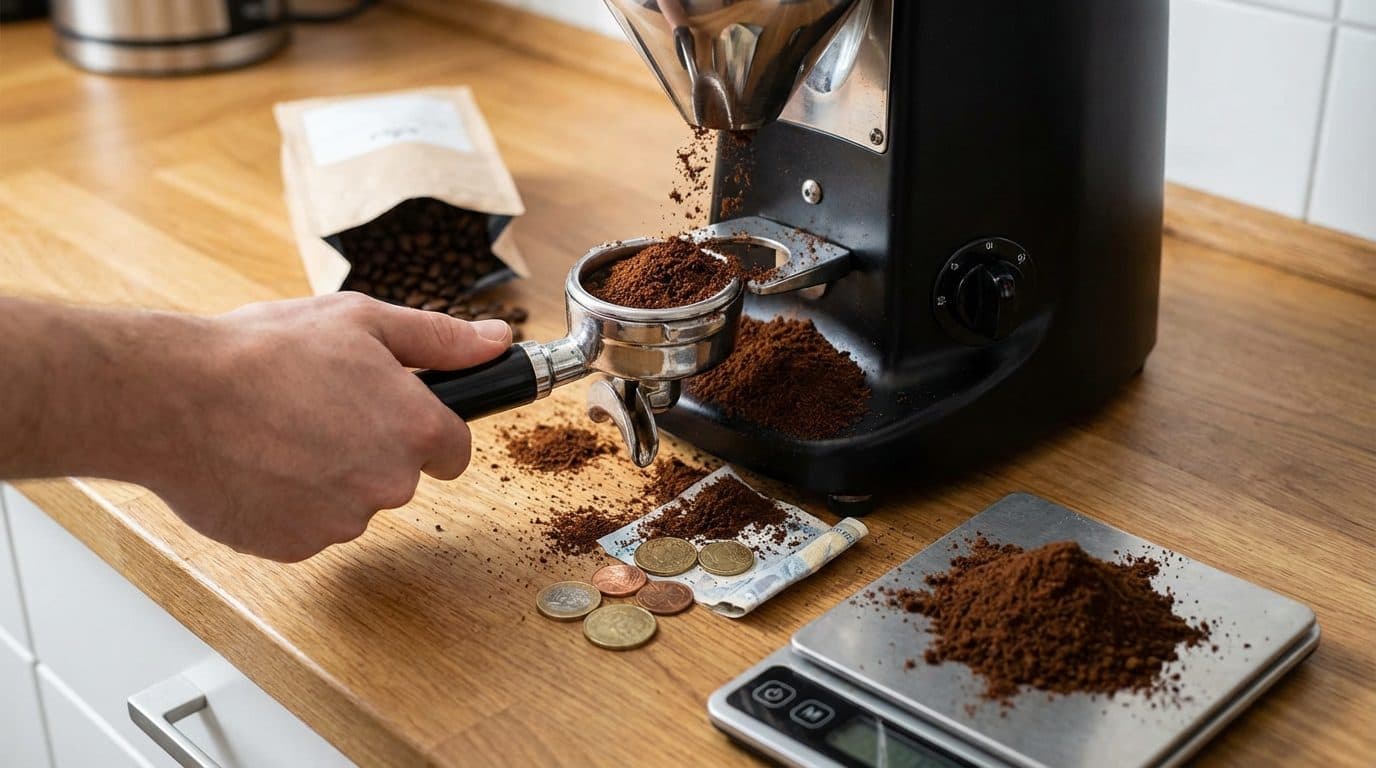
Here’s a scenario I’ve seen countless times: someone grinds 20 grams but only uses 17 grams because the rest is stuck in the grinder. Over weeks and months, those lost grams add up to entire bags of wasted coffee.
For budget-conscious home baristas, this is especially frustrating. You’re essentially paying for coffee you never drink.
| Retention Level | Grams Lost Per Day | Monthly Waste (30 days) |
|---|---|---|
| Low (0.5g) | 0.5g | 15g |
| Medium (2g) | 2g | 60g |
| High (4g+) | 4g | 120g+ |
How Much Retention Is Acceptable?
Not all grinders are created equal when it comes to retention. The design, build quality, and price point all play a role. Here’s what you can generally expect from different grinder types.
Blade Grinders
These budget options typically have minimal retention since there’s no complex pathway for grounds to travel. However, their inconsistent grind size creates bigger problems than retention ever could. I’d skip these entirely if you’re serious about coffee quality.
Entry-Level Burr Grinders
Most budget burr grinders in the $50-150 range retain between 1-3 grams. This is noticeable but manageable with some workarounds. Many popular models like the Baratza Encore or 1Zpresso hand grinders fall into this category.
Mid-Range and Premium Grinders
Grinders designed with low retention in mind can achieve 0.2-0.5 grams. These often feature steep chute angles, anti-static materials, and bellows systems. Expect to pay $200+ for these features.
Did You Know? Some high-end grinders are marketed as “zero retention,” but true zero retention is nearly impossible. Even the best grinders leave trace amounts behind. Anything under 0.5g is considered excellent for home use.
Practical Tips to Reduce Retention in Your Grinder
The good news? You don’t necessarily need to buy a new grinder to combat retention. I’ve found several techniques that work well, even with budget-friendly equipment.
The Bellows Method
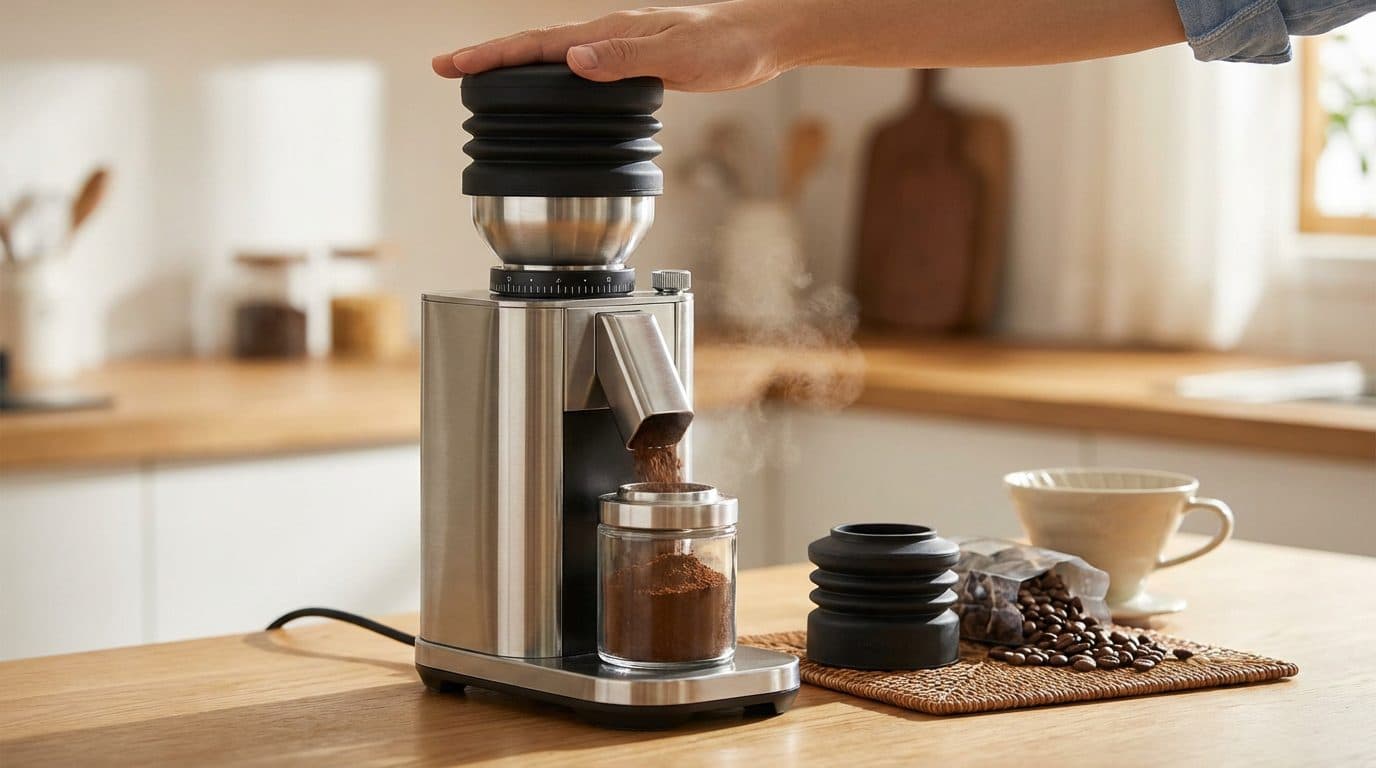
Many grinders now include bellows—a rubber bulb that pushes air through the chute to expel stuck grounds. If your grinder doesn’t have one built-in, you can often buy a universal bellows attachment for under $20. A few puffs after grinding clears out most retained coffee.
The “Purge” Technique
Before grinding your actual dose, run a small amount of beans (2-3 grams) through the grinder and discard them. This pushes out stale retained grounds and primes the grinder with fresh coffee. Yes, you’re sacrificing a few beans, but your cup quality improves dramatically.
- Grind 2-3g of beans as a purge
- Discard these grounds
- Grind your actual dose immediately after
- Use bellows or tap the grinder to clear the chute
Single-Dose Grinding
Instead of keeping beans in the hopper, weigh out exactly what you need for each brew. This approach, combined with purging, ensures maximum freshness and helps you track exactly how much coffee is being retained.
Regular Cleaning
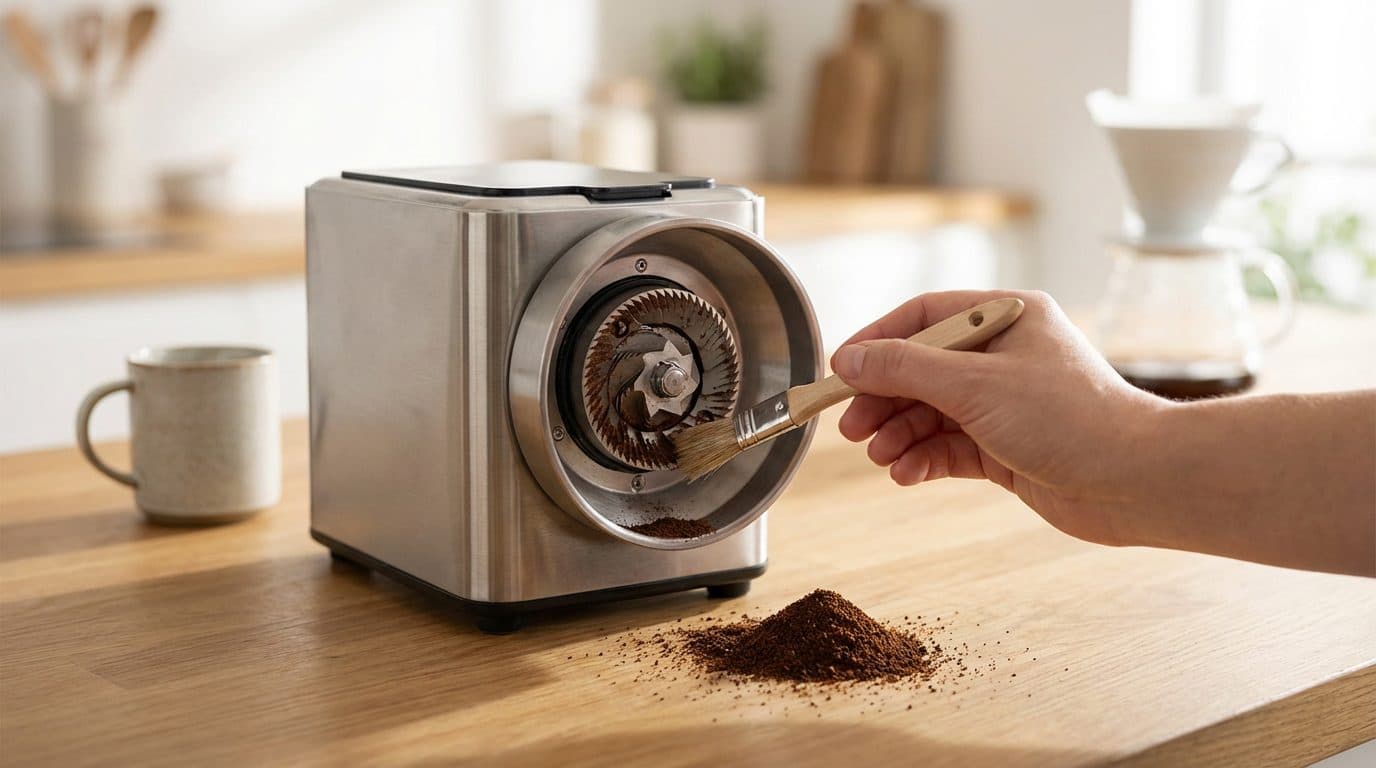
Old coffee oils and fine particles build up over time, increasing retention. Clean your burrs every few weeks with a brush, and consider using grinder cleaning tablets monthly. A clean grinder is a low-retention grinder.
Reduce Static
Static electricity makes grounds cling to surfaces. Try the “Ross Droplet Technique”—add a single drop of water to your beans before grinding. This sounds strange, but it dramatically reduces static without affecting your grind. Just don’t overdo it.
Frequently Asked Questions
Does retention matter more for espresso or filter coffee?
Retention impacts espresso more significantly because espresso recipes are precise—a difference of 0.5 grams can change extraction noticeably. For filter coffee, you have more margin for error, but stale retained grounds still affect flavor regardless of brew method.
Can I just ignore retention if I grind daily?
If you grind the same coffee every day at the same setting, retention becomes less problematic since you’re constantly cycling through similar grounds. However, if you switch between different beans or grind sizes, those retained grounds from your previous coffee will contaminate your current brew.
Are hand grinders better for retention than electric grinders?
Generally, yes. Hand grinders typically have shorter, more direct pathways from burr to exit, resulting in lower retention. Many quality hand grinders achieve under 0.3g retention, which rivals electric grinders costing three times as much.
How do I measure my grinder’s retention?
Weigh your beans before grinding, then weigh the grounds that come out. The difference is your retention. Do this several times and average the results for accuracy. Some variance is normal, but consistent high numbers indicate a retention problem.
Is zero-retention worth paying extra for?
For most home baristas brewing once or twice daily, a grinder with 1g or less retention is perfectly adequate. True low-retention grinders shine when you’re switching beans frequently or demand absolute consistency for espresso dialing.
Summary and Your Next Steps
Retention in coffee grinders might seem like a minor technical detail, but it directly affects freshness, consistency, and how much coffee you waste. Understanding where your grinder falls on the retention spectrum helps you make informed decisions—whether that means adjusting your technique or eventually upgrading your equipment.
For now, try implementing the purge technique and reducing static with the water droplet method. These simple changes cost nothing and can noticeably improve your cup quality. If you’re shopping for a new grinder, prioritize models with documented low retention, steep chutes, and bellows systems. Your taste buds (and your wallet) will thank you.


Comments