


Table of Contents
- What Makes French Press and Pour-Over Different?
- French Press: Pros and Cons for Beginners
- Advantages of French Press
- Disadvantages of French Press
- Pour-Over: Pros and Cons for Beginners
- Advantages of Pour-Over
- Disadvantages of Pour-Over
- Equipment and Cost Comparison
- French Press Starter Kit
- Pour-Over Starter Kit
- Which Brewing Method Should You Choose?
- Tips for Success With Either Method
- Final Verdict: The Best Choice for Beginners
You’ve decided to brew better coffee at home, but now you’re stuck choosing between two popular methods: French Press and Pour-Over. Both promise a richer cup than your standard drip machine, yet they work in completely different ways. So which brewing method is actually best for beginners?
Choose French press for a fuller-bodied cup and a simple timed steep. Choose pour-over for a cleaner cup and more control over flow. Both methods benefit from a burr grinder, scale, repeatable water temperature, and one stable recipe.
What Makes French Press and Pour-Over Different?
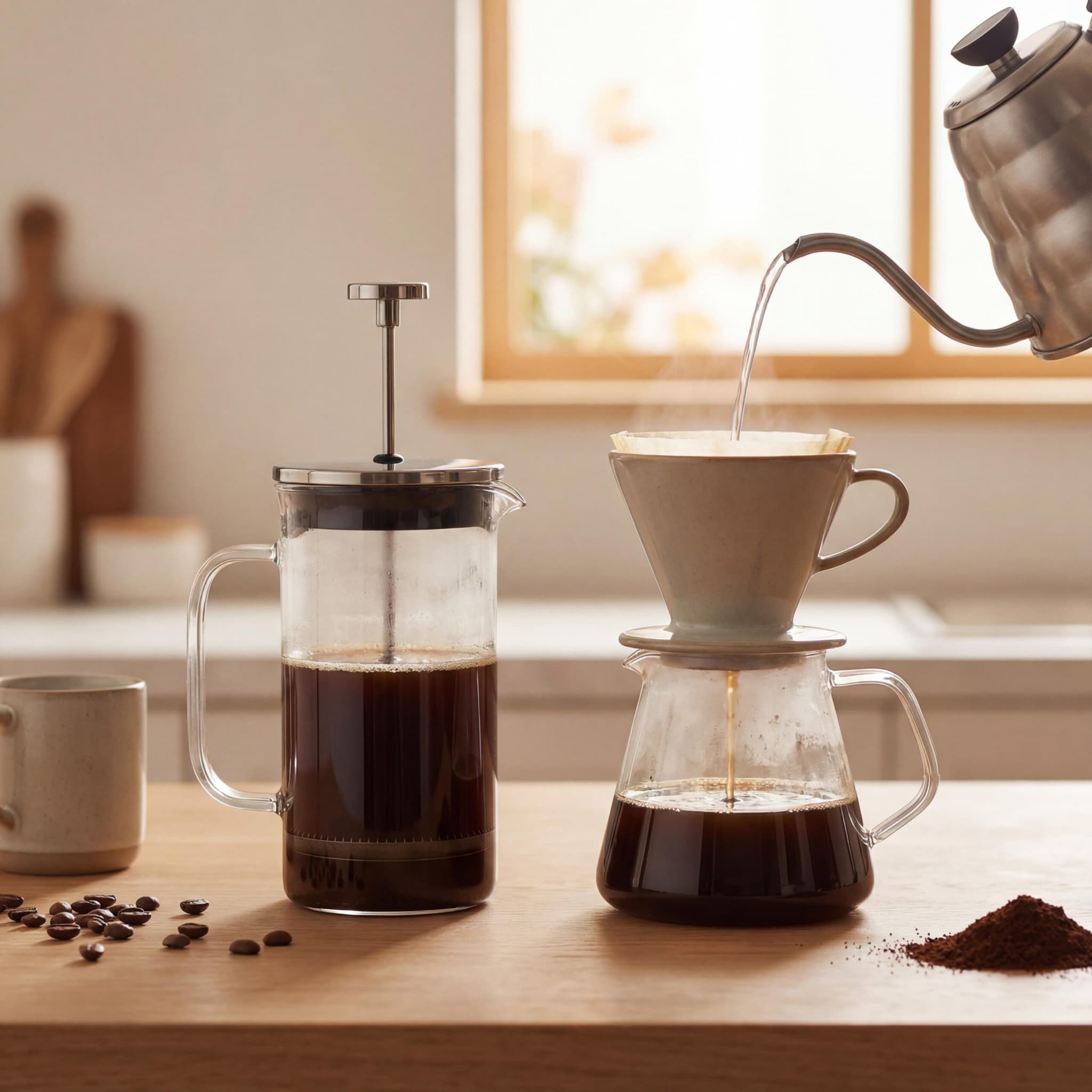
Before diving into pros and cons, it helps to understand the basic mechanics. French Press and Pour-Over represent two fundamentally different approaches to extracting flavor from coffee grounds.
French Press is an immersion method. You add coarse grounds to a carafe, pour hot water over them, let everything steep together for about four minutes, then press down a metal mesh filter to separate the grounds from the liquid. The coffee stays in contact with water the entire time.
Pour-Over is a percolation method. You place a paper or metal filter in a cone-shaped dripper, add medium-fine grounds, and slowly pour hot water over them in a circular motion. The water passes through the grounds and drips into your cup or carafe below. Contact time is shorter and more controlled.
This difference in extraction creates distinct flavor profiles. French Press produces a full-bodied, slightly oily cup with more sediment. Pour-Over delivers a cleaner, brighter taste that highlights subtle flavor notes.
French Press: Pros and Cons for Beginners
The French Press has been a staple in home kitchens for decades, and there’s a good reason it remains popular among beginners.
Advantages of French Press
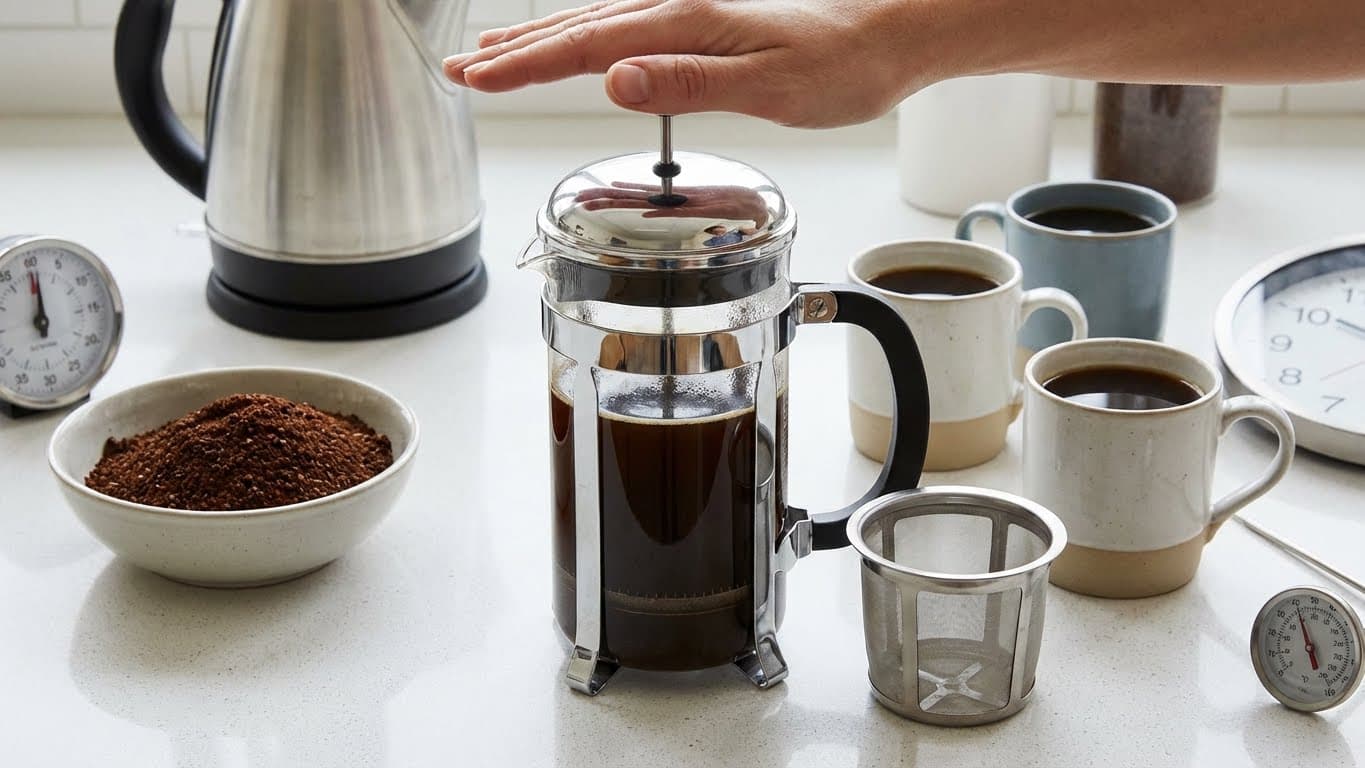
- Simple technique: Add grounds, pour water, wait, press. There’s no pouring technique to master or timing to stress about.
- Reusable filter: A French press has a built-in metal filter. Compare current local carafe prices, capacity, replacement parts, and glass durability.
- Forgiving process: Even if your water temperature is slightly off or your timing isn’t perfect, you’ll still get a drinkable cup.
- Makes multiple cups: Most French Press carafes brew 3-4 cups at once, perfect for sharing or for those who drink several cups in the morning.
- No paper filters needed: This saves money over time and reduces waste.
Disadvantages of French Press
- Sediment in your cup: The metal mesh doesn’t catch fine particles, so you’ll notice some grit at the bottom of your mug.
- Cleanup can be messy: Scooping wet grounds out of the carafe takes a bit of effort.
- Less flavor clarity: The oils and fine particles create a heavier mouthfeel, which can mask delicate flavor notes in specialty beans.
- Timing matters for bitterness: If you leave the coffee sitting on the grounds too long after pressing, it continues to extract and becomes bitter.
Imagine this scenario: You wake up groggy on a Monday morning. With a French Press, you can measure your grounds, boil water, pour, set a timer for four minutes, and go brush your teeth. When you come back, press and pour. Minimal attention required.
Pour-Over: Pros and Cons for Beginners
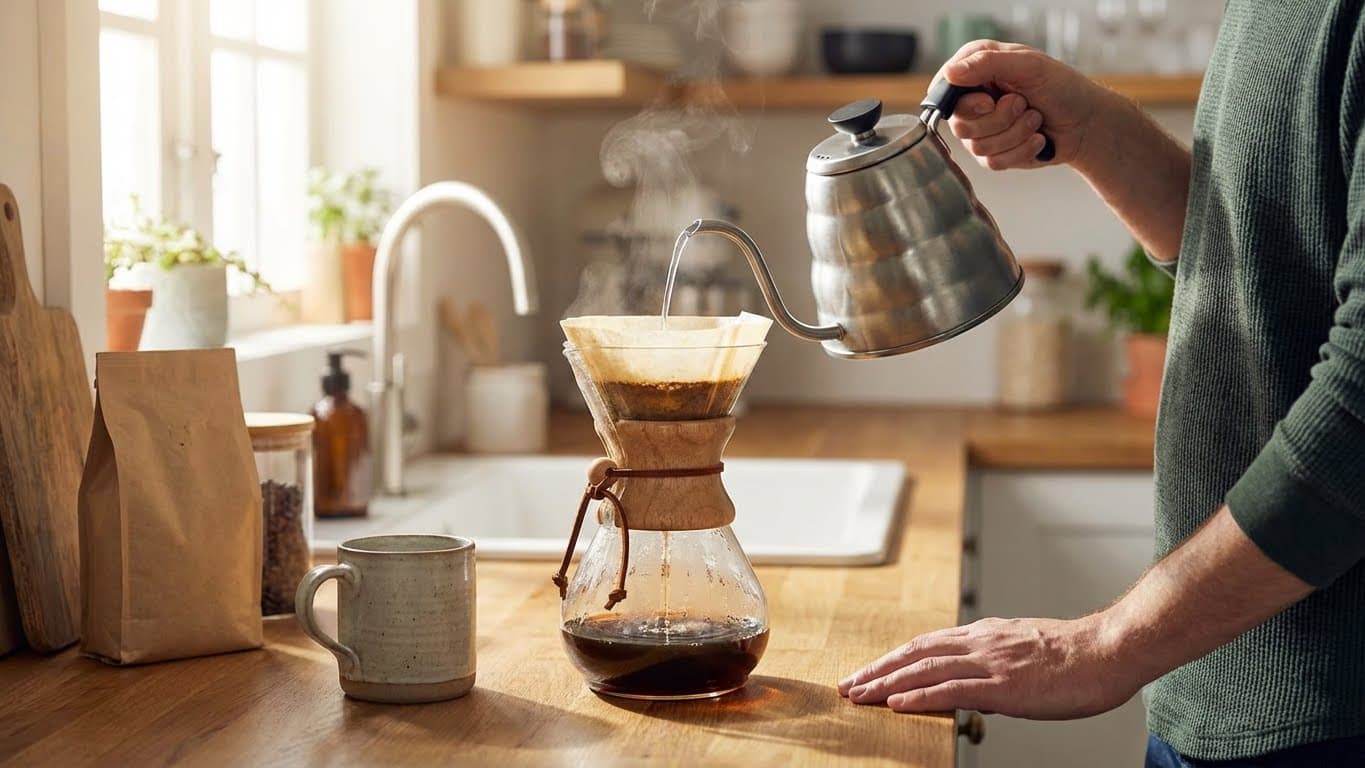
Pour-Over brewing has gained massive popularity in specialty coffee shops, and many home brewers want to recreate that experience.
Advantages of Pour-Over
- Clean, bright flavor: Paper filters remove oils and sediment, resulting in a cup that showcases the coffee’s origin characteristics.
- Precise control: You decide exactly how fast to pour, where to pour, and how long the brew takes.
- Easy cleanup: Just lift out the filter with the grounds and toss it. Rinse the dripper and you’re done.
- Compact equipment: A simple plastic dripper like the Melitta or Hario V60 takes up almost no counter space.
- Satisfying ritual: Many people enjoy the meditative process of slowly pouring water in circles.
Disadvantages of Pour-Over
- Steeper learning curve: Achieving consistent results requires practice with pour speed, water distribution, and timing.
- Requires more attention: You can’t walk away during brewing. The entire 3-4 minute process needs your focus.
- Usually makes one cup: Most drippers are designed for single servings, though larger options exist.
- Ongoing filter costs: Paper filters are inexpensive but add up over time.
- More equipment needed: For best results, you’ll want a gooseneck kettle, which adds $30-$80 to your setup.
Example workflow: Pour-over adds filter rinsing and controlled pouring to the routine. Some users value that interaction; others prefer a timed immersion method when speed and low attention matter.
Equipment and Cost Comparison
Budget often plays a role in choosing a brewing method, especially for beginners who aren’t sure how deep they want to dive into coffee culture.
French Press Starter Kit
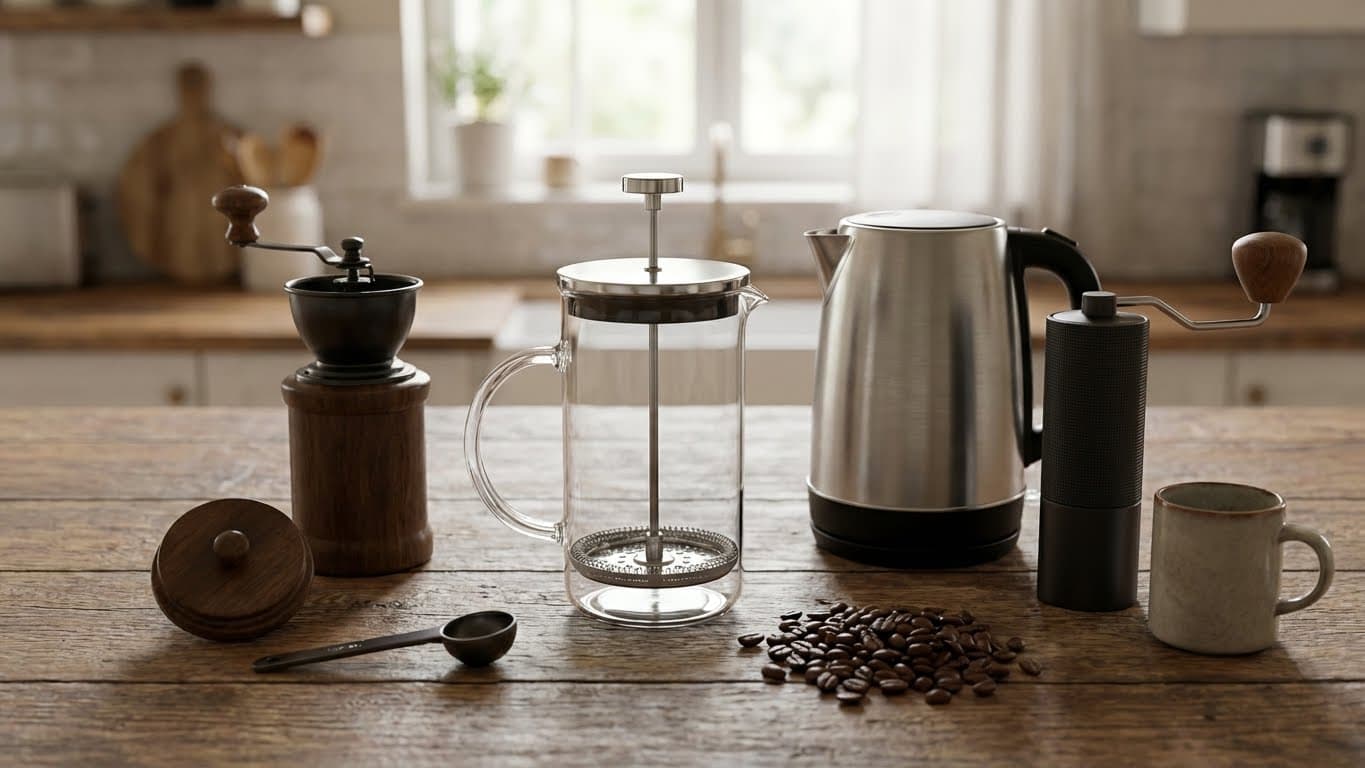
- French press carafe: check current local price, capacity, filter design, and replacement parts
- Basic kettle: reuse a suitable kettle or compare current local price and capacity
- Burr grinder: compare current local price, grind range, capacity, and parts support
Total starting cost: add only the equipment you do not already own, using current local prices.
Pour-Over Starter Kit
- Dripper: compare current local price, filter availability, capacity, and material
- Paper filters: calculate the current local cost per filter for the exact dripper
- Gooseneck kettle: optional when an existing kettle provides adequate flow control; compare current local options
- Burr grinder: compare current local price, grind range, capacity, and parts support
- Server or mug: reuse a suitable vessel or compare current local capacity and price
Total starting cost: add the dripper, compatible filters, and only the other equipment the workflow actually requires.
French press can have a lower starting cost when a suitable kettle is already available, while pour-over may require compatible filters and more controlled pouring. The actual winner depends on equipment already owned and current local prices; both methods benefit from a repeatable grind.
Which Brewing Method Should You Choose?
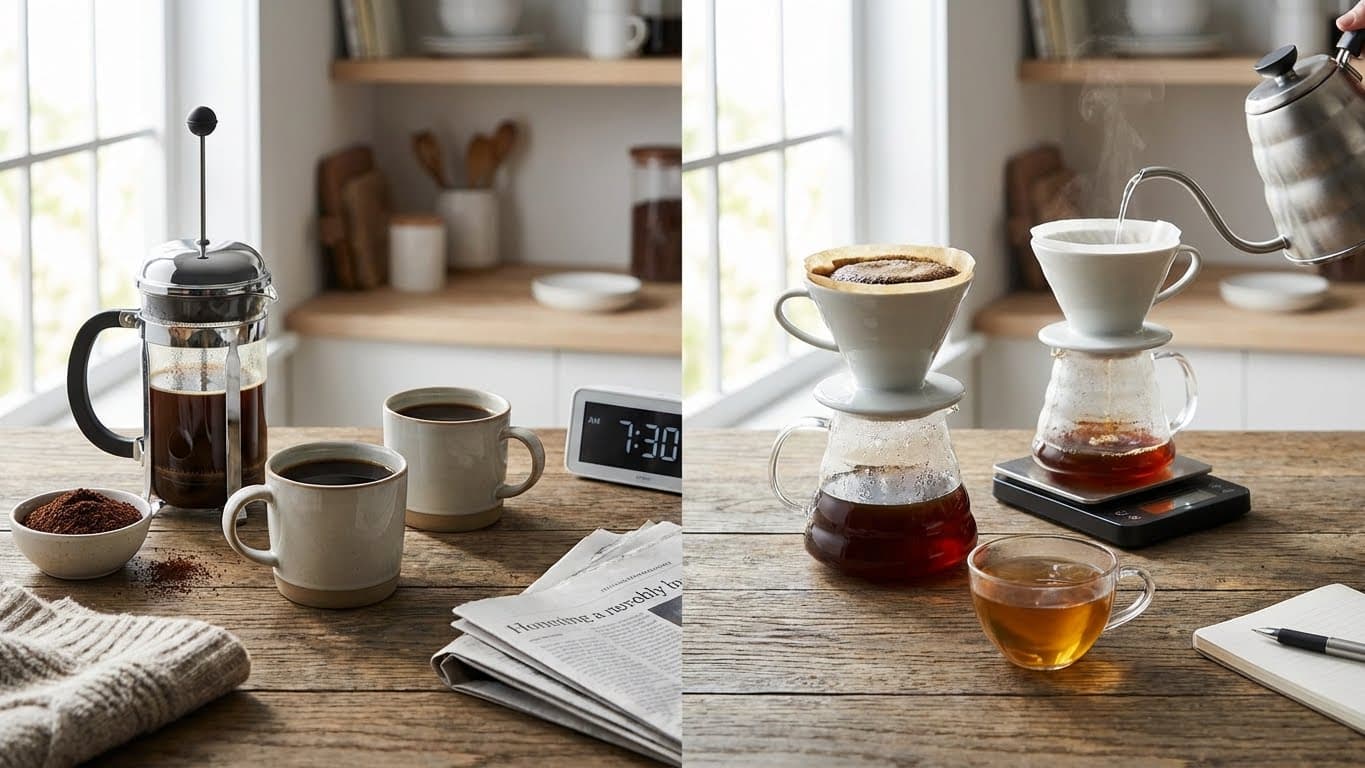
Now for the practical decision. Consider these questions to find your match.
Choose French Press if:
- You want the easiest possible learning curve
- You prefer a bold, full-bodied cup with more texture
- You often brew for two or more people
- You don’t mind a bit of sediment
- You want to keep costs low
- Morning time is limited and you need a hands-off process
Choose Pour-Over if:
- You enjoy clean, nuanced flavors and want to taste origin notes
- You’re willing to practice and refine your technique
- You usually brew just one cup at a time
- You find the ritual of manual brewing relaxing
- You prefer easy cleanup
- You’re interested in eventually exploring specialty coffee more deeply
Example decision path: A beginner might start with French press for a timed immersion workflow and later try pour-over when practicing flow control is useful. Starting with one method does not prevent using both for different routines.
Tips for Success With Either Method
Regardless of which brewing method you pick, a few universal principles will improve your results.
- Use fresh beans: Coffee tastes best within 2-4 weeks of roasting. Check for a roast date on the bag.
- Grind right before brewing: Ground coffee loses flavor quickly. Even an inexpensive burr grinder makes a difference.
- Set a repeatable water temperature: Use 195-205°F (90-96°C) as a practical starting range. Water does not literally scorch wet grounds; adjust temperature, grind, and contact time if the cup tastes harsh.
- Use a scale: A kitchen scale helps you nail the coffee-to-water ratio every time. Start with 1:15 (1 gram of coffee to 15 grams of water) and adjust to taste.
- Experiment: Try different grind sizes, brew times, and ratios. Part of the fun is finding what you like best.
Final Verdict: The Best Choice for Beginners
For a timed immersion workflow with little pouring technique, French press is a practical starting point. Pour-over is a better fit when a cleaner cup and control over flow are worth practicing. Neither method is universally easier or better.
However, if you’re drawn to the craft aspect of coffee and don’t mind a bit of practice, Pour-Over offers a rewarding experience with exceptional flavor clarity. It’s slightly more demanding but teaches you skills that translate to other brewing methods.
Neither method is universally better. Pick the workflow and cup texture you prefer, repeat the same recipe three times, and change equipment only when a specific limitation is clear.


Comments