


Table of Contents
- Quick Verdict: Fine Mesh Stainless Steel Filter
- Types of Budget-Friendly Reusable Coffee Filters
- Stainless Steel Mesh Filters
- Cloth Coffee Filters
- Gold-Tone and Nylon Mesh Filters
- Comparison: Which Reusable Filter Is Right for You?
- Who Is This For?
- Who Is This NOT For?
- How to Care for Your Reusable Coffee Filter
- Cleaning Stainless Steel Filters
- Maintaining Cloth Filters
- Keeping Gold-Tone Filters Fresh
- Barista Tips for Better Brewing with Reusable Filters
- The Environmental and Financial Impact
- Conclusion and Next Steps
Are you tired of constantly buying paper filters and watching your money (and trees) go down the drain? You’re not alone. Many home brewers are making the switch to budget-friendly reusable coffee filters, and for good reason. These eco-friendly alternatives can save you hundreds of dollars over time while delivering a richer, more flavorful cup of coffee.
In this guide, I’ll walk you through the best types of reusable coffee filters for home brewing, break down their pros and cons, and help you figure out which one matches your brewing style and budget. Whether you’re a pour-over purist or a drip machine devotee, there’s a reusable filter waiting to transform your morning routine.
Quick Verdict: Fine Mesh Stainless Steel Filter
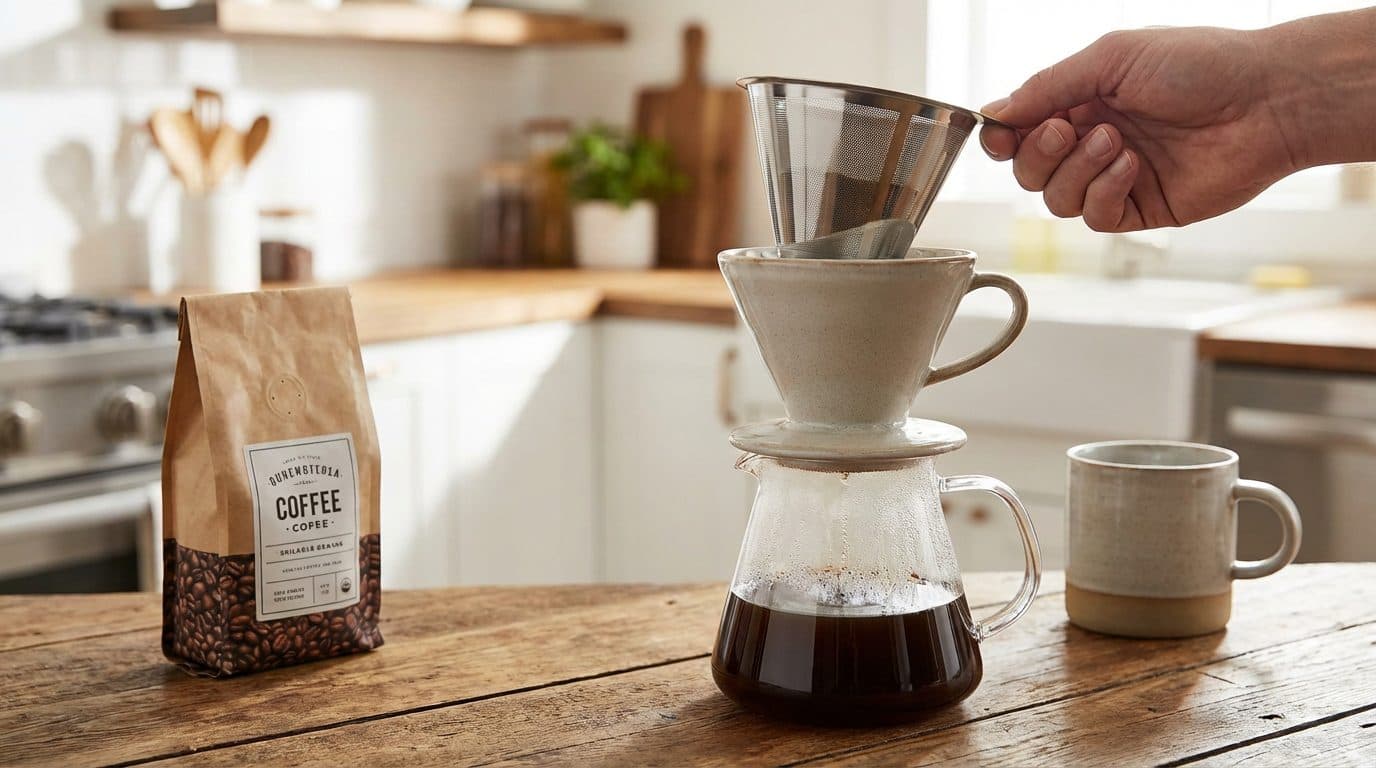
After years of testing different options, my top pick for most home brewers is a fine mesh stainless steel filter. It strikes the perfect balance between durability, ease of cleaning, and coffee quality. You’ll typically find these for under $15, and they can last for years with proper care. The fuller body and natural oils they allow through create a noticeably richer cup compared to paper filters.
That said, your ideal choice depends on your priorities. If you prefer a cleaner, lighter cup, a cloth filter might be your match. Let’s dive into each option so you can make the right call.
Types of Budget-Friendly Reusable Coffee Filters
Not all reusable filters are created equal. Each material brings something different to your cup, and understanding these differences will help you choose wisely. Here’s what you need to know about the three main types.
Stainless Steel Mesh Filters
These are the workhorses of the reusable filter world. Made from food-grade stainless steel, they’re designed to fit most standard drip coffee makers and pour-over setups. The mesh allows coffee oils and fine particles to pass through, resulting in a fuller-bodied brew.
Pros:
- Extremely durable – can last 5+ years with proper care
- Easy to clean – just rinse and occasionally scrub
- No flavor absorption – won’t retain old coffee tastes
- Dishwasher safe in most cases
- Budget-friendly at $8-$20 for most options
Cons:
- Allows some sediment through, especially with finer grinds
- Coffee oils can build up over time if not cleaned properly
- Produces a heavier body that some drinkers don’t prefer
In my experience, a quality stainless steel filter pays for itself within a month or two if you’re brewing daily. I’ve had one in rotation for over three years now, and it still performs like new.
Cloth Coffee Filters
Cloth filters, often made from organic cotton or hemp, have been used for centuries in traditional coffee cultures. They offer a middle ground between paper and metal, producing a clean cup while still allowing some oils through.
Pros:
- Produces a smooth, clean cup with good body
- Filters out more sediment than metal options
- Environmentally friendly and biodegradable
- Very affordable – usually $5-$12 for a pack
- Great for pour-over and Chemex-style brewing
Cons:
- Requires more maintenance – must be rinsed and stored wet
- Shorter lifespan – typically 3-6 months with daily use
- Can absorb flavors if not cleaned thoroughly
- Needs to be replaced more frequently than metal
Here’s a barista tip: store your cloth filter in a container of water in the fridge between uses. This prevents it from drying out and absorbing unwanted odors. Trust me, a dried-out cloth filter can make your coffee taste stale.
Gold-Tone and Nylon Mesh Filters
Gold-tone filters feature a fine nylon or plastic mesh coated with gold-colored material. They’re commonly included with higher-end drip machines but can also be purchased separately as budget-friendly replacements.
Pros:
- Very fine mesh reduces sediment compared to steel
- Lightweight and easy to handle
- Often designed for specific machine models
- Good balance of body and clarity in the cup
Cons:
- Less durable than stainless steel
- Can warp or crack over time
- Some contain plastic components
- May need replacement every 1-2 years
Comparison: Which Reusable Filter Is Right for You?
Let me break this down in a simple comparison so you can see the differences at a glance:
| Filter Type | Price Range | Lifespan | Cup Profile | Maintenance |
|---|---|---|---|---|
| Stainless Steel Mesh | $8-$20 | 3-5+ years | Full body, some sediment | Low |
| Cloth | $5-$12 | 3-6 months | Clean, balanced | High |
| Gold-Tone/Nylon | $10-$18 | 1-2 years | Medium body, less sediment | Low-Medium |
When you crunch the numbers, stainless steel offers the best long-term value. A $15 filter lasting five years costs you just $3 per year. Compare that to spending $50+ annually on paper filters, and the savings become obvious.
Who Is This For?
Reusable coffee filters are perfect for certain types of home brewers. Here’s who will benefit most:
- Budget-conscious coffee lovers – If you brew daily, you’ll save significant money over time
- Eco-minded individuals – Reducing paper waste feels good and helps the planet
- Fans of full-bodied coffee – Metal filters let through oils that paper absorbs
- Minimalists – One filter means no more running out of paper supplies
- French press fans transitioning to drip – You’ll appreciate the similar body and mouthfeel
Who Is This NOT For?
To be fair, reusable filters aren’t ideal for everyone. You might want to stick with paper if:
- You prefer ultra-clean, light coffee – Paper filters remove more oils and sediment
- You hate cleaning – Reusable filters require regular maintenance
- You’re sensitive to coffee oils – Some people find unfiltered oils cause digestive issues
- You only brew occasionally – The cost savings won’t add up as quickly
- You’re watching cholesterol – Coffee oils contain cafestol, which can raise LDL levels
How to Care for Your Reusable Coffee Filter
Getting the most out of your reusable filter comes down to proper maintenance. Here’s how to keep each type in top shape.
Cleaning Stainless Steel Filters
Daily cleaning is simple: knock out the grounds, rinse under hot water, and let it dry. Once a week, give it a deeper clean:
- Soak in a mixture of hot water and white vinegar for 15-20 minutes
- Use a soft brush to scrub away any oil buildup
- Rinse thoroughly and air dry completely
- For stubborn residue, a paste of baking soda and water works wonders
According to coffee enthusiasts on various forums, the biggest mistake people make is letting oils build up over weeks. This creates a rancid taste that transfers to your brew. A quick weekly deep clean prevents this entirely.
Maintaining Cloth Filters
Cloth filters need more attention but reward you with excellent coffee when cared for properly:
- Rinse immediately after each use – never let grounds sit
- Store submerged in clean water in the refrigerator
- Change the storage water every day or two
- Boil the filter for 10 minutes once a week to remove oils
- Replace when you notice off-flavors or visible wear
In short, cloth filters are higher maintenance but produce a uniquely smooth cup that many coffee lovers swear by. It’s a trade-off worth considering if you value cup quality over convenience.
Keeping Gold-Tone Filters Fresh
These fall somewhere in between:
- Rinse after each use and shake dry
- Hand wash weekly with mild dish soap
- Avoid abrasive scrubbers that can damage the coating
- Check for cracks or warping periodically
Barista Tips for Better Brewing with Reusable Filters
After years of experimenting, I’ve found a few tricks that make a real difference when using reusable filters:
- Grind slightly coarser – This reduces sediment in your cup, especially with metal filters
- Pre-wet your filter – A quick rinse with hot water removes any residual flavors and preheats your brewer
- Don’t overfill – Leave room for the coffee to bloom and expand
- Use filtered water – Hard water minerals can build up on your filter faster
- Experiment with ratios – Reusable filters often extract differently than paper, so adjust your coffee-to-water ratio
One thing I’ve found is that a medium-coarse grind (similar to sea salt) works beautifully with most stainless steel filters. Go too fine, and you’ll end up with a muddy cup. Go too coarse, and the extraction will be weak.
The Environmental and Financial Impact
Let’s talk numbers for a moment. The average coffee drinker uses about 500 paper filters per year. At roughly $0.05-$0.10 per filter, that’s $25-$50 annually just on filters. Over a decade, you’re looking at $250-$500.
A quality stainless steel filter costs $15 and lasts at least five years. That’s $3 per year versus $25-$50. The math speaks for itself.
Beyond your wallet, there’s the environmental angle. Those 500 paper filters per year add up across millions of coffee drinkers. While paper filters are biodegradable, the production process still requires trees, water, and energy. Switching to reusable options is a small change that adds up to meaningful impact.
Conclusion and Next Steps
Choosing a budget-friendly reusable coffee filter comes down to your priorities. If you want maximum durability and minimal fuss, go with a stainless steel mesh filter. If you prefer a cleaner cup and don’t mind extra maintenance, cloth filters deliver excellent results. And if you’re looking for a middle ground with less sediment, gold-tone options fit the bill.
My recommendation? Start with an affordable stainless steel filter and see how you like the fuller body it produces. Most home brewers find they actually prefer the richer taste once they adjust. If it’s not for you, cloth filters are an inexpensive second option to try.
Life’s too short for bad coffee – and too short to keep wasting money on paper filters. Make the switch, dial in your grind size, and enjoy better coffee while keeping more money in your pocket. Your morning routine (and the planet) will thank you.


Comments