


Table of Contents
- What You'll Need to Start Your Weekly Coffee Menu
- Gear Basics
- Bean Selection
- Why a Weekly Coffee Menu Makes Sense
- How to Structure Your Weekly Coffee Menu
- Consider Your Weekly Rhythm
- Match Energy Levels to Roast Profiles
- Pairing Different Beans with Brewing Methods
- Light Roast Beans
- Medium Roast Beans
- Dark Roast Beans
- Sample Weekly Coffee Menu to Get You Started
- Tips for Making Your Weekly Coffee Menu Sustainable
- Frequently Asked Questions
- How many different beans should I keep at home?
- Do I need expensive equipment to plan a weekly coffee menu?
- How do I know which brewing method suits a particular bean?
- Can I repeat the same bean multiple times in one week?
- How long does it take to plan a weekly coffee menu?
- Conclusion: Start Your Coffee Adventure This Week
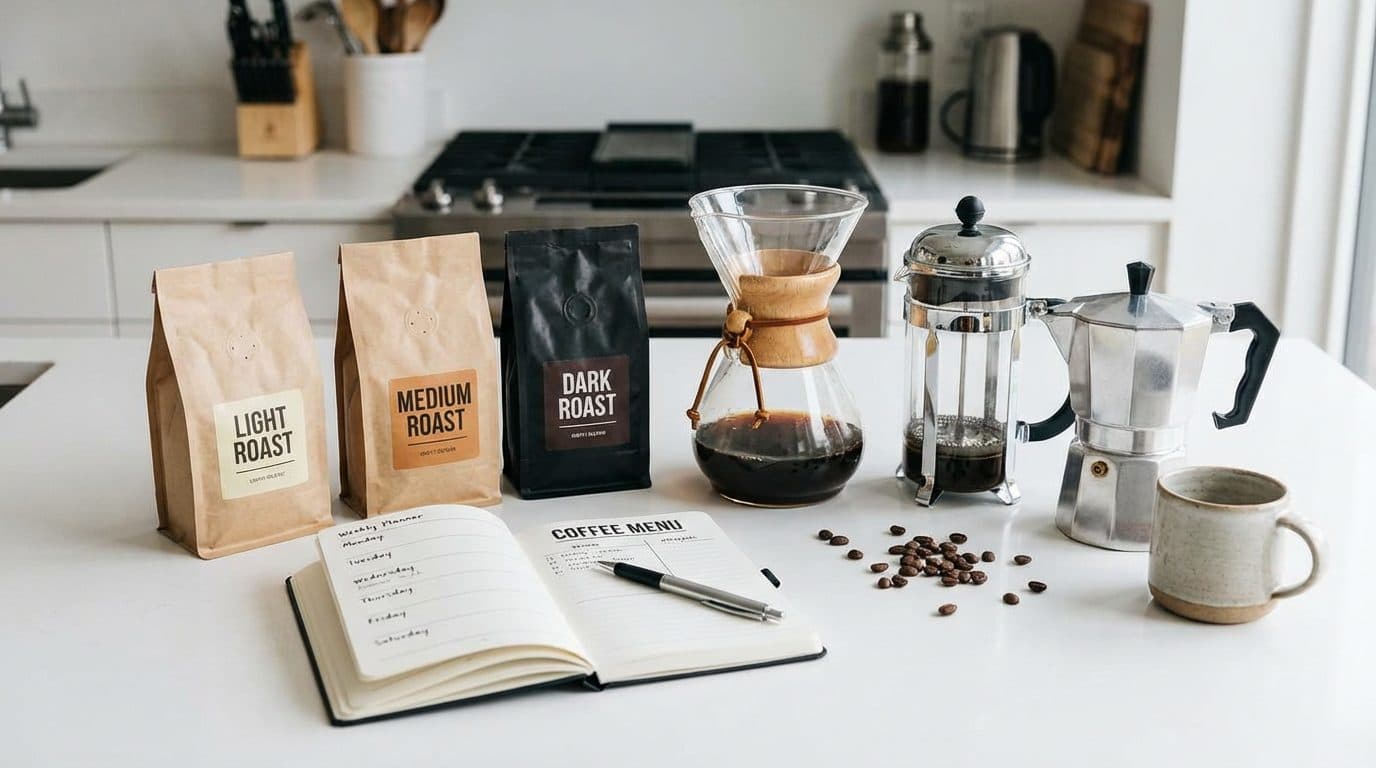
Do you ever find yourself stuck in a coffee rut, brewing the same cup every single morning? You’re not alone. Many home baristas default to one bean and one method out of habit, missing out on the incredible variety that coffee has to offer. Planning a weekly coffee menu at home changes everything—it turns your daily ritual into an adventure through different beans and brewing methods.
In this guide, I’ll walk you through how to create your own weekly coffee menu that keeps things exciting while helping you discover new flavors. Whether you’re a pour-over purist or an espresso enthusiast, rotating your beans and methods throughout the week will sharpen your palate and make every morning feel fresh.
What You’ll Need to Start Your Weekly Coffee Menu
Before diving into planning, let’s make sure you have the essentials. You don’t need a professional setup—just a few key items to give yourself options.
Gear Basics
- At least 2-3 different brewing devices (e.g., French press, pour-over dripper, AeroPress, moka pot)
- A burr grinder (adjustable grind size is crucial for different methods)
- A kitchen scale for consistent measurements
- A gooseneck kettle (especially helpful for pour-over)
- Airtight containers for storing multiple bean varieties
Bean Selection
- 2-3 different coffee origins or roast levels
- Consider one light roast, one medium, and one dark roast
- Single-origin beans for tasting distinct flavor profiles
- A reliable blend for those “just need caffeine” mornings
Barista Tip: Buy smaller bags (250g) of multiple varieties rather than one large bag. This keeps your beans fresher and gives you more options to rotate throughout the week.
Why a Weekly Coffee Menu Makes Sense

I’ve found that planning your coffee week in advance does more than just add variety. It actually makes you a better home barista. Here’s why this approach works so well.
First, different brewing methods extract different compounds from coffee. A French press gives you a full-bodied, oily cup, while a pour-over highlights delicate floral notes. By rotating methods, you experience the full spectrum of what coffee can offer.
Second, certain beans shine with specific brewing techniques. That fruity Ethiopian Yirgacheffe? It’s magical as a pour-over but can taste muddy in a French press. Planning ahead lets you pair beans with their ideal brewing method.
Third, it prevents palate fatigue. When you drink the same coffee daily, your taste buds stop noticing the nuances. Switching things up keeps your senses sharp and your appreciation growing.
How to Structure Your Weekly Coffee Menu
There’s no single “right” way to plan your coffee week, but I’ll share a framework that works beautifully for most home baristas. Think of it as a template you can customize based on your schedule and preferences.
Consider Your Weekly Rhythm
Your coffee needs change throughout the week. Monday morning calls for something different than a lazy Sunday. Here’s how to think about it:
- Busy weekday mornings: Quick methods like AeroPress or drip machine
- Work-from-home days: Pour-over or Chemex when you have a few extra minutes
- Weekend mornings: Slow, ritualistic brewing like French press or siphon
- Afternoon pick-me-ups: Espresso-based drinks or cold brew
Match Energy Levels to Roast Profiles

In my experience, aligning roast levels with your weekly energy patterns makes a noticeable difference. Light roasts typically have more caffeine and brighter acidity—perfect for sluggish Mondays. Dark roasts offer that comforting, bold flavor ideal for winding down toward the weekend.
| Day Type | Suggested Roast | Why It Works |
|---|---|---|
| High-energy needed | Light to medium | Higher caffeine, bright flavors wake you up |
| Steady workday | Medium | Balanced, reliable, crowd-pleasing |
| Relaxed weekend | Medium-dark to dark | Rich, comforting, pairs well with breakfast |
Pairing Different Beans with Brewing Methods
This is where the magic happens. Not every bean works equally well with every method. Here’s a quick guide to help you make smart pairings for your weekly coffee menu.
Light Roast Beans
Light roasts preserve the bean’s origin characteristics—think floral, fruity, and tea-like notes. These delicate flavors need gentle extraction.
- Best methods: Pour-over (V60, Chemex), AeroPress
- Taste profile: Bright acidity, complex fruit notes, clean finish
- Avoid: French press (can taste sour and thin)
Medium Roast Beans
The versatile middle ground. Medium roasts balance origin flavors with roast development, making them forgiving across methods.
- Best methods: Drip machine, pour-over, AeroPress, espresso
- Taste profile: Balanced sweetness, mild acidity, nutty or chocolatey notes
- Great for: Everyday drinking and sharing with guests
Dark Roast Beans
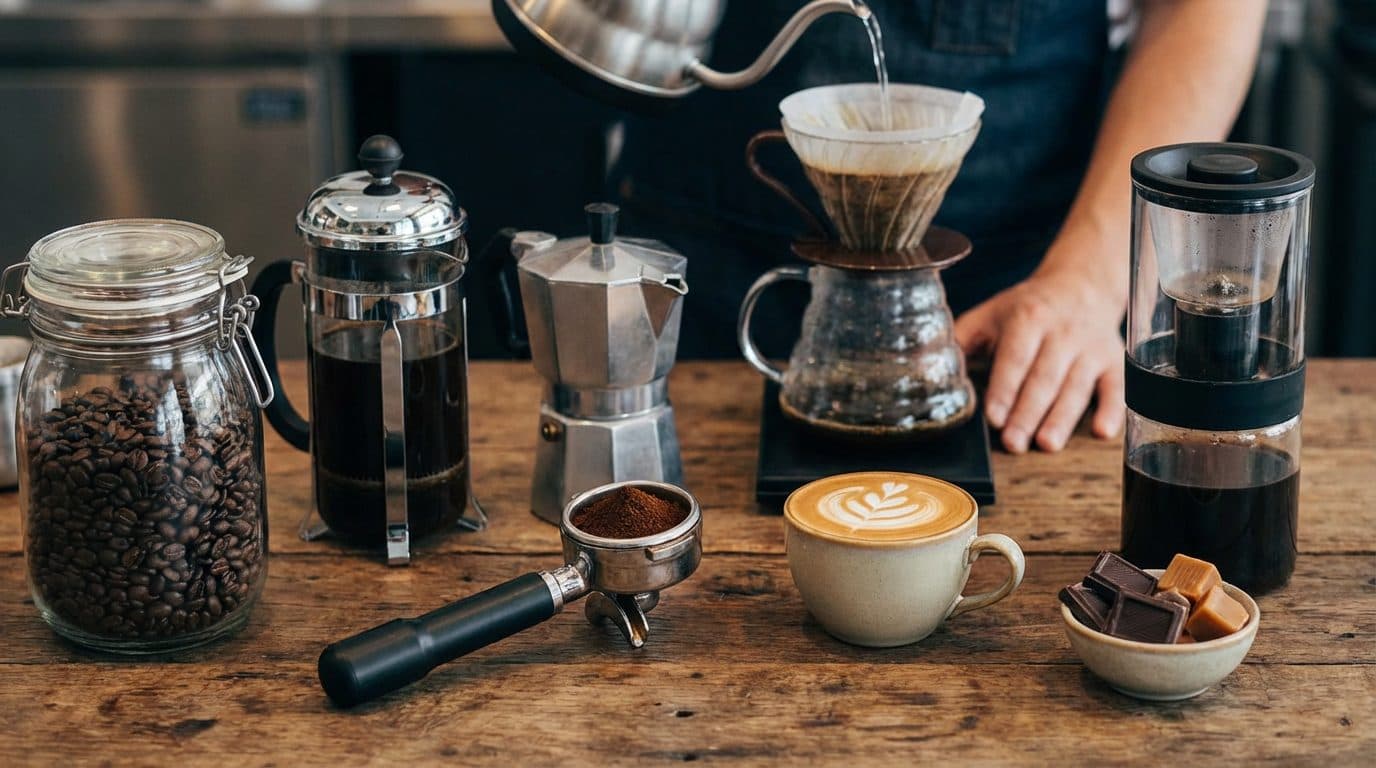
Dark roasts emphasize roast flavors—smoky, chocolatey, and bold. They handle aggressive extraction well.
- Best methods: French press, moka pot, espresso, cold brew
- Taste profile: Low acidity, heavy body, bittersweet chocolate, caramel
- Perfect for: Milk-based drinks where you want coffee to punch through
Barista Tip: When trying a new bean, brew it with your most familiar method first. This gives you a baseline before experimenting with other techniques.
Sample Weekly Coffee Menu to Get You Started
Here’s a practical example of how your week might look. Feel free to adjust based on what beans you have and your personal schedule.
| Day | Bean | Method | Why This Combo |
|---|---|---|---|
| Monday | Ethiopian light roast | Pour-over | Bright, energizing start to the week |
| Tuesday | Colombian medium roast | AeroPress | Quick, reliable, balanced cup |
| Wednesday | Brazilian medium-dark | Drip machine | Midweek comfort, nutty sweetness |
| Thursday | Ethiopian light roast | Chemex | Revisit with different extraction |
| Friday | Sumatra dark roast | French press | Bold, earthy reward for surviving the week |
| Saturday | Brazilian medium-dark | Moka pot + steamed milk | Weekend treat, café-style latte |
| Sunday | Colombian medium roast | Cold brew (prepped Saturday) | Smooth, refreshing, low-effort morning |
Notice how this menu uses just three different beans but creates seven distinct coffee experiences. That’s the beauty of combining different beans and methods strategically.
Tips for Making Your Weekly Coffee Menu Sustainable
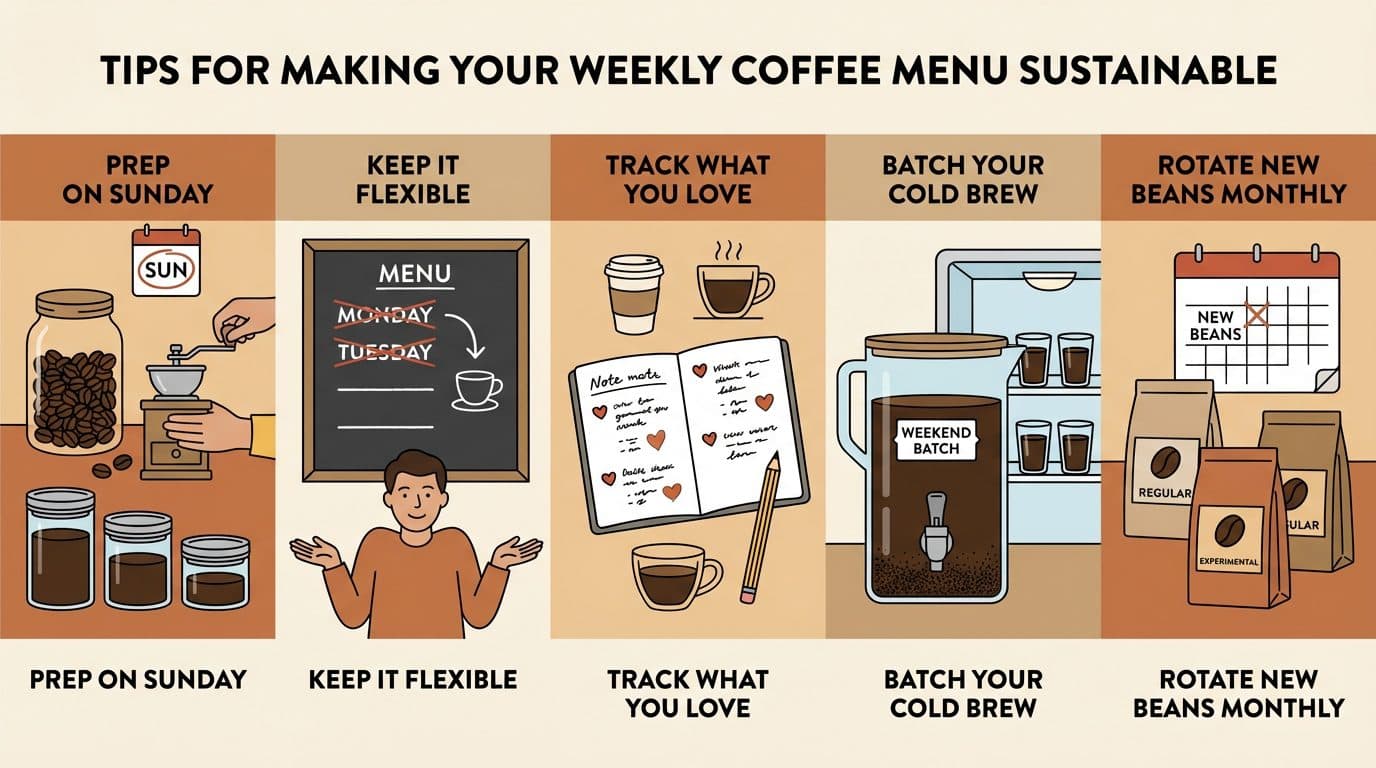
Planning is one thing—sticking with it is another. Here are some practical strategies I’ve learned over the years.
- Prep on Sunday: Grind beans for quick-brew days in advance (store in airtight containers)
- Keep it flexible: Your menu is a guide, not a rule. Swap days based on mood
- Track what you love: Keep simple notes on combinations that worked well
- Batch your cold brew: Make a large batch on weekends for easy weekday options
- Rotate new beans monthly: Keep two “regulars” and one experimental option
Barista Tip: Life is too short for bad coffee—but it’s also too short for complicated systems. If your weekly menu feels like a chore, simplify it. Even rotating between two beans and two methods beats drinking the same thing every day.
Frequently Asked Questions
How many different beans should I keep at home?
For most home baristas, 2-3 varieties is the sweet spot. This gives you enough variety without beans going stale before you finish them. Store them properly in airtight containers away from light and heat.
Do I need expensive equipment to plan a weekly coffee menu?
Not at all. A French press and a simple pour-over dripper cost under $30 combined and give you two very different brewing experiences. Start with what you have and add methods gradually as your interest grows.
How do I know which brewing method suits a particular bean?
Start with the roast level as your guide. Light roasts generally prefer pour-over and AeroPress. Dark roasts shine in French press and espresso. Medium roasts are flexible. Beyond that, experimentation is part of the fun.
Can I repeat the same bean multiple times in one week?
Absolutely. The goal isn’t to use a different bean every day—it’s to create variety through combinations. The same bean brewed as pour-over versus French press will taste noticeably different.
How long does it take to plan a weekly coffee menu?
Once you get the hang of it, about five minutes on Sunday. You’re simply deciding which beans to pair with which methods based on your schedule. It becomes second nature quickly.
Conclusion: Start Your Coffee Adventure This Week
Planning a weekly coffee menu at home transforms your morning routine from autopilot to intentional enjoyment. By rotating different beans and methods, you’ll discover flavors you never knew existed in coffee, develop your palate, and genuinely look forward to each morning’s cup.
You don’t need to overcomplicate this. Start with two beans and two brewing methods. Create a simple rotation. Pay attention to what you enjoy. Adjust as you go. Within a few weeks, you’ll wonder how you ever settled for the same cup every single day. Your coffee journey starts now—grab a new bag of beans and make tomorrow’s cup something worth waking up for.



Comments