


Table of Contents
- Quick Verdict: Metal Drippers Win for Serious Brewers
- Understanding Temperature Dynamics in Pour-Over Brewing
- How Plastic Handles Heat
- The Metal Temperature Challenge
- Durability Showdown: Which Material Lasts Longer?
- Plastic Dripper Durability
- Metal Dripper Longevity
- Real-World Performance: Brewing Scenarios Compared
- Scenario 1: The Morning Rush
- Scenario 2: Batch Brewing Multiple Cups
- Scenario 3: Travel and Outdoor Brewing
- Who Should Choose Plastic vs. Metal Drippers?
- Plastic Drippers Are For You If:
- Metal Drippers Are For You If:
- Who Should Avoid Each?
- Pros and Cons at a Glance
- Plastic Drippers
- Metal Drippers
- Frequently Asked Questions
- Does the dripper material affect coffee taste?
- Are plastic drippers safe for brewing with hot water?
- How long should I preheat a metal dripper?
- Can I use metal drippers for iced pour-over?
- Which material is better for the environment?
- Final Thoughts: Making Your Choice
Quick Verdict: Metal Drippers Win for Serious Brewers
If you’re chasing thermal stability and long-term durability, metal drippers are your best bet. However, plastic drippers hold their own surprisingly well for beginners, travelers, and budget-conscious coffee lovers. The “best” choice really depends on how you brew, where you brew, and what you prioritize in your morning cup.
| Factor | Plastic Drippers | Metal Drippers |
|---|---|---|
| Durability | Good (flexible, drop-resistant) | Excellent (virtually indestructible) |
| Temperature Retention | Moderate (less heat loss) | Variable (requires preheating) |
| Price Range | $8–$25 | $25–$60+ |
| Weight | Very light | Heavier |
| Best For | Beginners, travel, consistency | Home setups, aesthetics, longevity |
Choosing between plastic and metal drippers is one of those debates that can keep coffee enthusiasts arguing for hours. I’ve used both extensively over the years, and I can tell you there’s no universal winner. Each material brings something different to your pour-over routine. Let’s break down what actually matters when you’re standing in your kitchen, kettle in hand, ready to brew.
Understanding Temperature Dynamics in Pour-Over Brewing
Temperature is everything in pour-over coffee. Too cold, and you’ll under-extract, leaving you with sour, thin coffee. Too hot, and you risk bitter, astringent flavors. The dripper material plays a bigger role in this than most people realize.
How Plastic Handles Heat
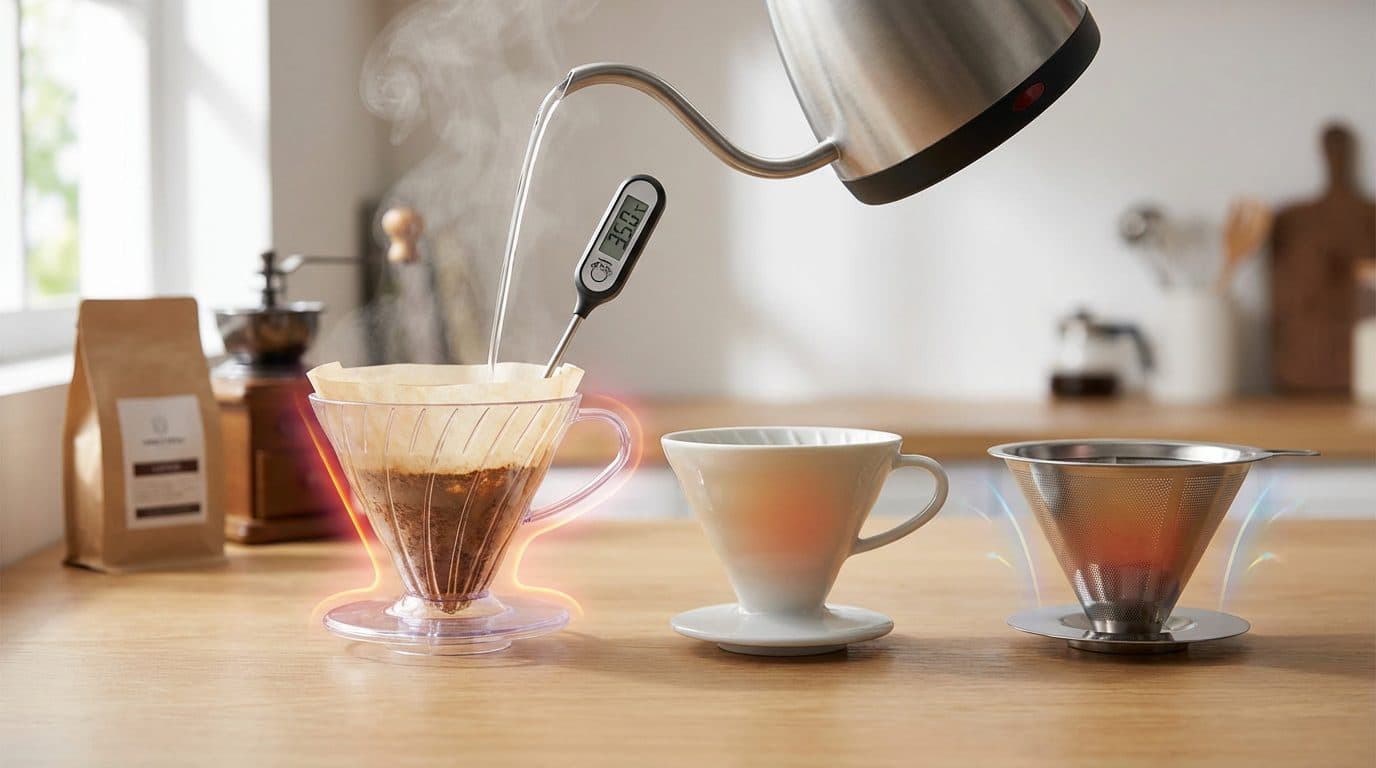
Here’s something that surprises many coffee lovers: plastic drippers actually maintain brew temperature remarkably well. Plastic is a poor conductor of heat, which means it doesn’t steal thermal energy from your water during brewing. When you pour hot water into a plastic dripper, less heat transfers into the dripper walls.
In my experience, a plastic V60 or Melitta dripper keeps the slurry temperature more consistent throughout the brew. You don’t need to preheat as aggressively, and the water stays where it should be: in contact with your coffee grounds at the right temperature.
- Less preheating required
- More forgiving for beginners
- Consistent performance across multiple brews
- Ideal for single cups where heat loss matters most
The Metal Temperature Challenge
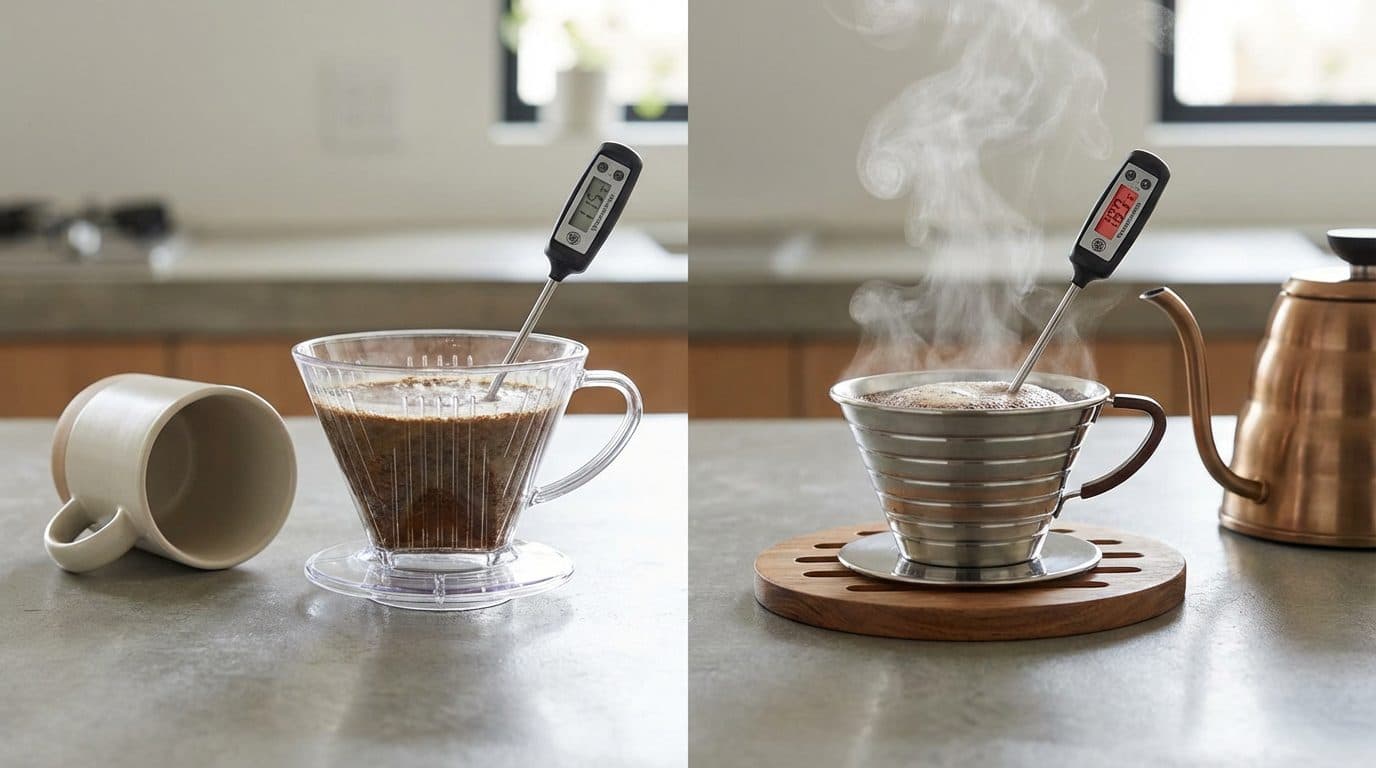
Metal drippers, whether stainless steel or copper, are excellent heat conductors. This sounds good in theory, but it creates a practical challenge. When you pour hot water into a cold metal dripper, the metal rapidly absorbs heat from your water. This initial temperature drop can affect extraction, especially in the first critical seconds of your brew.
Barista Tip: Always preheat metal drippers thoroughly. I pour nearly-boiling water through mine at least twice before brewing. Yes, it takes extra time, but skipping this step means your first pour might be 10-15 degrees cooler than intended.
Once preheated properly, metal drippers can actually perform excellently. Some brewers argue that the thermal mass helps maintain temperature throughout longer brew times. However, in colder environments or during winter months, that metal will cool faster than plastic, potentially affecting your results.
Durability Showdown: Which Material Lasts Longer?
Let’s talk about what happens when your dripper meets the kitchen floor. Because let’s be honest, life happens, especially before that first cup of coffee kicks in.
Plastic Dripper Durability
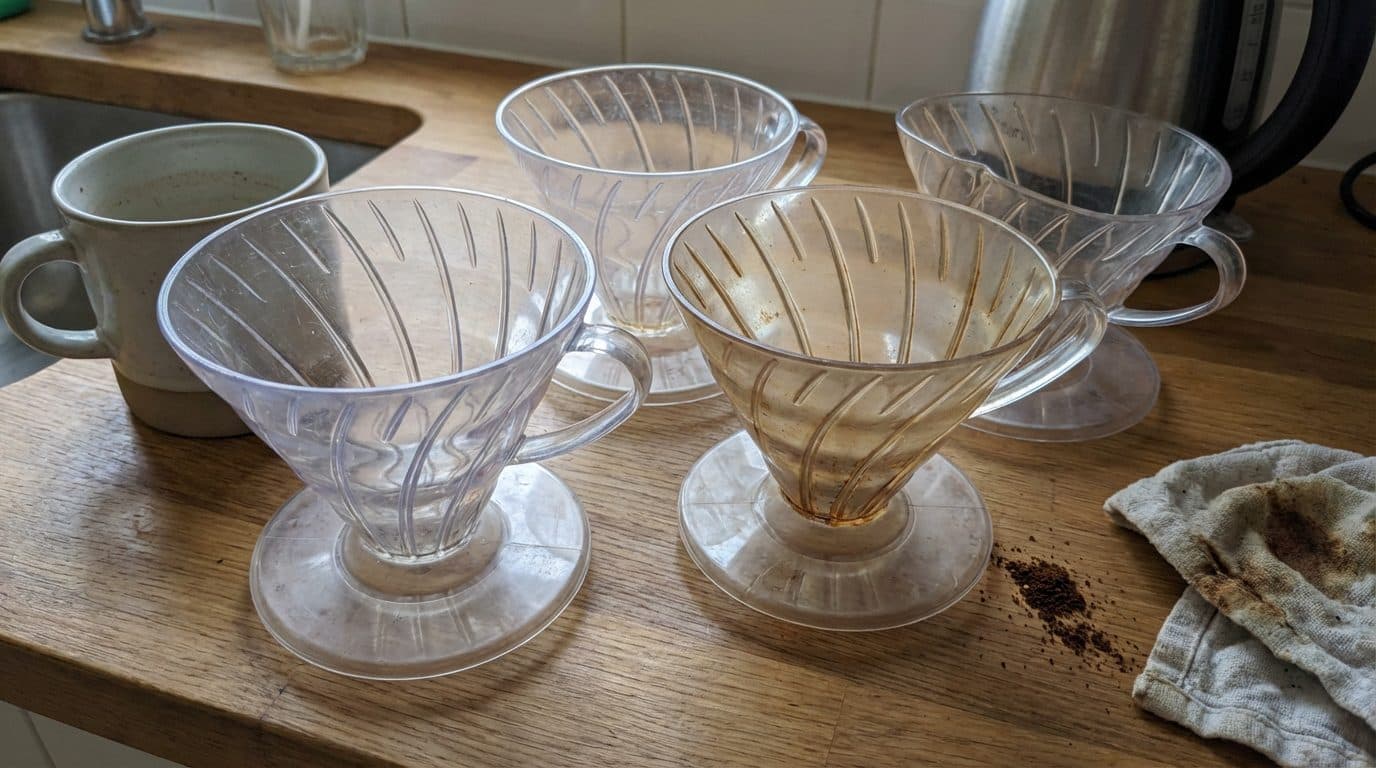
Modern plastic drippers, particularly those made from Tritan or similar BPA-free plastics, are surprisingly tough. I’ve dropped my plastic V60 more times than I care to admit. It bounces. It survives. It keeps brewing excellent coffee.
That said, plastic isn’t invincible. Over years of use, you might notice:
- Minor scratches that can harbor coffee oils
- Slight warping if exposed to extremely hot water repeatedly
- Potential discoloration over time
- Fading or cloudiness with certain cleaners
The good news? Most quality plastic drippers will serve you well for 5-10 years of regular use. And if they do eventually give up, replacing them won’t break the bank.
Metal Dripper Longevity
This is where metal truly shines. A well-made stainless steel dripper can literally last a lifetime. I’ve seen vintage metal drippers from the 1970s still performing beautifully. There’s something satisfying about owning brewing equipment you might pass down to your kids.
Metal drippers resist scratches, don’t absorb odors, and won’t warp under heat. However, they’re not completely maintenance-free. Depending on the finish, you might encounter:
- Water spots and mineral buildup
- Potential for dents if dropped on hard surfaces
- Some finishes can scratch and show wear
- Copper drippers require occasional polishing
In short: metal drippers offer superior longevity if you’re willing to invest upfront and don’t mind the extra weight.
Real-World Performance: Brewing Scenarios Compared
Theory is nice, but what matters is how these drippers perform in your actual kitchen, campsite, or office break room.
Scenario 1: The Morning Rush
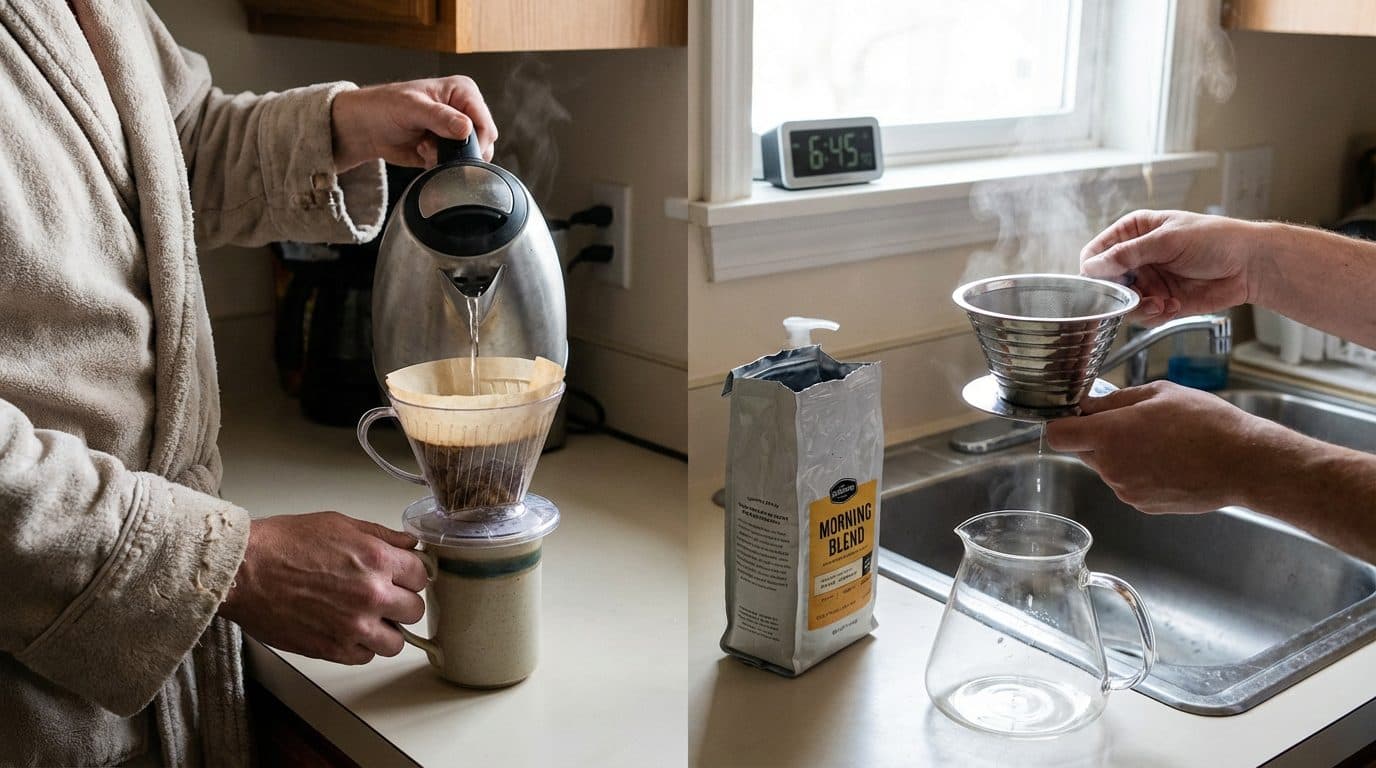
You’ve just woken up, you need coffee immediately, and you don’t want to fuss with preheating rituals. In this situation, plastic wins hands down. Grab your plastic dripper, rinse the filter, and start brewing. The material won’t punish you for skipping the preheat.
With a metal dripper in this scenario, you’ll either need to build preheating into your routine or accept inconsistent results. I’ve found that my rushed metal dripper brews taste noticeably different from my careful, preheated ones.
Scenario 2: Batch Brewing Multiple Cups
When you’re making several pour-overs in a row, maybe for weekend guests, the dynamics shift. A properly preheated metal dripper maintains temperature well between brews. The thermal mass works in your favor once the metal is up to temperature.
Plastic still performs consistently here, but you might notice slight temperature variations if your environment is cold or if there’s significant time between brews.
Scenario 3: Travel and Outdoor Brewing
Camping trip? Road trip? Office desk setup? Plastic drippers are the obvious choice. They’re lightweight, virtually unbreakable, and don’t require babying. I’ve packed my plastic Hario dripper in backpacks, suitcases, and car door pockets without a second thought.
Metal drippers can travel, but they’re heavier and more prone to damage in transit. That beautiful copper dripper looks great on your kitchen counter but less ideal bouncing around in a backpack.
Who Should Choose Plastic vs. Metal Drippers?
Plastic Drippers Are For You If:
- You’re new to pour-over brewing and want consistent results
- Budget matters and you’d rather spend on quality beans
- You travel frequently or brew outside your kitchen
- You prefer low-maintenance gear
- Morning speed is more important than aesthetic appeal
- You brew primarily single cups
Metal Drippers Are For You If:
- You’ve dialed in your technique and enjoy the ritual of brewing
- Longevity and sustainability are priorities
- You appreciate beautiful equipment as part of the experience
- Your brewing setup is primarily stationary
- You don’t mind spending extra time on preheating
- You’re willing to invest more upfront for lifetime quality
Who Should Avoid Each?
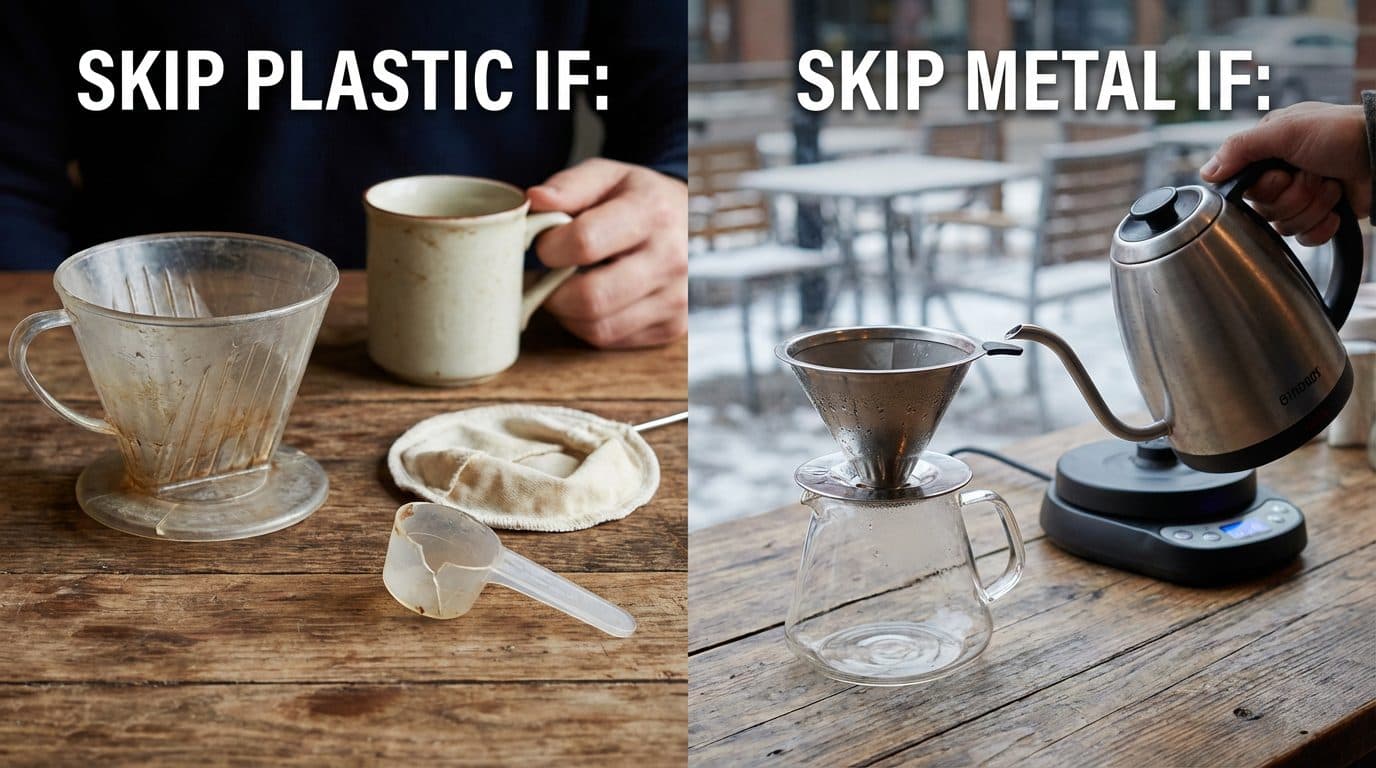
Skip plastic if: You’re deeply concerned about long-term plastic use, want heirloom-quality gear, or find yourself frustrated by equipment that shows wear over time.
Skip metal if: You’re impatient in the mornings, frequently brew in changing environments, or you’re still learning the basics of pour-over technique.
Pros and Cons at a Glance
Plastic Drippers
Pros:
- Excellent temperature stability without preheating
- Affordable and easy to replace
- Lightweight and travel-friendly
- Forgiving for beginners
- Drop-resistant and flexible
Cons:
- Can scratch and discolor over time
- May absorb odors with extended use
- Less aesthetically appealing to some
- Environmental concerns about plastic production
Metal Drippers
Pros:
- Exceptional durability and longevity
- Beautiful aesthetics and premium feel
- Won’t absorb odors or stain
- Excellent thermal mass once preheated
- Sustainable long-term choice
Cons:
- Requires thorough preheating for best results
- Higher upfront cost
- Heavier and less portable
- Can dent if dropped
- May cool quickly in cold environments
Frequently Asked Questions
Does the dripper material affect coffee taste?
The material itself doesn’t impart flavor to your coffee. However, temperature differences caused by inadequate preheating can significantly affect extraction and therefore taste. A properly preheated metal dripper and a plastic dripper should produce very similar results when all other variables are controlled.
Are plastic drippers safe for brewing with hot water?
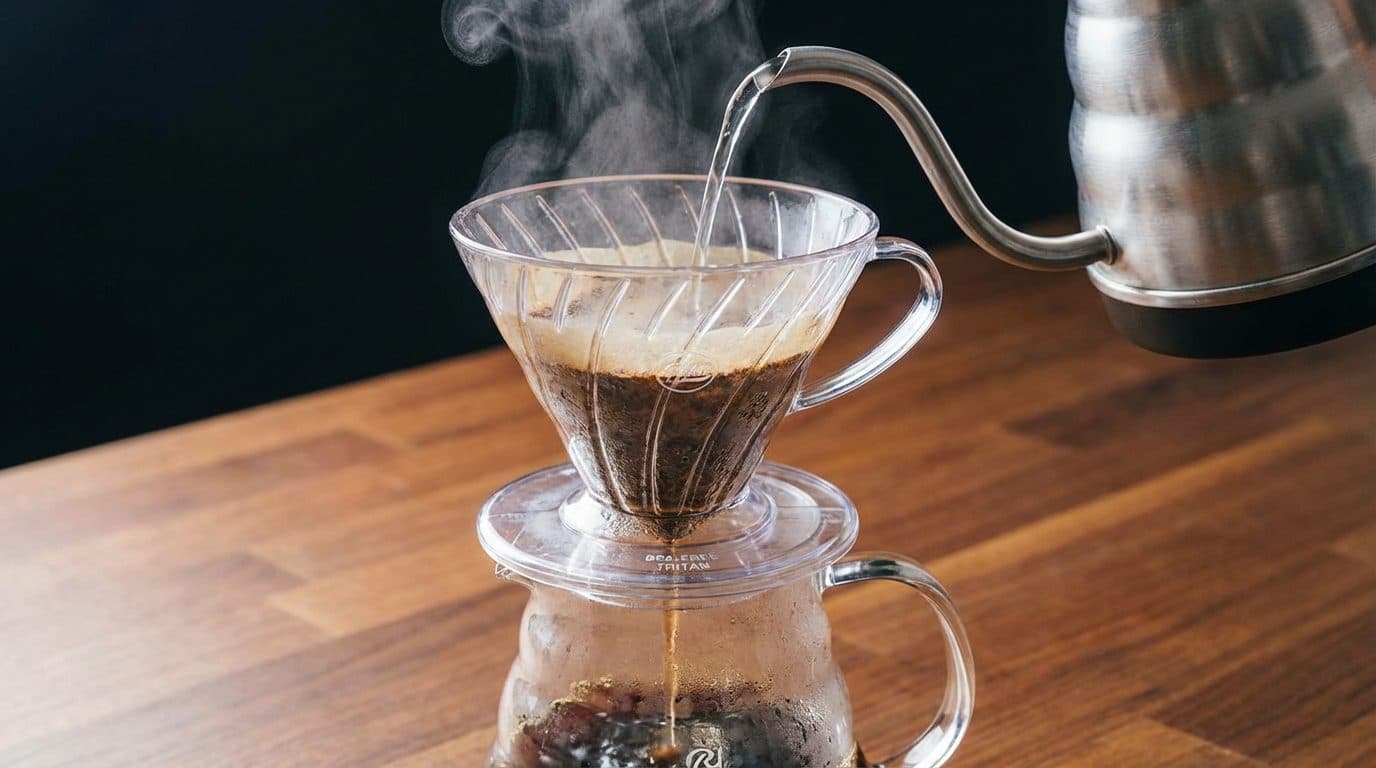
Quality plastic drippers from reputable brands are made from BPA-free, food-safe materials designed for hot liquids. Look for drippers made from Tritan or similar heat-resistant plastics. That said, always purchase from established coffee equipment manufacturers rather than generic alternatives.
How long should I preheat a metal dripper?
I recommend at least two full rinses with near-boiling water. Pour water through the dripper, let it sit for 10-15 seconds, discard, and repeat. The dripper should feel hot to the touch before you begin brewing. In colder months, you might need a third rinse.
Can I use metal drippers for iced pour-over?
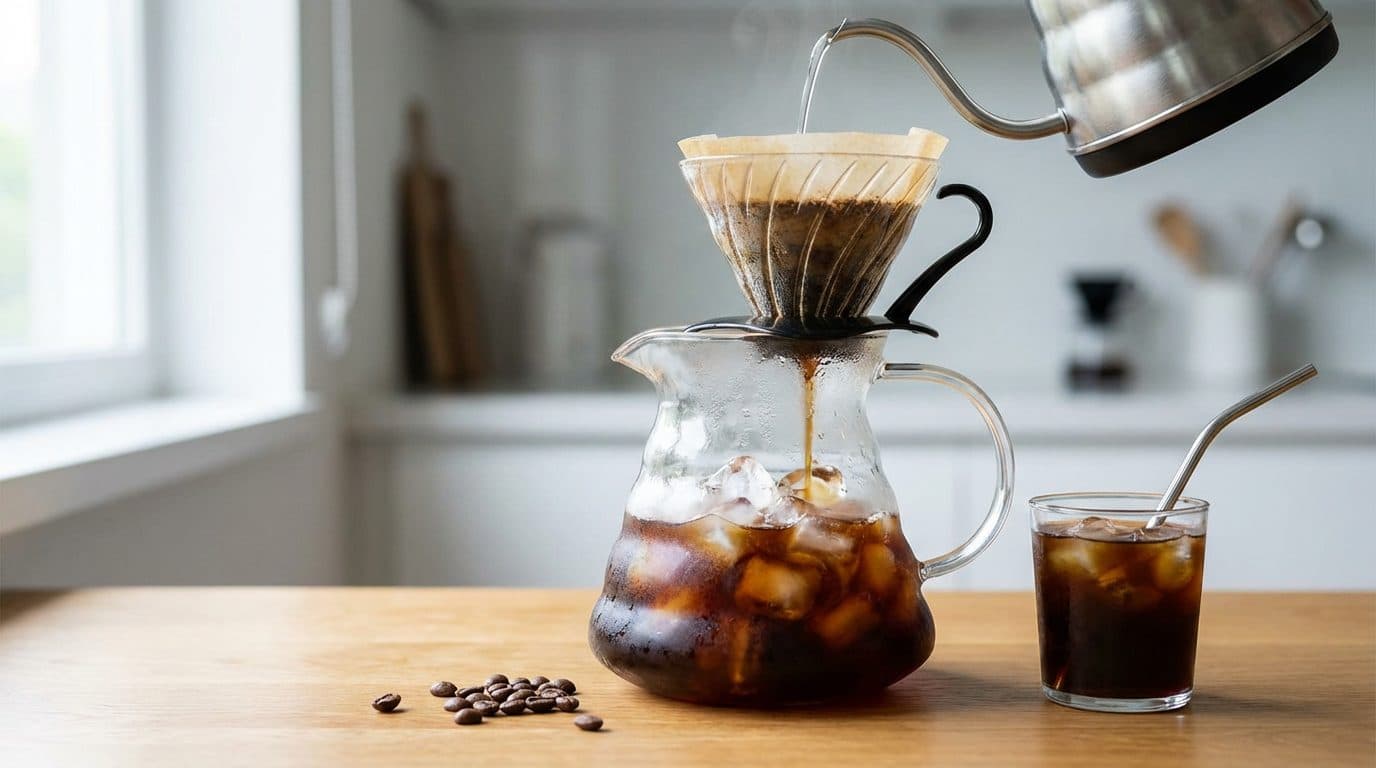
Yes, and metal actually works well here since you’re brewing directly over ice. The cooling effect of the metal is less problematic when your goal is a cold beverage. Some brewers even prefer metal for flash-chilled coffee because the slightly lower slurry temperature can reduce bitterness.
Which material is better for the environment?
This depends on your perspective. Metal drippers last longer and won’t end up in landfills as quickly, making them arguably more sustainable long-term. However, metal production has significant environmental costs. A plastic dripper used for a decade might have a smaller overall footprint than one metal dripper, depending on manufacturing processes.
Final Thoughts: Making Your Choice
After years of brewing with both materials, I’ve settled into using both depending on the situation. My stainless steel Kalita Wave lives on my kitchen counter for weekend morning rituals when I have time to preheat and enjoy the process. My plastic V60 travels everywhere and handles weekday mornings when speed matters more than ceremony.
The truth about plastic vs. metal drippers is that neither is objectively superior. They’re tools designed for slightly different purposes and preferences. Your brewing style, environment, and priorities should guide your choice, not marketing hype or coffee snobbery.
If you’re still unsure, start with an affordable plastic dripper to learn the basics of pour-over technique. Once you’ve nailed your process and decided this brewing method is for you, consider adding a metal dripper to your collection. Life is too short for bad coffee, but it’s also too short to stress over which dripper material is “correct.” Pick one, brew often, and enjoy the journey.


Comments