


Table of Contents
- Quick Verdict: Baratza Encore ESP
- Why Grind Size Matters for French Press and Pour-Over
- Electric Coffee Grinders for Home Brewing
- Feature-Based Electric Option: Baratza Encore ESP
- Premium Electric Option: Fellow Ode Gen 2
- Budget Electric Category: Entry-Level Conical Burr Grinders
- Manual Coffee Grinders for French Press and Pour-Over
- Premium Manual Option: Comandante C40 MK4
- 1Zpresso Models: Compare the Exact Model
- Electric vs. Manual: Which Workflow Fits?
- Key Features to Look For
- Burr Type and Size
- Grind Settings
- Retention
- Build Quality
- Common Mistakes to Avoid
- Choosing by Brewing Style
- Product Documentation Used
A burr grinder with repeatable adjustments from coarse to medium-fine is a practical starting point for French press and pour-over. The Baratza Encore ESP is the feature-based electric comparison point in this guide because the manufacturer documents replacement parts, brew guidance, and support for the model.
Evaluation basis: These are editorial, specification-based selections, not hands-on laboratory test results. The comparison uses published burr design, adjustment range, intended brew methods, capacity, maintenance, parts support, and current manufacturer documentation. Verify current price, warranty, and regional availability before buying.
If you already own good beans but your French press tastes silty or your pour-over tastes sour one day and bitter the next, the grinder is a likely suspect. Brewing methods can forgive small mistakes, but uneven grounds are harder to hide. Big chunks under-extract. Dusty fines over-extract. A burr grinder reduces that spread and gives you a repeatable starting point.
Quick Verdict: Baratza Encore ESP
The Baratza Encore ESP is an electric comparison point because Baratza publishes brew guidance, replacement parts, warranty information, and repair support for the model. Buyers should compare its current price and workflow with filter-only alternatives rather than treating this as a hands-on performance ranking.
Manual grinders from 1Zpresso or Comandante trade motorized convenience for a smaller footprint and hand-powered workflow. Fellow documents the Ode Gen 2 as a brewed-coffee-only grinder with 64 mm flat burrs, anti-static technology, and no espresso capability.
Why Grind Size Matters for French Press and Pour-Over

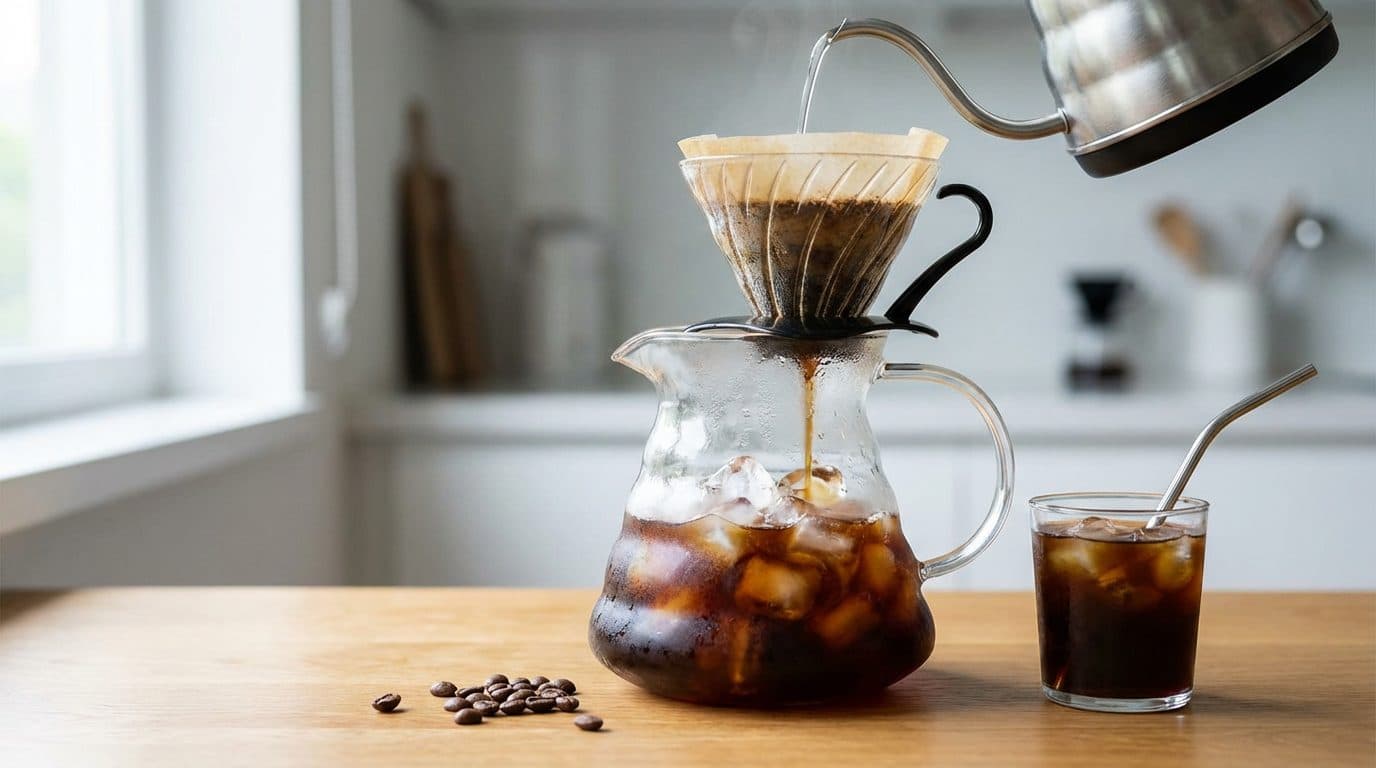
French press and pour-over ask for different grinds, but both punish inconsistency.
- French press usually needs a coarse grind so the cup stays rich without turning muddy or gritty.
- Pour-over usually needs a medium to medium-fine grind so water flows slowly enough to extract sweetness without stalling.
The Specialty Coffee Association frames brewed coffee around extraction, strength, and brew ratio. At home, grind size is one of the fastest ways to move those variables. If the cup is sour and thin, grind finer. If it is bitter, harsh, or clogged, grind coarser. A burr grinder lets those changes mean something.
Electric Coffee Grinders for Home Brewing
Electric grinders provide a push-button workflow and may suit early-morning brewing, multiple servings, or anyone who prefers not to hand grind. Compare the exact model’s adjustment range, capacity, cleaning instructions, and support.
Feature-Based Electric Option: Baratza Encore ESP
The ESP version adds finer adjustment capability. For French press and pour-over, check its documented filter range, adjustment steps, parts support, and current warranty rather than assuming a cup-quality ranking.
Published details and checks:
- Manufacturer lists 40 grind settings; verify the adjustment range for the intended brews
- Check repeatability with the current adjustment design and your recipe notes
- Manufacturer documents replacement parts and support; confirm regional availability
- Check the product dimensions against the available counter space
- Compare the manufacturer’s warranty and support terms with other models
Additional checks:
- Check whether its documented range meets your espresso workflow; this guide focuses on filter coffee
- Review the listed materials and current price before deciding whether the build fits your needs
- If you single-dose, check retention information and return terms for the exact model
Consider it if: You brew filter coffee daily and value documented parts and support for a repairable workflow.
Check before choosing: Verify espresso compatibility, retention expectations, noise, materials, and current price for your use case.
Premium Electric Option: Fellow Ode Gen 2

Fellow Ode Gen 2 is documented as a brewed-coffee grinder, not an espresso grinder. Its published 64 mm flat burrs, single-dose workflow, and anti-static features are relevant criteria for pour-over; evaluate cup results and workflow with the specific beans and recipe.
Published details and checks:
- 64 mm flat burrs are a published specification; verify grind distribution with independent testing
- Single-dose workflow is documented; verify actual retention with the beans and dose you use
- Check sound level in independent reviews if noise matters
- Check dimensions, finish, and counter fit as separate design requirements
- Flat-burr geometry is a specification; cup clarity also depends on coffee and recipe
Additional checks:
- Compare current price with your budget and the required feature set
- Not intended for espresso
- Fines can vary with beans and settings; test a coarse brew before relying on the setting
Consider it if: You want a documented brewed-coffee workflow and are prepared to compare clarity, retention, and price for your own setup.
Check before choosing: This model is not intended for espresso; compare current price, return terms, and filter-brewing requirements.
Budget Electric Category: Entry-Level Conical Burr Grinders
An entry-level burr grinder is a different workflow from a blade grinder. Look for stainless steel conical burrs, stable adjustment, a documented brew range, and a return policy. In lower-priced models, compare the exact specification and independent evidence instead of relying on a product page’s "professional" claim.
Published details and checks:
- Compare total cost, warranty, and return terms with the alternatives
- Check motor details and expected dose time for your morning batch
- Confirm that the model’s documented range includes drip or pour-over
Additional checks:
- Check independent grind-distribution evidence at coarse settings
- Verify burr alignment, adjustment stability, and the return policy
- Consider whether the documented range and service terms will cover future needs
A budget electric may make sense when convenience is the main requirement. If French press sediment or pour-over drawdown is a priority, compare independent grind-distribution evidence and return terms before buying.
Manual Coffee Grinders for French Press and Pour-Over

Manual grinders remove the motor and require the user to supply the work. Compare burr construction, adjustment design, capacity, ergonomics, and replacement support directly; price alone does not establish cup quality against an electric model.
Premium Manual Option: Comandante C40 MK4
Comandante documents the C40 MK4 with a high-nitrogen stainless-steel burr set and a range extending from coarse hand brewing to fine espresso settings. That published range makes it relevant to both French press and pour-over; comfort and value remain personal buying decisions.
Published details and checks:
- Published high-nitrogen stainless-steel burr set; verify cup uniformity with independent testing
- Assess handle effort and ergonomics through current hands-on evidence or a return policy
- Check materials, serviceability, and warranty rather than assuming long-term durability
- Manual format may suit travel; confirm weight, dimensions, and noise expectations
- Use current community setting references alongside the manufacturer’s manual
Additional checks:
- Compare current price with the required adjustment range and materials
- Plan for hand-grinding time based on your dose and batch size
- Check current regional stock and support before buying
Consider it if: You want a manual filter-coffee workflow and are comfortable assessing effort, capacity, and adjustment range.
Check before choosing: Confirm that hand grinding suits your batch size and any hand or wrist limitations.
1Zpresso Models: Compare the Exact Model

1Zpresso offers several grinders with different adjustment systems and intended brew ranges, so the model name matters. Check the current manufacturer manual and grind-range specification for the exact model instead of applying one brand-wide performance claim.
Published details and checks:
- Compare burr geometry, adjustment steps, and current price for the exact model
- Check expected dose and batch time in current independent reviews
- Review listed materials, ergonomics, and service terms
- Several models cover different documented brew ranges; identify the exact model
Additional checks:
- Model names and adjustment systems vary; confirm the exact product specification
- Match the adjustment design to the brew range you need
- Hand grinding adds effort for large batches; assess capacity and dose time
Buying note: Read the model description carefully. A grinder specified for espresso may not match a French press workflow, even when the brand offers several capable models.
Electric vs. Manual: Which Workflow Fits?
The right grinder is the one you will use every day. Here is the practical split.
| Factor | Electric Grinder | Manual Grinder |
|---|---|---|
| Workflow | Push-button operation; requires power and counter space | Hand-powered operation; requires physical effort |
| Grind-quality evidence | Compare manufacturer specifications and independent tests | Compare manufacturer specifications and independent tests |
| Speed | Depends on motor, dose, and model | Depends on burrs, dose, and hand effort |
| Noise | Motor sound varies by model; check independent measurements | No motor; hand movement still produces some sound |
| Portability | Check power needs, dimensions, and weight | Check dimensions, weight, and capacity |
| Storage | Check dimensions and hopper or dosing workflow | Check dimensions and storage case, if supplied |
| Maintenance | Follow the manufacturer’s cleaning instructions | Follow the manufacturer’s cleaning instructions |
Choose electric if you prefer a push-button workflow or regularly brew multiple servings. Choose manual if you accept hand effort and want to compare a compact, power-free setup.
Key Features to Look For
Ignore vague product claims and check the pieces that affect the cup.
Burr Type and Size

Conical and flat burrs use different geometries. Check the manufacturer’s burr material, size, adjustment range, motor or hand workflow, and independent grind-distribution evidence for the brew size you use.
Grind Settings
You need enough range to move from French press to pour-over without guessing. Stepped settings are easier for beginners because you can write down recipes and return to them.
Retention
Retention is the ground coffee left inside the grinder. Low retention matters if you switch beans often or single-dose. It matters less if you use the same beans every day and purge a tiny amount before brewing.
Build Quality
Look for documented burr materials, stable adjustment, and parts availability. Compare purchase price, replacement parts, shipping, labor, and warranty coverage when estimating ownership cost; repairability does not guarantee a particular saving.
Common Mistakes to Avoid
These grinder choices can affect French press and pour-over results at home:
- Buying a blade grinder: It chops unevenly and gives you dust plus chunks.
- Using one grind for everything: French press and pour-over need different settings.
- Ignoring fines: Too many fines create sludge in French press and slow drawdown in pour-over.
- Never cleaning the grinder: Old coffee oils go stale and can make fresh beans taste flat.
- Grinding days ahead: Ground coffee loses aroma quickly; grind right before brewing when possible.
Reality check: A grinder will not fix stale beans, bad water, or a wildly wrong recipe. It gives you control. You still need to use that control.
Choosing by Brewing Style
For an electric shortlist, compare the Baratza Encore ESP when parts support and a broad home-brewing workflow matter, and the Fellow Ode Gen 2 when a documented filter-only design, 64 mm flat burrs, and single-dose workflow match the requirement. Neither specification sheet proves which cup you will prefer.
For French press specifically, prioritize coarse consistency over fancy fine adjustment. Too many fines will slip through the mesh and make the last half of the mug taste dusty. For pour-over, prioritize repeatable medium settings and small adjustments, because one or two clicks can change drawdown time noticeably.
If you brew one cup at a time and accept hand grinding, compare the current specifications of a suitable 1Zpresso model with the Comandante C40. Buy for actual batch size, adjustment needs, maintenance, and ergonomics rather than an undocumented performance score.

Comments