


Table of Contents
- Quick Verdict: Ristretto Takes the Crown for Intensity
- Understanding Espresso Ratios: The Foundation
- What Exactly Is a Ristretto?
- Ristretto Brewing Parameters
- What Does Ristretto Taste Like?
- Ristretto Pros and Cons
- What Exactly Is a Lungo?
- Lungo Brewing Parameters
- What Does Lungo Taste Like?
- Lungo Pros and Cons
- Ristretto vs Lungo: Head-to-Head Comparison
- Flavor Profile Differences Explained
- Who Is Each Style For?
- Ristretto Is Perfect For You If:
- Ristretto Is NOT For You If:
- Lungo Is Perfect For You If:
- Lungo Is NOT For You If:
- How to Dial In Each Style at Home
- Dialing In Ristretto
- Dialing In Lungo
- Conclusion and Next Steps
Quick Verdict: Ristretto Takes the Crown for Intensity
If you crave a punchy, concentrated espresso with syrupy sweetness and less bitterness, ristretto is your winner. But if you prefer a longer, more mellow cup with nuanced flavors and a lighter body, lungo deserves your attention. The real answer? Both have their place in your home barista toolkit.
Understanding Espresso Ratios: The Foundation
Ever pulled what you thought was a perfect espresso shot, only to find it tasted nothing like the café down the street? Chances are, your espresso ratio was off. The relationship between ground coffee and extracted liquid is everything in the espresso world. Ristretto vs lungo represents two ends of this spectrum, and understanding the difference will transform your morning routine.
Before we dive into the specifics, let’s establish what we mean by “ratio.” In espresso terms, ratio refers to the weight of ground coffee compared to the weight of liquid espresso in your cup. A standard espresso typically uses a 1:2 ratio—18 grams of coffee yielding 36 grams of espresso. Ristretto and lungo play with this formula in opposite directions.
In my experience, home baristas often overlook ratios entirely, focusing instead on grind size or tamping pressure. But I’ve found that nailing your ratio is the single most impactful variable you can control. Life is too short for bad coffee, and understanding these fundamentals makes all the difference.
What Exactly Is a Ristretto?
Ristretto means “restricted” in Italian, and that’s precisely what you’re doing—restricting the water flow. A ristretto uses the same amount of ground coffee as a standard espresso but extracts less liquid. The typical ristretto ratio falls between 1:1 and 1:1.5.
Ristretto Brewing Parameters
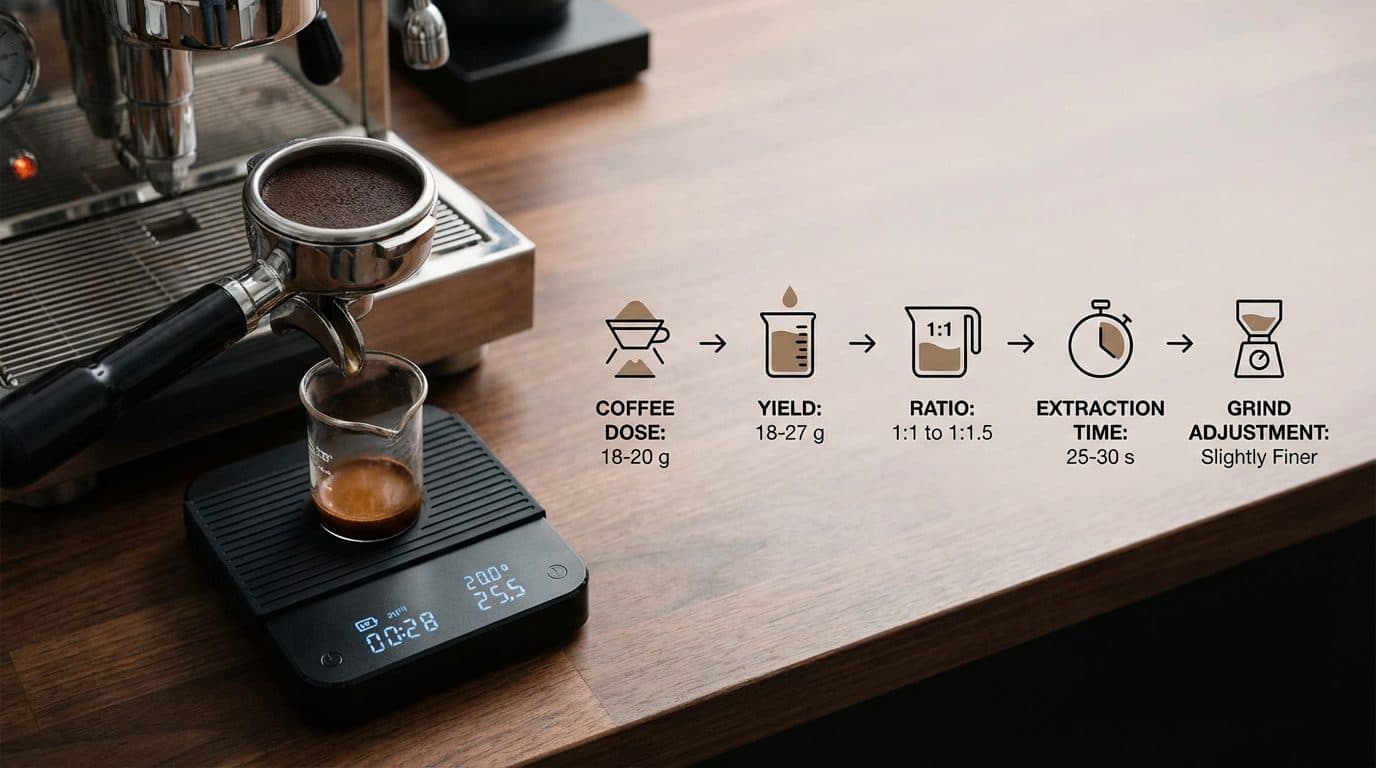
For a proper ristretto, you’re looking at approximately 18 grams of coffee in, yielding just 18-27 grams of liquid out. The extraction time stays roughly the same as espresso (25-30 seconds), meaning less water passes through the coffee puck in the same timeframe.
- Coffee dose: 18-20 grams (same as espresso)
- Yield: 18-27 grams of liquid
- Ratio: 1:1 to 1:1.5
- Extraction time: 25-30 seconds
- Grind adjustment: Slightly finer than espresso
What Does Ristretto Taste Like?
Because you’re extracting less water through the same coffee bed, ristretto pulls predominantly the early-extracting compounds. These tend to be sweeter, more aromatic, and less bitter. The result is a concentrated shot with intense sweetness, heavy body, and pronounced fruit or chocolate notes depending on your beans.
I’ve found that ristretto particularly shines with medium-roast, single-origin beans. The restricted extraction highlights their unique character without overwhelming bitterness. A Brazilian natural processed coffee, for instance, becomes almost dessert-like as a ristretto.
Barista Tip: If your ristretto tastes sour or thin, your grind is too coarse. Tighten it up slightly and try again. The shorter extraction demands precision.
Ristretto Pros and Cons
Pros:
- Intense, concentrated flavor
- Naturally sweeter with less bitterness
- Syrupy, full body
- Highlights origin characteristics
- Lower caffeine per shot (less extraction time)
Cons:
- Very small volume (some find it unsatisfying)
- Requires precise grind adjustment
- Can taste unbalanced with dark roasts
- Less forgiving of poor technique
What Exactly Is a Lungo?
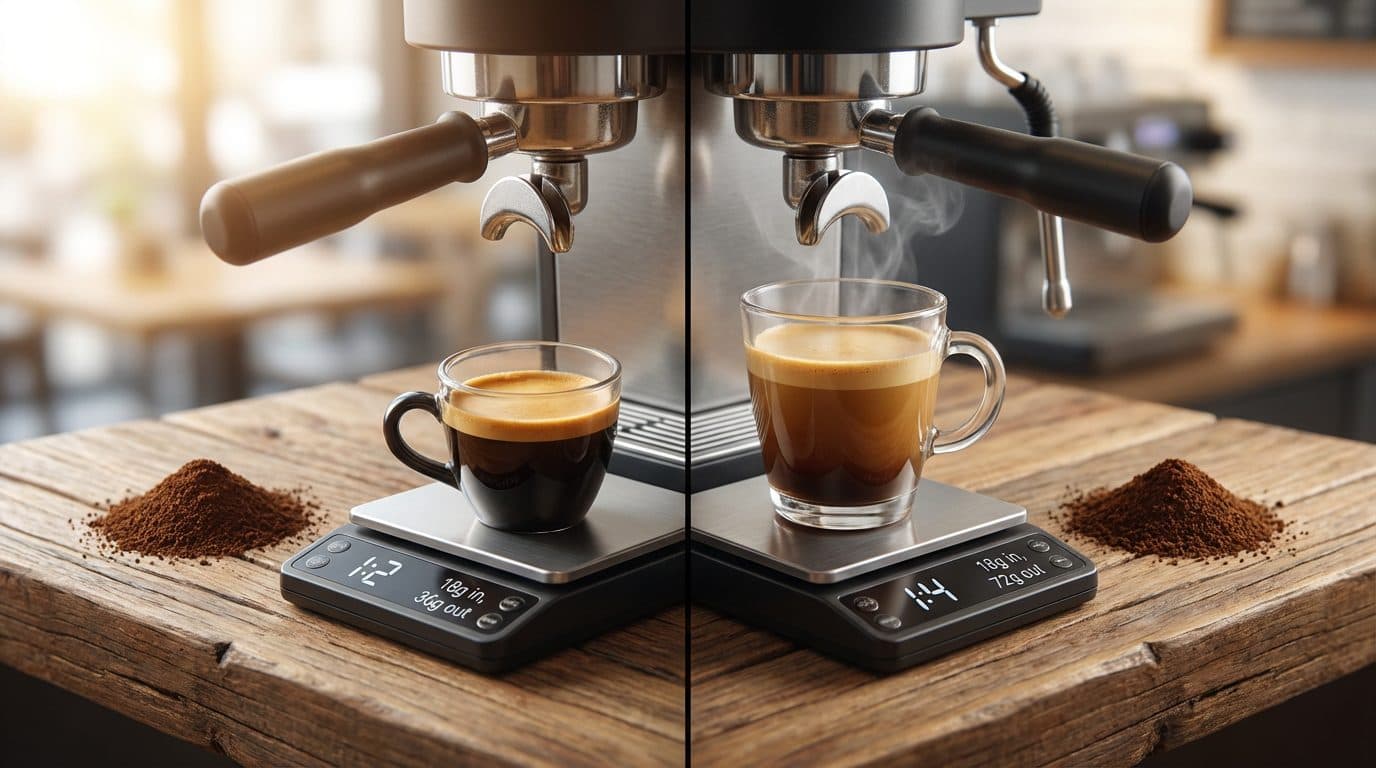
Lungo means “long” in Italian, and as you might guess, it’s the opposite approach. A lungo uses the same coffee dose but extracts significantly more liquid. The typical lungo ratio ranges from 1:3 to 1:4, sometimes even higher.
Lungo Brewing Parameters
With a lungo, you’re using roughly 18 grams of coffee to produce 54-72 grams of liquid espresso. This extended extraction requires either a longer pull time or a coarser grind to prevent over-extraction and excessive bitterness.
- Coffee dose: 18-20 grams (same as espresso)
- Yield: 54-72 grams of liquid
- Ratio: 1:3 to 1:4
- Extraction time: 35-50 seconds
- Grind adjustment: Slightly coarser than espresso
What Does Lungo Taste Like?
The extended extraction pulls more compounds from the coffee, including those that emerge later in the process. This creates a drink with more volume, lighter body, and increased bitterness compared to standard espresso. However, it also reveals subtle flavor nuances that shorter extractions miss entirely.
In my experience, lungo works beautifully with high-quality dark roasts where you want to explore the full flavor spectrum. An Indonesian Sumatra, for example, develops fascinating earthy, herbal notes as a lungo that you’d never taste in a ristretto.
Barista Tip: Don’t confuse lungo with an americano. Lungo is a longer extraction, while an americano is standard espresso diluted with hot water. They taste completely different despite similar volumes.
Lungo Pros and Cons
Pros:
- Larger, more satisfying volume
- Reveals complex, subtle flavors
- Higher caffeine content (more extraction)
- More forgiving brewing process
- Works well with darker roasts
Cons:
- Increased bitterness if not dialed in properly
- Thinner body compared to espresso or ristretto
- Can taste watery with light roasts
- Less concentrated flavor punch
Ristretto vs Lungo: Head-to-Head Comparison
Now let’s break down how these two espresso variations compare across the factors that matter most to home baristas. This comparison should help you understand when to reach for each style.
| Factor | Ristretto | Lungo |
|---|---|---|
| Ratio | 1:1 to 1:1.5 | 1:3 to 1:4 |
| Volume | 15-25ml | 50-70ml |
| Body | Thick, syrupy | Light, tea-like |
| Sweetness | High | Moderate |
| Bitterness | Low | Higher |
| Caffeine | Lower per shot | Higher per shot |
| Best Roast | Light to medium | Medium to dark |
| Difficulty | Higher precision needed | More forgiving |
Flavor Profile Differences Explained
The science behind these flavor differences is fascinating. During espresso extraction, different compounds dissolve at different rates. Acids and fruity compounds extract first, followed by sugars, then finally the heavier, bitter compounds.
Ristretto captures primarily that first wave of extraction—bright, sweet, and aromatic. Lungo goes through the entire extraction journey, pulling everything the coffee has to offer, including those later-extracting bitter notes. Neither approach is inherently better; they simply offer different experiences from the same beans.
In short: ristretto gives you the coffee’s highlights, while lungo tells the whole story.
Who Is Each Style For?
Ristretto Is Perfect For You If:
- You prefer intense, concentrated flavors
- Bitterness in coffee bothers you
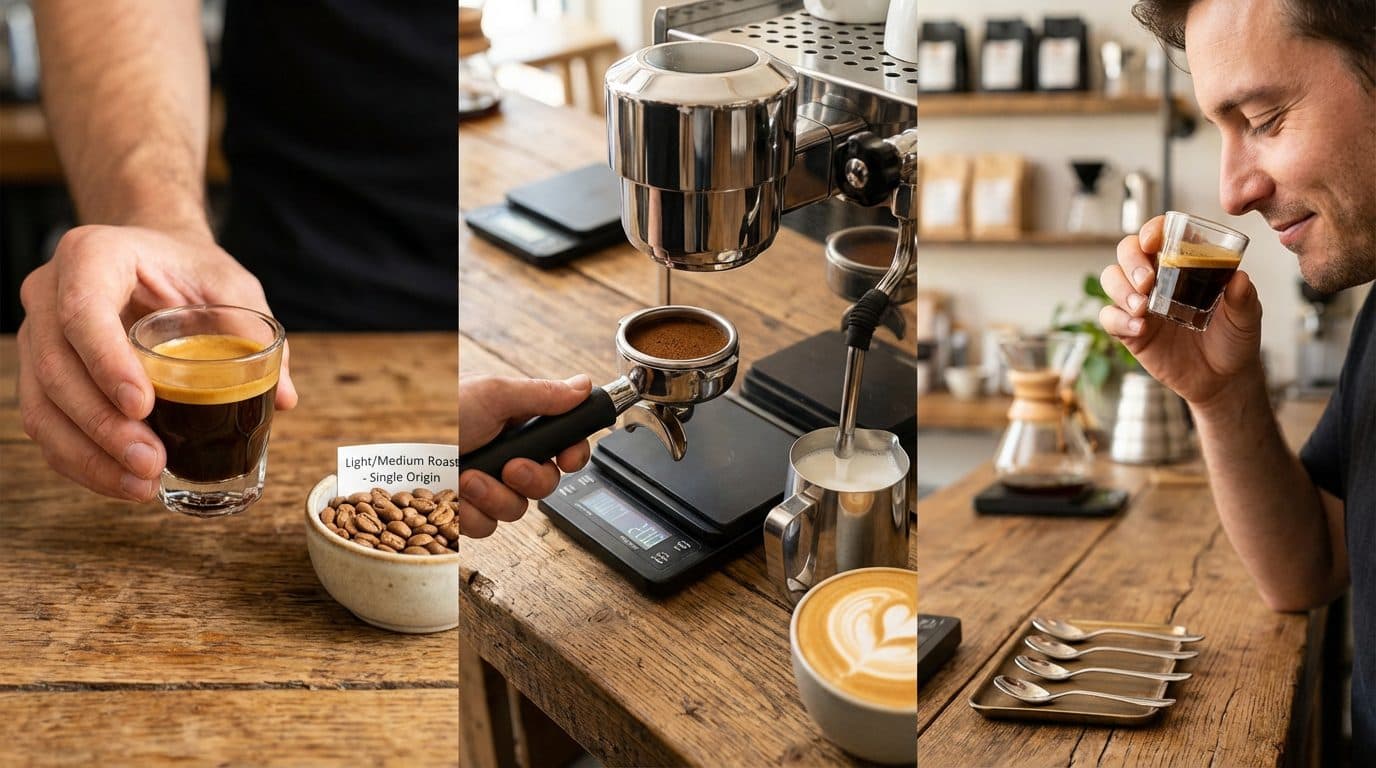
- You enjoy light to medium roast specialty beans
- You want to taste the unique origin characteristics
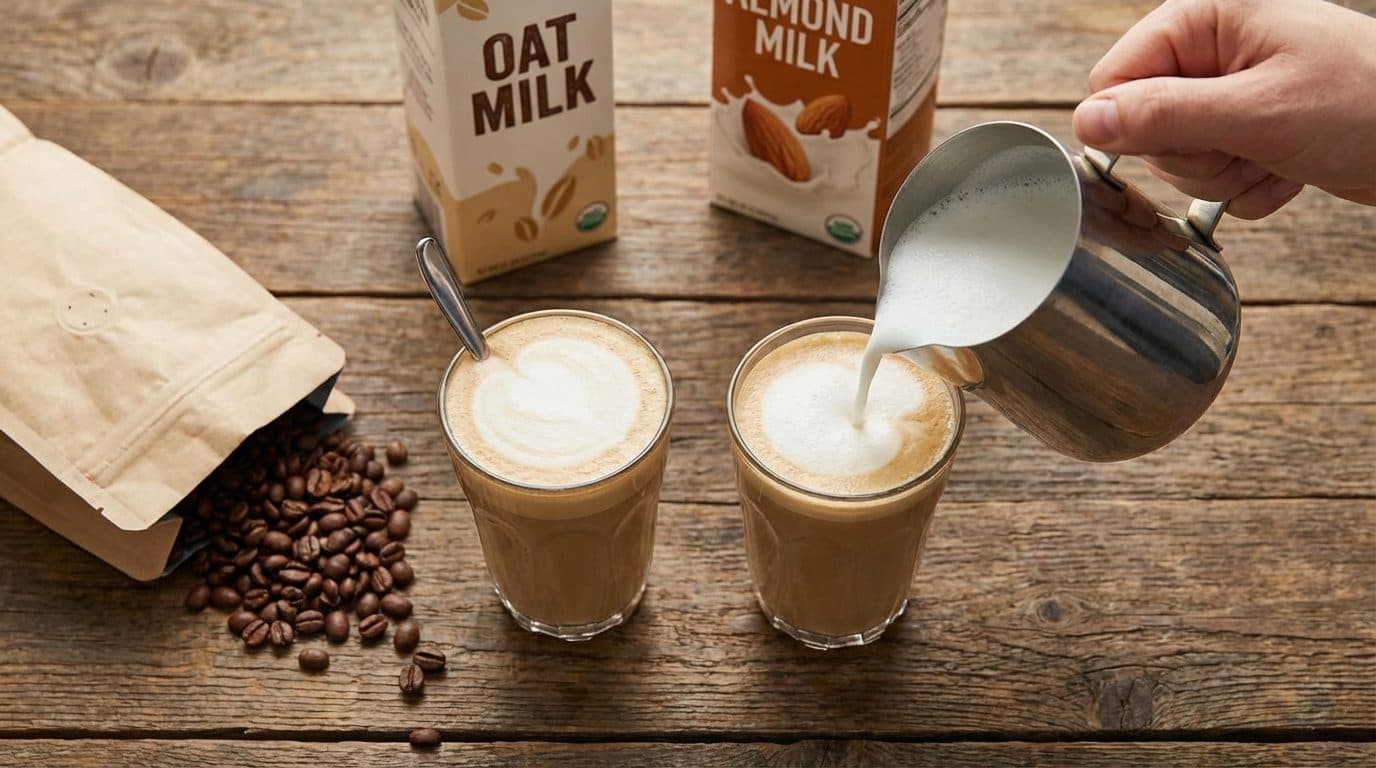
- You’re adding the shot to milk drinks (the intensity cuts through)
- You appreciate the craft of precision brewing
Ristretto Is NOT For You If:
- You want a larger, more voluminous drink
- You prefer a mellow, balanced flavor
- You’re using pre-ground or older coffee beans
- You don’t have a grinder capable of fine adjustments
Lungo Is Perfect For You If:
- You want more volume without diluting espresso
- You enjoy exploring nuanced, complex flavors
- You prefer medium to dark roast coffees
- You appreciate a lighter, more approachable drinking experience
- You need more caffeine in your morning cup
- You’re still developing your espresso-making skills
Lungo Is NOT For You If:
- You dislike any bitterness in your coffee
- You want a thick, syrupy texture
- You’re working with delicate light roast beans
- You prefer punchy, concentrated flavors
How to Dial In Each Style at Home
Getting these ratios right on your home espresso machine requires some experimentation. Here’s my practical approach to dialing in both styles successfully.
Dialing In Ristretto
Start with your standard espresso recipe. If you’re pulling 18 grams in and 36 grams out in 28 seconds, grind finer to restrict the flow. You’re aiming for 18-22 grams out in roughly the same 25-30 second window.
Watch the extraction carefully. Ristretto should still flow steadily—if it’s dripping painfully slowly or blonding too early, you’ve gone too fine. The shot should look like warm honey dripping from the portafilter, dark and rich throughout.
Dialing In Lungo
Again, start from your standard espresso baseline. Grind slightly coarser and let the shot run longer, targeting 50-60 grams out over 35-45 seconds. The key is maintaining consistent flow without the shot gushing or running too quickly.
If your lungo tastes excessively bitter or hollow, your grind is too coarse and water is rushing through without proper extraction. Tighten the grind and try again.
Key Takeaway: Always change one variable at a time. Adjust grind, then taste. Adjust dose, then taste. Systematic troubleshooting saves time and coffee.
Conclusion and Next Steps
Understanding the ristretto vs lungo spectrum opens up a world of flavor possibilities from your home espresso setup. Ristretto delivers concentrated sweetness and intensity, while lungo offers volume and nuanced complexity. Neither is objectively better—they’re simply different tools for different moments.
My recommendation? Try both with your current beans. Pull a ristretto one morning, then a lungo the next, using the same coffee. Taste them side by side if you can. You’ll quickly discover which style suits your palate and your preferred coffee ritual.
Start by adjusting your grind in small increments from your standard espresso setting. Keep notes on what works. Before long, you’ll confidently switch between ratios depending on your mood, your beans, or whether you’re adding milk. That flexibility is what makes home espresso so rewarding.


Comments