


Table of Contents
- Quick Verdict: Hand Grinder Wins for Budget Brewers
- Hand Grinder vs Electric Grinder: The Real Differences
- How They Work
- The Budget Reality Check
- Pros and Cons: Hand Grinder for Budget Brewing
- Who Is a Hand Grinder For?
- Who Is a Hand Grinder NOT For?
- Pros and Cons: Electric Grinder for Budget Brewing
- Who Is an Electric Grinder For?
- Who Is an Electric Grinder NOT For?
- Budget Recommendations: Best Options in Each Category
- Best Budget Hand Grinders
- Best Budget Electric Grinders
- Real-World Scenario: Which Should You Choose?
- Scenario One: The Solo Morning Brewer
- Scenario Two: The Busy Family Kitchen
- Barista Tip: Getting the Most from Your Budget Grinder
- Frequently Asked Questions
- Are hand grinders really as good as electric grinders?
- How long does grinding take with a hand grinder?
- Can budget electric grinders make espresso?
- How long do budget grinders typically last?
- Is grinding your own coffee really worth it?
- Conclusion: Make Your Decision and Start Brewing
Quick Verdict: Hand Grinder Wins for Budget Brewers
If you’re watching your wallet and want the best grind quality for your money, a hand grinder is the clear winner for budget home brewers. You’ll get burr-quality grounds that rival grinders costing three times as much in the electric category. The trade-off? A few minutes of manual labor each morning. For most people brewing 1-2 cups daily, that’s a worthy exchange.
That said, electric grinders have their place. If you’re brewing for a crowd, have limited hand mobility, or simply value convenience above all else, an electric option might suit you better. Let’s break down exactly when each type makes sense for your home coffee setup.
Hand Grinder vs Electric Grinder: The Real Differences
When comparing a hand grinder vs electric grinder, the decision goes beyond just price tags. Both tools do the same job, but they approach it differently. Understanding these differences helps you pick the right one for your brewing style and budget.
How They Work
Hand grinders use your arm power to rotate burrs that crush coffee beans. Most quality hand grinders feature conical steel or ceramic burrs. You load beans into a hopper, grip the body, and crank the handle. Depending on the grind size and bean hardness, expect 30-60 seconds of grinding per cup.
Electric grinders use a motor to spin the burrs automatically. You press a button, wait a few seconds, and you’re done. They come in two main types: blade grinders (which chop beans unevenly) and burr grinders (which crush beans consistently). For serious home brewing, burr grinders are the only option worth considering.
The Budget Reality Check
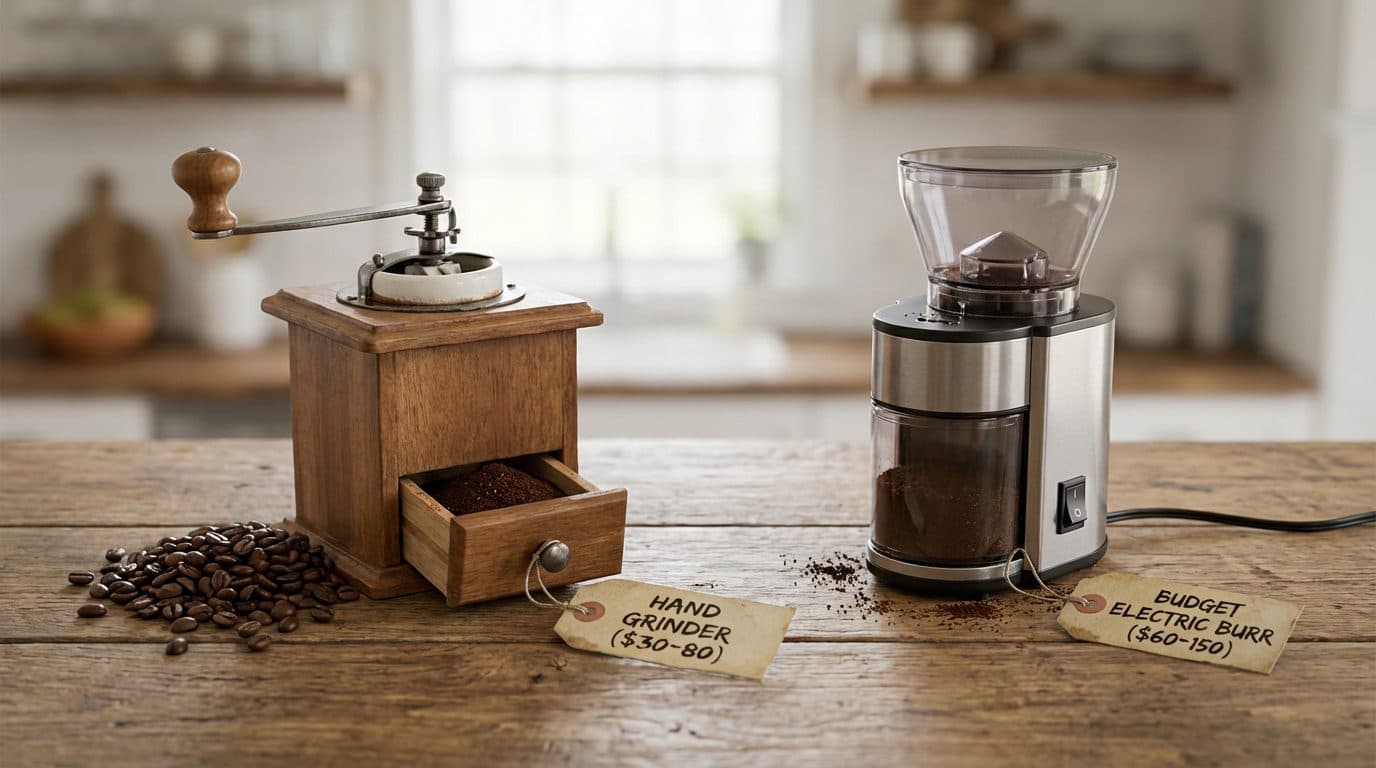
Here’s where things get interesting for budget-conscious brewers. I’ve found that you get significantly more grinding quality per dollar with hand grinders. A $40-60 hand grinder often outperforms electric grinders in the $100-150 range when it comes to grind consistency.
| Feature | Hand Grinder ($30-80) | Budget Electric Burr ($60-150) |
|---|---|---|
| Grind Consistency | Excellent | Good to Moderate |
| Espresso Capable | Yes (higher-end models) | Rarely at this price |
| Speed (per cup) | 30-60 seconds | 5-15 seconds |
| Noise Level | Very quiet | Loud |
| Durability | 10+ years typical | 3-5 years typical |
| Counter Space | Minimal (stores in drawer) | Permanent spot needed |
Pros and Cons: Hand Grinder for Budget Brewing
Let me share what I’ve experienced after years of using hand grinders at home. These compact tools have earned their loyal following for good reasons.
Pros:
- Superior grind quality at lower price points
- Virtually silent operation (perfect for early mornings)
- No electricity needed (great for travel, camping, power outages)
- Compact and easy to store
- Fewer parts mean less can break
- Connects you to the brewing ritual
- Often lasts a decade or longer with basic care
Cons:
- Requires physical effort (tough on wrists for some)
- Slower when grinding for multiple cups
- Learning curve to find your preferred technique
- Can be tiring if you drink a lot of coffee
- Not practical for entertaining or batch brewing
Who Is a Hand Grinder For?
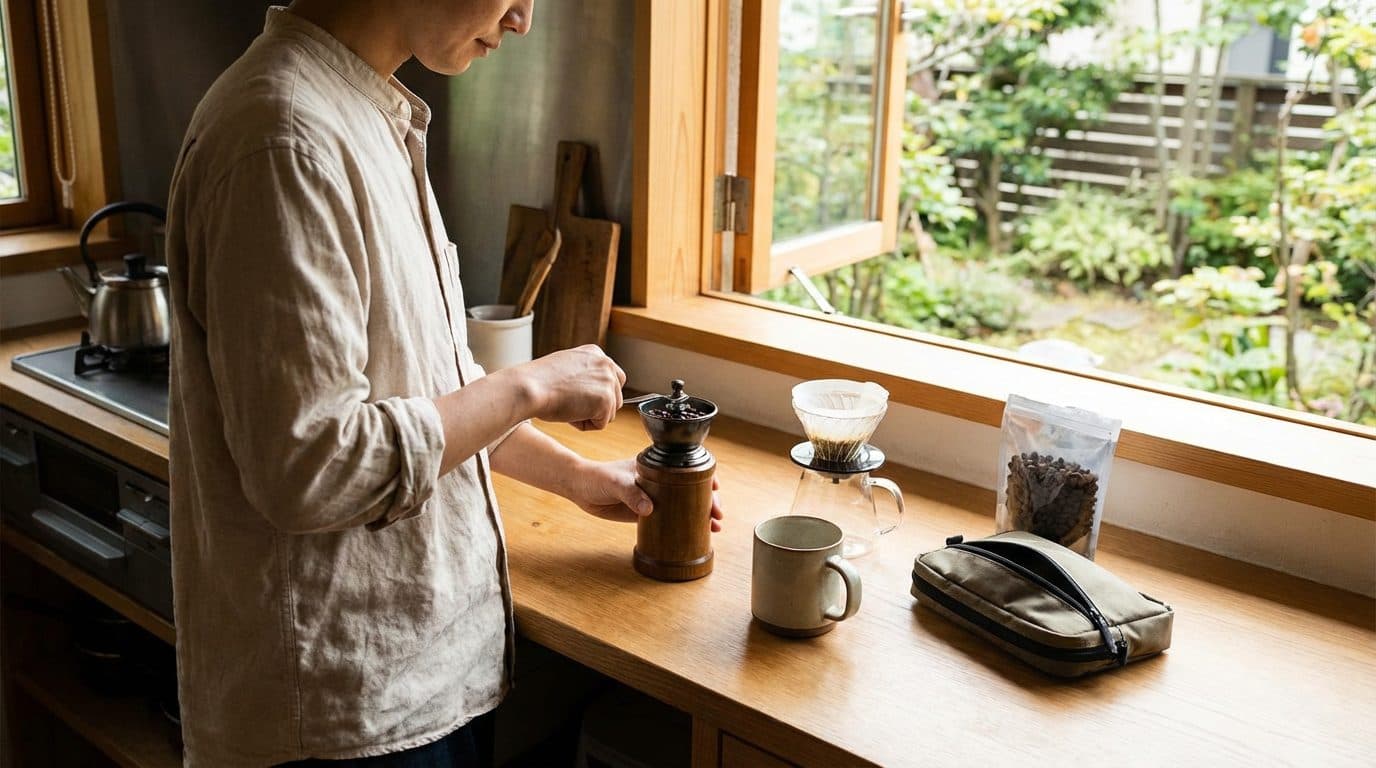
You’ll love a hand grinder if you brew 1-3 cups daily, enjoy a mindful morning routine, appreciate quiet mornings, travel frequently, or want maximum quality on a limited budget. In my experience, people who see coffee preparation as a small meditation rather than a chore thrive with hand grinders.
Who Is a Hand Grinder NOT For?
Skip the hand grinder if you have wrist or hand mobility issues, brew large batches regularly, need coffee in under 60 seconds, or genuinely hate any manual kitchen tasks. Life is too short for bad coffee, but it’s also too short to force yourself into a routine you’ll resent.
Pros and Cons: Electric Grinder for Budget Brewing
Electric grinders prioritize convenience. At budget price points, you’re making some compromises, but for many home brewers, those trade-offs make sense.
Pros:
- Fast and effortless operation
- Handles large quantities easily
- Consistent results without technique learning curve
- Better for households with multiple coffee drinkers
- No physical strain required
- Often includes timer or dose settings
Cons:
- Lower grind quality at equivalent price points
- Loud operation (can wake sleeping family members)
- Takes counter space
- More parts that can fail
- Static can be an issue with cheaper models
- Requires electricity
- Shorter typical lifespan
Who Is an Electric Grinder For?
Electric grinders suit you if you brew for multiple people, prioritize speed and convenience, have physical limitations affecting hand strength, or simply want to press a button and move on with your morning.
Who Is an Electric Grinder NOT For?
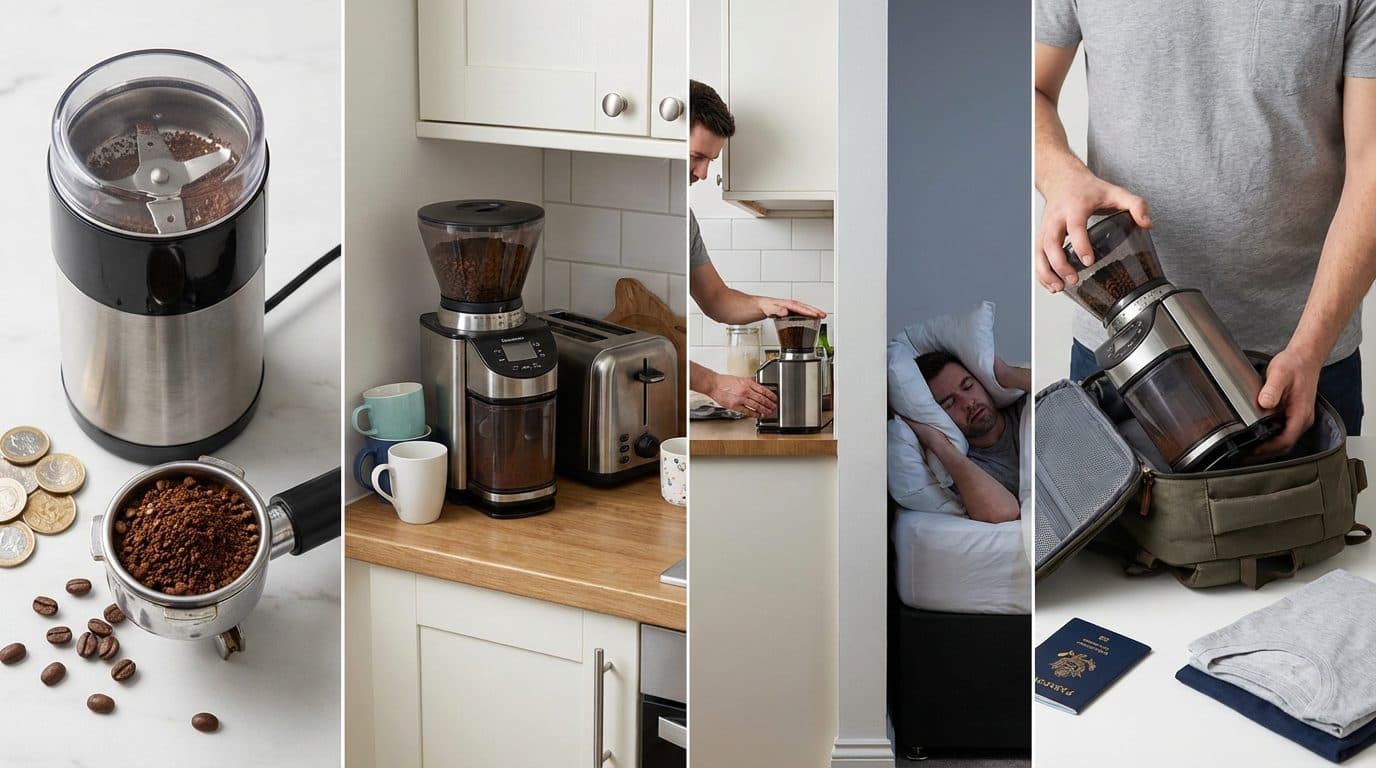
Think twice about electric grinders if you’re chasing espresso-quality grinds on a tight budget, have limited counter space, live with light sleepers, or want a grinder that travels well.
Budget Recommendations: Best Options in Each Category
After testing dozens of grinders, here are my top picks for budget home brewers looking at the hand grinder vs electric grinder decision.
Best Budget Hand Grinders
Timemore C2 ($50-70): This is my go-to recommendation for most budget brewers. The grind consistency rivals electric grinders costing twice as much. It handles pour-over, French press, and AeroPress beautifully. The ergonomic design makes grinding comfortable, and adjustments are precise.
JavaPresse Manual Grinder ($25-35): If you’re really stretching pennies, this Amazon favorite gets the job done. Grind quality is acceptable for French press and drip methods. It won’t win awards, but it beats pre-ground coffee by miles. Consider this your entry point into fresh grinding.
1Zpresso Q2 ($80-100): At the top of the budget range, this grinder punches into premium territory. Fast grinding action, exceptional consistency, and build quality that lasts. If you can stretch your budget here, you’ll have a grinder for the next decade.
Check the latest prices on Amazon for current deals on these models.
Best Budget Electric Grinders
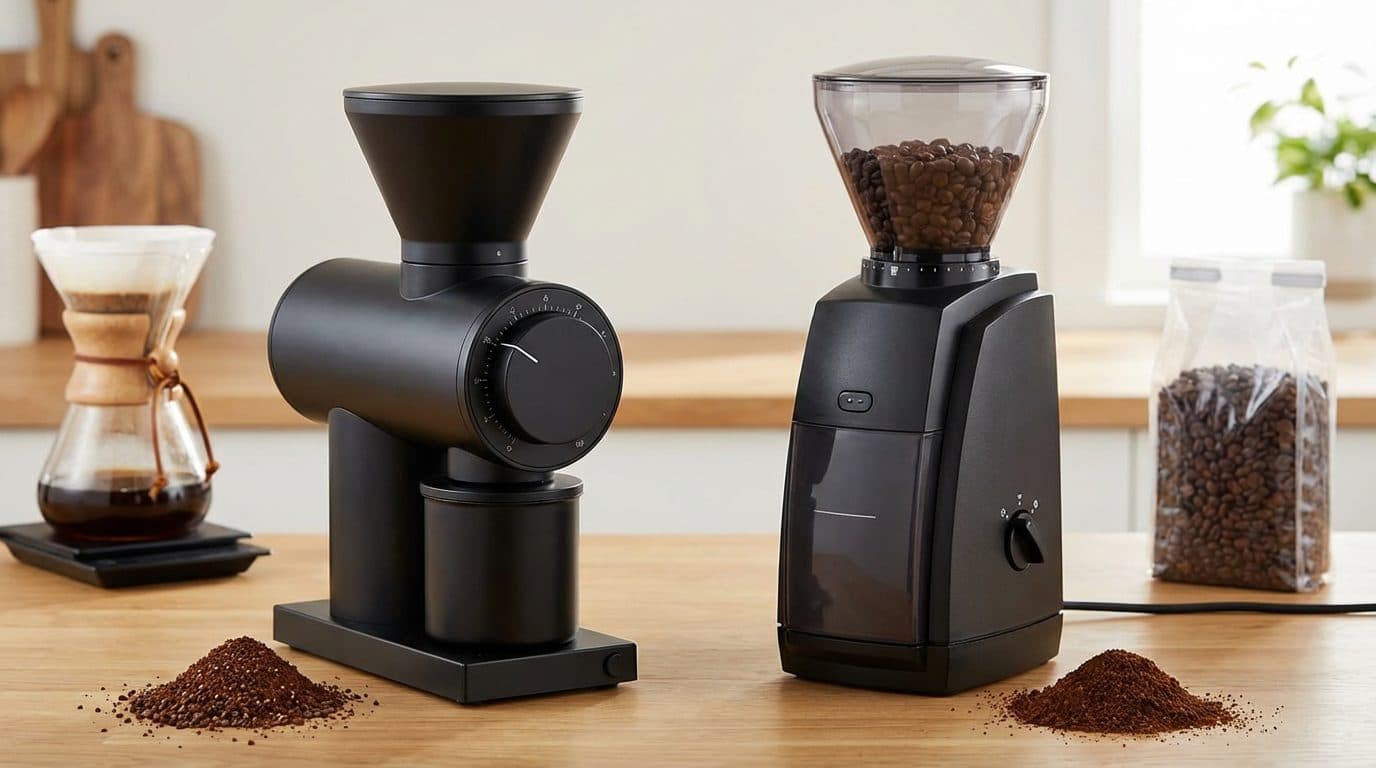
Baratza Encore ($150-170): Yes, it stretches the “budget” definition, but the Encore remains the gold standard for entry-level electric burr grinders. Consistent grounds, 40 grind settings, and Baratza’s legendary customer service and repair support. If you can save a bit longer, this investment pays off.
OXO Brew Conical Burr Grinder ($100-120): A solid performer with intuitive controls and decent consistency for pour-over and drip methods. Not ideal for espresso, but great for everyday brewing.
Bodum Bistro ($80-100): An affordable option that delivers acceptable results for most brewing methods. Some static issues, but manageable. Good entry point if electric is your priority.
See current deals on these electric options through major retailers.
Real-World Scenario: Which Should You Choose?
Let me paint two typical scenarios to help you decide between a hand grinder vs electric grinder.
Scenario One: The Solo Morning Brewer
Sarah lives alone and makes one pour-over each morning before work. She has 15 minutes for her coffee routine and enjoys the quiet before the day begins. She’s working with a $60 budget.
Best choice: Hand grinder (Timemore C2). Sarah gets exceptional grind quality, a meditative morning moment, and a grinder that’ll last years. The 45 seconds of grinding becomes part of her ritual rather than a chore.
Scenario Two: The Busy Family Kitchen
Mike and his partner both drink coffee, plus they frequently host weekend brunches. Mornings are chaotic with kids getting ready for school. Budget is around $120-150.
Best choice: Electric grinder (OXO or save for Baratza Encore). Speed matters when you’re grinding for multiple people while managing breakfast chaos. The convenience justifies the quality trade-off at this price point.
Barista Tip: Getting the Most from Your Budget Grinder
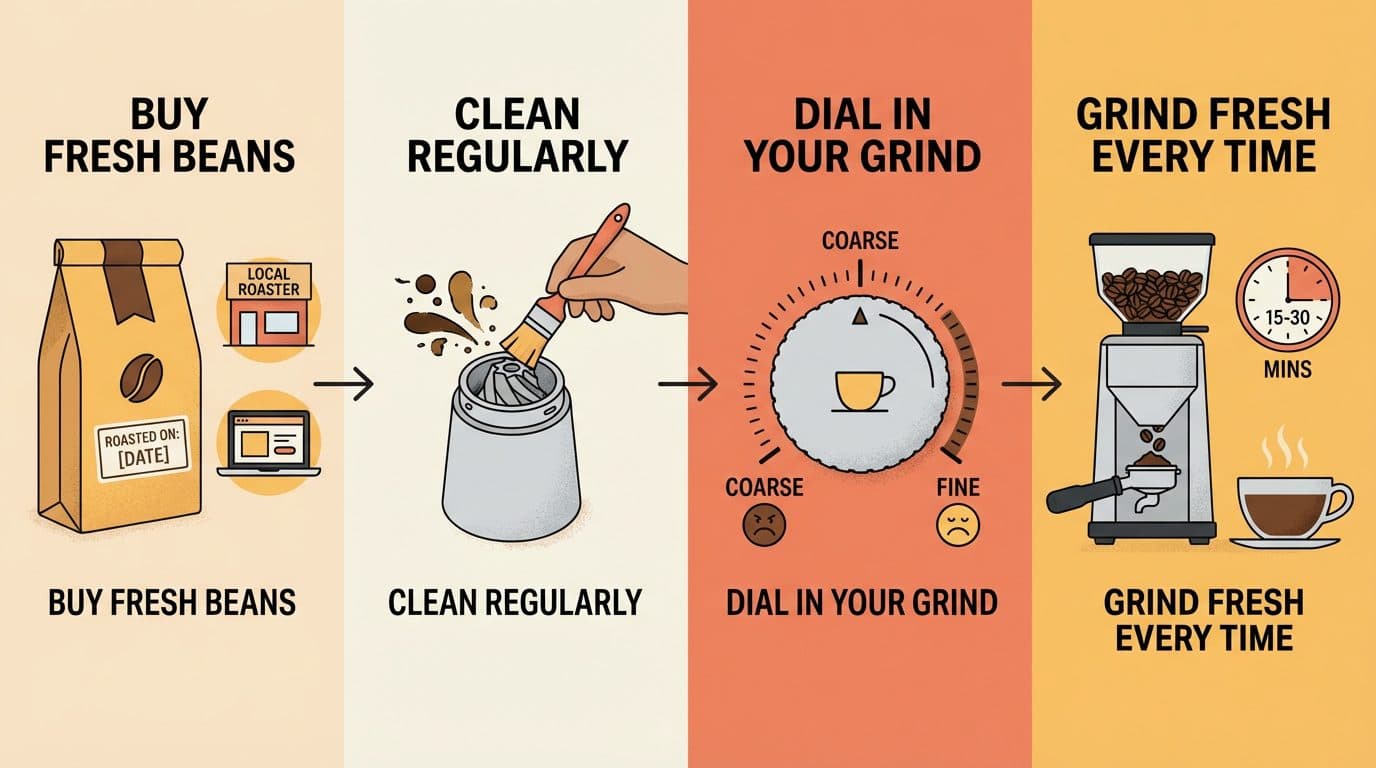
Whichever you choose, these tips help you extract maximum value:
- Buy fresh beans: Even the best grinder can’t save stale coffee. Find a local roaster or order online from roasters who print roast dates.
- Clean regularly: Old coffee oils go rancid and affect flavor. Brush out your grinder weekly.
- Dial in your grind: Spend time adjusting until your coffee tastes balanced. Too bitter? Grind coarser. Too sour? Grind finer.
- Grind fresh every time: Ground coffee goes stale within 15-30 minutes. Never grind more than you’ll use immediately.
In my experience, a mediocre grinder with fresh beans beats an expensive grinder with stale coffee every time. Focus on bean freshness once you’ve got your grinder sorted.
Frequently Asked Questions
Are hand grinders really as good as electric grinders?
At equivalent price points, hand grinders typically produce more consistent grinds than electric grinders. The mechanical simplicity allows manufacturers to put more budget into quality burrs rather than motors and electronics. For budget home brewers, hand grinders often deliver better cup quality.
How long does grinding take with a hand grinder?
Expect 30-60 seconds per cup for medium grinds. Finer grinds (like espresso) take longer, around 60-90 seconds. Coarser grinds (French press) are faster, around 20-30 seconds. Most people find this manageable for 1-2 cups.
Can budget electric grinders make espresso?
Generally, no. True espresso requires very fine, extremely consistent grinds. Budget electric grinders under $150 rarely achieve this. If espresso is your goal, you’ll need to invest more in an electric grinder ($300+) or choose a quality hand grinder designed for espresso ($100-150).
How long do budget grinders typically last?
Quality hand grinders often last 10-15 years with basic care. Budget electric grinders typically last 3-7 years, depending on use frequency and build quality. This longevity difference affects the true cost of ownership.
Is grinding your own coffee really worth it?
Absolutely. Pre-ground coffee starts going stale within minutes of grinding. Freshly ground beans release aromatic compounds that make coffee taste vibrant and complex. It’s the single biggest upgrade most home brewers can make.
Conclusion: Make Your Decision and Start Brewing
The hand grinder vs electric grinder debate comes down to your priorities. For budget home brewers who want maximum quality per dollar, don’t mind a brief manual effort, and brew modest quantities, hand grinders win. For those prioritizing convenience, brewing larger amounts, or dealing with physical limitations, budget electric grinders make more sense.
My recommendation for most budget-conscious readers? Start with a quality hand grinder like the Timemore C2. You’ll get exceptional grind quality, learn what good coffee tastes like, and have a reliable tool for years. If you later decide convenience matters more, you can always upgrade to an electric grinder while keeping your hand grinder for travel.
Whichever path you choose, the real victory is grinding fresh. That simple change transforms your morning cup from ordinary to remarkable. Pick a grinder that fits your budget and lifestyle, order some fresh beans, and start enjoying coffee the way it’s meant to taste.


Comments