


Table of Contents
- What You'll Need for Iced Pour-Over Coffee
- Gear List
- Ingredients
- The Quick Brew Method: Step-by-Step
- Brewing Steps
- Why the Japanese Iced Coffee Method Works
- Key Takeaway
- Common Mistakes to Avoid
- Using the Wrong Grind Size
- Not Adjusting Your Ratio
- Pouring Too Fast
- Using Stale Coffee
- Skipping the Bloom
- Barista Tips for the Best Iced Pour-Over
- Iced Pour-Over vs. Cold Brew: What's the Difference?
- Frequently Asked Questions
- Can I use any pour-over dripper for iced coffee?
- How much ice should I use for iced pour-over?
- Why does my iced pour-over taste sour?
- Can I make iced pour-over ahead of time?
- What's the best coffee origin for iced pour-over?
- Conclusion and Next Steps
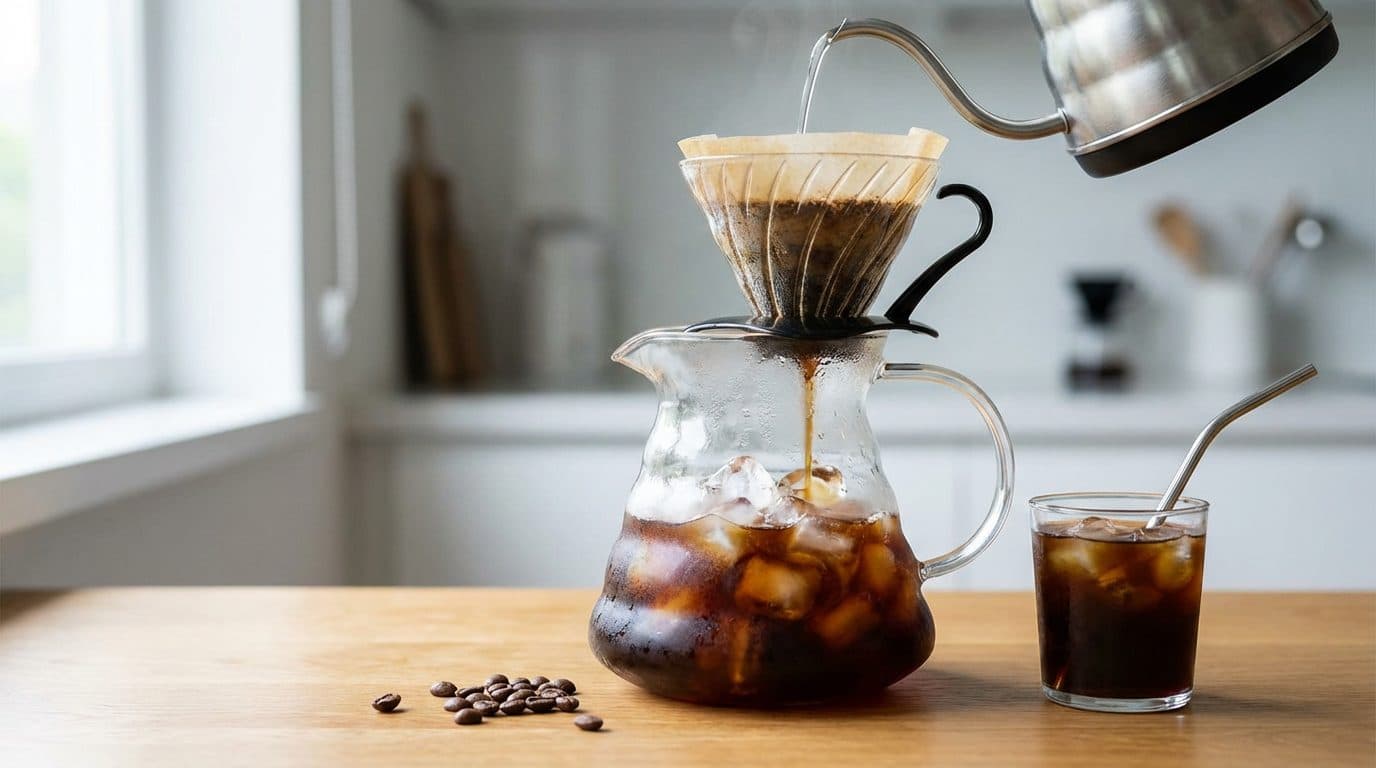
Ever craved a refreshing iced coffee but didn’t want to wait 12+ hours for cold brew? You’re not alone. The good news is that iced pour-over coffee gives you a bright, flavorful cup in under five minutes—no overnight steeping required. This quick brew method has become my go-to during hot summer mornings when I need something cold, fast, and delicious.
In this guide, you’ll learn exactly how to make iced pour-over coffee at home using a simple technique called the “Japanese iced coffee method.” I’ll walk you through the gear you need, the step-by-step process, and the tips that separate a mediocre iced coffee from a truly exceptional one. Life is too short for watered-down, bitter iced coffee—let’s fix that.
What You’ll Need for Iced Pour-Over Coffee
Before you start brewing, gather your equipment and ingredients. The beauty of this method is that you probably already have most of what you need if you’ve ever made hot pour-over coffee.
Gear List
- Pour-over dripper (any cone-style dripper works well)
- Paper or reusable filter
- Gooseneck kettle (or any kettle with a controlled pour)
- Kitchen scale (highly recommended for consistency)
- Timer
- Carafe or large glass
- Stirring spoon
Ingredients
- Coffee beans: 25-30 grams of freshly roasted coffee
- Hot water: About 200 grams at 200-205°F (93-96°C)
- Ice: 100-120 grams of ice cubes
Barista Tip: Use filtered water for both your hot water and ice. Tap water with heavy chlorine or mineral content can muddy the flavors you’re trying to highlight.
The Quick Brew Method: Step-by-Step

This technique works by brewing concentrated hot coffee directly onto ice. The ice instantly chills the coffee while diluting it to the proper strength. Here’s how to do it right.
Brewing Steps
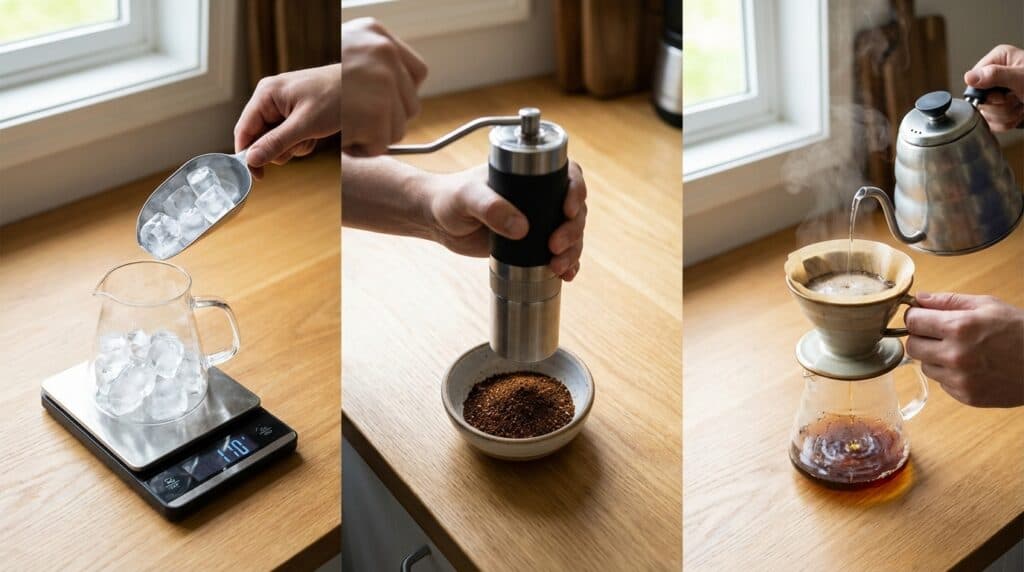
- Weigh your ice: Place 100-120 grams of ice directly into your carafe or serving glass. This will sit beneath your pour-over dripper.
- Grind your coffee: Use a medium-fine grind—slightly finer than you’d use for regular hot pour-over. Aim for something resembling table salt. You’ll need about 25-30 grams of coffee.
- Rinse your filter: Place the filter in your dripper and rinse it with hot water. This removes any papery taste and preheats the dripper. Discard the rinse water (not into your ice!).
- Add coffee grounds: Place the dripper on top of your ice-filled carafe. Add the ground coffee and give it a gentle shake to level the bed.
- Bloom the coffee: Start your timer and pour about 50 grams of hot water in a slow spiral over the grounds. Wait 30-45 seconds. You’ll see the coffee “bloom” as gases escape—this is a sign of freshness.
- Continue pouring: After the bloom, pour the remaining water in slow, steady circles. Keep the water level consistent and avoid pouring directly on the filter edges. Total pour time should be around 2:30 to 3:00 minutes.
- Swirl and serve: Once the drip finishes, remove the dripper. Give your carafe a gentle swirl to ensure the melted ice is fully incorporated. Pour over fresh ice if desired, and enjoy immediately.
Taste Profile: Expect a bright, crisp cup with pronounced acidity and clear flavor notes. Unlike cold brew, which tends to be smooth and mellow, iced pour-over preserves the coffee’s origin characteristics—fruity, floral, or chocolatey notes really shine through.
Why the Japanese Iced Coffee Method Works
You might wonder: doesn’t hot coffee over ice just make a watery mess? Not when you do it correctly. The secret is in the ratio adjustments.
When you brew hot pour-over normally, you use a certain ratio of coffee to water—typically around 1:15 or 1:16. For iced pour-over, you replace a portion of that water with ice. So instead of 300 grams of hot water, you might use 200 grams of hot water plus 100 grams of ice. The math works out so that once the ice melts, you have the same total liquid volume at the proper strength.
Key Takeaway
The rapid cooling locks in volatile aromatic compounds that would otherwise evaporate if you let hot coffee cool slowly. This is why iced pour-over tastes brighter and more complex than simply refrigerating leftover morning coffee.
Did You Know? This method has been popular in Japan for decades, which is why it’s often called “Japanese iced coffee.” It was designed specifically to capture the nuanced flavors of single-origin beans in a cold format.
Common Mistakes to Avoid
I’ve made plenty of iced pour-over mistakes over the years. Here are the pitfalls that trip up most home baristas—and how to sidestep them.
Using the Wrong Grind Size
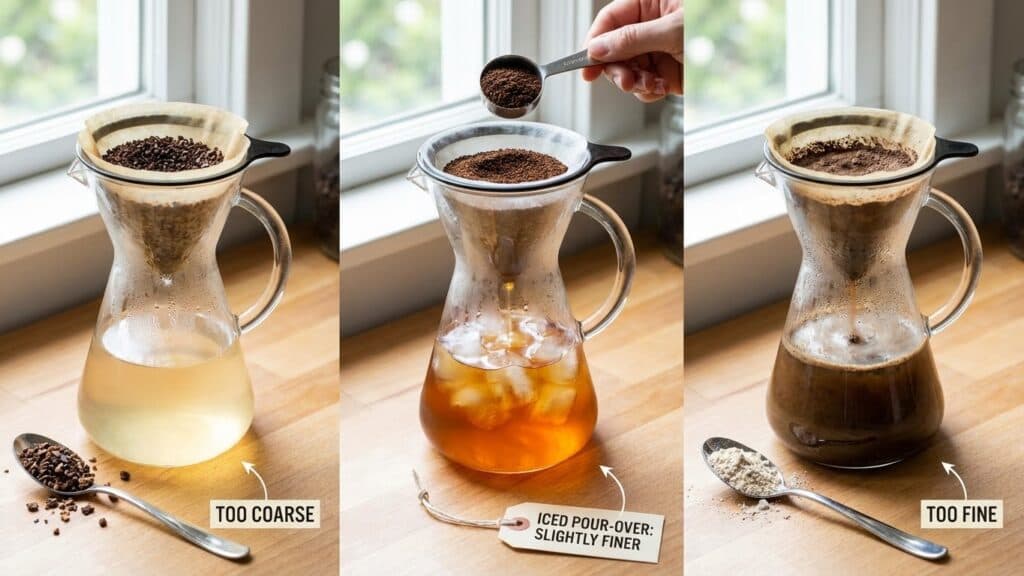
If your grind is too coarse, the coffee will be under-extracted and taste sour or weak. If it’s too fine, you’ll get a bitter, over-extracted brew. For iced pour-over, go slightly finer than your usual hot pour-over setting. The reduced water volume means you need more surface area to extract properly.
Not Adjusting Your Ratio
This is the most common error. If you use your normal amount of hot water AND add ice, you’ll end up with a diluted, flavorless drink. Remember: the ice counts as part of your total water weight. A good starting point is 60% hot water and 40% ice.
Pouring Too Fast
Rushing the pour leads to channeling, where water finds the path of least resistance and doesn’t extract evenly. Take your time. A slow, controlled pour in concentric circles ensures all the grounds get equal contact with water.
Using Stale Coffee
Iced pour-over is unforgiving with stale beans. Because this method highlights bright, delicate flavors, old coffee will taste flat and lifeless. Use beans roasted within the last 2-4 weeks for best results.
Skipping the Bloom
The bloom phase isn’t optional. It releases carbon dioxide trapped in fresh coffee, which can create uneven extraction and sour notes if not allowed to escape. Give it a full 30-45 seconds.
Barista Tips for the Best Iced Pour-Over
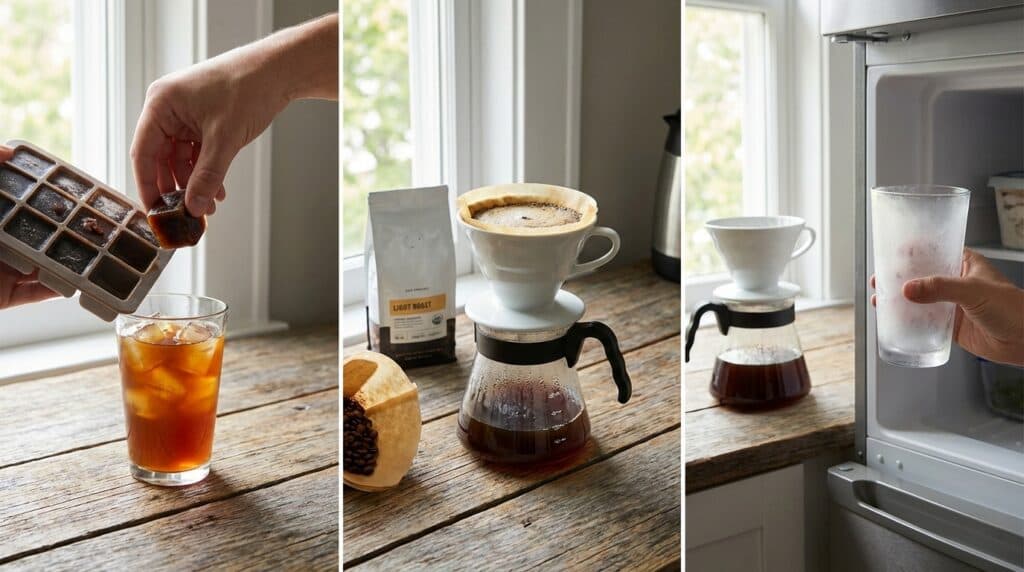
After years of experimenting, I’ve found a few tricks that consistently elevate my iced pour-over game. These small adjustments make a noticeable difference.
- Use coffee ice cubes: Freeze leftover brewed coffee into ice cubes. Use these instead of regular ice to prevent any dilution as you sip.
- Try light roasts: Lighter roasts tend to have more acidity and fruity notes, which translate beautifully to iced coffee. Save the dark roasts for your espresso drinks.
- Chill your glass: Pop your serving glass in the freezer for 10 minutes before brewing. This keeps your drink colder longer.
- Experiment with ratios: Start with a 1:12 coffee-to-total-water ratio and adjust based on your taste. Some people prefer a stronger concentrate; others like it lighter.
- Add a pinch of salt: Sounds strange, but a tiny pinch of salt can reduce bitterness and enhance sweetness without making your coffee taste salty.
Barista Tip: If you want to get fancy, try adding a splash of tonic water to your finished iced pour-over. The quinine bitterness and carbonation create a surprisingly refreshing coffee tonic that’s popular in specialty cafes.
Iced Pour-Over vs. Cold Brew: What’s the Difference?
People often confuse these two methods, but they produce very different drinks. Here’s a quick comparison to help you understand when to use each.
| Factor | Iced Pour-Over | Cold Brew |
|---|---|---|
| Brew Time | 3-5 minutes | 12-24 hours |
| Flavor Profile | Bright, acidic, complex | Smooth, mellow, chocolatey |
| Best For | Single-origin, light roasts | Dark roasts, milk-based drinks |
| Caffeine | Moderate | Higher (concentrated) |
| Effort | Active brewing required | Set it and forget it |
In short, choose iced pour-over when you want to taste the unique characteristics of a specific coffee. Choose cold brew when you want something smooth and easy to batch-prepare for the week.
Frequently Asked Questions
Can I use any pour-over dripper for iced coffee?
Yes, any cone-style dripper works well for this method. The key is adjusting your grind size and ratio, not the specific equipment. Flat-bottom drippers also work, though you may need to tweak your pour technique slightly.
How much ice should I use for iced pour-over?
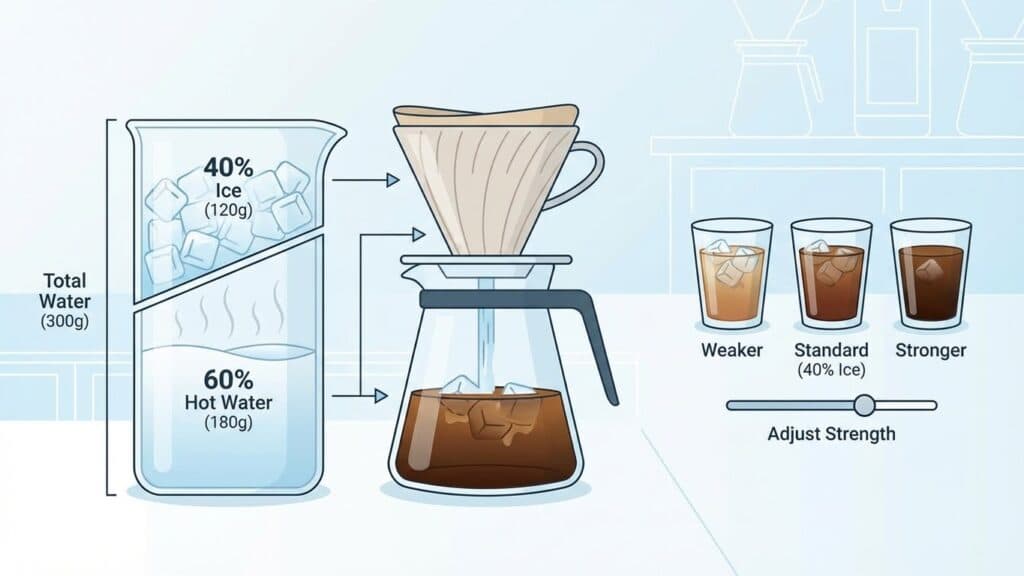
A good rule of thumb is to replace about 40% of your total water weight with ice. So if your recipe calls for 300 grams of water total, use 180 grams of hot water and 120 grams of ice. Adjust based on how strong you like your coffee.
Why does my iced pour-over taste sour?
Sourness usually indicates under-extraction. Try grinding finer, pouring slower, or using slightly hotter water. Also make sure you’re giving the coffee a proper bloom time before continuing your pour.
Can I make iced pour-over ahead of time?
It’s best enjoyed immediately, as the bright flavors fade within a few hours. If you must make it ahead, store it in a sealed container in the refrigerator and consume within 24 hours. It won’t taste quite as vibrant, but it’ll still be good.
What’s the best coffee origin for iced pour-over?
Ethiopian and Kenyan coffees are fantastic choices because of their bright acidity and fruity notes. Central American coffees with citrus or floral characteristics also shine. In my experience, anything with tasting notes like “berry,” “citrus,” or “floral” works beautifully chilled.
Conclusion and Next Steps
Making iced pour-over coffee at home is one of the simplest ways to enjoy café-quality cold coffee without the wait. The quick brew method preserves all the nuanced flavors that make specialty coffee special, and it takes less than five minutes from start to finish. Once you nail the ratio and technique, you’ll wonder why you ever settled for watered-down iced coffee or day-old cold brew.
Start with the basic recipe outlined above, then experiment with different beans, ratios, and ice amounts until you find your perfect cup. The beauty of home brewing is that you’re in control. Grab your dripper, some fresh beans, and a handful of ice—your best iced coffee is just a few pours away.

Comments