


Table of Contents
- Quick Verdict: Philips 3200 LatteGo
- What Makes the Philips 3200 LatteGo Different?
- The LatteGo Milk System Explained
- Philips 3200 LatteGo: Features and Specifications
- Build Quality and Design
- Daily Use: How Close to Hands-Free Is It Really?
- The Morning Routine
- What "Hands-Free" Doesn't Cover
- Espresso and Coffee Quality: The Taste Test
- Espresso Performance
- Milk Drinks: Lattes and Cappuccinos
- Pros and Cons of the Philips 3200 LatteGo
- Pros
- Cons
- Who Is This Machine For?
- Who Is This For?
- Who Is This NOT For?
- Frequently Asked Questions
- How long does the Philips 3200 LatteGo take to make a latte?
- Can you use pre-ground coffee in the Philips 3200?
- How often do you need to descale the machine?
- Is the Philips 3200 worth the price compared to the 4300 series?
- How loud is the machine during operation?
- Final Verdict and Recommendations
Quick Verdict: Philips 3200 LatteGo
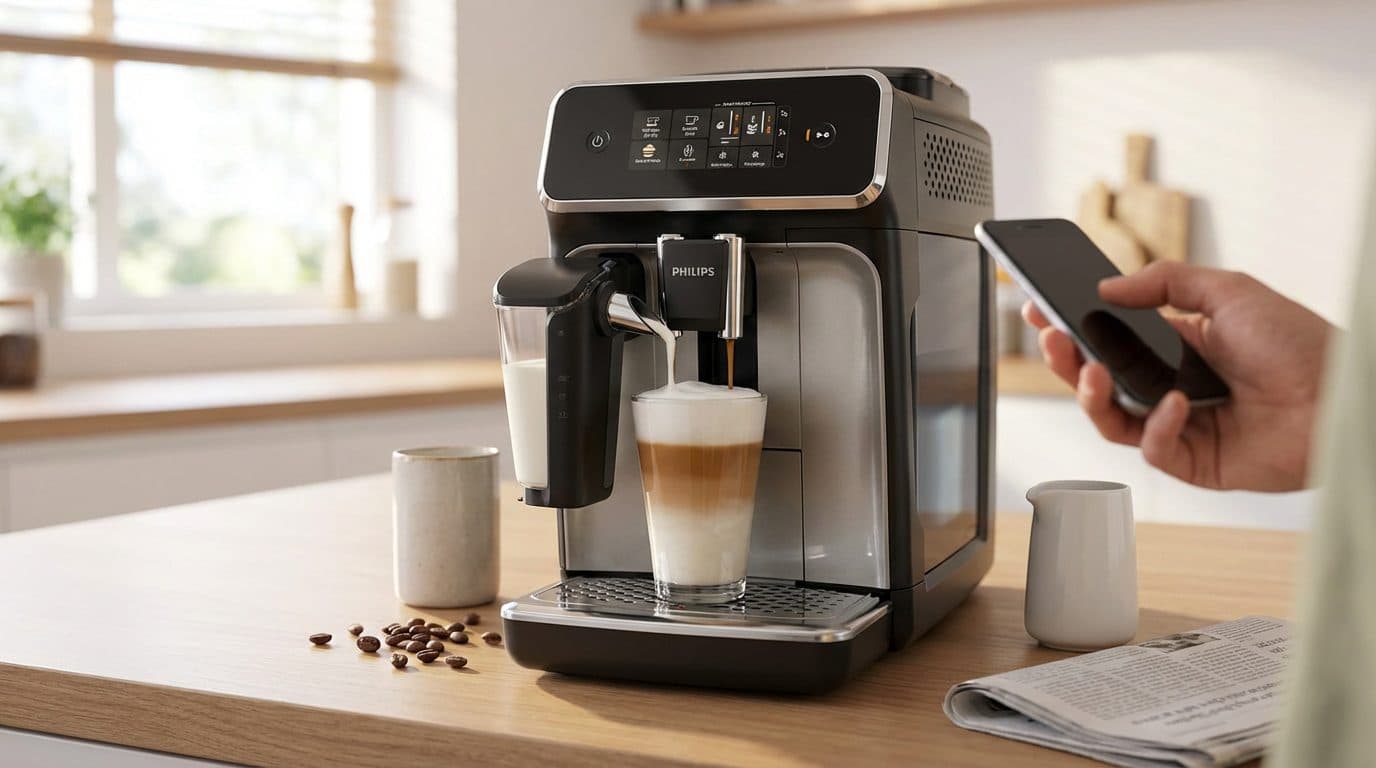
After months of daily use, I can tell you the Philips 3200 LatteGo comes remarkably close to the hands-free espresso dream. It’s not perfect—no machine truly is—but it delivers consistently good lattes and cappuccinos with minimal effort. If you’re tired of complicated milk frothing routines and want a super-automatic that actually simplifies your morning, this machine earns a solid recommendation. It’s the espresso machine equivalent of having a reliable sous chef in your kitchen.
What Makes the Philips 3200 LatteGo Different?
The coffee machine market is flooded with options promising café-quality drinks at home. So what sets the Philips 3200 LatteGo apart from the crowd? The answer lies in its innovative milk system design and genuinely user-friendly approach.
Traditional super-automatic machines often use milk carafes with internal tubes, valves, and complicated assemblies. These work fine for frothing, but cleaning them feels like solving a puzzle after every use. The LatteGo system takes a completely different approach. It uses a simple two-piece milk container that clicks together—no tubes, no hidden parts, no frustration.
The LatteGo Milk System Explained
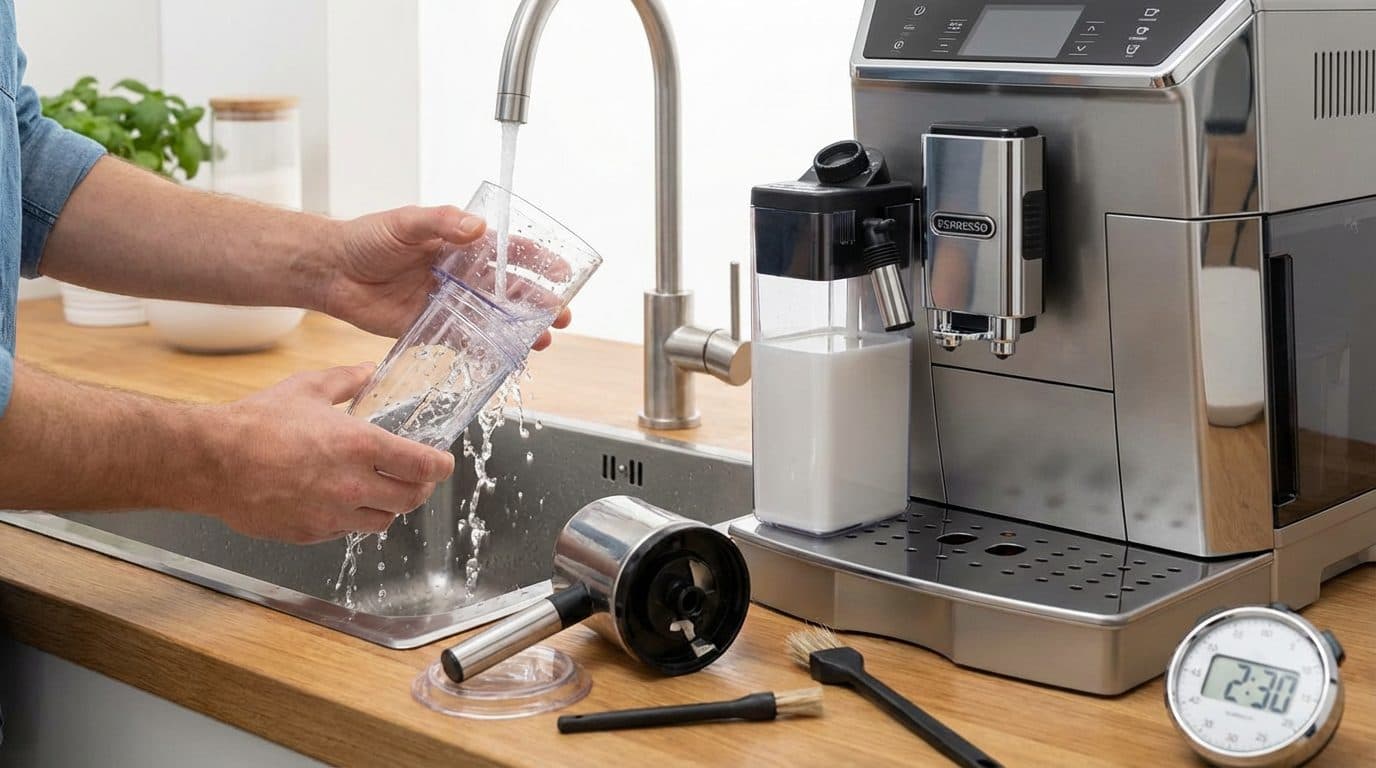
In short, the LatteGo system creates microfoam by rapidly mixing air with milk as it’s drawn up and dispensed. The two-piece design means you can rinse both parts under the tap in about 15 seconds. Compare that to the 2-3 minutes of disassembly and scrubbing required by traditional milk systems, and you’ll understand why this machine has such devoted fans.
I’ve found that the foam quality sits somewhere between a steam wand and a basic automatic frother. It’s not the silky microfoam you’d get from a skilled barista, but it’s consistently creamy and holds up well in your cup. For a machine designed around convenience, that’s a fair trade-off.
Philips 3200 LatteGo: Features and Specifications
Before diving deeper into performance, let’s look at what you’re actually getting with this machine. Understanding the specifications helps set realistic expectations.
| Feature | Specification |
|---|---|
| Drink Options | 5 one-touch drinks (espresso, coffee, cappuccino, latte macchiato, americano) |
| Grinder | Ceramic burr, 12 settings |
| Water Tank | 1.8 liters (removable) |
| Bean Hopper | 275 grams capacity |
| Milk Container | LatteGo system (dishwasher safe) |
| Pressure | 15 bar |
| Dimensions | 24.6 x 37.1 x 43.3 cm |
| Customization | Aroma strength (3 levels), drink volume adjustment |
Build Quality and Design
The Philips 3200 has a predominantly plastic exterior, which might disappoint those expecting stainless steel at this price point. However, the plastic feels sturdy and holds up well to daily handling. The intuitive touch display sits front and center, making drink selection straightforward even before your first coffee kicks in.
One design element I genuinely appreciate is the front-loading drip tray and grounds container. You don’t need to pull the machine out from under cabinets to empty waste or check water levels. This sounds minor until you’ve lived with a machine that requires constant repositioning.
Daily Use: How Close to Hands-Free Is It Really?
Here’s where we address the main question. The marketing promise of “hands-free” espresso sounds almost too good to be true. In my experience, the reality is nuanced but largely positive.
The Morning Routine
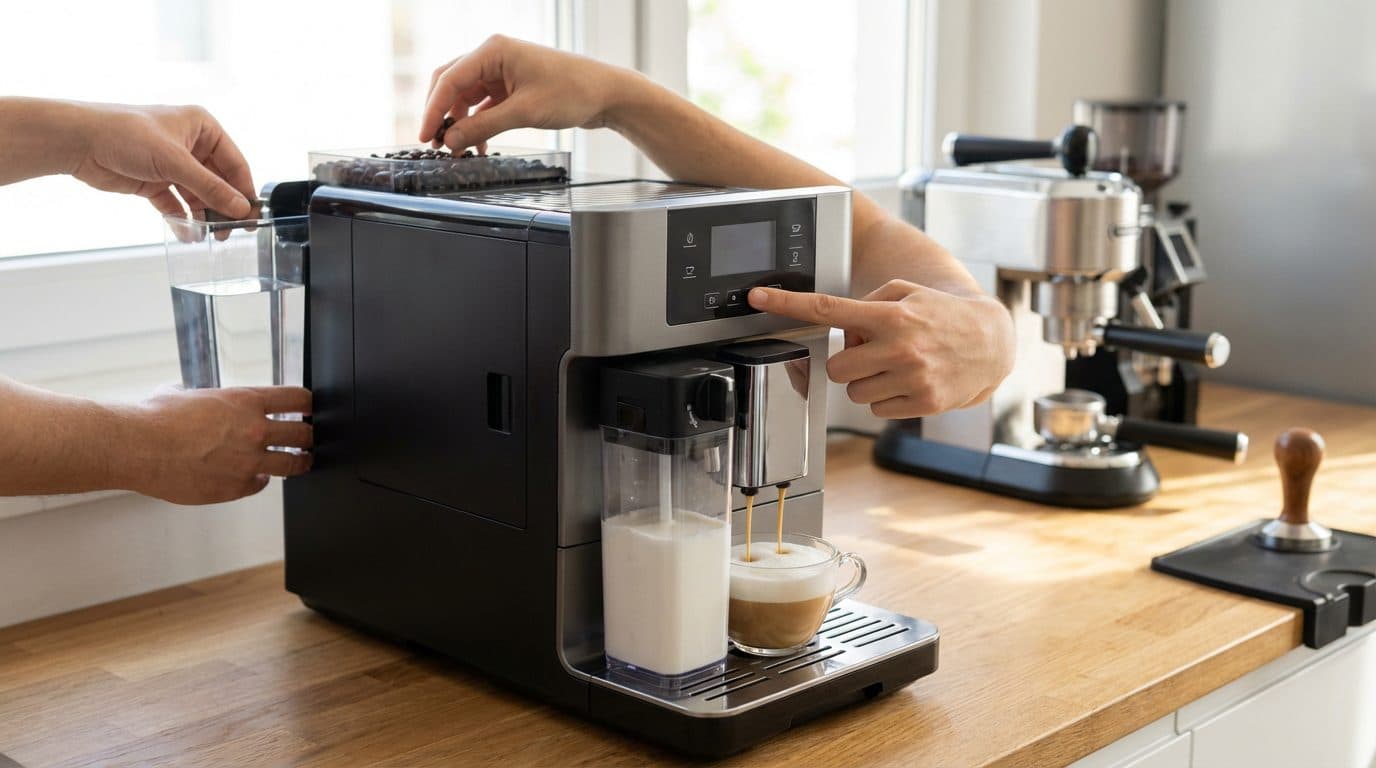
A typical morning with the Philips 3200 looks like this: You fill the water tank (once every day or two), add beans to the hopper (once a week for most users), click the LatteGo container into place with milk, and press your drink button. The machine grinds, brews, froths, and dispenses. Total active involvement: roughly 30 seconds.
Compare this to a traditional espresso setup requiring grinding, tamping, shot timing, and separate milk steaming—you’re saving 5-10 minutes per drink. For busy mornings, that difference matters enormously.
What “Hands-Free” Doesn’t Cover
Let’s be honest about the limitations. You still need to:
- Empty the drip tray every 8-10 drinks
- Discard used coffee grounds from the internal container (capacity: about 12 pucks)
- Run the automatic cleaning cycle when prompted (uses one cleaning tablet)
- Descale every 2-3 months depending on water hardness
- Wipe down the milk spout occasionally to prevent residue buildup
None of these tasks are difficult, but they’re not zero-effort either. The machine reminds you with on-screen prompts, so nothing catches you off guard. I’d describe it as “low maintenance” rather than “no maintenance.”
Espresso and Coffee Quality: The Taste Test
Convenience means nothing if the coffee tastes mediocre. So how does the Philips 3200 perform where it actually counts—in your cup?
Espresso Performance
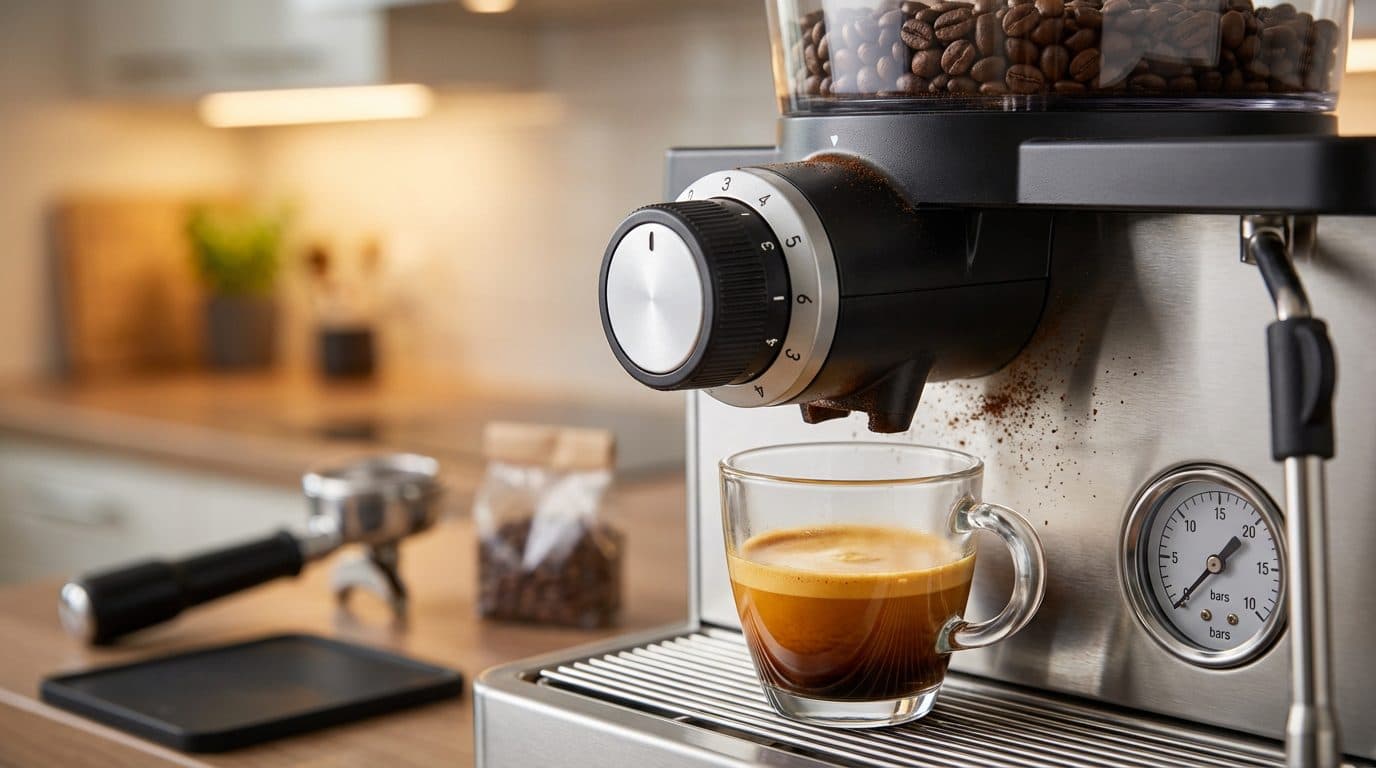
The ceramic burr grinder does a respectable job across its 12 grind settings. Out of the box, the default setting tends toward the coarse side for espresso, so I’d recommend starting around setting 3-4 and adjusting from there. The 15-bar pump delivers consistent extraction, producing shots with decent crema and balanced flavor.
Is it competition-level espresso? No. A skilled barista with a semi-automatic machine and freshly roasted beans will produce superior shots. But for a super-automatic handling everything internally, the results are genuinely enjoyable. I’d rate the espresso quality as “good coffee shop” rather than “specialty roaster” level.
Barista Tip: Use medium to medium-dark roasted beans for best results. Very light roasts don’t extract as well with the machine’s fixed brewing parameters, often tasting sour or thin.
Milk Drinks: Lattes and Cappuccinos
The LatteGo system shines brightest with milk-based drinks. Cappuccinos come out with a nice foam layer, while latte macchiatos deliver that satisfying layered look. The milk temperature lands around 65°C (149°F)—hot enough to enjoy immediately without scorching.
One adjustment option I wish existed: foam density control. You get what you get, and while it’s good, some mornings I’d prefer denser cappuccino foam versus what the machine delivers. The Philips 4300 series adds this customization if it’s important to you.
Pros and Cons of the Philips 3200 LatteGo
After extensive testing, here’s my honest breakdown of what works and what falls short.
Pros
- Genuinely easy milk system: The LatteGo design lives up to the hype for quick cleaning
- Consistent drink quality: Every cup tastes nearly identical—great for routine lovers
- Intuitive interface: Even non-tech-savvy family members figure it out quickly
- Compact footprint: Smaller than many competitors with similar features
- Quiet grinder: Ceramic burrs operate noticeably quieter than steel alternatives
- Dishwasher-safe components: Milk container, drip tray, and brew group all go in the dishwasher
Cons
- Limited customization: Only 3 aroma strength levels; no temperature or foam adjustments
- Plastic build: Doesn’t feel premium despite the price tag
- No hot water spout: Can’t make tea or americanos without brewing coffee first
- Grinder retention: First shot after changing grind settings may taste off
- Milk container size: Holds enough for 2-3 drinks maximum
Who Is This Machine For?
Not every espresso machine suits every coffee lover. Here’s my take on who should consider the Philips 3200 LatteGo—and who should look elsewhere.
Who Is This For?
- Busy professionals who want quality drinks without the learning curve
- Households where multiple people drink different beverages
- Anyone frustrated by complicated milk frother cleaning
- Coffee lovers who value consistency over maximum customization
- People transitioning from pod machines to real espresso
Who Is This NOT For?
- Espresso purists who want full control over every variable
- Those seeking the absolute best shot quality regardless of convenience
- Budget-conscious buyers (this is a significant investment)
- People who exclusively drink black coffee (simpler machines exist)
- Anyone who enjoys the ritual of manual espresso preparation
Frequently Asked Questions
How long does the Philips 3200 LatteGo take to make a latte?
From pressing the button to finished drink, expect about 60-90 seconds for a latte macchiato. The machine heats up in roughly 30 seconds from standby mode. Your total time from approaching the machine to holding a completed drink is under 2 minutes.
Can you use pre-ground coffee in the Philips 3200?
Yes, there’s a bypass chute for pre-ground coffee. This works well for decaf in the evening or trying different beans without emptying the hopper. However, I’d recommend using fresh beans 90% of the time for best flavor.
How often do you need to descale the machine?
The machine tracks water usage and prompts you when descaling is needed—typically every 2-3 months with average water hardness. Using filtered water extends this interval. Philips sells descaling solution, but generic citric acid-based descalers work equally well.
Is the Philips 3200 worth the price compared to the 4300 series?
The 4300 adds more drink options, a coffee intensity slider, and foam customization. If those features matter to you, the extra cost makes sense. For most users who want great lattes without complexity, the 3200 offers better value. I’ve found the core coffee quality nearly identical between models.
How loud is the machine during operation?
The grinding phase is the loudest moment, but it’s surprisingly tolerable—quieter than many electric coffee grinders. You won’t wake sleeping family members in adjacent rooms, though it’s not silent either. The brewing and milk frothing phases are much quieter.
Final Verdict and Recommendations
So, is the Philips 3200 LatteGo truly hands-free? Almost. It comes closer than any super-automatic machine I’ve tested to delivering effortless café-style drinks. The LatteGo milk system genuinely revolutionizes daily maintenance, and the overall experience prioritizes convenience without completely sacrificing quality.
The trade-off is clear: you’re exchanging maximum espresso potential for maximum ease of use. If that exchange works for your lifestyle, this machine delivers excellent value. Life really is too short for complicated coffee routines—and the Philips 3200 understands that perfectly.
Ready to simplify your morning coffee ritual? Check the latest price on Amazon to see current deals on the Philips 3200 LatteGo. Your future self—the one enjoying lattes without cleanup stress—will thank you.


Comments