


Table of Contents
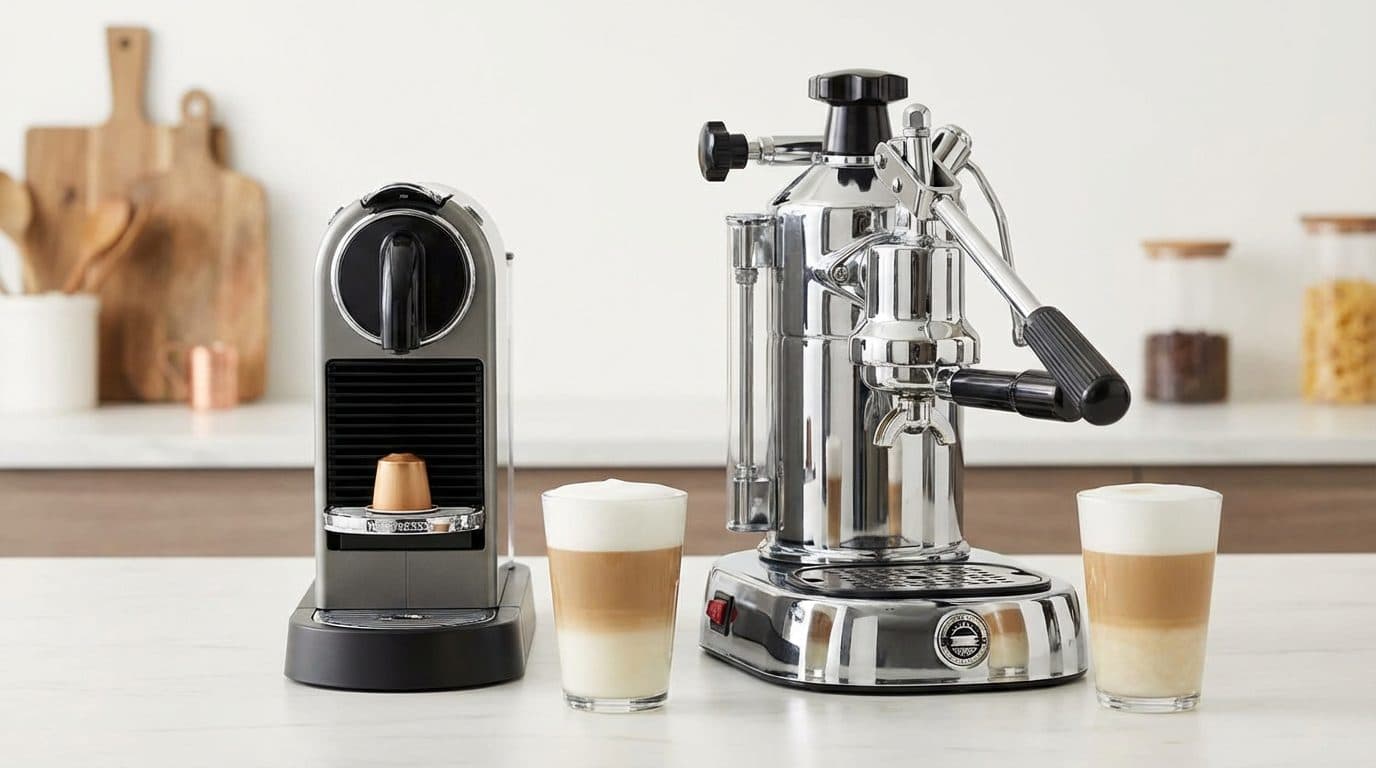
If you’re comparing Nespresso vs traditional espresso machine for home lattes, start with the workflow: Nespresso prioritizes speed and repeatability, while a traditional machine offers more control over coffee dose, extraction, and milk texture. Total cost depends on drink frequency, capsule price, beans, grinder, and maintenance.
Quick Verdict:
- For a capsule workflow: Compare the milk system and cleaning steps on the exact Nespresso model.
- For adjustable extraction: Compare a traditional espresso machine with a compatible grinder.
- For a fixed budget: Calculate equipment, ingredients, maintenance, and actual drinks before choosing either system.
Capsule Brewing vs Adjustable Espresso
Nespresso is a capsule system with fixed capsule and beverage formats; a traditional espresso machine lets the user control coffee dose, grind, yield, and extraction. The Specialty Coffee Association’s heritage espresso definition describes a specific dose, beverage volume, temperature, pressure, and brew-time range, so compare each machine’s documented process instead of using “real espresso” as a quality verdict.
Milk softens some flavor differences, but espresso body, concentration, and extraction still affect the finished latte. Compare drinks using the same milk volume and no syrup before deciding which result you prefer.
Compare the finished drinks with the milk and syrup amounts you normally use. Preference in a plain shot may differ from preference in a latte.
Cost Breakdown: Pods vs Beans
Compare total cost with current local inputs; neither system is permanently cheaper for every drink frequency or ownership period.
| Factor | Nespresso | Traditional Espresso |
|---|---|---|
| Machine Cost | Varies by model, region, retailer, and date | Varies by machine, grinder requirement, region, retailer, and date |
| Cost Per Shot | Use the current local capsule price per drink | Calculate beans used per shot at the current local bag price |
| Annual Cost (2 lattes/day) | Calculate from actual drinks, capsules, milk, cleaning, and maintenance | Calculate from actual drinks, beans, milk, cleaning, grinder, and maintenance |
| Grinder Required? | No | Often; include the current grinder cost when one is required |
Do not treat one annual-cost estimate as universal. Calculate capsules or beans per drink, milk, cleaning supplies, filters, repairs, and the grinder or frother required by each setup using current local prices.
Milk Frothing: Where Lattes Are Won or Lost
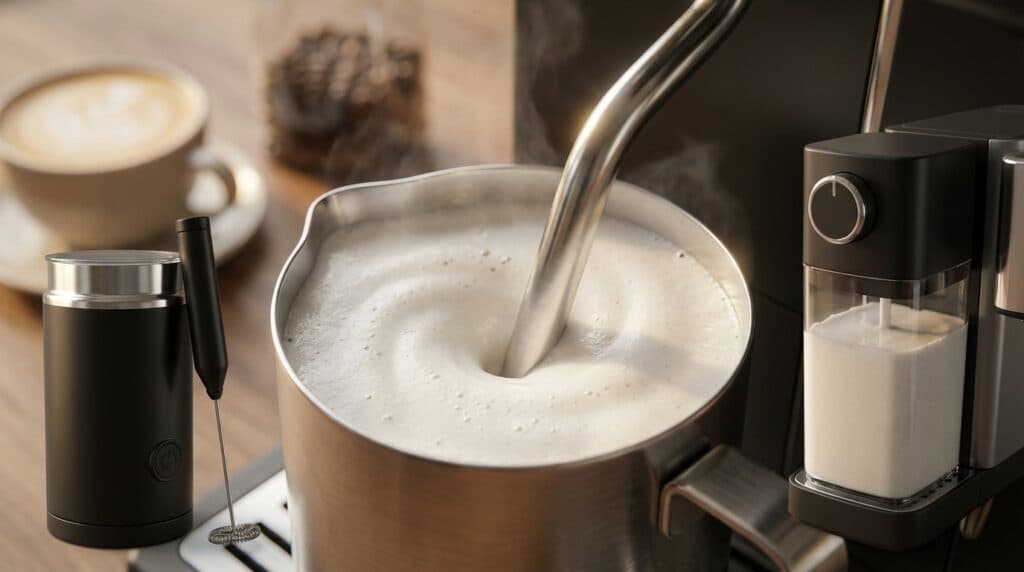
Milk texture affects how foam and coffee combine. Compare the texture you prefer and the cleaning work each milk system requires.
Nespresso options:
- Aeroccino: A separate electric milk frother. Available modes and whether it is included depend on the exact model and bundle.
- Lattissima line: Models use an integrated milk system; check the drink settings, milk-container care, and cleaning instructions.
- Creatista line: Nespresso documents an integrated steam wand and adjustable milk settings on supported models. Verify the exact regional model, current local price, warranty, and milk workflow before comparing it with a traditional machine.
Traditional machines:
- A manual steam wand lets you adjust aeration and milk movement within the machine’s capabilities
- Traditional machines require practice to produce repeatable extraction and milk texture
- Texture depends on the milk, wand design, temperature, and technique
Latte-art suitability depends on the exact milk system, milk formulation, temperature, and technique. Compare the integrated frother or steam wand on the specific model rather than applying one result to the entire Nespresso range.
Comparing Popular Models for Home Lattes
| Machine | Type | Price | Milk System | Best For |
|---|---|---|---|---|
| Nespresso Lattissima One | Pod | Check current local price | Auto frother | Quick, no-fuss lattes |
| Nespresso Creatista Plus | Pod | Check current local price | Steam wand | Pod convenience + real steaming |
| Breville Bambino Plus | Traditional | Check current local price | Steam wand | Beginners wanting quality |
| Gaggia Classic Pro | Traditional | Check current local price | Steam wand | Tinkerers & upgraders |
The Breville Bambino Plus is one example of a compact traditional machine with assisted milk steaming. Verify current specifications, heat-up claims, warranty terms, and price with the manufacturer before buying.
For a Gaggia Classic model, verify the current regional specification and manual workflow. Modification is not a requirement; consider warranty and service implications before changing any machine.
Pros and Cons: The Honest Version
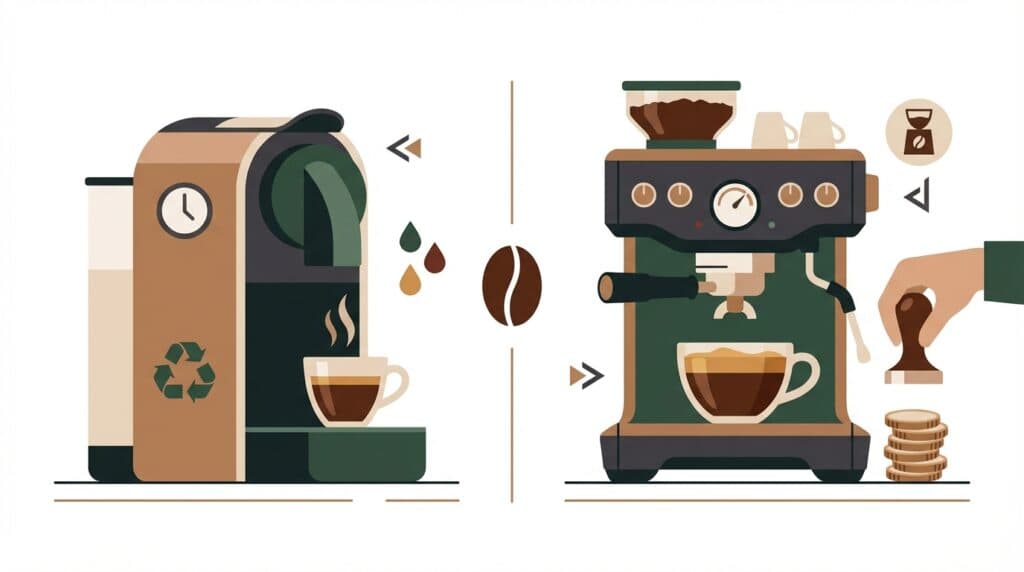
Nespresso Pros:
- Capsules remove separate grinding and tamping steps
- Preset drinks can simplify repeat preparation
- Warm-up and preparation time depend on the model and drink
- Cleaning, descaling, and milk-system care are still required
Nespresso Cons:
- Capsule cost and disposal options vary by region; calculate current cost per drink and check the local recycling route
- Limited to capsules compatible with the selected system
- Milk texture depends on the exact frother or steam-wand design, milk, settings, and technique
- Less direct control over dose and grind than a separate-grinder setup
Traditional Espresso Machine Pros:
- Lets you compare different coffees and extraction recipes
- Full control over grind, dose, and extraction
- Per-cup and ownership cost can be lower or higher depending on beans, capsules, equipment, drink frequency, and maintenance
- A steam wand can combine heating and aeration; results require practice
- Use any beans you want
Traditional Espresso Machine Cons:
- Learning time varies; traditional machines require practice to make extraction and milk texture repeatable
- Requires a compatible grinder; compare current local price, adjustment range, capacity, and parts support
- More cleanup and maintenance
- Workflow time varies by model, warm-up, grinder, milk system, drink, and cleaning steps; time both routines in your kitchen
Who Should Buy What
Get a Nespresso machine if:
- You value speed and convenience above all else
- You prefer a preset capsule recipe to adjusting grind and dose
- You accept the model’s required cleaning and maintenance
- Current capsule costs fit your actual drink frequency and budget
Get a traditional espresso machine if:
- Your equipment and ingredient cost calculation favors this workflow
- You want to learn latte art
- You care about coffee quality and want to experiment with beans
- You enjoy the ritual of making coffee
Skip both and get a super-automatic if:
- You want an integrated grinder and automated brewing; compare milk preparation, cleaning, and maintenance rather than assuming zero effort
Practical Recommendation
Choose Nespresso when a short, low-cleanup workflow is the main requirement. Choose a traditional machine when controlling the beans, dose, extraction, and milk texture is worth the extra setup and cleaning.
Neither format is universally better. Use the decision table above and calculate your own drink frequency, time, equipment, and ingredient costs before choosing.
System Documentation Used
- Nespresso Creatista and Creatista Plus user guides
- Specialty Coffee Association discussion of espresso definitions
Milk preparation: Start with refrigerated milk or a suitable oat milk formulation. Follow the milk package and appliance instructions, use clean equipment, and heat only what you will serve. Compare texture at the same milk volume; no one temperature guarantees the best result for every product.
Start with the workflow and ongoing cost that match your needs. Reassess only if those requirements change.


Comments