


Table of Contents
- Quick Verdict: Monk Fruit Sweetener Takes the Crown
- Why Consider Sugar Substitutes for Coffee?
- Sugar Substitutes for Coffee: The Complete Taste-Test Results
- Monk Fruit Sweetener
- Allulose
- Stevia
- Erythritol
- Xylitol
- Coconut Sugar
- Sugar Substitutes Comparison at a Glance
- Health Considerations When Choosing Sugar Substitutes
- Blood Sugar Impact
- Digestive Tolerance
- Long-Term Safety
- Tips for Making the Switch Successfully
- Frequently Asked Questions
- Do sugar substitutes change how coffee tastes beyond sweetness?
- Can I use sugar substitutes in cold brew coffee?
- Are sugar substitutes safe for everyday use?
- Which sugar substitute is best for someone with diabetes?
- Why does stevia taste bitter to some people but not others?
- Final Thoughts and Your Next Step
Quick Verdict: Monk Fruit Sweetener Takes the Crown
After testing over a dozen sugar alternatives in my morning cup, monk fruit sweetener emerged as the best overall sugar substitute for coffee at home. It delivers clean sweetness without the bitter aftertaste that plagues many alternatives, has zero calories, and doesn’t spike blood sugar. If you’re looking for a close-to-sugar experience without the downsides, this is your winner.
Runner-up: Allulose, for those who want something that behaves almost identically to real sugar in terms of texture and taste.
Budget pick: Stevia-erythritol blends offer excellent value and wide availability.
Why Consider Sugar Substitutes for Coffee?
Let’s be honest—many of us have a complicated relationship with sugar. You love that spoonful dissolving into your morning brew, but you’re also aware of the calories, the blood sugar rollercoaster, and the long-term health concerns. Maybe you’re managing diabetes, watching your weight, or simply trying to cut back without sacrificing your coffee ritual.
The good news? The world of sugar substitutes for coffee has expanded dramatically. You’re no longer stuck with that pink packet that tastes vaguely chemical. Today’s options range from plant-derived sweeteners to rare sugars that your body barely absorbs. The challenge is figuring out which ones actually taste good in coffee.
In my experience testing these alternatives, I’ve discovered that what works beautifully in baking might taste terrible in your espresso. Coffee is unforgiving—it exposes every flaw in a sweetener. That’s why I’ve put together this taste-test and health overview specifically focused on how these sugar substitutes perform in your cup.
Sugar Substitutes for Coffee: The Complete Taste-Test Results
Monk Fruit Sweetener
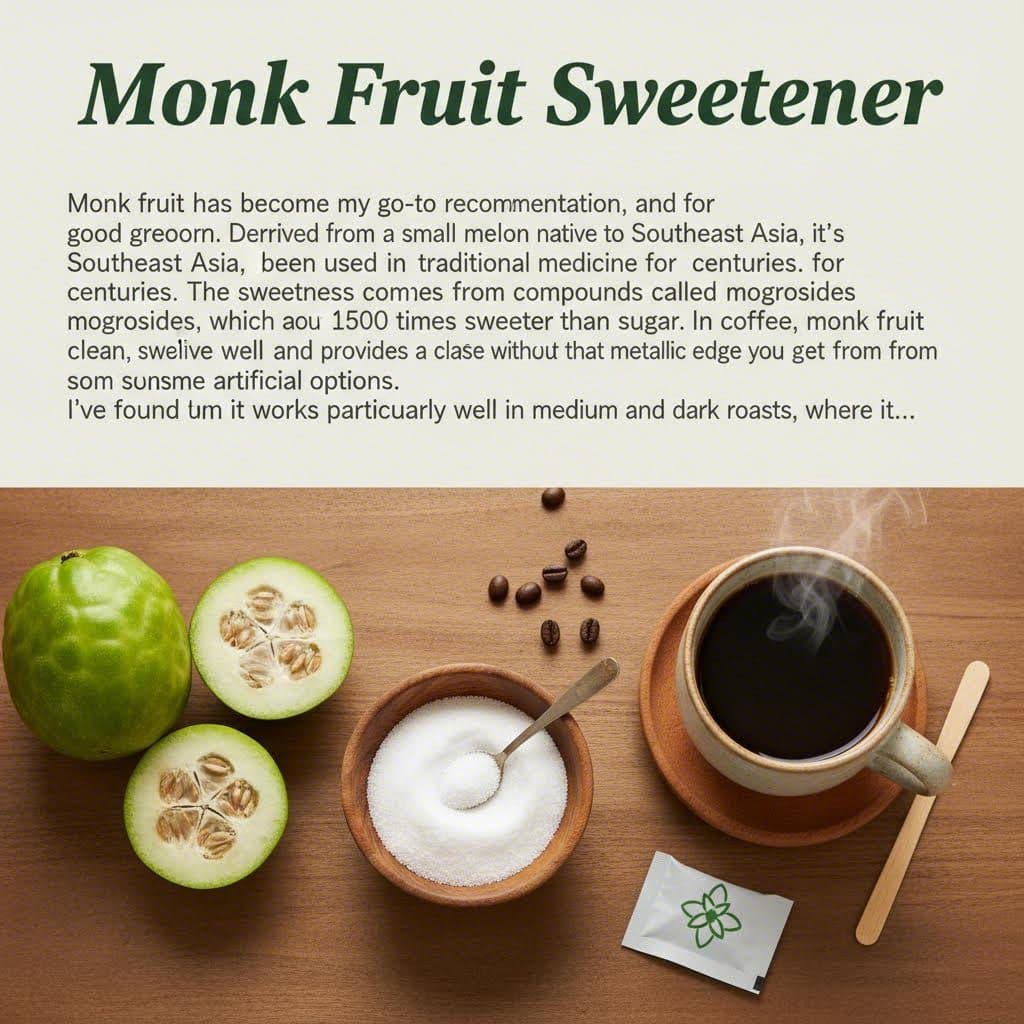
Monk fruit has become my go-to recommendation, and for good reason. Derived from a small melon native to Southeast Asia, it’s been used in traditional Chinese medicine for centuries. The sweetness comes from compounds called mogrosides, which are about 150-200 times sweeter than sugar.
In coffee, monk fruit dissolves well and provides a clean, sweet taste without that metallic edge you get from some artificial options. I’ve found it works particularly well in medium and dark roasts, where its subtle fruity undertone complements the coffee’s natural flavors rather than fighting them.
Pros:
- Zero calories and zero glycemic impact
- No bitter aftertaste when properly dosed
- Heat-stable for hot coffee
- Natural origin appeals to many health-conscious drinkers
Cons:
- More expensive than most alternatives
- Often blended with erythritol, which some people find cooling
- Can taste slightly fruity in light roasts
Who is this for? Anyone wanting the cleanest-tasting natural sweetener with zero metabolic impact. Perfect for diabetics, keto followers, and calorie counters.
Who is this NOT for? Those on a tight budget or people who prefer the exact taste profile of regular sugar.
Allulose
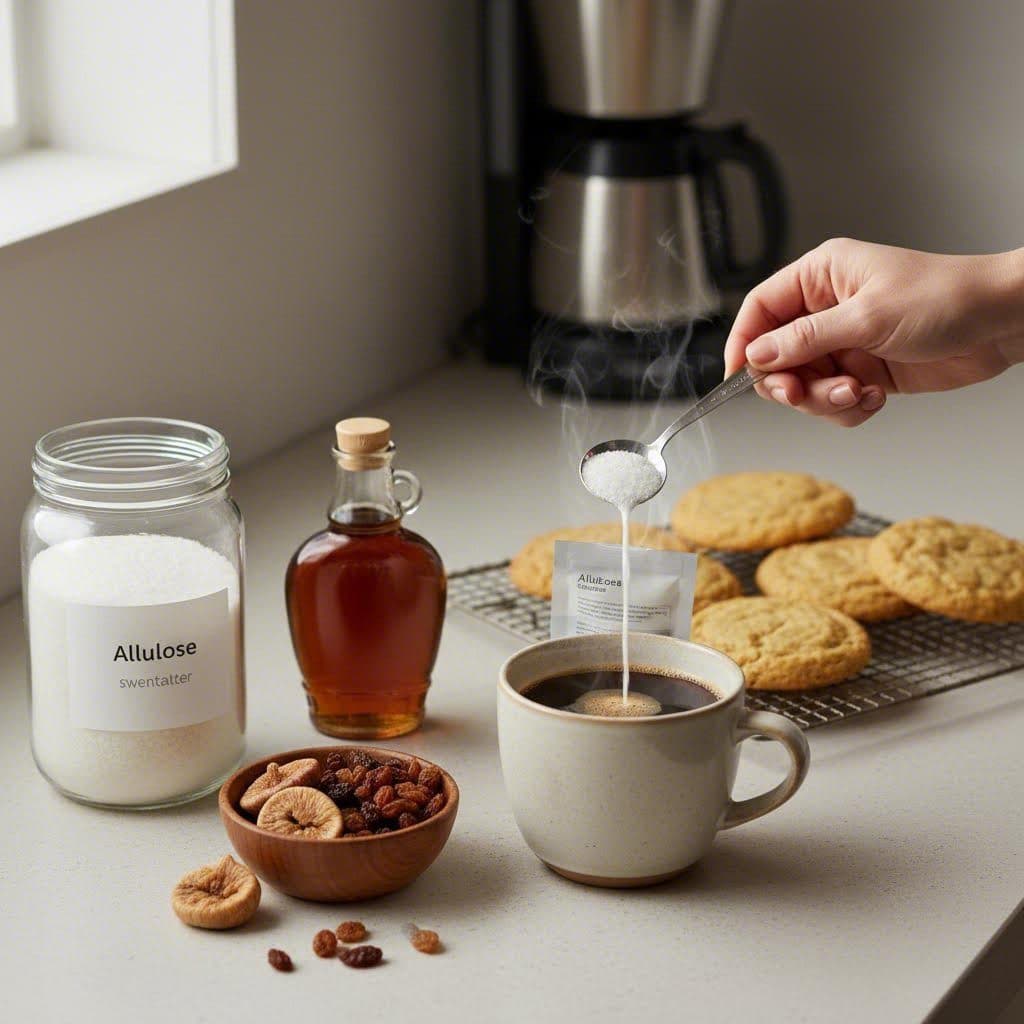
Allulose is the new kid on the block that’s getting serious attention. Technically a “rare sugar,” it occurs naturally in figs, raisins, and maple syrup. Your body absorbs it but can’t metabolize it, so it passes through with minimal caloric impact.
Here’s what fascinated me during testing: allulose behaves almost identically to sugar. It browns similarly, dissolves the same way, and has about 70% of sugar’s sweetness. In coffee, it’s remarkably convincing. Close your eyes, and you might not realize you’re drinking something sugar-free.
Pros:
- Closest taste and texture to real sugar
- Only 0.2-0.4 calories per gram
- Doesn’t cause digestive issues for most people
- Works in both hot and iced coffee
Cons:
- Not as sweet as sugar, so you need more
- Relatively expensive and harder to find locally
- Large amounts may cause mild digestive discomfort
Barista Tip: Use about 1.3 teaspoons of allulose for every teaspoon of sugar you’d normally add. This ratio gets you to that sweet spot.
Stevia
Stevia has been around long enough that you probably already have an opinion about it. Extracted from the leaves of the Stevia rebaudiana plant, it’s incredibly potent—about 200-300 times sweeter than sugar.
I have a love-hate relationship with stevia in coffee. High-quality stevia extracts (specifically those high in Reb A or Reb M compounds) can taste quite good. But cheaper stevia products often carry that notorious bitter, licorice-like aftertaste that ruins the experience.
Pros:
- Zero calories and widely available
- Long track record of safety
- Very affordable compared to newer alternatives
- Comes in liquid drops, perfect for portion control
Cons:
- Bitter aftertaste in many products
- Can overpower delicate coffee flavors
- Quality varies dramatically between brands
Who is this for? Budget-conscious coffee drinkers willing to experiment with brands to find one that works for their palate.
Who is this NOT for? Anyone particularly sensitive to bitter tastes or those who’ve tried stevia before and hated it.
Erythritol
Erythritol is a sugar alcohol that’s become popular both on its own and as a bulking agent mixed with intense sweeteners like stevia or monk fruit. It occurs naturally in some fruits and fermented foods.
At about 70% the sweetness of sugar with nearly zero calories, erythritol offers a compelling package. However, it has a distinctive cooling sensation—similar to mint without the mint flavor—that some people find odd in coffee. I personally don’t mind it, but it’s definitely noticeable.
Pros:
- No blood sugar impact
- Fewer digestive issues than other sugar alcohols
- Dissolves reasonably well in hot liquids
- Affordable and widely available
Cons:
- Cooling sensation may feel strange
- Doesn’t dissolve well in cold brew
- Can crystallize in iced coffee
Xylitol
Xylitol is another sugar alcohol that’s been around for decades, particularly popular in sugar-free gum and dental products. It has a similar sweetness level to sugar, which makes measuring straightforward.
In coffee, xylitol performs decently. It lacks the cooling effect of erythritol but can cause digestive issues in larger amounts. If you’re only using a teaspoon or two per day, you’ll likely be fine. Just don’t go overboard.
Important note: Xylitol is extremely toxic to dogs. If you have pets, store it carefully and clean up any spills immediately.
Coconut Sugar
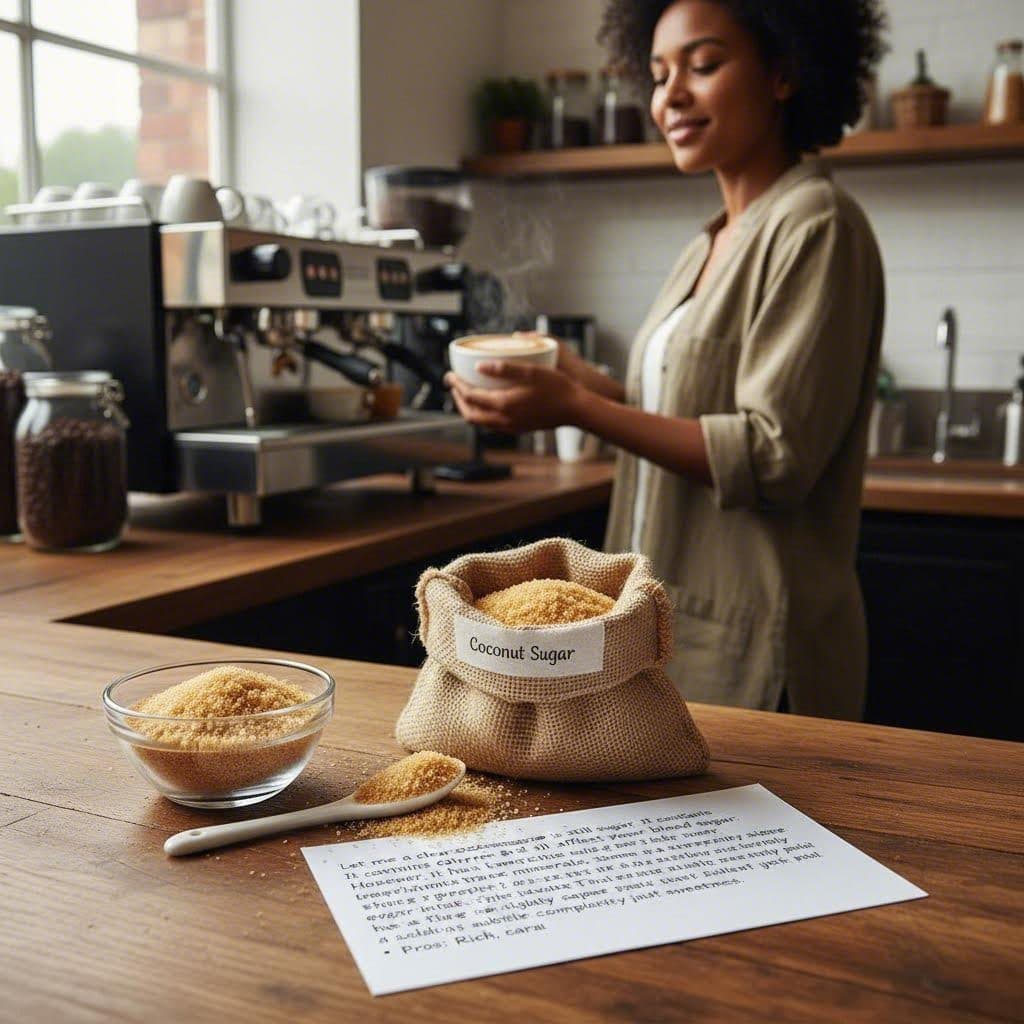
Let me be clear: coconut sugar is still sugar. It contains calories and will affect your blood sugar. However, it has a lower glycemic index than regular table sugar and contains trace minerals. Some people prefer it as a stepping stone toward reducing their overall sugar intake.
The flavor is what sets coconut sugar apart. It has a caramel-like, slightly earthy taste that pairs beautifully with bold coffees. Think of it as adding subtle complexity rather than just sweetness.
Pros:
- Rich, caramelized flavor complements dark roasts
- Lower glycemic index than white sugar
- Contains small amounts of minerals
- Dissolves just like regular sugar
Cons:
- Still contains significant calories and carbohydrates
- Not suitable for strict low-carb diets
- Flavor may overwhelm lighter coffee roasts
Sugar Substitutes Comparison at a Glance
| Sweetener | Calories per tsp | Glycemic Index | Taste in Coffee | Best For |
|---|---|---|---|---|
| Monk Fruit | 0 | 0 | Clean, slight fruit note | Overall best option |
| Allulose | ~1 | 0 | Most sugar-like | Sugar replication |
| Stevia | 0 | 0 | Varies by brand | Budget option |
| Erythritol | ~1 | 0 | Cooling sensation | Blend component |
| Xylitol | ~10 | 13 | Sugar-like | Easy transition |
| Coconut Sugar | 15 | 35 | Caramel notes | Flavor enhancement |
Health Considerations When Choosing Sugar Substitutes
Beyond taste, you’re probably wondering about the health implications of these various sweeteners. While I can share what I’ve learned from research and personal experience, please consult with a healthcare professional for advice specific to your situation—especially if you’re managing diabetes, digestive conditions, or other health concerns.
Blood Sugar Impact

For those monitoring blood glucose, monk fruit, stevia, allulose, and erythritol are your safest bets. They have essentially zero glycemic impact. I’ve seen many diabetic coffee lovers successfully incorporate these into their daily routine without affecting their numbers.
Xylitol has a minimal but measurable effect, while coconut sugar will raise blood sugar—just somewhat less dramatically than white sugar.
Digestive Tolerance
Sugar alcohols like erythritol and xylitol can cause digestive upset in some people, particularly in larger amounts. Erythritol is generally the best tolerated of the sugar alcohols because it’s absorbed in the small intestine rather than fermenting in the colon.
If you’re new to sugar alcohols, start small. A teaspoon in your morning coffee is unlikely to cause problems, but sweetening multiple drinks per day might.
Long-Term Safety
Most of these sweeteners have solid safety profiles based on available research. Stevia and erythritol have been studied extensively. Monk fruit and allulose are newer to the Western market but have long histories of use in other cultures.
Key takeaway: Moderation matters with everything. Even zero-calorie sweeteners shouldn’t be consumed in unlimited quantities.
Tips for Making the Switch Successfully

Transitioning away from sugar in coffee takes some adjustment. Your taste buds are accustomed to one type of sweetness, and alternatives taste different—not necessarily worse, just different. Here’s what I’ve found helps:
- Reduce gradually: Cut your sugar by half first, replacing that portion with your chosen substitute. Your palate adapts over about two weeks.
- Try liquid versions: Liquid stevia and monk fruit drops mix more evenly than powders, especially in iced coffee.
- Adjust your coffee first: Sometimes switching to a naturally sweeter coffee origin (like Brazilian or Guatemalan) reduces how much sweetener you need.
- Buy small quantities initially: Don’t stock up until you’ve found what you like. That Costco-sized bag of stevia will haunt you if it’s not your thing.
Barista Tip: Life is too short for bad coffee—and for forcing yourself to drink sweeteners you hate. Give each option a fair trial (at least a week), but don’t suffer through something that genuinely ruins your coffee experience.
Frequently Asked Questions
Do sugar substitutes change how coffee tastes beyond sweetness?
Yes, they can. Some sweeteners like coconut sugar add flavor notes of their own. Others, like stevia, might introduce bitter undertones if you use too much. Allulose and monk fruit tend to be the most neutral, allowing your coffee’s natural flavors to shine through.
Can I use sugar substitutes in cold brew coffee?
Absolutely, but liquid forms work best. Granulated erythritol and some other powdered sweeteners don’t dissolve well in cold liquids. Liquid stevia, monk fruit drops, or simple syrups made with allulose dissolve perfectly in cold brew.
Are sugar substitutes safe for everyday use?
The sweeteners discussed here are generally recognized as safe by major health authorities when consumed in typical amounts. However, individual responses vary. Some people tolerate sugar alcohols poorly, while others have sensitivities to specific sweeteners. Start with small amounts and pay attention to how your body responds.
Which sugar substitute is best for someone with diabetes?
Monk fruit, stevia, allulose, and erythritol have zero or near-zero glycemic impact, making them popular choices among diabetic individuals. That said, everyone’s body responds differently, so monitoring your own blood sugar response is the most reliable approach. Always discuss significant dietary changes with your healthcare provider.
Why does stevia taste bitter to some people but not others?
Genetic differences in taste receptors explain this phenomenon. Some people have receptors that strongly detect the bitter compounds in stevia, while others barely notice them. If you’re in the bitter-sensitive camp, try products with higher Reb M content or switch to monk fruit, which works through different pathways.
Final Thoughts and Your Next Step
Finding the best sugar substitute for coffee at home comes down to balancing taste, health goals, and practical factors like cost and availability. Based on my extensive testing, monk fruit offers the best combination of clean taste and health benefits for most people. Allulose earns top marks if mimicking sugar’s exact profile matters most to you.
The beautiful thing about making coffee at home is that you control every variable. Experiment with these options, trust your own palate, and don’t be afraid to blend different sweeteners together—sometimes a combination of monk fruit and a touch of allulose creates something better than either alone.
Start by picking up a small package of monk fruit or allulose this week. Give it an honest try for seven days before making your final judgment. Your perfect sweet coffee is waiting to be discovered.


Comments