


Table of Contents
- What You'll Need for Japanese Iced Pour-Over Coffee
- Gear
- Ingredients
- Why the Japanese Iced Pour-Over Method Works
- The Science Behind Flash Chilling
- Step-by-Step Japanese Iced Pour-Over Coffee Recipe
- Preparation
- The Brewing Process
- Dialing In Your Japanese Iced Pour-Over Ratio
- Adjusting for Different Coffee Origins
- Common Mistakes and How to Fix Them
- Watery, Weak Coffee
- Bitter or Harsh Flavors
- Sour or Underdeveloped Taste
- Lack of Aromatics
- Variations to Try
- Iced Pour-Over with Coffee Ice Cubes
- Sweetened Japanese Iced Coffee
- Iced Pour-Over Tonic
- Frequently Asked Questions
- Can I use a regular coffee maker for Japanese iced pour-over?
- How does Japanese iced pour-over compare to cold brew?
- Can I make Japanese iced pour-over ahead of time?
- What's the best coffee roast for this method?
- Do I need a special pour-over dripper?
- Conclusion and Your Next Steps
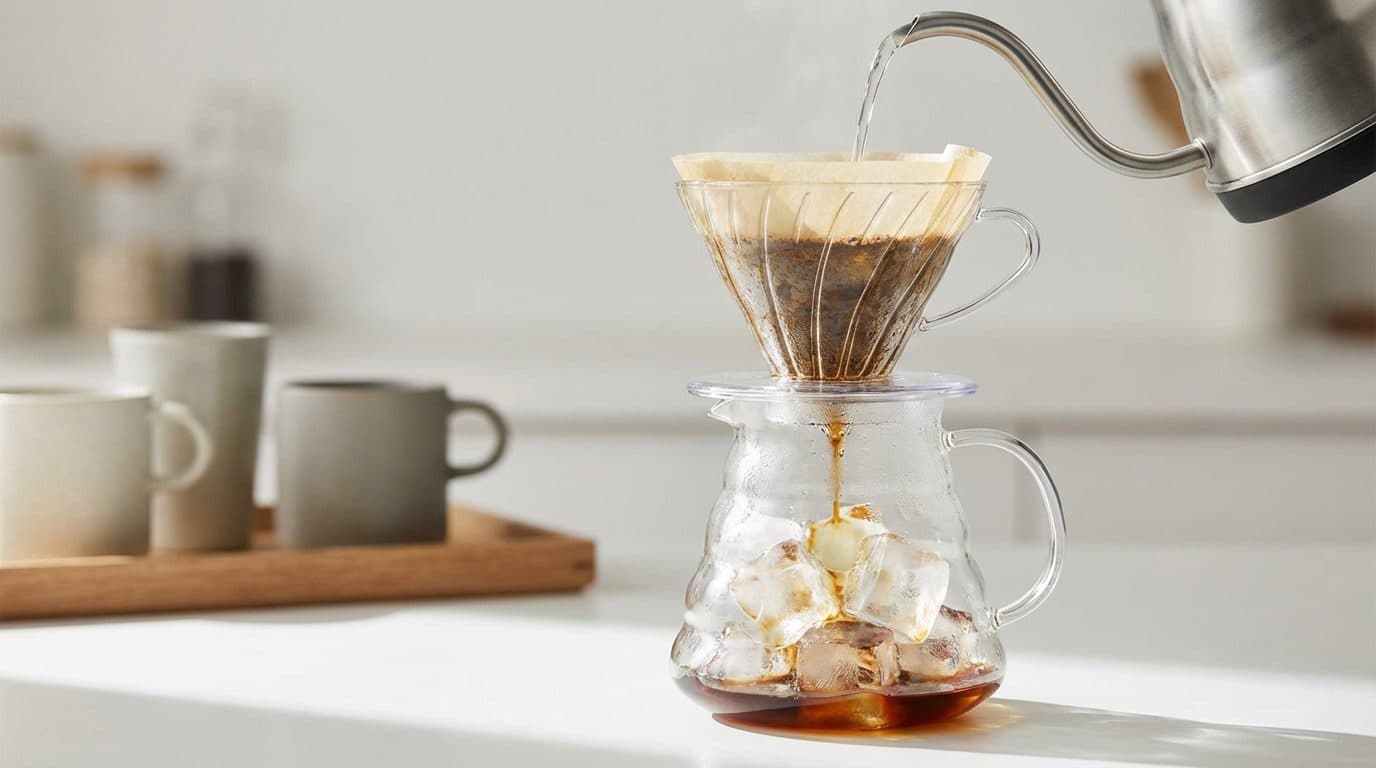
Is your regular iced coffee tasting watered-down and disappointing? You’re not alone. Most home brewers simply pour hot coffee over ice and wonder why it tastes flat and diluted. The Japanese style iced pour-over method solves this problem elegantly, producing a bright, aromatic, and full-flavored iced coffee that rivals anything you’d find at a specialty café. This technique brews hot coffee directly onto ice, instantly chilling it while preserving those delicate flavor compounds that make pour-over coffee so special.
In this guide, I’ll walk you through exactly how to make iced pour-over coffee at home using the Japanese method. You’ll learn the science behind why this technique works, the precise ratios to use, and the small adjustments that make a big difference. By the end, you’ll be brewing iced coffee that’s crisp, complex, and genuinely refreshing.
What You’ll Need for Japanese Iced Pour-Over Coffee
Gear
- Pour-over dripper (Hario V60, Kalita Wave, or Chemex work great)
- Paper filters appropriate for your dripper
- Gooseneck kettle (electric or stovetop)
- Coffee scale with timer
- Burr grinder (or freshly ground coffee)
- Serving vessel or carafe
- Plenty of ice cubes
Ingredients
- 25-30 grams of freshly roasted coffee beans
- 200 grams of hot water (around 200°F / 93°C)
- 120-150 grams of ice
Barista Tip: Use filtered water for both your ice and brewing water. Tap water with heavy chlorine or mineral content can create off-flavors that become more noticeable in iced coffee.
Why the Japanese Iced Pour-Over Method Works
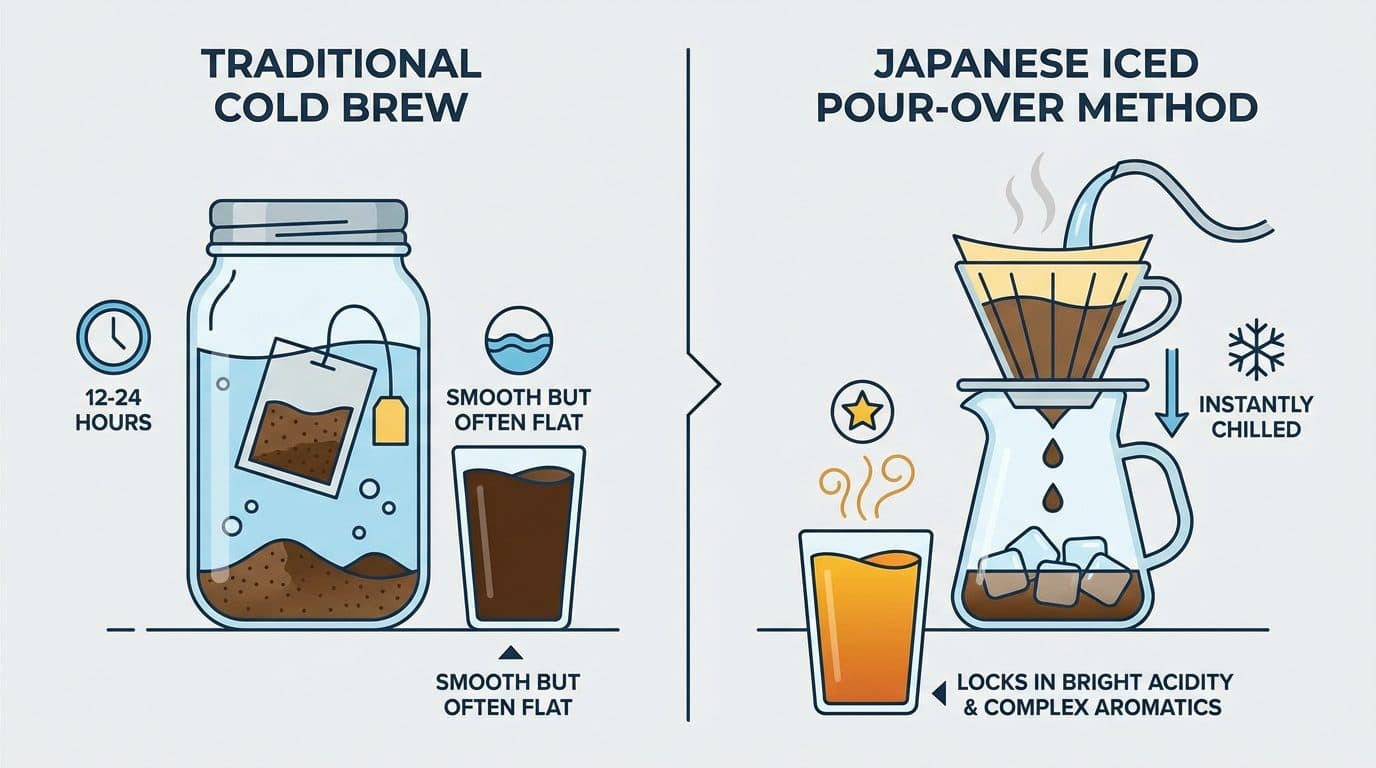
Traditional cold brew steeps coffee grounds in cold water for 12-24 hours. While it produces a smooth drink, it often lacks the bright acidity and aromatic complexity that makes specialty coffee exciting. The Japanese method takes a completely different approach.
When you brew hot water through coffee grounds directly onto ice, the coffee chills almost instantly. This rapid cooling locks in volatile aromatic compounds that would otherwise evaporate as hot coffee sits and slowly cools. In short, you get the clarity of pour-over with the refreshing qualities of iced coffee.
The Science Behind Flash Chilling
Hot water extracts acids, sugars, and aromatic oils from coffee grounds efficiently. These compounds create the complex flavor profile we love. When coffee cools slowly, many of these aromatics dissipate into the air. By flash-chilling onto ice, you’re essentially trapping those flavors in the cup.
I’ve found that coffee brewed this way has noticeably more fruit-forward and floral notes compared to cold brew. It’s brighter, more dynamic, and honestly more interesting to drink. Think of it as the difference between fresh-squeezed orange juice and concentrate.
Step-by-Step Japanese Iced Pour-Over Coffee Recipe
Here’s the exact process I use every morning during summer months. Follow these steps, and you’ll nail it on your first try.
Preparation
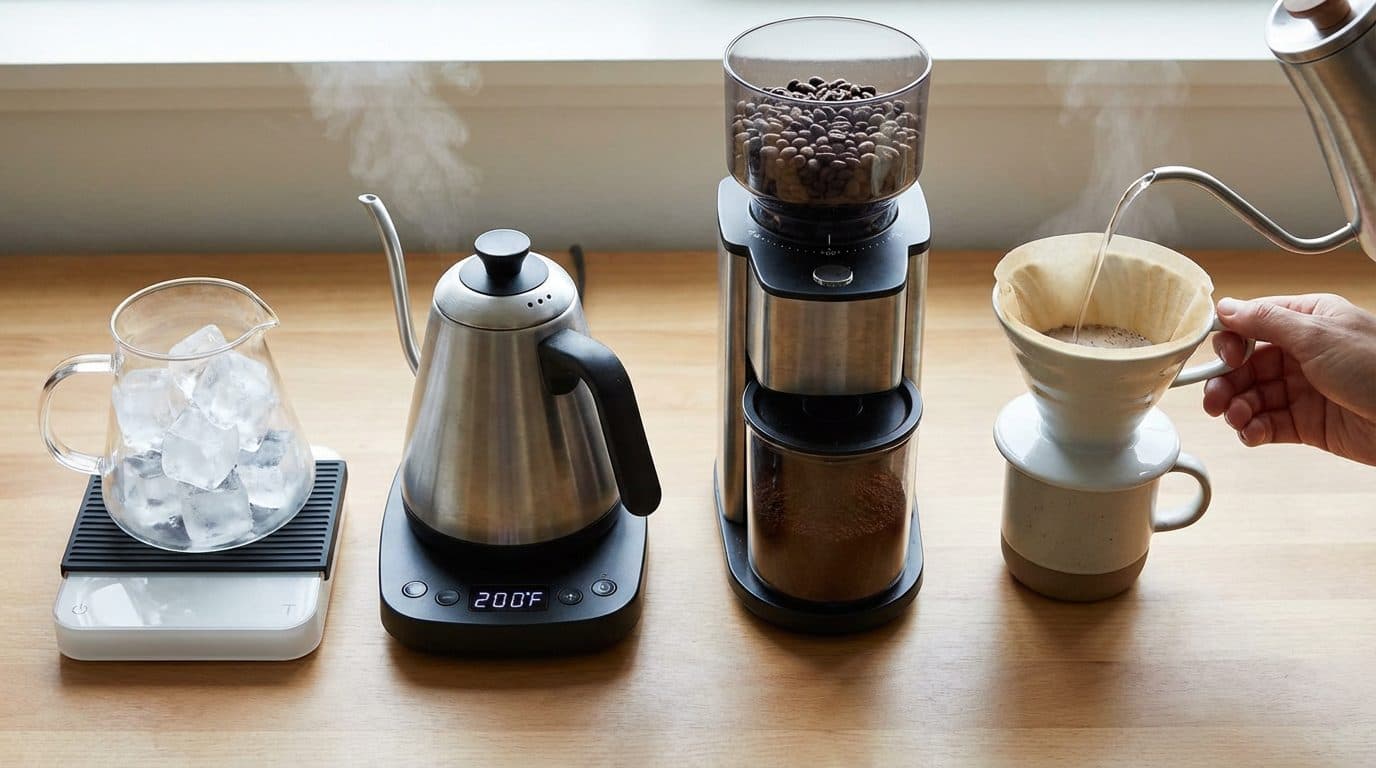
- Weigh your ice: Place 120-150 grams of ice directly into your serving vessel or carafe. This will sit beneath your pour-over dripper.
- Heat your water: Bring water to about 200°F (93°C). If you don’t have a temperature-controlled kettle, let boiling water rest for 30-45 seconds.
- Grind your coffee: Use 25-30 grams of coffee ground slightly finer than your typical pour-over setting. Since we’re using less water, a finer grind helps with extraction.
- Rinse your filter: Place the filter in your dripper, rinse with hot water to remove paper taste, then discard the rinse water (not onto your ice!).
- Add coffee to the filter: Gently shake to level the grounds and create a flat bed.
The Brewing Process
- Bloom (0:00-0:45): Pour 50 grams of water in a slow spiral, saturating all the grounds evenly. Wait 30-45 seconds while the coffee releases CO2 and expands. Fresh coffee will bubble noticeably.
- First pour (0:45-1:15): Add another 75 grams of water in slow, concentric circles starting from the center and moving outward. Avoid pouring directly on the filter edges.
- Second pour (1:30-2:00): Add the remaining 75 grams of water using the same circular motion. Keep your pour steady and controlled.
- Let it drain: Allow all the water to pass through the coffee bed. Total brew time should be around 2:30-3:00 minutes.
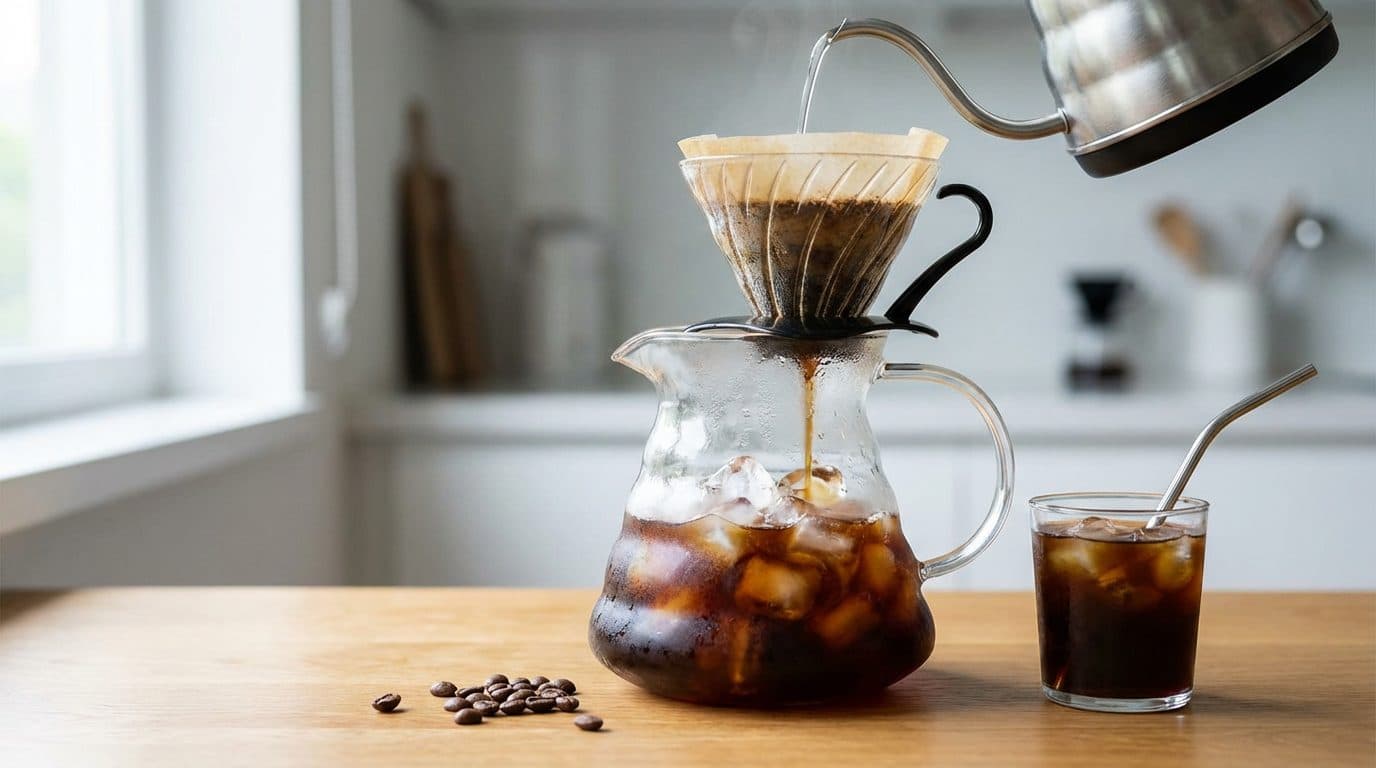
- Swirl and serve: Once brewing completes, remove the dripper, give your carafe a gentle swirl to melt any remaining ice and mix the coffee, then pour over fresh ice in your drinking glass.
Taste Profile: Expect a bright, clean cup with pronounced acidity and fruit-forward notes. The body will be lighter than cold brew but more refreshing. Chocolate and nutty undertones come through beautifully with medium roasts.
Dialing In Your Japanese Iced Pour-Over Ratio
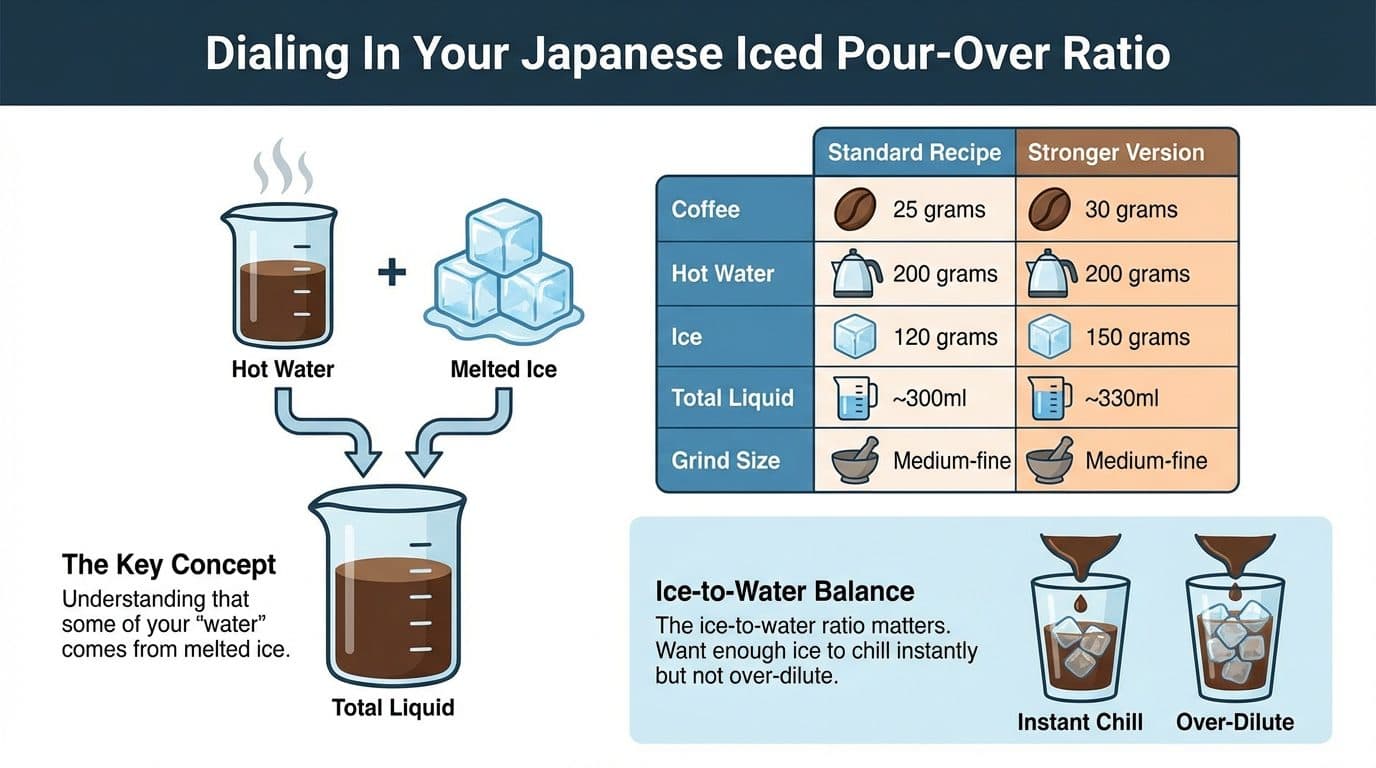
The key to this method is understanding that some of your “water” comes from melted ice. Here’s a simple formula that works consistently:
| Component | Standard Recipe | Stronger Version |
|---|---|---|
| Coffee | 25 grams | 30 grams |
| Hot Water | 200 grams | 200 grams |
| Ice | 120 grams | 150 grams |
| Total Liquid | ~300ml | ~330ml |
| Grind Size | Medium-fine | Medium-fine |
The ice-to-water ratio matters because not all the ice melts during brewing. You want enough ice to chill the coffee instantly but not so much that it over-dilutes your final cup. I’ve found that a 60:40 ratio of hot water to ice works beautifully for most setups.
Adjusting for Different Coffee Origins
Light roasts from Ethiopia or Kenya shine with this method. Their natural fruit and floral characteristics become incredibly pronounced when flash-chilled. For these coffees, stick with the standard recipe and enjoy the acidity.
Medium roasts from Central America or Colombia offer a more balanced cup. You might prefer the stronger version if you like more body in your iced coffee. The chocolate and caramel notes hold up well against the ice.
Dark roasts can work but require adjustment. Use slightly coarser grind and hotter water to avoid over-extraction. The resulting cup will be bold and smoky but might lack the brightness this method is famous for.
Common Mistakes and How to Fix Them
Even experienced home baristas stumble with iced pour-over at first. Here are the issues I see most often and how to troubleshoot them.
Watery, Weak Coffee
If your iced pour-over tastes diluted, you’re probably using too much ice or too coarse a grind. Remember, we’re compensating for ice melt by brewing a concentrated coffee. Try reducing ice by 20 grams and grinding slightly finer.
Bitter or Harsh Flavors
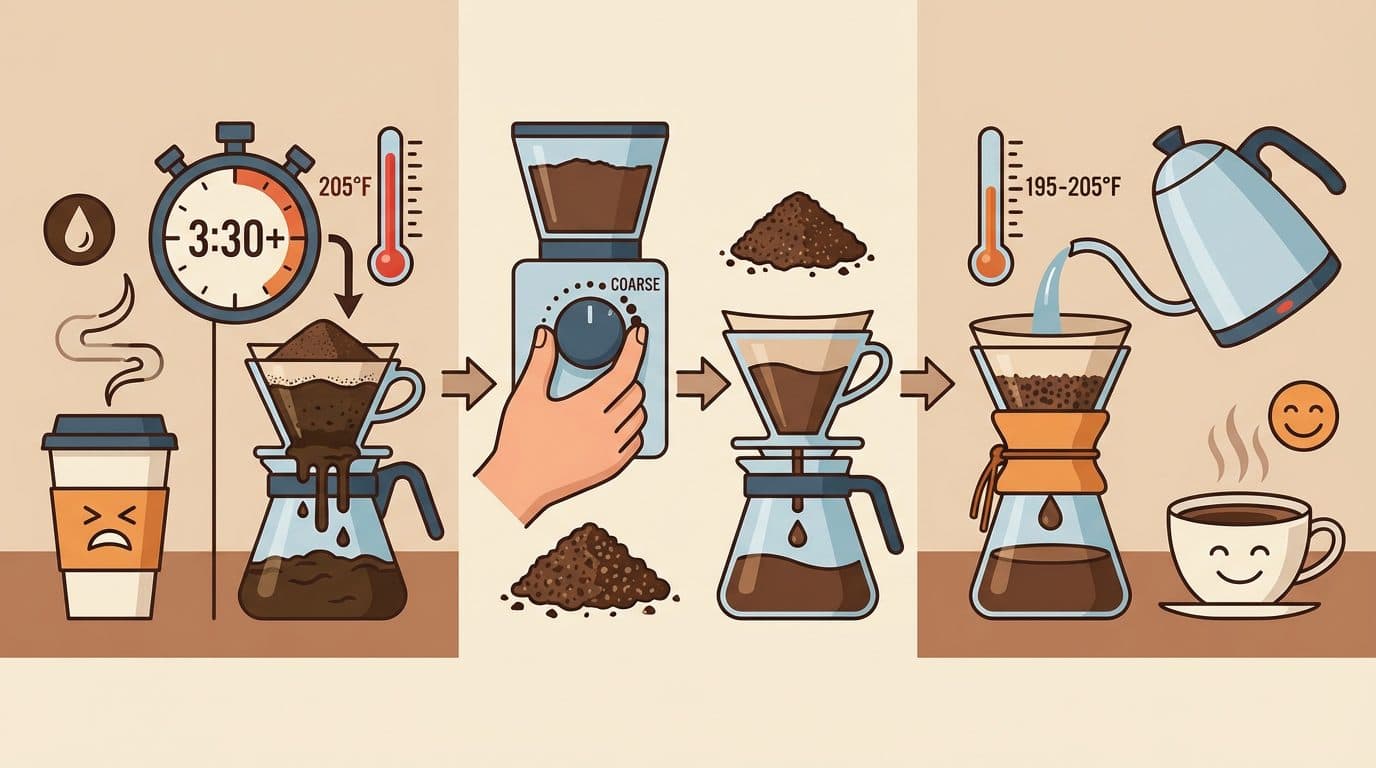
Over-extraction happens when water sits too long with the grounds or when your grind is too fine. If your brew takes longer than 3:30 minutes to drain, coarsen your grind. Also check your water temperature—anything above 205°F can cause bitterness.
Sour or Underdeveloped Taste
Sourness indicates under-extraction. Your grind might be too coarse, or you’re pouring too quickly. Slow down your pour rate and consider grinding finer. Make sure your bloom gets adequate time for proper saturation.
Lack of Aromatics
This usually means your coffee isn’t fresh. Coffee begins losing aromatic compounds within two weeks of roasting. For the best iced pour-over experience, use beans roasted within the past month and grind just before brewing.
Did You Know? Japanese coffee culture has been perfecting this method since the 1960s. Tokyo kissaten (coffee houses) were serving flash-chilled pour-over long before third-wave coffee shops made it trendy in the West.
Variations to Try
Once you’ve mastered the basic technique, experiment with these variations to keep things interesting.
Iced Pour-Over with Coffee Ice Cubes
Freeze leftover coffee in ice cube trays. Use these instead of regular ice, and your drink won’t dilute at all as you sip. It’s a small extra step that makes a noticeable difference, especially if you like to linger over your coffee.
Sweetened Japanese Iced Coffee
Add a small amount of simple syrup to your serving vessel before brewing. The hot coffee will incorporate it perfectly as it drips onto the ice. One tablespoon of simple syrup works well for most palates.
Iced Pour-Over Tonic
For a truly refreshing summer drink, fill your glass halfway with good quality tonic water before adding your Japanese iced pour-over. The quinine bitterness complements coffee beautifully. It’s become one of my favorite afternoon treats.
Frequently Asked Questions
Can I use a regular coffee maker for Japanese iced pour-over?

Standard drip machines don’t give you enough control over pour rate and timing. You could technically brew over ice, but results won’t be as good. A manual pour-over dripper costing under $30 will deliver significantly better iced coffee.
How does Japanese iced pour-over compare to cold brew?
Cold brew is smooth, low-acid, and heavy-bodied. Japanese iced pour-over is bright, complex, and aromatic. Neither is objectively better—they’re different drinks entirely. I prefer the Japanese method for fruity light roasts and cold brew for chocolatey dark roasts.
Can I make Japanese iced pour-over ahead of time?
This method is best enjoyed immediately. Unlike cold brew, which keeps for days, flash-chilled coffee will lose its aromatic brightness within a few hours. If you must make it ahead, store in a sealed container with minimal air and consume within 4-6 hours.
What’s the best coffee roast for this method?
Light to medium roasts showcase the Japanese method’s strengths. Look for single-origin coffees with tasting notes of citrus, berries, or florals. These characteristics really pop when flash-chilled.
Do I need a special pour-over dripper?
Any pour-over dripper works, but the Hario V60 is particularly popular for this method. Its large opening and spiral ridges promote fast drainage, which helps prevent over-extraction when brewing concentrated coffee.
Conclusion and Your Next Steps
Japanese iced pour-over coffee transforms your summer coffee routine. By brewing hot coffee directly onto ice, you capture aromatic complexity that cold brew and traditional iced coffee simply can’t match. The method takes only a few minutes once you’ve practiced it, and the results are genuinely impressive.
Start with the standard recipe using 25 grams of coffee, 200 grams of hot water, and 120 grams of ice. Pay attention to your grind size and pour rate, adjusting based on taste. As you dial in your technique, you’ll develop an intuition for what works best with different coffees and personal preferences. Life is too short for watered-down iced coffee—this method ensures every summer cup is worth savoring.


Comments