


Table of Contents
- Understanding Where Chocolatey Flavor Comes From in Coffee
- The Role of Roast Level
- What You'll Need to Maximize Chocolate Notes
- Gear
- Ingredients
- Brewing Techniques That Bring Out Chocolate Flavor
- Grind Size Matters
- Water Temperature: The Secret Weapon
- Brew Ratio and Time
- Best Brewing Methods for Chocolatey Coffee
- French Press: The Chocolate Champion
- AeroPress: Versatile and Forgiving
- Pour-Over: Clean but Capable
- Moka Pot: Intense and Bold
- Common Mistakes That Kill Chocolate Flavor
- Myth: Darker Is Always More Chocolatey
- Using Stale or Pre-Ground Coffee
- Ignoring Water Quality
- Rushing the Process
- Frequently Asked Questions
- Can I add anything to my coffee to make it taste more chocolatey?
- Why does my coffee taste bitter instead of chocolatey?
- What coffee origins are best for chocolate flavor?
- Does the type of milk I use affect chocolate flavor perception?
- How long do roasted coffee beans stay fresh?
- Conclusion: Your Path to Chocolatey Coffee Bliss
Ever brewed a cup of coffee expecting rich, chocolatey notes only to end up with something flat or overly bitter? You’re not alone. Many home baristas chase that deep, cocoa-like sweetness in their morning cup but struggle to coax it out consistently. The good news is that getting more chocolatey flavor from your coffee beans at home isn’t about luck—it’s about understanding a few key variables and making small, intentional adjustments to your routine.
In this guide, I’ll walk you through everything from bean selection to brewing technique. By the end, you’ll know exactly how to unlock those delicious chocolate notes hiding in your coffee and why certain methods work better than others. Life is too short for bad coffee, so let’s make yours taste like a warm hug from a chocolate bar.
Understanding Where Chocolatey Flavor Comes From in Coffee
Before you start tweaking your brew, it helps to understand why some coffees taste chocolatey in the first place. Chocolate notes in coffee come from a combination of factors: the bean’s origin, how it was processed, and—crucially—how it was roasted. Certain compounds developed during roasting, like pyrazines and Maillard reaction products, create flavors our brains interpret as cocoa, dark chocolate, or milk chocolate.
Key Takeaway: Chocolatey flavor isn’t something you add to coffee. It’s already there in the right beans—you just need to extract it properly.
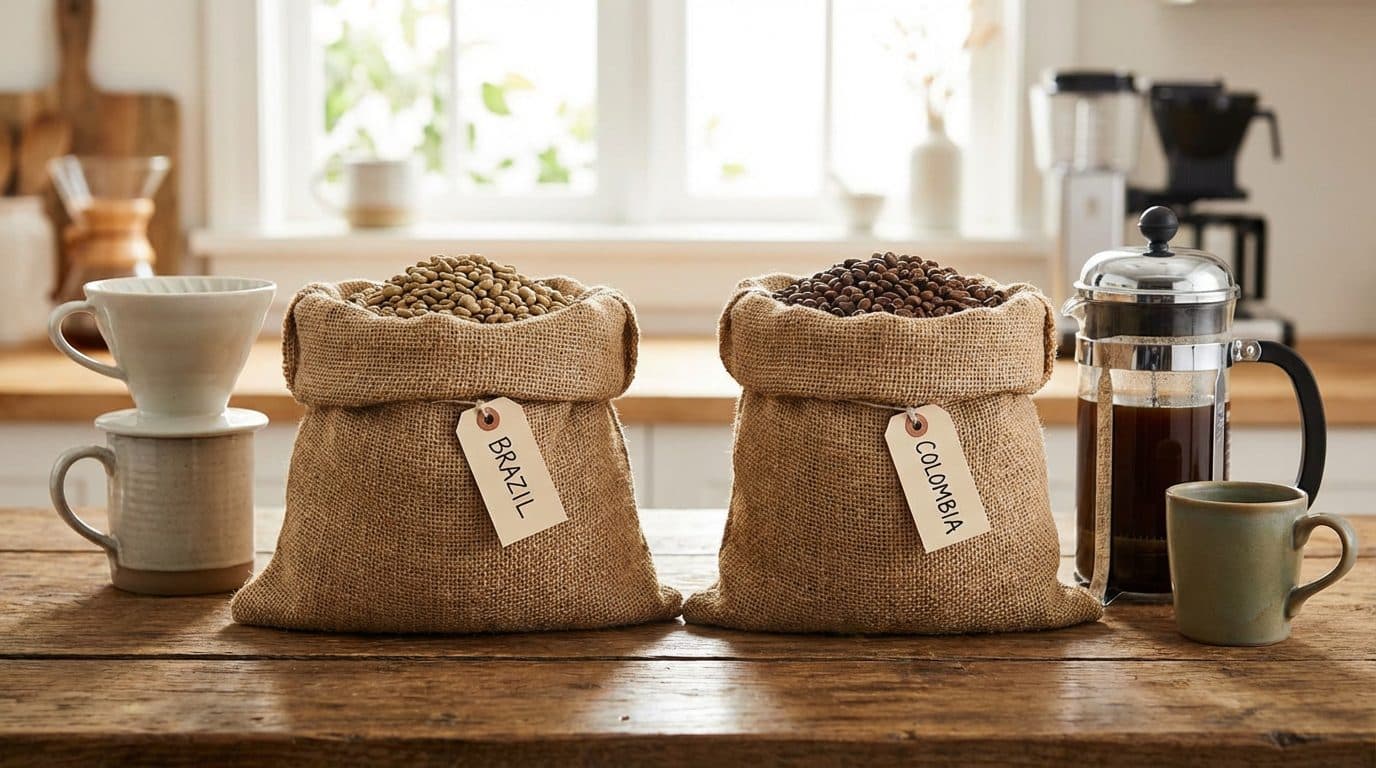
Origins known for chocolate notes include Brazil, Guatemala, Colombia, and Sumatra. These regions produce beans with naturally lower acidity and heavier body, which translates to that smooth, cocoa-forward taste. Processing methods matter too: natural (dry) processed coffees often have deeper, fruitier chocolate notes, while washed coffees tend toward cleaner, more subtle cocoa undertones.
The Role of Roast Level
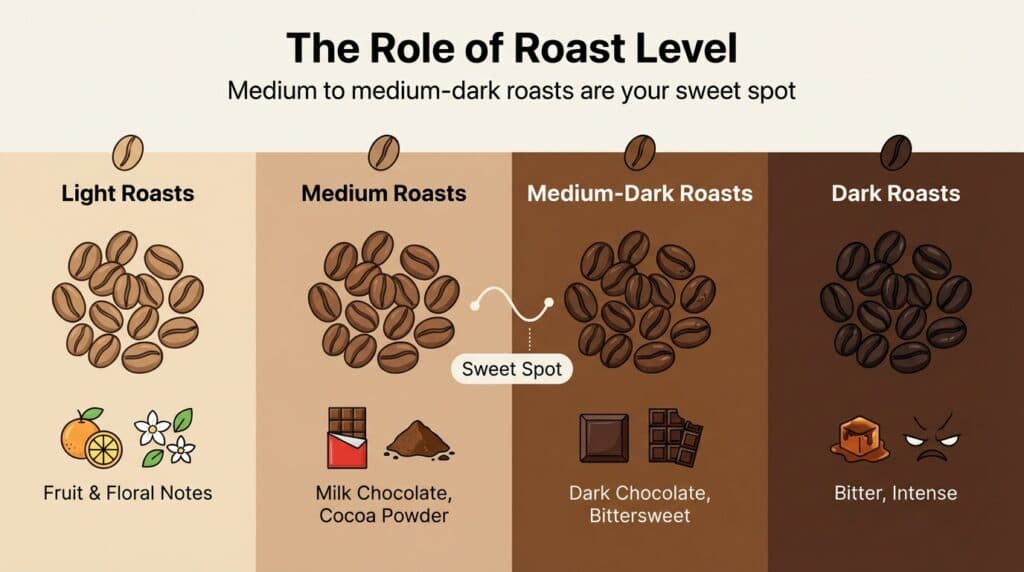
Roast level is perhaps the single biggest factor in achieving chocolatey flavor. Medium to medium-dark roasts are your sweet spot. Here’s why:
- Light roasts emphasize origin characteristics like fruit and floral notes—great for some, but not ideal for chocolate seekers.
- Medium roasts balance origin flavors with roast-developed sweetness, often producing milk chocolate or cocoa powder notes.
- Medium-dark roasts push further into dark chocolate and bittersweet territory.
- Dark roasts can taste chocolatey, but you risk losing nuance and ending up with ashy or burnt flavors instead.
In my experience, a medium-dark roast from a Central or South American origin is the most reliable path to consistent chocolate notes at home.
What You’ll Need to Maximize Chocolate Notes
Getting more chocolatey flavor from your coffee beans requires the right setup. You don’t need expensive equipment, but a few essentials make a big difference.
Gear
- A burr grinder (blade grinders create inconsistent particle sizes, leading to uneven extraction)
- A scale for measuring coffee and water
- Your preferred brewing device (French press, pour-over, AeroPress, or drip machine)
- A kettle with temperature control, or a thermometer
- Fresh, filtered water
Ingredients
- Freshly roasted coffee beans (ideally roasted within the last 2-4 weeks)
- Filtered water at the right temperature (more on this below)
Barista Tip: Stale beans are the enemy of flavor. If your coffee smells flat or cardboard-like, no brewing trick will bring back those chocolate notes. Always check the roast date before buying.
Brewing Techniques That Bring Out Chocolate Flavor
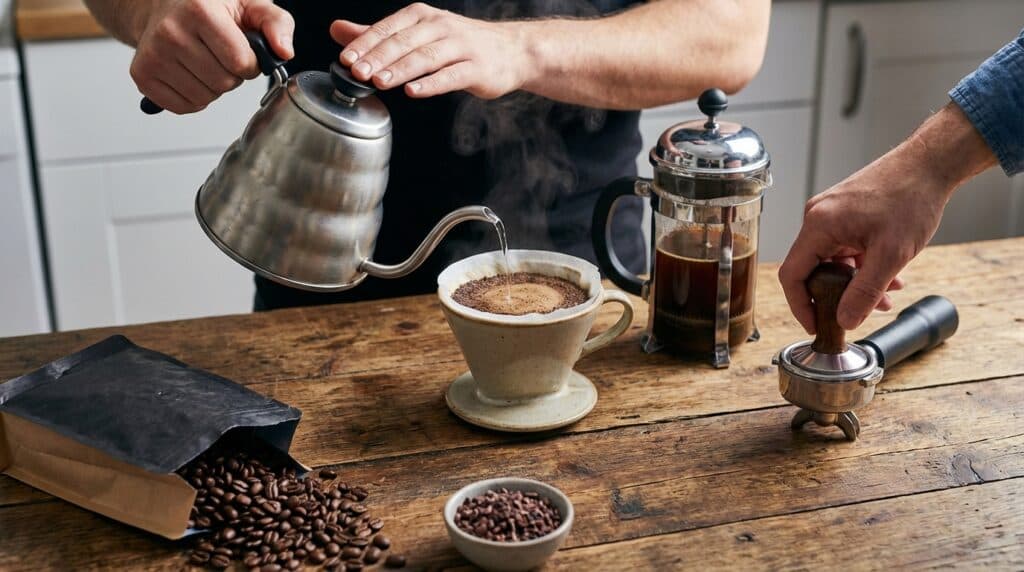
Now for the fun part—actually brewing your coffee. The way you extract your coffee has a massive impact on which flavors end up in your cup. Here’s how to dial in your technique for maximum chocolatey goodness.
Grind Size Matters
Grind size controls how quickly water extracts flavor from your coffee. For chocolate notes, you generally want a medium to medium-coarse grind, depending on your brew method:
- French press: Coarse grind, like sea salt
- Pour-over: Medium grind, like table salt
- AeroPress: Medium-fine to medium, depending on brew time
- Drip machine: Medium grind
If your coffee tastes sour or thin, your grind is likely too coarse (under-extraction). If it’s bitter and harsh, you’ve gone too fine (over-extraction). Chocolate notes live in the sweet spot of proper extraction—usually between 18-22% extraction yield, though you don’t need fancy equipment to taste when you’ve hit it right.
Water Temperature: The Secret Weapon
Water temperature is often overlooked, but it’s critical for extracting chocolatey flavor. The ideal range is between 195°F and 205°F (90-96°C). Here’s what happens at different temperatures:
- Too cool (below 190°F): Under-extraction, resulting in sour, weak coffee with muted flavors.
- Sweet spot (195-205°F): Balanced extraction that pulls out sweetness, body, and those chocolate notes.
- Too hot (boiling): Over-extraction, leading to bitterness that masks chocolate flavors.
I’ve found that aiming for around 200°F works beautifully for most medium-dark roasts. If you don’t have a temperature-controlled kettle, just let boiling water sit for 30-45 seconds before pouring.
Brew Ratio and Time
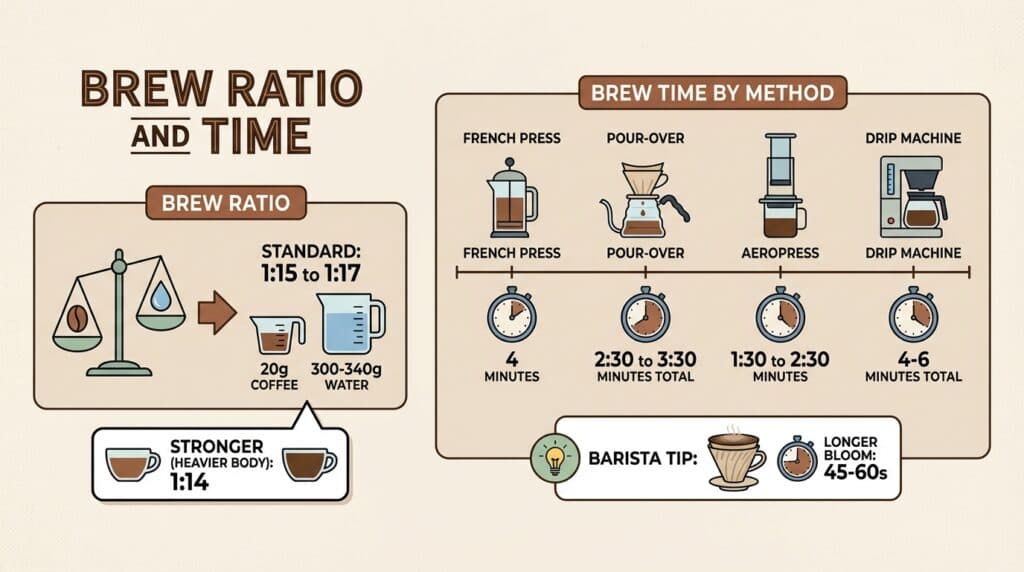
A standard starting ratio is 1:15 to 1:17 (coffee to water by weight). For example, 20 grams of coffee to 300-340 grams of water. If you want a heavier body that emphasizes chocolate notes, try a slightly stronger ratio like 1:14.
Brew time varies by method:
- French press: 4 minutes
- Pour-over: 2:30 to 3:30 minutes total
- AeroPress: 1:30 to 2:30 minutes
- Drip machine: Automatic, but aim for 4-6 minutes total contact time
Barista Tip: If you’re using a pour-over, try a longer bloom time (45-60 seconds instead of 30). This allows CO2 to escape and helps water extract more evenly, often resulting in sweeter, more developed flavors.
Best Brewing Methods for Chocolatey Coffee
Not all brewing methods are created equal when it comes to chocolate notes. Some naturally emphasize body and sweetness, while others highlight brighter, more acidic flavors.
French Press: The Chocolate Champion
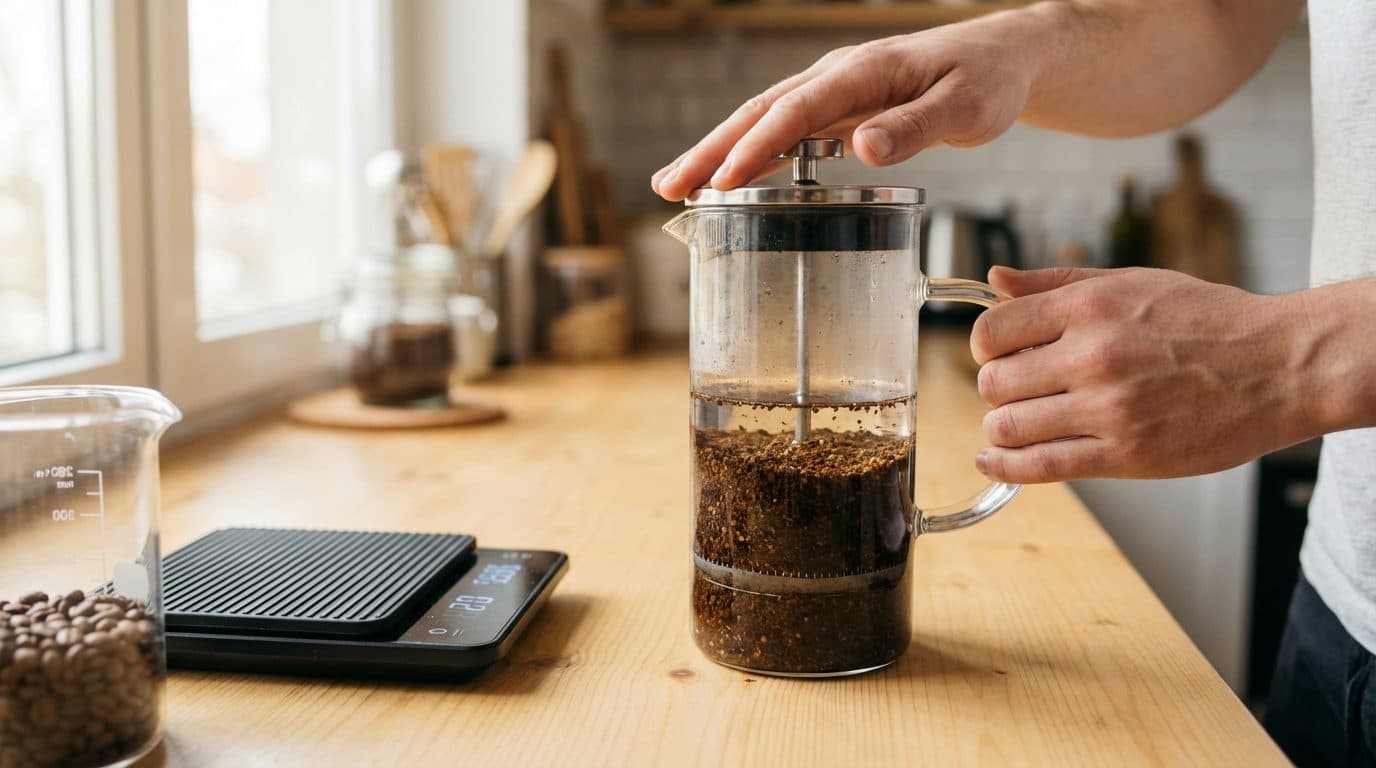
The French press is my go-to recommendation for anyone chasing chocolatey flavor. Its metal mesh filter allows oils and fine particles into your cup, creating a full-bodied, rich brew that showcases chocolate notes beautifully. The immersion brewing style also ensures even extraction.
Mini scenario: Imagine you’ve got a bag of Brazilian beans with tasting notes of “milk chocolate and hazelnut.” Brew them in a French press at a 1:14 ratio with 200°F water, steep for 4 minutes, and you’ll taste exactly what the roaster intended.
AeroPress: Versatile and Forgiving
The AeroPress can produce anything from espresso-style concentrate to clean, tea-like coffee. For chocolate notes, use a medium grind, inverted method, and a slightly longer steep time (2 minutes). The pressure during plunging helps extract oils and body.
Pour-Over: Clean but Capable
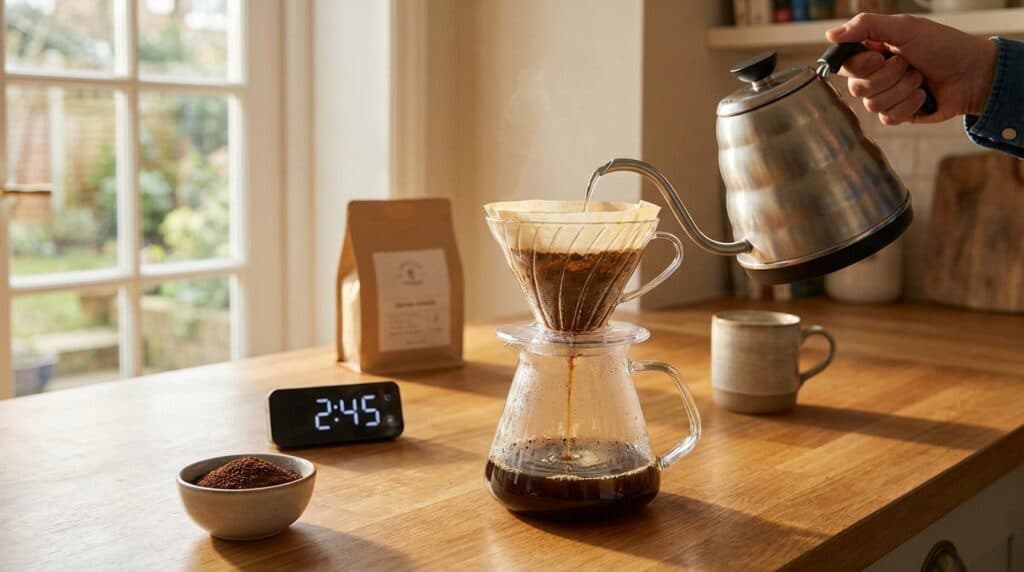
Pour-over methods like the V60 or Chemex tend to produce cleaner, brighter cups. However, you can still get chocolate notes by using a medium-dark roast, slightly finer grind, and slower pour rate. The key is extending contact time without over-extracting.
Moka Pot: Intense and Bold
If you love dark chocolate and bittersweet notes, the Moka pot delivers concentrated, intense coffee that pairs wonderfully with milk. Just be careful not to overheat it—remove from heat as soon as coffee starts gurgling to avoid burnt flavors.
Common Mistakes That Kill Chocolate Flavor
Even with the right beans and equipment, a few common mistakes can sabotage your efforts. Let’s bust some myths and troubleshoot the usual culprits.
Myth: Darker Is Always More Chocolatey
Many people assume that the darkest roast equals the most chocolate flavor. In reality, over-roasted beans taste burnt, ashy, and one-dimensional. The complex sugars that create chocolate notes get destroyed at very high roast temperatures. Stick to medium-dark for the best results.
Using Stale or Pre-Ground Coffee
Coffee begins losing flavor within minutes of grinding. Pre-ground coffee from the store has already lost most of its aromatic compounds by the time you brew it. Always grind fresh, right before brewing.
Ignoring Water Quality
Tap water with high chlorine or mineral content can introduce off-flavors that mask chocolate notes. Filtered water makes a noticeable difference. Avoid distilled water, though—some minerals are necessary for proper extraction.
Rushing the Process
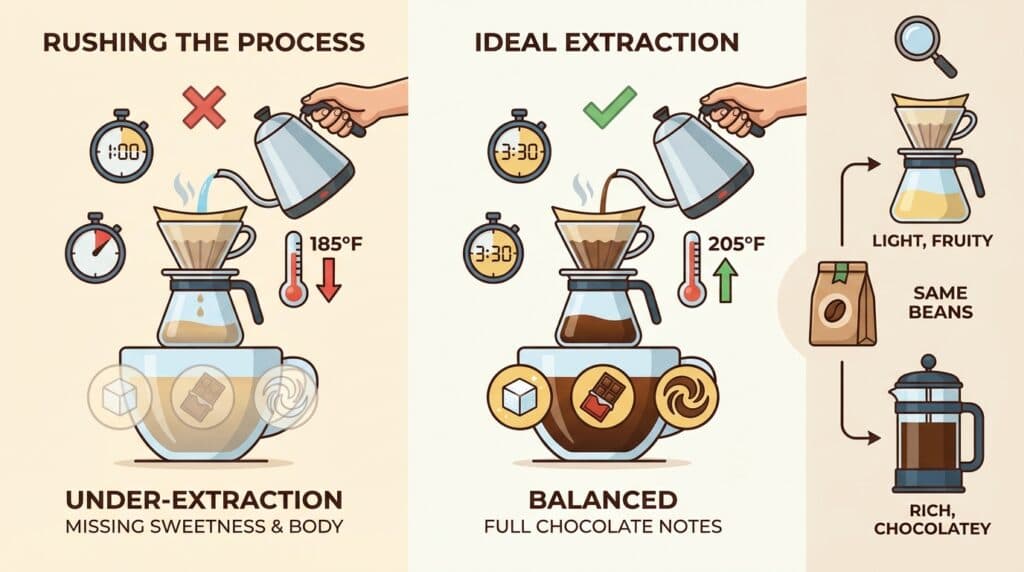
Impatience leads to under-extraction. If you’re pouring too fast, using water that’s not hot enough, or cutting brew time short, you’ll miss out on the sweetness and body that make chocolate notes shine.
Did You Know? The same coffee brewed two different ways can taste completely different. A light, fruity pour-over and a rich, chocolatey French press can come from the exact same bag of beans.
Frequently Asked Questions
Can I add anything to my coffee to make it taste more chocolatey?
You can add cocoa powder, chocolate syrup, or a mocha-style preparation, but these are additions rather than extracting natural chocolate flavor from the beans. For authentic chocolatey taste, focus on bean selection and brewing technique first. If you still want more, a small pinch of unsweetened cocoa powder in your grounds before brewing can enhance existing notes without making it taste artificial.
Why does my coffee taste bitter instead of chocolatey?
Bitterness usually indicates over-extraction. This happens when your grind is too fine, water is too hot, or brew time is too long. Try a coarser grind, slightly cooler water (around 195°F), or shorter steep time. Also check your roast level—very dark roasts naturally taste more bitter.
What coffee origins are best for chocolate flavor?
Brazilian, Colombian, Guatemalan, and Sumatran coffees are known for chocolate notes. Look for tasting notes on the bag that mention cocoa, dark chocolate, milk chocolate, or brownie. Single-origin coffees from these regions, roasted to medium or medium-dark, are your best bet.
Does the type of milk I use affect chocolate flavor perception?
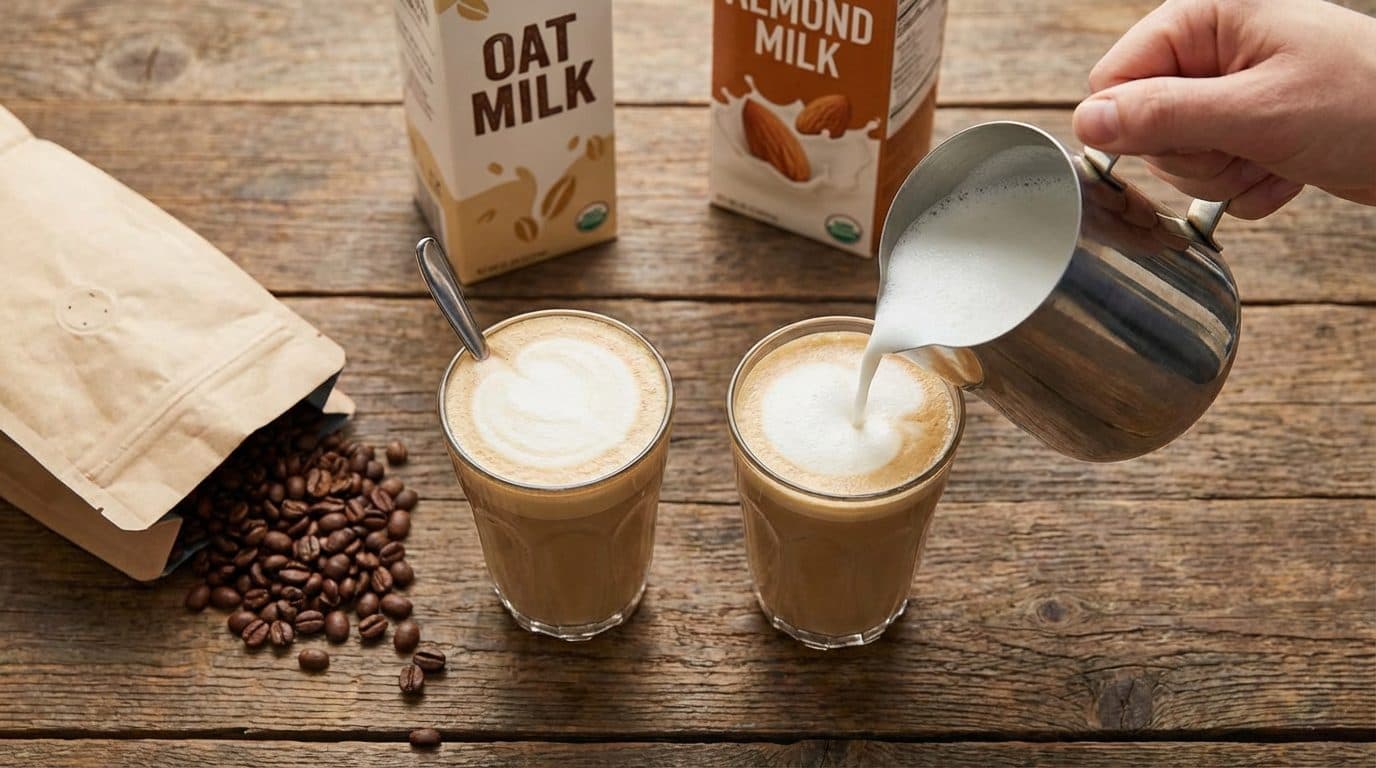
Yes, milk can enhance or mask chocolate notes. Whole milk adds sweetness and body that complements cocoa flavors. Oat milk also works well due to its natural sweetness. Very light or watery milks may dilute the perception of chocolate. If drinking black, you’ll taste the chocolate notes most clearly.
How long do roasted coffee beans stay fresh?
For optimal flavor, use beans within 2-4 weeks of the roast date. Store them in an airtight container away from light, heat, and moisture. After about a month, flavor compounds degrade significantly, and those delicate chocolate notes will fade into generic “coffee” taste.
Conclusion: Your Path to Chocolatey Coffee Bliss
Getting more chocolatey flavor from your coffee beans at home comes down to a few key principles: choose the right beans (medium to medium-dark roast from chocolate-forward origins), grind fresh, use proper water temperature, and match your brewing method to your flavor goals. The French press and AeroPress are particularly effective for emphasizing body and sweetness, but any method can work with the right adjustments.
Start by evaluating your current setup. Are your beans fresh? Is your grind size appropriate? Is your water hot enough? Small tweaks in these areas often yield dramatic improvements. Experiment with one variable at a time so you can taste the difference each change makes.
By following these steps, you’ll be well on your way to brewing coffee that tastes like the chocolate-lover’s dream you’ve been chasing. Now go make yourself a cup worth savoring.

Comments