


Table of Contents
- Understanding Fair Trade Coffee: The Certified Approach
- The Pros of Fair Trade
- The Cons of Fair Trade
- Direct Trade Coffee: Cutting Out the Middleman
- The Pros of Direct Trade
- The Cons of Direct Trade
- Fair Trade vs. Direct Trade: A Side-by-Side Comparison
- Where Does Your Coffee Dollar Actually Go?
- Fair Trade Breakdown
- Direct Trade Breakdown
- Who Benefits Most from Each Model?
- Fair Trade Benefits
- Direct Trade Benefits
- How to Make Ethical Coffee Choices
- Frequently Asked Questions
- Is Fair Trade coffee actually fair to farmers?
- How do I know if Direct Trade claims are legitimate?
- Does paying more for coffee mean farmers get more money?
- Can a coffee be both Fair Trade and Direct Trade?
- Which is better for the environment?
- Conclusion: Making Your Coffee Count
Ever wondered where your money actually goes when you buy that bag of “ethically sourced” coffee? You’re not alone. With labels like Fair Trade and Direct Trade splashed across packaging, it’s easy to assume farmers are getting a fair cut. But here’s the thing—these two models work in completely different ways, and the financial impact on coffee growers varies dramatically. If you care about supporting the people who grow your morning brew, understanding where the money goes is essential.
In this guide, I’ll break down the key differences between Fair Trade and Direct Trade, explain how money flows through each system, and help you decide which approach aligns with your values. Because life is too short for bad coffee—and it’s definitely too short to feel confused about whether your purchase actually helps farmers.
Understanding Fair Trade Coffee: The Certified Approach
Fair Trade is a certification system managed by organizations like Fairtrade International and Fair Trade USA. It sets minimum standards for pricing, labor conditions, and environmental practices. When you see that familiar green and blue logo, it means the coffee has been verified by a third-party organization.
Here’s how the money flows in a Fair Trade system:
- Minimum price guarantee: Farmers receive at least $1.40 per pound for washed Arabica (or $1.70 for organic), regardless of market fluctuations.
- Fair Trade Premium: An additional $0.20 per pound goes to the cooperative for community projects like schools, healthcare, or infrastructure.
- Cooperative structure: Payments go to farmer cooperatives, not individual growers directly.
The Pros of Fair Trade
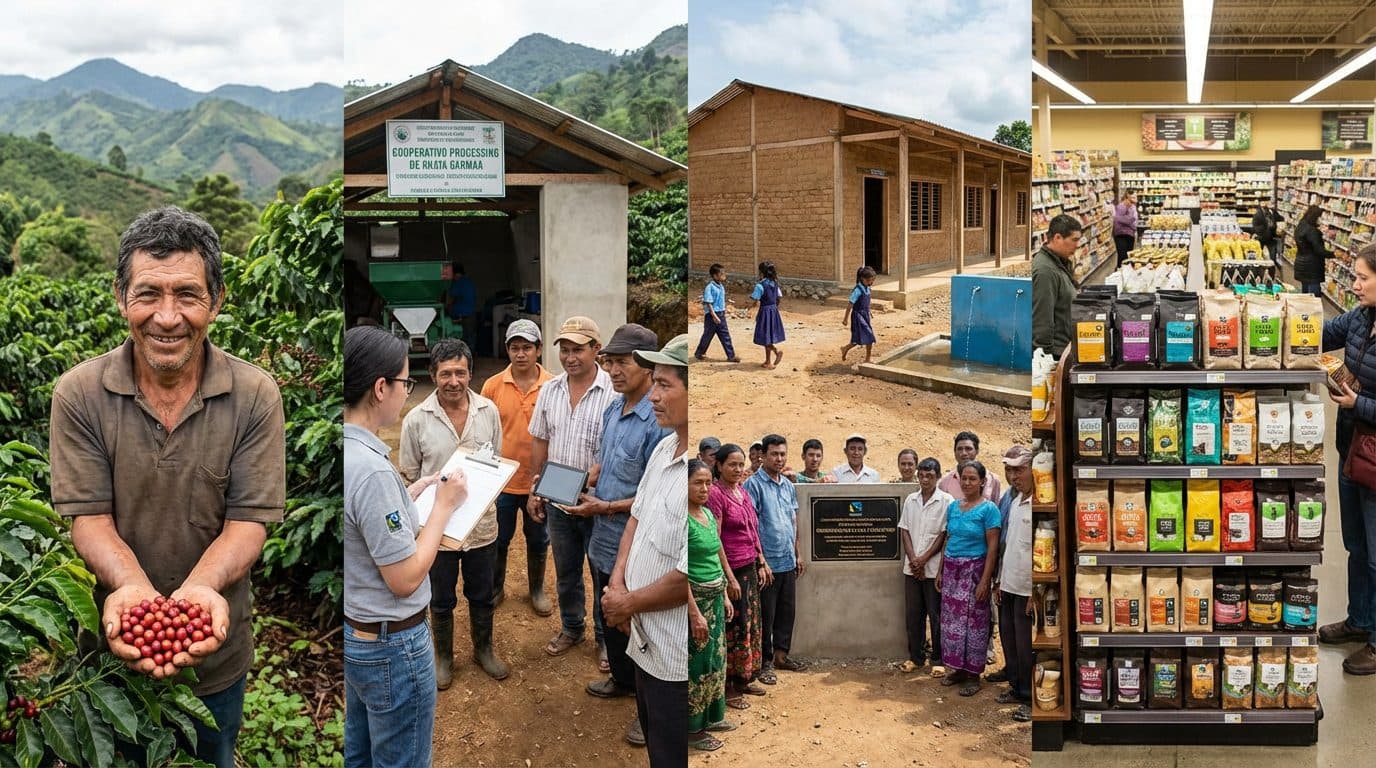
- Provides a safety net when global coffee prices crash
- Third-party verification ensures accountability
- Community premium funds collective improvements
- Widely recognized and available in mainstream stores
The Cons of Fair Trade
- Certification fees can be expensive for small cooperatives
- Minimum price may still fall below production costs in some regions
- Money goes to cooperatives, not always reaching individual farmers equally
- Doesn’t necessarily reward exceptional quality with higher prices
Did You Know? The Fair Trade minimum price hasn’t kept pace with inflation. That $1.40 per pound was set years ago, and production costs have risen significantly since then. In some countries, farmers still struggle to break even despite Fair Trade certification.
Direct Trade Coffee: Cutting Out the Middleman
Direct Trade isn’t a certification—it’s a business philosophy. Roasters who practice Direct Trade build personal relationships with farmers, visit their farms, and negotiate prices face-to-face. There’s no official logo or third-party verification, which means the term can mean different things depending on who’s using it.
In my experience, the best Direct Trade roasters are incredibly transparent about their sourcing. They’ll tell you exactly which farm produced your beans, how much they paid, and often share photos or stories from their visits.
Here’s how money typically flows in Direct Trade:
- Higher prices paid: Many Direct Trade roasters pay $2.00–$5.00+ per pound, well above Fair Trade minimums.
- Direct payment: Money goes straight to the farmer or farm owner, bypassing cooperatives and intermediaries.
- Quality premiums: Exceptional beans command higher prices, incentivizing farmers to improve their craft.
The Pros of Direct Trade
- Often results in significantly higher farmer income
- Rewards quality with premium prices
- Builds long-term relationships and stability
- No certification fees eating into profits
The Cons of Direct Trade
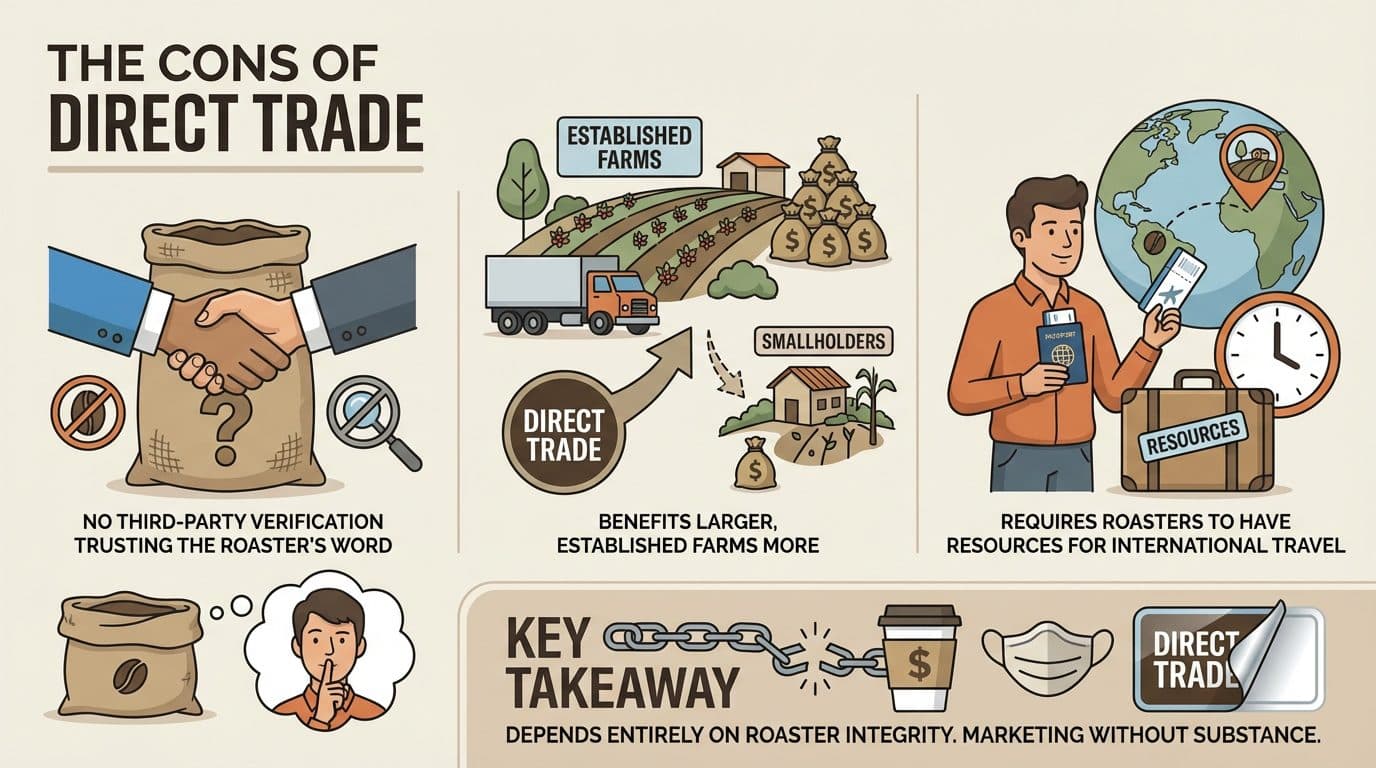
- No third-party verification—you’re trusting the roaster’s word
- Benefits larger, established farms more than smallholders
- Requires roasters to have resources for international travel
- Inconsistent standards across different companies
Key Takeaway: Direct Trade can put more money in farmers’ pockets, but it depends entirely on the integrity of the roaster. Without certification, some companies use “Direct Trade” as marketing without the substance to back it up.
Fair Trade vs. Direct Trade: A Side-by-Side Comparison
Let me break this down in a way that makes the differences crystal clear:
| Factor | Fair Trade | Direct Trade |
|---|---|---|
| Certification | Yes, third-party verified | No official certification |
| Minimum Price | $1.40/lb (washed Arabica) | No minimum, but often $2.00–$5.00+/lb |
| Payment Recipient | Cooperatives | Individual farmers/farm owners |
| Quality Incentive | Limited | Strong—better beans mean better prices |
| Transparency | Standardized reporting | Varies by roaster |
| Accessibility | Widely available | Mostly specialty roasters |
| Farm Size Benefit | Smallholders in cooperatives | Often favors larger operations |
Neither system is perfect. Fair Trade offers structure and accountability but can feel bureaucratic. Direct Trade offers flexibility and potentially higher returns but lacks oversight. The “better” choice depends on what matters most to you.
Where Does Your Coffee Dollar Actually Go?
Here’s where things get interesting—and a little frustrating. Let’s trace a hypothetical $15 bag of coffee through each system.
Fair Trade Breakdown
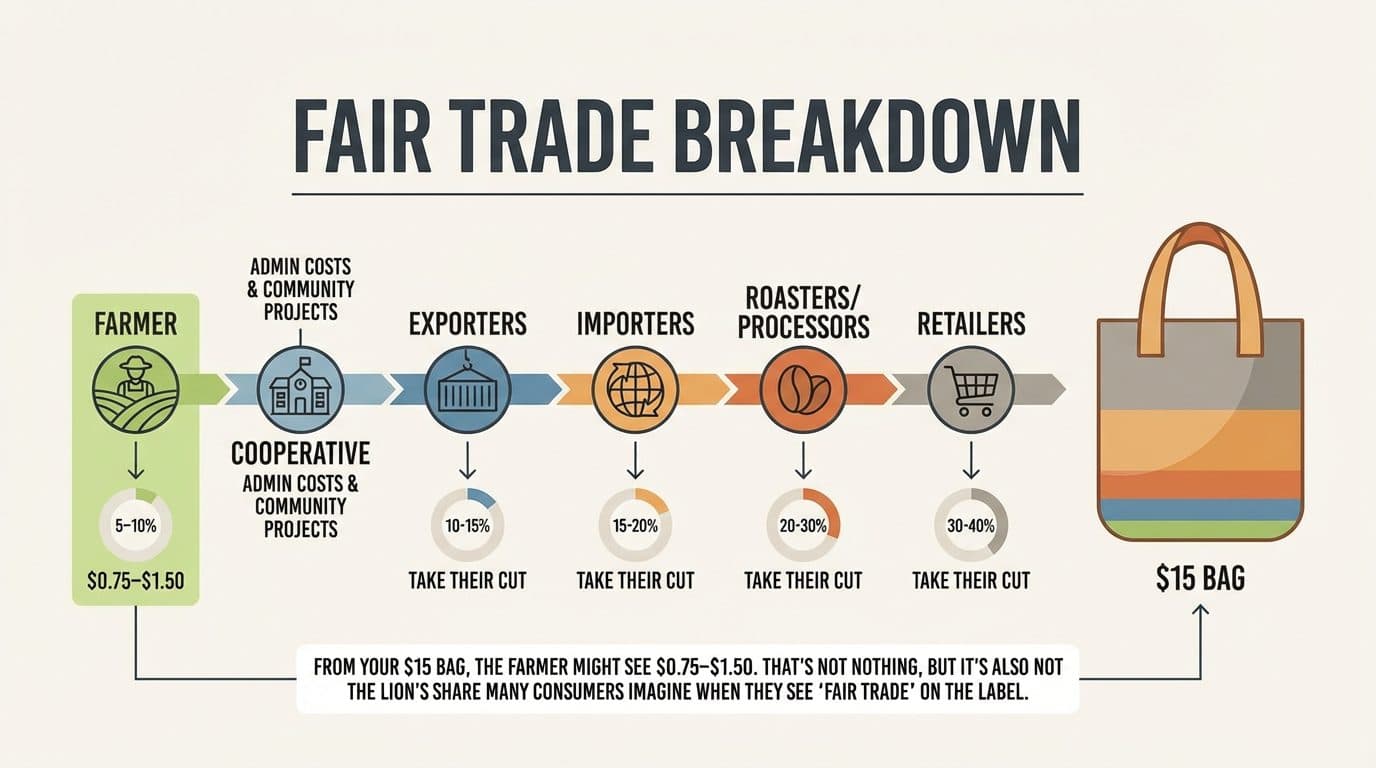
For a typical Fair Trade bag, the farmer might receive around 5–10% of the final retail price. The cooperative takes a portion for administrative costs and community projects. Importers, exporters, roasters, and retailers each take their cut along the way.
So from your $15 bag, the farmer might see $0.75–$1.50. That’s not nothing, but it’s also not the lion’s share many consumers imagine when they see “Fair Trade” on the label.
Direct Trade Breakdown
With Direct Trade, farmers often receive a higher percentage—sometimes 15–25% of the retail price for specialty-grade beans. Because there are fewer intermediaries, more money can flow upstream. From that same $15 bag, a farmer might receive $2.25–$3.75.
However, this varies wildly. A roaster genuinely committed to Direct Trade principles will pay far more than one just using the term for marketing purposes.
Real-World Example: I’ve visited roasters who proudly share their green coffee purchase receipts. One showed me they paid $4.50 per pound for an exceptional Ethiopian lot—more than triple the Fair Trade minimum. That farmer could invest in better processing equipment, hire help during harvest, and improve their family’s quality of life. That’s the Direct Trade model working as intended.
Who Benefits Most from Each Model?
Understanding who each system serves best can help you make informed purchasing decisions.
Fair Trade Benefits
- Smallholder farmers: Growers with just a few acres who can’t negotiate individually with buyers
- Vulnerable communities: Areas where market access is limited and price volatility threatens livelihoods
- Cooperative members: Farmers who benefit from collective bargaining power and shared resources
Direct Trade Benefits
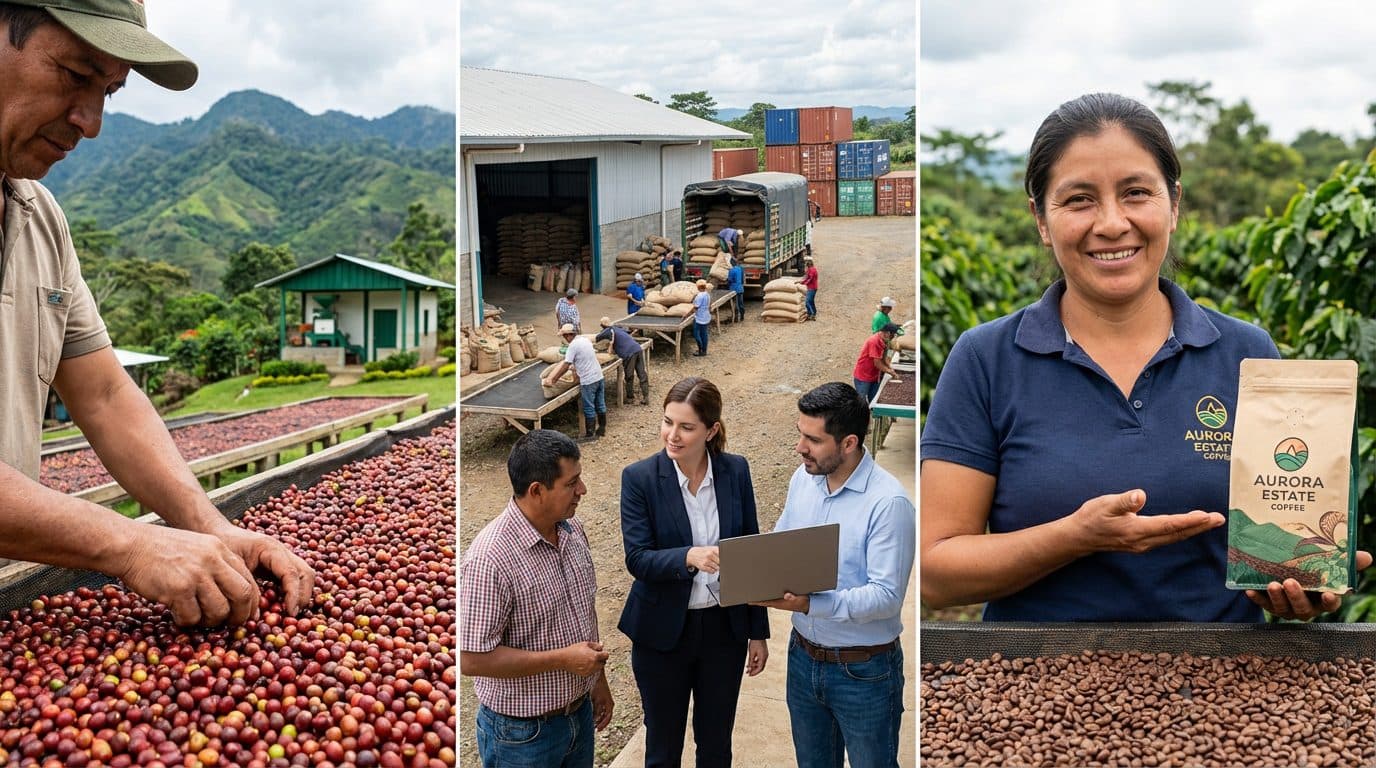
- Quality-focused producers: Farmers investing in exceptional processing and cultivation methods
- Established farms: Operations large enough to handle international communication and logistics
- Entrepreneurial growers: Farmers who want to build their own brand and reputation
Here’s a scenario I’ve seen play out: A small farmer in Guatemala joins a Fair Trade cooperative and gains market access they’d never have alone. Meanwhile, a third-generation farm in Colombia builds a direct relationship with a specialty roaster and earns premium prices for their meticulously processed lots. Both systems create value—just for different people in different circumstances.
How to Make Ethical Coffee Choices
So what should you do with all this information? Here are my practical recommendations:
- Look beyond the label: Fair Trade certification is meaningful, but it’s not the only indicator of ethical sourcing. Research the roaster’s practices.
- Ask questions: Good roasters love talking about their sourcing. If they can’t tell you where beans came from or what they paid, that’s a red flag.
- Support transparency: Some roasters publish full transparency reports showing exactly what they paid for each lot. Seek these out.
- Consider both: You don’t have to choose one or the other. Buy Fair Trade from your grocery store and Direct Trade from your local specialty roaster.
- Pay more when you can: Cheap coffee almost always means someone in the supply chain is being squeezed. Paying $15–$20 for a bag instead of $8 makes ethical sourcing more feasible.
Barista Tip: When trying a new roaster, check their website for a sourcing or transparency page. Companies genuinely committed to ethical practices usually make this information easy to find. If you have to dig extensively or can’t find any details, consider that a warning sign.
Frequently Asked Questions
Is Fair Trade coffee actually fair to farmers?
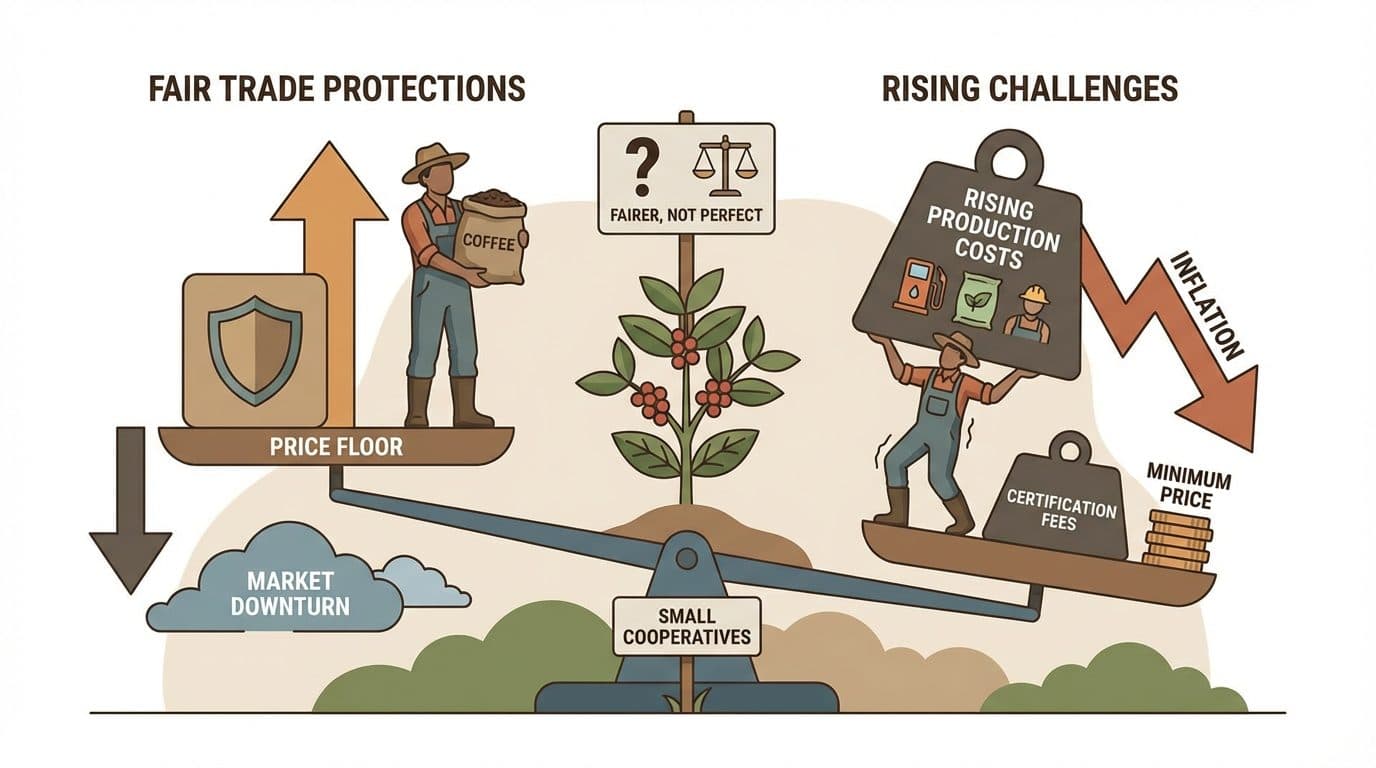
Fair Trade provides important protections, especially price floors during market downturns. However, the minimum price hasn’t kept pace with rising production costs, and certification fees can burden small cooperatives. It’s fairer than conventional trading, but it’s not a perfect solution.
How do I know if Direct Trade claims are legitimate?
Look for specifics. Trustworthy Direct Trade roasters share farm names, farmer stories, prices paid, and often photos from origin visits. Vague claims without details should raise suspicion. Some roasters even publish transparency reports with exact figures.
Does paying more for coffee mean farmers get more money?
Not automatically. A premium price at retail doesn’t guarantee premium payment to farmers. However, specialty roasters who charge more often do pay more for quality beans and invest in direct relationships. Research the specific roaster rather than assuming price equals ethics.
Can a coffee be both Fair Trade and Direct Trade?
Technically, yes. Some roasters maintain Fair Trade certification while also building direct relationships with specific farms. However, this is relatively uncommon because Direct Trade roasters often pay above Fair Trade prices anyway, making certification somewhat redundant.
Which is better for the environment?
Both can support environmental sustainability, but neither guarantees it. Fair Trade has environmental standards built into certification. Direct Trade relationships can include environmental commitments, but there’s no requirement. Look for additional certifications like organic or Rainforest Alliance if environmental impact is a priority.
Conclusion: Making Your Coffee Count
The Fair Trade vs. Direct Trade debate doesn’t have a clear winner—and that’s actually okay. Both models emerged from genuine desire to improve farmers’ lives, and both have strengths and limitations. Fair Trade offers structure, accessibility, and protection for vulnerable smallholders. Direct Trade offers flexibility, quality incentives, and potentially higher returns for farmers who can access those relationships.
What matters most is that you’re asking these questions in the first place. By caring about where your money goes, you’re already ahead of most coffee consumers. My advice? Stay curious, support transparent roasters, and don’t be afraid to pay a little more for beans you can feel good about. Your morning cup tastes better when you know it’s making a real difference in someone’s life.


Comments