


Table of Contents
- Quick Verdict: Bodum Pour Over Coffee Maker
- What Makes a Coffee Maker "Apartment-Friendly"?
- The Best Cheap Coffee Makers Compared
- Bodum Pour Over Coffee Maker
- AeroPress Original
- Classic French Press
- Mr. Coffee 5-Cup Mini Brew
- Keurig K-Mini
- Budget Breakdown: What Will Coffee Actually Cost?
- Tips for Making Great Coffee in Small Spaces
- Final Thoughts and Recommendations
Quick Verdict: Bodum Pour Over Coffee Maker
After testing dozens of budget coffee makers in cramped kitchens and tiny dorm rooms, the Bodum Pour Over Coffee Maker stands out as the best overall choice. It costs under $25, takes up almost no counter space, brews excellent coffee, and requires zero electricity. For students and apartment dwellers who want great coffee without the bulk or complexity, this is the one I recommend most often.
Pros:
- Extremely affordable (usually under $25)
- No electricity needed
- Compact footprint fits anywhere
- Easy to clean and nearly indestructible
- Brews rich, flavorful coffee
Cons:
- Manual process requires some learning
- No programmable features
- You need to heat water separately
That said, the “best” cheap coffee maker really depends on your specific needs. Keep reading to find the perfect match for your living situation and brewing style.
What Makes a Coffee Maker “Apartment-Friendly”?
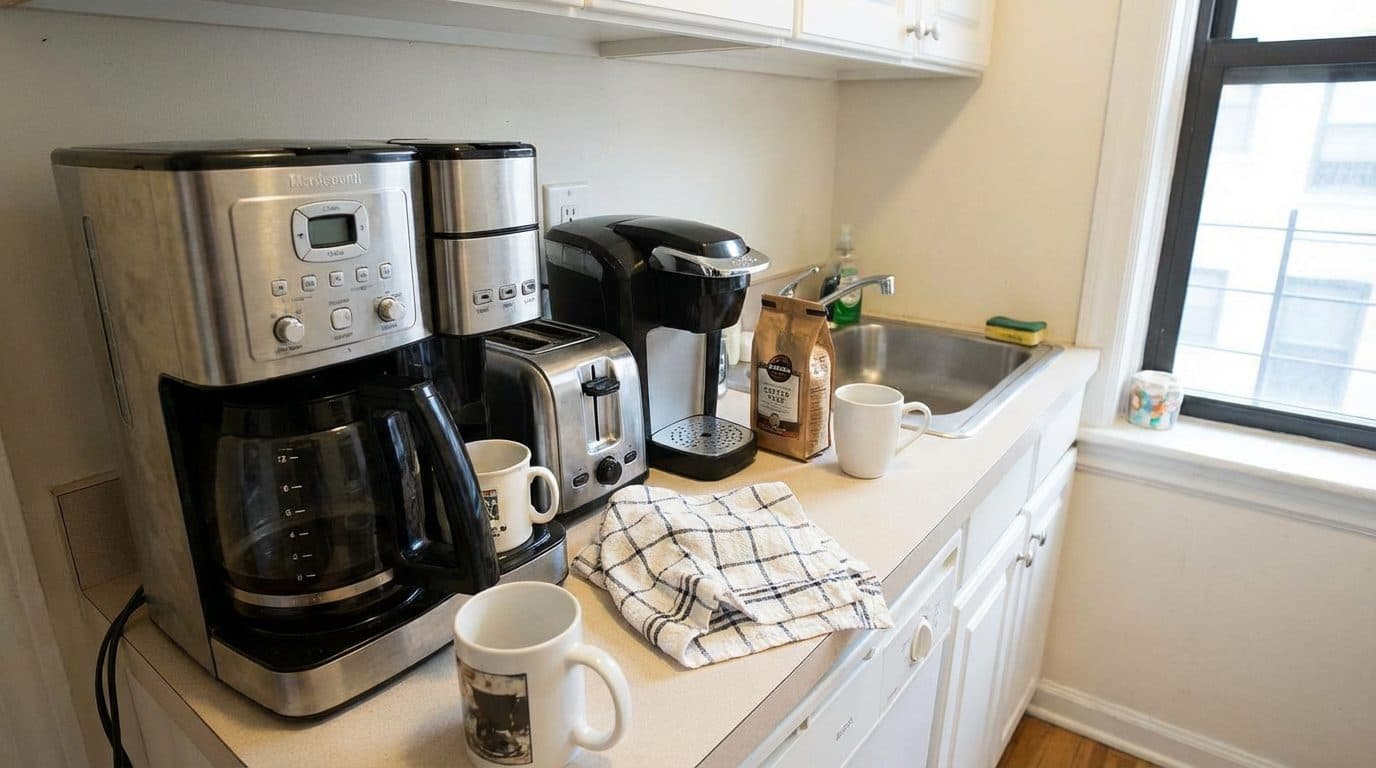
Before diving into specific recommendations, let’s talk about what actually matters when you’re shopping for a cheap coffee maker for a small space. In my experience, people focus too much on features and not enough on practical considerations.
First, size matters more than you think. That 12-cup drip machine might seem like a good deal, but it’ll dominate your entire counter. In a dorm room or studio apartment, every square inch counts. I’ve seen too many coffee makers end up in closets because they just didn’t fit the space.
Second, consider your electrical situation. Dorm rooms often have strict rules about heating appliances, and older apartments might have limited outlets. A coffee maker that doesn’t need electricity can be a genuine lifesaver.
Here’s what I look for in apartment-friendly coffee makers:
- Compact footprint (ideally under 8 inches in any direction)
- Budget-friendly price (under $50, ideally under $30)
- Easy cleaning without fancy parts
- Quiet operation (your roommates will thank you)
- Durable construction that survives moves
The Best Cheap Coffee Makers Compared
I’ve organized these picks by brewing method, since that’s really the first decision you need to make. Each has its own personality, and what works for your neighbor might not work for you.
| Coffee Maker | Price Range | Size | Electricity Needed | Best For |
|---|---|---|---|---|
| Bodum Pour Over | $20-25 | Very Small | No | Quality-focused beginners |
| AeroPress Original | $35-40 | Very Small | No | Experimenters and travelers |
| French Press | $15-25 | Small | No | Bold coffee lovers |
| Mr. Coffee 5-Cup | $25-30 | Medium | Yes | Set-it-and-forget-it types |
| Keurig K-Mini | $70-90 | Small | Yes | Ultimate convenience seekers |
Bodum Pour Over Coffee Maker
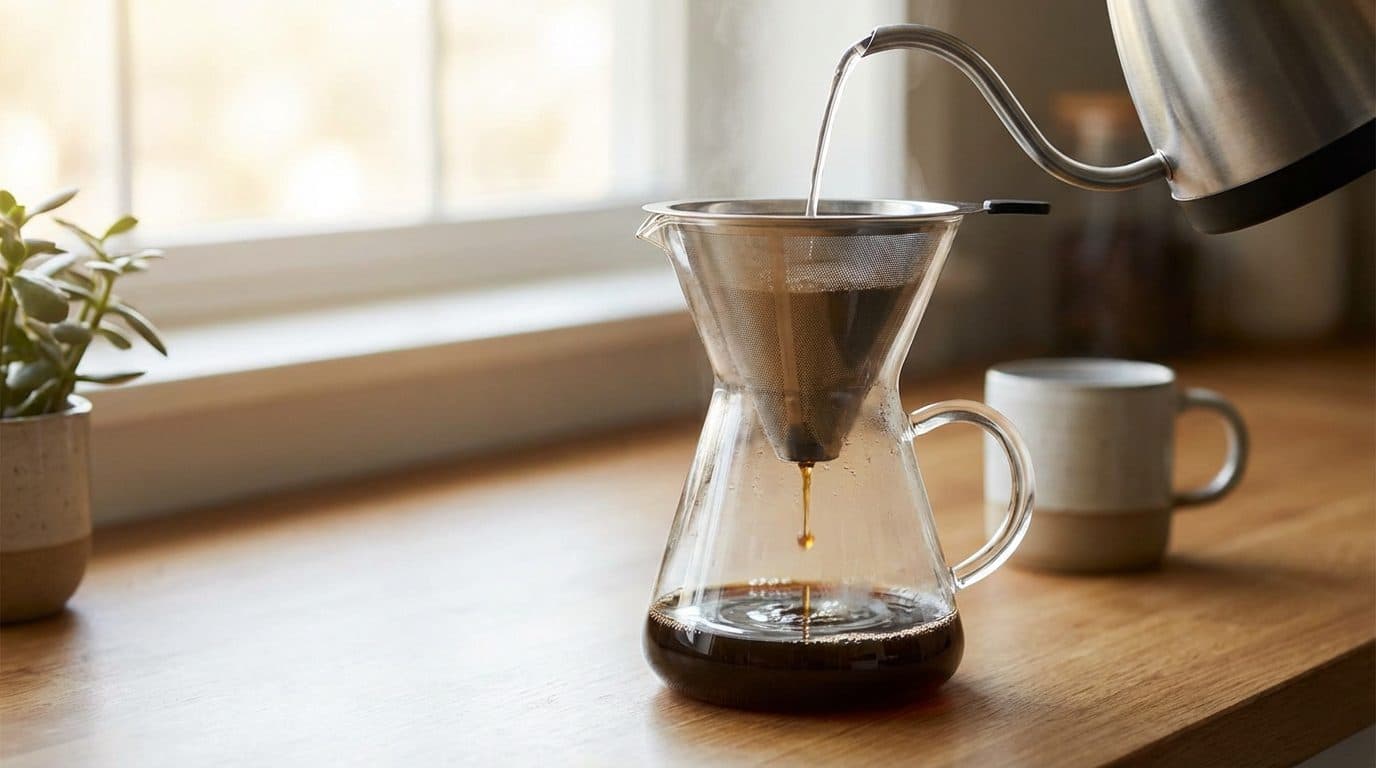
This is my top pick for a reason. The Bodum pour over is basically a glass carafe with a permanent mesh filter built in. You add coffee grounds, pour hot water over them, and gravity does the rest. The whole thing is about the size of a wine bottle.
What I love about this method is the coffee quality. Pour over brewing extracts bright, clean flavors that drip machines often miss. Once you nail the technique (which takes maybe three tries), you’ll wonder why you ever bothered with complicated machines.
Pros:
- No paper filters needed (save money long-term)
- Glass carafe looks elegant
- Dishwasher safe
- Perfect for 2-4 cups
Cons:
- Requires separate kettle for hot water
- 3-4 minute active brewing time
- Glass can break if dropped
Who is this for? Anyone who cares about coffee quality and doesn’t mind spending a few minutes on the ritual. Great for dorm residents who can use the communal kitchen’s kettle.
Who is this NOT for? People who need coffee ready the moment they wake up, or those who want to brew while doing other things.
Check the latest price on Amazon.
AeroPress Original
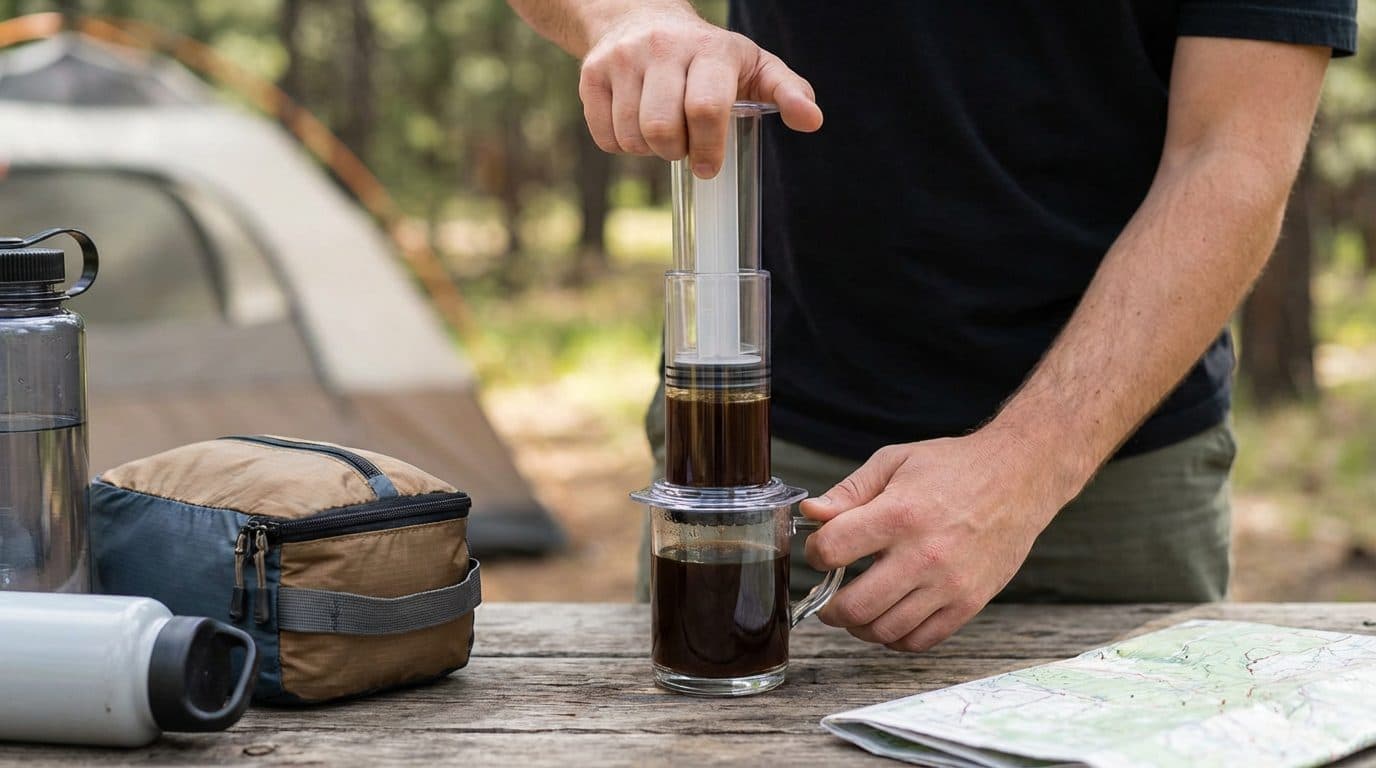
The AeroPress looks like a science experiment, but don’t let that intimidate you. It’s essentially a giant syringe that uses air pressure to push water through coffee grounds. The result is smooth, concentrated coffee that falls somewhere between espresso and regular drip.
I’ve taken my AeroPress on camping trips, to hotel rooms, and yes, through several apartment moves. It’s practically indestructible and takes up less space than most travel mugs. The entire kit fits in a small bag.
Pros:
- Incredibly versatile (makes espresso-style or regular coffee)
- Brews in about 90 seconds
- Almost impossible to break
- Huge online community with recipes
- Super easy cleanup
Cons:
- Only makes one cup at a time
- Slight learning curve
- Requires paper filters (or $15 metal filter)
Who is this for? Coffee enthusiasts who enjoy experimenting and want maximum portability. Perfect if you move frequently or travel often.
Who is this NOT for? Anyone brewing for multiple people, or those who find the idea of “pressing” their coffee strange.
See current deals on Amazon.
Classic French Press
The French press has been around since 1929, and there’s a reason it’s still popular. You add coarse grounds, pour hot water, wait four minutes, and press the plunger. That’s it. No fancy techniques, no learning curve.
French press coffee is bold, full-bodied, and has a richness that other methods can’t quite match. The trade-off is a bit of sediment at the bottom of your cup and oils that paper filters would normally catch. Some people love this; others find it too heavy.
Pros:
- Extremely affordable (good ones start at $15)
- No filters needed ever
- Foolproof brewing method
- Makes 2-4 cups easily
- Also works for tea
Cons:
- Produces sediment in the cup
- Glass versions can break
- Requires thorough cleaning
- Coffee cools quickly without insulation
Barista Tip: Get an insulated stainless steel French press if you like to sip slowly. The Espro P6 is pricier but keeps coffee hot for over an hour.
Who is this for? People who like bold, robust coffee and want the simplest possible brewing method. Great for sharing with a roommate.
Who is this NOT for? Anyone who prefers clean, light coffee or hates the idea of sediment.
Mr. Coffee 5-Cup Mini Brew
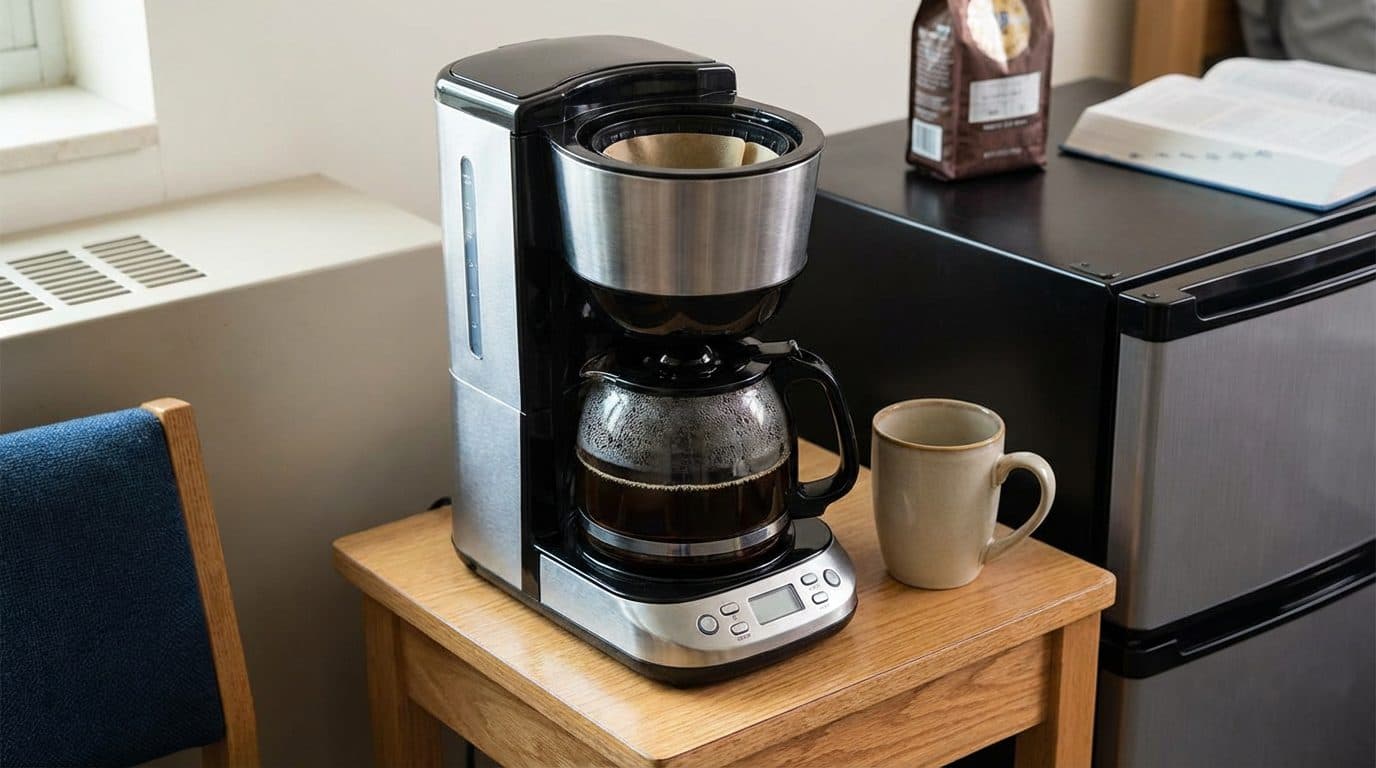
Sometimes you just want to push a button and have coffee appear. I get it. The Mr. Coffee 5-Cup is the smallest traditional drip machine worth buying, and it’s been a dorm room staple for decades.
This machine won’t win any barista awards, but it’s reliable and genuinely compact for a drip brewer. The 5-cup capacity is actually perfect for one or two people, and the carafe fits on most mini-fridge tops for storage.
Pros:
- Completely automatic brewing
- Programmable on some models
- Hot plate keeps coffee warm
- Familiar, no-learning-curve operation
Cons:
- Larger footprint than manual methods
- Needs electrical outlet
- Coffee quality is average
- Hot plate can burn coffee if left too long
Who is this for? People who want traditional American drip coffee with zero morning effort. Perfect if you have the counter space.
Who is this NOT for? Dorm residents with appliance restrictions, or anyone in a truly tiny kitchen.
Keurig K-Mini
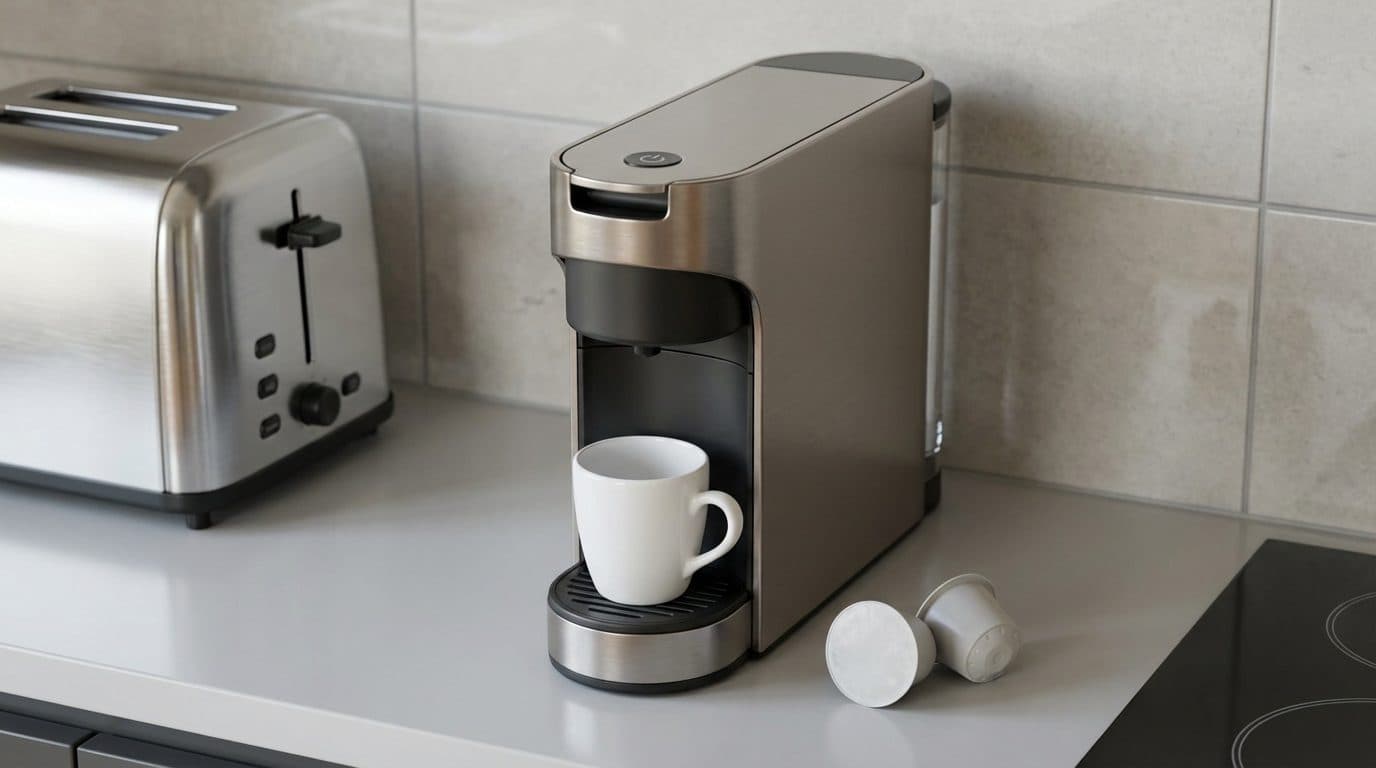
I’ll be honest—I have mixed feelings about pod machines. The waste bothers me, and the coffee is rarely exceptional. But the K-Mini is genuinely impressive for what it is: a 5-inch-wide coffee maker that produces a decent cup in under two minutes.
If convenience is your absolute priority and you’re willing to pay more per cup, the K-Mini delivers. It’s the only machine on this list you can tuck between your toaster and the wall.
Pros:
- Incredibly slim profile (only 5 inches wide)
- One-button operation
- Huge variety of pod flavors
- No coffee grounds to deal with
Cons:
- Higher upfront cost ($70-90)
- Pods cost $0.50-1.00 each
- Environmental concerns with waste
- Coffee quality varies by pod brand
Who is this for? People who value convenience above all else and don’t mind paying more per cup. Great for offices or anyone who only drinks one cup daily.
Who is this NOT for? Budget-conscious coffee drinkers, environmentally-minded people, or anyone who drinks multiple cups daily.
Budget Breakdown: What Will Coffee Actually Cost?
The purchase price is only part of the equation. Here’s what your first year of coffee might actually cost with each method:
| Method | Machine Cost | Yearly Supplies | Total First Year |
|---|---|---|---|
| Pour Over | $25 | $100 (coffee only) | $125 |
| AeroPress | $40 | $115 (coffee + filters) | $155 |
| French Press | $20 | $100 (coffee only) | $120 |
| Mr. Coffee | $30 | $120 (coffee + filters) | $150 |
| Keurig K-Mini | $80 | $350 (pods) | $430 |
These numbers assume one cup per day. If you’re a two-cup person, the Keurig costs add up fast. The manual methods become even more economical over time since there’s nothing to replace or repair.
Tips for Making Great Coffee in Small Spaces
No matter which machine you choose, a few simple habits will dramatically improve your coffee game:
- Buy whole beans and grind fresh. A $20 hand grinder makes more difference than a $200 machine.
- Use filtered water. Dorm and apartment tap water often tastes funky. A simple Brita pitcher solves this.
- Store beans properly. An airtight container away from light keeps coffee fresh for 2-3 weeks.
- Clean your equipment weekly. Coffee oils go rancid and ruin the taste of fresh brews.
Barista Tip: If you can’t afford a grinder, buy small amounts of pre-ground coffee from a local roaster. It’s infinitely better than the stuff that’s been sitting on grocery store shelves for months.
Final Thoughts and Recommendations
Life is too short for bad coffee, but that doesn’t mean you need expensive equipment. The best cheap coffee makers for small apartments prioritize simplicity and quality over bells and whistles.
For most people, I recommend starting with a pour over or French press. Both cost under $25, require no electricity, and produce better coffee than machines costing five times as much. If you want something more hands-off, the Mr. Coffee 5-Cup gets the job done without taking over your kitchen.
The key is matching the machine to your lifestyle. Think about when you drink coffee, how much time you have in the morning, and what kind of coffee actually makes you happy. A $15 French press that you use every day beats a $100 machine gathering dust in your closet.
Start with something affordable, learn what you like, and upgrade later if you catch the coffee bug. Your wallet—and your tiny kitchen—will thank you.


Comments