


Table of Contents
- Quick Verdict: The Best Coffee for Office Brewing
- What Makes Coffee "Office-Friendly"?
- Crowd-Pleasing Flavor Profile
- Forgiving Brew Characteristics
- Value and Freshness
- Top 5 Coffees for Office Brewing Compared
- Peet's Coffee Big Bang Medium Roast
- Kirkland Signature House Blend
- Counter Culture Hologram
- Office Brewing Methods: Matching Coffee to Your Machine
- Standard Drip Coffee Makers
- Single-Serve Pod Machines
- Commercial Airpot Brewers
- Keeping Office Coffee Fresh: Practical Tips
- The Office Coffee Budget: What to Expect
- Frequently Asked Questions
- What roast level is best for office coffee?
- Should office coffee be whole bean or pre-ground?
- How much coffee should I budget per employee?
- Can I use specialty coffee in a basic office drip machine?
- How often should office coffee machines be cleaned?
- Summary and Next Steps
Ever walked into your office kitchen, poured a cup of that communal coffee, and wondered why it tastes like disappointment in liquid form? You’re not alone. The average office worker drinks around 3 cups of coffee per day, yet most workplaces serve beans that would make any coffee lover weep. Finding the best coffee for office brewing doesn’t have to be a compromise between convenience and quality—you just need to know what works in a shared environment.
In this guide, I’ll walk you through my top picks for office-friendly coffee, explain what makes certain beans perform better in typical office brewers, and share practical tips for keeping your whole team caffeinated and happy. Because life is too short for bad coffee, especially when you’re stuck in meetings all day.
Quick Verdict: The Best Coffee for Office Brewing
Peet’s Coffee Big Bang Medium Roast takes the top spot for most office environments. It strikes the perfect balance between bold flavor and broad appeal, performs beautifully in drip machines, and stays fresh longer than lighter roasts. It’s the diplomatic choice that won’t start a coffee war in your break room.
For budget-conscious offices, Kirkland Signature House Blend delivers surprising quality at a fraction of the price. And if your team leans adventurous, Counter Culture Hologram offers a more nuanced, specialty experience that still works in standard office equipment.
What Makes Coffee “Office-Friendly”?
Not every great coffee translates well to an office setting. In my experience, the best coffee for office brewing needs to check several boxes that home brewing doesn’t always require.
Crowd-Pleasing Flavor Profile
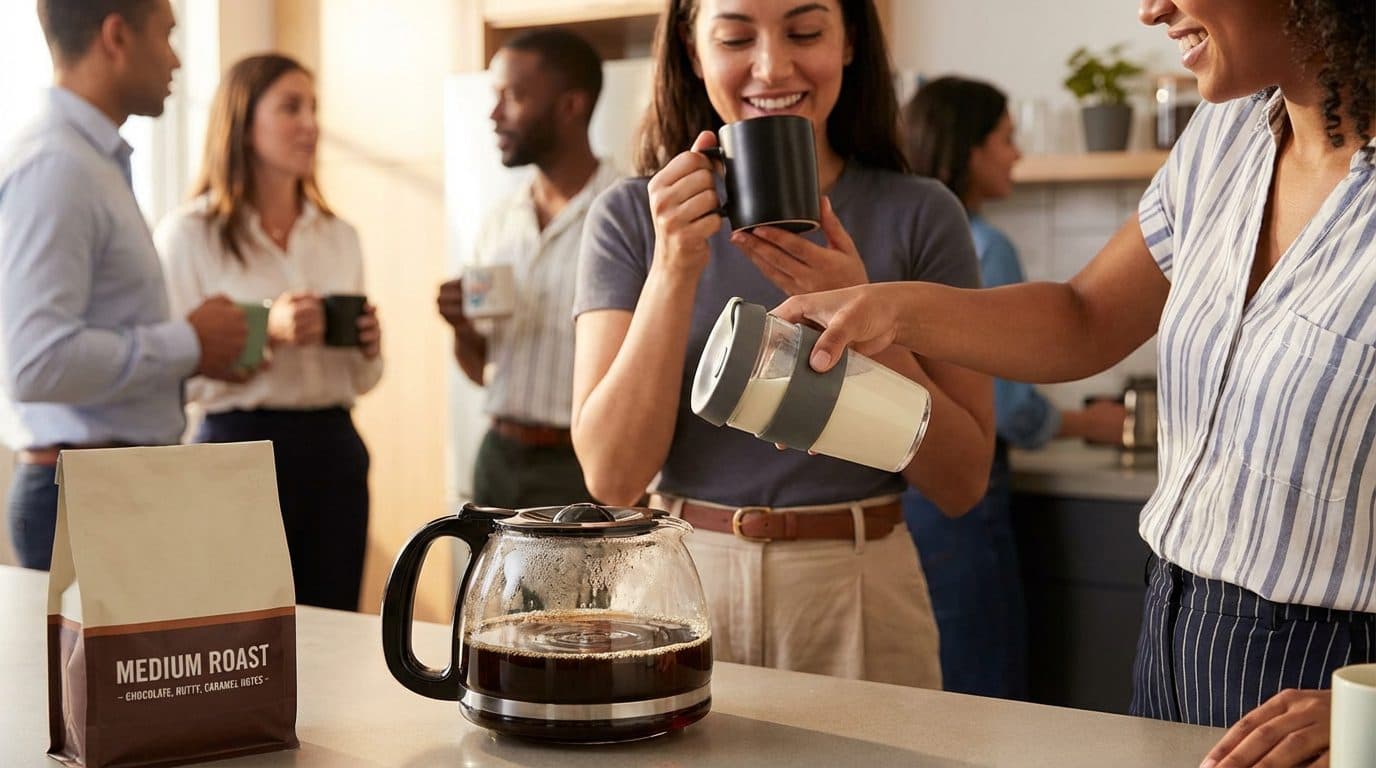
Your office likely has diverse coffee preferences—from the person who drowns everything in cream to the purist who drinks it black. Medium roasts tend to work best because they offer enough body to stand up to additions while remaining smooth enough for black coffee drinkers. I’ve found that coffees with chocolate, nutty, or caramel notes get the fewest complaints.
Forgiving Brew Characteristics
Let’s be honest: nobody in your office is carefully measuring water temperature or timing extraction. Office coffee needs to taste good even when someone:
- Leaves it on the burner for an hour
- Uses slightly stale grounds
- Eyeballs the coffee-to-water ratio
- Brews it in a machine that hasn’t been cleaned since the last quarterly review
Darker roasts and medium-dark blends handle these real-world conditions better than delicate single-origins.
Value and Freshness
Office coffee disappears fast, so you need beans that offer good value in larger quantities. Pre-ground options make sense here since convenience matters, but whole bean is always better if you can swing a grinder. Look for roast dates on bags and aim for coffee roasted within the past month.
Top 5 Coffees for Office Brewing Compared
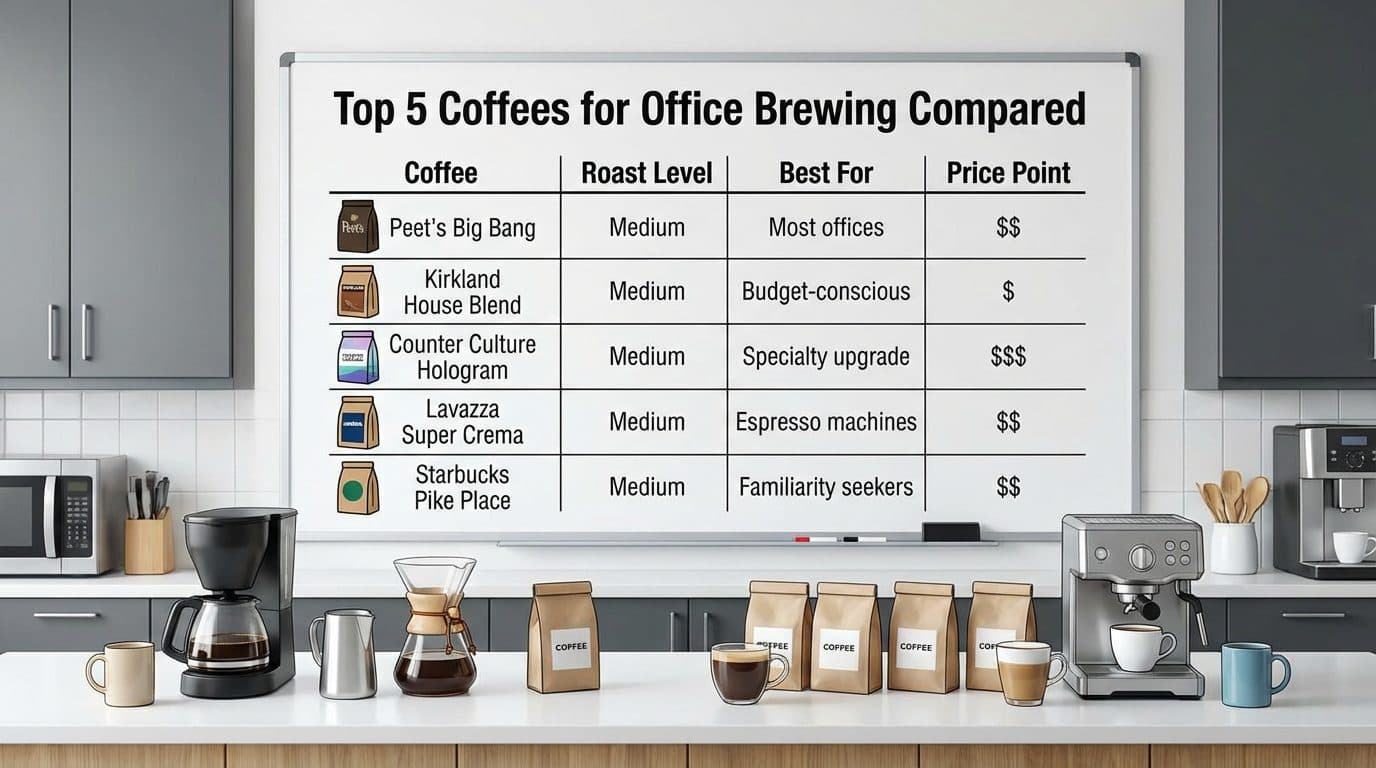
I’ve tested dozens of coffees in various office settings—from the basic Mr. Coffee drip machine to the fancier Bunn commercial brewers. Here are my top recommendations based on real-world performance.
| Coffee | Roast Level | Best For | Price Point |
|---|---|---|---|
| Peet’s Big Bang | Medium | Most offices | $$ |
| Kirkland House Blend | Medium | Budget-conscious | $ |
| Counter Culture Hologram | Medium | Specialty upgrade | $$$ |
| Lavazza Super Crema | Medium | Espresso machines | $$ |
| Starbucks Pike Place | Medium | Familiarity seekers | $$ |
Peet’s Coffee Big Bang Medium Roast
This blend consistently delivers in office environments. The flavor profile—smooth with hints of chocolate and a subtle brightness—appeals to a wide range of palates without being boring.
Pros:
- Excellent flavor even when brewed in basic machines
- Holds up well on a warming plate for 30-45 minutes
- Widely available in stores and online
- Pre-ground options maintain freshness decently
Cons:
- More expensive than budget options
- Some may find it slightly bold
- Limited single-origin transparency
Who is this for? Offices that want reliable quality without constant complaints. Perfect for teams of 10-50 people.
Who is this NOT for? Very small teams who might prefer more variety or ultra-budget-conscious environments.
Check the latest price on Amazon for bulk options that bring the per-cup cost down significantly.
Kirkland Signature House Blend
Don’t let the Costco branding fool you—this coffee is roasted by Starbucks and offers remarkable value. In my experience, it outperforms many coffees at twice the price.
Pros:
- Unbeatable price per ounce
- Consistent roast quality
- Available in massive bags perfect for high-volume offices
- Smooth, approachable flavor
Cons:
- Requires Costco membership to purchase
- Large bags can go stale if consumption is slow
- Flavor is good but not exceptional
Who is this for? Large offices with high coffee consumption and tight budgets.
Who is this NOT for? Small teams or offices without Costco access.
Counter Culture Hologram
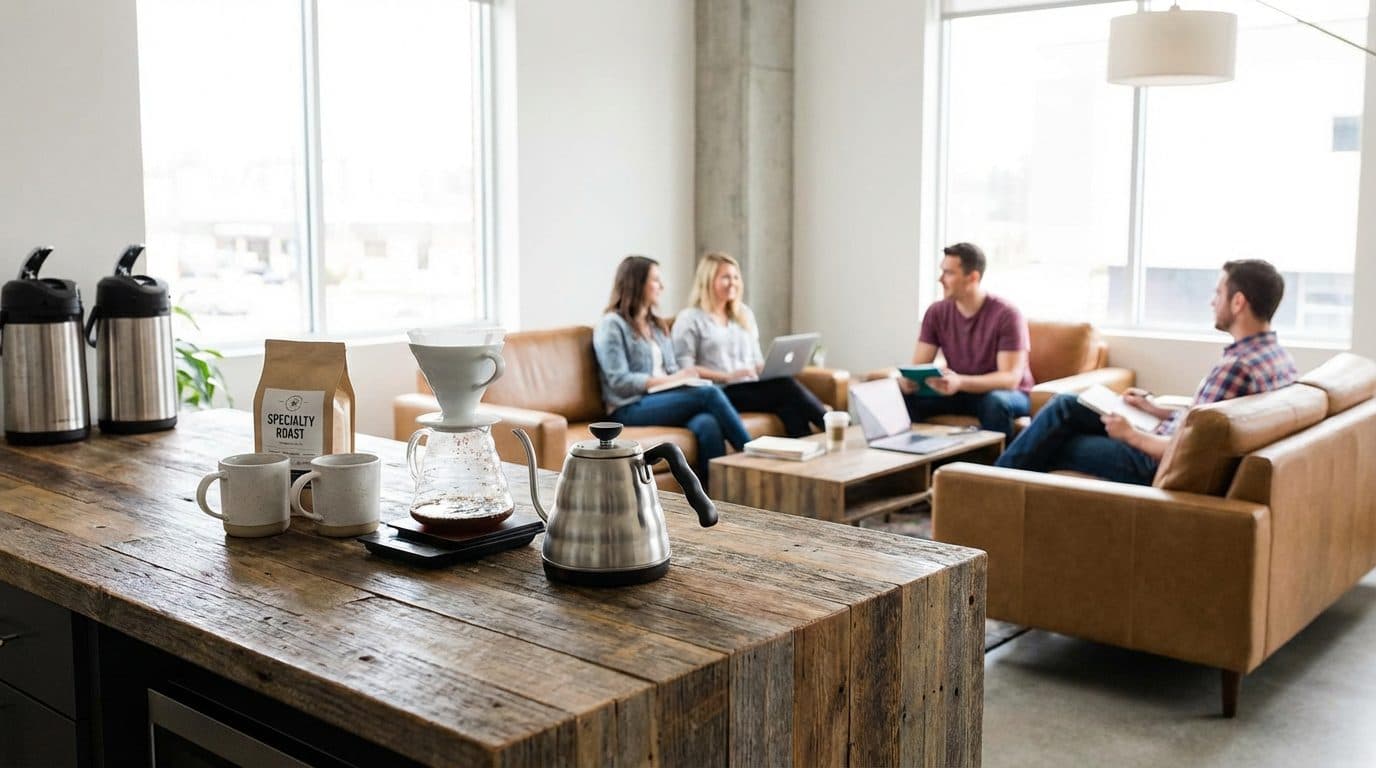
If your office has a few serious coffee enthusiasts, Hologram brings specialty coffee quality to the break room. It’s more complex than typical office fare without being alienating.
Pros:
- Exceptional flavor complexity
- Ethically sourced with transparent supply chain
- Roasted to order for freshness
- Bright, fruity notes that stand out
Cons:
- Higher price point
- May be too “different” for some palates
- Benefits most from proper brewing technique
Who is this for? Creative agencies, tech startups, or any office where coffee culture matters.
Who is this NOT for? Traditional corporate environments or teams who prefer familiar flavors.
Office Brewing Methods: Matching Coffee to Your Machine
The best coffee for office brewing also depends on what equipment you’re working with. Here’s how to optimize your choice based on your setup.
Standard Drip Coffee Makers
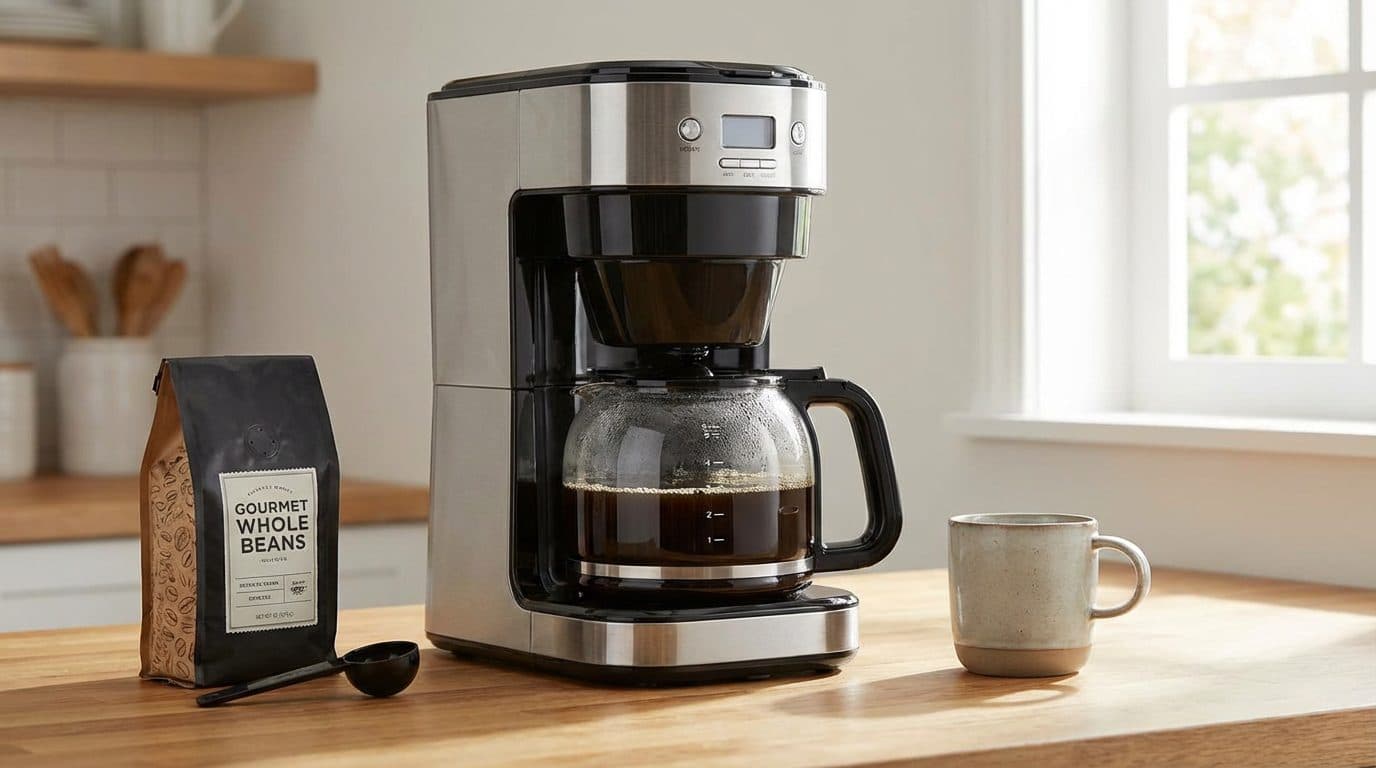
Most offices rely on basic drip machines, and that’s perfectly fine. For these brewers, choose medium to medium-dark roasts with a medium grind. The Peet’s Big Bang and Kirkland options excel here. One tip: clean your machine monthly with a vinegar solution. You’d be amazed how much better even cheap coffee tastes in a clean brewer.
Single-Serve Pod Machines
Keurigs and similar machines dominate many offices. If you’re stuck with pods, look for brands that use fresh-roasted coffee and avoid the cheapest options. Peet’s, Starbucks, and Green Mountain all offer decent pod options. Better yet, invest in a reusable pod that lets you use fresh-ground coffee.
Commercial Airpot Brewers
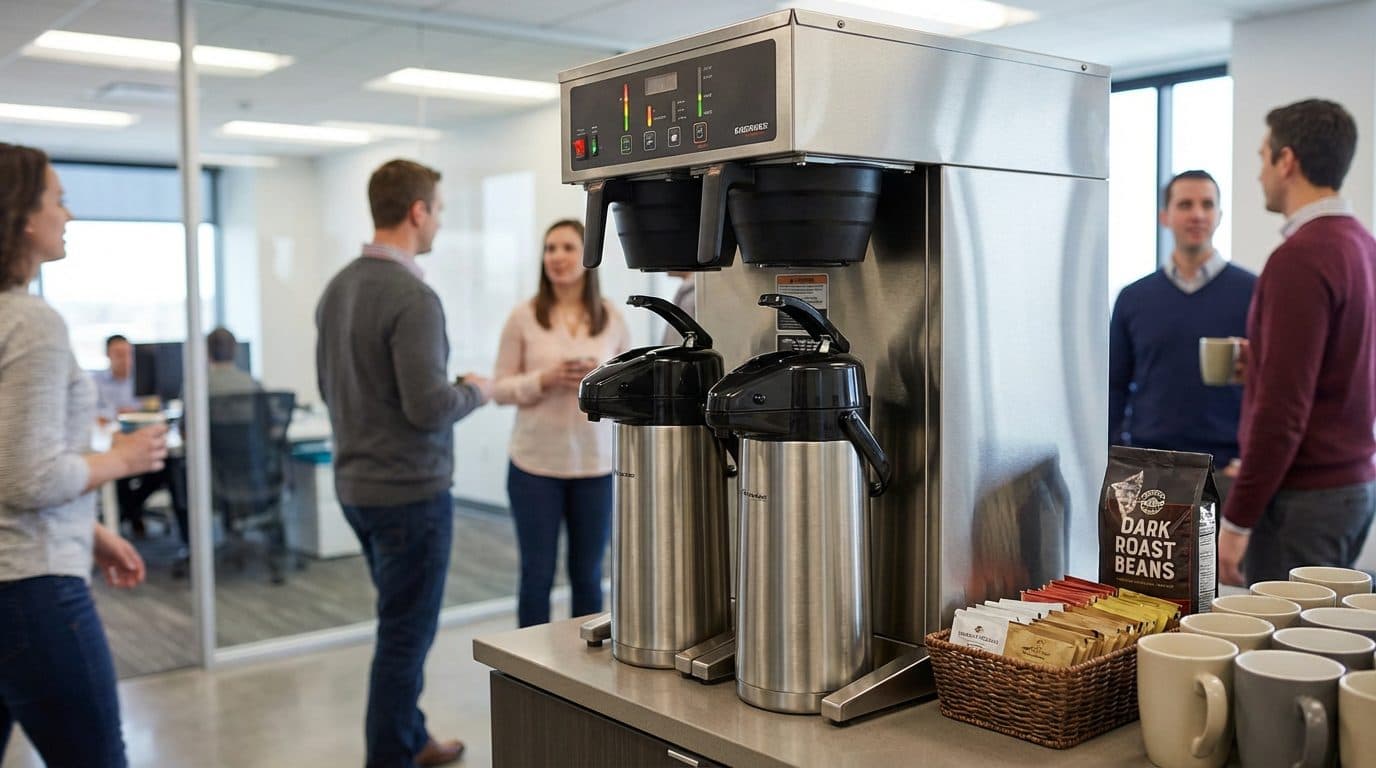
Larger offices often have commercial Bunn-style brewers with airpots. These machines brew at higher temperatures and volumes, so slightly darker roasts work well. The thermal airpots keep coffee fresh much longer than glass carafes on warming plates.
Keeping Office Coffee Fresh: Practical Tips
Even the best coffee for office brewing will taste terrible if stored improperly. Here are some straightforward ways to maintain quality.
- Buy smaller quantities more often rather than bulk purchases that sit for months
- Store coffee in airtight containers away from heat and light—not next to the microwave
- Establish a rotation system so older coffee gets used first
- Consider whole bean with a basic grinder if your team is committed
- Never refrigerate or freeze coffee that will be used regularly—temperature fluctuations cause condensation and staleness
In short: fresh coffee makes everything easier. No fancy beans can overcome three-month-old pre-ground sitting in an open bag.
The Office Coffee Budget: What to Expect
Coffee costs add up, especially in larger offices. Here’s a realistic breakdown to help you plan.
The average office worker consumes about 20 cups per week. For a team of 20 people, that’s roughly 400 cups weekly. Using mid-range coffee at about $12 per 12-ounce bag (which yields approximately 40 cups), you’re looking at around $120 per week or about $500 monthly.
Stepping up to specialty coffee might double that cost, while budget options could cut it in half. I’ve found the sweet spot usually sits around $0.30-0.50 per cup for quality that keeps everyone happy without breaking the budget.
Frequently Asked Questions
What roast level is best for office coffee?
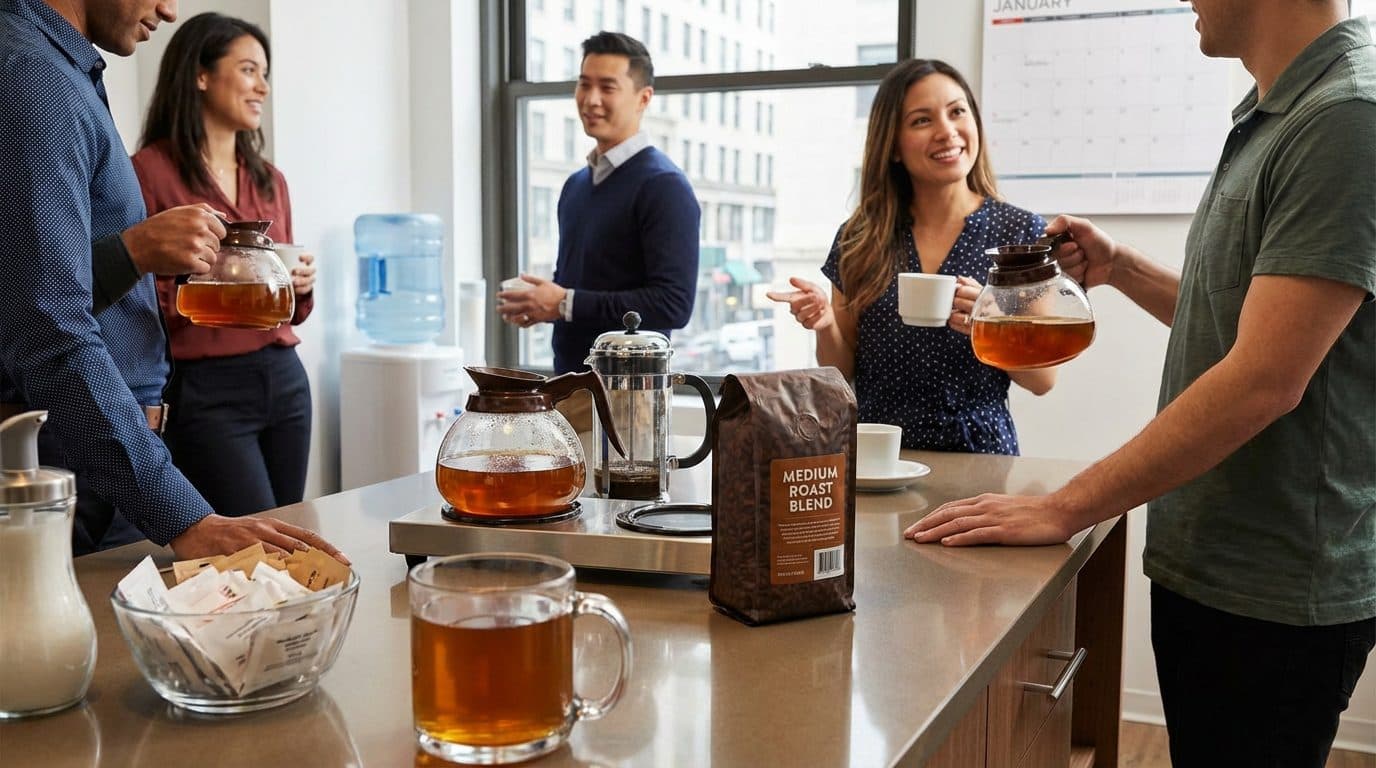
Medium roasts offer the widest appeal and most forgiving brew characteristics. They balance flavor complexity with smoothness and hold up better than light roasts when left on warmers or brewed imperfectly.
Should office coffee be whole bean or pre-ground?
Ideally whole bean, but realistically, pre-ground works fine for most offices. If you choose pre-ground, buy smaller bags and use them within two weeks. The convenience factor often outweighs the slight quality difference in busy office environments.
How much coffee should I budget per employee?
Plan for about 2-3 cups per employee per day. This works out to roughly $15-25 per employee monthly, depending on the coffee quality you choose.
Can I use specialty coffee in a basic office drip machine?
Yes, but manage expectations. Basic drip machines won’t extract specialty coffee’s full potential, but you’ll still notice improved flavor compared to commercial-grade beans. Focus on medium roasts that don’t require precise brewing parameters.
How often should office coffee machines be cleaned?
Monthly deep cleaning with a descaling solution or vinegar is minimum. Daily rinsing of carafes and weekly cleaning of filter baskets makes a noticeable difference in taste. Assign this to a rotation or hire cleaning staff to include it in their routine.
Summary and Next Steps
Finding the best coffee for office brewing comes down to choosing beans that balance quality with practicality. Medium roasts from reputable roasters like Peet’s or Counter Culture will satisfy most teams, while budget options like Kirkland work well for high-volume, cost-conscious environments.
Start by assessing your office’s brewing equipment, consumption volume, and budget. Then pick one of the recommended coffees and commit to proper storage and regular machine cleaning. These simple steps will transform your office coffee experience without requiring a complete equipment overhaul.
Your Monday mornings deserve better than bitter, stale coffee. Make the switch, and watch your team’s afternoon productivity improve—one decent cup at a time. See current deals on bulk coffee options to get started with your office upgrade today.

Comments