


Table of Contents
- How Coffee Affects Your Sleep: The Science Made Simple
- Caffeine's Half-Life: Why Timing Matters
- Finding Your Personal Caffeine Cutoff Time
- The Two-Week Experiment
- Factors That Might Shift Your Cutoff
- Smarter Coffee Choices for Better Sleep
- Understanding Caffeine Levels Across Brew Methods
- The Half-Caff and Decaf Options
- Building a Coffee and Sleep-Friendly Routine
- Morning Coffee: Timing It Right
- Creating an Evening Wind-Down
- Common Myths About Coffee and Sleep—Busted
- Myth 1: "I'm Used to Caffeine, So It Doesn't Affect My Sleep"
- Myth 2: "Decaf Is Pointless"
- Myth 3: "Coffee Before a Nap Helps Me Sleep Better at Night"
- Frequently Asked Questions
- How many hours before bed should I stop drinking coffee?
- Can coffee cause insomnia even if I drink it only in the morning?
- Is decaf coffee safe to drink before bed?
- Does the roast level of coffee affect caffeine content?
- Will cutting back on coffee improve my sleep immediately?
- Conclusion: Enjoy Your Coffee and Your Sleep
Do you love your morning coffee but find yourself staring at the ceiling at 2 AM? You’re not alone. Millions of coffee lovers struggle with the delicate balance between enjoying their daily brew and getting quality sleep. The good news? You don’t have to choose between coffee and sleep—you just need to understand how they interact and make a few smart adjustments to your routine.
In this guide, I’ll share what I’ve learned about the relationship between coffee and sleep, including the science behind caffeine, practical timing strategies, and tips that have helped me (and countless home baristas I know) enjoy our cups without sacrificing rest. Whether you’re a one-cup-a-day sipper or a multi-cup enthusiast, you’ll find actionable advice to help you sleep better tonight.
How Coffee Affects Your Sleep: The Science Made Simple
Before we dive into strategies, it helps to understand what’s actually happening in your body when you drink coffee. Caffeine, the star compound in your favorite brew, works by blocking adenosine receptors in your brain. Adenosine is the chemical that builds up throughout the day and makes you feel sleepy. When caffeine blocks it, you feel more alert and awake.
Here’s the thing: caffeine doesn’t eliminate adenosine—it just temporarily prevents your brain from recognizing it. Once the caffeine wears off, all that built-up adenosine hits you at once (hello, afternoon crash). But there’s more to consider.
Caffeine’s Half-Life: Why Timing Matters
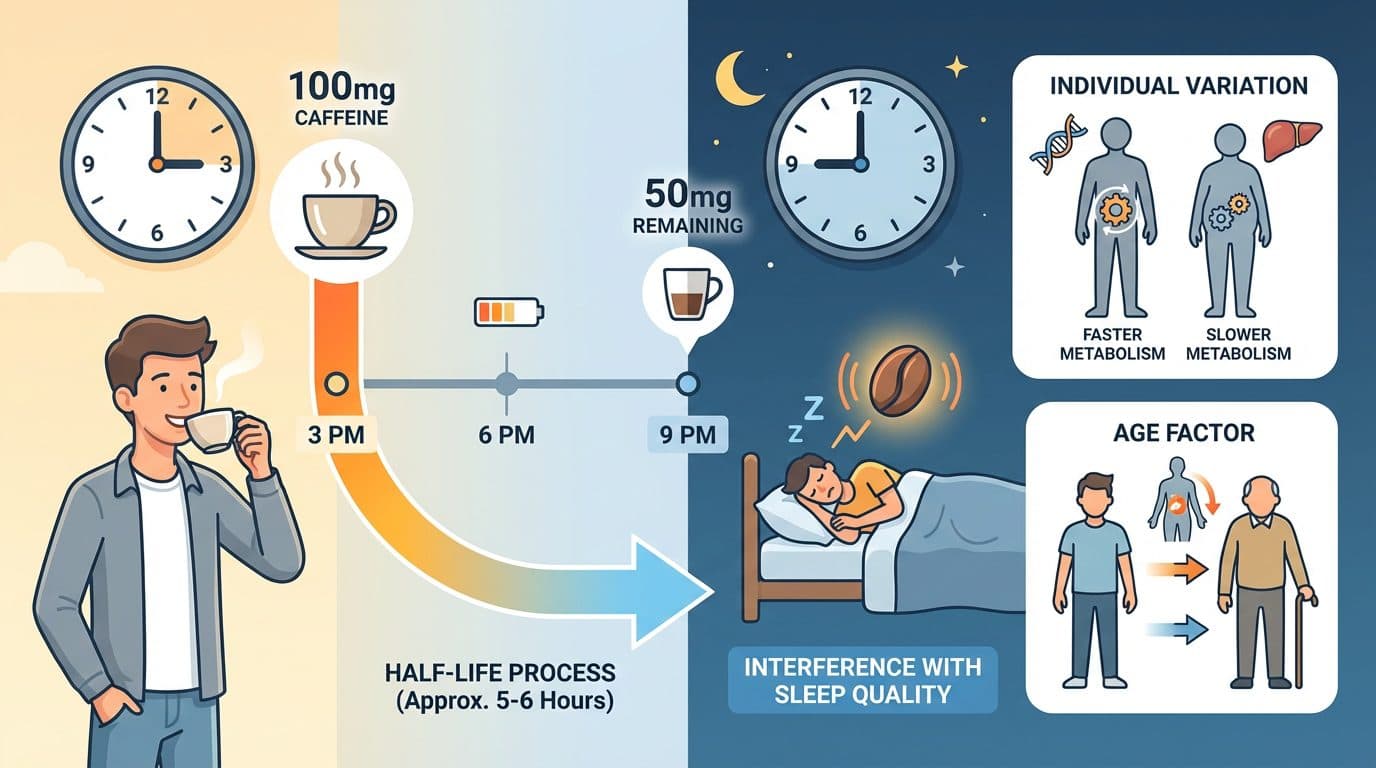
Caffeine has a half-life of about 5 to 6 hours in most adults. In short, this means that if you drink a cup of coffee with 100mg of caffeine at 3 PM, you’ll still have roughly 50mg in your system by 8 or 9 PM. That’s enough to interfere with sleep quality for many people, even if you don’t have trouble falling asleep.
- Individual variation: Some people metabolize caffeine faster (thanks to genetics and liver enzymes), while others process it more slowly.
- Age factor: Caffeine metabolism tends to slow down as we get older.
- Medications and hormones: Birth control, pregnancy, and certain medications can significantly extend caffeine’s effects.
Key Takeaway: Even if you feel fine after an afternoon coffee, your sleep architecture (the quality and stages of your sleep) may still be disrupted. Studies show that caffeine can reduce deep sleep by up to 20%, leaving you groggy even after a full night in bed.
Finding Your Personal Caffeine Cutoff Time
The most common advice you’ll hear is to stop drinking coffee by 2 PM. While that’s a reasonable starting point, in my experience, the ideal cutoff varies from person to person. Here’s how to find yours:
The Two-Week Experiment
Try this simple approach to discover your optimal caffeine cutoff:
- Week One: Stop all caffeine consumption by noon. Track your sleep quality, how long it takes to fall asleep, and how you feel upon waking.
- Week Two: Push your cutoff to 2 PM and repeat the tracking.
- Compare: Notice any difference? You might find that noon works best, or you might tolerate 2 PM just fine.
I’ve found that my personal cutoff is around 1 PM. Any later, and I notice I wake up more during the night—even if I don’t have trouble falling asleep initially. Your mileage may vary, and that’s perfectly normal.
Factors That Might Shift Your Cutoff
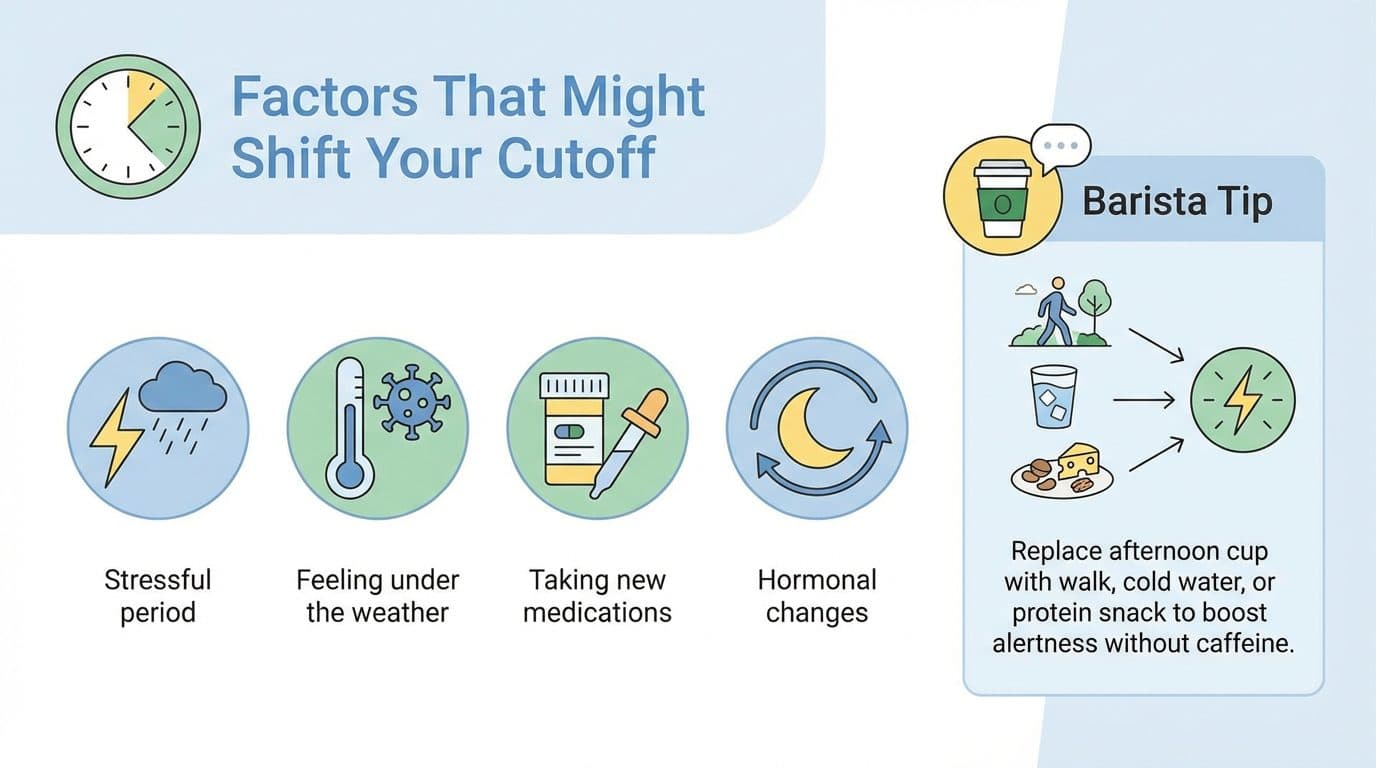
Keep in mind that your ideal cutoff isn’t fixed forever. Consider adjusting earlier if you’re:
- Going through a stressful period (stress already impairs sleep)
- Feeling under the weather or fighting off illness
- Taking new medications
- Experiencing hormonal changes
Barista Tip: If you’re used to afternoon coffee and worried about the energy slump, try replacing that later cup with a short walk, a glass of cold water, or a small protein-rich snack. These alternatives can boost alertness without affecting your sleep.
Smarter Coffee Choices for Better Sleep
Timing isn’t your only tool. The type of coffee you drink and how you prepare it can also make a significant difference in how caffeine affects your sleep.
Understanding Caffeine Levels Across Brew Methods
Not all coffee is created equal when it comes to caffeine content. Here’s a quick comparison:
| Brew Method | Caffeine (per 8 oz cup) | Notes |
|---|---|---|
| Drip Coffee | 95-165 mg | Higher extraction, more caffeine |
| Espresso (1 shot) | 63 mg | Concentrated but smaller serving |
| French Press | 80-135 mg | Depends on steep time |
| Cold Brew | 100-200 mg | Often higher; dilute to adjust |
| Instant Coffee | 30-90 mg | Generally lower caffeine |
If you’re craving an afternoon coffee but want to minimize caffeine impact, consider switching to a single shot of espresso instead of a full drip coffee. You’ll still get that ritual and flavor, just with less caffeine lingering in your system come bedtime.
The Half-Caff and Decaf Options

Don’t overlook half-caff blends or quality decaf for your afternoon fix. Modern decaf has come a long way, and methods like Swiss Water Process preserve much of the flavor while removing most of the caffeine. In my experience, a well-made decaf can satisfy that coffee craving without the sleep penalty.
- Half-caff: Mix regular and decaf beans for a middle ground—around 40-50% less caffeine.
- Decaf: Contains only 2-15 mg of caffeine per cup, making it safe for most people even in the evening.
Did You Know? Decaf isn’t completely caffeine-free. If you’re extremely sensitive to caffeine, even a decaf after dinner might affect your sleep. Pay attention to how your body responds.
Building a Coffee and Sleep-Friendly Routine
Beyond timing and coffee selection, your overall daily routine plays a huge role in how coffee and sleep coexist. Here are some practical strategies to optimize both:
Morning Coffee: Timing It Right
Interestingly, there’s also an optimal time to start your coffee consumption. Many sleep experts suggest waiting 60 to 90 minutes after waking before having your first cup. Here’s why:
- Cortisol (your natural wake-up hormone) peaks shortly after waking.
- Drinking coffee during this peak can interfere with your body’s natural alertness cycle.
- Waiting allows caffeine to work with your body rather than against it.
I’ll admit, this one was hard for me to adopt. But after trying it for a few weeks, I noticed my morning coffee felt more effective, and I didn’t crave a second cup as early in the day.
Creating an Evening Wind-Down
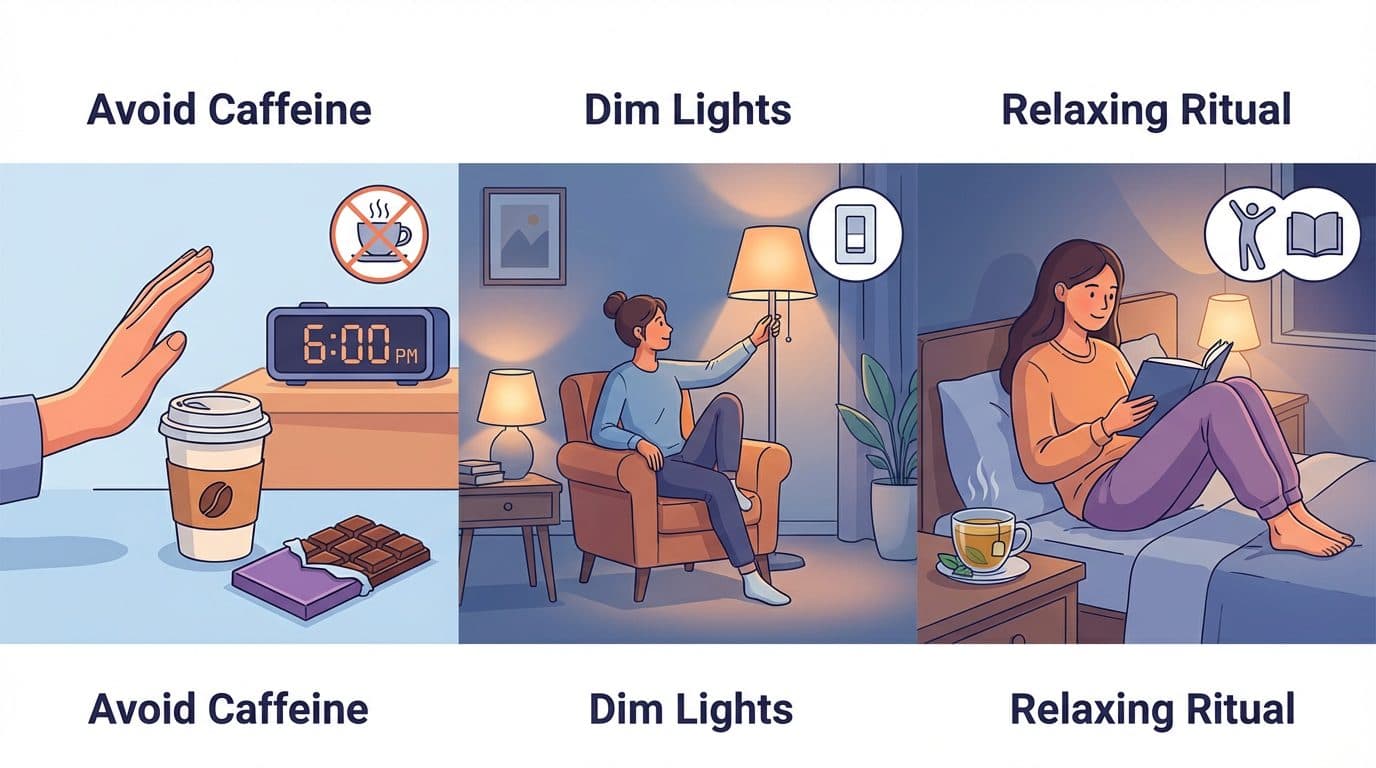
Your evening routine matters just as much as your coffee habits. To give your body the best chance at quality sleep:
- Avoid all caffeine after your cutoff time (including tea, chocolate, and some sodas).
- Dim the lights in your home 1-2 hours before bed to signal to your brain that sleep is approaching.
- Establish a relaxing pre-bed ritual: reading, gentle stretching, or a warm (caffeine-free) beverage like herbal tea.
Think of your sleep routine as an extension of your coffee ritual. Both deserve intention and care.
Common Myths About Coffee and Sleep—Busted
There’s a lot of conflicting information out there about coffee and sleep. Let me address a few misconceptions I hear often:
Myth 1: “I’m Used to Caffeine, So It Doesn’t Affect My Sleep”
While regular coffee drinkers do develop some tolerance to caffeine’s stimulating effects, research shows that sleep quality is still impacted—even if you don’t notice it. You might fall asleep fine, but your deep sleep stages often suffer. This can leave you feeling less refreshed despite clocking enough hours in bed.
Myth 2: “Decaf Is Pointless”
As I mentioned earlier, quality decaf can be surprisingly delicious. The idea that decaf tastes terrible comes from outdated processing methods. Today’s specialty decaf beans, especially those processed using the Swiss Water method, retain most of the nuanced flavors of regular coffee. Give them another chance if you’ve written them off.
Myth 3: “Coffee Before a Nap Helps Me Sleep Better at Night”
The “coffee nap” (drinking coffee, then immediately napping for 15-20 minutes) can boost alertness in the short term. However, relying on this tactic regularly can disrupt your nighttime sleep and create a cycle of poor rest and caffeine dependency. Use it occasionally, not as a daily crutch.
Frequently Asked Questions
How many hours before bed should I stop drinking coffee?
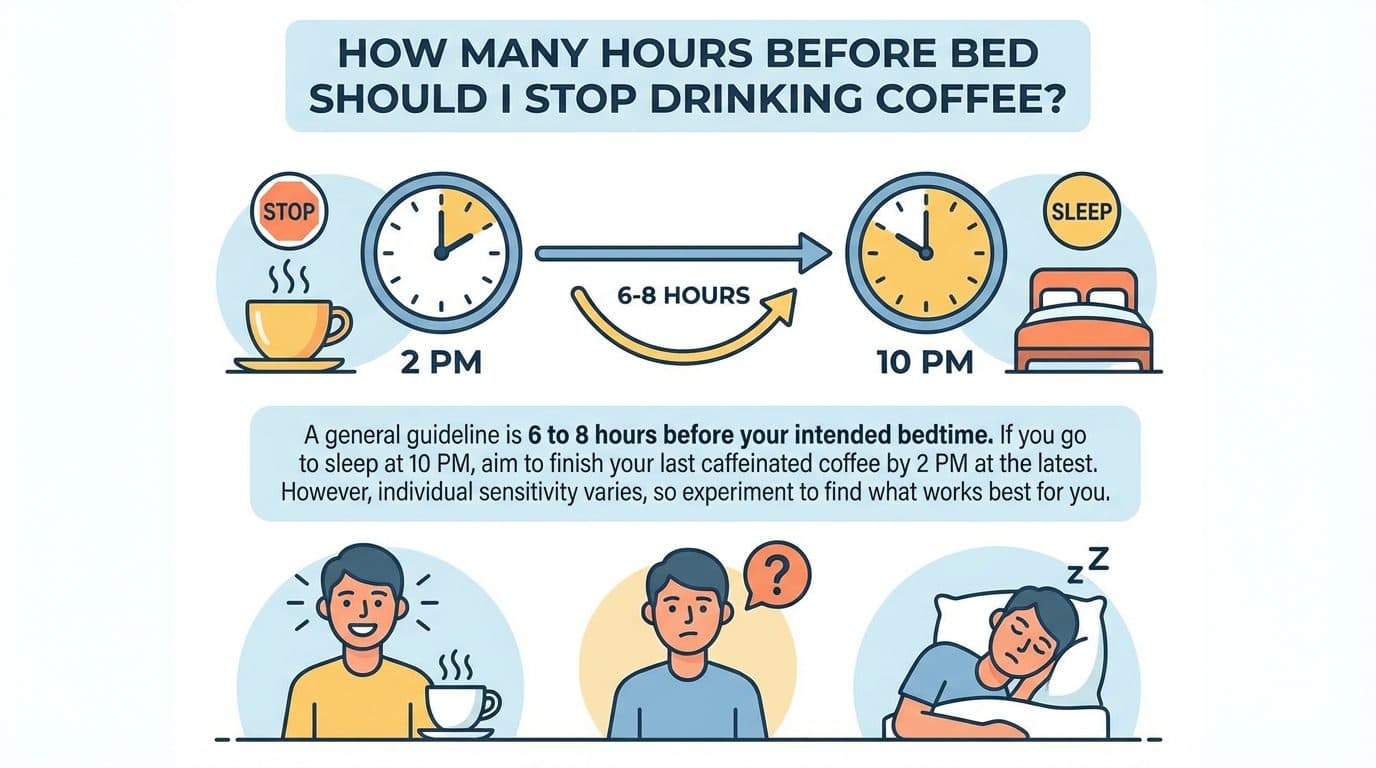
A general guideline is 6 to 8 hours before your intended bedtime. If you go to sleep at 10 PM, aim to finish your last caffeinated coffee by 2 PM at the latest. However, individual sensitivity varies, so experiment to find what works best for you.
Can coffee cause insomnia even if I drink it only in the morning?
For most people, morning coffee alone shouldn’t cause insomnia. However, if you’re drinking very large amounts (4+ cups) or are particularly sensitive to caffeine, even morning consumption could contribute to sleep difficulties. Consider reducing your intake and monitoring the effects.
Is decaf coffee safe to drink before bed?
For most people, yes. Decaf contains minimal caffeine (2-15 mg per cup) and is unlikely to disrupt sleep. That said, extremely caffeine-sensitive individuals may still notice effects. If you’re unsure, try herbal tea instead for a completely caffeine-free evening beverage.
Does the roast level of coffee affect caffeine content?
Slightly, but not as much as people think. Light roasts actually retain marginally more caffeine than dark roasts, but the difference per cup is minimal. The brewing method and coffee-to-water ratio have a much larger impact on your caffeine intake.
Will cutting back on coffee improve my sleep immediately?
You may notice improvements within a few days, but it often takes 1-2 weeks for your body to fully adjust. During this period, you might experience some caffeine withdrawal symptoms like headaches or fatigue. Stick with it—most people report better sleep quality after adapting.
Conclusion: Enjoy Your Coffee and Your Sleep
Coffee and sleep don’t have to be enemies. By understanding how caffeine works in your body, finding your personal cutoff time, choosing smarter brew options, and building supportive daily routines, you can have the best of both worlds. Life is too short for bad coffee—and it’s definitely too short for bad sleep.
Start with one or two changes from this guide and observe how your sleep responds. Maybe it’s shifting your last cup an hour earlier, or perhaps it’s swapping that afternoon drip for a single espresso shot. Small adjustments often lead to surprisingly significant improvements. Here’s to better mornings and restful nights—you deserve both.



Comments