


Table of Contents
- What Makes Espresso-Style Coffee Different?
- What You'll Need for Espresso-Style Coffee
- Essential Gear (Choose One Method)
- Ingredients and Accessories
- Method 1: The Moka Pot (Closest to Real Espresso)
- How the Moka Pot Works
- Step-by-Step Moka Pot Brewing
- Method 2: AeroPress (Most Versatile Option)
- Why AeroPress Works for Espresso-Style Coffee
- The Espresso-Style AeroPress Recipe
- Method 3: French Press Concentrate
- Creating Espresso-Style French Press Coffee
- Method 4: Pour-Over Concentrate (The Underdog)
- The Concentrated Pour-Over Technique
- Choosing the Right Method for Your Espresso-Style Coffee
- Common Mistakes to Avoid
- Frequently Asked Questions
- Can I make real crema without an espresso machine?
- What's the best coffee roast for espresso-style brewing?
- How fine should I grind for espresso-style coffee?
- Can I steam milk without a steam wand?
- Is espresso-style coffee as strong as real espresso?
- Conclusion and Your Next Steps
Craving that rich, intense espresso shot but staring at your kitchen counter with no espresso machine in sight? You’re not alone. Millions of coffee lovers want that bold, concentrated espresso-style coffee without dropping hundreds (or thousands) on specialized equipment. The good news? You can get remarkably close to authentic espresso using brewing methods you probably already own.
In this guide, I’ll walk you through several proven techniques to make espresso-style coffee at home without an espresso machine. We’ll cover the Moka pot, AeroPress, French press, and even a clever pour-over hack. By the end, you’ll know exactly which method suits your taste, budget, and morning routine.
What Makes Espresso-Style Coffee Different?
Before we dive into the brewing methods, let’s understand what we’re trying to achieve. True espresso requires about 9 bars of pressure forcing hot water through finely ground coffee in roughly 25-30 seconds. This creates that signature crema, concentrated flavor, and syrupy body we love.
Without an espresso machine, we can’t replicate this exactly. However, we can create coffee that’s:
- Concentrated and bold – similar intensity to espresso
- Rich in flavor – capturing those deep, complex notes
- Versatile – perfect as a base for lattes, cappuccinos, or Americanos
- Small in volume – mimicking that satisfying shot experience
In short, espresso-style coffee means getting as close as possible to the real thing using alternative brewing methods. It won’t have identical crema or pressure extraction, but it can taste remarkably similar.
What You’ll Need for Espresso-Style Coffee
Essential Gear (Choose One Method)
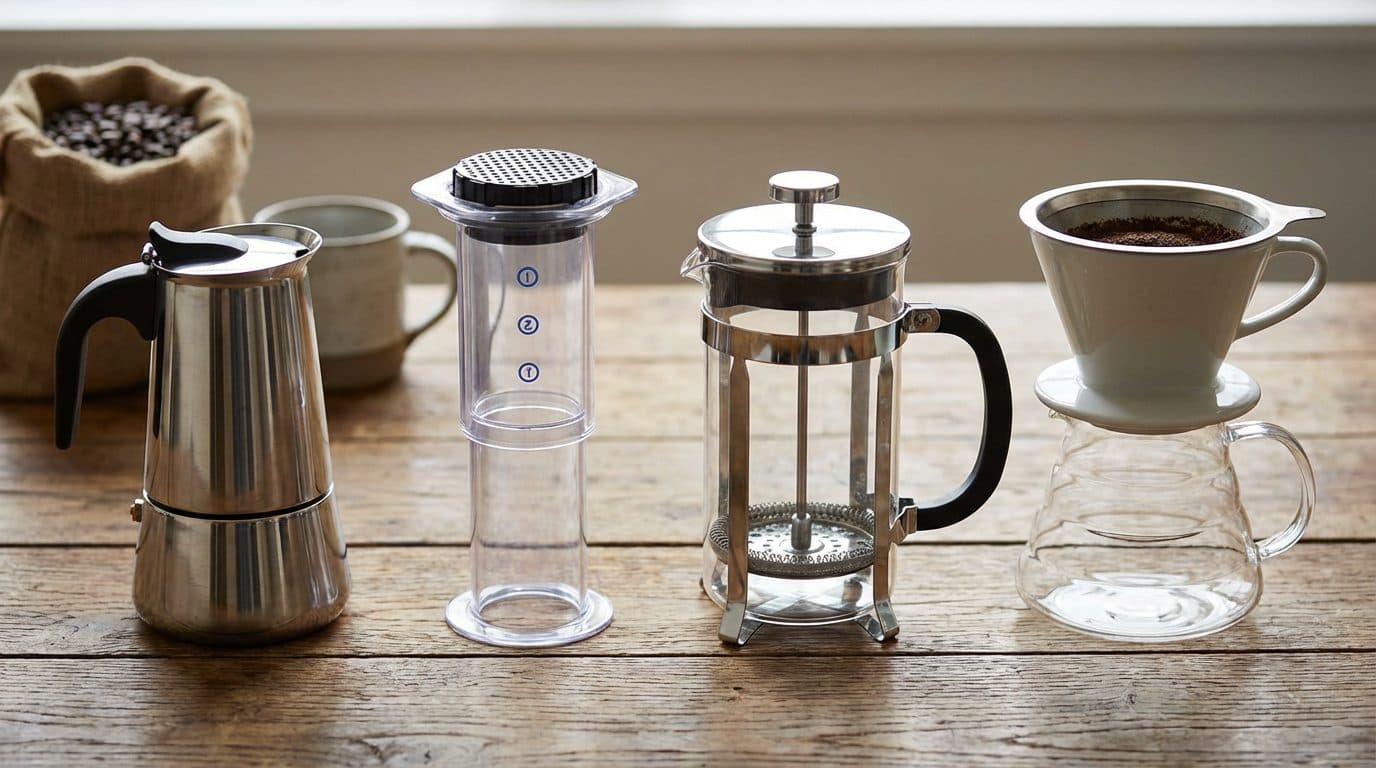
- Moka pot (stovetop espresso maker)
- AeroPress with metal filter
- French press
- Pour-over dripper with fine-grind capability
Ingredients and Accessories
- Fresh coffee beans – dark roast works best for espresso-style flavor
- Burr grinder – essential for consistent, fine grounds
- Filtered water – heated to 195-205°F (90-96°C)
- Kitchen scale – for precise measurements
- Timer – your phone works fine
Barista Tip: Freshly roasted beans (within 2-4 weeks of roast date) make a huge difference. Stale beans produce flat, lifeless coffee no matter which method you use. I’ve found that medium-dark to dark roasts with chocolate or nutty notes translate best to espresso-style brewing.
Method 1: The Moka Pot (Closest to Real Espresso)
The Moka pot is my top recommendation for espresso-style coffee without a machine. This Italian stovetop brewer has been producing concentrated coffee since 1933, and there’s a reason it’s found in nearly every Italian household.
How the Moka Pot Works
Water in the bottom chamber heats up, creating pressure that forces it through the coffee grounds and into the upper chamber. While it only generates about 1-2 bars of pressure (compared to espresso’s 9 bars), the result is remarkably close to the real thing.
Step-by-Step Moka Pot Brewing
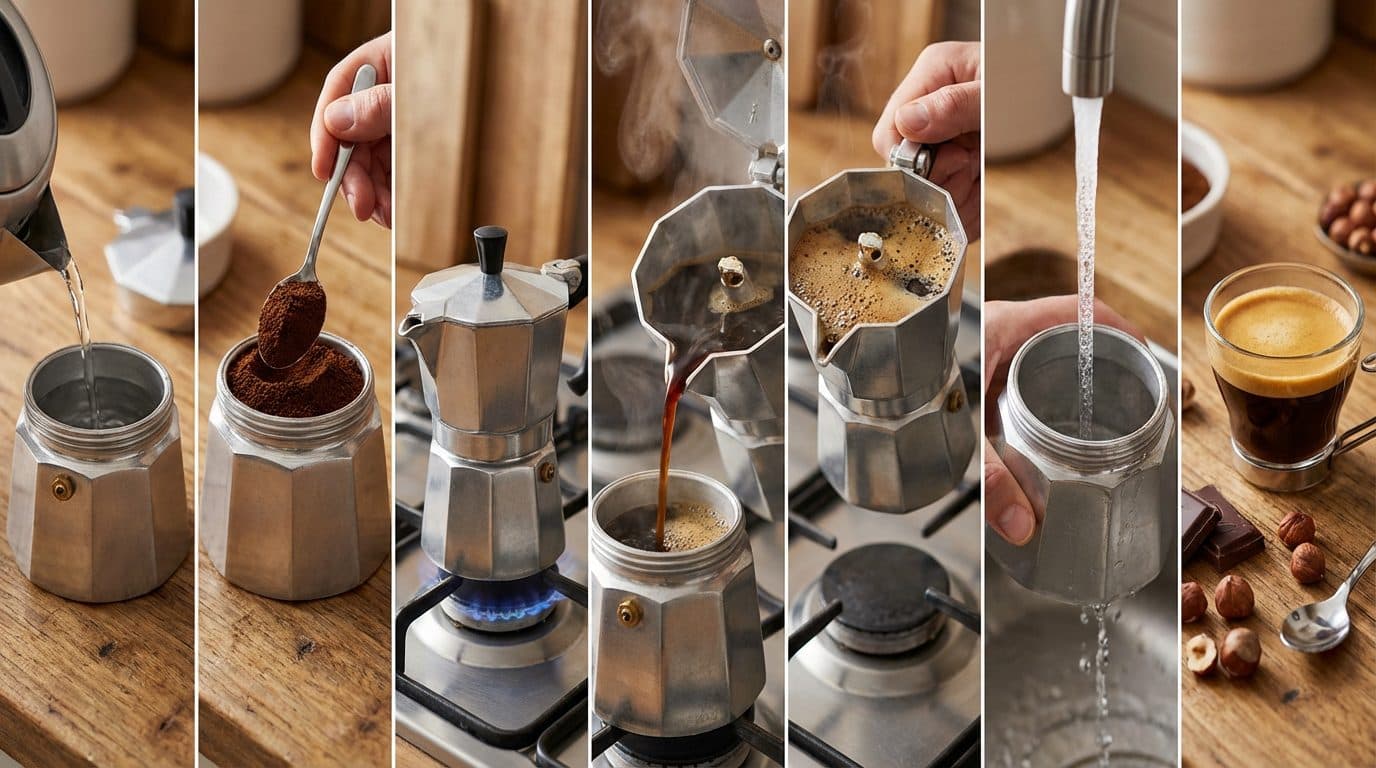
- Fill the bottom chamber with pre-heated water up to the safety valve
- Add finely ground coffee to the filter basket – fill it completely but don’t tamp
- Assemble the pot and place on medium-low heat
- Listen for a gurgling, hissing sound – this means extraction is almost complete
- Remove from heat immediately when coffee starts sputtering
- Run the bottom under cold water to stop extraction
Taste Profile: Bold, slightly bitter, with a rich body. Expect notes of dark chocolate, roasted nuts, and a hint of pleasant bitterness.
Key Takeaway: The biggest mistake with Moka pots is using high heat. This causes over-extraction, resulting in burnt, bitter coffee. Low and slow wins the race here. In my experience, medium-low heat produces the smoothest results every time.
| Aspect | Moka Pot | True Espresso |
|---|---|---|
| Pressure | 1-2 bars | 9 bars |
| Brew Time | 4-5 minutes | 25-30 seconds |
| Crema | Minimal | Rich, golden |
| Cost | $25-50 | $200-2000+ |
Method 2: AeroPress (Most Versatile Option)
The AeroPress has become a cult favorite among home baristas, and for good reason. This simple plastic device can produce espresso-style coffee that rivals many machine-made shots.
Why AeroPress Works for Espresso-Style Coffee
The AeroPress uses manual pressure and immersion brewing to create concentrated coffee. While you’re only generating about 0.35-0.7 bars of pressure, the combination of fine grounds, short brew time, and low water volume creates impressive concentration.
The Espresso-Style AeroPress Recipe
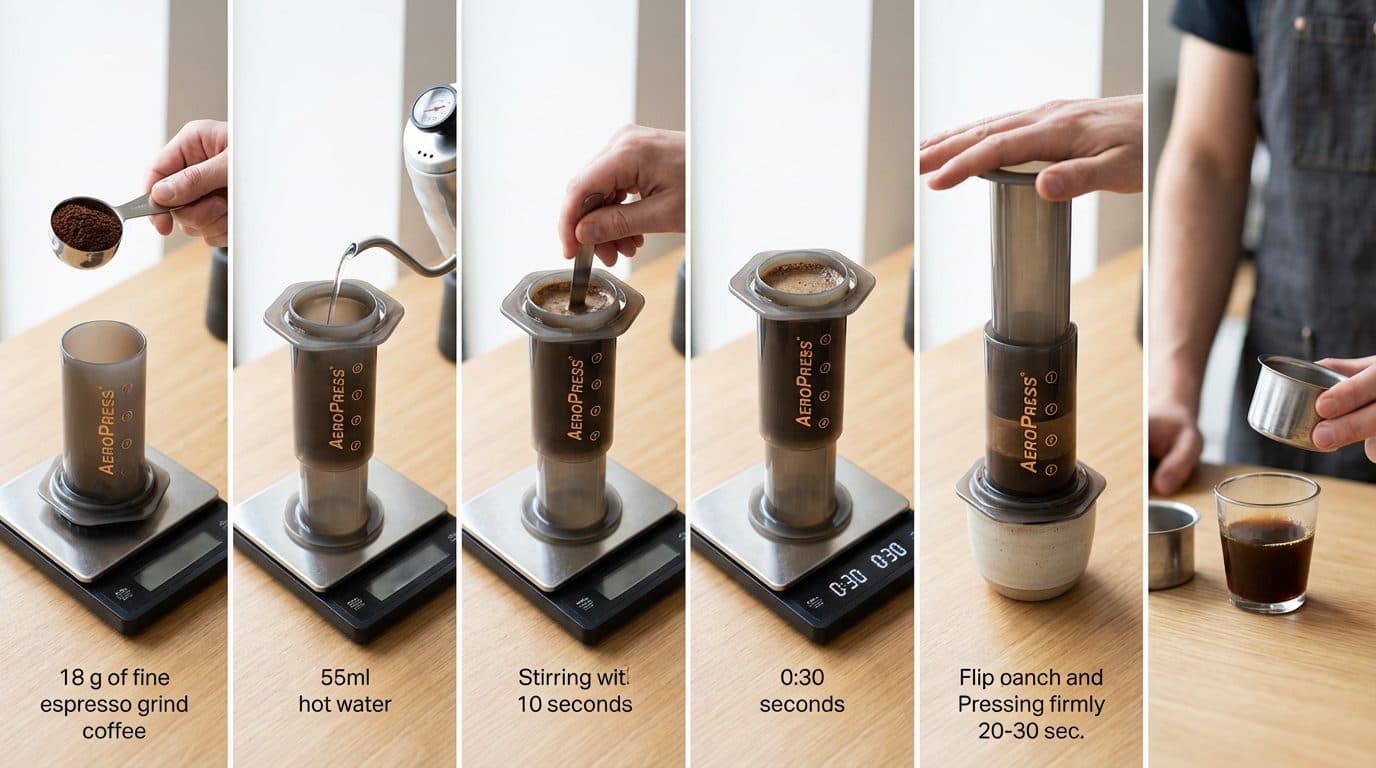
- Use 18 grams of finely ground coffee (espresso grind)
- Set up the AeroPress in inverted position
- Add 55ml of water at 200°F (93°C)
- Stir vigorously for 10 seconds
- Steep for 30 seconds total
- Flip onto your cup and press firmly for 20-30 seconds
This produces approximately 40-50ml of concentrated, espresso-like coffee. Perfect for drinking straight or as a base for milk drinks.
Barista Tip: Using a metal filter instead of paper allows more oils through, creating a richer, more espresso-like body. The Fellow Prismo attachment is specifically designed for espresso-style AeroPress brewing and adds slight pressure resistance.
I’ve tested this method countless times, and it consistently produces a shot that fools guests expecting machine-made espresso. The flavor is clean yet bold, with excellent sweetness when dialed in correctly.
Method 3: French Press Concentrate
Surprised to see French press here? This method won’t give you espresso exactly, but it can produce a concentrated coffee that works beautifully in lattes and other espresso-based drinks.
Creating Espresso-Style French Press Coffee
The secret is adjusting your coffee-to-water ratio dramatically and using a finer grind than typical French press brewing.
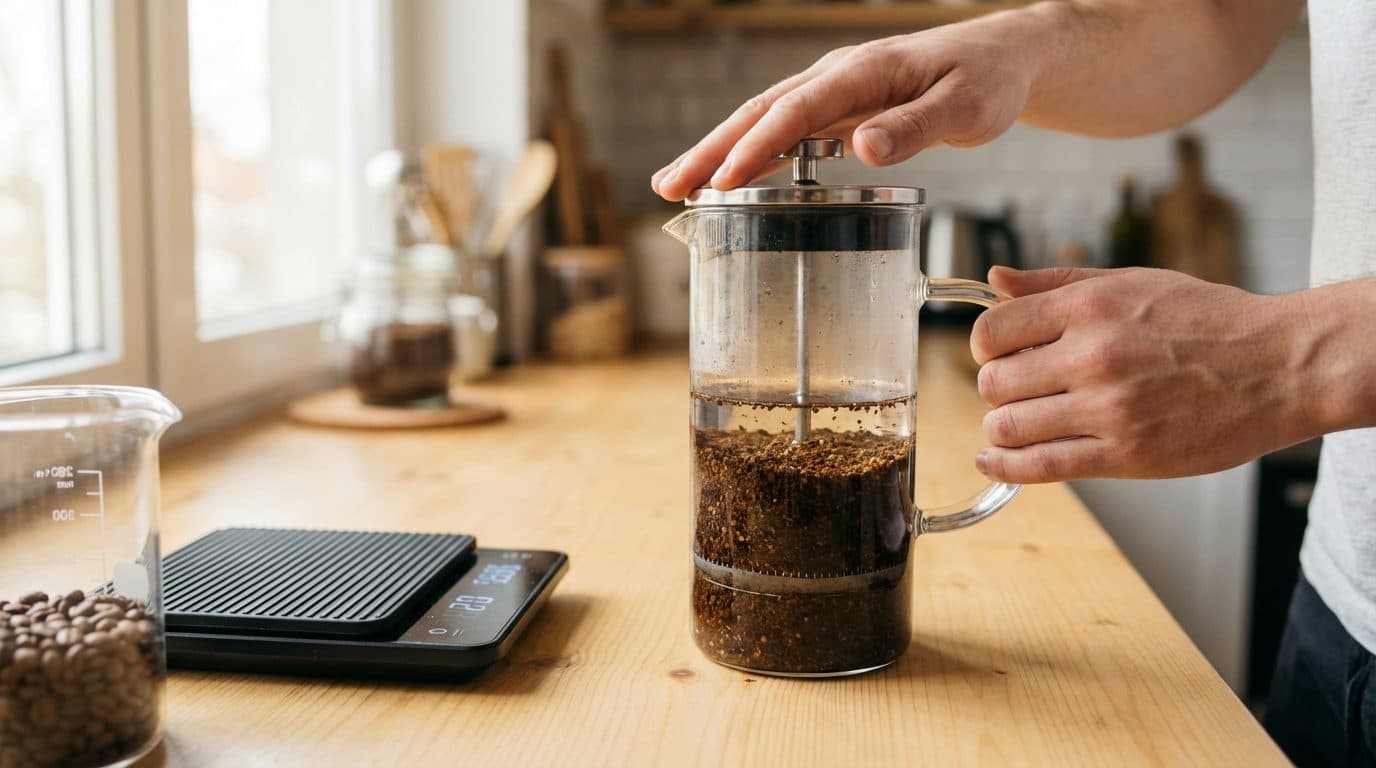
- Use 35 grams of medium-fine ground coffee
- Add only 150ml of water at 200°F (93°C)
- Stir immediately and let steep for 4 minutes
- Press slowly and steadily
- Pour immediately to avoid over-extraction
Taste Profile: Full-bodied, heavy mouthfeel, with sediment. Expect earthy, bold flavors with less brightness than other methods.
Here’s a realistic scenario: You’re making lattes for brunch guests and don’t have an espresso machine. French press concentrate saves the day. It’s strong enough to cut through milk while maintaining that coffeehouse flavor profile.
The drawback? French press produces sediment and a heavier body that some people dislike in straight shots. It’s best reserved for milk-based drinks or Americanos where these characteristics blend in.
Method 4: Pour-Over Concentrate (The Underdog)
Pour-over might seem counterintuitive for espresso-style coffee, but a modified technique can produce surprisingly concentrated results.
The Concentrated Pour-Over Technique
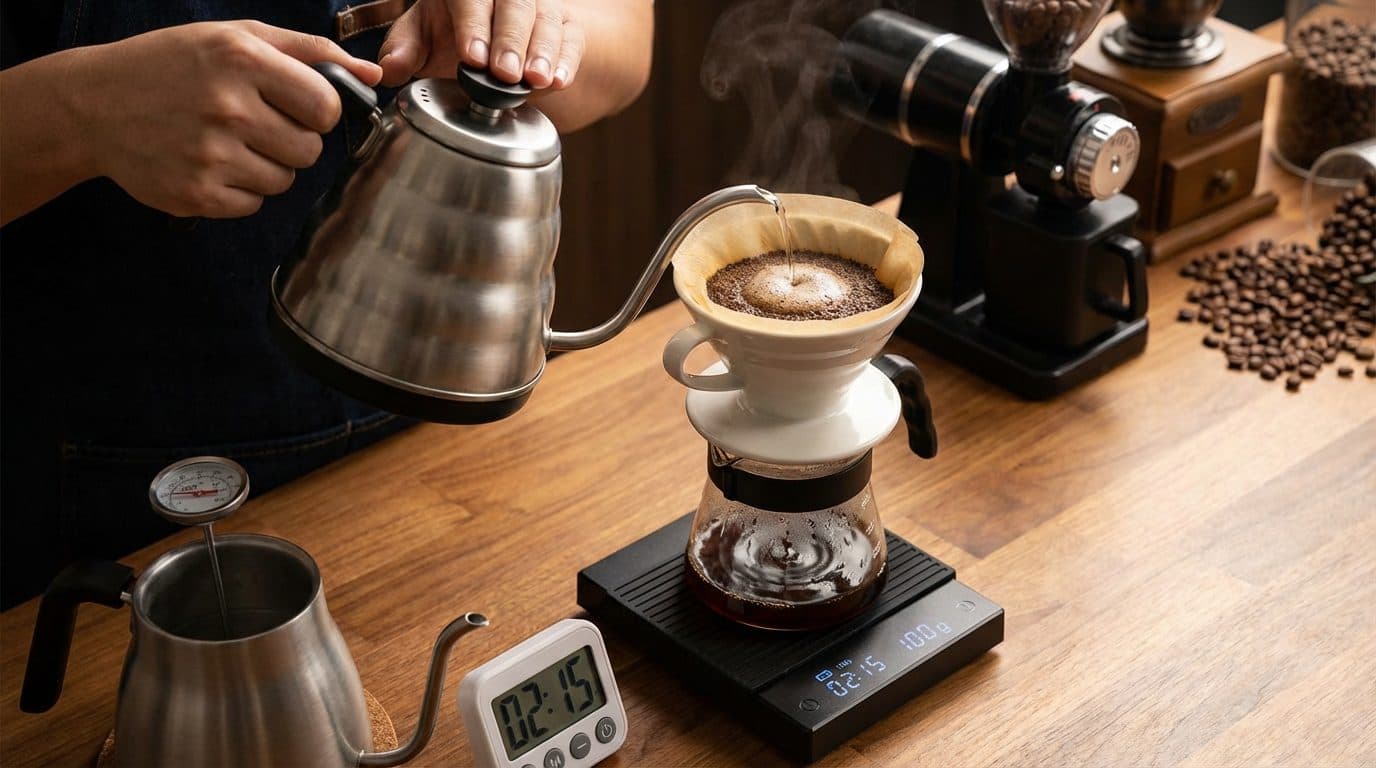
- Use 25 grams of fine-medium ground coffee
- Brew with only 100ml of water at 205°F (96°C)
- Pour in slow, concentrated circles
- Aim for a total brew time of 2-2.5 minutes
- The result: approximately 75ml of concentrated coffee
This method produces the cleanest espresso-style coffee of all the options. You’ll get bright, clear flavors with excellent sweetness – though it lacks the body of pressure-brewed methods.
Did You Know? Some specialty cafes use a technique called “bypass brewing” where they brew concentrated pour-over and dilute it to taste. You can reverse this concept to create espresso-style coffee for your home drinks.
Choosing the Right Method for Your Espresso-Style Coffee
With four solid options, which should you choose? Here’s my breakdown based on different priorities:
| Priority | Best Method | Why |
|---|---|---|
| Closest to real espresso | Moka Pot | Pressure extraction, traditional flavor |
| Versatility | AeroPress | Multiple recipes, easy cleanup |
| Already own equipment | French Press | Modify your existing technique |
| Cleanest taste | Pour-Over | Paper filter removes oils/sediment |
In my experience, most people end up gravitating toward the Moka pot or AeroPress for regular espresso-style brewing. They’re affordable, reliable, and produce consistently excellent results.
Common Mistakes to Avoid
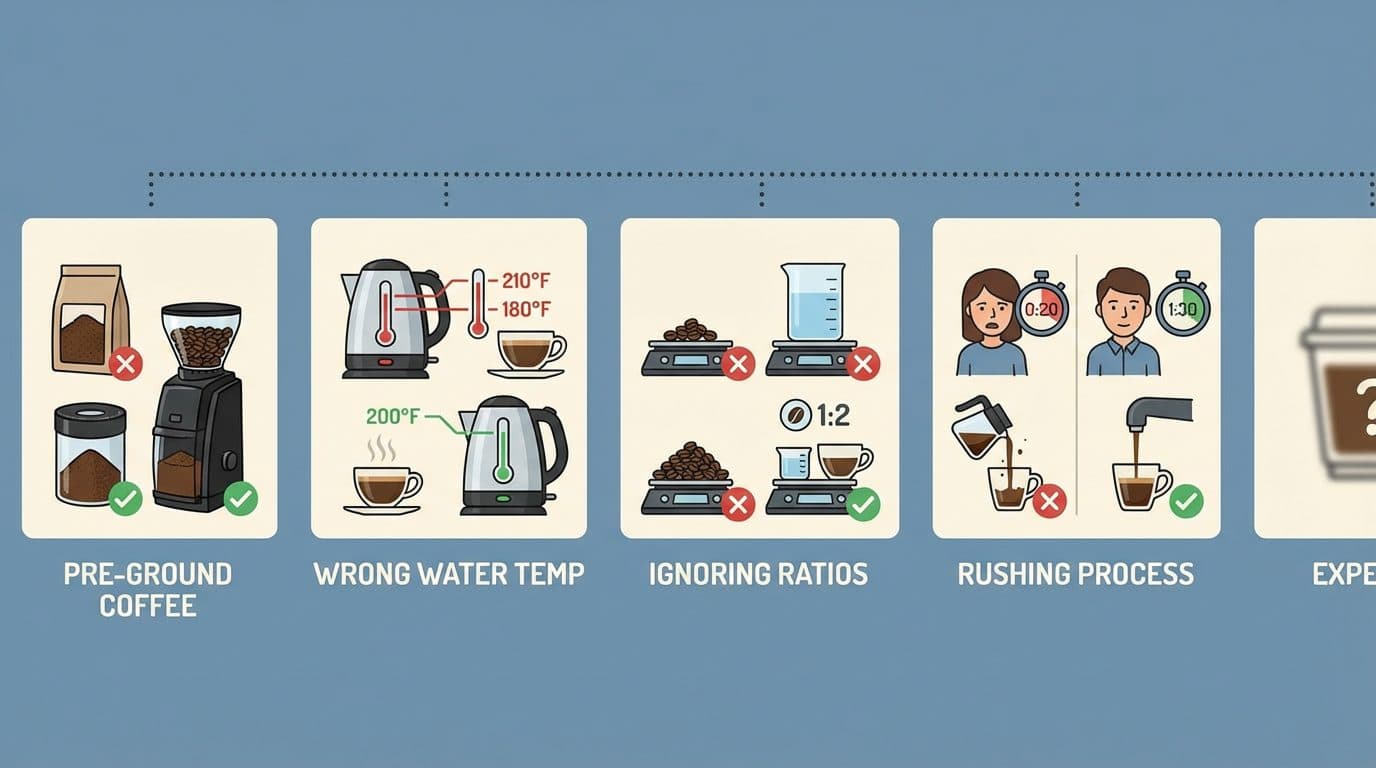
Making espresso-style coffee at home has a learning curve. Here are the mistakes I see most often:
- Using pre-ground coffee – It’s likely too coarse and definitely stale. Invest in a burr grinder.
- Wrong water temperature – Too hot burns the coffee; too cold under-extracts. Aim for 195-205°F.
- Ignoring ratios – Espresso-style requires significantly more coffee per volume of water than regular brewing.
- Rushing the process – Each method has its optimal timing. Patience produces better results.
- Expecting identical results – Manage expectations. You’re making espresso-style coffee, not true espresso.
Frequently Asked Questions
Can I make real crema without an espresso machine?
Unfortunately, authentic crema requires the 9 bars of pressure that only espresso machines provide. Some methods like Moka pots produce a thin layer of foam, and devices like the AeroPress Prismo can create a crema-like effect, but it won’t match the golden, thick crema from a proper machine.
What’s the best coffee roast for espresso-style brewing?
Medium-dark to dark roasts work best. They’re designed to shine with espresso-style extraction, offering those classic chocolate, caramel, and nutty notes. Light roasts can taste sour and under-developed with these methods.
How fine should I grind for espresso-style coffee?
Aim for slightly coarser than true espresso grind. For Moka pots and AeroPress, think “fine table salt” consistency. True espresso grind (powdery) can cause over-extraction and bitterness in these methods.
Can I steam milk without a steam wand?
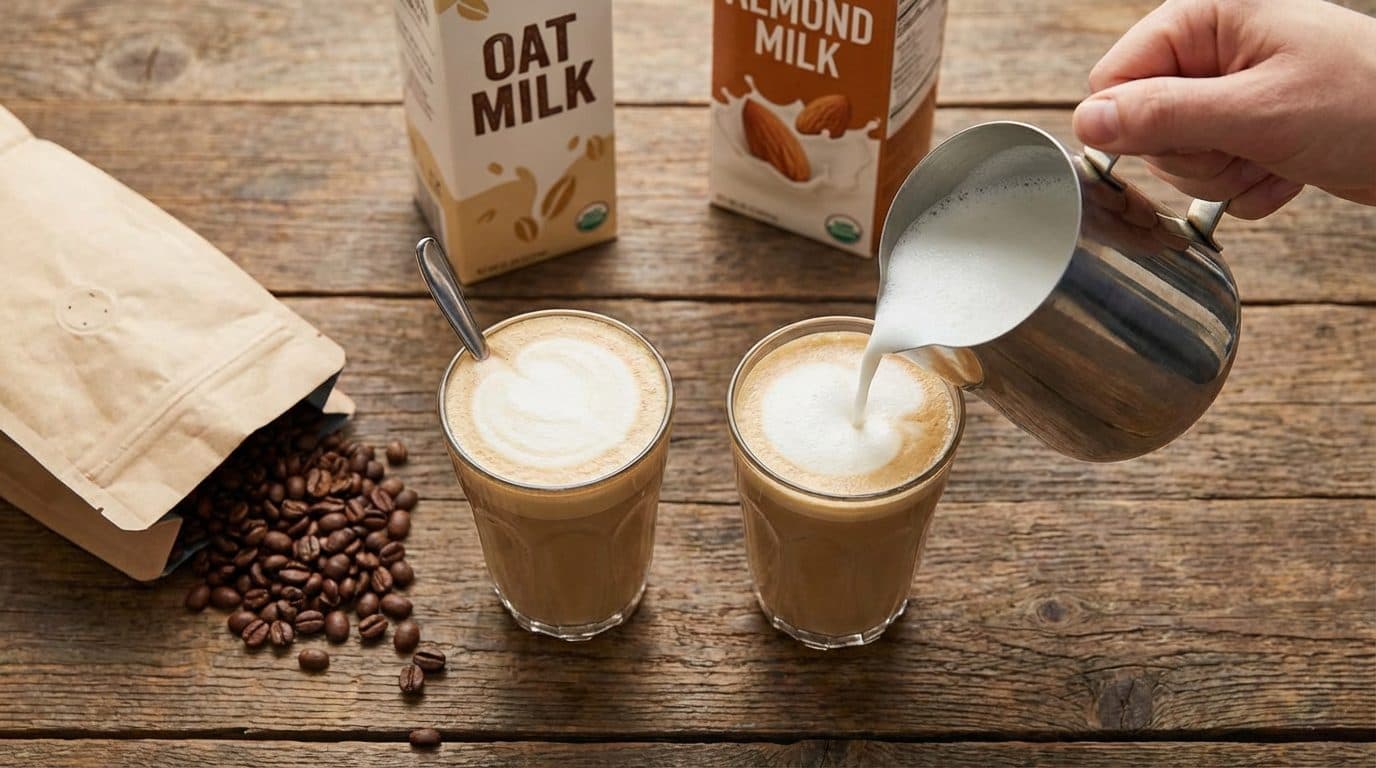
Yes! Heat milk in a saucepan or microwave, then froth using a French press plunger, handheld frother, or even a mason jar with vigorous shaking. The texture won’t be identical to steamed milk, but it works well for lattes and cappuccinos.
Is espresso-style coffee as strong as real espresso?
It can be just as concentrated in terms of coffee-to-water ratio and caffeine content. The difference lies in extraction efficiency and flavor profile. True espresso extracts compounds differently due to high pressure, creating unique flavors that alternative methods approximate rather than replicate.
Conclusion and Your Next Steps
Making espresso-style coffee at home without an espresso machine is absolutely achievable. Whether you choose the traditional Moka pot, versatile AeroPress, convenient French press, or clean pour-over method, you can create bold, concentrated coffee that satisfies your espresso cravings.
Start with the method that matches equipment you already own. If you’re buying new, I’d recommend the AeroPress for its versatility or the Moka pot for the most authentic espresso-style experience. Life is too short for bad coffee, and with these techniques, you’re just a few minutes away from a seriously good cup.
Pick your method, grab some fresh beans, and start experimenting this weekend. Your perfect espresso-style coffee is waiting to be discovered.

Comments