


Table of Contents
- The Usual Culprits Behind Bland Decaf
- Decaffeination Methods: Which Preserves the Most Flavor?
- Swiss Water Process (SWP)
- CO2 (Supercritical Carbon Dioxide) Method
- What to Look For When Buying Decaf Beans
- Freshness Is Non-Negotiable
- Origin Matters More Than You Think
- Roast Level: Find Your Sweet Spot
- Decaf Recommendations by Brewing Method
- For Pour-Over and Drip Coffee
- For French Press and Immersion Brewing
- For Espresso
- Common Mistakes to Avoid
- Pros and Cons of Switching to Quality Decaf
- Conclusion: Life Is Too Short for Bad Decaf
Before we talk solutions, let’s understand the problem. Decaffeination is a complex process that inevitably strips away some flavor compounds along with the caffeine. The beans undergo significant stress—soaking, extraction, and drying—which can damage their cellular structure and mute their natural characteristics.
The Usual Culprits Behind Bland Decaf
- Harsh chemical solvents: Traditional methods using methylene chloride or ethyl acetate can leave behind subtle off-flavors and strip away delicate notes.
- Low-quality source beans: Many roasters use inferior beans for decaf, assuming customers won’t notice the difference.
- Stale beans: Decaf beans go stale faster than regular coffee. That bag sitting on the supermarket shelf for months? It’s already lost most of its flavor potential.
- Over-roasting to mask defects: Some roasters char decaf beans to a dark roast to hide the flatness, which just trades one problem for another—burnt, bitter coffee.
In short, flat decaf usually isn’t the fault of decaffeination itself—it’s the result of cutting corners at multiple stages.
Decaffeination Methods: Which Preserves the Most Flavor?
Not all decaf is created equal. The method used to remove caffeine has a massive impact on what ends up in your cup. Here’s a quick breakdown:
| Method | Flavor Preservation | Chemical-Free? | Cost |
|---|---|---|---|
| Swiss Water Process | Very Good | Yes | Higher |
| CO2 (Supercritical) | Excellent | Yes | Highest |
| Sugarcane/Ethyl Acetate | Good | Semi-natural | Moderate |
| Methylene Chloride | Fair | No | Lowest |
Swiss Water Process (SWP)
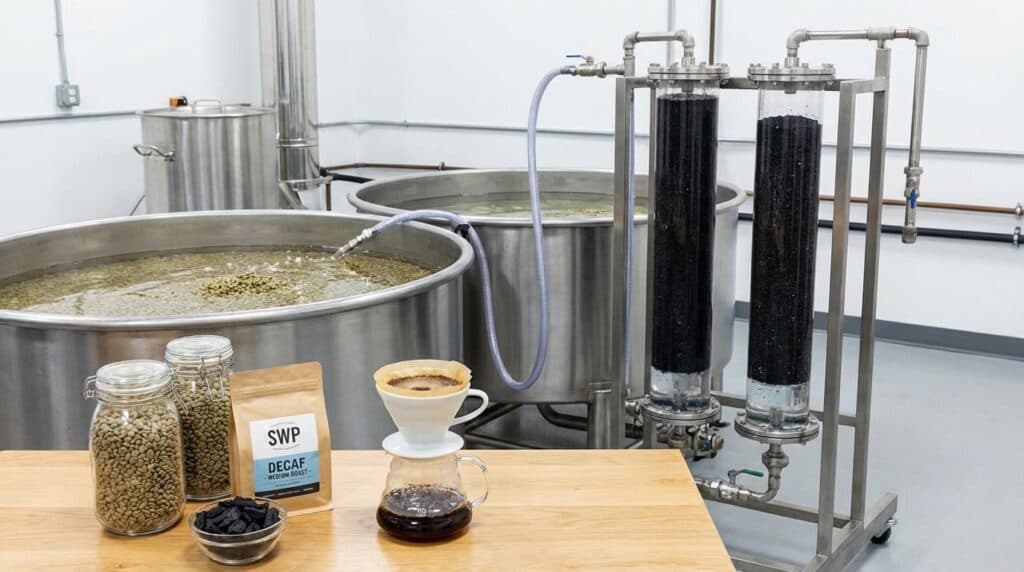
This method uses only water and activated charcoal to remove caffeine. It’s 100% chemical-free and widely available. According to coffee professionals, Swiss Water decafs can occasionally have a slightly muted profile, but high-quality SWP beans from good roasters taste remarkably close to regular coffee. I’ve found that medium roasts processed this way work beautifully for pour-over and drip brewing.
CO2 (Supercritical Carbon Dioxide) Method
This is the gold standard for flavor preservation. Liquid CO2 selectively targets caffeine molecules while leaving most flavor compounds intact. Recent discussions among roasters suggest CO2 decaf retains more origin characteristics—those fruity Ethiopian notes or chocolatey Colombian profiles actually come through. The downside? It’s more expensive, and fewer roasters offer it. But if you’re serious about great-tasting decaf, it’s worth seeking out.
Barista Tip: When shopping, look for “Swiss Water Process” or “CO2 Decaf” on the label. If the decaffeination method isn’t listed, that’s often a red flag—quality-focused roasters are proud to advertise their process.
What to Look For When Buying Decaf Beans
Now that you understand the methods, let’s talk practical shopping advice. Here’s my checklist for finding decaf that actually delivers:
Freshness Is Non-Negotiable
Decaf beans oxidize and go stale faster than regular coffee—some roasters estimate the optimal window is just 2-3 weeks post-roast. Always check for a roast date (not just a “best by” date) and buy from roasters who ship quickly after roasting. That supermarket bag with no date? Skip it.
Origin Matters More Than You Think
Single-origin decafs let you taste the unique characteristics of a specific region. A decaf from Colombia might offer caramel sweetness and nutty undertones, while an Ethiopian decaf could surprise you with berry and floral notes. Blends can be good too, but single-origins give you a clearer picture of quality.
Roast Level: Find Your Sweet Spot
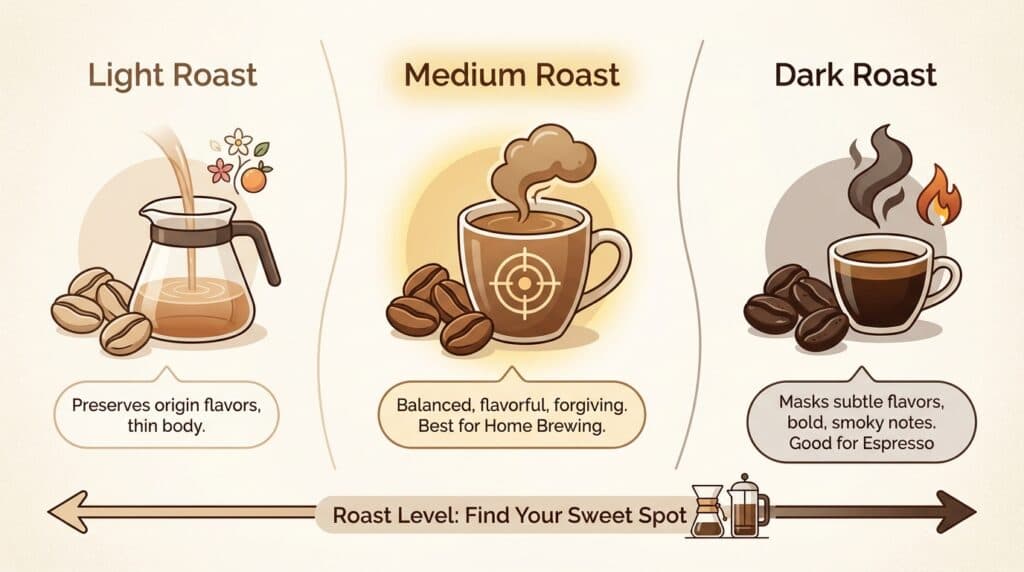
- Light roast: Preserves origin flavors but can taste thin if the beans aren’t exceptional quality.
- Medium roast: The sweet spot for most decaf—balanced, flavorful, and forgiving across brewing methods.
- Dark roast: Can mask subtle flavors but works well for espresso or those who prefer bold, smoky notes.
In my experience, medium and medium-dark roasts tend to perform best for home brewing. They have enough body to feel satisfying without sacrificing complexity.
Decaf Recommendations by Brewing Method
Different brewing methods extract coffee differently, so your ideal decaf might vary based on your setup.
For Pour-Over and Drip Coffee
Look for a medium-roast, single-origin decaf with bright acidity and clear flavor notes. CO2-processed beans shine here because the method preserves delicate aromatics. Aim for a light-to-medium body so the coffee doesn’t taste watery.
Who is this for? Home brewers who enjoy nuanced, clean cups and want to taste origin characteristics.
Who is this NOT for? Those who prefer heavy, bold coffee or primarily drink with milk and sugar.
For French Press and Immersion Brewing
A medium-dark roast with chocolatey or nutty notes works wonderfully. The longer extraction time of immersion brewing pulls out more body, so you want beans that can handle it without turning bitter. Swiss Water Process decafs often excel here.
Who is this for? Fans of full-bodied, rich coffee who want a satisfying cup without caffeine.
Who is this NOT for? Those sensitive to sediment or who prefer lighter, tea-like coffee.
For Espresso
Espresso is unforgiving—it amplifies every flaw. Choose a medium-to-dark roast blend specifically designed for espresso, with good crema potential and balanced bitterness. Many specialty roasters now offer dedicated decaf espresso blends that pull beautiful shots.
Who is this for? Home espresso enthusiasts who want evening lattes or cappuccinos without the sleep disruption.
Who is this NOT for? Beginners still dialing in their espresso setup—start with regular beans until you’ve nailed your technique.
Common Mistakes to Avoid
Even with great beans, you can still end up with flat-tasting decaf if you make these errors:
- Grinding too early: Pre-ground decaf loses flavor even faster than whole bean. Grind right before brewing.
- Using old beans: That “great deal” on a bulk bag isn’t a deal if the beans are three months old.
- Wrong water temperature: Decaf can taste flat if brewed with water that’s too cool. Aim for 195-205°F (90-96°C).
- Skimping on dose: Some people use less decaf thinking it’s “weaker.” Use the same ratio you would for regular coffee—typically 1:15 to 1:17 coffee to water.
Key Takeaway: Treat your decaf beans with the same respect you’d give premium regular coffee. Fresh beans, proper storage, correct grind size, and good brewing technique make all the difference.
Pros and Cons of Switching to Quality Decaf
Pros:
- Enjoy coffee any time of day without affecting sleep
- Reduced anxiety and jitters for caffeine-sensitive individuals
- Modern decaf can taste nearly identical to regular coffee
- Still contains beneficial antioxidants
- Great option during pregnancy or for those with certain health conditions
Cons:
- Quality decaf costs more than regular coffee
- Shorter shelf life means buying smaller quantities more often
- Fewer options available compared to regular coffee
- Some trace caffeine remains (typically 2-3% of original)
Conclusion: Life Is Too Short for Bad Decaf
The days of accepting bland, lifeless decaf are over. By choosing beans processed with Swiss Water or CO2 methods, prioritizing freshness, and selecting quality single-origins or well-crafted blends, you can enjoy decaf that genuinely satisfies. I’ve found that once people taste properly sourced and freshly roasted decaf, they’re genuinely surprised—it doesn’t have to taste like a compromise.
Start by finding a specialty roaster that takes their decaf seriously (they’ll proudly list the decaffeination method and roast date). Buy small quantities, store them properly in an airtight container away from light, and brew within a few weeks. Your evening cup—or your caffeine-free lifestyle—deserves coffee that actually tastes like coffee. Give quality decaf a chance, and you might just become a convert.

Comments