


Table of Contents
- Why Roast Level Matters More Than You Think
- The Grind Size Sweet Spot
- Single Origin vs. Blends: Which Works Better?
- Origins That Shine in Drip Brewers
- How Fresh Is Fresh Enough?
- The Coffee-to-Water Ratio That Actually Works
- Common Mistakes (And How to Fix Them)
- Who Should Buy What
- Choose a Repeatable Starting Recipe
- Brewing Reference
Affiliate disclosure: As an Amazon Associate I earn from qualifying purchases.
For an automatic drip machine, a medium roast and the manufacturer’s recommended grind are useful starting points. Measure your dose and water, then adjust from the tasted result rather than expecting one coffee to suit every brewer.
This guide focuses on choosing the coffee itself: roast level, origin, freshness, and grind. For machine cleaning and the brewing process, use the basic drip coffee recipe.
Quick Verdict:
- Practical first trial: A medium-roast blend can provide a balanced baseline; origin, components, roast development, freshness, dose, and grind still affect the cup.
- For a more roast-forward cup: Trial a darker roast, then compare bitterness, body, and aroma with the same dose and grind.
- For a more fruit-forward trial: Compare a lighter-roast Ethiopian selection, recognizing that region, variety, process, roast, and recipe can change the profile.
Why Roast Level Matters More Than You Think
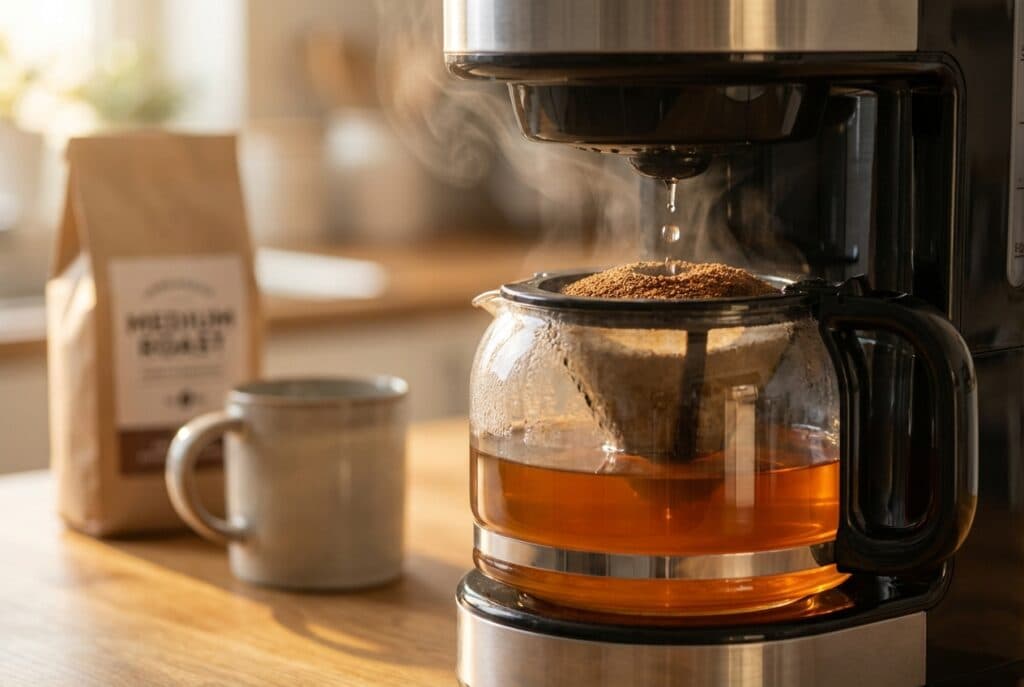
Automatic drip machines provide less direct control over water temperature and contact time than manual brewing methods. Choose coffee and grind settings that work with the machine’s fixed brew cycle, then adjust one variable at a time.
Medium roasts provide a practical comparison baseline. Roast labels are not standardized across sellers, so check the roaster’s tasting notes and compare the brewed result.
A light roast can work in a drip brewer. If it tastes too sharp, check the machine’s instructions and try a small grind adjustment with the same dose and water before changing coffees.
A darker roast may suit a roast-forward preference. Compare the seller’s descriptions rather than assuming that labels such as full city, French, or Italian mean the same thing across brands.
The Grind Size Sweet Spot
Grind affects extraction and flow through the filter. Both very fine and very coarse settings can make a recipe harder to reproduce.
For automatic drip machines, you want a medium grind—roughly the texture of coarse sand or sea salt. If you’re buying pre-ground, look for bags specifically labeled “drip” or “auto-drip.” Avoid anything marked “espresso” (way too fine) or “French press” (too coarse).
If the cup tastes weak, try a slightly finer grind while keeping dose and water stable. Watch for slow drainage or overflow, and return to the manufacturer’s recommended range if flow becomes restricted.
| Grind Size | Best For | Possible Drip Result; Check by Taste |
|---|---|---|
| Fine (espresso) | Espresso machines, Moka pots | May restrict drainage or produce a harsh cup |
| Medium | Drip machines, pour-over | A starting point, not a guarantee of balance |
| Coarse | French press, cold brew | May produce a weaker or sharper cup at the same dose |
Single Origin vs. Blends: Which Works Better?
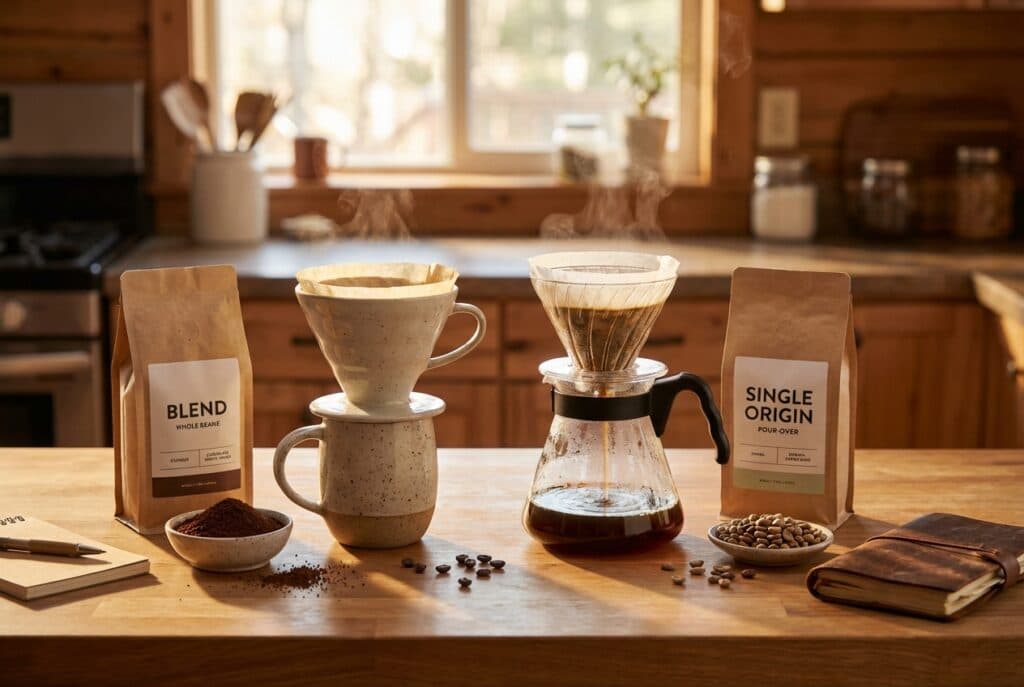
Blends can be easier to reproduce because roasters design them for a stable profile, while single-origin coffees can provide more distinctive character. Either can work in a drip machine; choose a roast and grind suited to the machine’s brew cycle.
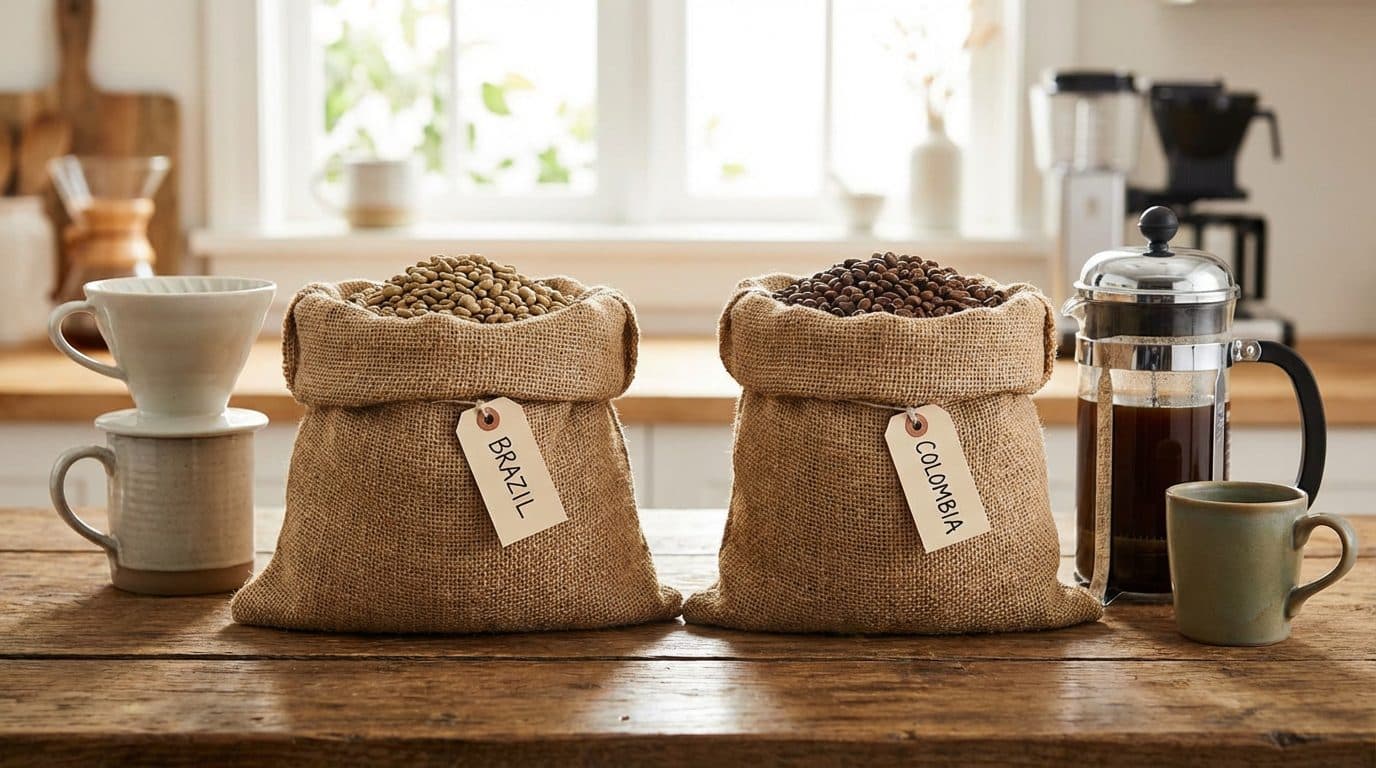
Single-origin results depend on roast, process, freshness, and the brew cycle. A washed Colombian selection may offer a balanced starting point, while some natural-process coffees emphasize fruit; these are tendencies rather than guarantees.
A practical starting recommendation:
- New to specialty coffee? Try a blend described by its roaster for filter brewing, then record how it tastes in your machine.
- Already comfortable with your machine? Compare single origins such as an Ethiopian natural, washed Colombian, or Brazilian pulped-natural selection. Keep dose and water stable, then adjust grind from the tasted result.
Origins That Shine in Drip Brewers
Central and South American coffees: Some selections from Colombia, Guatemala, or Brazil emphasize chocolate, nuts, or caramel. Check the specific bag’s variety, process, roast, and tasting notes rather than relying on country alone.
African coffees: Coffees from Ethiopia or Kenya may show brighter or fruit-forward notes, but variety, process, roast, freshness, grinder, machine, and recipe change the result. Treat temperature as a starting variable and adjust after tasting; do not predict sourness from a fixed 93°C threshold.
Indonesian coffees: Some selections from Sumatra or Java are described as earthy or full-bodied. Those descriptions are possible sensory profiles, not an extraction or acidity guarantee.
How Fresh Is Fresh Enough?
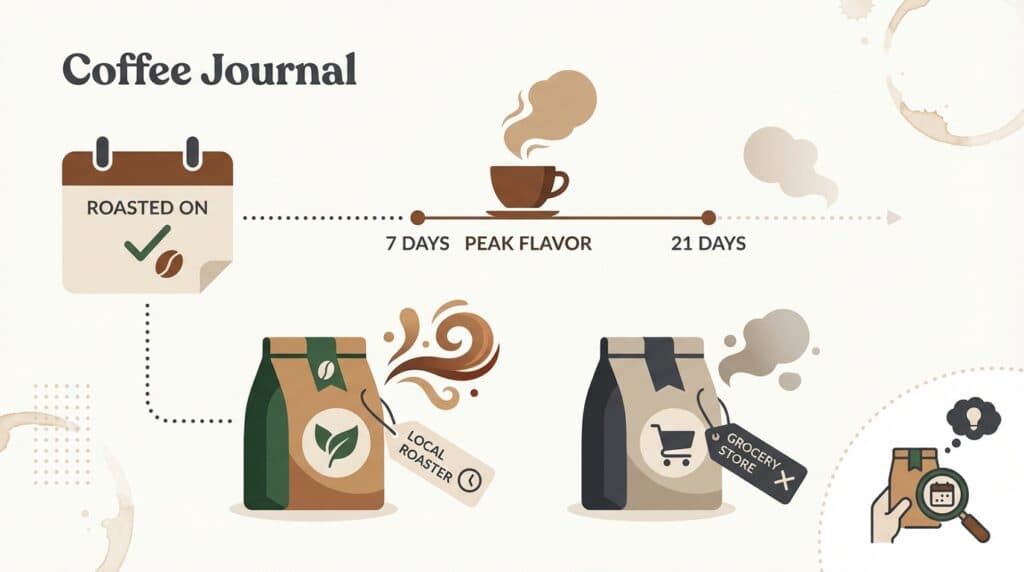
Coffee aroma fades after roasting and fades faster after grinding. Prefer bags with a roast date, buy an amount you can finish, and store the beans in a sealed container away from heat and light.
Use aroma and taste rather than a universal day cutoff. If brewed coffee becomes dull before the bag is finished, buy a smaller amount or grind closer to brewing.
Buying check: Prefer a visible roast date when freshness is important, but do not infer a seller’s motive from a missing date. Compare packaging, retailer turnover, aroma, and the brewed result.
The Coffee-to-Water Ratio That Actually Works
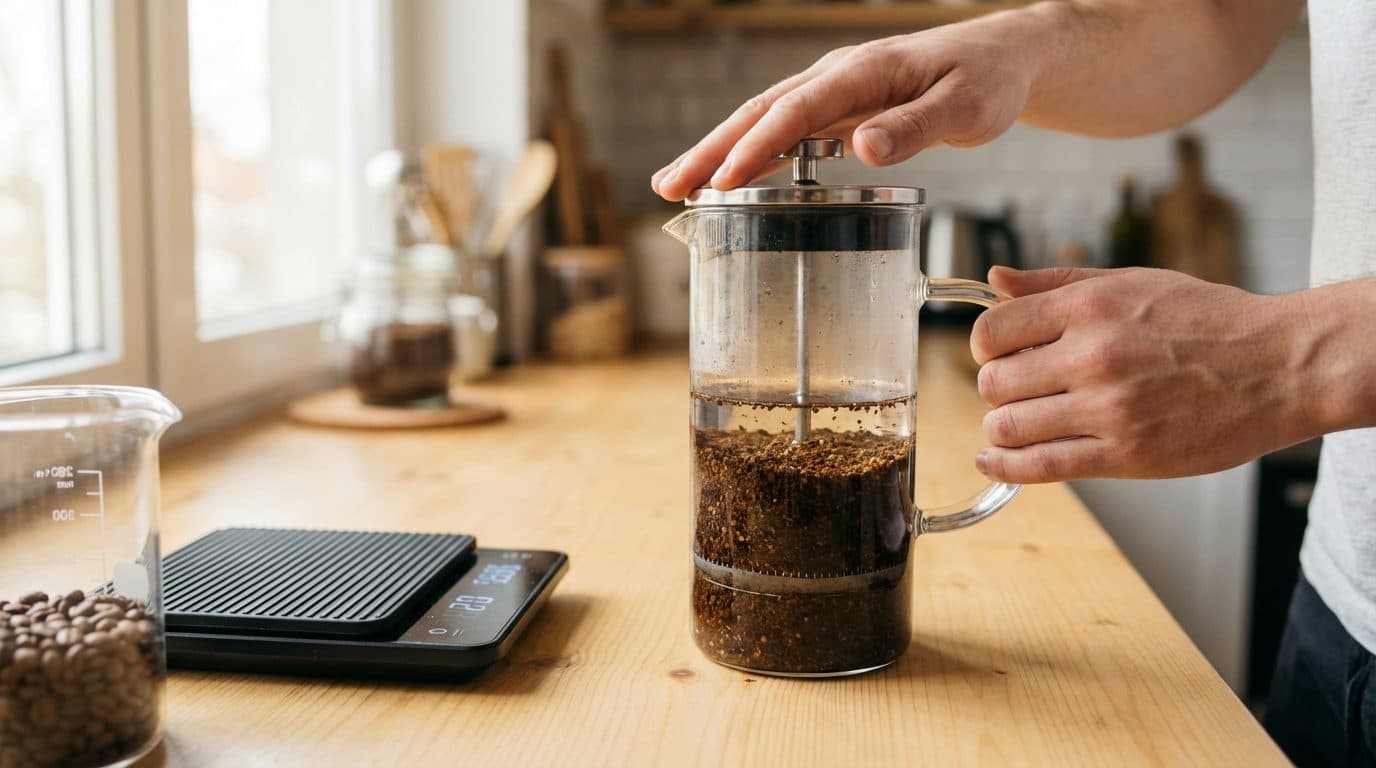
Forget the vague “one scoop per cup” advice. Use a scale. Seriously.
Use the coffee-to-water ratio guide for a full method table. Measure the brewer’s actual water volume and calculate a starting dose from the chosen ratio; a “12-cup” label and resulting dose vary by manufacturer. Adjust from taste.
Use 1:16 as a balanced starting ratio. Try 1:15 for a stronger cup or 1:17 for a lighter cup, changing only one variable between brews.
| Example Brewer Label; Actual Volume Varies | Water (ml) | Coffee at 1:16 (grams) |
|---|---|---|
| 6 cups | 700ml | 44g |
| 8 cups | 950ml | 59g |
| 10 cups | 1180ml | 74g |
| 12 cups | 1420ml | 89g |
Common Mistakes (And How to Fix Them)
- Bitter coffee: Try a small coarser-grind adjustment, then compare at the same dose; roast, water, and cleanliness can also contribute.
- Sour coffee: Try a small finer-grind adjustment within the brewer’s guidance. Do not assume taste alone identifies a temperature fault.
- Weak coffee: Check the measured dose and water first, then change either dose or grind, not both at once.
- Burnt taste after holding: Compare a freshly brewed cup with one left on the hot plate. A suitable thermal carafe is one way to avoid continued hot-plate heating.
Who Should Buy What
This is for you if:
- You want consistent, no-fuss morning coffee
- You’re brewing for multiple people
- You prefer convenience over ritual
This might NOT be for you if:
- You want maximum control over every variable (consider pour-over instead)
- You only drink one small cup a day (a single-serve method might be more practical)
Choose a Repeatable Starting Recipe
Start with a medium roast, a medium grind, fresh coffee, and a measured ratio. Then change one variable at a time; no fixed percentage describes how much each factor contributes to the final cup.
Start with a solid Central American blend from a local roaster. Dial in your ratio. Then branch out. Try a natural Ethiopian. Grab a Sumatran. See what your machine—and your taste buds—respond to best.
Your drip machine is more capable than you think. It just needs the right fuel.
Brewing Reference
For method background, see the National Coffee Association’s brewing guides. The ratios and comparisons here are starting trials to adapt to your actual brewer, not results from a hands-on product test.

Comments