


Table of Contents
- The Science Behind Coffee Inconsistency
- The Extraction Sweet Spot
- The Top Reasons Your Coffee Tastes Different Every Day
- Your Grind Size Is Inconsistent
- You're Not Measuring Your Coffee
- Water Temperature Fluctuations
- Your Water Quality Varies
- Bean Freshness and Storage Issues
- How to Get Consistent Coffee Every Time
- Invest in a Quality Burr Grinder
- Use a Scale for Everything
- Control Your Water Temperature
- Standardize Your Water
- Manage Bean Freshness
- Building Your Consistency Routine
- Frequently Asked Questions
- Why does my coffee taste different in the afternoon versus the morning?
- Can humidity affect my coffee consistency?
- How often should I clean my grinder for consistent results?
- Does the type of coffee filter matter for consistency?
- My espresso is especially inconsistent—what gives?
- Summary and Your Next Steps
You weigh your beans, use the same mug, follow the same routine every single morning—and yet somehow your coffee tastes amazing one day and disappointingly flat the next. Sound familiar? You’re not losing your mind, and you’re definitely not alone. Inconsistent coffee is one of the most frustrating problems home baristas face, and it often comes down to variables you might not even realize are changing.
In this guide, I’ll walk you through the hidden culprits behind your coffee’s mood swings and show you exactly how to achieve that beautiful, repeatable cup every time. Because life is too short for bad coffee—especially when you thought you did everything right.
The Science Behind Coffee Inconsistency
Coffee extraction is essentially a chemistry experiment happening in your kitchen. When hot water meets ground coffee, it dissolves and extracts hundreds of compounds—acids, sugars, oils, and bitter elements. The tricky part? The order and amount of extraction depends on multiple variables working together. Change one thing, even slightly, and your cup tastes different.
Here’s the key takeaway: Coffee consistency isn’t about doing “one thing” right. It’s about controlling multiple variables simultaneously.
Think of it like baking. You wouldn’t expect a cake to turn out the same if you used a different oven temperature each time, right? Coffee works the same way, except the variables are often less obvious. Water temperature, grind size, dose, brew time, and even the age of your beans all interact in complex ways.
The Extraction Sweet Spot
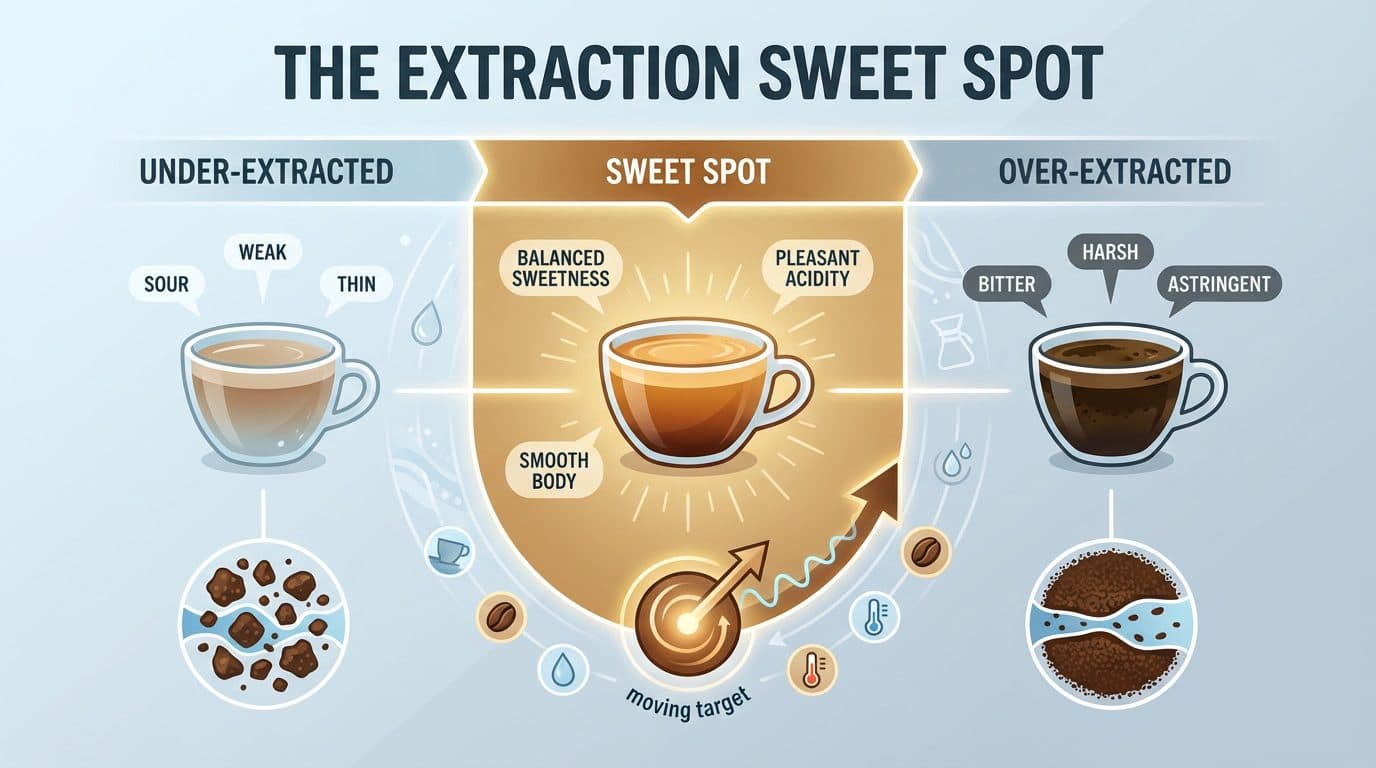
Under-extracted coffee tastes sour, weak, and thin. Over-extracted coffee tastes bitter, harsh, and astringent. The goal is hitting that sweet spot in between, where you get balanced sweetness, pleasant acidity, and smooth body. The problem is that this sweet spot is a moving target when your variables keep shifting.
The Top Reasons Your Coffee Tastes Different Every Day
Let’s troubleshoot the most common culprits. In my experience, at least one of these is almost always the issue.
Your Grind Size Is Inconsistent
This is the number one reason for inconsistent coffee at home. If you’re using a blade grinder, you’re essentially playing coffee roulette. Blade grinders chop beans randomly, producing a mix of fine powder and large chunks in the same batch. The fines over-extract while the boulders under-extract, and the ratio changes every time.
Even with a burr grinder, consistency matters. Entry-level burr grinders can drift over time, or produce different results depending on how fast beans feed through. I’ve found that even tiny adjustments—half a notch on the dial—can noticeably change the cup.
- Blade grinders produce inconsistent particle sizes by design
- Burr grinder settings can shift if not locked properly
- Static and retention can mix old and fresh grounds
- Different beans may require grind adjustments
You’re Not Measuring Your Coffee
Scoops are convenient but wildly inconsistent. A “heaping scoop” one day and a “level scoop” the next can mean a 20-30% difference in coffee dose. When your coffee-to-water ratio changes, extraction changes, and so does taste.
Here’s a mini scenario: Let’s say your ideal ratio is 1:16 (one gram of coffee to sixteen grams of water). Using 18 grams of coffee versus 15 grams means the difference between a bold, balanced cup and a watery, sour disappointment—even with identical brewing otherwise.
Water Temperature Fluctuations
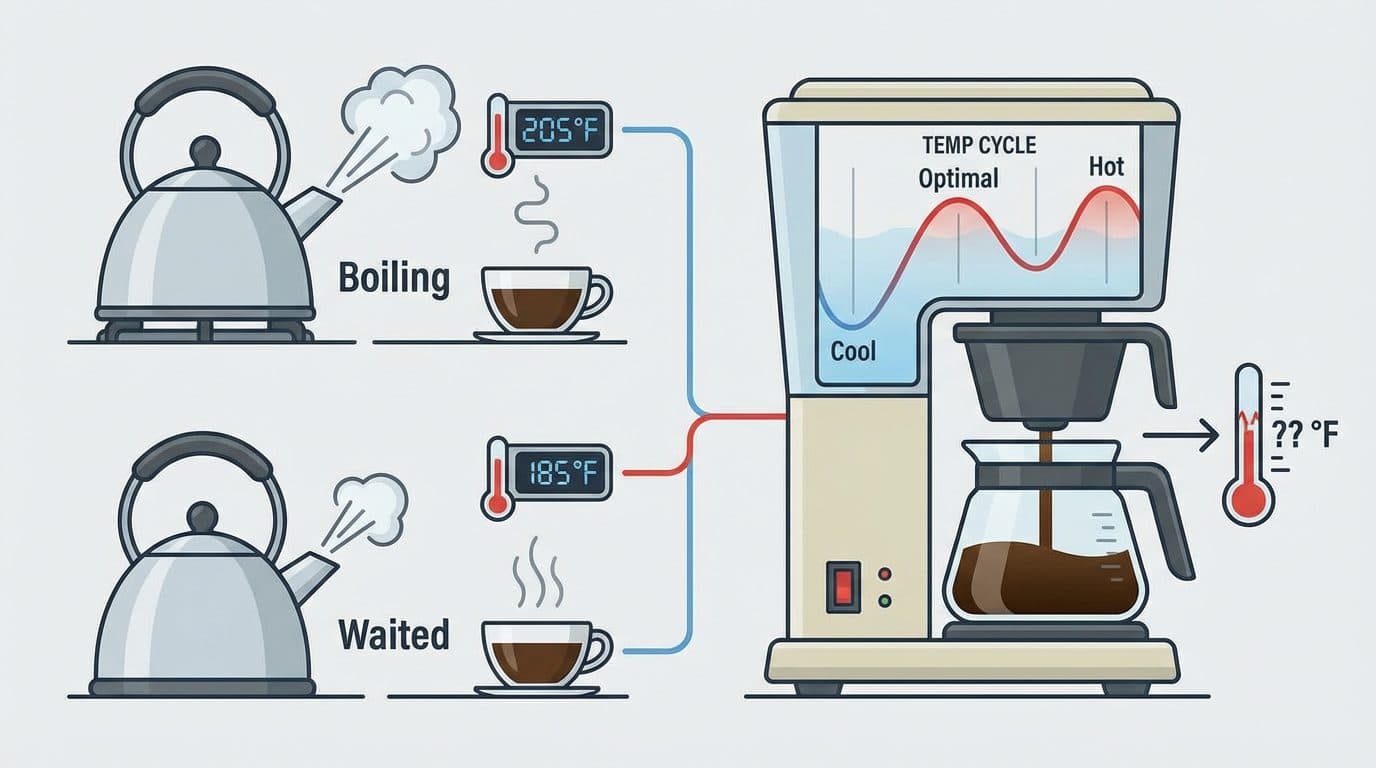
Water temperature dramatically affects extraction. Hotter water extracts more aggressively; cooler water extracts less. If your kettle doesn’t have temperature control, you might be brewing at 205°F one morning and 185°F the next, depending on how long you wait after boiling.
Many automatic drip machines also struggle with temperature consistency, especially older or cheaper models. They might hit optimal temperature mid-brew but start too cool or finish too hot.
Your Water Quality Varies
Did you know that water makes up about 98% of your brewed coffee? The mineral content in your water affects both extraction efficiency and flavor. If you’re using tap water, seasonal changes in your municipal supply can subtly alter your coffee’s taste.
Hard water with high mineral content can lead to over-extraction and harsh flavors. Soft water or distilled water can cause under-extraction and flat, lifeless coffee. This is why many specialty cafes obsess over water recipes.
Bean Freshness and Storage Issues
Coffee beans are constantly changing after roasting. They release CO2, oxidize, and slowly go stale. A bag of beans tastes different on day 3 post-roast versus day 21. If you’re working through a bag over several weeks, your coffee will naturally taste different at the beginning, middle, and end.
Storage matters too. Beans exposed to air, light, heat, or moisture degrade faster. If your canister isn’t airtight, or you’re storing beans near your stove, freshness drops quickly and inconsistently.
How to Get Consistent Coffee Every Time
Now for the good news: consistency is absolutely achievable with a few simple upgrades and habits. Here’s your action plan.
Invest in a Quality Burr Grinder
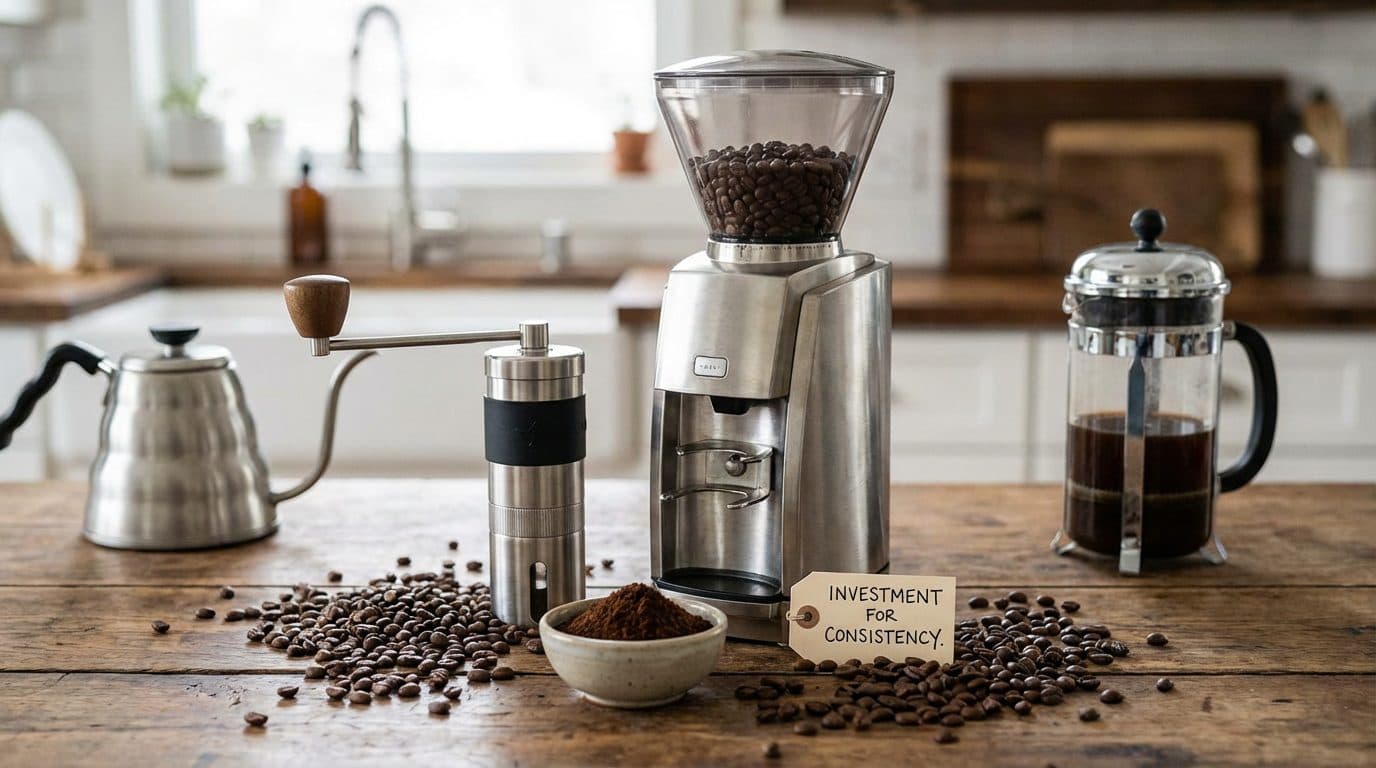
If you take away one thing from this guide, let it be this: a good burr grinder is the single best investment for consistent coffee. You don’t need to spend a fortune—even a quality hand grinder around $50-100 will dramatically improve your results.
Look for grinders with stepped or stepless adjustment, minimal retention (grounds left behind from previous use), and solid build quality. I’ve found that spending a bit more upfront saves frustration and money long-term.
| Grinder Type | Consistency | Price Range | Best For |
|---|---|---|---|
| Blade Grinder | Poor | $15-30 | Spices (not coffee) |
| Entry Burr Grinder | Good | $50-100 | Drip, French Press |
| Mid-Range Burr | Very Good | $100-250 | Pour Over, Espresso |
| Premium Burr | Excellent | $250+ | Espresso, Perfectionists |
Use a Scale for Everything
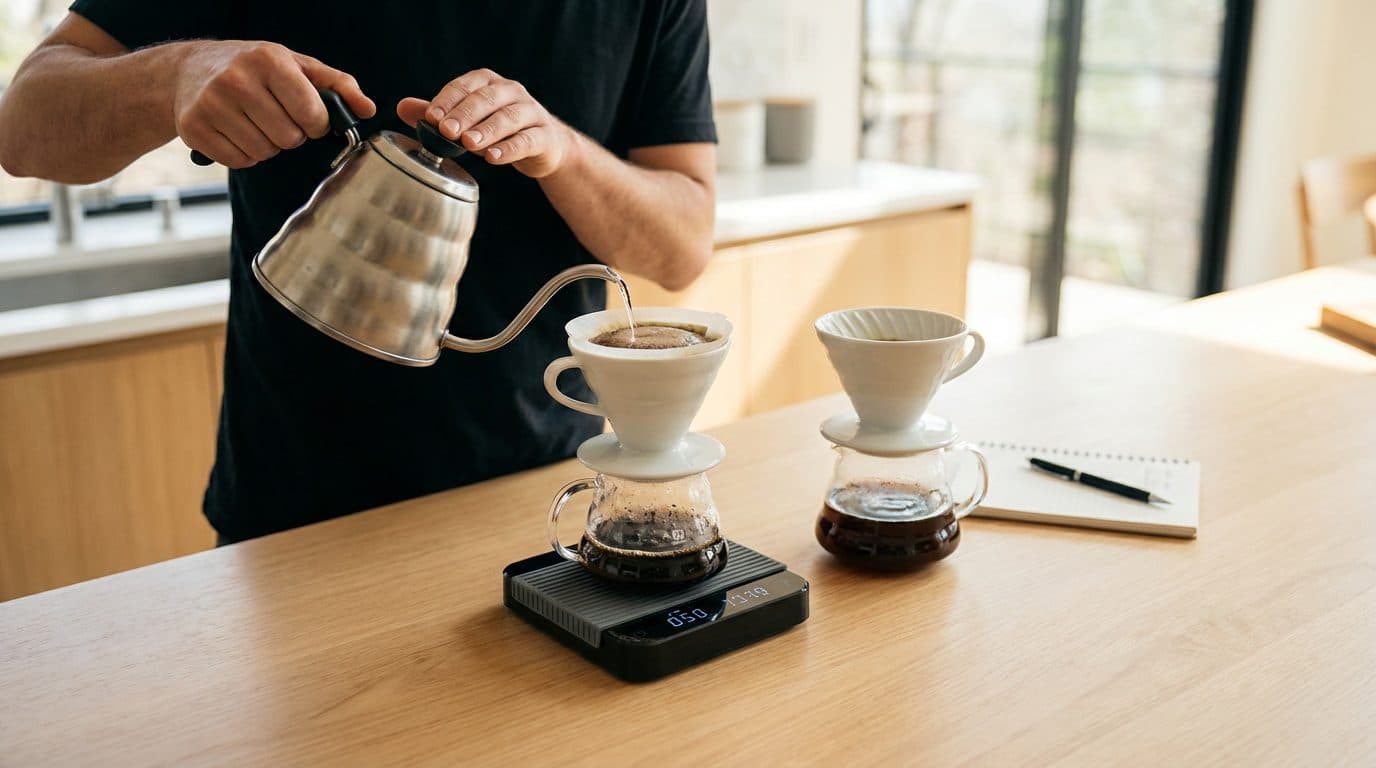
A simple kitchen scale (0.1g accuracy is ideal) removes guesswork from your routine. Weigh your beans before grinding, weigh your water, and you’ll eliminate one of the biggest sources of variation.
Barista Tip: Use the same ratio as your starting point every time. For most brewing methods, 1:15 to 1:17 (coffee to water) works well. I personally start at 1:16 and adjust from there based on taste.
Control Your Water Temperature
Get a kettle with temperature control, or at minimum, use a thermometer. For most brewing methods, aim for 195-205°F (90-96°C). Let boiling water rest for 30-45 seconds if you don’t have a temperature-controlled kettle.
Consistency here is more important than hitting a “perfect” number. If you always brew at 200°F, you can adjust other variables knowing temperature is constant.
Standardize Your Water
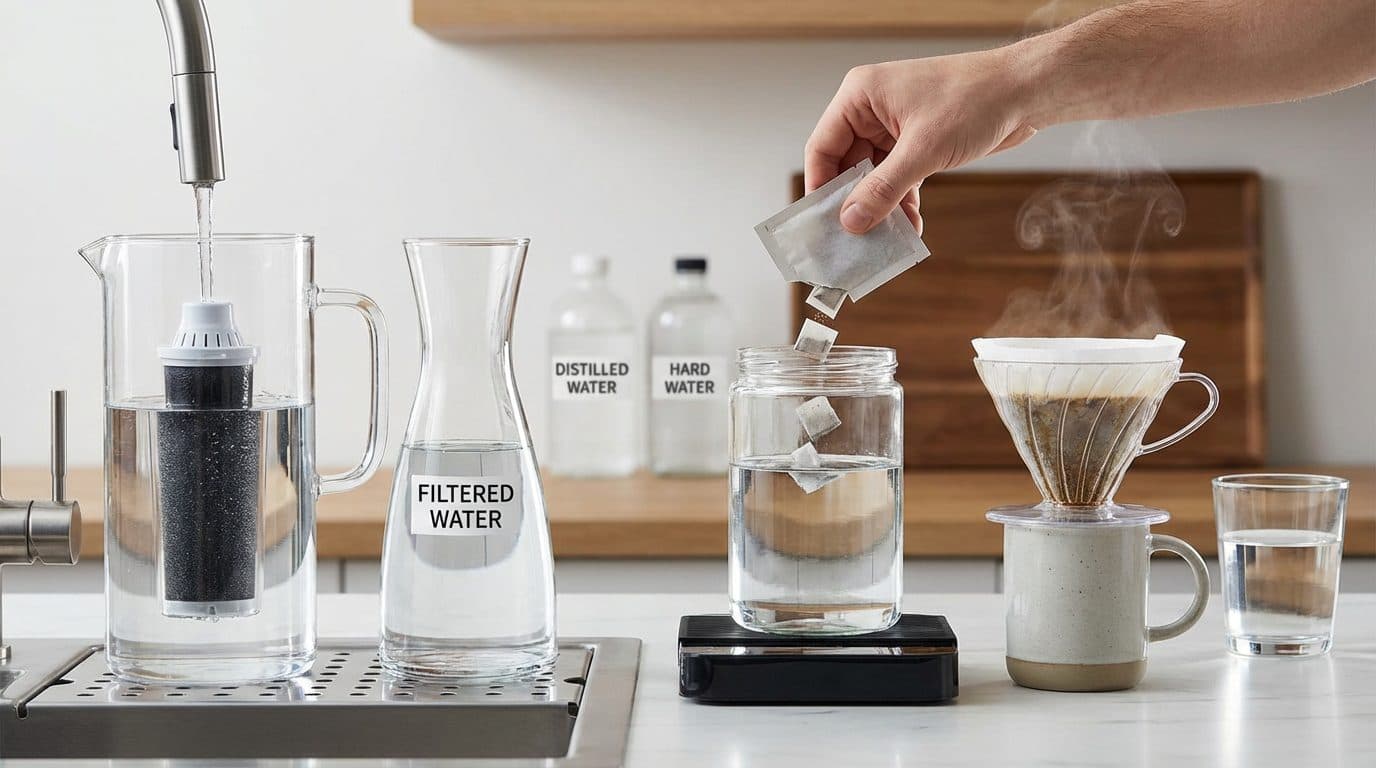
The easiest approach is using filtered water consistently. A simple pitcher filter removes chlorine and some minerals, providing a more neutral starting point. For even more control, some home baristas use specific water recipes with mineral packets added to distilled water.
- Filtered tap water works well for most people
- Avoid distilled or softened water (too flat)
- Avoid very hard tap water (too harsh)
- Third Wave Water or similar products offer precise mineral control
Manage Bean Freshness
Buy smaller quantities more frequently rather than large bags that go stale. Store beans in an airtight container away from light and heat. If you must buy in bulk, consider freezing portions in airtight bags and thawing as needed.
Most coffee tastes best between 7-21 days post-roast for filter brewing. Very fresh coffee (under a week) can actually taste a bit wild as it’s still degassing heavily.
Building Your Consistency Routine
Here’s a practical daily workflow that takes the guesswork out of your morning cup.
Step 1: Weigh your beans (start with 20g for a single cup)
Step 2: Grind at your established setting
Step 3: Heat filtered water to your target temperature
Step 4: Weigh your water as you brew (320g for a 1:16 ratio)
Step 5: Time your brew for consistency
Step 6: Taste, evaluate, and take notes
That last step matters more than you might think. Keep a simple log—even just mental notes—about what worked and what didn’t. Did the coffee taste sour? Grind finer or increase water temperature next time. Bitter and harsh? Go coarser or cooler. Over time, you’ll dial in your perfect recipe.
Frequently Asked Questions
Why does my coffee taste different in the afternoon versus the morning?
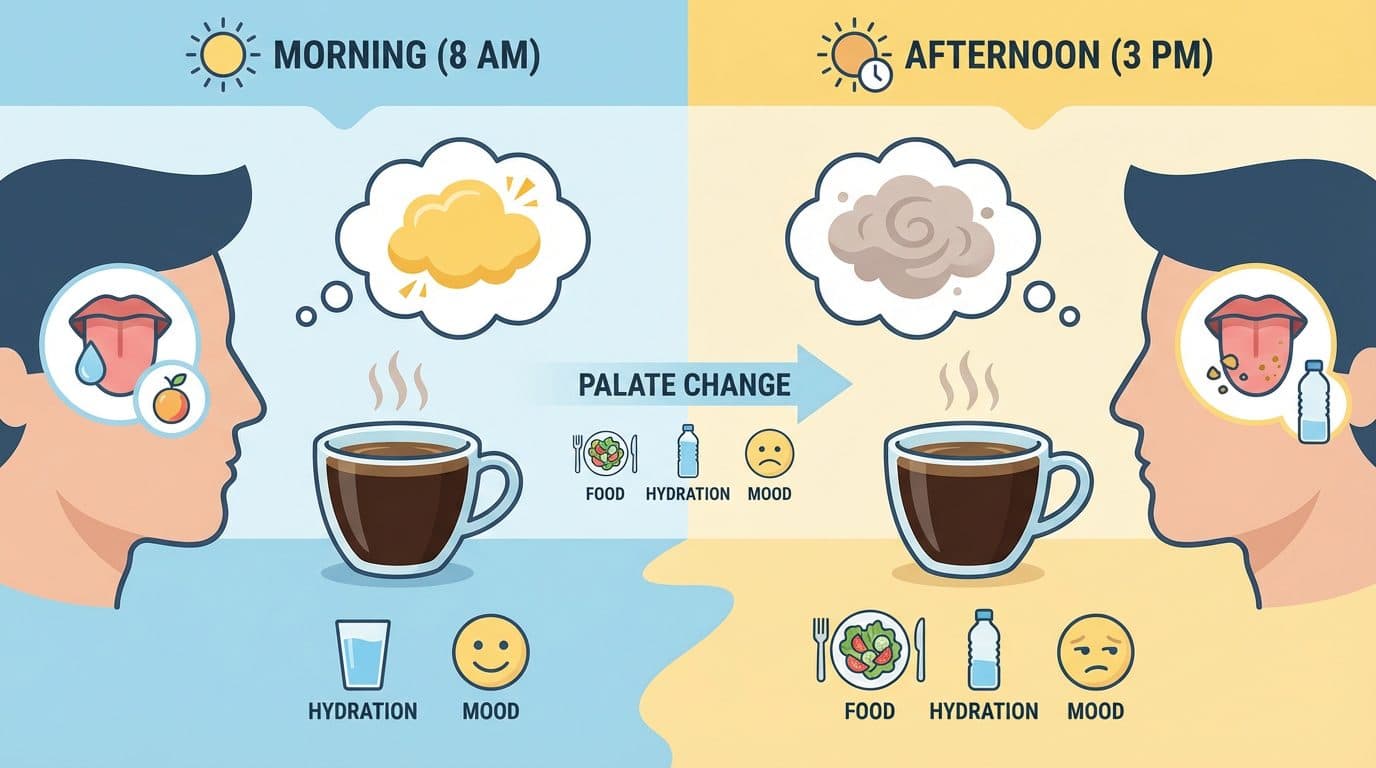
Your palate changes throughout the day based on what you’ve eaten, your hydration level, and even your mood. Coffee itself doesn’t change, but your perception does. This is normal and not something you need to “fix”—just be aware that morning coffee hits differently than afternoon coffee for most people.
Can humidity affect my coffee consistency?
Yes, humidity can impact both your beans and your grinder. High humidity can cause beans to absorb moisture and grounds to clump, affecting extraction. If you live in a very humid climate, consider storing beans in airtight containers with humidity control packets and adjusting grind slightly during humid seasons.
How often should I clean my grinder for consistent results?
At minimum, brush out your grinder weekly and do a deeper clean monthly. Old oils and fine particles build up over time, affecting both grind consistency and flavor. Some grinders benefit from occasional use of grinder cleaning tablets to remove oily residue.
Does the type of coffee filter matter for consistency?
Absolutely. Cheap filters can vary in thickness and porosity, affecting flow rate and extraction. Switching to quality bleached or unbleached filters from reputable brands provides more predictable results. Also, make sure to rinse paper filters before brewing to remove any papery taste.
My espresso is especially inconsistent—what gives?
Espresso amplifies every variable because of the short extraction time and fine grind. Small changes in dose, grind, distribution, and tamping pressure all dramatically affect the shot. Focus on distribution and tamping technique, use a scale for your dose, and dial in each new bag of beans before expecting consistency.
Summary and Your Next Steps
Inconsistent coffee usually isn’t bad luck—it’s uncontrolled variables stacking up against you. The good news is that you don’t need to become obsessive or spend thousands of dollars to achieve repeatable results. Start with the biggest impact changes: get a decent burr grinder, use a scale, and control your water temperature. Those three upgrades alone solve most consistency problems.
From there, refine your routine. Measure everything, keep your variables constant, and pay attention to what works. In my experience, most home baristas can go from frustrating inconsistency to reliable deliciousness within a week or two of mindful brewing. Your perfect cup is waiting—you just need to remove the chaos keeping you from it.

Comments