


Table of Contents
- Quick Verdict: Timemore C3 Takes the Crown
- Timemore C2 vs. C3: Key Differences at a Glance
- The Burr Upgrade: Why S2C Matters for Your Cup
- What Are S2C Burrs?
- Real-World Impact on Your Coffee
- Build Quality and Design: More Similar Than Different
- What They Share
- Minor C3 Refinements
- Grind Quality Comparison: Where the Rubber Meets the Road
- Pour-Over Performance (V60, Chemex, Kalita)
- French Press and Immersion Brewing
- Espresso: A Word of Caution
- Timemore C2: Pros and Cons
- Timemore C3: Pros and Cons
- Who Is the Timemore C2 For?
- Who Is the Timemore C3 For?
- Who Should Skip Both Grinders?
- Frequently Asked Questions
- Can I upgrade my Timemore C2 with S2C burrs?
- How long do Timemore hand grinder burrs last?
- Is the Timemore C3 good for espresso?
- What grind setting should I use on the Timemore C3 for pour-over?
- Does the Timemore C3 work for cold brew?
- Final Verdict: Which Budget King Should You Crown?
Looking for a budget hand grinder that doesn’t feel like a budget compromise? You’ve probably stumbled upon the Timemore C2 and C3 – two grinders that have absolutely dominated the entry-level specialty coffee scene. But here’s the thing: they look almost identical, they’re priced similarly, and the marketing doesn’t exactly spell out what’s different. So which one actually deserves your hard-earned cash?
I’ve spent considerable time with both of these grinders, and I can tell you the differences matter more than you’d expect. In this comparison, you’ll discover exactly what separates the Timemore C2 from the C3, which one suits your brewing style, and whether the upgrade is worth it. Let’s settle this budget king showdown once and for all.
Quick Verdict: Timemore C3 Takes the Crown
For most home baristas, the Timemore C3 is the better buy. The upgraded S2C burrs deliver noticeably improved grind consistency, especially for pour-over and filter brewing. The price difference is minimal (usually $5-15), but the performance gap is significant. That said, the C2 remains an excellent choice if you primarily brew immersion methods like French press or if you’re on an extremely tight budget.
Timemore C2 vs. C3: Key Differences at a Glance
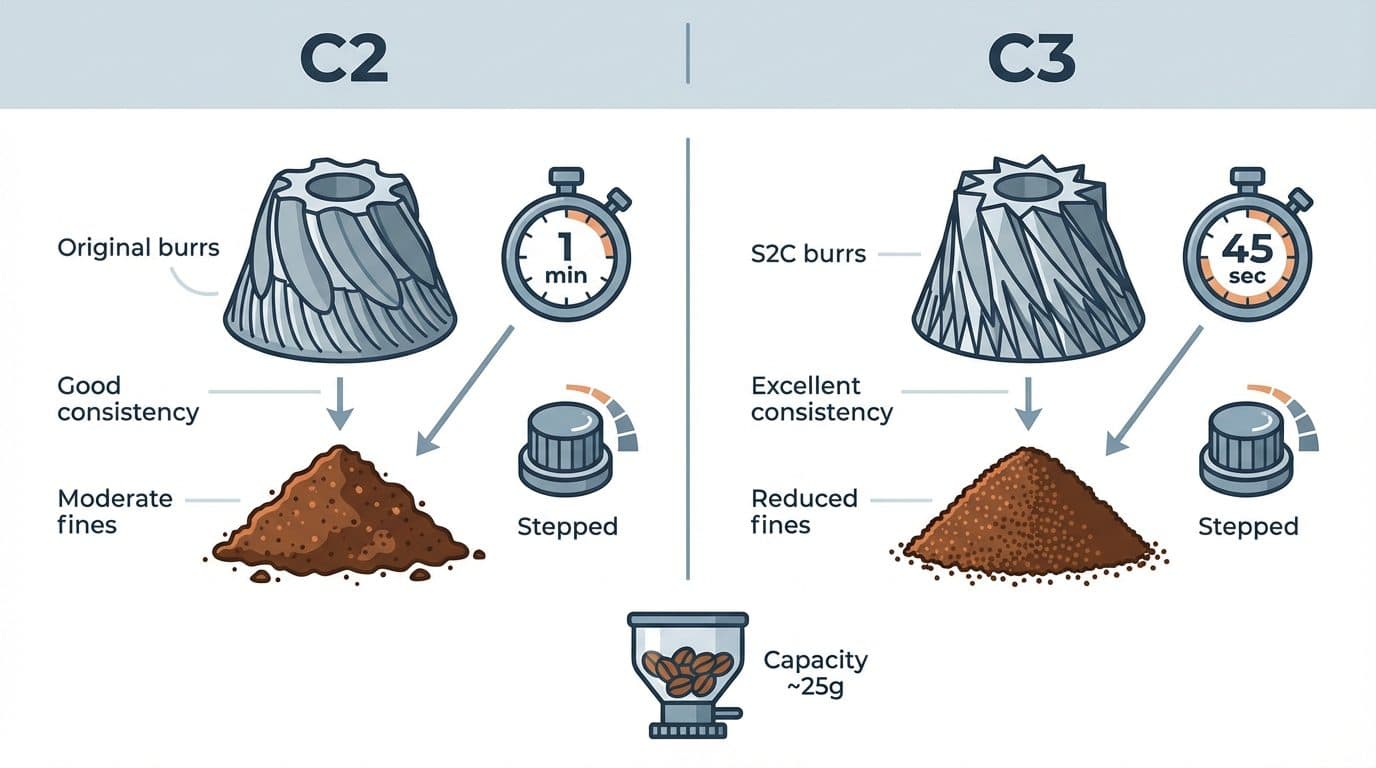
Before diving deep, let’s break down what actually changed between these two popular hand grinders. The C3 isn’t a complete redesign – it’s more of a refined evolution. But those refinements hit where it counts.
| Feature | Timemore C2 | Timemore C3 |
|---|---|---|
| Burr Type | Original steel burrs | S2C (Spike to Cut) burrs |
| Grind Consistency | Good | Excellent |
| Fines Production | Moderate | Reduced |
| Grinding Speed | ~1 min for 20g | ~45 sec for 20g |
| Adjustment System | Stepped (clicks) | Stepped (clicks) |
| Capacity | ~25g beans | ~25g beans |
| Best For | All methods (budget pick) | Pour-over, filter, espresso |
| Price Range | $50-60 | $55-70 |
The Burr Upgrade: Why S2C Matters for Your Cup
The biggest difference between the Timemore C2 and C3 comes down to the burrs. The C3 features Timemore’s S2C (Spike to Cut) burr design, and this isn’t just marketing fluff. In my experience, this upgrade genuinely transforms the grinding experience.
What Are S2C Burrs?
S2C burrs use a two-stage cutting approach. First, sharp “spikes” break down the beans into smaller pieces. Then, the cutting edges refine those pieces into uniform grounds. In short, this design means less stress on the beans and more consistent particle sizes in your final grind.
Real-World Impact on Your Coffee
Here’s what I’ve noticed when switching from the C2 to the C3:
- Cleaner pour-over cups: Less fines means less over-extraction and bitterness
- Better flavor clarity: Individual tasting notes come through more distinctly
- More forgiving brewing: Consistent grinds make it easier to dial in recipes
- Faster grinding: The improved geometry cuts through beans more efficiently
Picture this: you’re making a V60 with a bright Ethiopian coffee. With the C2, you might get a nice cup, but some muddiness in the mid-tones. With the C3, those blueberry and floral notes pop with more definition. It’s not night and day, but once you notice it, you can’t un-notice it.
Build Quality and Design: More Similar Than Different
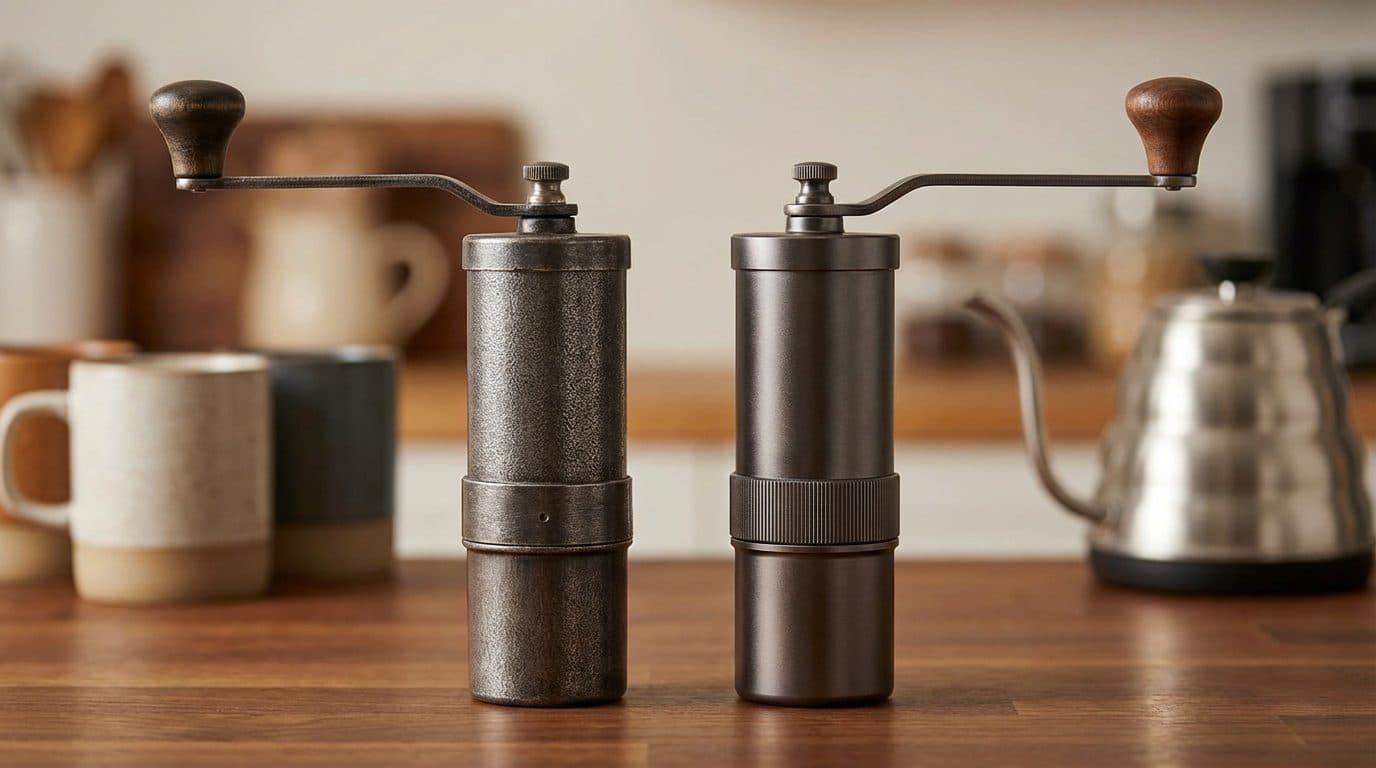
Both grinders share the same fundamental construction, and honestly, Timemore nailed it with the original C2 design. The C3 didn’t fix what wasn’t broken.
What They Share
- Aluminum alloy body (lightweight yet durable)
- Comfortable non-slip grip
- Magnetic catch cup (satisfying and practical)
- Portable size (fits easily in a travel bag)
- Dual bearing stabilization for smooth grinding
Minor C3 Refinements
The C3 has slightly improved bearing alignment in some batches, which contributes to that smoother grinding feel. However, quality control varies, and a well-made C2 can feel just as smooth as a C3. Don’t expect a dramatically different hand-feel between the two.
Barista Tip: Regardless of which model you choose, avoid over-tightening the adjustment dial. This is the most common way people damage their Timemore grinders. Snug is enough – you don’t need gorilla strength.
Grind Quality Comparison: Where the Rubber Meets the Road
Let’s get specific about how each grinder performs across different brewing methods. This is where the Timemore C2 vs. C3 debate gets interesting.
Pour-Over Performance (V60, Chemex, Kalita)
The C3 wins here convincingly. Pour-over is unforgiving of grind inconsistency – fines clog filters, boulders under-extract, and the result is a muddled cup. The S2C burrs produce a tighter particle distribution, which translates to:
- More predictable drawdown times
- Better extraction uniformity
- Brighter, cleaner flavor profiles
The C2 still makes good pour-over coffee. But if this is your primary method, the C3 is worth every extra penny.
French Press and Immersion Brewing
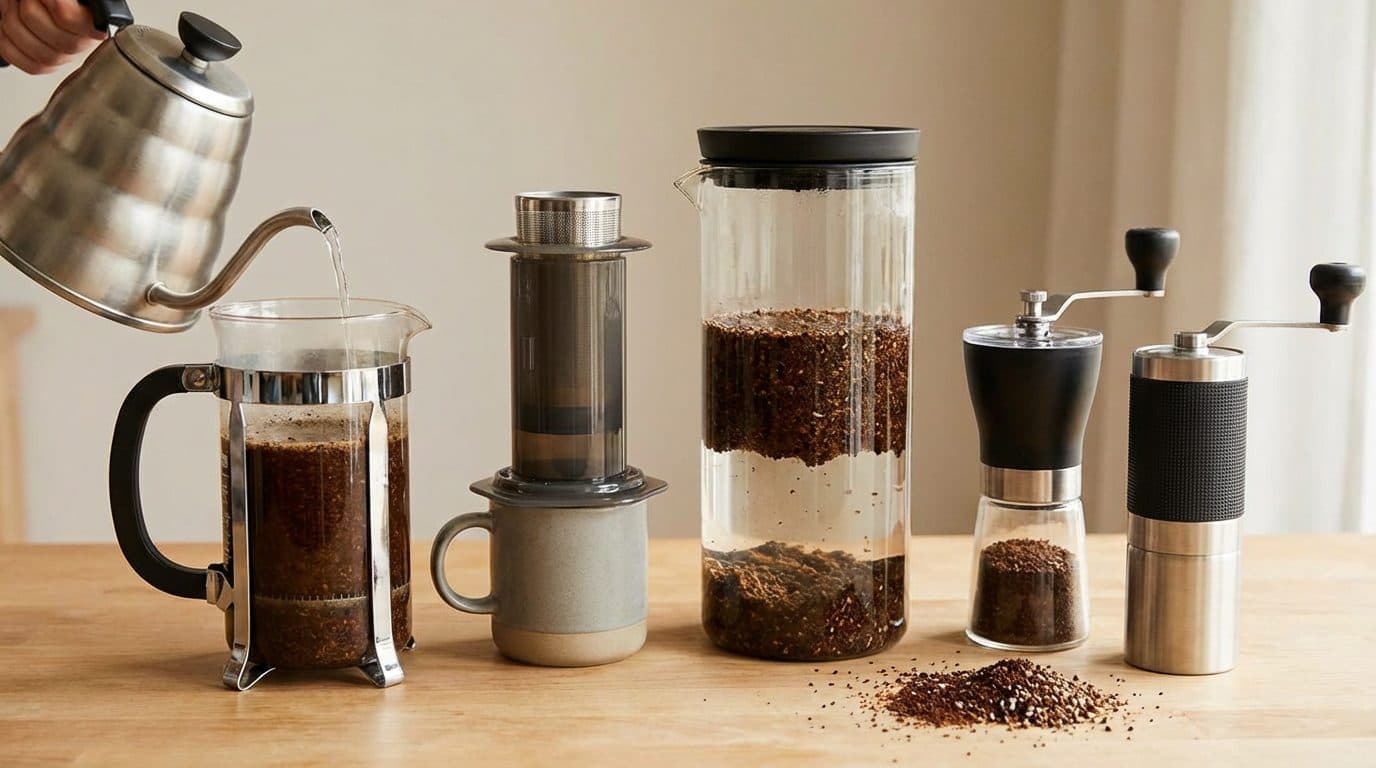
Here’s where the gap narrows significantly. Immersion brewing is much more forgiving of grind variation because all grounds steep together in the water. The C2’s slightly higher fines production matters less when you’re not fighting gravity and a paper filter.
For French press, AeroPress (with longer steep times), and cold brew, both grinders perform admirably. If these are your go-to methods, save the money and grab the C2.
Espresso: A Word of Caution
Neither the C2 nor C3 is designed for espresso, but people try anyway. The C3 does a slightly better job thanks to improved consistency at fine settings. However, you’ll want to look at the Timemore C2 Max or Chestnut series if espresso is a priority. The stepped adjustment on both the C2 and C3 simply doesn’t offer the precision espresso demands.
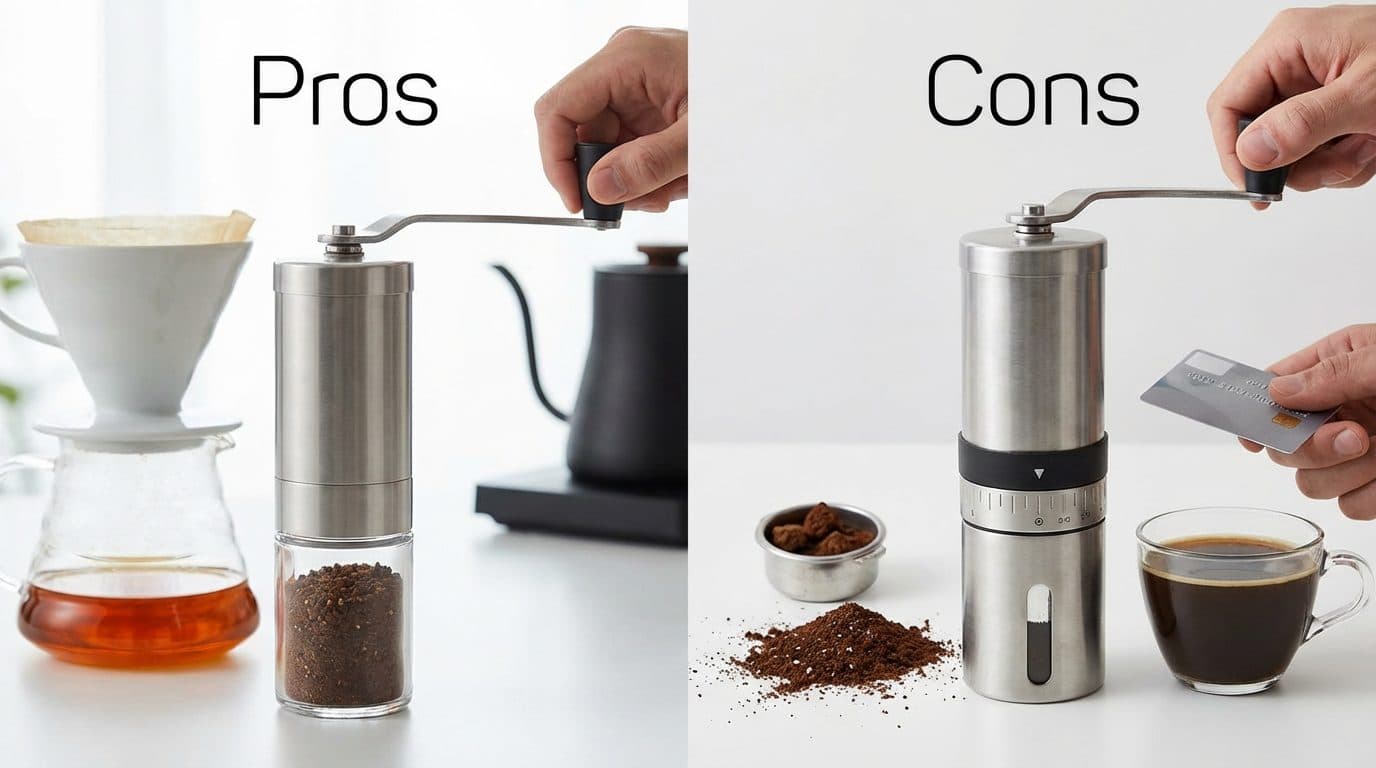
Timemore C2: Pros and Cons
Pros:
- Lowest entry price for quality hand grinding
- Excellent build quality for the money
- Perfectly adequate for immersion brewing
- Still beats most blade grinders and cheaper hand grinders
- Widely available with proven reliability
Cons:
- Higher fines production affects pour-over clarity
- Slightly slower grinding than the C3
- Less refined taste for light roast filter coffee
- Being phased out in some markets
Timemore C3: Pros and Cons
Pros:
- S2C burrs deliver noticeably better grind consistency
- Faster grinding speed saves time
- Excellent for pour-over and filter brewing
- Reduced fines mean cleaner, brighter cups
- Same great build quality as the C2
Cons:
- Slightly higher price point
- Still uses stepped adjustment (no micro-adjustments)
- Not ideal for espresso despite improvements
- Benefits are subtle for dark roasts or immersion brewing
Who Is the Timemore C2 For?
The C2 remains a solid choice for specific situations. You should consider the Timemore C2 if:
- You’re on an extremely tight budget and every dollar counts
- French press or AeroPress is your primary brewing method
- You mostly drink medium-to-dark roasts
- You’re buying a backup grinder or travel grinder
- You found a great deal on the C2 (closeout pricing, etc.)
I know someone who bought a C2 specifically for camping trips. It gets tossed in a bag, bounces around in a truck, and still makes perfectly enjoyable cowboy coffee. For that use case, spending extra on the C3 doesn’t make sense.
Who Is the Timemore C3 For?
The C3 is the better investment for most specialty coffee enthusiasts. You should choose the Timemore C3 if:
- Pour-over or drip brewing is your main method
- You appreciate light roasts and want flavor clarity
- You’re willing to spend a bit more for better results
- This is your primary grinder (not just a backup)
- You want the best grind quality in this price range
Who Should Skip Both Grinders?
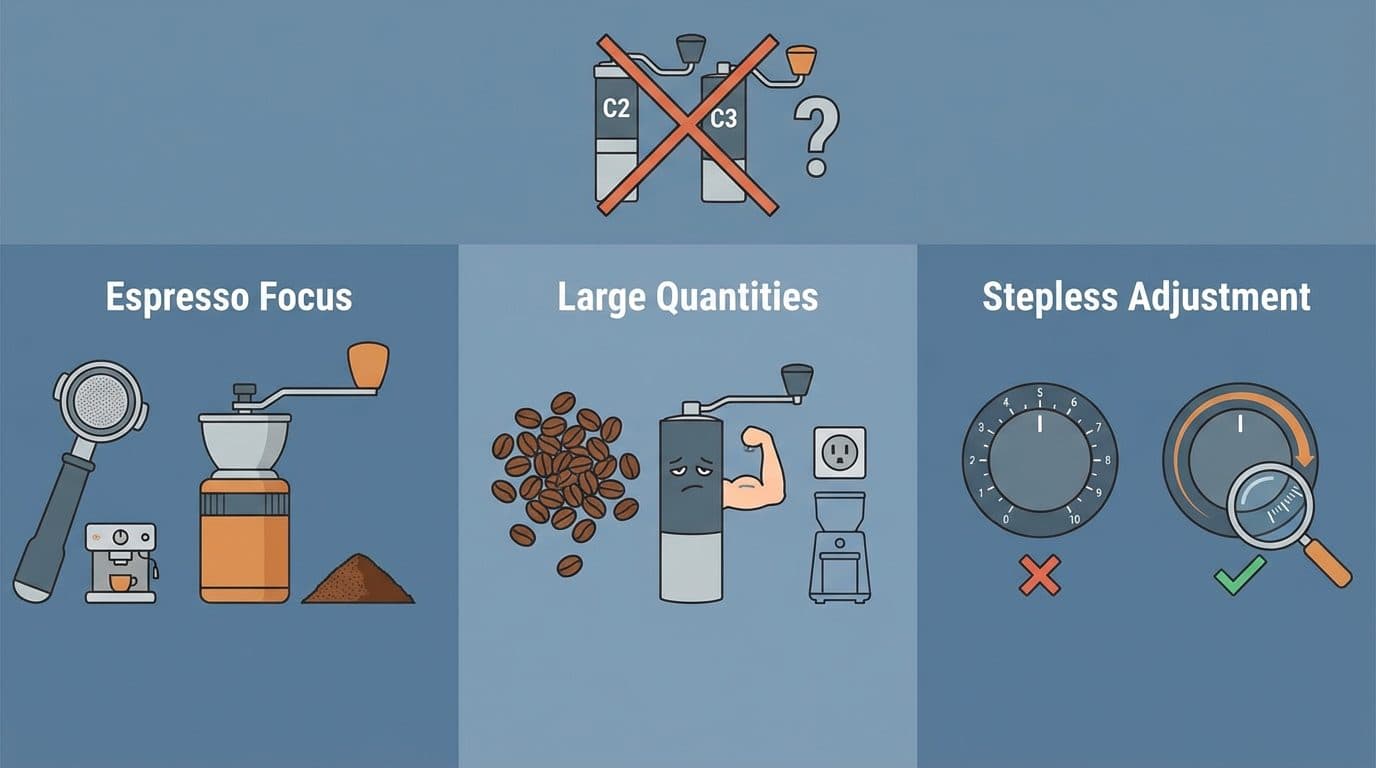
Neither the C2 nor C3 is right for everyone. Consider looking elsewhere if:
- Espresso is your focus: Look at the Timemore Chestnut X, 1Zpresso JX-Pro, or save for an electric grinder
- You grind large quantities: Hand grinding 30+ grams daily gets old fast; consider an electric option
- You need stepless adjustment: Both grinders use clicked steps; for dialing in espresso, you need finer control
Frequently Asked Questions
Can I upgrade my Timemore C2 with S2C burrs?
Unfortunately, no. The S2C burrs in the C3 are designed specifically for that model and aren’t compatible with the C2 body. If you want S2C performance, you’ll need to purchase the C3 or a higher-end Timemore grinder.
How long do Timemore hand grinder burrs last?
With normal home use (20-40 grams per day), you can expect several years of excellent performance from both the C2 and C3 burrs. Steel burrs are durable and maintain their sharpness well. Many users report 5+ years without noticeable degradation.
Is the Timemore C3 good for espresso?
It can work in a pinch, especially for pressurized portafilters or forgiving machines like the Flair Neo. However, the stepped adjustment limits your ability to dial in precisely. For serious home espresso, you’ll be happier with grinders designed for that purpose.
What grind setting should I use on the Timemore C3 for pour-over?
A good starting point for most pour-overs is around 18-22 clicks from fully closed. For V60, try 18-20 clicks. For Chemex, go slightly coarser at 20-24 clicks. Always adjust based on your drawdown time and taste – these are just starting points.
Does the Timemore C3 work for cold brew?
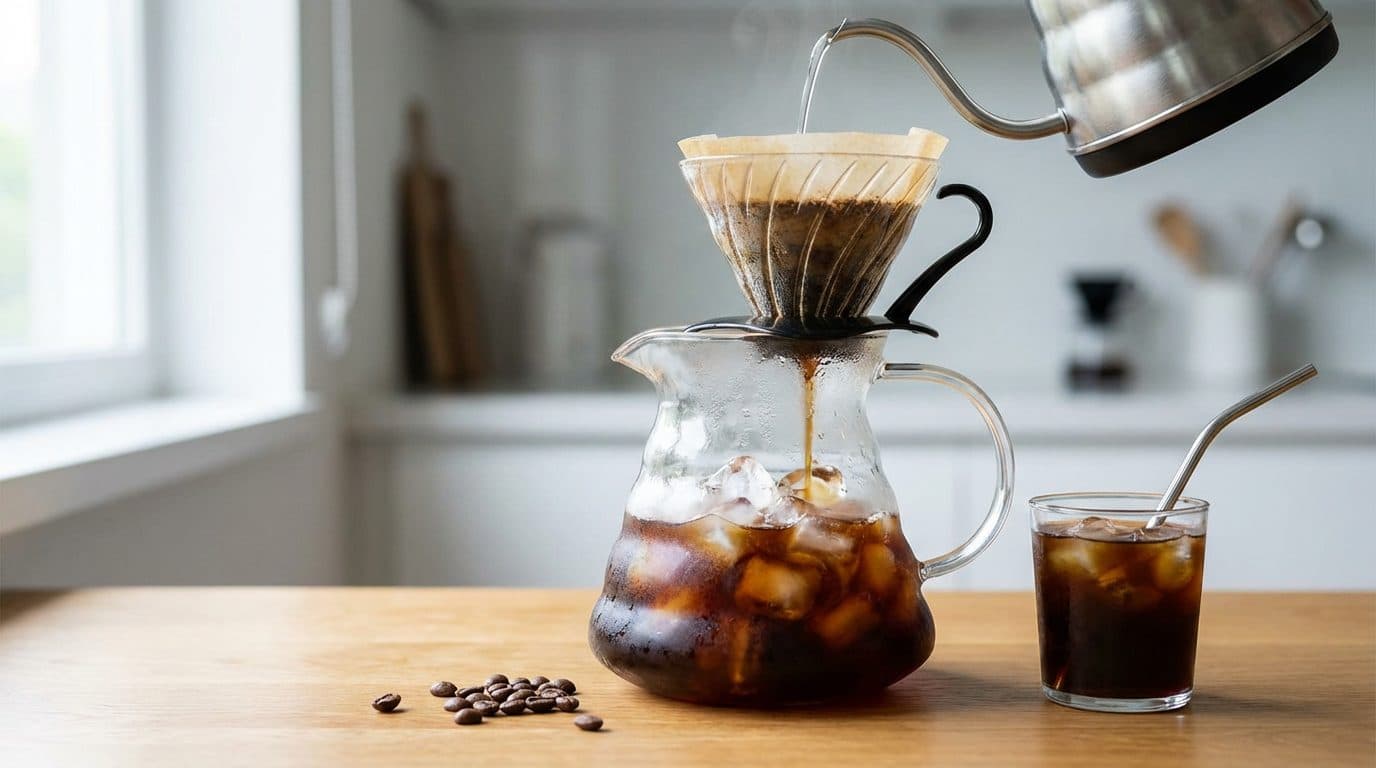
Absolutely. Cold brew requires a coarse grind, and both the C2 and C3 handle coarse settings well. You won’t notice much difference between the two grinders for cold brew since the long steep time and filtration method are very forgiving.
Final Verdict: Which Budget King Should You Crown?
The Timemore C2 vs. C3 debate ultimately comes down to how you brew and what you prioritize. Both grinders punch well above their weight class, offering performance that rivals hand grinders costing twice as much.
If you brew primarily pour-over, appreciate light roasts, or simply want the best grind quality in this price bracket – get the Timemore C3. The S2C burrs make a genuine difference, and the small price premium pays for itself in cup quality. This is my recommendation for most readers.
If you’re on a strict budget, brew mostly French press, or need a beater grinder for travel – the Timemore C2 remains a fantastic option. It still outperforms countless competitors and has earned its reputation for reliability.
Life is too short for bad coffee, but it’s also too short to stress over small decisions. Either grinder will serve you well and dramatically improve your home brewing compared to pre-ground or blade-ground coffee. Pick the one that fits your budget and brewing style, then focus on what really matters: enjoying great coffee every morning.
Check the latest prices on Amazon for both the Timemore C2 and Timemore C3 – deals fluctuate, and sometimes the price gap shrinks to almost nothing, making the C3 an even easier choice.


Comments