


Table of Contents
- Quick Verdict: Whole Milk
- Understanding What Makes Milk Froth
- The Role of Protein
- The Role of Fat
- Whole Milk Frothing: Pros and Cons
- Pros of Frothing Whole Milk
- Cons of Frothing Whole Milk
- Skim Milk Frothing: Pros and Cons
- Pros of Frothing Skim Milk
- Cons of Frothing Skim Milk
- Who Should Choose Which Milk?
- Whole Milk Is For You If:
- Skim Milk Is For You If:
- Whole Milk Is NOT For You If:
- Skim Milk Is NOT For You If:
- Frothing Tips for Both Milk Types
- Temperature Is Everything
- Introduce Air Early
- Don't Over-Froth Skim Milk
- Tap and Swirl
- The Middle Ground: Semi-Skimmed Milk
- Frequently Asked Questions
- Can I froth ultra-pasteurized milk?
- Why does my skim milk foam taste watery?
- Does organic milk froth better?
- How long does frothed milk stay good?
- Can I mix whole and skim milk for frothing?
- Conclusion and Final Recommendations
You’ve just invested in a beautiful espresso machine or a handy milk frother, and you’re ready to create café-worthy lattes at home. But then you open the fridge and face a dilemma: should you reach for the whole milk or the skim milk? Which one will give you that silky, velvety microfoam you’ve been dreaming about? It’s a question I’ve tackled countless times in my own kitchen, and the answer might surprise you.
In this comparison, we’ll break down exactly how whole milk and skim milk perform when it comes to frothing. You’ll discover why fat content matters, how protein plays a crucial role, and which milk will help you pour latte art like a pro. Whether you’re watching calories or chasing flavor, I’ve got you covered.
Quick Verdict: Whole Milk
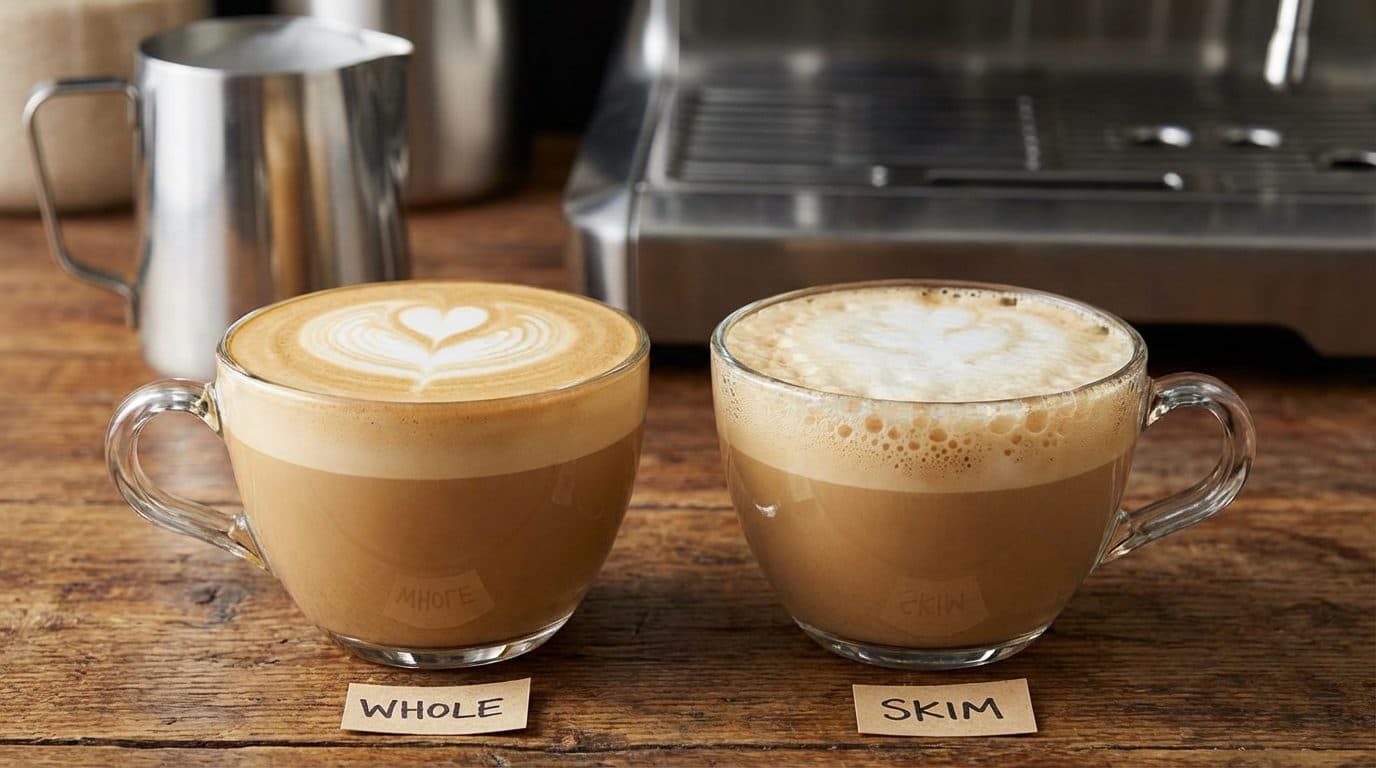
If you want the richest, most stable foam with a creamy mouthfeel and forgiving texture, whole milk is your winner. It froths beautifully, holds its shape longer, and delivers that luxurious taste we associate with specialty coffee shops. That said, skim milk has its place—especially if you prefer lighter, airier foam or you’re counting calories.
Understanding What Makes Milk Froth
Before we dive into the whole milk vs. skim milk showdown, let’s quickly understand the science behind frothing. When you froth milk, you’re essentially forcing air into the liquid while proteins create a network that traps those air bubbles. The result? That gorgeous foam sitting on top of your cappuccino.
The Role of Protein
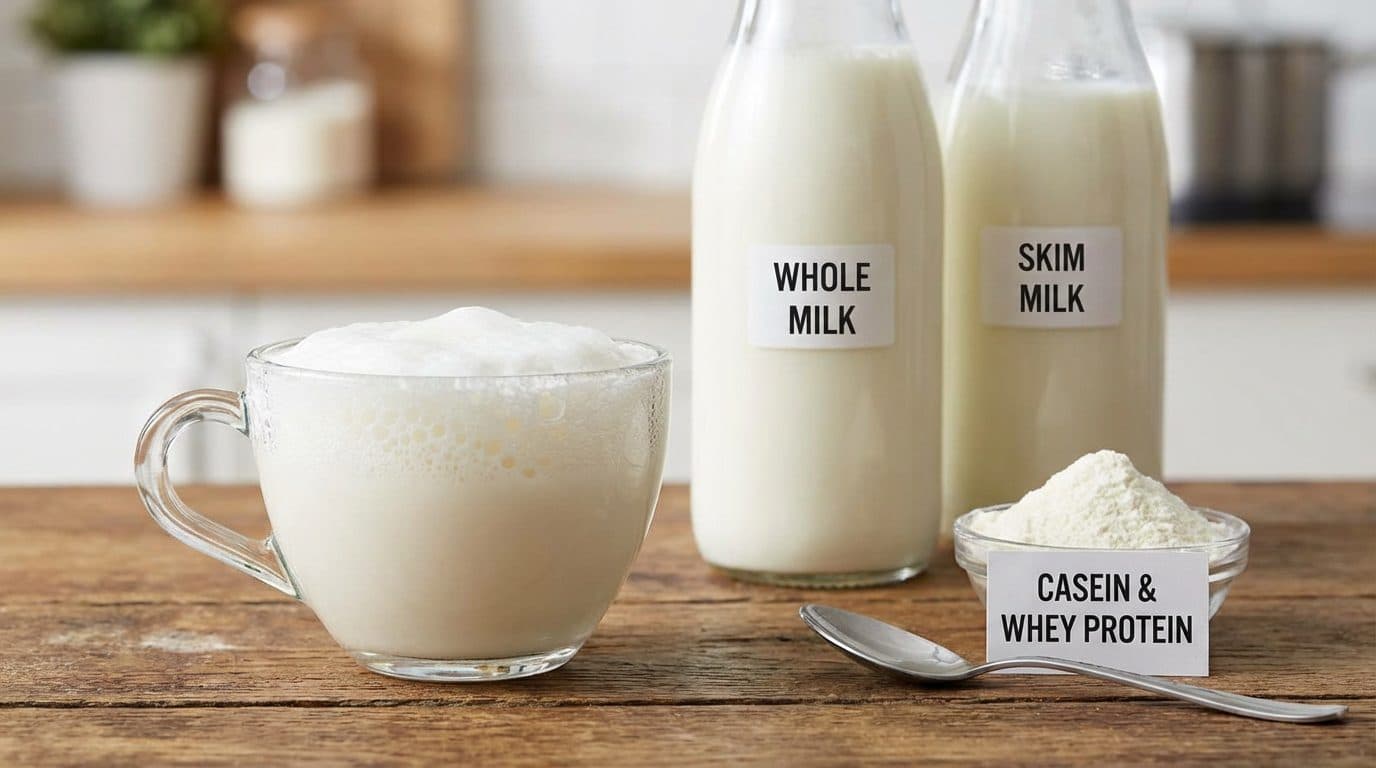
Proteins, specifically casein and whey, are the real heroes of milk foam. They stabilize the air bubbles and prevent them from popping immediately. Both whole milk and skim milk contain roughly the same amount of protein (about 3.4 grams per 100ml), which is why both can technically froth.
The Role of Fat
Here’s where things get interesting. Fat content affects the texture and stability of your foam. Whole milk contains around 3.5% fat, while skim milk has virtually none (usually 0.1% or less). Fat adds creaminess and richness, but it also competes with proteins for space at the bubble surface. In short, fat creates a trade-off between foam volume and foam quality.
| Milk Type | Fat Content | Protein Content | Calories (per 100ml) |
|---|---|---|---|
| Whole Milk | ~3.5% | ~3.4g | ~60-65 |
| Skim Milk | ~0.1% | ~3.4g | ~35 |
Whole Milk Frothing: Pros and Cons
I’ve spent countless mornings experimenting with whole milk, and I can tell you it’s the go-to choice for most professional baristas. Here’s why it performs so well—and where it falls short.
Pros of Frothing Whole Milk
- Rich, creamy texture: The fat content creates a velvety mouthfeel that coats your tongue beautifully.
- Stable microfoam: Whole milk produces tight, glossy bubbles that hold their shape for minutes.
- Easier latte art: The consistency makes it more forgiving when you’re learning to pour hearts and rosettas.
- Better flavor integration: Fat carries flavor, so your espresso and milk blend harmoniously.
- More forgiving temperature range: Even if you slightly overheat it, whole milk remains usable.
Cons of Frothing Whole Milk
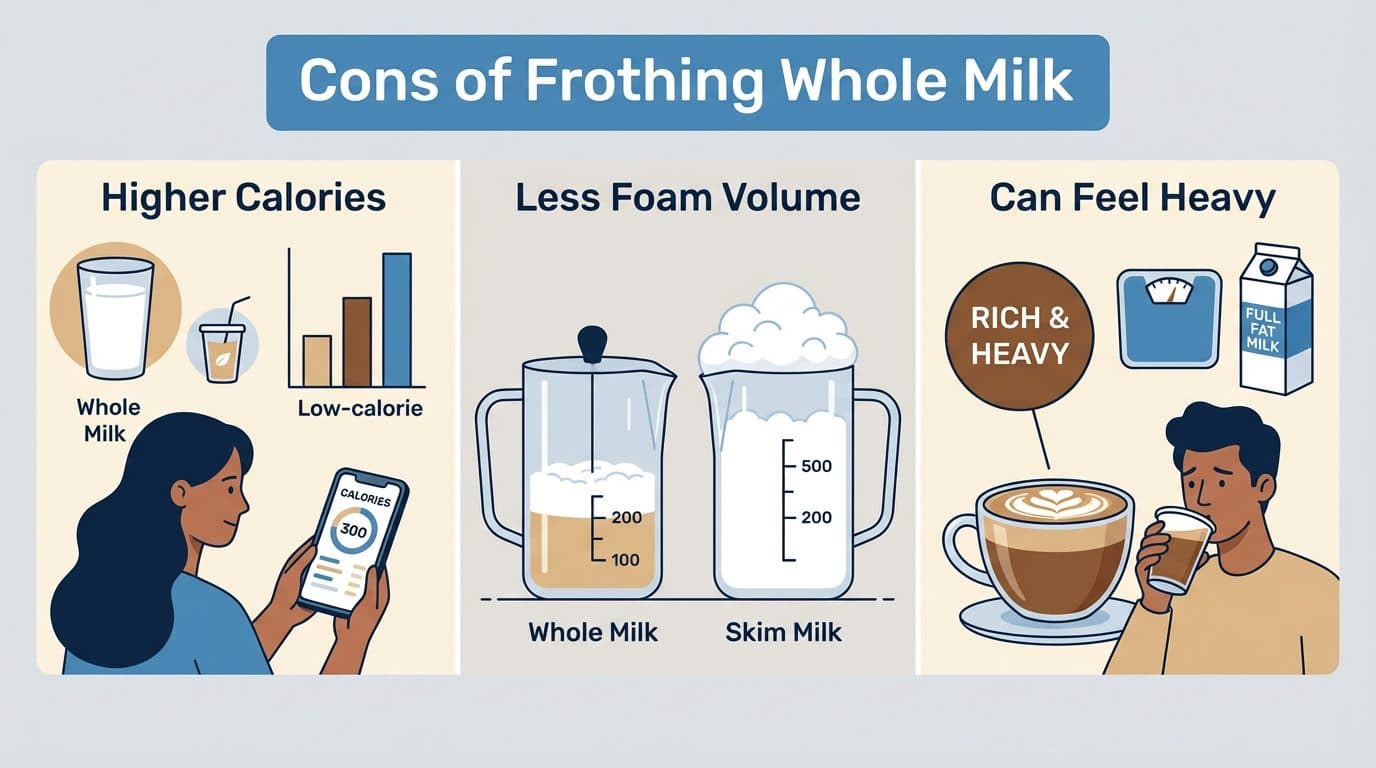
- Higher calories: Not ideal if you’re drinking multiple lattes daily and watching your intake.
- Less foam volume: You won’t get those massive, cloud-like peaks that skim milk produces.
- Can feel heavy: Some people find full-fat milk too rich, especially in larger drinks.
In my experience, whole milk is the most reliable choice for home baristas who want consistent results. I remember when I first started making cappuccinos—whole milk was incredibly forgiving of my clumsy technique.
Skim Milk Frothing: Pros and Cons
Skim milk often gets a bad reputation in coffee circles, but it has genuine strengths. If you’ve written it off completely, you might want to reconsider.
Pros of Frothing Skim Milk
- Impressive foam volume: Without fat weighing it down, skim milk creates abundant, dramatic foam.
- Lighter mouthfeel: Perfect for those who find whole milk too heavy.
- Fewer calories: Nearly half the calories of whole milk per serving.
- Slightly sweeter taste: Some people notice skim milk tastes a bit sweeter when heated.
Cons of Frothing Skim Milk
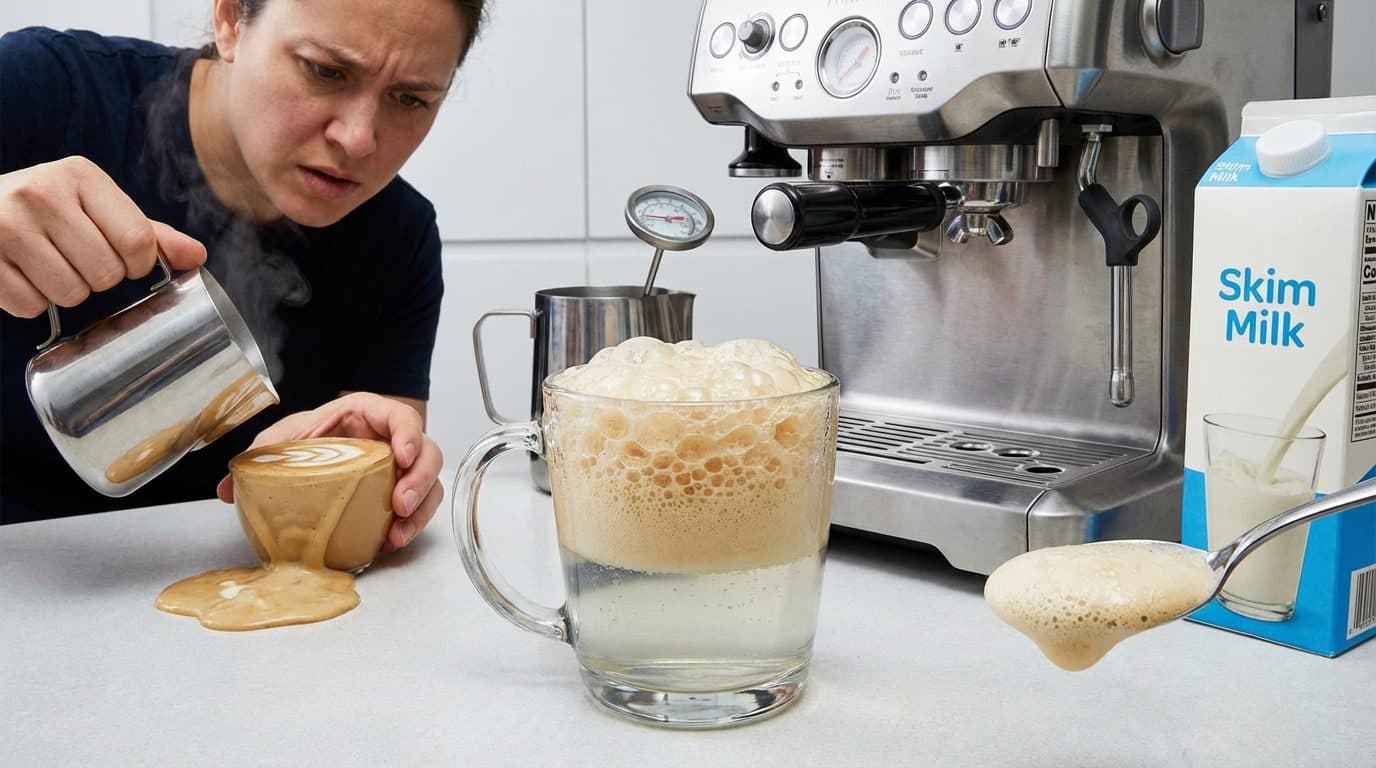
- Large, unstable bubbles: The foam tends to be dry and airy rather than silky and smooth.
- Quick deterioration: Those beautiful bubbles deflate rapidly, sometimes within a minute.
- Difficult latte art: The thin consistency makes pouring designs challenging.
- Less satisfying texture: The foam can feel almost soap-like rather than creamy.
- Sensitive to temperature: Overheating skim milk results in unpleasant, watery foam.
Here’s a scenario I see often: someone new to home espresso buys skim milk thinking lighter equals easier. They froth it, pour a gorgeous-looking mountain of foam, and by the time they snap a photo for Instagram, half of it has collapsed. Life is too short for disappearing foam.
Who Should Choose Which Milk?
Choosing between whole milk and skim milk isn’t just about frothing performance—it’s about matching your priorities. Let me break it down for you.
Whole Milk Is For You If:
- You prioritize flavor and texture above all else
- You’re learning latte art and need forgiving foam
- You want café-quality drinks at home
- You drink one or two specialty coffees daily (not five)
- You value stability and don’t mind slightly fewer calories elsewhere
Skim Milk Is For You If:
- You’re actively managing calorie intake
- You prefer lighter, less rich beverages
- You enjoy airy, voluminous foam (even if it’s temporary)
- You drink multiple milk-based coffees per day
- You’re making drinks that get consumed immediately
Whole Milk Is NOT For You If:
- You’re lactose intolerant and need to limit dairy fat
- Rich, creamy textures don’t appeal to you
- You’re on a strict low-fat diet prescribed by a doctor
Skim Milk Is NOT For You If:
- Silky microfoam is non-negotiable
- You’re entering latte art competitions (even friendly ones)
- Your drinks sit for a few minutes before you finish them
Frothing Tips for Both Milk Types
Regardless of which milk you choose, technique matters enormously. Here are some barista tips I’ve picked up over the years that apply to both options.
Temperature Is Everything
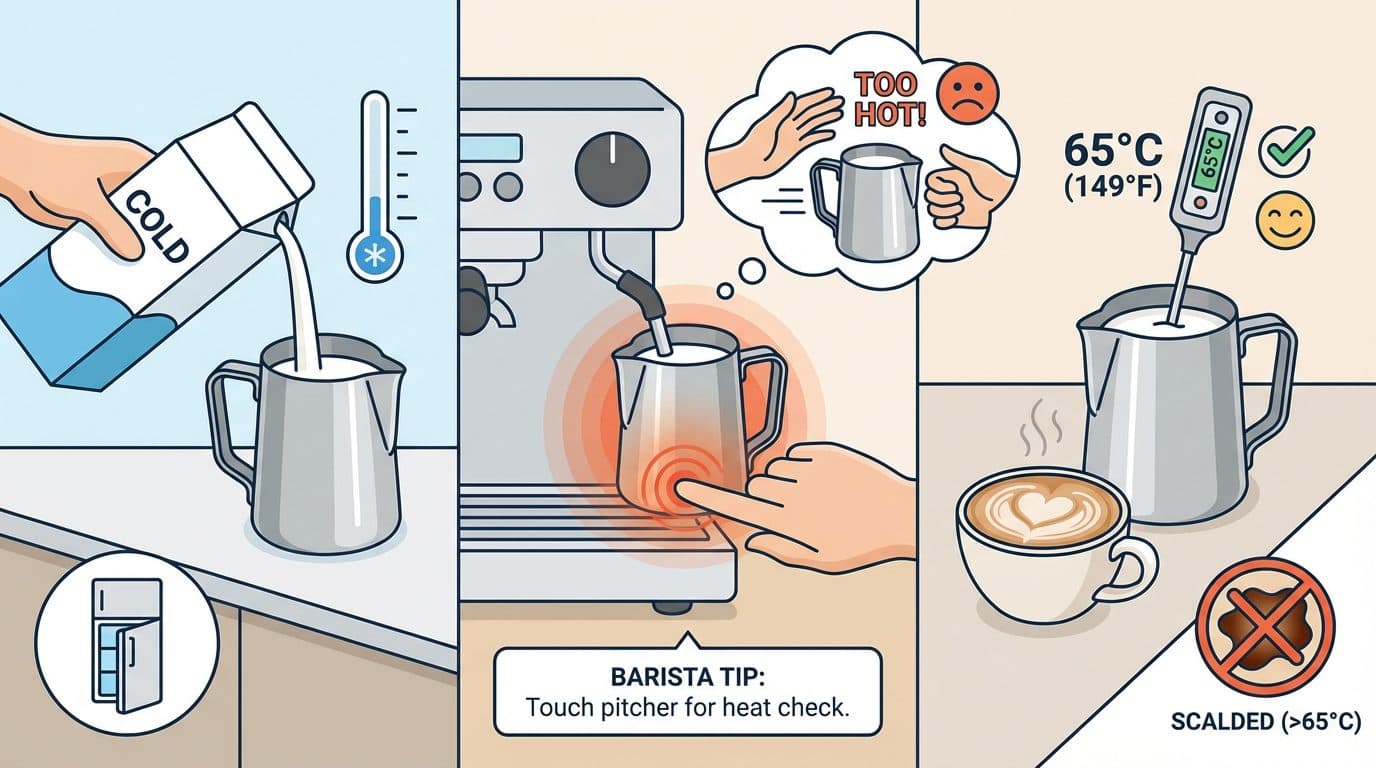
Start with cold milk, straight from the refrigerator. Cold milk gives you more time to incorporate air before it heats up. Aim for a final temperature between 60-65°C (140-150°F). Any hotter, and you’ll scald the proteins, resulting in a flat, unpleasant taste.
Barista Tip: If you don’t have a thermometer, touch the bottom of your frothing pitcher. When it becomes too hot to hold comfortably for more than a second, you’re in the right zone.
Introduce Air Early
When using a steam wand, keep the tip just below the surface during the first few seconds. You should hear a gentle “tss-tss” sound as air enters. Once you’ve got enough volume, submerge the wand deeper to create that spinning vortex that breaks down large bubbles into microfoam.
Don’t Over-Froth Skim Milk
Because skim milk froths so aggressively, it’s easy to create too much foam. Start with less aeration time than you think you need. You can always add more air, but you can’t remove it.
Tap and Swirl
After frothing, tap your pitcher firmly on the counter to pop any large surface bubbles. Then swirl the milk gently until it looks like wet paint—glossy and smooth. This step is crucial for both milks but especially for skim, where bubbles tend to be larger.
The Middle Ground: Semi-Skimmed Milk
I’d be doing you a disservice if I didn’t mention semi-skimmed milk (also called 2% or reduced-fat milk). With around 1.5-2% fat, it offers a compromise between the creaminess of whole milk and the lighter quality of skim.
In my experience, semi-skimmed froths reasonably well. The foam isn’t quite as silky as whole milk, but it’s significantly more stable than skim. If you’re torn between health goals and froth quality, this might be your sweet spot.
Frequently Asked Questions
Can I froth ultra-pasteurized milk?
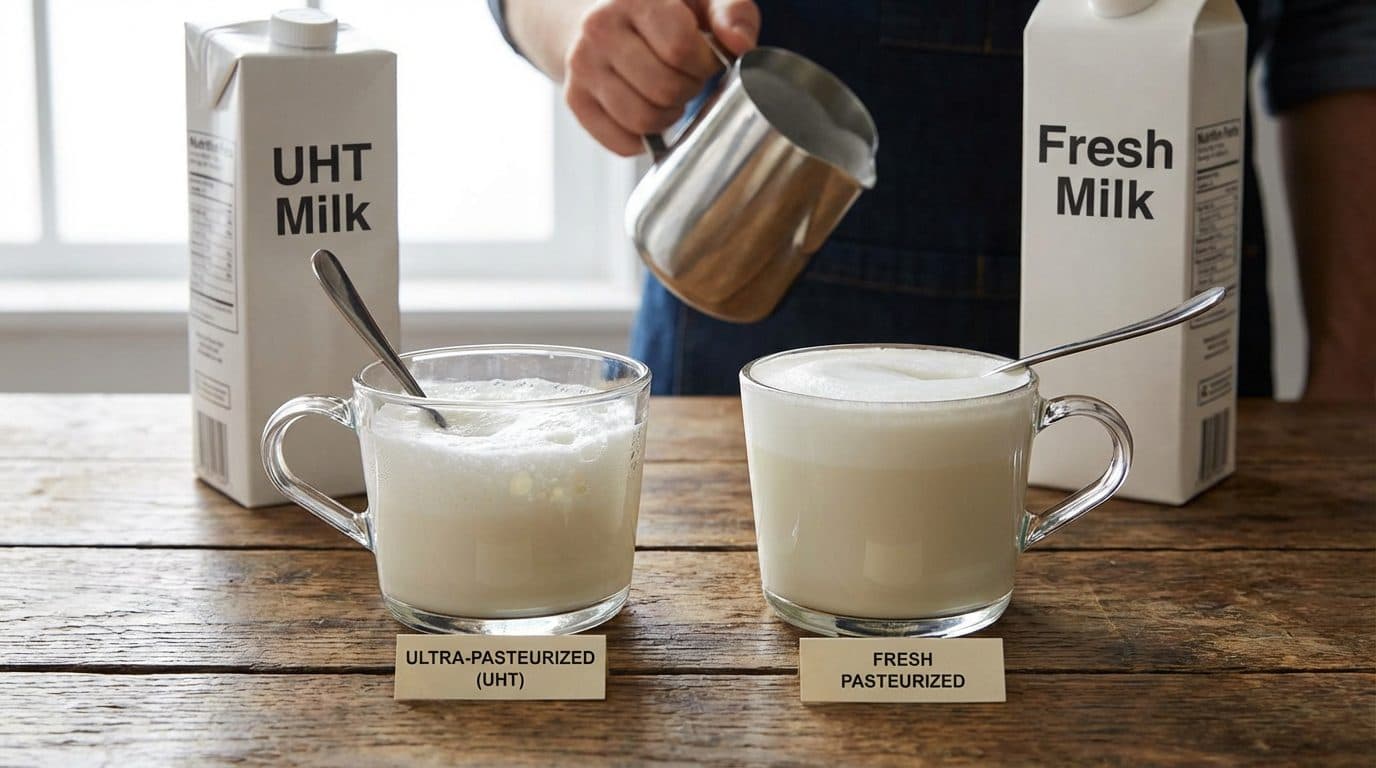
Yes, but results may vary. Ultra-pasteurized (UHT) milk has been heated to higher temperatures, which can affect protein structure. Some baristas find it produces slightly less stable foam compared to regularly pasteurized milk. If possible, opt for fresh pasteurized milk for the best results.
Why does my skim milk foam taste watery?
Without fat to carry flavor and add body, skim milk foam can taste thin. Additionally, if you’ve overheated the milk, the proteins break down, leading to a flat, almost metallic taste. Keep your temperature under 65°C and accept that skim milk will naturally taste lighter than whole milk.
Does organic milk froth better?
Not necessarily. Frothing ability depends on protein and fat content, not whether the milk is organic. However, organic milk from grass-fed cows sometimes has slightly different fat compositions, which some people claim produces a marginally sweeter taste. The difference is subtle at best.
How long does frothed milk stay good?
Ideally, use frothed milk immediately. Whole milk foam can hold for 2-3 minutes reasonably well, while skim milk foam starts collapsing within 60 seconds. Re-frothing isn’t recommended since the milk has already been heated once.
Can I mix whole and skim milk for frothing?
Absolutely! Many baristas create custom blends. Mixing half whole milk and half skim gives you something similar to semi-skimmed, with moderate foam quality and reduced calories. Experiment to find your preferred ratio.
Conclusion and Final Recommendations
When it comes to the whole milk vs. skim milk frothing battle, whole milk takes the crown for most home baristas. Its higher fat content creates stable, velvety microfoam that tastes incredible and pours like a dream. If you’re serious about making café-quality drinks at home, whole milk is worth the extra calories.
That said, skim milk isn’t a lost cause. If health considerations are your priority, or you simply prefer a lighter beverage, skim milk can work—just adjust your expectations and perfect your technique. The foam will be airier and less forgiving, but it’s still entirely drinkable.
My final suggestion? Try both. Froth whole milk for your morning latte when you want that indulgent experience. Reach for skim when you’re on your third coffee and want something lighter. Life is too short for bad coffee, but it’s also too short to stress over milk choices. Find what makes you happy and enjoy every sip.


Comments