


Table of Contents
- Quick Verdict: Cortado Takes the Crown
- What Exactly Is a Macchiato?
- The Macchiato Experience
- What Exactly Is a Cortado?
- The Cortado Experience
- Macchiato vs. Cortado: Side-by-Side Comparison
- Pros and Cons: Macchiato
- Pros and Cons: Cortado
- Who Is Each Drink For?
- The Macchiato Is For You If:
- The Macchiato Is NOT For You If:
- The Cortado Is For You If:
- The Cortado Is NOT For You If:
- How to Make Each Drink at Home
- What You'll Need
- Making a Macchiato
- Making a Cortado
- Frequently Asked Questions
- Is a cortado stronger than a macchiato?
- Can I order these drinks at Starbucks?
- Which drink has more calories?
- What milk works best for these drinks?
- Do I need an expensive espresso machine to make these?
- Final Thoughts: Pick Your Champion
Quick Verdict: Cortado Takes the Crown
If you want a balanced, smooth espresso drink that doesn’t sacrifice coffee flavor for milk, the cortado is your winner. It delivers harmony in every sip. However, if you’re a purist who wants to taste espresso front and center with just a kiss of foam, the macchiato will be your go-to. Both drinks are fantastic—it really comes down to how much milk you want between you and your espresso.
Ever stood at a coffee shop counter, staring at the menu, wondering what the actual difference is between a macchiato and a cortado? You’re not alone. These two tiny titans of the espresso world confuse even seasoned coffee drinkers. They’re both small, both espresso-based, and both involve milk. So what gives? In my experience pulling shots and experimenting at home, the difference is subtle but meaningful. Let’s break down this small drink showdown so you can order—or make—with confidence.
What Exactly Is a Macchiato?
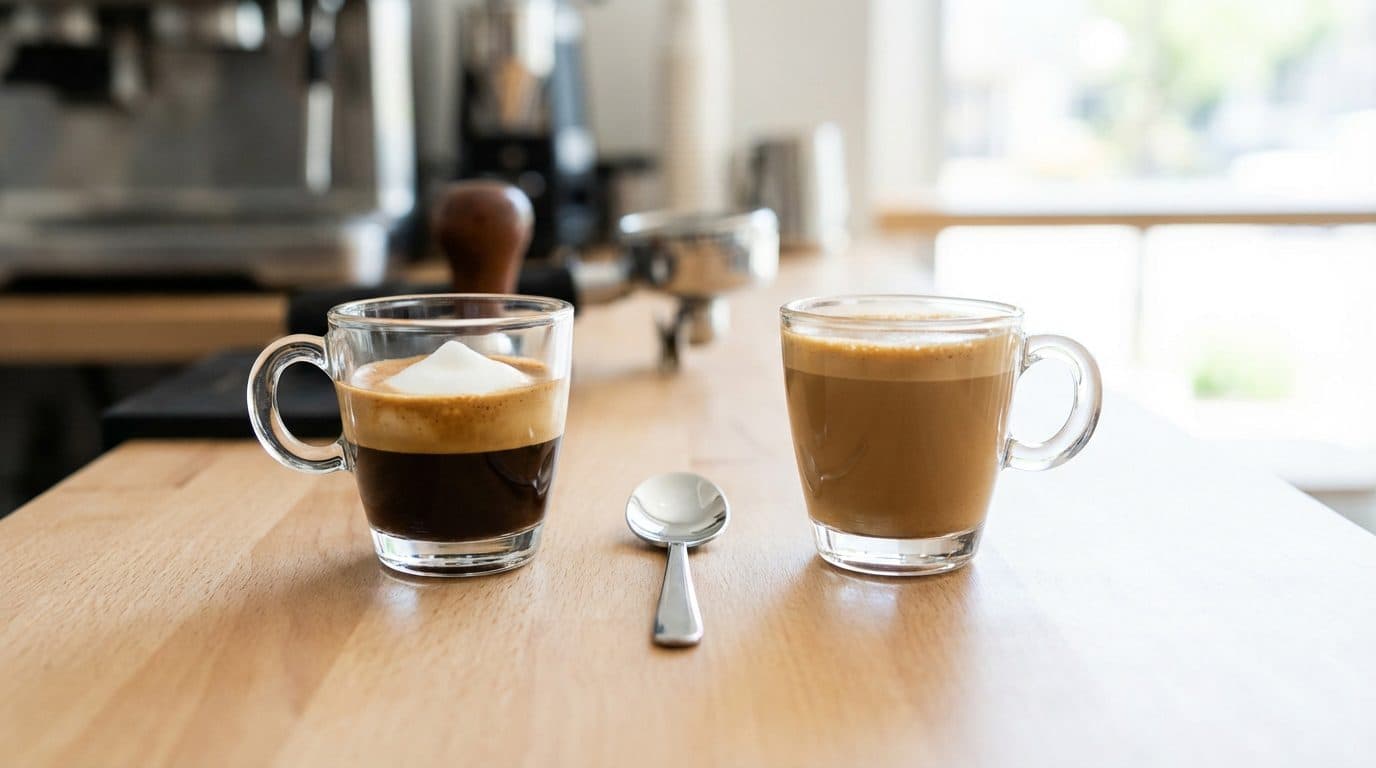
The word “macchiato” comes from Italian, meaning “stained” or “marked.” And that’s exactly what this drink is: an espresso that’s been marked with just a small dollop of steamed milk or foam. We’re talking about a teaspoon or two at most. The espresso remains the undisputed star here.
A traditional macchiato is typically 2–3 ounces total. You get one or two shots of espresso topped with a small amount of milk foam. That’s it. No fancy layers, no elaborate milk art. Just espresso with a gentle touch of dairy to soften the edges.
The Macchiato Experience

When you take your first sip of a properly made macchiato, the espresso hits you immediately. It’s bold, intense, and unapologetically coffee-forward. The milk foam serves one purpose: to slightly temper the espresso’s natural bitterness without masking its character.
I’ve found that macchiatos work best when you’re craving a quick, punchy caffeine hit. It’s the drink equivalent of ripping off a band-aid—fast, effective, and satisfying. Here’s what to expect:
- Intense espresso flavor with minimal dilution
- Served in a small demitasse cup (2–3 oz)
- Traditionally uses foam, not steamed milk
- Consumed quickly, usually in a few sips
Barista Tip: A real macchiato looks nothing like what certain large coffee chains serve. If your “macchiato” comes in a 16-ounce cup with caramel drizzle, you’ve got a latte in disguise. Not that there’s anything wrong with that—just know it’s a different creature entirely.
What Exactly Is a Cortado?
The cortado hails from Spain, and its name comes from the Spanish word “cortar,” meaning “to cut.” The idea is that the milk cuts through the espresso’s acidity and intensity. Unlike the macchiato’s mere stain of milk, a cortado uses equal parts espresso and steamed milk.
You’ll typically get about 4 ounces total: two shots of espresso combined with two ounces of warm, lightly textured milk. No foam cap here. The milk in a cortado is steamed but not frothed into a fluffy cloud. It blends seamlessly with the espresso.
The Cortado Experience
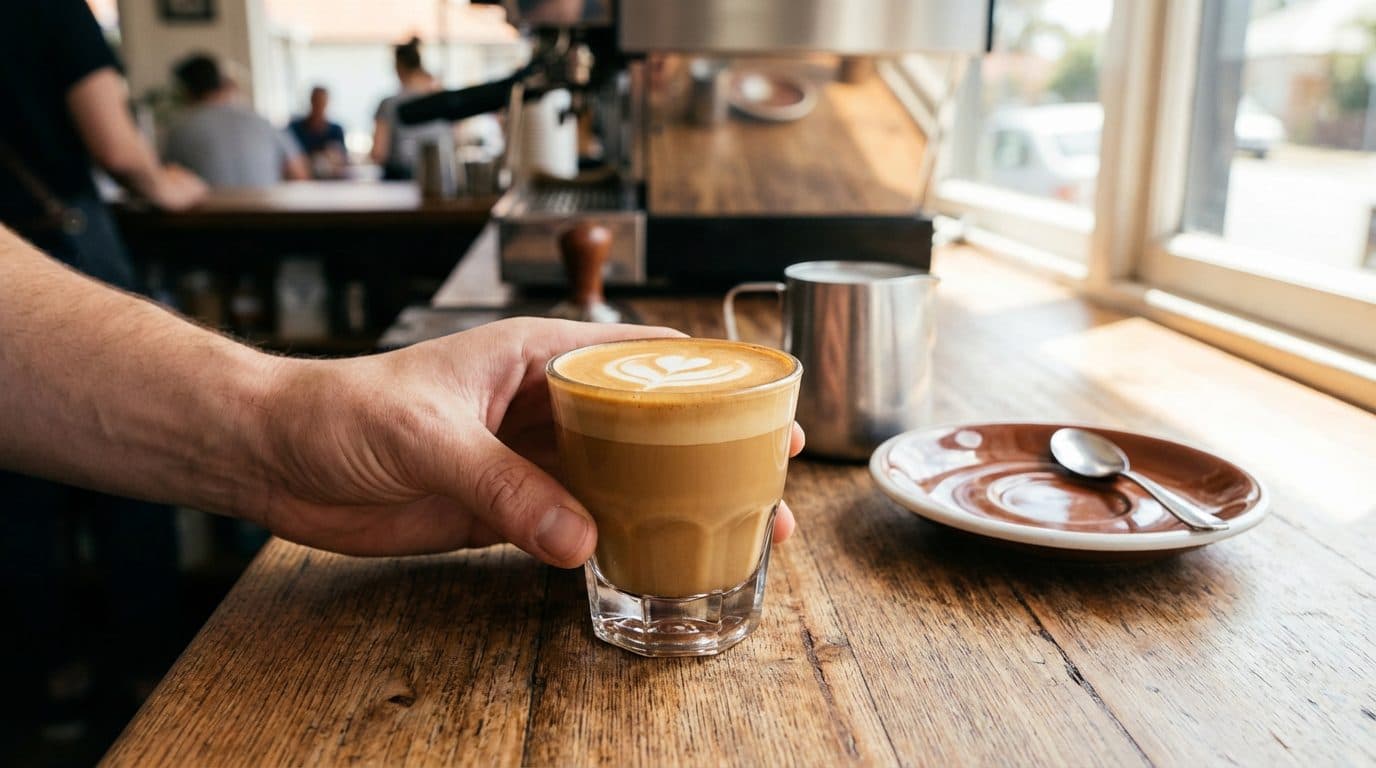
Your first cortado sip reveals something beautiful: balance. The espresso’s brightness and the milk’s sweetness meet in the middle. Neither overwhelms the other. It’s coffee diplomacy in a glass.
In my experience, cortados are perfect for people who find straight espresso too aggressive but think lattes are too milky. It’s the Goldilocks zone of espresso drinks. Here’s the cortado breakdown:
- Equal ratio of espresso to steamed milk (1:1)
- Served in a small glass or cup (4–5 oz)
- Milk is steamed but not heavily textured
- Smooth, balanced, easy to drink
Did You Know? In some regions, you’ll hear the cortado called a “Gibraltar.” That name comes from the Libbey Gibraltar glass it’s traditionally served in. Same drink, different geography.
Macchiato vs. Cortado: Side-by-Side Comparison
Let’s put these drinks head-to-head so you can see exactly how they differ. Sometimes a quick comparison table tells the story better than paragraphs of explanation.
| Feature | Macchiato | Cortado |
|---|---|---|
| Origin | Italy | Spain |
| Size | 2–3 oz | 4–5 oz |
| Espresso to Milk Ratio | 1:0.25 (mostly espresso) | 1:1 (equal parts) |
| Milk Texture | Foam/froth | Steamed, minimal foam |
| Flavor Profile | Bold, espresso-forward | Balanced, smooth |
| Best For | Espresso purists | Those seeking balance |
As you can see, the differences aren’t massive, but they matter. The macchiato keeps espresso in the spotlight while the cortado creates a duet between coffee and milk.
Pros and Cons: Macchiato
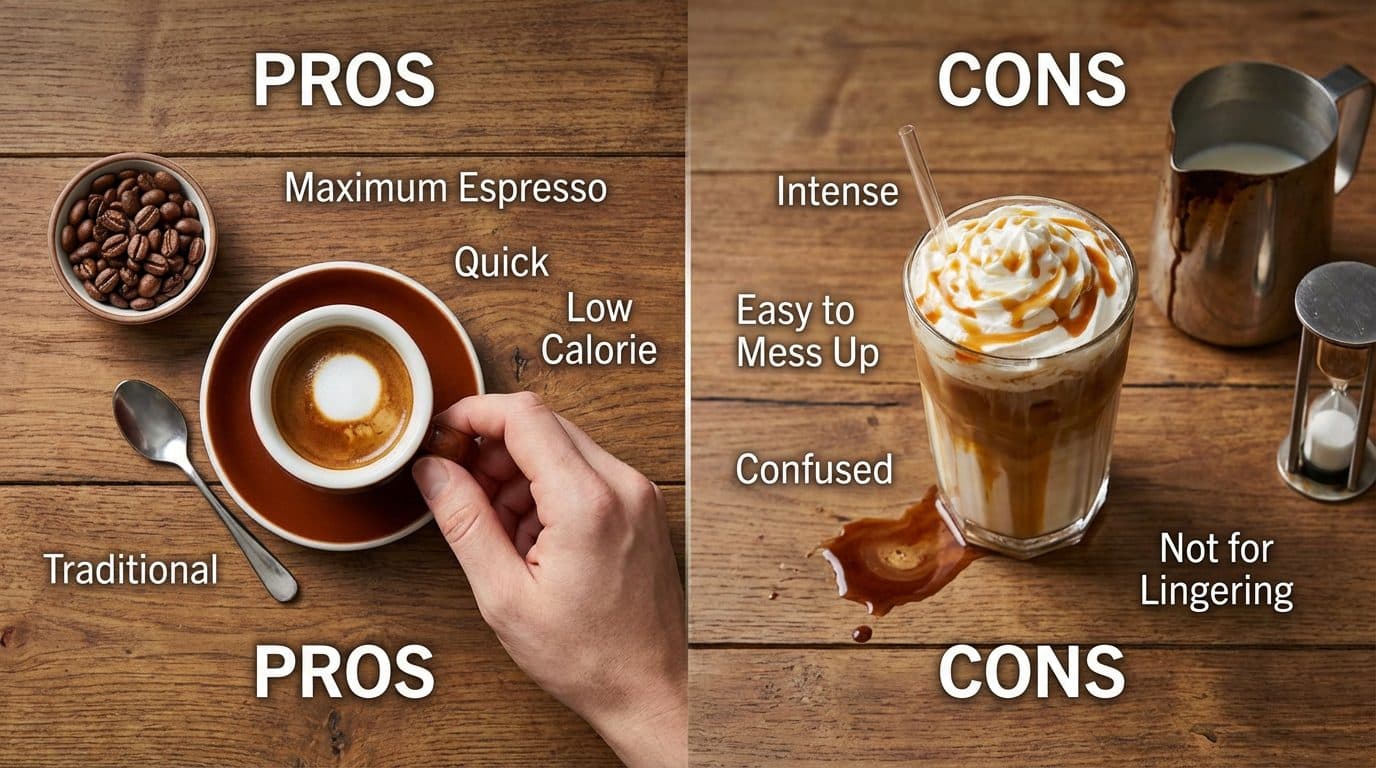
Every drink has its strengths and weaknesses. Here’s my honest take on the macchiato after years of making and drinking them.
Pros:
- Maximum espresso flavor with minimal interference
- Quick to make and quick to drink
- Lower calorie count due to minimal milk
- Perfect for tasting single-origin espresso beans
- Traditional, classic preparation
Cons:
- Too intense for some palates
- Easy to mess up—timing matters
- Often confused with sugary chain versions
- Not great for lingering over conversation
- Can taste harsh if espresso quality is poor
Pros and Cons: Cortado
Now let’s give the cortado the same treatment. Here’s what I’ve learned about this Spanish gem.
Pros:
- Beautiful balance between espresso and milk
- Less acidic than straight espresso
- Approachable for espresso newcomers
- Still small enough to taste the coffee
- Versatile—works with various espresso roasts
Cons:
- May feel too milky for true espresso purists
- Not as widely available as other drinks
- Requires proper milk steaming technique
- Some cafes serve it incorrectly sized
- Can mask flaws in mediocre espresso
Who Is Each Drink For?
Let me save you some trial and error. After watching countless home baristas discover their preferences, clear patterns emerge about who loves which drink.
The Macchiato Is For You If:
- You drink your coffee black and proud
- You want caffeine impact without the volume
- You appreciate tasting espresso’s nuances
- You’re short on time but need a coffee fix
- You consider lattes and cappuccinos too milky
The Macchiato Is NOT For You If:
- Strong coffee makes you wince
- You prefer creamy, smooth beverages
- You want something to sip slowly
- Bitter flavors aren’t your thing
The Cortado Is For You If:

- You want espresso flavor without the punch
- You think lattes are too milky
- You appreciate balance and harmony in drinks
- You’re transitioning from milky drinks to espresso
- You enjoy a small but satisfying coffee moment
The Cortado Is NOT For You If:
- You want pure, unadulterated espresso
- You prefer larger drinks you can nurse
- You’re avoiding dairy entirely
- You want visible latte art (cortados don’t really do that)
How to Make Each Drink at Home
Life is too short for bad coffee, so let’s get your home versions right. Here’s what you’ll need and how to nail each drink.
What You’ll Need
Gear:
- Espresso machine (or strong moka pot coffee as substitute)
- Milk steamer or frother
- Small cups or glasses (demitasse for macchiato, 4 oz glass for cortado)
- Fresh whole milk (or your preferred alternative)
Ingredients:
- Freshly ground espresso beans (18–20g for a double shot)
- Cold milk (about 2 oz for macchiato foam, 2 oz for cortado)
Making a Macchiato
- Pull a fresh double shot of espresso into your demitasse cup.
- Steam a small amount of milk, focusing on creating microfoam.
- Spoon just a dollop of foam onto the espresso—about a teaspoon.
- Drink immediately while everything is fresh and hot.
Barista Tip: The foam should sit on top like a little hat, not sink in. If your foam disappears, you’ve steamed the milk too thin.
Making a Cortado
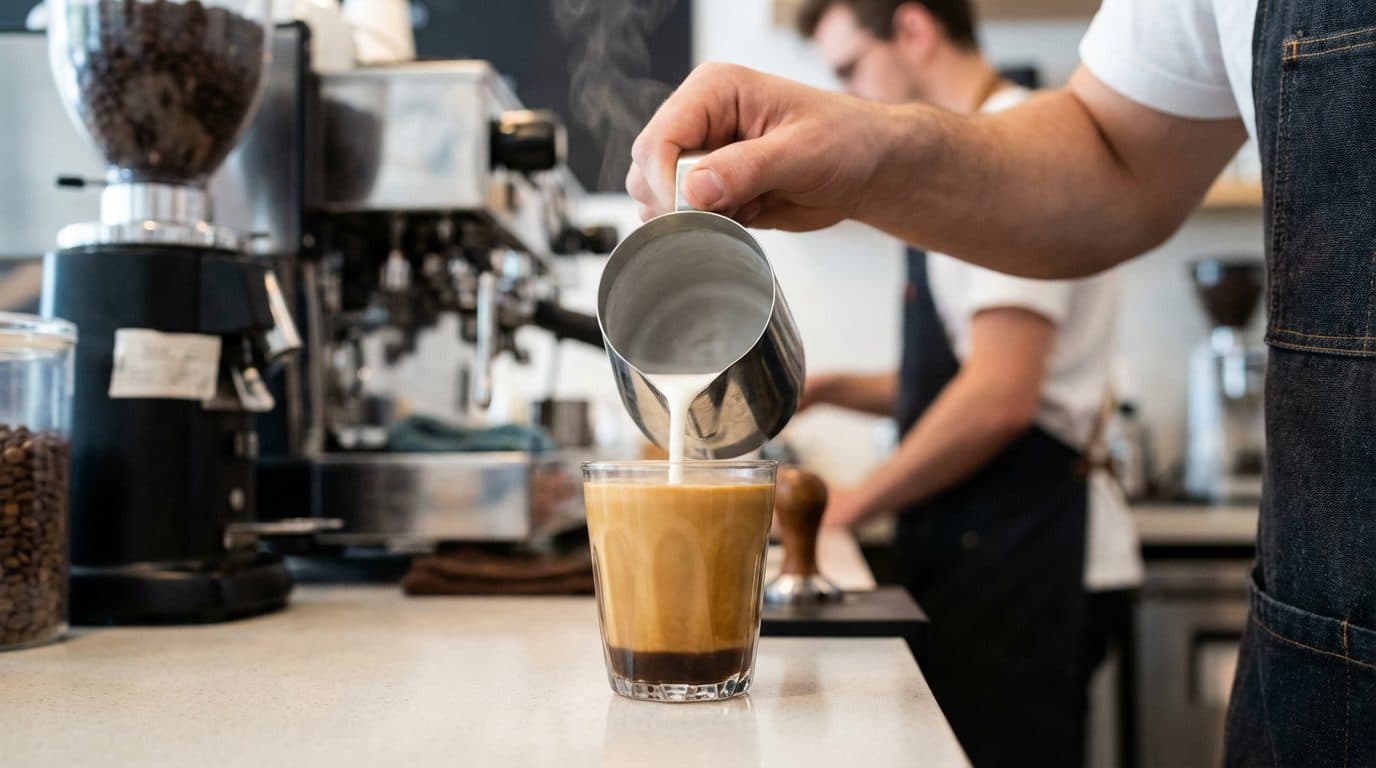
- Pull a fresh double shot of espresso into a 4–5 oz glass.
- Steam 2 oz of milk until warm with minimal foam (around 140°F).
- Pour the steamed milk directly into the espresso.
- The milk should integrate smoothly—no distinct layers.
Barista Tip: Don’t oversteam your milk for a cortado. You want it silky, not frothy. Think warm milk, not cappuccino clouds.
Frequently Asked Questions
Is a cortado stronger than a macchiato?
They contain the same amount of espresso, so caffeine-wise, they’re equal. However, the macchiato tastes stronger because less milk dilutes the espresso flavor. The cortado’s milk makes it feel smoother and less intense on your palate.
Can I order these drinks at Starbucks?
Starbucks doesn’t have a traditional cortado on their menu, though you can ask for a “short latte with no foam” as an approximation. Their macchiato is quite different from the Italian original—it’s essentially an upside-down latte with flavored syrup.
Which drink has more calories?
The cortado contains more milk, so it has slightly more calories. A traditional macchiato might have 10–15 calories from the milk dollop, while a cortado runs about 30–40 calories. Neither will break your diet.
What milk works best for these drinks?
Whole milk creates the best texture and sweetness for both drinks. Oat milk is my favorite non-dairy option—it steams well and complements espresso nicely. Almond milk can work but tends to separate in cortados.
Do I need an expensive espresso machine to make these?
Not necessarily. A good moka pot produces strong coffee that works in a pinch. However, for true espresso-based drinks, you’ll get better results with at least an entry-level espresso machine. The flavor difference is noticeable.
Final Thoughts: Pick Your Champion
Both the macchiato and cortado deserve spots in your coffee rotation. They’re small, intentional drinks that respect espresso’s power while offering different experiences. The macchiato says, “I’m here for the espresso, period.” The cortado says, “Let’s find some harmony.”
My recommendation? Try both. Make them at home this weekend and taste them side by side. Your palate will tell you which one belongs in your daily routine. Either way, you’re drinking better coffee than the masses—and that’s always worth celebrating.
Check the latest prices on quality espresso machines to start your small drink journey at home. Life really is too short for bad coffee.


Comments