


Table of Contents
- Quick Verdict: The Best Budget All-Rounder
- Why Finding a Dual-Purpose Budget Grinder Is Tricky
- What to Look for in a Budget Espresso and Filter Grinder
- Grind Adjustment Range and Steps
- Burr Quality and Size
- Retention and Workflow
- Build Quality and Longevity
- Best Budget Grinders for Espresso and Filter: My Top Picks
- Electric Option: Baratza Encore ESP ($199)
- Hand Grinder Option: 1Zpresso JX-Pro ($159)
- Ultra-Budget Option: Timemore C3 ESP ($75-90)
- Quick Comparison: Budget Dual-Purpose Grinders at a Glance
- Common Mistakes When Buying a Budget Dual-Purpose Grinder
- Making the Switch: Tips for Dual-Purpose Grinding
- Frequently Asked Questions
- Can a $50 grinder really do espresso and filter?
- Is a hand grinder or electric grinder better for dual-purpose use?
- How long do budget grinders typically last?
- Should I buy refurbished to save money?
- What's the minimum I should spend on a dual-purpose grinder?
- Conclusion and Next Steps
Quick Verdict: The Best Budget All-Rounder
If you’re short on time and just want my recommendation: the Baratza Encore ESP or the 1Zpresso JX-Pro are your best bets for a grinder that handles both espresso and filter without destroying your wallet. The Baratza wins for convenience (it’s electric), while the 1Zpresso wins for grind quality per dollar spent (but requires elbow grease). Now, let’s dig into why these work and how to make the right choice for your specific situation.
Why Finding a Dual-Purpose Budget Grinder Is Tricky
Here’s the thing about grinding coffee: espresso and filter brewing are basically opposites when it comes to grind requirements. Espresso needs ultra-fine, consistent particles that can withstand 9 bars of pressure. Filter methods like pour-over or drip want a coarser, more forgiving grind. Asking one grinder to do both is like asking a sedan to be great at both city driving and off-roading.
Most budget grinders under $100 are built with one purpose in mind. They either nail espresso and struggle with coarse settings, or they’re great for French press but produce dusty, inconsistent fines when you try to go fine. The sweet spot for dual-purpose grinders typically falls in the $100-$250 range, where manufacturers start including better burrs and more precise adjustment mechanisms.
I’ve personally gone through three budget grinders before finding ones that actually work for both brewing methods. The frustration of a clogged portafilter or a weak, under-extracted pour-over taught me exactly what to look for—and what to avoid.
What to Look for in a Budget Espresso and Filter Grinder
Grind Adjustment Range and Steps
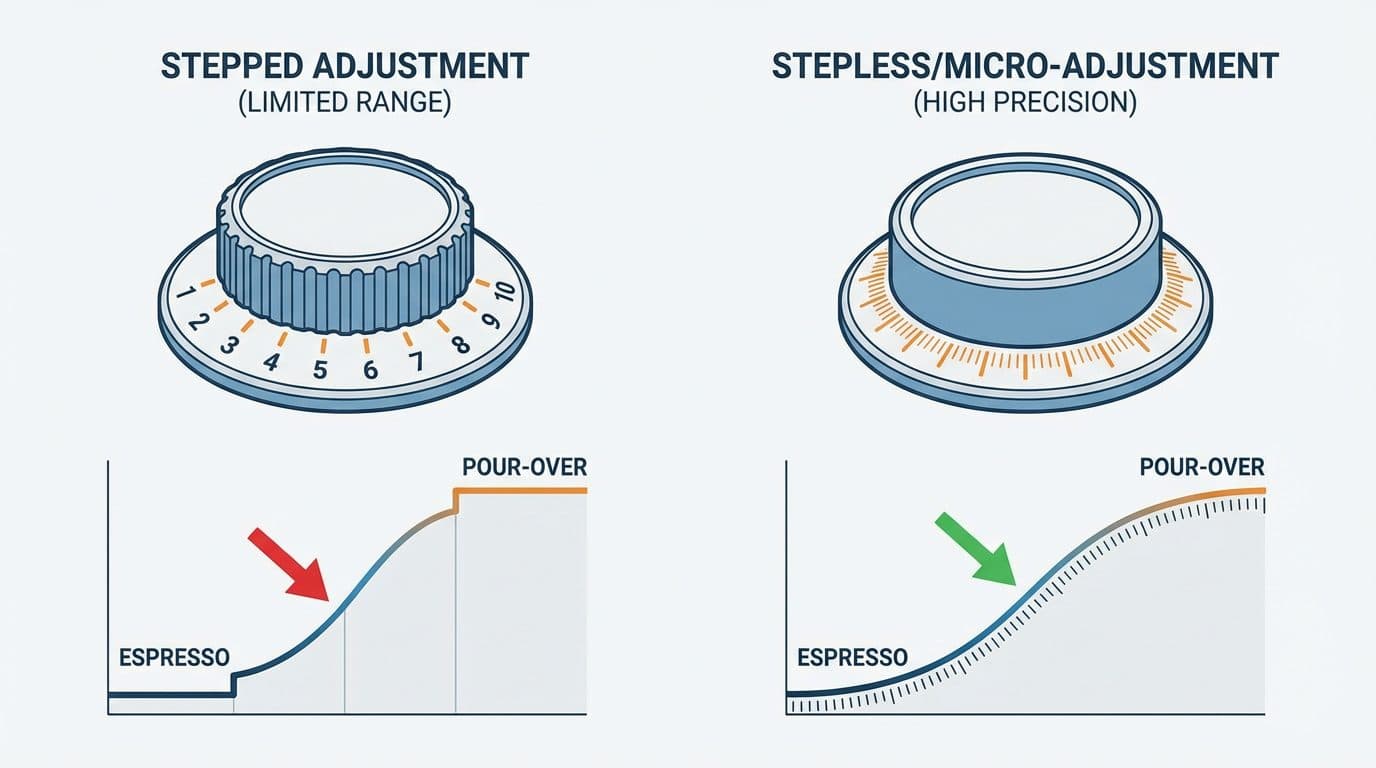
This is the most critical factor. You need a grinder with enough adjustment steps to fine-tune your espresso dial-in while also being able to jump to coarser settings for filter. Look for at least 30-40 distinct settings, or even better, a stepless or micro-adjustment system.
For example, if your grinder only has 10 settings, the jump between “fine enough for espresso” and “coarse enough for pour-over” might be just 2-3 clicks. That’s not enough precision. You’ll constantly be fighting to find that perfect spot.
Burr Quality and Size
Burrs are the teeth that actually grind your coffee. Bigger burrs generally mean more consistency and less heat generation (which can damage flavor). For budget grinders, you’ll typically find:
- 38mm burrs: Common in entry-level grinders, acceptable for filter but often struggle with espresso consistency
- 40-48mm burrs: The sweet spot for budget dual-purpose grinders—enough surface area for decent espresso performance
- Conical vs. flat burrs: Conical burrs are more common in this price range and work well for both methods
In short: don’t go smaller than 38mm if you’re serious about espresso, and prioritize grinders with steel burrs over ceramic for longevity.
Retention and Workflow
Retention refers to how much ground coffee stays trapped inside the grinder after each use. High retention is annoying because you’re wasting coffee and getting stale grounds mixed into your fresh dose. This matters even more when switching between espresso and filter because leftover fine grounds can mess up your coarse brew (and vice versa).
Look for grinders with retention under 1 gram. Some budget options achieve this with innovative chute designs or by using gravity-fed hand grinders that don’t trap grounds in horizontal chambers.
Build Quality and Longevity
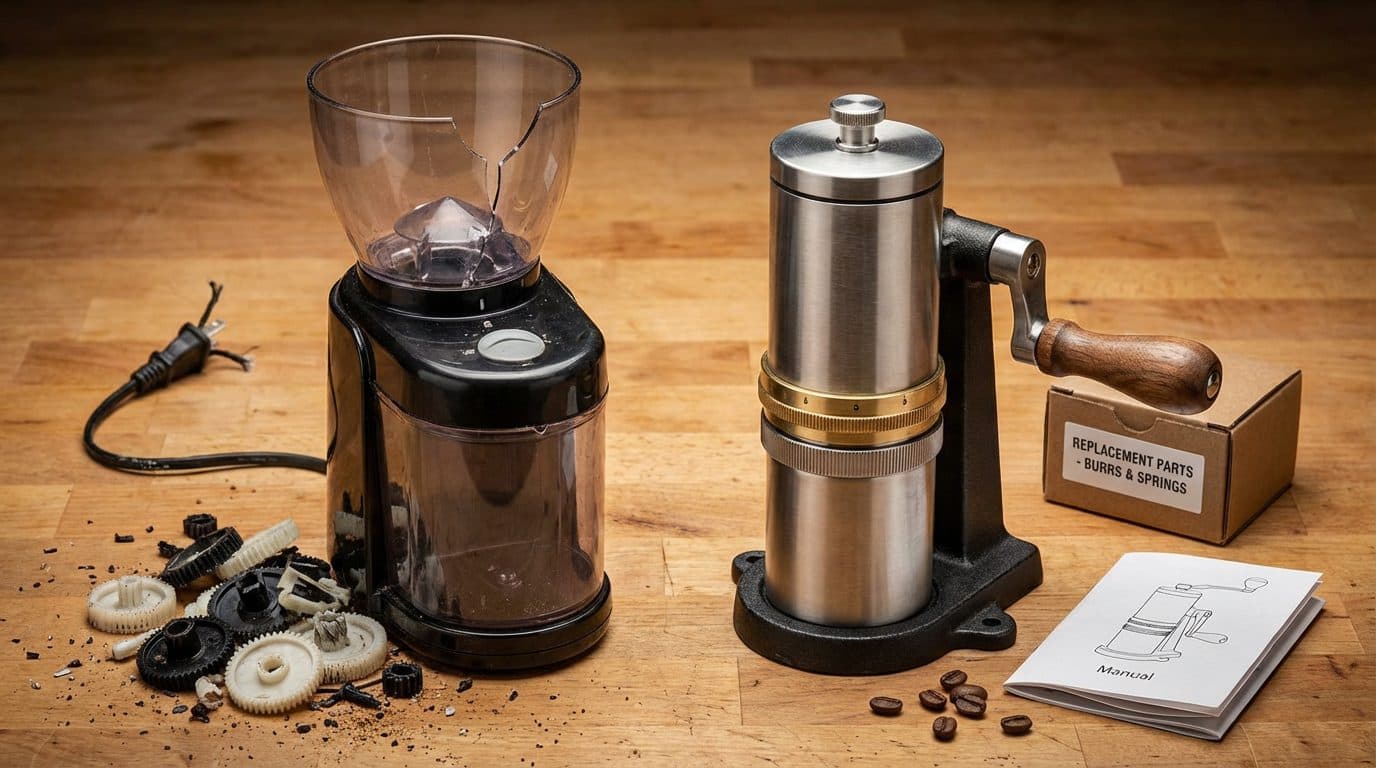
A “budget” grinder that breaks after six months isn’t actually budget-friendly. Check for:
- Metal components in high-stress areas (adjustment rings, burr carriers)
- Stable, sturdy bases (especially for hand grinders)
- Availability of replacement parts and customer service reputation
Best Budget Grinders for Espresso and Filter: My Top Picks
Electric Option: Baratza Encore ESP ($199)
The Encore ESP is Baratza’s answer to the “I want one grinder for everything” crowd. It’s essentially the beloved Encore with a modified burr set and finer adjustment range that extends into espresso territory.
Pros:
- Excellent customer service and readily available replacement parts
- 40mm conical burrs deliver consistent grinds across the range
- Simple operation—push a button, get coffee
- Low retention compared to other electric grinders at this price
Cons:
- Stepped adjustment means less precision than stepless alternatives
- Can struggle with ultra-light roasts for espresso
- Plastic exterior feels less premium than the price suggests
Who is this for? Home baristas who value convenience and want a reliable workhorse that requires minimal technique. Perfect if you’re making multiple cups daily or hate the idea of hand grinding.
Who is this NOT for? Perfectionists who want to micro-adjust their espresso grind in tiny increments, or those working with very light roast espresso.
Barista Tip: When switching from espresso to filter on the Encore ESP, run a few grams of beans through at the new setting before grinding your actual dose. This purges any fine particles stuck in the burrs.
Hand Grinder Option: 1Zpresso JX-Pro ($159)
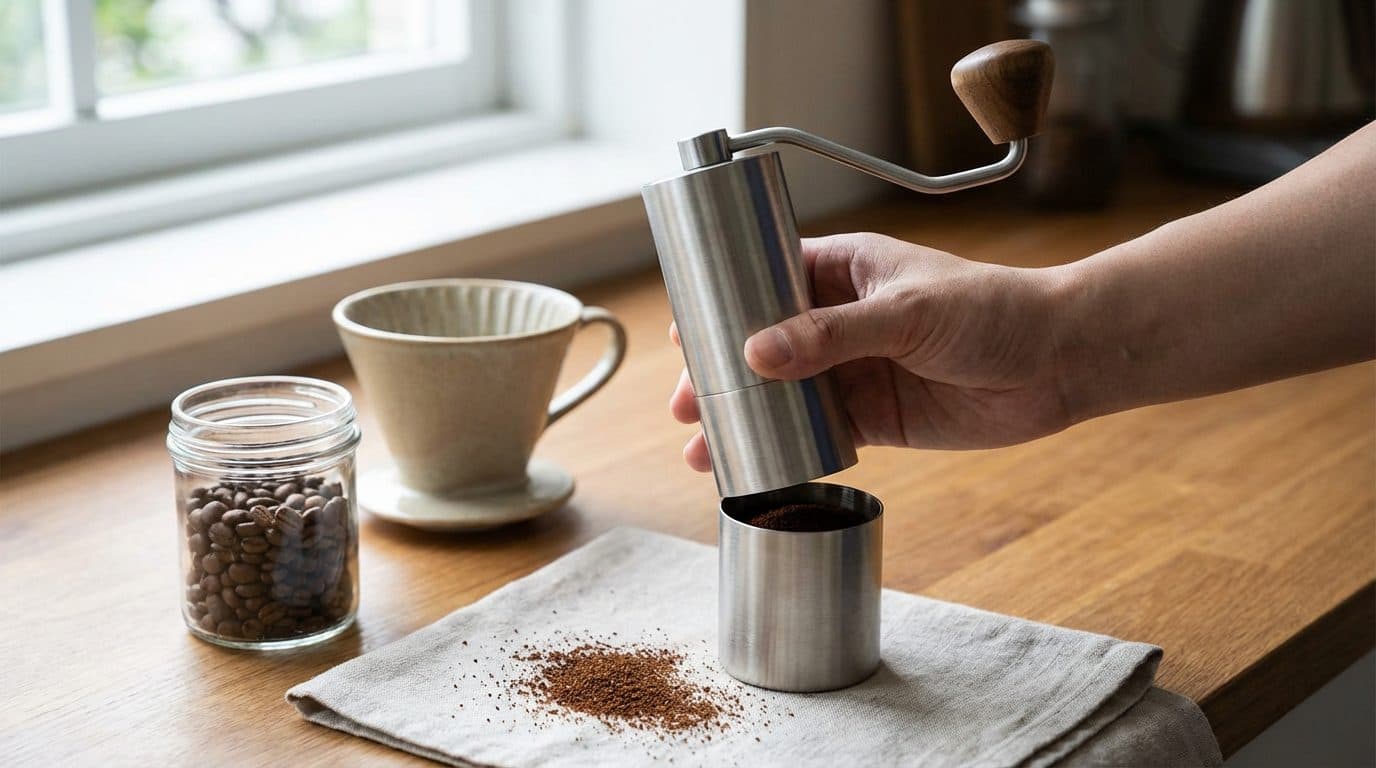
If you’re willing to put in some manual labor, the JX-Pro delivers grind quality that rivals electric grinders costing twice as much. I’ve used mine for over two years, switching between espresso and V60 almost daily.
Pros:
- 48mm steel burrs produce exceptionally uniform particles
- External stepless adjustment allows incredibly precise dial-in
- Nearly zero retention (under 0.2 grams)
- Built like a tank—all metal construction
- Grinds 20g for espresso in about 30-40 seconds
Cons:
- Requires physical effort (though it’s easier than you’d think)
- Not practical for large batches or multiple drinks back-to-back
- Learning the numbered adjustment system takes some trial and error
Who is this for? Single-cup brewers who prioritize grind quality over convenience. Also great for travelers or anyone with limited counter space.
Who is this NOT for? Anyone making coffee for a household of caffeine addicts, or those who simply don’t want any manual work in their morning routine.
Ultra-Budget Option: Timemore C3 ESP ($75-90)
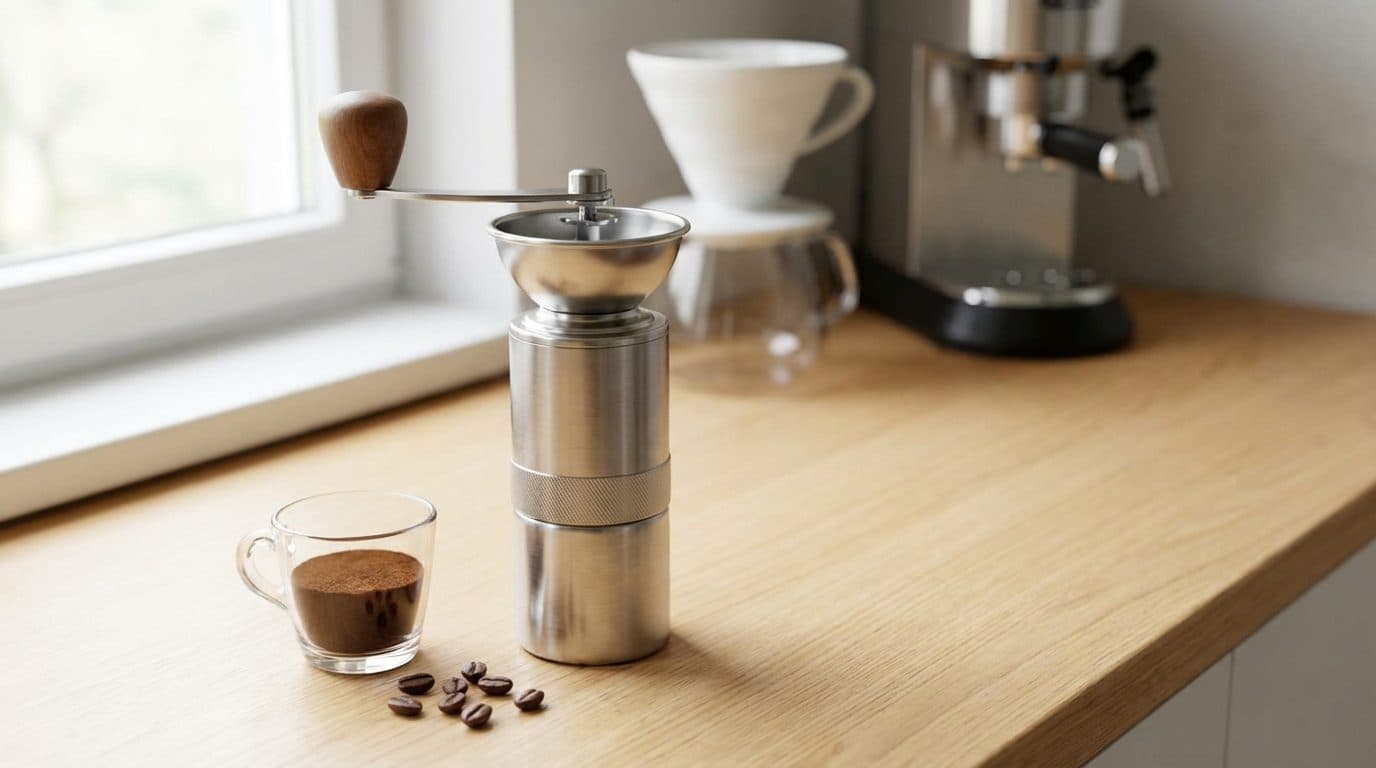
Timemore recently released the C3 ESP variant specifically designed for espresso compatibility. At under $100, it’s the most affordable option that genuinely works for both brewing methods.
Pros:
- Incredible value for the price
- S2C steel burrs punch above their weight class
- Compact and travel-friendly
- Good availability and replacement part support
Cons:
- Smaller 38mm burrs mean slightly longer grind times
- Less grind consistency than the JX-Pro at extreme fine settings
- Plastic adjustment mechanism feels less confidence-inspiring
Who is this for? Beginners who aren’t sure if they’ll stick with espresso, or anyone on a genuinely tight budget who still wants acceptable results.
Who is this NOT for? Those who’ve already developed a taste for high-quality espresso and would notice the consistency differences.
Quick Comparison: Budget Dual-Purpose Grinders at a Glance
| Grinder | Price | Type | Burr Size | Best For |
|---|---|---|---|---|
| Baratza Encore ESP | $199 | Electric | 40mm | Convenience lovers |
| 1Zpresso JX-Pro | $159 | Hand | 48mm | Quality focused |
| Timemore C3 ESP | $75-90 | Hand | 38mm | Beginners on budget |
| Kingrinder K4 | $99 | Hand | 48mm | Value hunters |
Common Mistakes When Buying a Budget Dual-Purpose Grinder
I’ve seen too many home baristas (including past me) make these errors. Save yourself the frustration:
- Buying a “espresso grinder” that can’t go coarse enough: Some budget espresso-focused grinders max out at medium-fine, making pour-over impossible
- Ignoring grind retention: That leftover gram of fine espresso grounds will absolutely ruin your next French press batch
- Expecting blade grinder results to improve: No amount of technique will make a blade grinder work for espresso—don’t waste your money
- Overlooking workflow: A cheaper grinder with a frustrating workflow will make you dread your morning coffee routine
In my experience, it’s better to save up for an extra month and get a grinder you’ll actually enjoy using for years rather than buying the cheapest option and replacing it within a year.
Making the Switch: Tips for Dual-Purpose Grinding
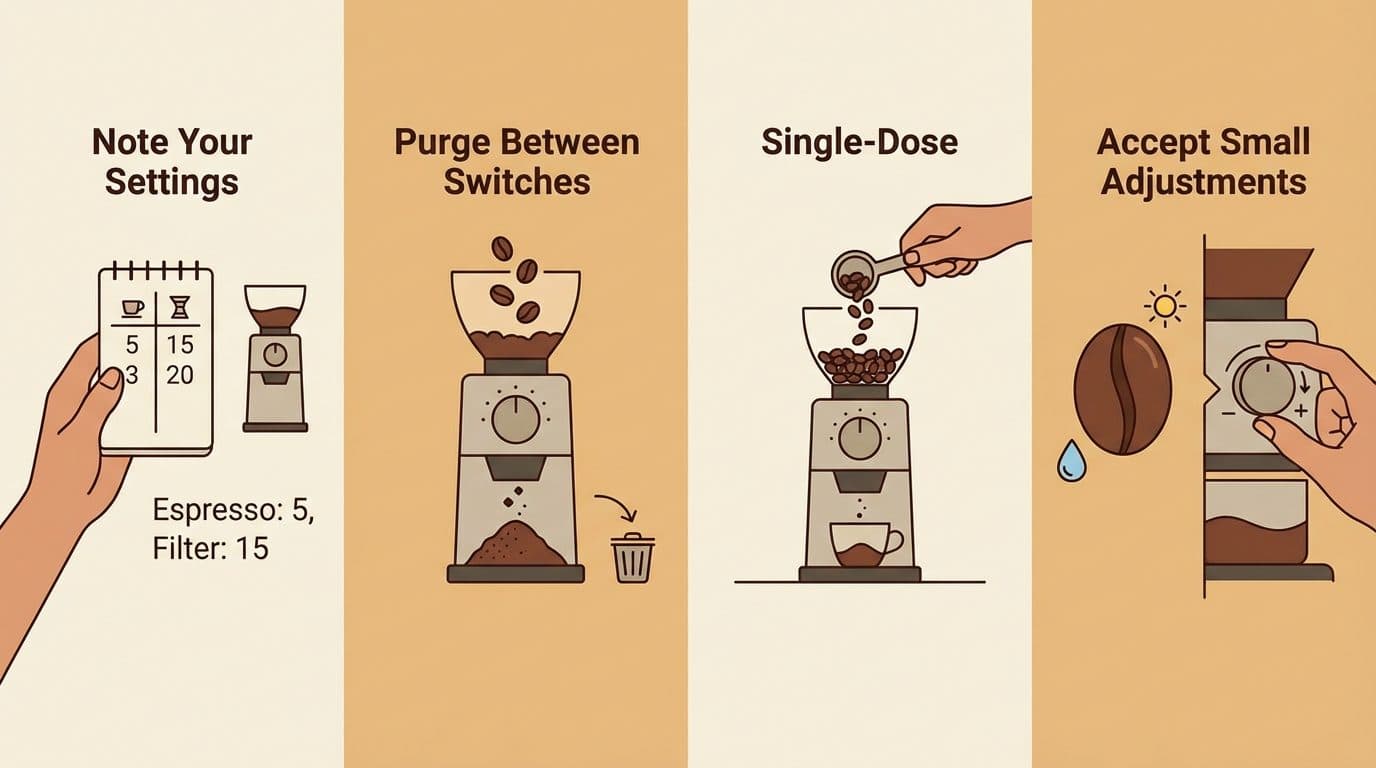
Once you’ve got your grinder, here’s how to make switching between espresso and filter less painful:
- Note your settings: Keep a small notepad or phone note with your preferred numbers for each brewing method and coffee
- Purge between switches: Run 2-3 grams of beans through at your new setting to clear old particles
- Single-dose: Only grind what you need for each brew to minimize retention issues
- Accept small adjustments: Even at the same setting, humidity and bean freshness affect extraction—stay flexible
Barista Tip: If you’re switching from espresso to filter daily, consider doing all your espresso drinks first, then switching to filter for the rest of the day. This minimizes the adjustment and purge cycle.
Frequently Asked Questions
Can a $50 grinder really do espresso and filter?
Honestly, no. At that price point, grinders lack the burr quality and adjustment precision needed for espresso. You might get acceptable filter coffee, but espresso requires a level of consistency that budget grinders under $75 simply can’t deliver. Save up a bit more for better results.
Is a hand grinder or electric grinder better for dual-purpose use?
Hand grinders typically offer better grind quality per dollar because you’re paying for burrs instead of motors. However, electric grinders win on convenience, especially if you’re making multiple cups. If you’re brewing just for yourself and value quality, go hand. If you’re making coffee for a family or hate manual work, go electric.
How long do budget grinders typically last?
With proper care, quality budget grinders like the Baratza Encore or 1Zpresso models can last 5-10 years. The key is cleaning regularly (monthly for most home users) and replacing burrs when they dull (typically every 2-3 years with daily use). Avoid running the grinder empty, which accelerates wear.
Should I buy refurbished to save money?
Absolutely, especially from Baratza. Their certified refurbished grinders come with the same warranty as new units and often cost 20-30% less. I’ve purchased two refurbished Baratzas over the years, and both performed identically to new models.
What’s the minimum I should spend on a dual-purpose grinder?
For genuinely acceptable results at both espresso and filter, budget at least $75-100 for a hand grinder or $150-200 for an electric. Anything below these thresholds will likely frustrate you with inconsistent espresso or lack of grind range.
Conclusion and Next Steps
Choosing a budget-friendly grinder for both espresso and filter isn’t impossible—it just requires knowing what to prioritize. Focus on grind adjustment range, burr size and quality, and low retention. The Baratza Encore ESP and 1Zpresso JX-Pro remain my top recommendations because they’ve proven themselves in real daily use over years, not just in spec sheets.
Life is too short for bad coffee, but it’s also too short for buyer’s remorse. Pick the option that matches your brewing frequency and willingness to grind manually, then start exploring the delicious range of coffee that becomes possible with freshly ground beans. Once you taste the difference, you’ll never go back to pre-ground. Check the latest prices on your preferred grinder and start your dual-purpose brewing journey today.


Comments