


Table of Contents
- Why Jamaican Blue Mountain Coffee Is So Hard to Find Authentic
- What Makes the Real Deal Special
- How to Verify Authentic Jamaican Blue Mountain Coffee
- The Certification Mark
- Barrel Packaging
- Price Reality Check
- Trusted Online Sources for Authentic Jamaican Blue Mountain Coffee
- Direct from Jamaican Estates
- Specialty Coffee Retailers
- Amazon (With Extreme Caution)
- What to Avoid When Buying Jamaican Blue Mountain Online
- "Jamaican Blue Mountain Style" or "Blend"
- Suspiciously Low Prices
- No Origin Transparency
- Stock Photos and Generic Descriptions
- Getting the Most from Your Purchase
- Storage Matters
- Brewing Recommendations
- Frequently Asked Questions
- Is Jamaican Blue Mountain coffee worth the high price?
- How can I tell if my Jamaican Blue Mountain coffee is fake after purchasing?
- Why is so much Jamaican Blue Mountain coffee exported to Japan?
- Can I buy Jamaican Blue Mountain green beans to roast myself?
- What's the difference between Jamaican Blue Mountain and High Mountain coffee?
- Final Thoughts and Your Next Step
You’ve heard the legends about Jamaican Blue Mountain coffee—the silky smooth body, the bright yet balanced acidity, and that price tag that makes your wallet weep. But here’s the real challenge: how do you actually get your hands on the authentic stuff without falling for one of the countless fakes flooding the market? I’ve been down this rabbit hole myself, spending way too much money on “Jamaican Blue Mountain blends” that turned out to be mostly inferior beans with a sprinkle of the real deal. Life is too short for bad coffee, and it’s way too short to pay premium prices for counterfeit beans.
In this guide, I’ll walk you through exactly where to buy authentic Jamaican Blue Mountain coffee online, how to spot the real thing versus clever imitations, and which trusted sources have earned my personal seal of approval. Whether you’re treating yourself or hunting for an impressive gift, you’ll know exactly where to click by the time you finish reading.
Why Jamaican Blue Mountain Coffee Is So Hard to Find Authentic
Before we dive into where to buy, you need to understand why this particular coffee is such a minefield. Jamaican Blue Mountain coffee comes from a tiny growing region in Jamaica’s Blue Mountains, between 3,000 and 5,500 feet elevation. The annual production is remarkably limited—we’re talking about roughly 0.1% of the world’s coffee supply.
Here’s where it gets tricky. Because demand far exceeds supply, the market is absolutely flooded with counterfeits. Some estimates suggest that up to 80% of coffee sold as “Jamaican Blue Mountain” is either completely fake or heavily blended. In my experience, the most common scam involves selling a “blend” that contains maybe 10-20% genuine JBM beans mixed with cheaper alternatives.
What Makes the Real Deal Special
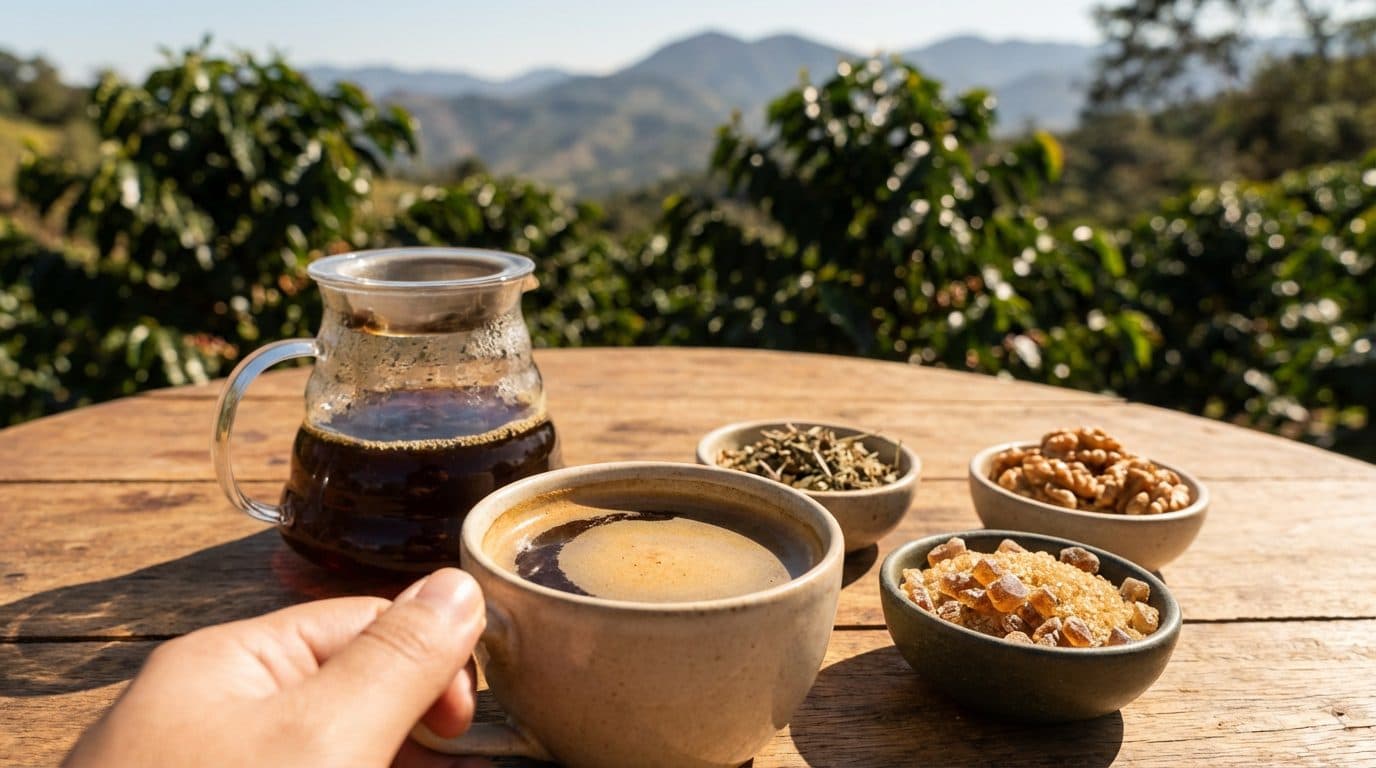
Authentic Jamaican Blue Mountain coffee has a distinctive flavor profile that’s nearly impossible to replicate:
- Clean, mild flavor with almost no bitterness
- Bright acidity that’s smooth rather than sharp
- Sweet undertones with hints of herbs and nuts
- Creamy body that feels almost velvety on your tongue
When you taste the real thing for the first time, you’ll understand why people obsess over it. The experience is genuinely different from any other coffee origin.
How to Verify Authentic Jamaican Blue Mountain Coffee
Before handing over your hard-earned cash, you need to know the authentication markers. The Coffee Industry Board of Jamaica (CIB) regulates all legitimate JBM exports, and there are specific signs to look for.
The Certification Mark
Every authentic bag of Jamaican Blue Mountain coffee should display the official certification mark from the CIB. This mark confirms the beans were grown in the designated Blue Mountain region, processed according to strict standards, and approved for export. If a seller can’t provide proof of certification, walk away.
Barrel Packaging
Here’s something most people don’t know: genuine Jamaican Blue Mountain coffee is traditionally exported in wooden barrels, not burlap sacks like most other coffees. While you won’t receive a barrel at your doorstep, legitimate roasters will often reference this heritage and can trace their beans back to certified estates.
Price Reality Check
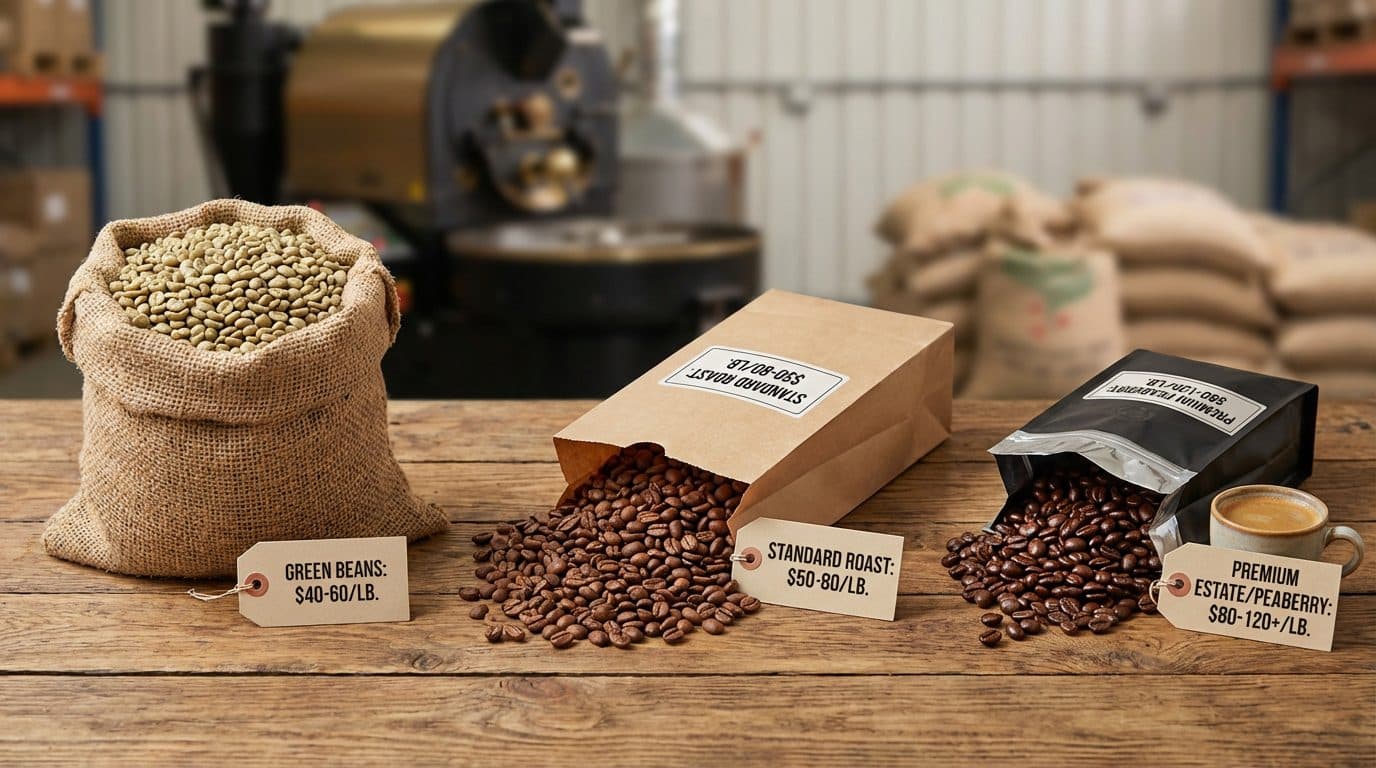
If you’re seeing Jamaican Blue Mountain coffee priced at $20-30 per pound, something’s wrong. Authentic JBM green beans alone cost roasters $40-60 per pound at minimum. By the time it’s roasted, packaged, and shipped to you, expect to pay:
- $50-80 per pound for standard grades
- $80-120+ per pound for premium estate-specific lots
- Peaberry varieties can command even higher prices
In short, if the deal seems too good to be true, it almost certainly is.
Trusted Online Sources for Authentic Jamaican Blue Mountain Coffee
Now for the part you’ve been waiting for. I’ve personally ordered from or thoroughly researched each of these sources, and they’ve consistently delivered the real thing.
Direct from Jamaican Estates
Wallenford Estate is one of the most famous and oldest JBM producers. They sell directly through their website and through authorized retailers. When you buy from the source, you eliminate middlemen and reduce the risk of counterfeits. Their beans come with full traceability documentation.
Clifton Mount Estate offers another excellent direct-purchase option. They’re a smaller operation, which sometimes means limited availability, but their quality control is exceptional. I’ve found their medium roast particularly impressive—it really showcases that signature JBM smoothness.
Specialty Coffee Retailers
Volcanica Coffee has built a solid reputation for sourcing authentic single-origin coffees. Their Jamaican Blue Mountain offering comes with certification verification, and they roast to order for maximum freshness. They also offer a peaberry version if you want to splurge.
Blue Mountain Coffee Jamaica (BMC) operates as an authorized online retailer with strong ties to the Jamaican coffee industry. They carry multiple estate options and provide detailed origin information for each product.
Amazon (With Extreme Caution)
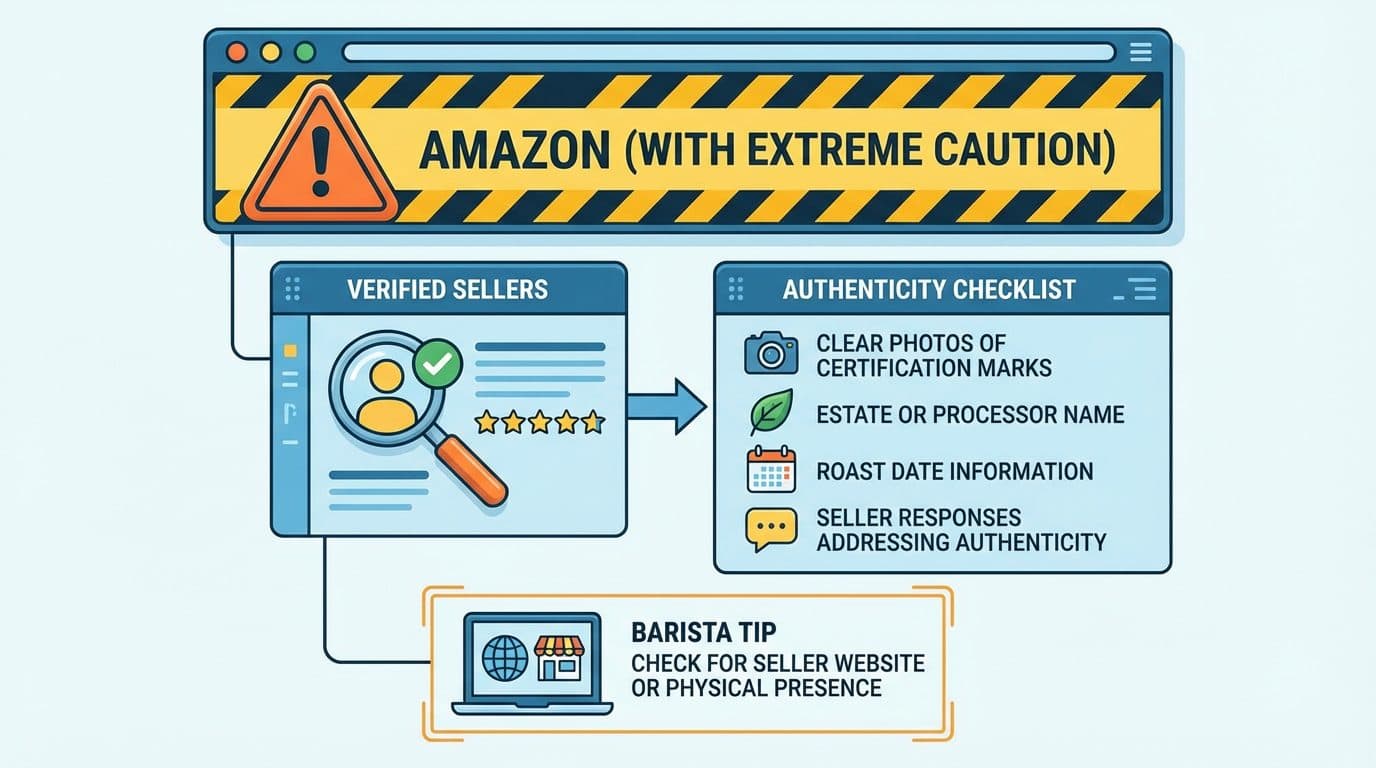
Yes, you can find authentic JBM on Amazon, but you need to be incredibly careful. Only purchase from verified sellers with extensive positive reviews specifically mentioning authenticity. Look for listings that include:
- Clear photos of certification marks
- Estate or processor name
- Roast date information
- Seller responses addressing authenticity questions
Barista Tip: On Amazon, check if the seller also has their own website or physical presence. Scammers rarely invest in legitimate business infrastructure beyond a marketplace listing.
What to Avoid When Buying Jamaican Blue Mountain Online
Let me save you some frustration and money by highlighting the red flags I’ve learned to spot over the years.
“Jamaican Blue Mountain Style” or “Blend”
These terms are marketing speak for “mostly not Jamaican Blue Mountain coffee.” Legally, a blend can contain as little as 10% genuine JBM beans. You’re paying a premium for what’s essentially regular coffee with fancy branding. Unless you specifically want a blend and understand what you’re getting, skip these entirely.
Suspiciously Low Prices
I can’t stress this enough. A genuine 8oz bag of JBM shouldn’t cost $15. If someone’s offering that deal, they’re either losing money on every sale (unlikely) or selling you something else entirely (very likely).
No Origin Transparency
Legitimate sellers are proud of their sourcing relationships. They’ll tell you which estate or processor their beans come from, provide certification information, and often share the story behind their coffee. Vague descriptions like “sourced from the finest Jamaican farms” without specifics should raise immediate suspicion.
Stock Photos and Generic Descriptions
Real specialty coffee sellers invest in authentic product photography and detailed tasting notes. If the listing looks like it was copied from Wikipedia and uses obviously generic coffee imagery, move on.
Getting the Most from Your Purchase
Once you’ve secured authentic beans, you want to treat them right. Here’s how to maximize your Jamaican Blue Mountain coffee experience.
Storage Matters
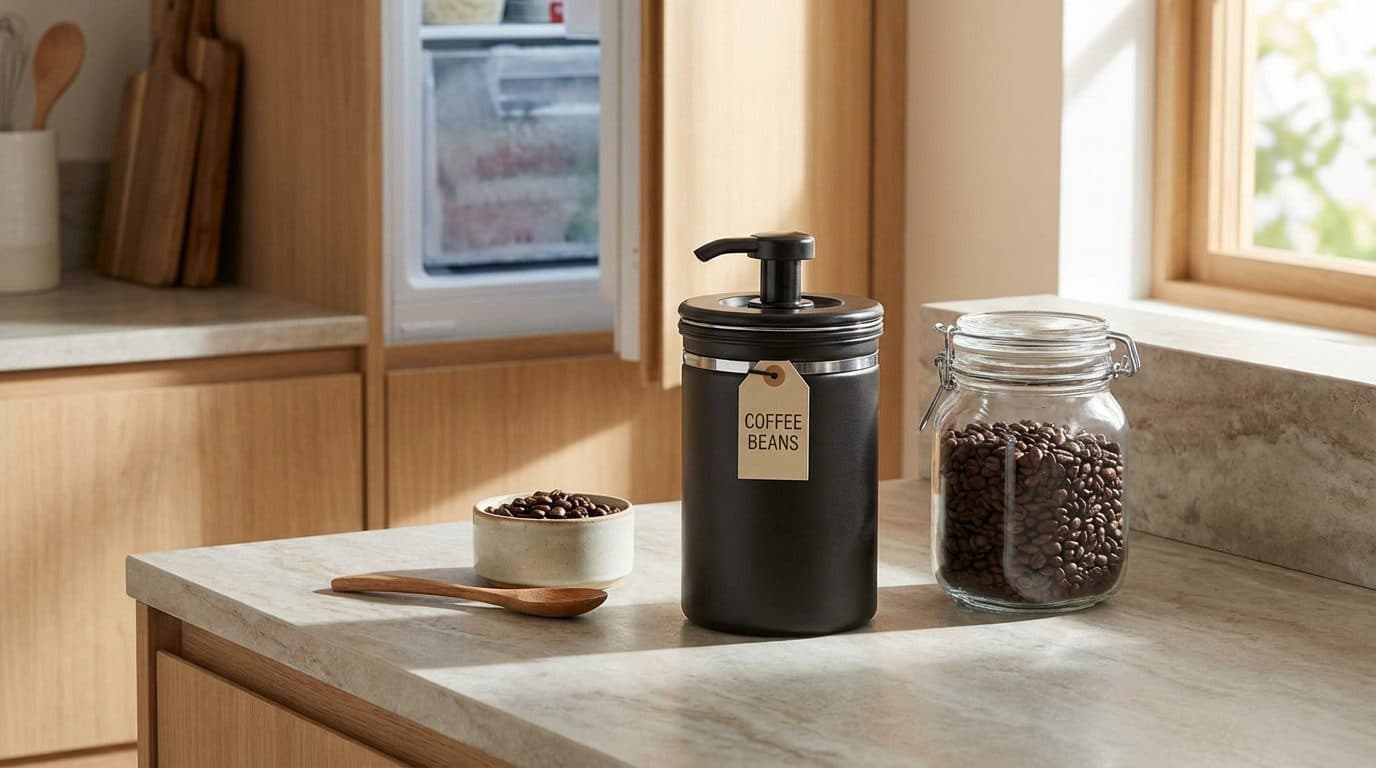
Keep your beans in an airtight container away from light, heat, and moisture. Given the investment you’re making, consider a vacuum-sealed container specifically designed for coffee storage. Don’t freeze these beans—temperature fluctuations can damage the delicate flavor compounds you’re paying for.
Brewing Recommendations
In my experience, Jamaican Blue Mountain shines brightest with brewing methods that highlight clarity and sweetness:
- Pour-over (V60, Chemex) — My personal favorite for JBM; really showcases the clean, sweet notes
- French press — Brings out the creamy body while maintaining balance
- Drip coffee maker — Perfectly acceptable; use filtered water for best results
Avoid overly dark roasts or espresso preparations initially. These can mask the subtle characteristics that make JBM special. Once you know the coffee, experiment freely.
Barista Tip: Use water just off the boil (around 200-205°F) and a medium grind. JBM doesn’t need aggressive extraction—its flavors come through beautifully with gentle treatment.
Frequently Asked Questions
Is Jamaican Blue Mountain coffee worth the high price?
That depends on what you value. If you appreciate subtle, nuanced coffee with exceptional smoothness and almost zero bitterness, the experience is genuinely unique. For everyday drinking, it’s probably overkill. For special occasions or exploring the upper limits of coffee quality, it’s absolutely worth trying at least once.
How can I tell if my Jamaican Blue Mountain coffee is fake after purchasing?
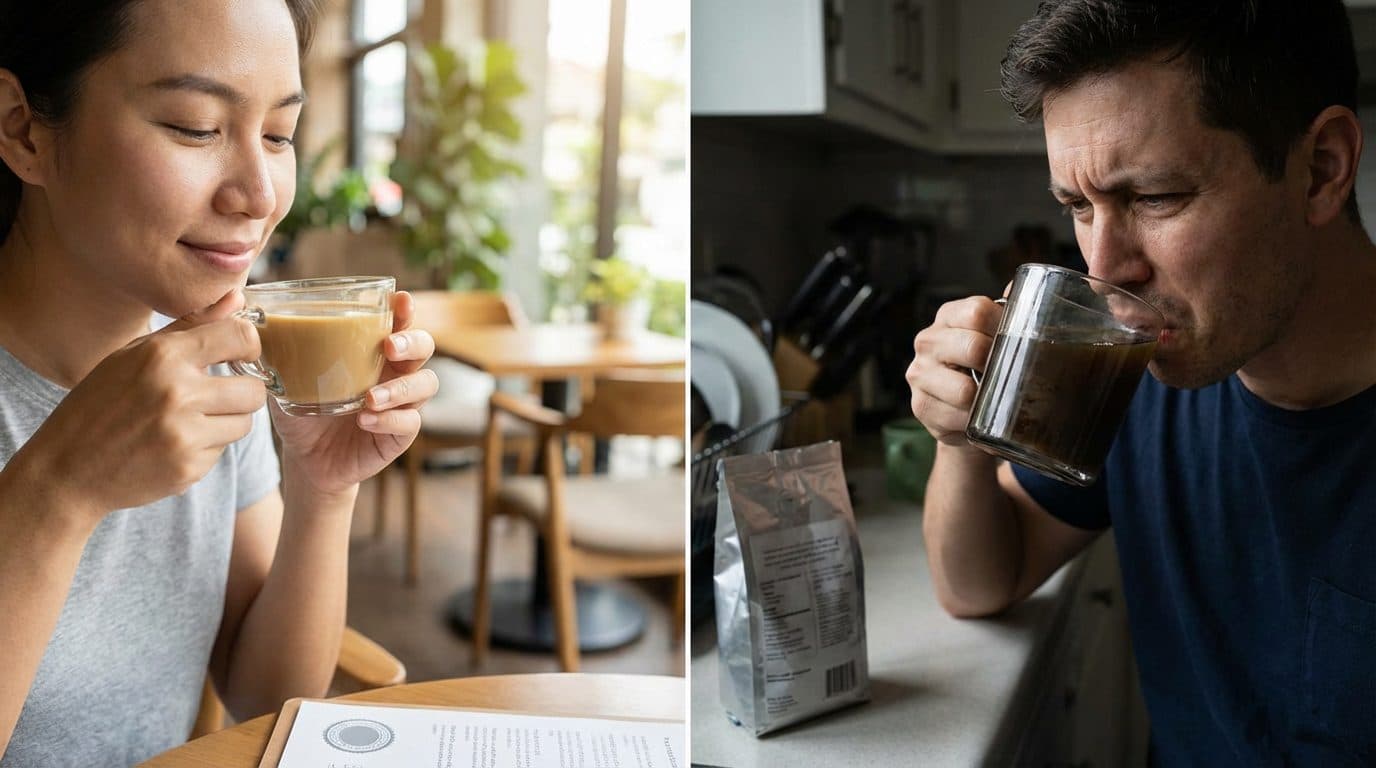
Trust your palate. Authentic JBM has an unmistakably smooth, clean profile with no harsh edges. If your “premium” coffee tastes bitter, overly acidic, or just like regular supermarket coffee, you’ve likely been duped. The certification mark and documentation remain your best pre-purchase protection.
Why is so much Jamaican Blue Mountain coffee exported to Japan?
Japan has historically purchased up to 80% of all JBM exports due to long-standing trade relationships and strong demand among Japanese coffee enthusiasts. This leaves relatively little for the rest of the world, contributing to scarcity and higher prices in other markets.
Can I buy Jamaican Blue Mountain green beans to roast myself?
Yes, and this can be a great option for home roasters. Sweet Maria’s and other green bean suppliers occasionally stock certified JBM lots. You’ll pay less per pound than pre-roasted beans, though you’ll need proper home roasting equipment and some experience.
What’s the difference between Jamaican Blue Mountain and High Mountain coffee?
High Mountain coffee grows at lower elevations (1,500-3,000 feet) in Jamaica. It’s still quality coffee but lacks the specific terroir characteristics of true Blue Mountain beans. It’s significantly cheaper and can be a good alternative if you enjoy Jamaican coffee but can’t justify JBM prices.
Final Thoughts and Your Next Step
Finding authentic Jamaican Blue Mountain coffee online requires a bit of homework, but it’s entirely possible to source the genuine article. Stick with certified estates, established specialty retailers with transparent sourcing, and always be skeptical of prices that seem too good. The extra diligence pays off when you finally brew a cup of real JBM and experience that legendary smoothness for yourself.
Start with one of the trusted sources I’ve mentioned above, order a small quantity to verify quality, and then stock up once you’ve found your favorite. Your taste buds—and your inner coffee snob—will thank you for making the effort to find the real thing.



Comments