


Table of Contents
- Why Heat Retention Actually Matters for French Press
- Glass French Press: The Classic Choice
- Stainless Steel French Press: Not All Are Created Equal
- Single-Wall Stainless Steel
- Double-Wall (Vacuum Insulated) Stainless Steel
- Head-to-Head: Temperature Retention Comparison
- The Myth vs. Reality Breakdown
- Which One Should You Actually Buy?
- Pro Tips for Maximizing Heat Retention (Either Material)
- Final Thoughts
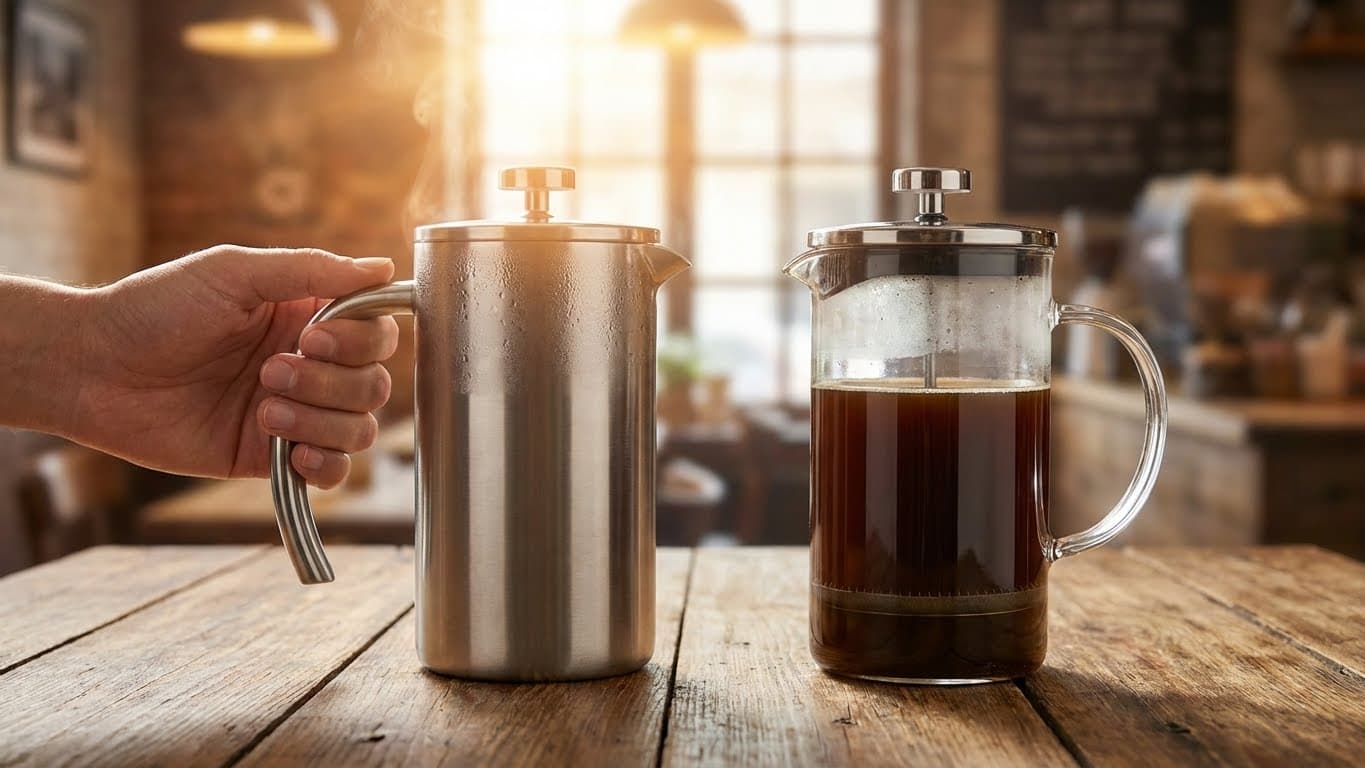
There’s something almost meditative about the slow plunge of a French press on a quiet Sunday morning—that gentle resistance, the bloom of coffee oils rising to the surface. But here’s the thing: by the time I pour my second cup, sometimes it’s barely lukewarm. That frustration led me down a rabbit hole comparing stainless steel vs. glass French press heat retention, and honestly, the results surprised me.
The short answer: Double-walled stainless steel French presses retain heat significantly better than glass—we’re talking 20-30 minutes longer at drinkable temperatures. But single-wall stainless steel? It actually loses heat faster than glass. Yeah, that caught me off guard too.
Why Heat Retention Actually Matters for French Press
French press brewing isn’t instant. You’re looking at a 4-minute steep time minimum, and many of us (myself included) like to let it go longer for a fuller body. During that steep, temperature drop affects extraction. Too much cooling, and you end up with under-extracted, sour notes.
Then there’s the second cup problem. I learned this the hard way during a camping trip with a cheap glass Bodum. By cup two, I was basically drinking room-temperature coffee soup. Not ideal.
Here’s what temperature loss actually does to your brew:
- Above 85°C (185°F): Active extraction continues, developing body and sweetness
- 75-85°C (167-185°F): Extraction slows dramatically
- Below 70°C (158°F): Your coffee tastes flat and the oils start to congeal
Glass French Press: The Classic Choice
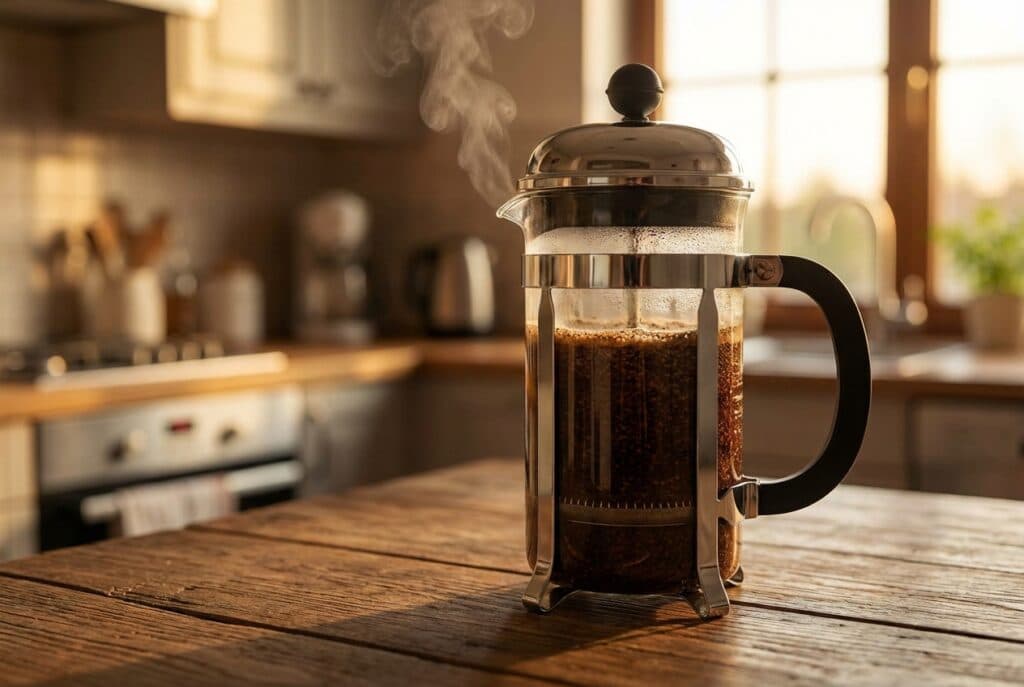
Glass is what most people picture when they think French press. There’s a reason it’s been the standard for decades.
What glass does well:
- You can see the bloom and steep (satisfying, I won’t lie)
- Neutral material—no metallic taste, ever
- Affordable—decent glass presses run $20-40
- Easy to spot when it needs cleaning
The heat retention reality:
Borosilicate glass (the good stuff) is actually a decent insulator on its own. The problem? Most glass French presses have thin walls and that metal frame acts like a heat sink, pulling warmth away from your brew. Based on user testing I’ve seen across coffee forums, a standard glass French press drops about 10-15°C within the first 10 minutes.
My barista friend Sarah swears by preheating her glass carafe with boiling water for 30 seconds before brewing. Does it help? A little. Maybe buys you an extra 5 minutes of optimal temperature. But it’s a band-aid, not a fix.
Stainless Steel French Press: Not All Are Created Equal
Here’s where it gets interesting. And a little annoying.
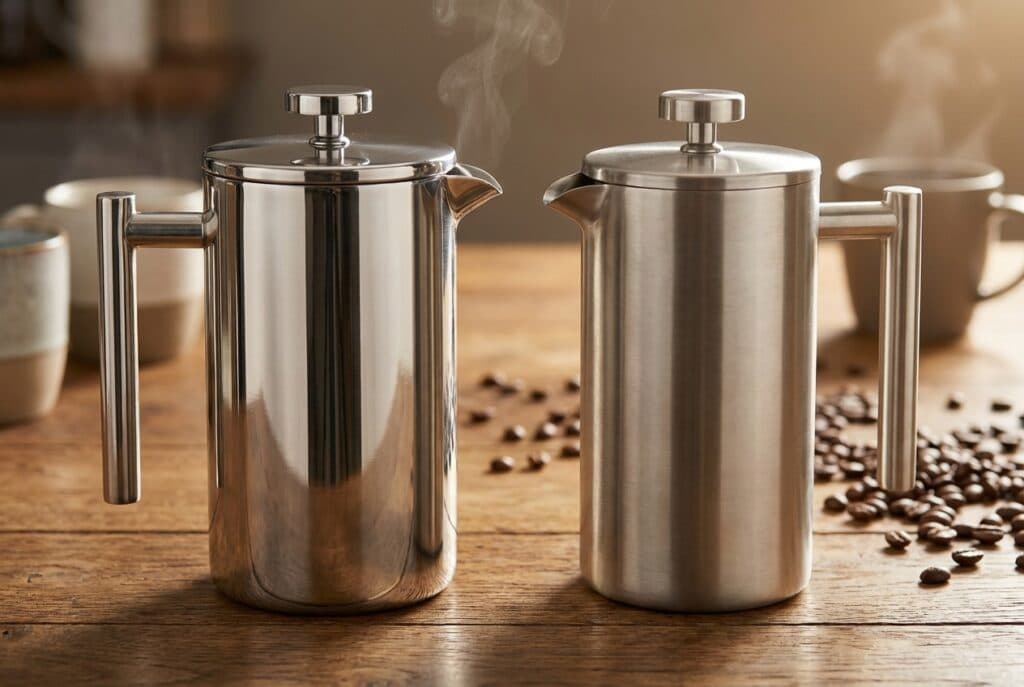
“Stainless steel” isn’t one thing. It’s two completely different products depending on wall construction:
Single-Wall Stainless Steel
Frankly, these are worse than glass for heat retention. Metal conducts heat efficiently—that’s physics. A single-wall steel carafe basically radiates your coffee’s heat into the room. I made this mistake once, bought a sleek-looking single-wall press, and wondered why my coffee went cold faster than my old glass Bodum. Lesson learned.
Double-Wall (Vacuum Insulated) Stainless Steel
This is the good stuff. The air gap between the two steel walls acts as insulation, similar to a thermos. According to reviews from serious coffee enthusiasts, quality double-walled presses like the Frieling or Espro maintain brewing temperature for 30+ minutes longer than glass equivalents.
The trade-off? Price. You’re looking at $70-120 for a quality double-walled press versus $25-40 for glass.
Head-to-Head: Temperature Retention Comparison
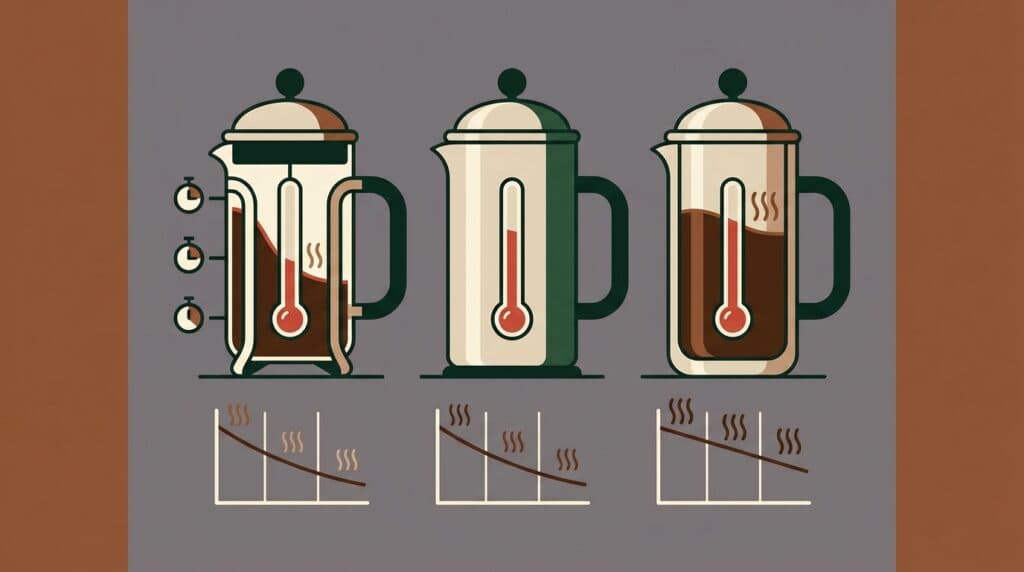
| French Press Type | Temp After 4 Min Steep | Temp After 15 Min | Temp After 30 Min |
|---|---|---|---|
| Glass (standard) | ~88°C (190°F) | ~72°C (162°F) | ~58°C (136°F) |
| Single-Wall Steel | ~85°C (185°F) | ~65°C (149°F) | ~50°C (122°F) |
| Double-Wall Steel | ~92°C (198°F) | ~85°C (185°F) | ~75°C (167°F) |
Note: These are approximate values based on aggregated user reports starting with 96°C water. Your results will vary based on room temperature and preheating.
The Myth vs. Reality Breakdown
Myth: “Stainless steel keeps coffee hotter than glass.”
Reality: Only if it’s double-walled. Single-wall steel is actually worse.
Myth: “Glass French presses are fragile and impractical.”
Reality: Borosilicate glass is surprisingly tough. I’ve had my Bodum for six years. Dropped it once on tile. Still intact. (Though I did hold my breath for a solid five seconds.)
Myth: “Metal presses make coffee taste metallic.”
Reality: Quality 18/10 stainless steel is non-reactive. I’ve never detected metallic notes in a good steel press. Cheap ones? Maybe. But that’s a quality issue, not a material issue.
Which One Should You Actually Buy?
I hate wishy-washy “it depends” answers, so here’s my actual opinion:
Get a glass French press if:
- You drink your coffee immediately after brewing
- You’re on a budget (under $40)
- You want to see the brewing process
- You’re brewing for one person
Get a double-walled stainless steel press if:
- You’re a slow sipper or brew for multiple people
- You take your French press camping or traveling
- You’ve broken more than two glass carafes (no judgment)
- You’re willing to invest $80+ for the long haul
Skip single-wall stainless steel entirely. Honestly, I don’t understand why they exist. You get the worst of both worlds—no visibility AND poor heat retention.
Pro Tips for Maximizing Heat Retention (Either Material)
Barista Tip: Preheat your carafe with water that’s 5-10°C hotter than your brewing temperature. For a glass press, this alone can extend optimal drinking temperature by 8-10 minutes.
Other tricks that actually work:
- Use a cozy or wrap: Sounds silly. Works surprisingly well on glass presses. I use an old wool sock. Don’t judge me.
- Brew slightly hotter: Start with 96-98°C water instead of the standard 93°C if you know you’ll be slow to drink.
- Decant immediately after plunging: Coffee sitting on grounds continues extracting and cooling. Pour it into a preheated thermal carafe if you’re not drinking right away.
- Don’t brew more than you’ll drink in 20 minutes: This is the real answer nobody wants to hear.
Final Thoughts
The stainless steel vs. glass French press debate really comes down to one question: how fast do you drink your coffee?
For me, I’ve landed on owning both. Glass Bodum for weekday mornings when I’m rushing. Double-walled steel for lazy weekends when I want that second cup to still taste like something. Is that overkill? Probably. But I’m a coffee nerd, and we’re allowed to be ridiculous about these things.
If you’re only buying one, and you tend to linger over your morning brew, spend the extra money on a quality double-walled stainless steel press. Your lukewarm second cup will thank you.

Comments