


Table of Contents
- What Exactly Is a Spanish Latte?
- Spanish Latte vs. Regular Latte: What's the Difference?
- What You'll Need to Make Spanish Latte at Home
- Ingredients
- Gear
- How to Make a Hot Spanish Latte: Step-by-Step
- A Mini Scenario: The Morning Rush Version
- How to Make an Iced Spanish Latte
- Common Spanish Latte Mistakes (And How to Avoid Them)
- Using Weak Coffee
- Adding Too Much Condensed Milk
- Not Mixing the Base Properly
- Over-Frothing the Milk
- Variations to Try Once You've Mastered the Basics
- Frequently Asked Questions
- Can I make a Spanish Latte without an espresso machine?
- Is a Spanish Latte very high in calories?
- Can I use evaporated milk instead of sweetened condensed milk?
- How do I store leftover condensed milk?
- Sources and Method Notes
- What's the best espresso roast for Spanish Latte?
- Final Thoughts: Your Perfect Spanish Latte Awaits
A Spanish latte combines concentrated coffee, milk, and sweetened condensed milk for a sweet, creamy drink. This guide provides measured hot and iced starting recipes; adjust the condensed milk to the exact product label and your taste rather than treating one price, name, or outcome as universal.
This guide explains the ingredients, a repeatable step-by-step recipe, and variables to record: coffee dose, milk volume, condensed-milk amount, temperature, and serving style.
What Exactly Is a Spanish Latte?
The term “Spanish latte” is used inconsistently across cafés, and a single origin should not be asserted without a reliable historical source. Tenerife’s documented leche y leche and barraquito traditions are related condensed-milk coffee preparations, but they are not proof that every modern Spanish latte is the same drink.
Unlike a standard unsweetened latte recipe, this version uses sweetened condensed milk. The exact sweetness, texture, and flavor depend on the product, dose, coffee concentration, and milk used.
Spanish Latte vs. Regular Latte: What’s the Difference?
| Feature | Spanish Latte | Regular Latte |
|---|---|---|
| Sweetener | Sweetened condensed milk | Optional sugar/syrup |
| Texture | Extra creamy, velvety | Smooth, lighter body |
| Flavor Profile | Sweet, caramelized, rich | Mild, coffee-forward |
| Calorie Content | Higher | Lower |
| Best Served | Hot or iced | Typically hot |
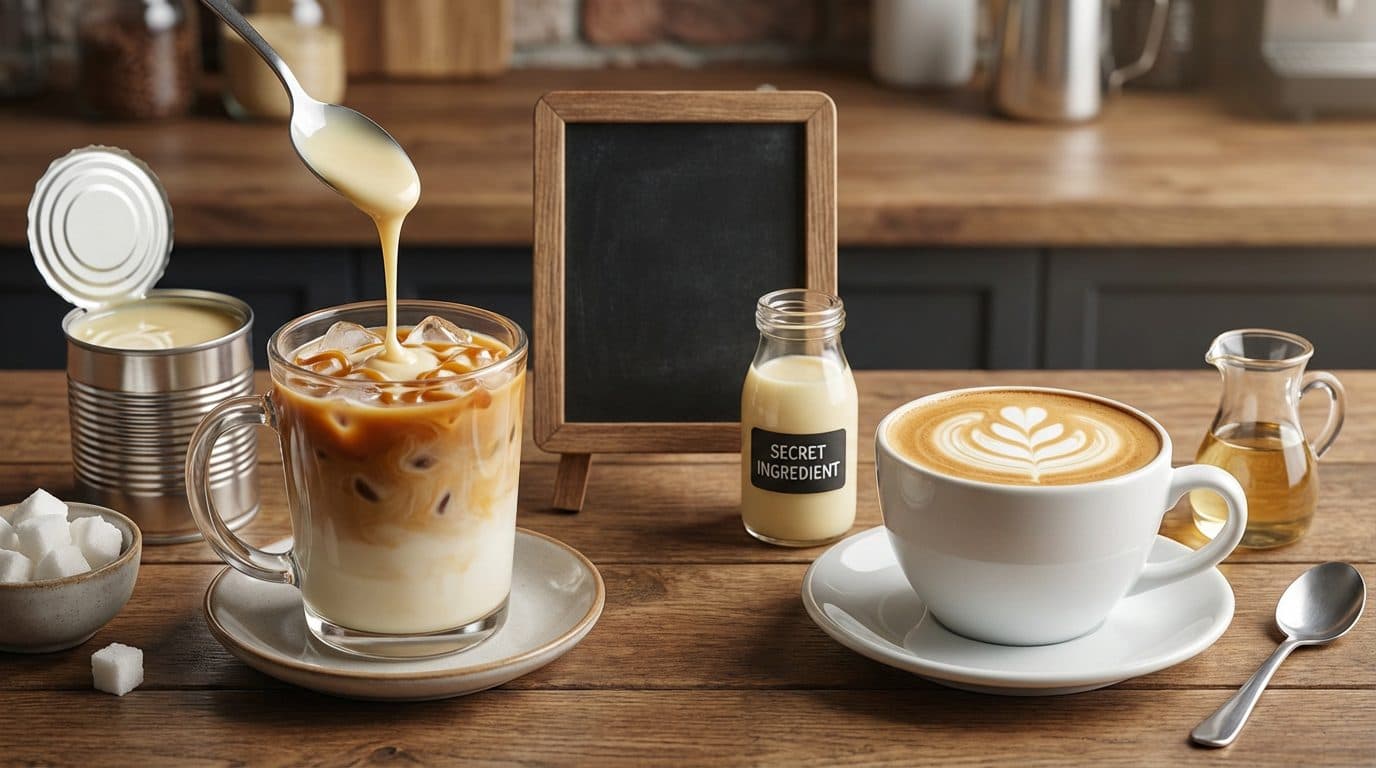
Key Takeaway: The sweetened condensed milk isn’t just a sweetener—it fundamentally changes the drink’s texture and flavor. That’s the “secret ingredient” that coffee shops don’t always tell you about.
What You’ll Need to Make Spanish Latte at Home
Ingredients
- Espresso: 1-2 shots (about 30-60ml). Strong brewed coffee works too if you don’t have an espresso machine.
- Sweetened condensed milk: 1-2 tablespoons (adjust to your sweetness preference)
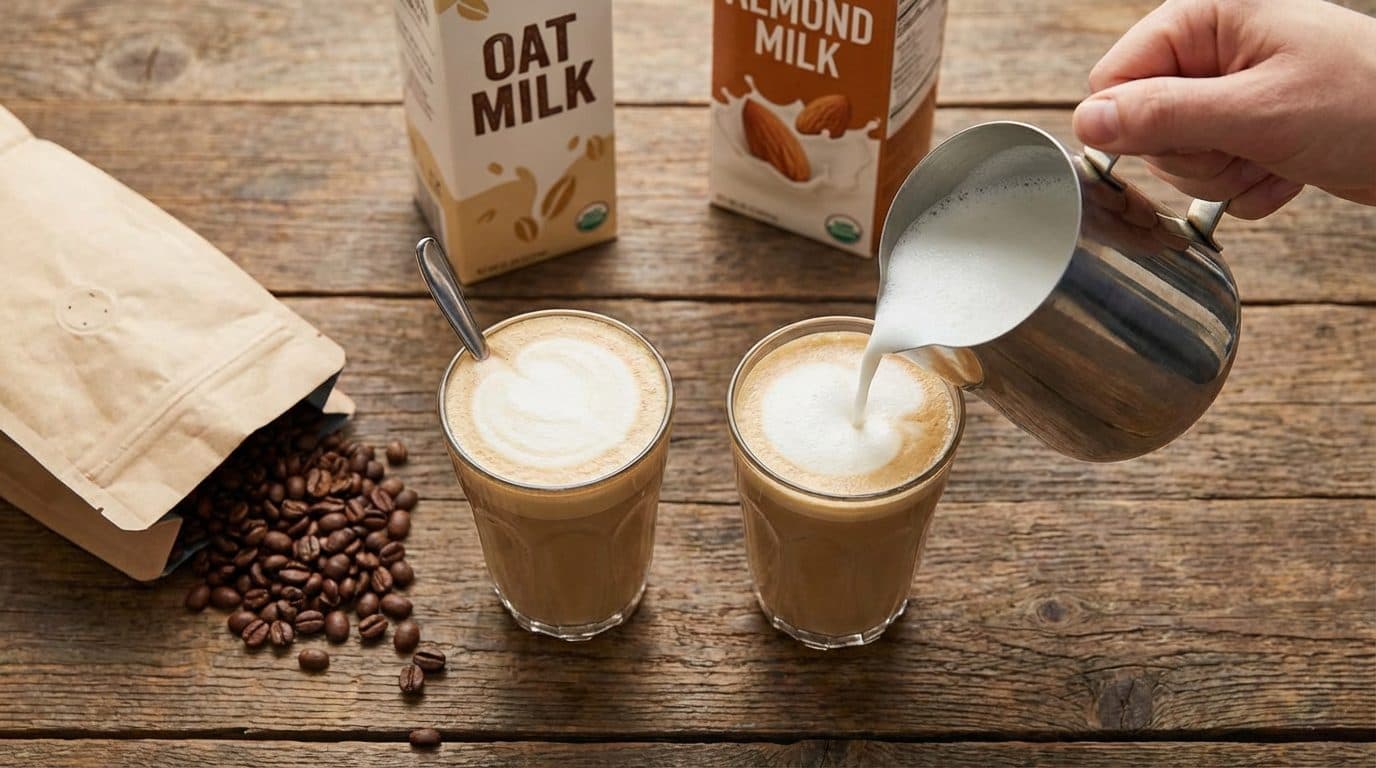
- Whole milk: 150-200ml (you can use oat milk for a dairy-free version)
- Ice cubes: If making iced version
Gear
- Espresso machine, Moka pot, or Aeropress
- Milk frother or steam wand (handheld frothers work great)
- Tall glass or your favorite mug
- Long spoon for stirring
An espresso machine is optional. A moka pot or another concentrated-coffee method can provide a practical base; compare the finished strength before changing the milk or condensed-milk dose. Verify current equipment prices locally.
How to Make a Hot Spanish Latte: Step-by-Step
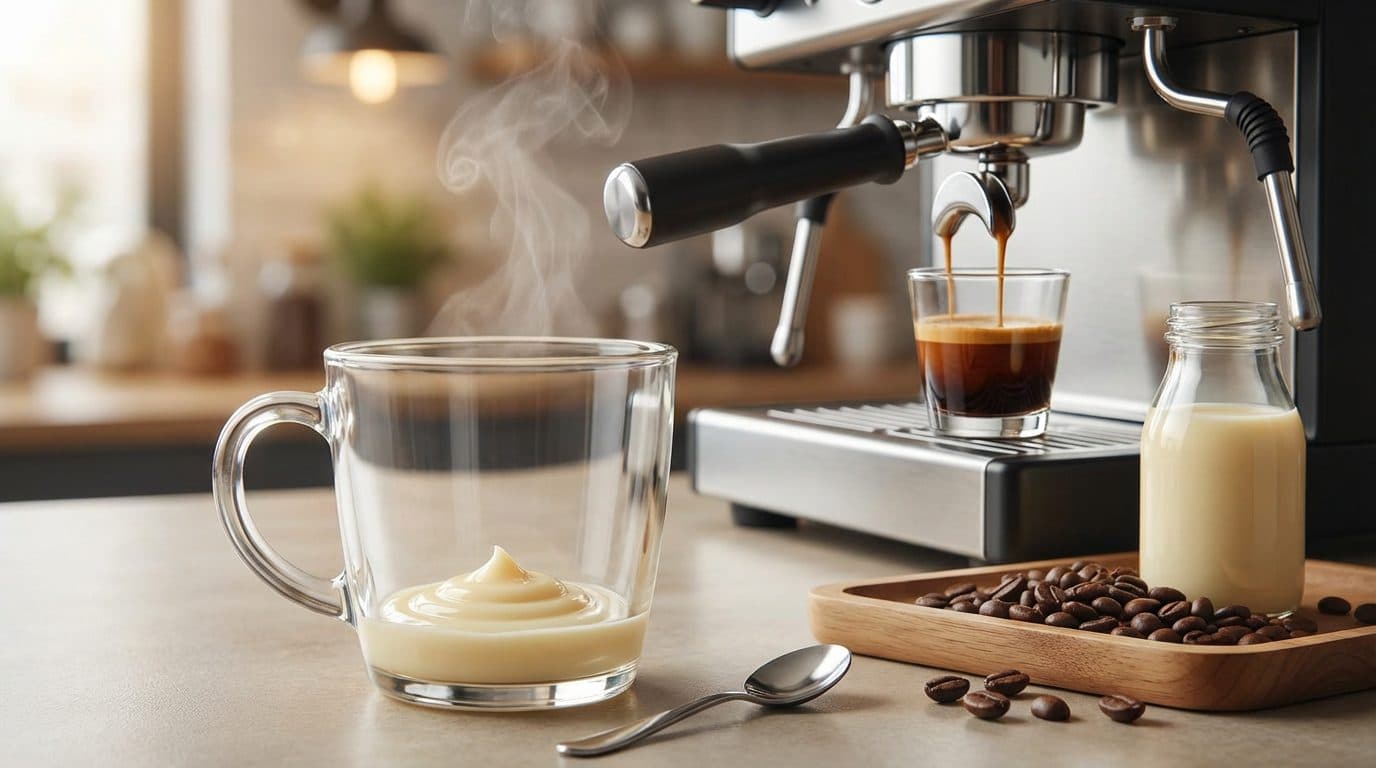
Use the following as a starting workflow. Preparation time varies with the brewer and milk tool, so record your actual time instead of assuming a café-equivalent result.
Taste Profile: Sweet, caramelized, creamy with bold espresso notes cutting through the richness.
- Add the condensed milk first. Spoon 1-2 tablespoons of sweetened condensed milk into the bottom of your glass or mug. Starting with less is smart—you can always add more later.
- Pull your espresso shot. Brew a strong double shot of espresso (or about 60ml of concentrated coffee from a Moka pot). The key here is intensity—weak coffee will get lost in all that creamy sweetness.
- Pour espresso over the condensed milk. Pour slowly and give it a quick stir to help dissolve the condensed milk. You’ll see it swirl into a beautiful caramel color.
- Steam or froth your milk. Heat your milk to around 60-65°C (140-150°F) and froth until you get a nice microfoam. If using a handheld frother, heat the milk first, then froth for 20-30 seconds.
- Pour the frothed milk. Add the steamed milk slowly, holding back the foam with a spoon, then top with that creamy microfoam.
- Give it a final gentle stir. Mix everything together so the flavors combine, or leave it layered if you want that Instagram-worthy look.
Barista Tip: Use filtered water for brewing your espresso. It makes a noticeable difference in taste—hard water can add unwanted mineral flavors that clash with the sweetness of the condensed milk.
A Mini Scenario: The Morning Rush Version
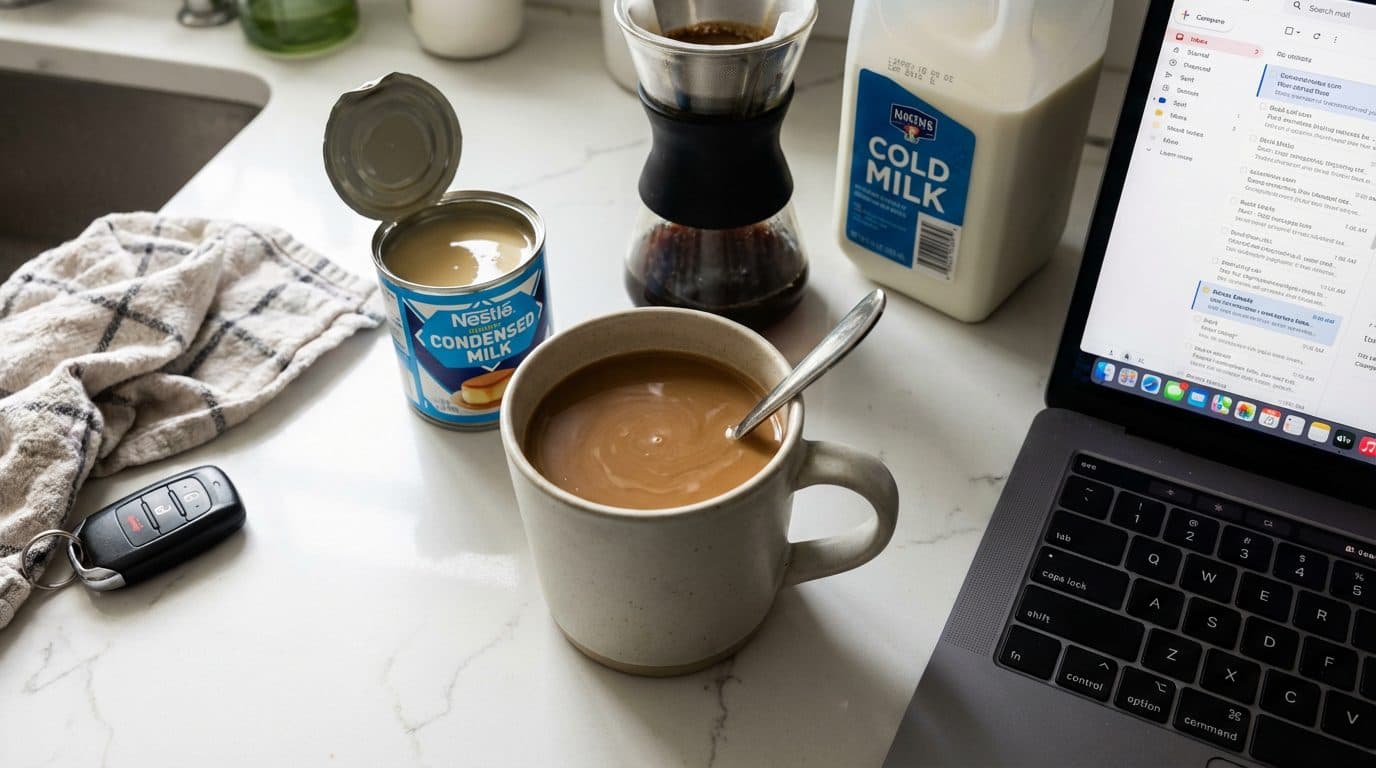
Let’s be real—not every morning allows for a leisurely coffee ritual. When I’m rushing to start my workday, I skip the milk frothing entirely. I simply add the condensed milk, pour hot espresso over it, top with cold milk, and stir. Is it as fancy? No. Is it still delicious? Absolutely. Life is too short for bad coffee, but it’s also too short to stress about perfect foam at 7 AM.
How to Make an Iced Spanish Latte
Honestly? The iced version might be even better than hot. There’s something about that cold, creamy sweetness that just works perfectly, especially on warm afternoons when you need a pick-me-up.
- Add condensed milk to your glass. Use 1-2 tablespoons, same as the hot version.
- Fill the glass with ice. Don’t be shy—fill it about three-quarters full with ice cubes.
- Brew your espresso and let it cool slightly. You can pour it directly over ice, but letting it cool for 30 seconds prevents the ice from melting too fast.
- Pour espresso over the ice. Watch those beautiful layers form as it cascades down.
- Add cold milk. Pour slowly for a layered effect, or stir immediately if you’re impatient like me.
- Stir well and enjoy. Make sure that condensed milk at the bottom gets fully incorporated.
Barista Tip: For an extra-strong iced version, freeze leftover espresso in ice cube trays. Use these coffee cubes instead of regular ice, and your drink won’t get watered down as it sits.
Common Spanish Latte Mistakes (And How to Avoid Them)
The following troubleshooting checks describe common recipe variables rather than undocumented personal test results.
Using Weak Coffee
This is the most common mistake I see. Regular drip coffee doesn’t have enough intensity to stand up to sweetened condensed milk. You’ll end up with something that tastes like sweet milk with a hint of coffee in the background. Always use espresso or very strong concentrated coffee.
Adding Too Much Condensed Milk
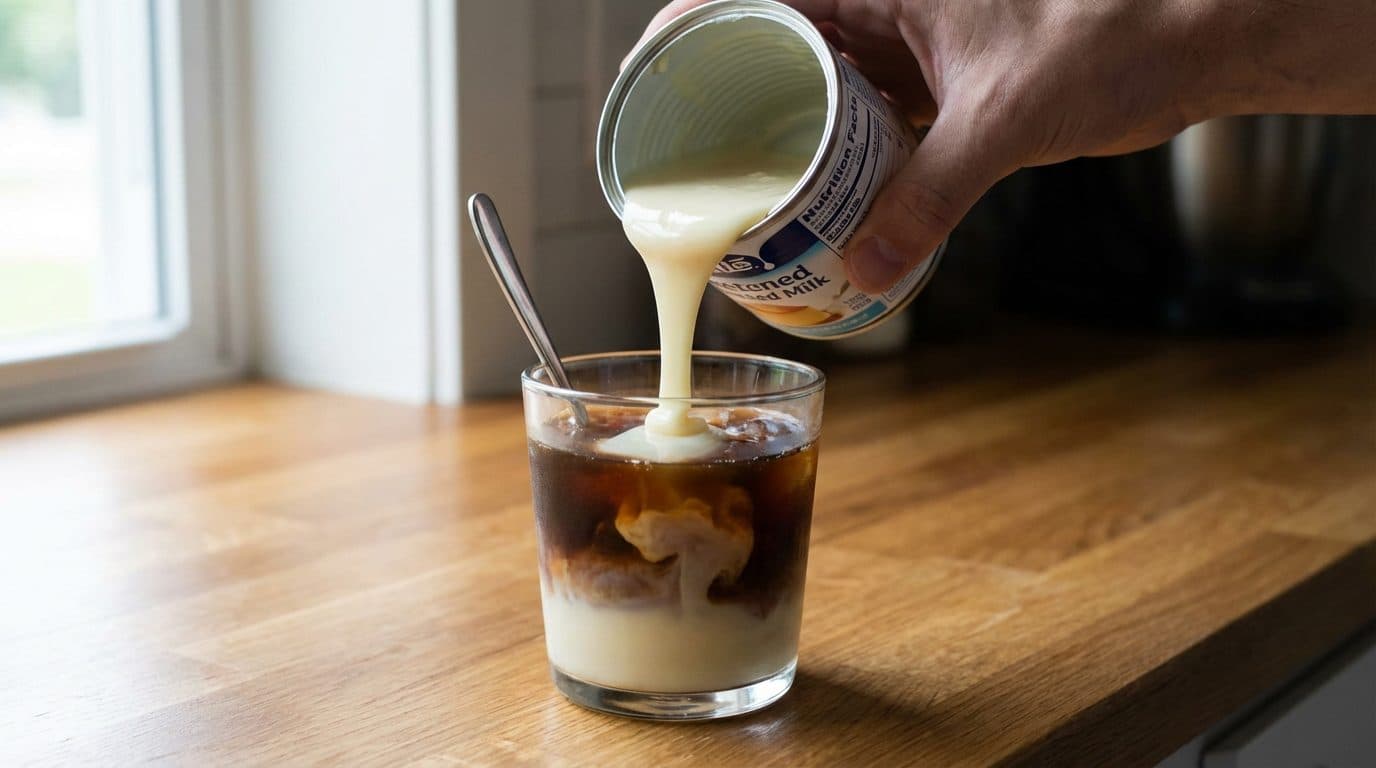
I get it—that stuff is addictive. But more isn’t always better. Too much condensed milk overwhelms everything and makes the drink cloyingly sweet. Start with one tablespoon and work up from there. You can always add more; you can’t take it away.
Not Mixing the Base Properly
Condensed milk is thick and tends to sink. If you don’t stir that first espresso pour into the condensed milk, you’ll end up sipping bitter coffee at the top and pure sugar syrup at the bottom. Take those extra five seconds to mix the base before adding your steamed milk.
Over-Frothing the Milk
You want silky microfoam, not stiff peaks like you’re making meringue. Over-frothed milk becomes bubbly and loses that velvety texture that makes a Spanish Latte so special. Froth until small, uniform bubbles form—that’s your sweet spot.
Variations to Try Once You’ve Mastered the Basics
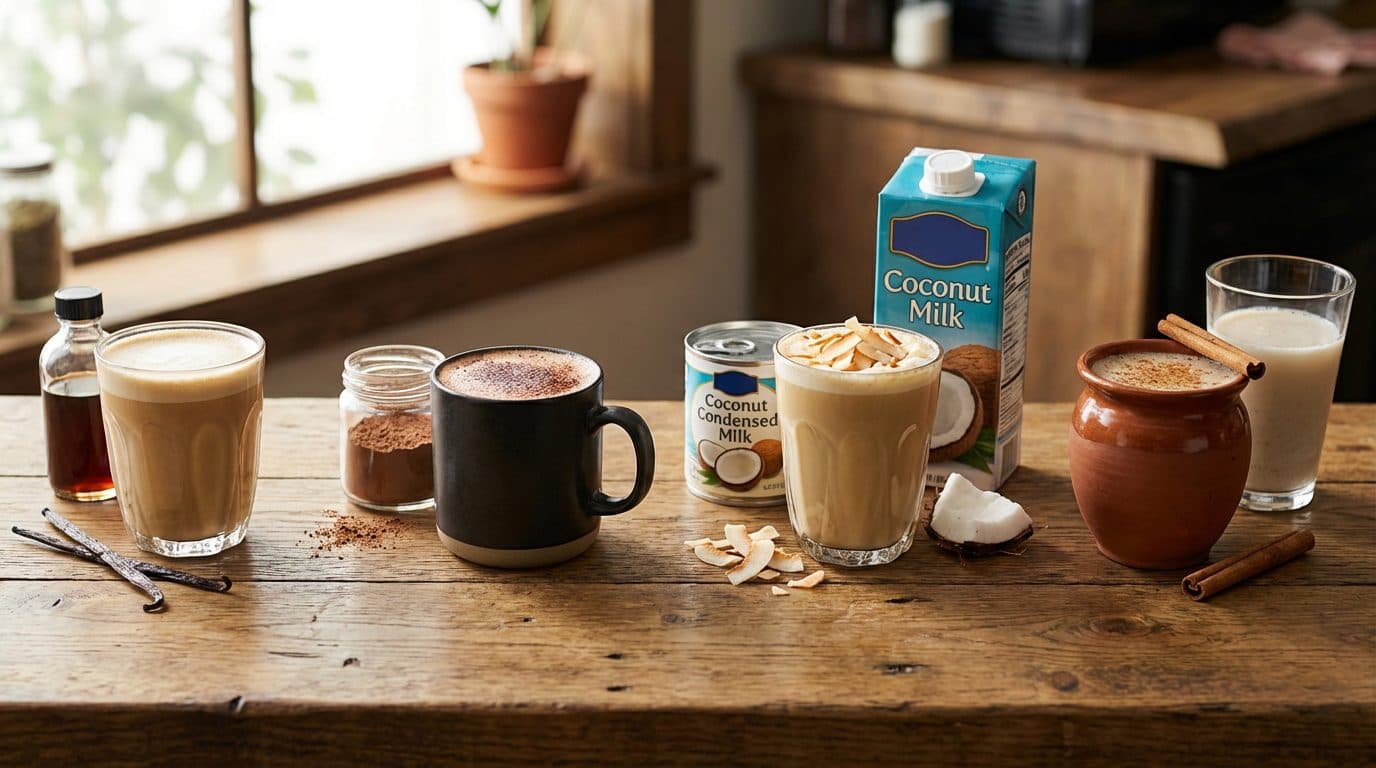
Once the base recipe is repeatable, test one variation at a time and record the ingredient amount.
- Vanilla Spanish Latte: Add half a teaspoon of vanilla extract to the condensed milk before pouring in the espresso.
- Mocha Spanish Latte: Mix a teaspoon of cocoa powder with the condensed milk for a chocolatey twist.
- Coconut Spanish Latte: Use coconut condensed milk (yes, it exists!) and coconut milk for a tropical, dairy-free version.
- Dirty Horchata Latte: Replace regular milk with horchata for a cinnamon-rice milk flavor that’s incredible with espresso.
- Salted Caramel Spanish Latte: Add a tiny pinch of sea salt to the condensed milk base. Trust me on this one—the salt amplifies the sweetness beautifully.
A coconut variation changes sweetness, fat, and flavor according to the exact coconut products used. Check both ingredient labels and adjust the condensed-milk dose before comparing it with the dairy version.
Frequently Asked Questions
Can I make a Spanish Latte without an espresso machine?
Yes, absolutely! A Moka pot, Aeropress, or even strong French press coffee works well. The key is concentration—brew your coffee stronger than you normally would. A Moka pot is particularly great because it produces coffee with similar intensity to espresso without the expensive equipment.
Is a Spanish Latte very high in calories?
Calories and added sugar depend on the exact condensed milk, milk, serving size, and dose. Calculate the drink from both product labels and measured amounts; do not rely on a universal calorie range.
Can I use evaporated milk instead of sweetened condensed milk?
They’re not interchangeable. Evaporated milk is unsweetened and has a different consistency. If you only have evaporated milk, you’d need to add sugar separately, but the result won’t be quite the same. The magic of sweetened condensed milk is its thick, syrupy texture that creates that signature creaminess.
How do I store leftover condensed milk?
After opening condensed milk, follow the manufacturer’s storage and discard instructions for the exact product. Transfer it only if the label permits, refrigerate promptly, date the container, and measure portions rather than assuming every ice-cube compartment equals one tablespoon.
Sources and Method Notes
What’s the best espresso roast for Spanish Latte?
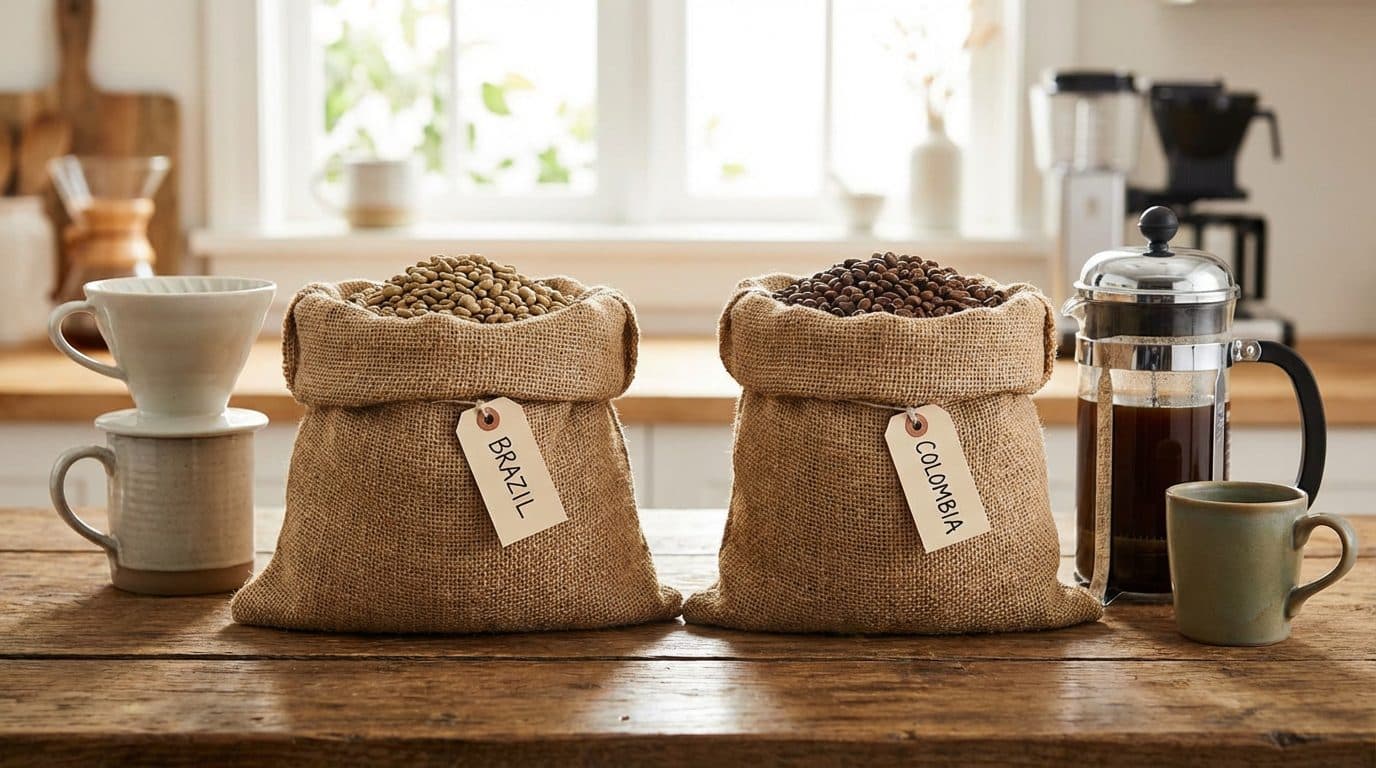
I’ve found that medium to dark roasts work best. They have enough body and bitterness to balance the sweetness of the condensed milk. Light roasts can taste a bit too acidic and fruity, which doesn’t always pair well with the caramelized notes.
Final Thoughts: Your Perfect Spanish Latte Awaits
Making a Spanish Latte at home is one of those simple pleasures that feels way more impressive than it actually is. With just a few ingredients and about five minutes, you can recreate that coffee shop experience without leaving your kitchen—or spending your entire coffee budget in a week.
Start with the basic recipe, get comfortable with the ratios that work for your taste buds, and then experiment with variations. Whether you prefer it hot on a chilly morning or iced during an afternoon slump, this drink delivers every time. Your perfect Spanish Latte is just a few shots of espresso and a spoonful of condensed milk away—so go ahead and make yourself one. You deserve it.


Comments