



Table of Contents
- Understanding Your Caffeine Limits on Busy Workdays
- Signs You Might Be Overdoing Caffeine
- Strategic Timing: When to Drink Coffee for Maximum Effect
- The Afternoon Slump Solution
- Choosing Lower-Caffeine Coffee Options
- Practical Swaps for Busy Workdays
- Building a Sustainable Coffee Routine for Work
- Sample Workday Coffee Schedule
- Mindset Shifts for Healthier Coffee Habits
- Frequently Asked Questions
- How much caffeine is too much on a workday?
- Can I drink decaf coffee instead to avoid caffeine?
- Will reducing caffeine make me less productive at work?
- What's the best coffee alternative for afternoon energy?
- How long before bed should I stop drinking coffee?
- Conclusion: Finding Your Coffee Balance
You love coffee. You need coffee. But somewhere between your third cup and that jittery feeling during your afternoon meeting, you’ve wondered: am I overdoing it? If you’re trying to figure out how to enjoy coffee on busy workdays without overdoing caffeine, you’re not alone. Millions of people struggle to find that sweet spot where coffee fuels productivity without causing anxiety, sleep issues, or that dreaded mid-afternoon crash.
In this guide, I’ll share practical strategies to help you get the most out of your coffee ritual while keeping your caffeine intake in check. Whether you’re a remote worker, office warrior, or someone constantly on the go, these tips will help you maintain energy throughout the day—without the downsides.
Understanding Your Caffeine Limits on Busy Workdays
Before you can manage your caffeine intake, you need to understand what “overdoing it” actually means. For most healthy adults, up to 400 milligrams of caffeine per day is considered safe. That’s roughly four 8-ounce cups of brewed coffee. However, individual tolerance varies wildly based on genetics, body weight, and how regularly you consume caffeine.
Did You Know? Some people metabolize caffeine quickly (fast metabolizers), while others process it slowly. If you’re a slow metabolizer, even two cups might leave you feeling wired for hours. Pay attention to how your body responds—it’s the best indicator of your personal limit.
On busy workdays, it’s tempting to reach for cup after cup to power through tasks. But here’s the thing: more caffeine doesn’t always mean more productivity. After a certain point, you’re just adding side effects without additional benefits. I’ve found that tracking my intake for a week helped me identify my personal sweet spot—and it was lower than I expected.
Signs You Might Be Overdoing Caffeine
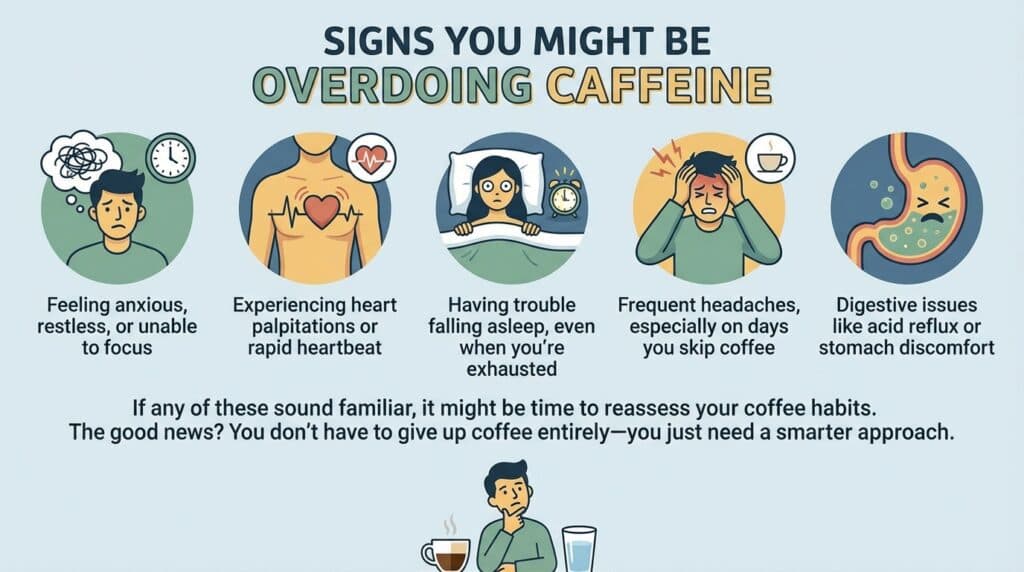
- Feeling anxious, restless, or unable to focus
- Experiencing heart palpitations or rapid heartbeat
- Having trouble falling asleep, even when you’re exhausted
- Frequent headaches, especially on days you skip coffee
- Digestive issues like acid reflux or stomach discomfort
If any of these sound familiar, it might be time to reassess your coffee habits. The good news? You don’t have to give up coffee entirely—you just need a smarter approach.
Strategic Timing: When to Drink Coffee for Maximum Effect
Timing matters more than most people realize. Your body produces cortisol (a natural alertness hormone) in cycles throughout the day. Drinking coffee when cortisol is already high means you’re essentially wasting caffeine and building tolerance faster.
Key Takeaway: The best times to drink coffee are typically between 9:30–11:30 AM and 1:30–5:00 PM, when cortisol levels naturally dip. Avoid coffee first thing in the morning—wait at least an hour after waking up.
Here’s a simple timing strategy I use on busy workdays:
- First cup: Around 9:30 AM, after my cortisol peak has passed
- Second cup (if needed): Early afternoon, around 1:30–2:00 PM
- Cut-off time: No coffee after 2:00–3:00 PM to protect sleep quality
In my experience, this schedule keeps me alert during peak work hours without interfering with my ability to wind down at night. Sleep quality directly affects how much caffeine you’ll crave the next day—it’s a cycle worth breaking.
The Afternoon Slump Solution
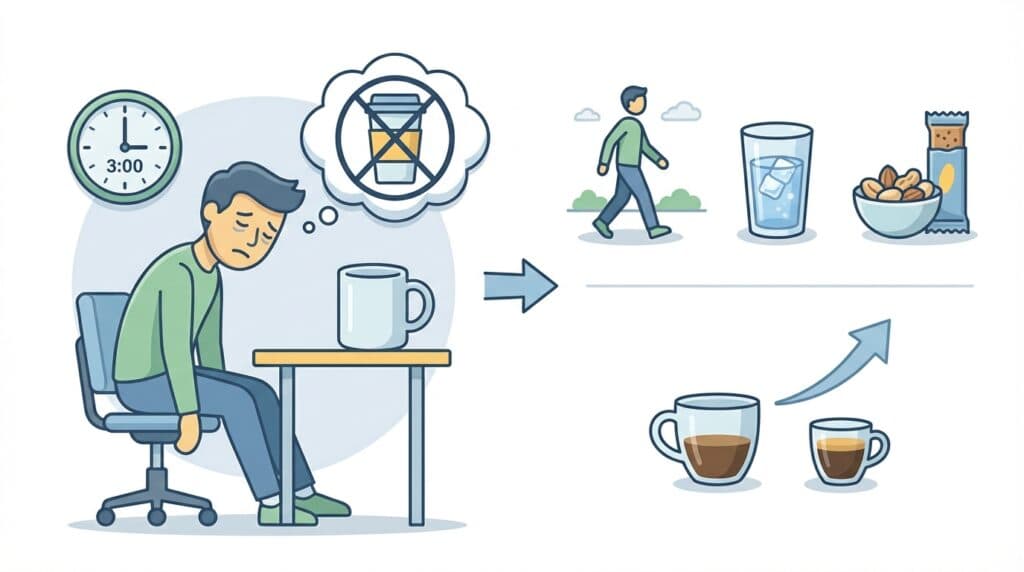
That 3 PM energy crash is real, and reaching for another coffee seems logical. But here’s a better approach: instead of more caffeine, try a 10-minute walk, a glass of cold water, or a small protein-rich snack. These alternatives address the actual cause of your slump (often dehydration or blood sugar dips) rather than masking it with stimulants.
If you absolutely need an afternoon pick-me-up, consider half-caf coffee or a small espresso shot. You’ll get a gentle boost without the full caffeine load that could wreck your evening.
Choosing Lower-Caffeine Coffee Options
Not all coffee is created equal when it comes to caffeine content. Your brewing method, bean type, and serving size all play a role. Understanding these differences lets you enjoy more cups without exceeding your limit.
| Coffee Type | Approximate Caffeine (per 8 oz) |
|---|---|
| Drip/Filter Coffee | 95–165 mg |
| Espresso (1 shot) | 63 mg |
| Cold Brew | 100–200 mg |
| Instant Coffee | 30–90 mg |
| Half-Caf Blend | 45–80 mg |
Surprised by cold brew? Many people assume it’s gentler, but the long steeping process actually extracts more caffeine. If you’re watching your intake, cold brew might not be your best friend on busy workdays.
Practical Swaps for Busy Workdays
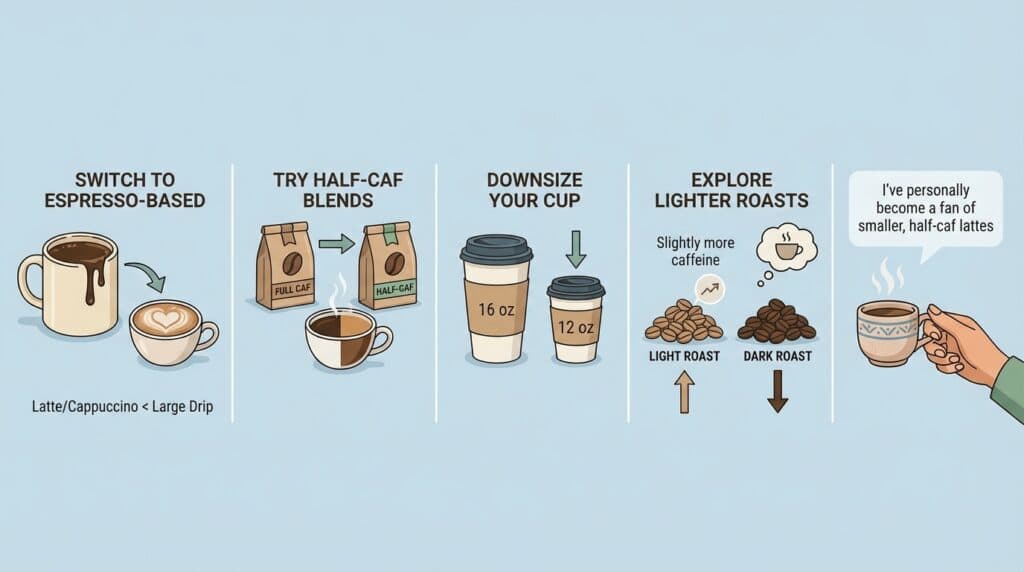
- Switch to espresso-based drinks: A latte or cappuccino typically has less caffeine than a large drip coffee
- Try half-caf blends: You get the ritual and flavor with roughly half the caffeine
- Downsize your cup: Going from a 16 oz to a 12 oz serving makes a meaningful difference over time
- Explore lighter roasts: Contrary to popular belief, light roasts often have slightly more caffeine than dark roasts, but the difference is minimal—choose based on taste preference
I’ve personally become a fan of half-caf for my second cup of the day. It satisfies the craving for a warm mug in my hands without pushing me over my caffeine comfort zone.
Building a Sustainable Coffee Routine for Work
The key to enjoying coffee on busy workdays without overdoing caffeine is creating a routine that works with your schedule, not against it. Here’s a framework you can adapt:
Morning ritual: Start your day with water before coffee. Hydration helps your body process caffeine more efficiently and reduces the urge to over-caffeinate. Then, enjoy your first cup mindfully—not while frantically checking emails, but as a moment to ease into your day.
Mid-morning check-in: Before reaching for cup number two, ask yourself: Am I actually tired, or am I just bored, stressed, or habituated? Sometimes we drink coffee out of routine rather than need. A quick stretch or a few deep breaths might be what you actually need.
Afternoon alternatives: Keep caffeine-free options available. Herbal tea, decaf coffee, or even a sparkling water can satisfy the desire for a beverage break without adding to your caffeine total.
Sample Workday Coffee Schedule
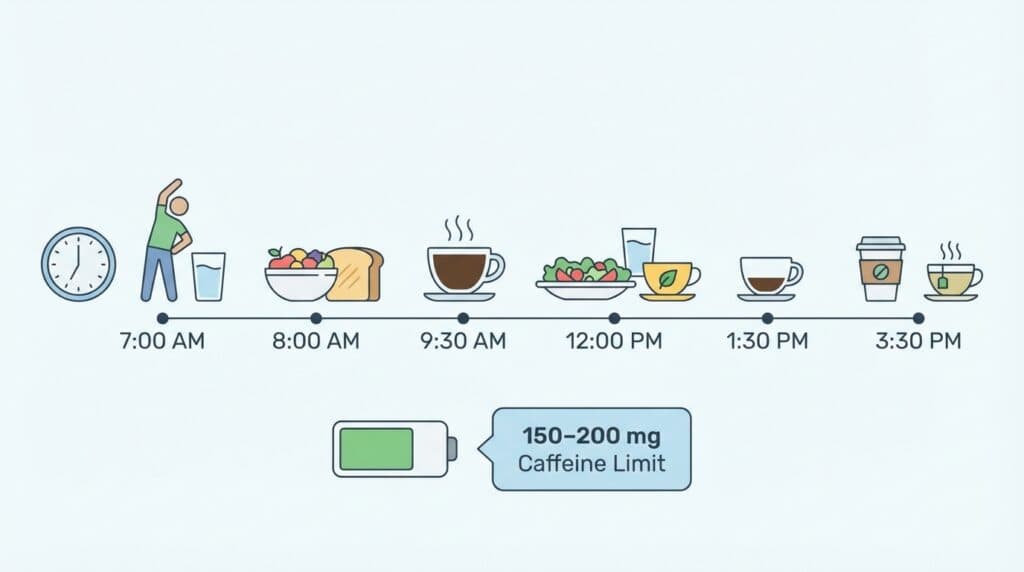
- 7:00 AM: Wake up, drink a full glass of water
- 8:00 AM: Light breakfast
- 9:30 AM: First coffee (regular strength)
- 12:00 PM: Lunch with water or herbal tea
- 1:30 PM: Second coffee (half-caf or smaller serving)
- 3:30 PM: Decaf or caffeine-free alternative if needed
This schedule keeps total caffeine around 150–200 mg for most people—well within safe limits while still providing the energy boost you need during peak work hours.
Mindset Shifts for Healthier Coffee Habits
Sometimes the biggest changes come from how we think about coffee, not just how we drink it. Here are a few mindset shifts that have helped me and many others:
Quality over quantity: Instead of multiple mediocre cups, invest in one or two really good ones. When your coffee tastes amazing, you savor it more and feel less compelled to keep refilling.
Coffee as a tool, not a crutch: Use caffeine strategically for demanding tasks or important meetings, rather than as a constant background presence. This keeps your tolerance low and makes each cup more effective.
Embrace the ritual: The act of making and drinking coffee can be calming in itself. Even on busy workdays, taking five minutes to prepare your coffee mindfully can reduce stress—which means you’ll need less caffeine to feel alert.
Life is too short for bad coffee, but it’s also too short to spend feeling jittery and unable to sleep. Finding balance is the goal.
Frequently Asked Questions
How much caffeine is too much on a workday?
For most adults, staying under 400 mg per day is considered safe. However, if you’re experiencing anxiety, sleep problems, or digestive issues, your personal limit might be lower. Start by tracking your intake for a week and noting how you feel at different levels.
Can I drink decaf coffee instead to avoid caffeine?
Decaf is a great option, but it’s not completely caffeine-free. A typical cup contains 2–15 mg of caffeine. For most people, this is negligible, but if you’re highly sensitive, even decaf in the evening might affect your sleep.
Will reducing caffeine make me less productive at work?
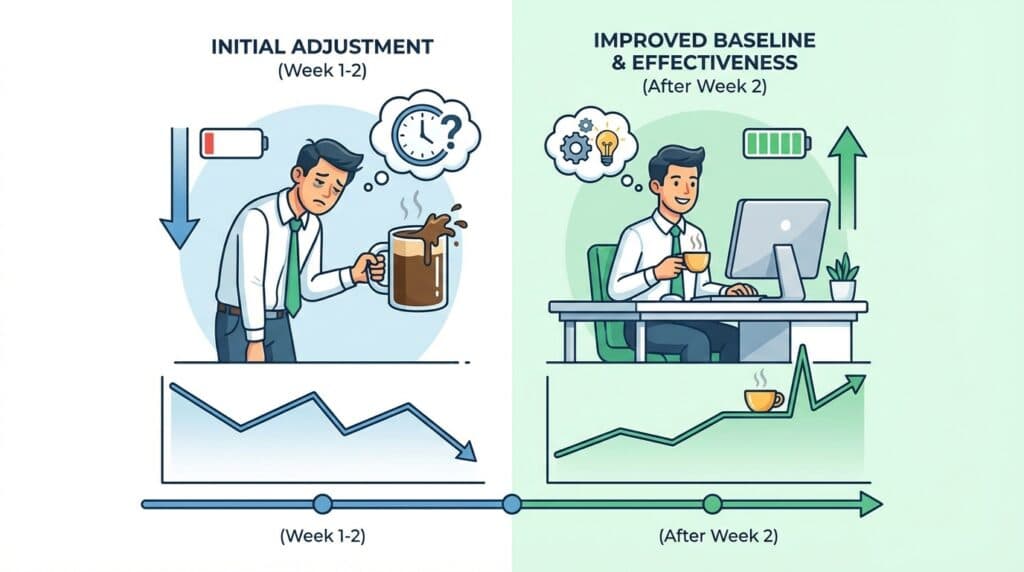
Initially, you might feel a dip in energy as your body adjusts. But within a week or two, most people find their baseline energy improves. Lower caffeine tolerance also means each cup becomes more effective, so you get more benefit from less.
What’s the best coffee alternative for afternoon energy?
Green tea offers a gentler caffeine boost (around 25–50 mg per cup) along with L-theanine, which promotes calm focus. Other options include a short walk, cold water, or a protein-rich snack to address the underlying cause of your energy dip.
How long before bed should I stop drinking coffee?
Caffeine has a half-life of about 5–6 hours, meaning half of it is still in your system that long after drinking. To protect sleep quality, most experts recommend cutting off caffeine at least 6–8 hours before bedtime. For a 10 PM bedtime, that means no coffee after 2–4 PM.
Conclusion: Finding Your Coffee Balance
Enjoying coffee on busy workdays without overdoing caffeine isn’t about deprivation—it’s about being intentional. By understanding your personal limits, timing your cups strategically, choosing lower-caffeine options when appropriate, and building a sustainable routine, you can have the best of both worlds: the energy and enjoyment coffee provides, without the downsides of overconsumption.
Start small. Maybe that means switching your second cup to half-caf, or simply waiting an hour after waking before your first sip. Pay attention to how these changes affect your energy, focus, and sleep. Over time, you’ll develop a coffee routine that supports your productivity and wellbeing—even on your busiest days. Your future well-rested self will thank you.


Comments