


Table of Contents
- What You'll Need
- Equipment
- Ingredients
- Why Brew Coffee Using a Metal Mesh Filter?
- Taste Profile
- Step-by-Step Guide to Brewing with a Metal Mesh Filter
- 1. Heat Your Water
- 2. Grind Your Coffee
- 3. Rinse the Filter and Preheat
- 4. Add Your Coffee Grounds
- 5. The Bloom Phase
- 6. Continue Pouring in Stages
- 7. Let It Finish and Serve
- Metal Mesh Filter Brewing Variables
- Cleaning and Maintaining Your Metal Mesh Filter
- Daily Cleaning
- Weekly Deep Clean
- What to Avoid
- Common Mistakes and How to Avoid Them
- Too Much Sediment in the Cup
- Bitter or Over-Extracted Taste
- Weak or Watery Coffee
- Metallic Taste
- Frequently Asked Questions
- Is coffee brewed with a metal mesh filter healthier or less healthy than paper-filtered coffee?
- Can I use pre-ground coffee with a metal mesh filter?
- How long does a metal mesh filter last?
- Do metal mesh filters work with all types of pour-over drippers?
- Why does my metal mesh filter brew faster than paper filters?
- Summary and Your Next Step
What You’ll Need
Before you start brewing with a metal mesh filter, let’s gather everything you’ll need. Having the right gear ready makes the whole process smoother and more enjoyable.
Equipment
- Metal mesh filter (cone-shaped for pour-over or flat-bottom depending on your dripper)
- Pour-over dripper or filter holder compatible with your mesh filter
- Gooseneck kettle (highly recommended for control, but a regular kettle works)
- Coffee grinder (burr grinder preferred for consistent grounds)
- Kitchen scale (optional but helpful for consistency)
- Timer (your phone works fine)
- Your favorite mug or carafe
Ingredients
- Fresh coffee beans – about 20-25 grams for a single cup (roughly 2-3 tablespoons)
- Filtered water – approximately 300-350ml per cup
Barista Tip: Use filtered water whenever possible. Tap water with heavy chlorine or minerals can muddy up your coffee’s flavor. Your beans deserve better.
Why Brew Coffee Using a Metal Mesh Filter?
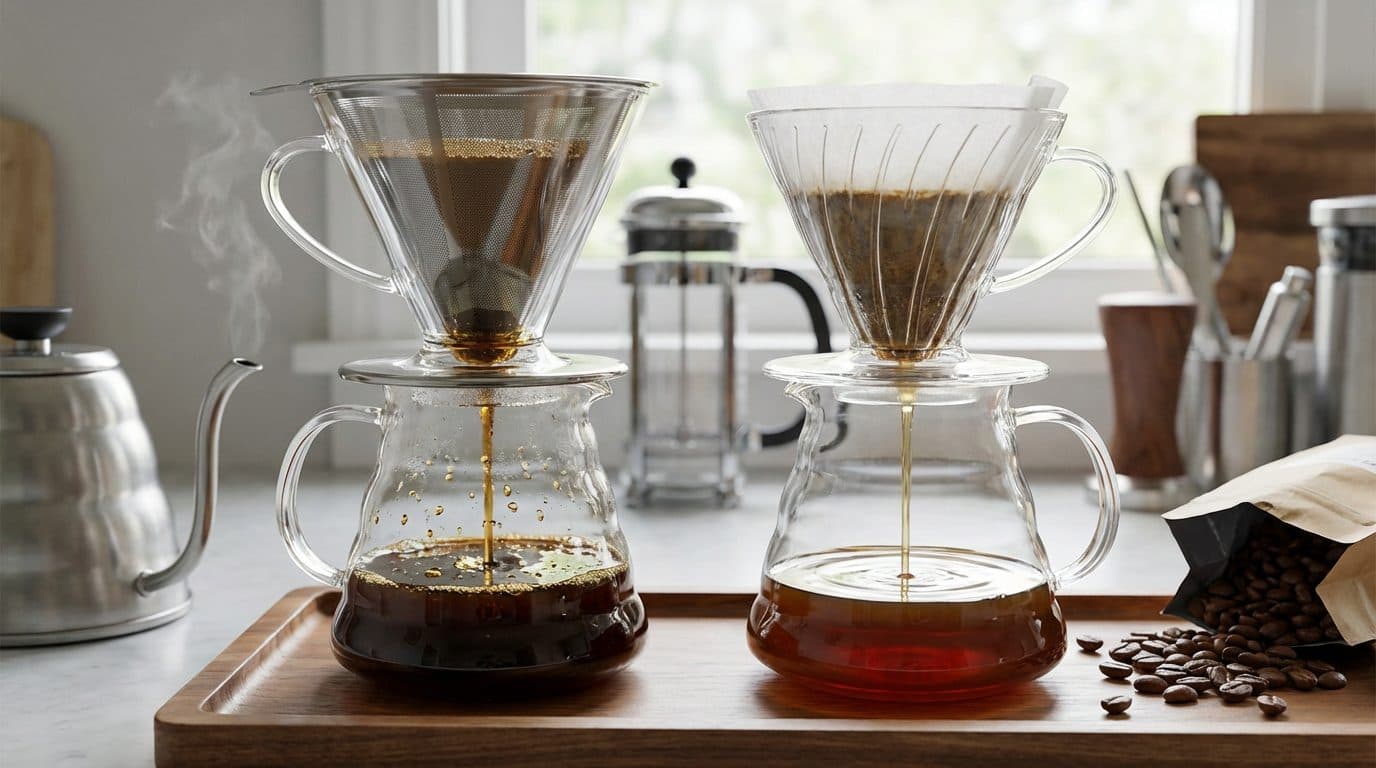
You might be wondering why you should bother with a metal mesh filter when paper filters seem so convenient. The answer comes down to flavor and sustainability. Metal mesh filters allow more of the coffee’s natural oils to pass through into your cup, creating a richer, fuller-bodied brew.
Paper filters absorb these oils, which some people prefer for a “cleaner” taste. But if you love the depth and complexity of French press coffee yet want the clarity of pour-over, a metal mesh filter sits right in that sweet spot. In my experience, the difference is noticeable from your very first sip.
There’s also the environmental angle. A reusable metal mesh filter means no paper waste piling up in your trash. Over months and years of daily brewing, that adds up to a meaningful reduction in your coffee footprint.
Taste Profile
Expect a cup that’s medium to full-bodied with a slightly heavier mouthfeel than paper-filtered coffee. You’ll notice more sweetness and complexity in the flavor notes, along with a pleasant richness. Some fine sediment may settle at the bottom of your cup, which is completely normal.
Step-by-Step Guide to Brewing with a Metal Mesh Filter
Now let’s get into the actual brewing process. I’ve broken this down into numbered steps so you can follow along easily, even on your first try.
1. Heat Your Water
Start by heating your water to around 195-205°F (90-96°C). If you don’t have a thermometer, bring the water to a boil and let it sit for 30-45 seconds. Water that’s too hot will over-extract your coffee, making it bitter. Water that’s too cool will under-extract, leaving you with a weak and sour cup.
2. Grind Your Coffee
Grind your beans to a medium-coarse consistency. Think sea salt or coarse sand. This is slightly coarser than you’d use for a paper filter pour-over. Why? Metal mesh filters have larger holes than paper, so finer grounds will slip through and create excessive sediment in your cup.
In short: if your coffee tastes muddy and over-extracted, try grinding coarser. If it tastes thin and sour, go a bit finer.
3. Rinse the Filter and Preheat
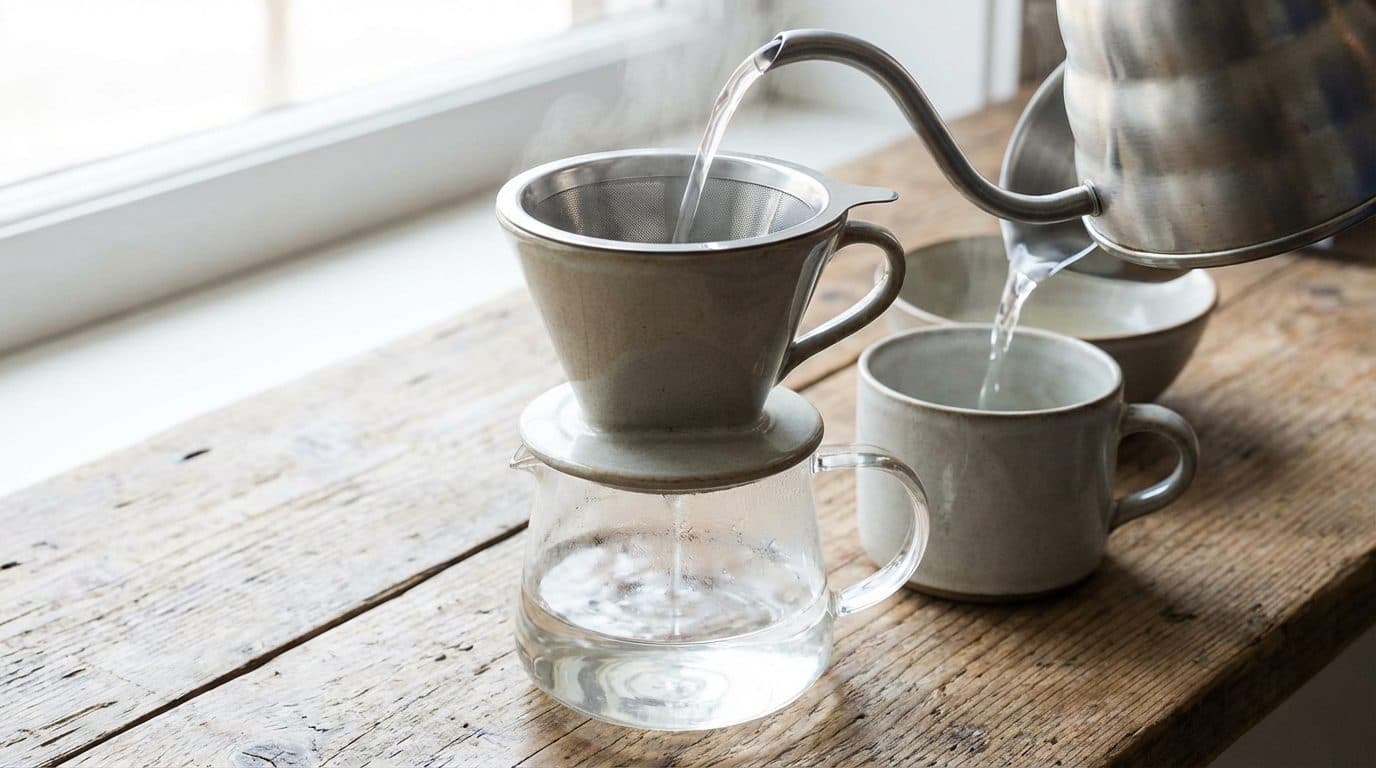
Place your metal mesh filter in the dripper and set it over your mug or carafe. Pour some hot water through the filter to rinse away any residual metallic taste and preheat your brewing vessel. Dump out this rinse water before adding your coffee grounds.
4. Add Your Coffee Grounds
Add your ground coffee to the filter and give it a gentle shake to level the bed. This helps ensure even extraction during brewing. For a standard cup, I recommend starting with a 1:15 ratio – that’s 1 gram of coffee to 15 grams of water. So for 20 grams of coffee, you’ll use 300 grams (or ml) of water.
5. The Bloom Phase
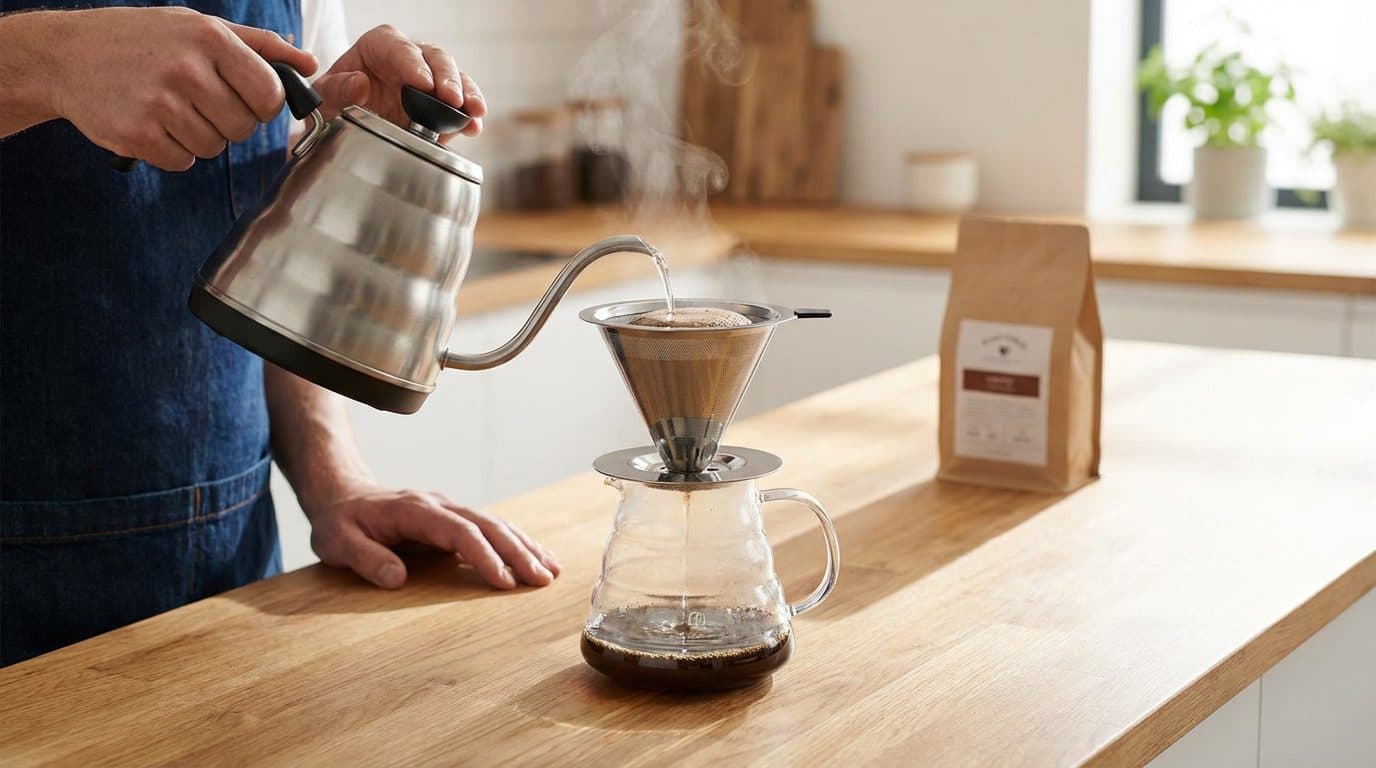
Start your timer and pour just enough hot water to saturate all the grounds – usually about twice the weight of your coffee (so 40-50ml for 20 grams of grounds). You’ll notice the coffee “blooming” and releasing gases, causing the grounds to puff up and bubble slightly.
Let this bloom for 30-45 seconds. This step releases CO2 trapped in fresh coffee, which would otherwise create channeling and uneven extraction. Fresh coffee blooms more dramatically than older coffee – it’s actually a good sign.
6. Continue Pouring in Stages
After the bloom, begin pouring in slow, circular motions starting from the center and spiraling outward. Avoid pouring directly on the filter walls. Add water in stages, allowing the level to drop slightly between pours.
Your total brew time should be around 3-4 minutes from the first pour to the last drip. If it’s taking much longer, your grind is probably too fine. If it’s rushing through in under 2 minutes, you’ve ground too coarse.
7. Let It Finish and Serve
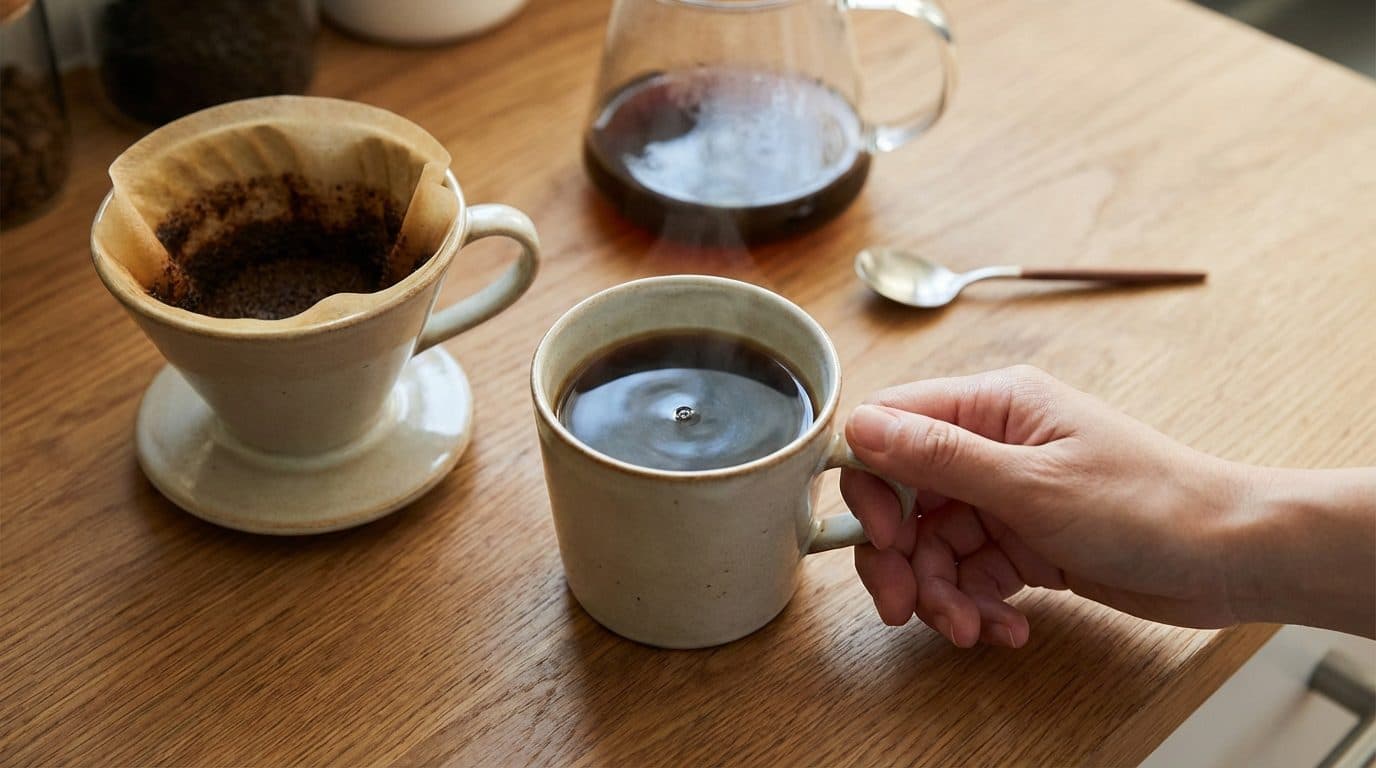
Once all the water has passed through, remove the filter and give your coffee a gentle swirl in the mug. This helps distribute any oils that might be floating on top. Let it cool for a minute or two – I know it’s tempting to dive right in – and then enjoy.
Barista Tip: If you notice too much sediment in your cup, try stirring less vigorously during brewing or using a slightly coarser grind next time.
Metal Mesh Filter Brewing Variables
Understanding the key variables helps you troubleshoot and dial in your perfect cup. Here’s a quick reference table:
| Variable | Recommendation | Effect on Taste |
|---|---|---|
| Grind Size | Medium-coarse | Too fine = bitter, muddy; Too coarse = weak, sour |
| Water Temperature | 195-205°F (90-96°C) | Too hot = bitter; Too cool = sour, thin |
| Coffee-to-Water Ratio | 1:15 to 1:17 | More coffee = stronger; Less coffee = lighter |
| Total Brew Time | 3-4 minutes | Longer = more extraction; Shorter = less extraction |
I’ve found that small adjustments to just one variable at a time help you understand what’s affecting your brew. Change everything at once, and you’ll never know what actually made the difference.
Cleaning and Maintaining Your Metal Mesh Filter
One major advantage of metal mesh filters is their reusability, but that only works if you keep them clean. Coffee oils build up over time and can turn rancid, giving your fresh brews an unpleasant stale taste.
Daily Cleaning
After each use, rinse your filter thoroughly under hot running water. Use your fingers or a soft brush to dislodge any grounds stuck in the mesh. Most of the time, this is all you need.
Weekly Deep Clean
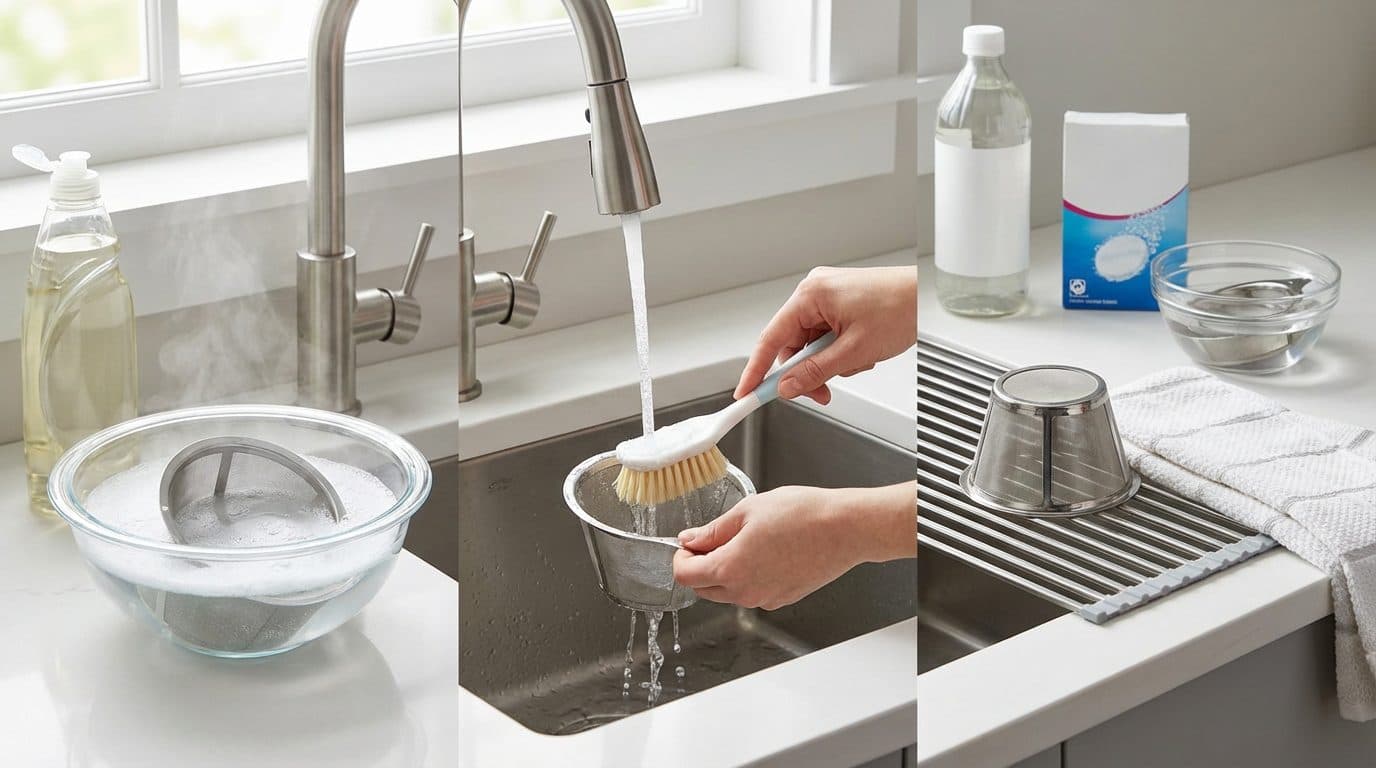
Once a week, give your filter a more thorough cleaning. Soak it in a solution of hot water and a small amount of dish soap for 10-15 minutes. Then scrub gently with a soft brush, rinse completely, and let it air dry.
Some people use a mixture of water and white vinegar or even denture cleaning tablets for stubborn oil buildup. Just make sure to rinse extremely well afterward – you don’t want your morning coffee tasting like vinegar.
What to Avoid
- Harsh scrubbers – Steel wool or abrasive pads can damage the mesh
- Dishwasher – Some filters are dishwasher safe, but the high heat can warp cheaper ones
- Bleach – Too aggressive and can leave residue that affects taste
A well-maintained metal mesh filter can last for years. I’ve been using the same one for over three years now, and it still brews beautifully.
Common Mistakes and How to Avoid Them
Even experienced home baristas run into issues when switching to metal mesh filters. Here are the most common problems I’ve seen and how to fix them.
Too Much Sediment in the Cup
This is the number one complaint. Metal mesh filters simply allow more fines through than paper. To minimize sediment, grind coarser and pour more gently. Also, let your cup sit for a moment before finishing it – the sediment settles at the bottom.
Bitter or Over-Extracted Taste
Usually caused by water that’s too hot, a grind that’s too fine, or brewing for too long. Try lowering your water temperature slightly and grinding a bit coarser. Aim for that 3-4 minute total brew window.
Weak or Watery Coffee
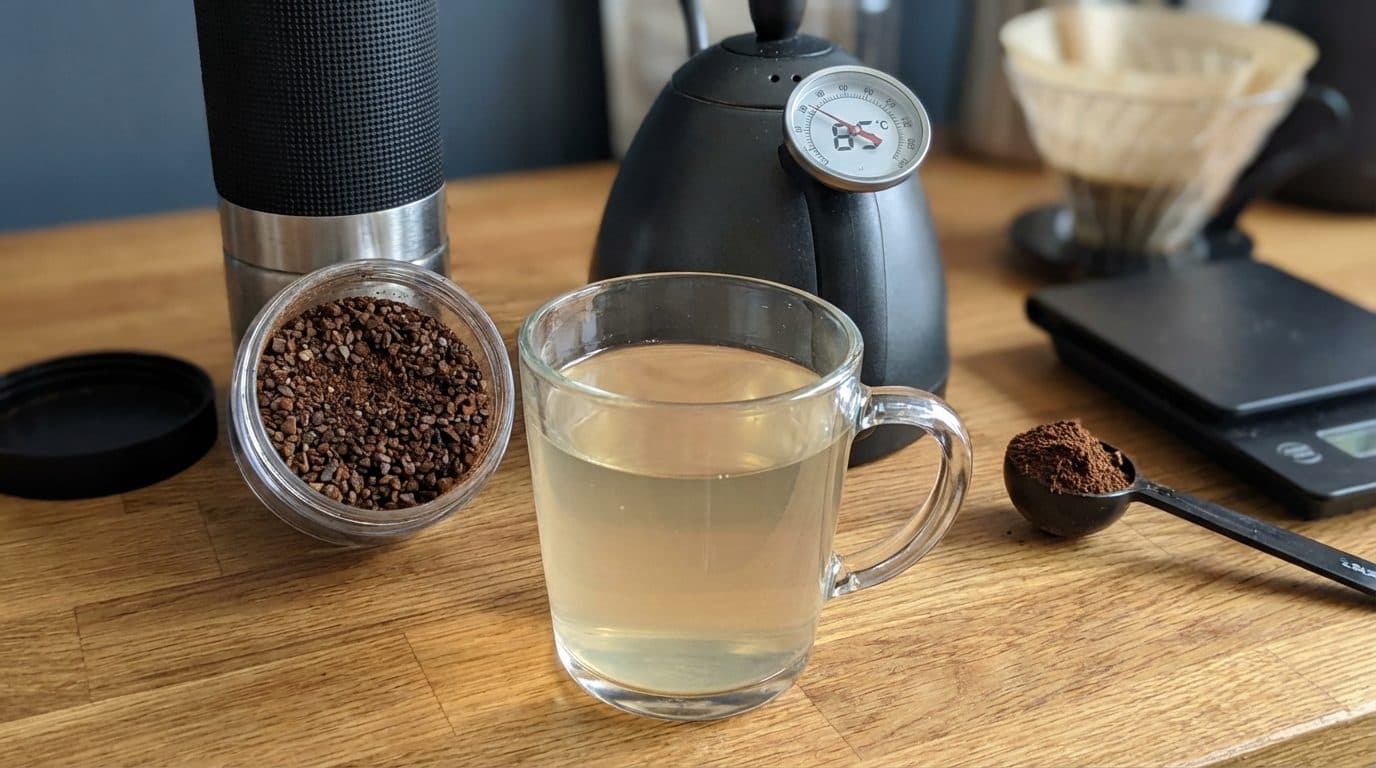
This typically means under-extraction. Your grind might be too coarse, your water too cool, or you’re using too little coffee. Adjust one variable at a time until you find the sweet spot.
Metallic Taste
Brand new metal filters sometimes have a slight metallic flavor. Rinse your filter with hot water several times before first use. If the taste persists after a few brews, try soaking in a vinegar solution and rinsing thoroughly.
Frequently Asked Questions
Is coffee brewed with a metal mesh filter healthier or less healthy than paper-filtered coffee?
Metal mesh filters allow coffee oils called diterpenes (cafestol and kahweol) to pass through. Some studies suggest these compounds can slightly raise cholesterol levels in some people. However, moderate consumption is generally considered safe for most healthy adults. If you have specific health concerns, it’s worth discussing with your doctor.
Can I use pre-ground coffee with a metal mesh filter?
You can, but you’ll likely get more sediment since pre-ground coffee is often ground finer for drip machines. If possible, buy whole beans and grind them fresh at a medium-coarse setting. The flavor difference is significant too.
How long does a metal mesh filter last?
With proper care, a quality metal mesh filter can last anywhere from 3-7 years or even longer. Replace it if you notice tears in the mesh, warping, or a persistent metallic taste that doesn’t go away with cleaning.
Do metal mesh filters work with all types of pour-over drippers?
Not all metal filters are universal. Make sure to buy one designed for your specific dripper (Hario V60, Kalita Wave, Melitta, etc.). The shape, size, and angle need to match for proper brewing.
Why does my metal mesh filter brew faster than paper filters?
Metal mesh has larger pores than paper, so water flows through more quickly. This is why a coarser grind is recommended – it slows things down and gives the water enough contact time with the coffee for proper extraction.
Summary and Your Next Step
Brewing coffee using a metal mesh filter at home offers a unique combination of rich flavor, environmental friendliness, and long-term savings. The fuller body and enhanced oil content create a cup that’s noticeably different from paper-filtered brews – in a good way.
The key points to remember: use a medium-coarse grind, keep your water temperature in the 195-205°F range, stick to a 1:15 coffee-to-water ratio, and aim for a total brew time around 3-4 minutes. Clean your filter properly, and it’ll serve you well for years.
Life is too short for bad coffee. Grab your metal mesh filter, experiment with these techniques, and pay attention to what your taste buds tell you. With a little practice, you’ll be brewing cups that rival your favorite coffee shop – right from your own kitchen.


Comments