


Table of Contents
- Quick Verdict: Airscape Stainless Steel Canister
- Why Coffee Storage Containers Actually Matter
- What Makes a Good Coffee Storage Container?
- Best Budget Coffee Storage Containers Compared
- Airscape Stainless Steel Canister – Best Overall
- Coffee Gator Canister – Best for Fresh Roasts
- OXO Steel POP Container – Best for Ease of Use
- Friis Coffee Vault – Best Runner-Up
- Prepara Evak Container – Best Budget Option
- How to Maximize Your Coffee Storage Container
- Buy the Right Amount of Beans
- Don't Store in the Fridge or Freezer (Usually)
- Keep the Original Bag Inside
- Clean Your Container Regularly
- Common Coffee Storage Mistakes to Avoid
- Frequently Asked Questions
- How long do coffee beans stay fresh in a storage container?
- Are expensive coffee canisters worth the money?
- Can I use mason jars for coffee storage?
- Should I store different coffee varieties in separate containers?
- Do I need a container with a CO2 valve?
- Final Thoughts and Recommendations
Quick Verdict: Airscape Stainless Steel Canister
After testing dozens of coffee storage containers across various price points, the Airscape Stainless Steel Canister stands out as the best budget-friendly option for keeping your beans fresh. It combines an innovative vacuum-seal lid with durable construction, all without breaking the bank. If you want your morning brew to taste as good on day fourteen as it did on day one, this is where your money should go.
Check the latest price on Amazon to grab one before your current bag of beans goes stale.
Why Coffee Storage Containers Actually Matter
Ever wonder why that amazing single-origin you splurged on tastes disappointingly flat after a week? The culprit is almost always improper storage. Coffee beans have four mortal enemies: oxygen, light, moisture, and heat. Leave your beans exposed to any of these, and those delicate flavor compounds start breaking down faster than you’d think.
I’ve found that even moderately priced beans can taste exceptional when stored properly. Conversely, I’ve watched expensive specialty roasts turn bland because someone left them in a paper bag on the counter. The right storage container creates a barrier against freshness-killing elements, extending your beans’ peak flavor window from days to weeks.
Key Takeaway: Investing $15-40 in a quality storage container can save you far more in wasted coffee over time. Think of it as flavor insurance for every bag you buy.
What Makes a Good Coffee Storage Container?
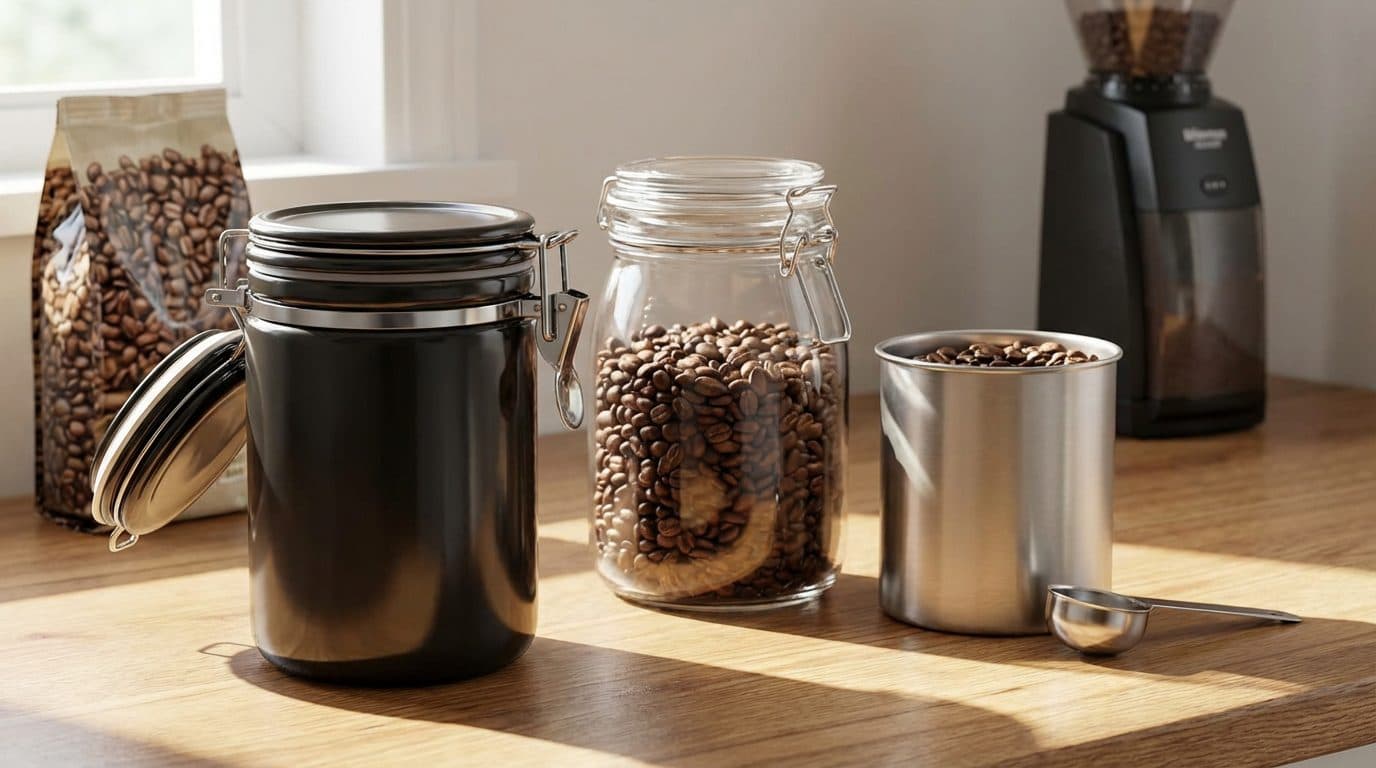
Before diving into specific products, let’s cover what separates effective containers from glorified jars:
- Airtight seal – This is non-negotiable. Oxygen degrades coffee through oxidation, creating stale, cardboard-like flavors.
- Opaque or UV-blocking material – Light accelerates staleness. Clear glass containers on sunny countertops are a recipe for disappointment.
- Appropriate size – Too much empty space means more trapped oxygen. Choose a container that matches your typical purchase amount.
- One-way CO2 valve (bonus) – Freshly roasted beans release carbon dioxide for days. A valve lets gas escape without letting oxygen in.
- Easy to use – If opening your container feels like a workout, you’ll eventually get lazy about sealing it properly.
Best Budget Coffee Storage Containers Compared
I’ve narrowed down the field to five containers that deliver genuine freshness protection without premium price tags. Each one I’ve personally used for at least a month, because specs on a website don’t tell you how something performs in a real kitchen.
| Container | Price Range | Capacity | Material | Seal Type |
|---|---|---|---|---|
| Airscape Stainless Steel | $25-35 | 16 oz | Stainless Steel | Vacuum Lid |
| Coffee Gator Canister | $20-28 | 16 oz | Stainless Steel | Airtight + CO2 Valve |
| OXO Steel POP Container | $18-24 | 16 oz | Steel/Plastic | Push-Button Airtight |
| Friis Coffee Vault | $22-30 | 16 oz | Stainless Steel | Airtight + CO2 Valve |
| Prepara Evak Container | $15-22 | Various | Glass/Silicone | Compression Lid |
Airscape Stainless Steel Canister – Best Overall
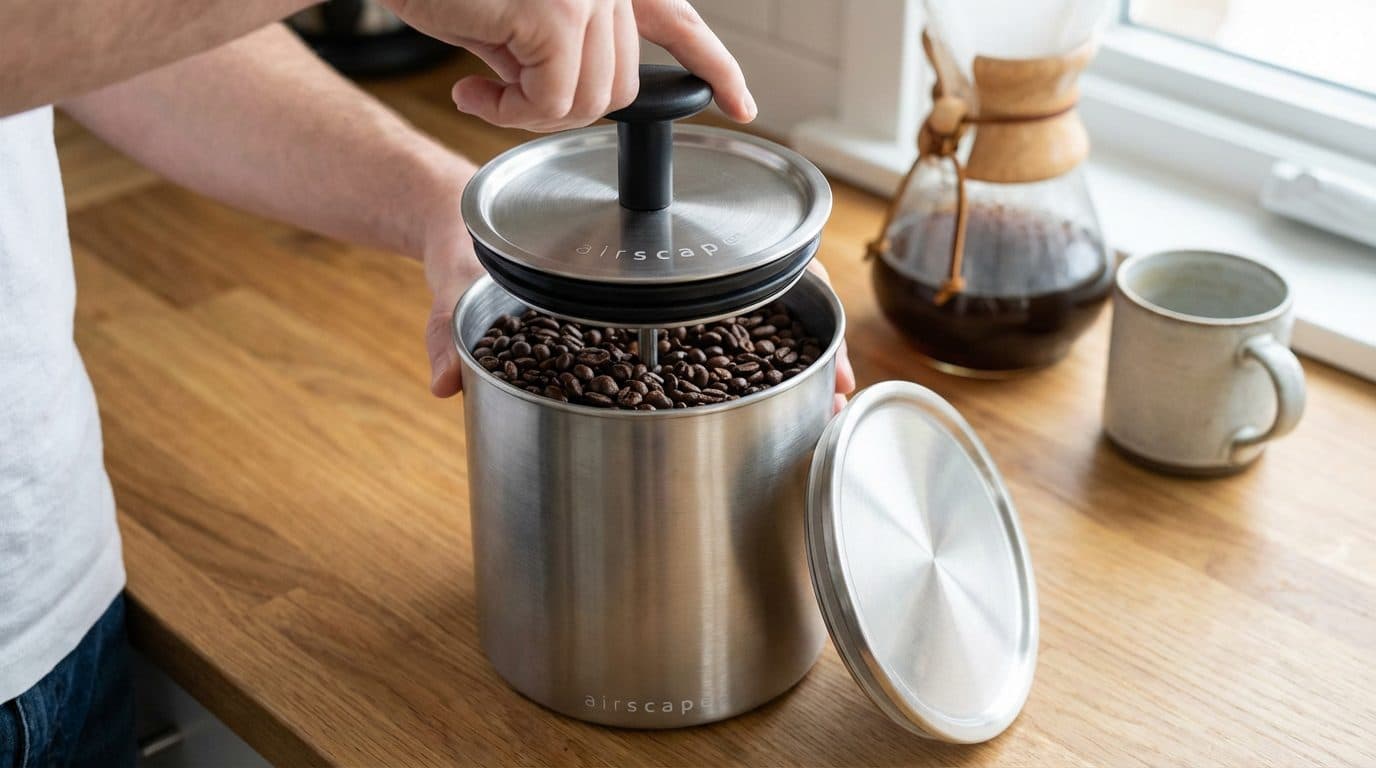
The Airscape uses a patented inner lid that you push down directly onto your beans, forcing out air before sealing. This creates a near-vacuum environment without needing any pumps or complicated mechanisms. In my experience, beans stored in an Airscape maintain their aromatic punch noticeably longer than in standard airtight containers.
Pros:
- Truly removes air rather than just blocking it
- Durable stainless steel construction
- Simple one-hand operation
- Available in multiple colors and sizes
- Dishwasher safe
Cons:
- No CO2 valve for ultra-fresh roasts
- Inner lid requires some getting used to
- Slightly pricier than basic options
Who is this for? Home brewers who buy beans weekly or bi-weekly and want maximum freshness without fussing with valves or pumps. Perfect if you grind before each brew.
Who is this NOT for? Those who buy freshly roasted beans (within 2-3 days of roast) and need degassing capability, or anyone on an extremely tight budget.
See current deals on the Airscape Canister.
Coffee Gator Canister – Best for Fresh Roasts
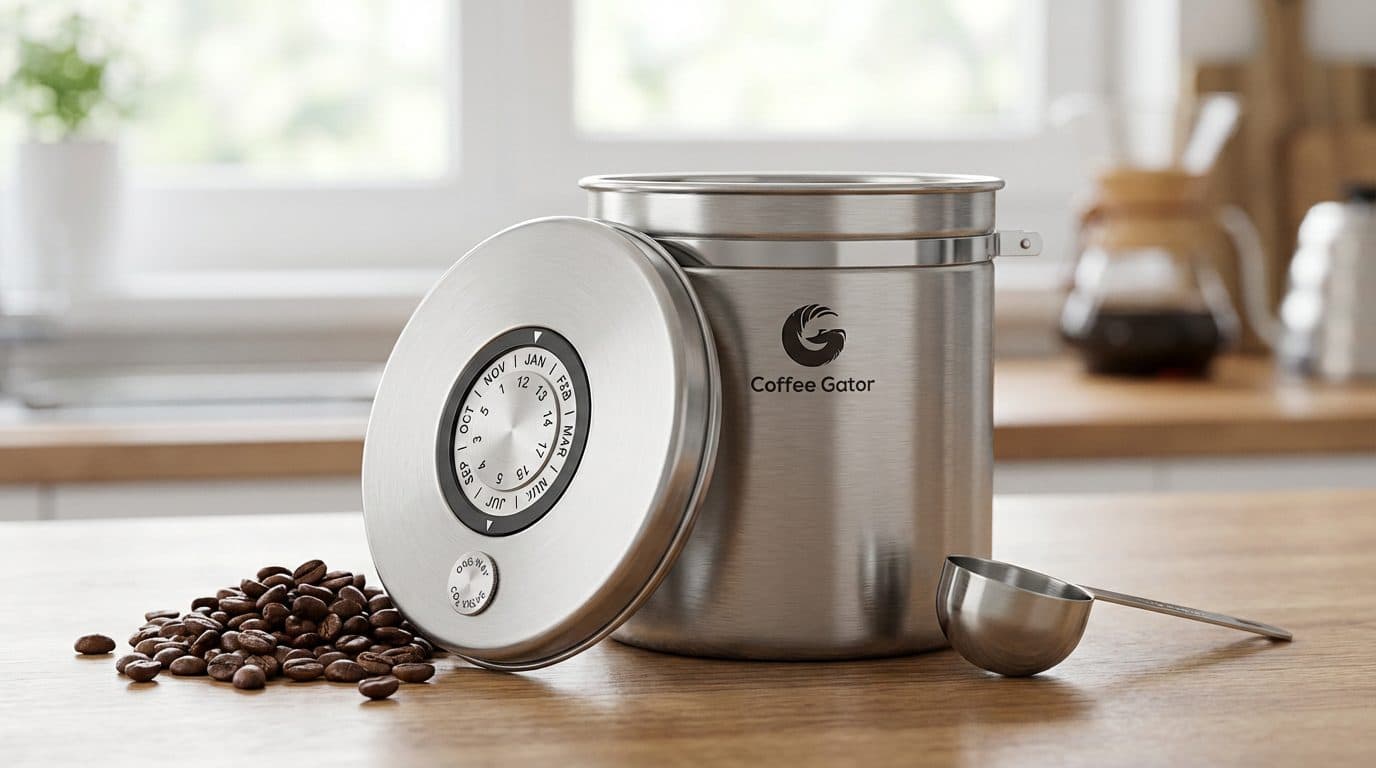
If you’re ordering beans directly from roasters or roasting at home, the Coffee Gator earns its spot. The built-in one-way CO2 valve allows freshly roasted beans to degas naturally while preventing oxygen from entering. It also includes a date wheel on the lid, which sounds gimmicky but genuinely helps track freshness.
Pros:
- One-way CO2 valve for freshly roasted beans
- Date tracking wheel included
- Solid stainless steel build
- Comes with a measuring scoop
- Excellent value for features offered
Cons:
- Valve needs occasional replacement
- Doesn’t actively remove air like Airscape
- Lid can feel a bit stiff initially
Who is this for? Enthusiasts who buy freshly roasted beans and want them to degas properly while staying protected. Great for subscription service users who receive beans shortly after roasting.
Who is this NOT for? Casual drinkers buying pre-ground or store-bought beans that have already degassed.
OXO Steel POP Container – Best for Ease of Use
Sometimes simple wins. The OXO POP container features a push-button lid that creates an airtight seal with one satisfying click. The stainless steel body blocks light completely, and the wide opening makes scooping beans effortless. I keep one of these on my counter because it just works without any thinking required.
Pros:
- One-touch button seal is incredibly easy
- Wide mouth for easy access
- Sleek, modern design
- Part of a larger storage system if you want matching containers
- Very durable construction
Cons:
- No vacuum or CO2 valve functionality
- Button mechanism may wear over time
- Premium for what is essentially an airtight jar
Who is this for? Anyone who values simplicity and aesthetics. Ideal for households where multiple people access the coffee and you need foolproof sealing.
Who is this NOT for? Those seeking maximum freshness technology or anyone put off by paying extra for design elegance.
Friis Coffee Vault – Best Runner-Up
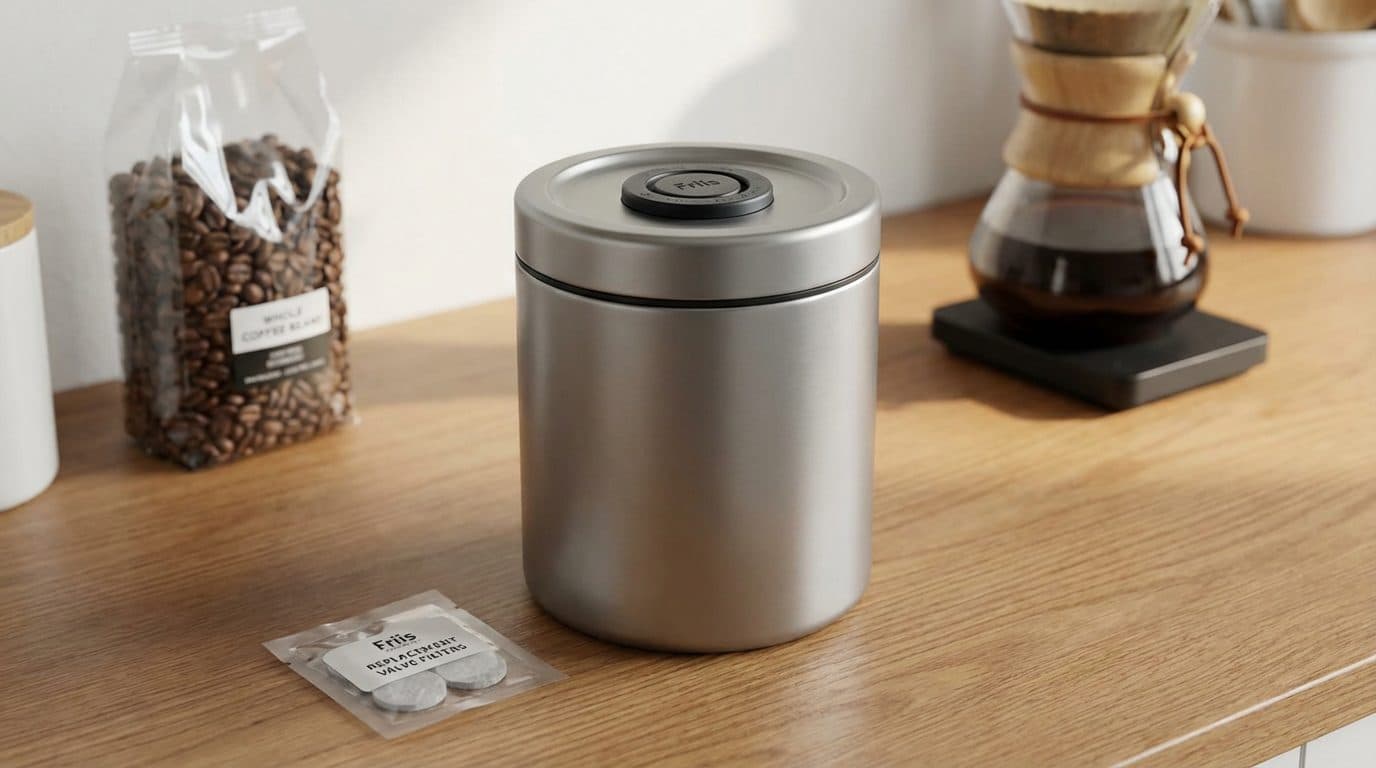
The Friis Coffee Vault hits a sweet spot between the Coffee Gator and basic containers. It features a polymer CO2 valve and includes replacement filters, showing the company thinks long-term. The build quality feels substantial, and the matte finish resists fingerprints better than glossy alternatives.
Pros:
- Effective CO2 valve system
- Includes replacement valve filters
- Fingerprint-resistant finish
- Solid construction and feel
- Good capacity options
Cons:
- Valve filters need periodic replacement (every 2 months)
- Slightly bulkier than competitors
- Lid seal could be tighter
Who is this for? Methodical coffee lovers who don’t mind a small maintenance routine for optimal storage conditions.
Who is this NOT for? Set-it-and-forget-it types who want zero ongoing attention.
Prepara Evak Container – Best Budget Option
The Prepara Evak takes a unique approach with a silicone lid that slides down inside a glass container, compressing air out as you push. It’s visually striking with its transparent design, though this means you’ll want to store it away from direct light. At its price point, the freshness extension is impressive.
Pros:
- Most affordable option that actually works
- Satisfying compression mechanism
- Available in various sizes
- Glass body won’t retain odors
- Easy to clean
Cons:
- Clear glass requires dark storage location
- Silicone lid can attract dust
- Less durable than metal options
Who is this for? Budget-conscious buyers willing to store the container in a cabinet or pantry away from light.
Who is this NOT for? Those who want to display their container on the counter or need ultra-durable materials.
How to Maximize Your Coffee Storage Container
Even the best container can’t perform miracles if you’re working against it. Here are some practical tips I’ve learned through plenty of trial and error.
Buy the Right Amount of Beans
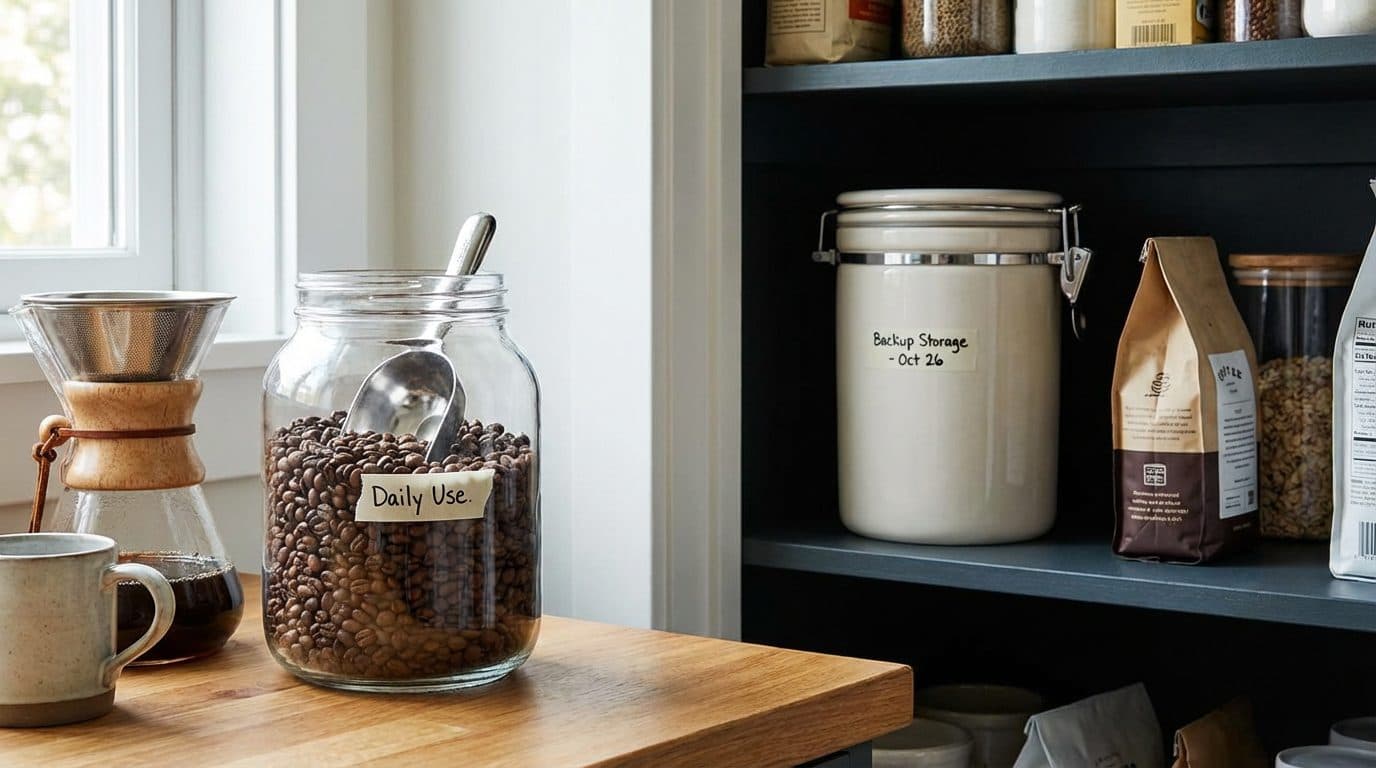
No container keeps coffee fresh indefinitely. I recommend buying only what you’ll consume within two to three weeks. Yes, those bulk deals are tempting, but stale coffee isn’t actually a bargain. If you do buy larger quantities, consider splitting beans between your daily-use container and a sealed backup stored in a cool, dark place.
Don’t Store in the Fridge or Freezer (Usually)
This myth refuses to die. Refrigerators introduce moisture and odors that coffee beans absorb like tiny flavor sponges. Freezing can work for long-term storage of unopened bags, but repeatedly freezing and thawing daily-use beans causes condensation damage. Keep your container at room temperature in a dark spot.
Barista Tip: If you must freeze beans, portion them into single-week amounts in airtight bags. Thaw completely before opening to prevent condensation from forming on the beans.
Keep the Original Bag Inside
Some people transfer only the beans, but I’ve found that placing the entire bag (rolled down tight) inside the container adds an extra layer of protection. This works especially well with bags that have built-in degassing valves, giving you double protection.
Clean Your Container Regularly
Coffee oils build up over time and can turn rancid, affecting fresh beans you add later. Wash your container with mild soap and warm water every few weeks. Make sure it’s completely dry before adding beans, since moisture is the enemy.
Common Coffee Storage Mistakes to Avoid
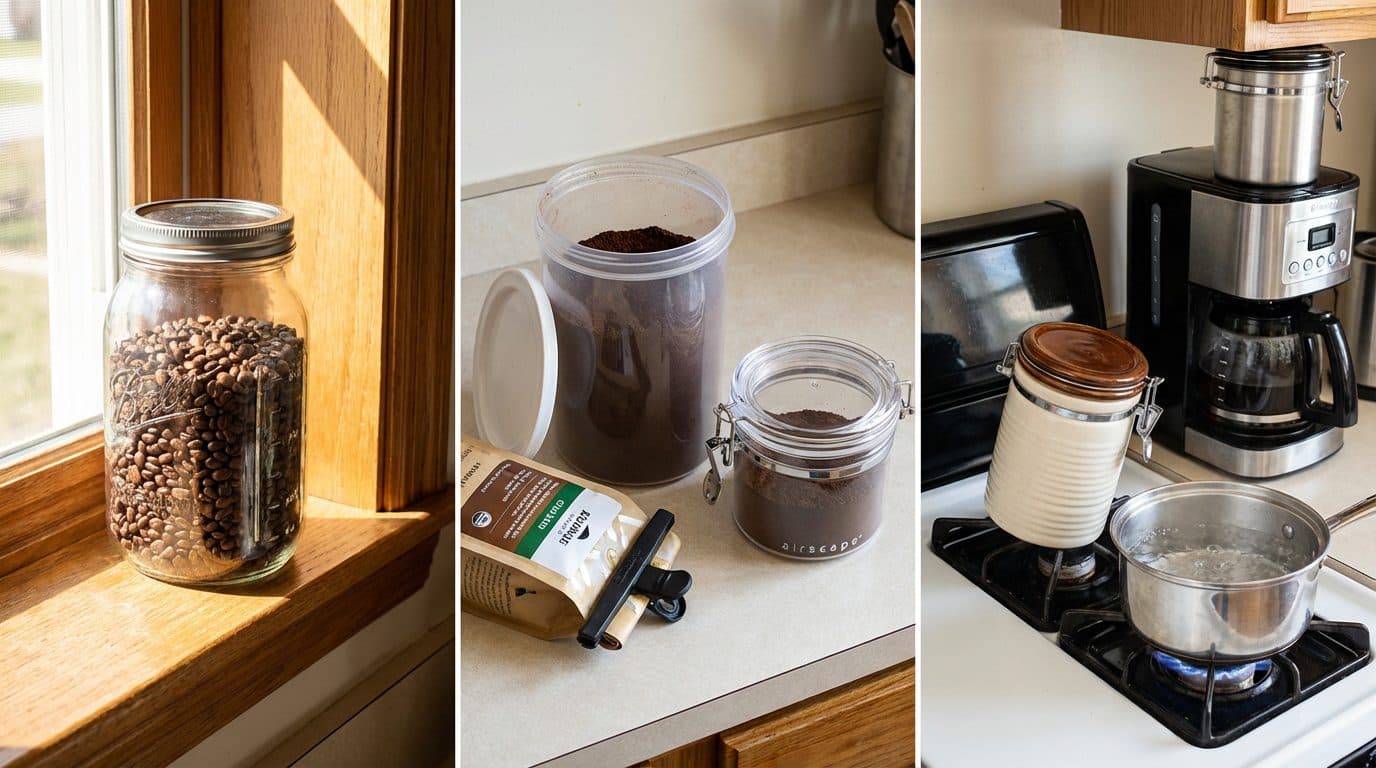
Let’s bust some myths and address the errors I see home brewers make constantly.
- Using clear containers on sunny counters – Light degrades coffee rapidly. Either use opaque containers or store clear ones in cabinets.
- Leaving half-empty containers – All that trapped air accelerates staleness. Use smaller containers as you work through your supply, or choose adjustable options like the Airscape.
- Storing near heat sources – Next to the stove or on top of the coffee maker are terrible spots. Heat accelerates chemical breakdown.
- Ignoring container size – A pound of beans in a half-gallon container leaves way too much air space. Match your container to your purchase habits.
- Buying pre-ground for storage – Ground coffee stales exponentially faster than whole beans. If freshness matters, invest in a grinder instead of a fancier container.
Frequently Asked Questions
How long do coffee beans stay fresh in a storage container?
With a quality airtight or vacuum container, whole beans typically maintain peak flavor for three to four weeks after roasting. You can still brew enjoyable coffee for up to six weeks, though subtle notes will fade. Pre-ground coffee, regardless of container, loses freshness within one to two weeks.
Are expensive coffee canisters worth the money?
Budget-friendly containers in the $20-35 range offer excellent freshness protection. Beyond that price point, you’re often paying for premium materials or aesthetics rather than significantly better performance. The containers reviewed here deliver ninety percent of the benefit at a fraction of the cost.
Can I use mason jars for coffee storage?
Mason jars are airtight, so they’ll prevent odor contamination. However, their clear glass allows light exposure, and they don’t remove air or accommodate degassing. They work in a pinch if stored in a dark cabinet, but purpose-built containers perform noticeably better.
Should I store different coffee varieties in separate containers?
Ideally, yes. Coffee beans absorb surrounding aromas, so mixing a fruity Ethiopian with a smoky Sumatra can muddle both flavor profiles. If you regularly rotate between origins or roasts, having two containers makes sense.
Do I need a container with a CO2 valve?
Only if you’re buying beans within days of roasting. Most grocery store and even many specialty beans have already degassed by the time you purchase them. CO2 valves matter most for home roasters or those with direct roaster subscriptions delivering truly fresh beans.
Final Thoughts and Recommendations
Life is too short for bad coffee, and proper storage is one of the easiest ways to improve every cup you brew. The Airscape Stainless Steel Canister remains my top pick for most home brewers because it actively removes air rather than just blocking it. For those buying ultra-fresh roasts, the Coffee Gator’s CO2 valve makes it worth considering. And if budget is your primary concern, the Prepara Evak delivers surprising performance at its price point.
Whichever container you choose, remember that no storage solution compensates for buying more beans than you can use in a few weeks. Start with smaller purchases, store them properly, and taste the difference fresh coffee makes. Your morning routine will thank you.

Comments