


Table of Contents
- Quick answer: what Major Dickason's is
- The story behind Peet's Major Dickason's Blend
- Peet's own roast, brightness and body scales
- Flavor: what Peet's says and what dark roast usually means
- How to brew Major Dickason's
- French press numbers from the NCA
- Adjusting the cup
- Freshness
- Strengths and limits
- Who it suits
- Frequently asked questions
- Is Major Dickason's a dark roast?
- Where do the beans come from?
- Who was Major Dickason?
- Does dark roast have more caffeine?
- What is the best way to brew it?
- Verdict
Peet’s Major Dickason’s is a dark-roast blend of beans from the Americas and the Indo-Pacific, and Peet’s calls it its all-time best seller. This review sets out what Peet’s itself publishes about the coffee, how the company’s own scales place it, and how to brew it using the National Coffee Association’s French press numbers. Daily Home Coffee did not run a tasting panel for this page, so the flavor description below is Peet’s own, not a house verdict.
Quick answer: what Major Dickason’s is
On its product page, Peet’s lists Major Dickason’s as a Signature Blend, roast type Dark Roast, with origins in the Americas and the Indo-Pacific and a process described as “Washed and Wet-Hulled”. Its flavor profile icons read Earth, Spice and “Everything”. Peet’s also sells it as K-Cup pods, espresso capsules and a decaf version.
If you want a coffee that tastes bright and fruity, this is not the one Peet’s describes. If you already drink dark roast and want a blend with a documented history going back to 1969, it is a reasonable one to try.
The story behind Peet’s Major Dickason’s Blend
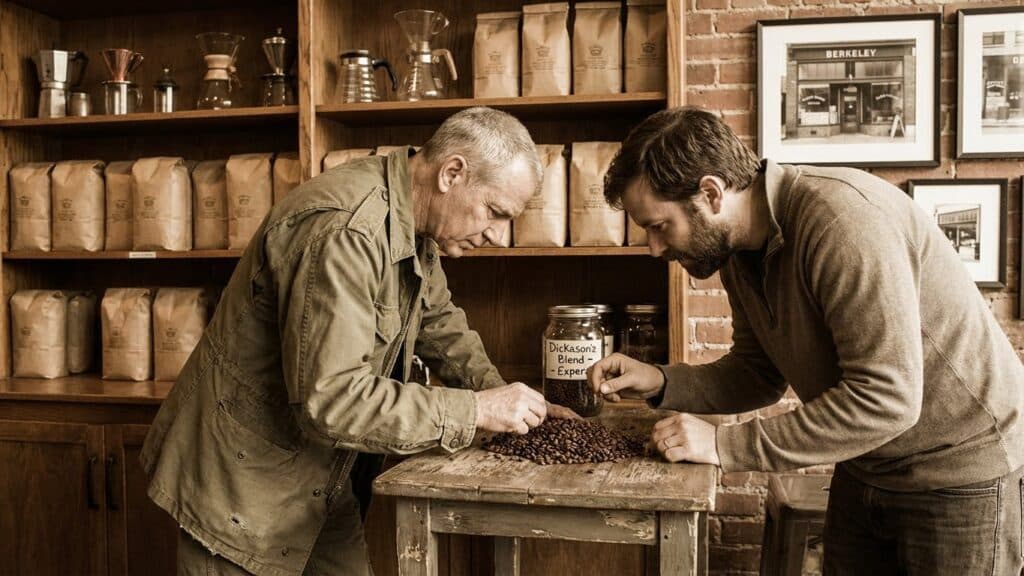
Peet’s company history says Alfred Peet opened his first shop on April 1, 1966, at the corner of Vine and Walnut streets in Berkeley, California. He had worked as a tea taster in Indonesia, where, in the company’s words, he “fell in love with the syrupy richness of dark-roasted Indonesian coffee”.
The blend came three years later. According to the same history, in 1969 Key Dickason, a retired army sergeant and a friend of Mr. Peet, suggested an idea for a blend, and the two “sampled countless combinations” before settling on it. Peet named it after him and promoted him in the title, from sergeant to Major. Peet’s product page tells the same story more briefly: a blend “suggested by loyal customer Key Dickason and perfected by Mr. Peet.”
Peet’s does not publish the exact components or their proportions. What it does publish is the region (Latin American and Indo-Pacific beans) and the process line above.
Peet’s own roast, brightness and body scales
The product page places Major Dickason’s on three 100-point sliders. These are Peet’s internal scales, useful for comparing Peet’s coffees with each other rather than with other roasters.
| Peet’s scale | Major Dickason’s | Scale ends |
|---|---|---|
| Roast level | 75 out of 100 | Light to Dark |
| Brightness level | 56 out of 100 | Low to High |
| Body level | 75 out of 100 | Light to Full |
Read together, Peet’s is describing a dark roast with a full body and brightness sitting near the middle of its own scale. That last number is worth noticing: Peet’s itself does not place the blend at the bottom of its brightness scale.
Flavor: what Peet’s says and what dark roast usually means
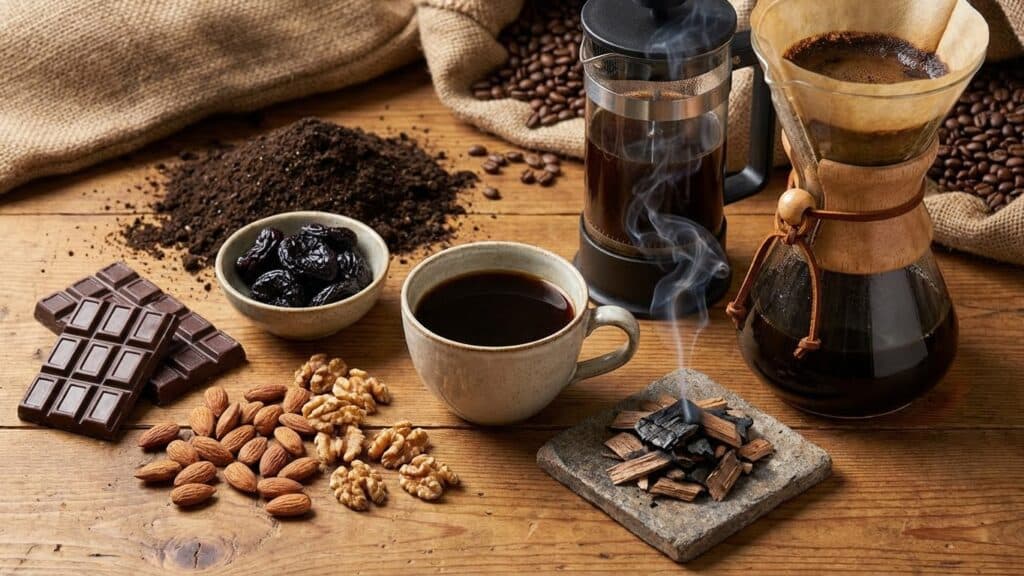
Peet’s flavor profile lists Earth and Spice, and its story text calls the blend “bold” and “darkly roasted”. Peet’s history also calls it a “rich, complex blend”.
The National Coffee Association’s roast guide explains what the dark category tends to bring. It describes dark roast as producing “shiny black beans with an oily surface and a pronounced bitterness”, and says that with darker roasts “your brewed coffee will be even less acidic than lighter roasts.” It also notes that one roaster’s dark coffee may differ from another’s, so the label alone does not tell you exactly how a blend will taste.
The NCA also says dark roast is not stronger in caffeine. In its words, the strong, rich flavor of dark roasts “is not associated with caffeine levels”. The site’s guide to roast level differences covers that comparison in more detail.
How to brew Major Dickason’s
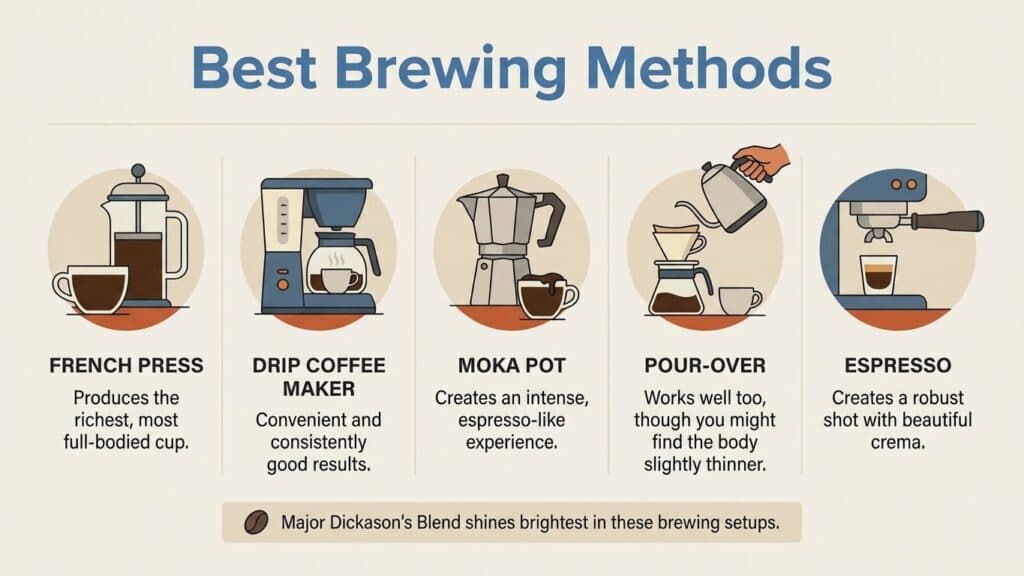
Peet’s product page marks French press as the recommended method for this coffee and says the press pot “is an ideal companion for dark roasts”. Its grind options are Whole Bean, Drip, French Press and Espresso, and the page also lists press pot, percolator and espresso as brew methods.
French press numbers from the NCA
The National Coffee Association gives these figures for French press:
- Coffee-to-water ratio: 1 gram of coffee to 10–16 grams of water (1:10 to 1:16)
- Brewing temperature: 93 ± 3°C
- Brewing time: about 4 minutes of contact between coffee and water
- Grind: coarse, “like rock salt”
The NCA’s method: boil the water, let it rest about 30 seconds, add the grounds and then the water, wait about one minute and stir to break the crust, put the lid on with the plunger up, steep about three more minutes, then press and serve or decant. Coffee left in the press keeps brewing and turns bitter. For dose tables at different ratios, see the site’s French press ratio guide.
Adjusting the cup
The NCA gives two grind fixes for French press:
- Bitter or sour: the coffee may be ground too fine (over-extracted), so try a coarser grind.
- Flat or watery: it may be ground too coarse (under-extracted), so try a finer grind.
If the cup is simply too strong or too light, move the ratio within the NCA’s 1:10 to 1:16 range.
Peet’s describes pour-over as “a simple way to brew a clean, bright cup” that “brings out subtle nuances in coffee, particularly those with bright, sparkling flavors”. Pour-over appears on the page as a second method, but French press is the one marked as recommended, so start there if you own one.
Freshness
Peet’s says its beans are “Sealed immediately after roast” and that it roasts Monday to Friday. The NCA’s roast guide says that, ideally, beans are ground and brewed about 2 to 7 days after roasting for peak freshly roasted flavor. The NCA also says that buying whole beans and grinding them immediately before brewing guarantees maximum freshness.
Strengths and limits
Strengths, from what Peet’s publishes:
- A long, documented history: suggested by Key Dickason in 1969 and still described by Peet’s as its all-time best seller.
- Sold as whole bean, several pre-ground options, K-Cup pods, espresso capsules and decaf.
- A full body on Peet’s own scale (75 out of 100).
- Transparent region and process information, even though the exact component list is not published.
Limits:
- It is a dark roast; the NCA associates that category with pronounced bitterness, which some drinkers dislike.
- It is a blend, so it does not offer the single-farm traceability some specialty buyers want.
- Peet’s does not publish the exact recipe.
- Pre-ground coffee loses the freshness advantage the NCA attributes to grinding just before brewing.
Who it suits
Likely a good fit if you:
- Already enjoy dark roasts and the roasty bitterness that comes with them.
- Brew with a French press, the method Peet’s recommends for this coffee.
- Want a coffee Peet’s rates toward the full end of its body scale.
- Want the same blend in beans, pods and capsules.
Probably not the one if you:
- Prefer light roasts; the NCA notes lighter roasts preserve more of a coffee’s unique qualities.
- Want fruity or floral notes, which Peet’s does not list for this blend.
- Buy only single-origin coffee.
Frequently asked questions
Is Major Dickason’s a dark roast?
Yes. Peet’s lists the roast type as Dark Roast and places it at 75 out of 100 on its own light-to-dark scale.
Where do the beans come from?
Peet’s lists the origin as the Americas and the Indo-Pacific; its story text says Latin American and Indo-Pacific beans. The process is listed as washed and wet-hulled. The individual countries and proportions are not published.
Who was Major Dickason?
Key Dickason was a retired army sergeant and a friend and customer of Alfred Peet. Peet’s history says he suggested the blend in 1969, and Peet promoted him to “Major” in its name.
Does dark roast have more caffeine?
No. The NCA says the strong flavor of dark roasts is not associated with caffeine levels, and that light roasts have a slightly higher amount of caffeine.
What is the best way to brew it?
Peet’s recommends French press. Start with the NCA’s figures: a coarse grind, 1:10 to 1:16 coffee to water, water at 93 ± 3°C and about 4 minutes of contact, then adjust grind or ratio by taste.
Verdict
On Peet’s own description, Major Dickason’s is a dark, full-bodied blend with a history going back to 1969 and a flavor profile the company sums up as earth and spice. Its brightness sits mid-scale on Peet’s own slider rather than at the low end. Buy it whole bean if you can, brew it in a French press with the NCA’s numbers, and adjust grind before ratio if the cup turns bitter.

Comments