


Table of Contents
- Why Oily Beans Cause Problems in Super-Automatic Machines
- Myth vs. Reality: Oily Beans and Machine Damage
- How to Identify Beans That Are Too Oily
- What Beans Work Best for Super-Automatics
- Cleaning and Maintenance to Minimize Oil Damage
- Weekly Tasks
- Monthly Tasks
- Every 3-6 Months
- What If You've Already Used Oily Beans?
- Frequently Asked Questions
- Key Takeaways
That shiny, glistening dark roast might look gorgeous in the bag, but inside your super-automatic espresso machine, oily beans in super-automatics can slowly wreak havoc. The oils coat internal components, gum up the grinder, and eventually lead to costly repairs or a machine that simply stops working. The fix? Choose beans with a matte, dry surface—typically medium roasts or lighter espresso blends—and commit to regular cleaning.
Here’s what’s actually happening inside your machine and how to keep it running smoothly for years.
Why Oily Beans Cause Problems in Super-Automatic Machines
Coffee beans contain natural oils (lipids) that migrate to the surface during roasting. The darker the roast, the more oils appear on the outside. This is perfectly normal chemistry—but super-automatic machines weren’t designed to handle it well.
The trouble starts in the bean hopper and grinder:
- Sticky hoppers: Oils coat the hopper walls, causing beans to clump and feed inconsistently.
- Clogged grinder chutes: Ground coffee mixed with oil creates a paste that builds up in the chute between the burrs and the brew unit.
- Hardened residue: Over time, oil residue oxidizes and hardens into a cement-like substance that’s extremely difficult to remove.
- Motor strain: As buildup accumulates, the grinder motor works harder, potentially shortening its lifespan.
Unlike a manual grinder you can fully disassemble and scrub, most super-automatics have sealed or semi-sealed grinder assemblies. Once oil residue hardens inside, you’re looking at professional servicing—or worse, replacement parts.
Myth vs. Reality: Oily Beans and Machine Damage
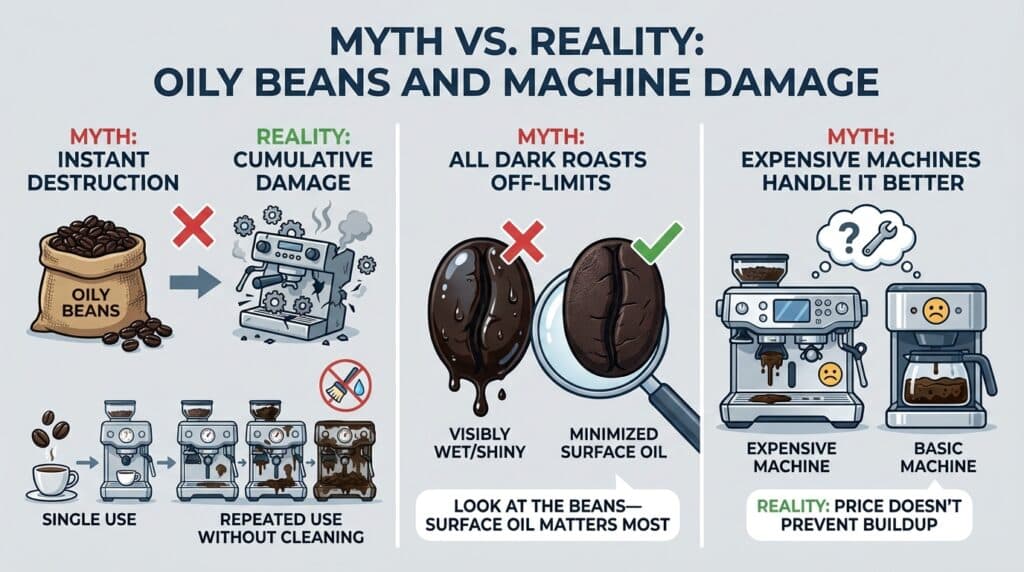
- Myth: One bag of oily beans will instantly destroy your machine.
Reality: The damage is cumulative. A single use won’t ruin anything, but repeated use without proper cleaning accelerates buildup significantly. - Myth: All dark roasts are off-limits.
Reality: Roast level matters less than surface oil. Some dark roasts are roasted carefully to minimize surface oil. Look at the beans—if they’re visibly wet or shiny, that’s the problem. - Myth: Expensive machines handle oily beans better.
Reality: Whether you have a €300 Philips or a €3,000 Jura, the grinder mechanics face the same oil-related issues. Premium machines may have better-sealed components, but they’re not immune. - Myth: Running cleaning cycles fixes oil buildup.
Reality: Standard cleaning tablets target coffee residue and oils in the brew group, not the grinder. Grinder buildup requires separate attention.
How to Identify Beans That Are Too Oily
Before you buy or pour beans into your hopper, do a quick visual and tactile check:
- Visual test: Hold the bag up to light. Safe beans look matte or have a slight sheen. Problem beans look wet, glossy, or leave visible oil smears on the bag interior.
- Touch test: Rub a few beans between your fingers. If they leave an oily residue, they’re too slick for your super-automatic.
- Roast date check: Freshly roasted dark beans may appear dry initially, then develop surface oil over 1-2 weeks as CO2 escapes and oils migrate outward. Beans roasted 3+ weeks ago are more likely to show their true oiliness.
Barista Tip: If you accidentally bought oily beans, don’t toss them—use them in a French press, pour-over, or manual espresso setup where cleanup is straightforward.
What Beans Work Best for Super-Automatics
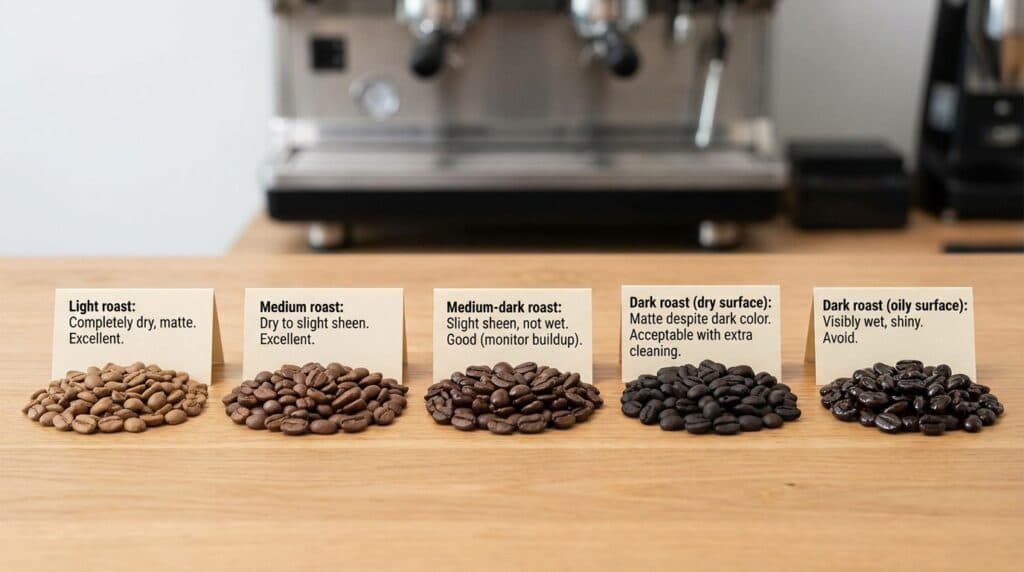
You don’t have to sacrifice flavor for machine safety. Focus on these characteristics:
| Bean Type | Surface Appearance | Super-Auto Compatibility |
|---|---|---|
| Light roast | Completely dry, matte | Excellent |
| Medium roast | Dry to slight sheen | Excellent |
| Medium-dark roast | Slight sheen, not wet | Good (monitor buildup) |
| Dark roast (dry surface) | Matte despite dark color | Acceptable with extra cleaning |
| Dark roast (oily surface) | Visibly wet, shiny | Avoid |
Many super-automatic owners report good results with espresso blends specifically marketed for automatic machines. These are typically roasted to a medium or “espresso medium” level that balances flavor intensity with a dry bean surface.
Based on user feedback in coffee communities, beans like Illy Classico (medium roast) tend to work well, while some popular grocery store espresso blends—despite tasting fine—run too oily for long-term machine health.
Cleaning and Maintenance to Minimize Oil Damage
Even with careful bean selection, some oil transfer is inevitable. Here’s a maintenance routine that protects your investment:
Weekly Tasks
- Empty the bean hopper completely.
- Wipe the hopper interior with a dry, lint-free cloth to remove oil film.
- Run your machine’s automatic cleaning cycle with manufacturer-approved tablets.
Monthly Tasks
- Use grinder cleaning pellets (sold by Jura, Urnex Grindz, or similar). These food-safe pellets absorb oil residue as they pass through the burrs.
- Remove and rinse the brew group (if your model allows) under warm water. Let it dry completely before reinstalling.
- Vacuum the bean hopper and grinder entrance with a small brush attachment to remove fine particles.
Every 3-6 Months
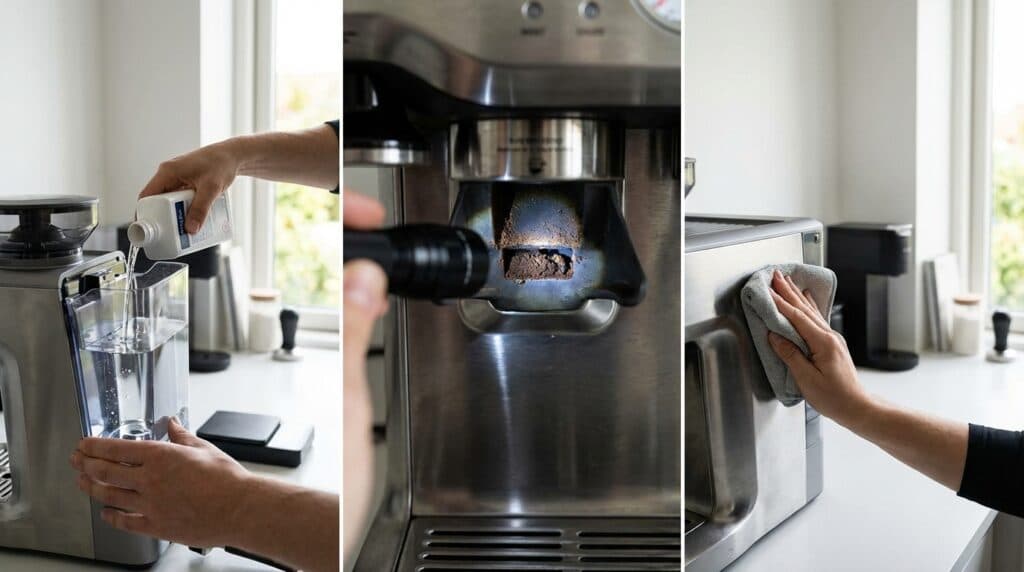
- Descale according to manufacturer instructions.
- Inspect the grinder chute (shine a flashlight in) for visible buildup. If you see caked residue, consider professional cleaning.
Consistency matters more than intensity. A quick weekly wipe-down prevents more problems than an aggressive deep-clean every six months.
What If You’ve Already Used Oily Beans?
Don’t panic. If you’ve run a few bags of oily coffee through your machine, you haven’t necessarily caused permanent damage. Take these steps:
- Switch immediately to dry, medium-roast beans.
- Run grinder cleaning pellets through the system twice, following package directions.
- Perform a full cleaning cycle with tablets for the brew group.
- Monitor performance: Listen for grinding sounds that seem labored or slower than usual. Watch for inconsistent shot volumes or weak extraction.
If your machine already shows symptoms—grinder jamming, error messages, or dramatically slower grinding—professional servicing may be necessary. Technicians can disassemble the grinder assembly and remove hardened oil deposits that home cleaning can’t reach.
Frequently Asked Questions
Can I mix oily and dry beans to reduce the problem?
Mixing dilutes the issue but doesn’t eliminate it. You’re still introducing oil into the system. If you must use up oily beans, mix at a 1:3 ratio (oily to dry) and increase your cleaning frequency.
Are flavored beans safe for super-automatics?
Flavored beans often have added oils from the flavoring process, making them risky regardless of roast level. Check the surface—if they’re shiny or sticky, avoid them.
My machine manual says “use only [brand] beans.” Is that necessary?
Manufacturers recommend their own beans partly for quality control, partly for profit. Any dry-surface, medium-roast bean works fine. The key is avoiding visible oil, not brand loyalty.
How long before oil damage becomes noticeable?
With consistently oily beans and no extra cleaning, most users report issues within 6-12 months—sticky hoppers first, then grinding problems. With occasional oily beans and regular maintenance, you may never see problems.
Key Takeaways
- Visible surface oil on beans is the enemy—not dark roasts specifically.
- Check beans visually and by touch before loading your hopper.
- Medium roasts and “espresso blends for automatic machines” are your safest choices.
- Weekly hopper wipe-downs and monthly grinder pellet cleaning prevent most buildup.
- If you’ve used oily beans, switch immediately and run cleaning cycles—damage is cumulative, not instant.
Tomorrow morning, take a close look at your current beans before grinding. If they’re leaving oil on your fingers, it might be time to explore a new roast. Your machine—and your future coffee—will thank you.


Comments