


Table of Contents
- What Is Café de Olla?
- What You'll Need for Café de Olla
- Ingredients
- Equipment
- Step-by-Step Café de Olla Recipe
- Taste Profile: What to Expect
- Tips for the Best Café de Olla
- Variations to Try
- Frequently Asked Questions
- Can I make café de olla without piloncillo?
- What kind of coffee works best for café de olla?
- Do I really need a clay pot?
- How long does café de olla stay fresh?
- Is café de olla very sweet?
- Final Thoughts and Next Steps
There’s something magical about a cup of coffee that tells a story. Café de Olla is exactly that—a traditional Mexican spiced coffee that has been warming hearts and homes for generations. If you’ve never experienced the rich, cinnamon-kissed sweetness of this beloved drink, you’re in for a treat. In my experience, once you try café de olla, regular black coffee starts to feel a little lonely.
This recipe will walk you through everything you need to know to make authentic café de olla at home. You’ll learn about the essential ingredients, the traditional brewing method, and a few tricks I’ve picked up along the way to make yours truly exceptional.
What Is Café de Olla?
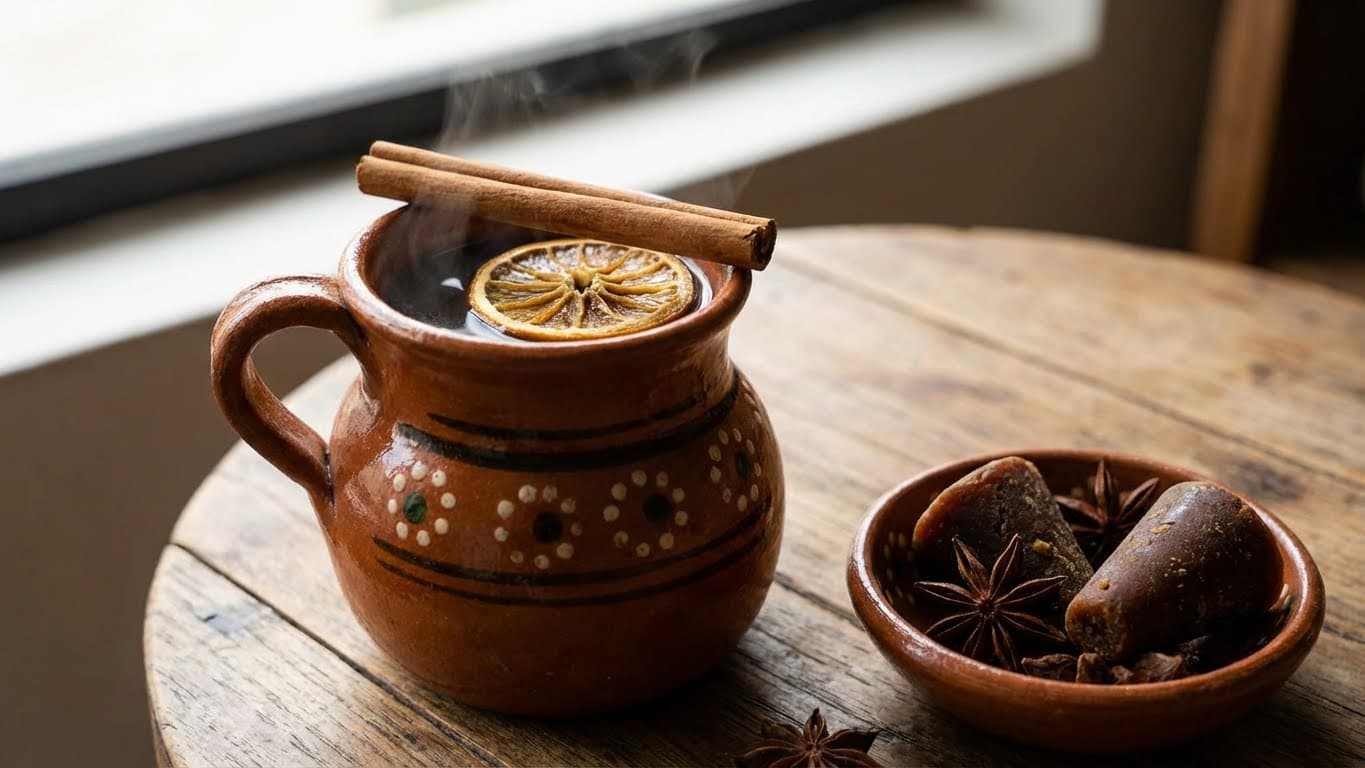
Café de olla (pronounced kah-FEH deh OH-yah) translates to “pot coffee” in Spanish. The name comes from the traditional clay pot, called an “olla de barro,” used to brew it. This isn’t just any spiced coffee—it’s a cultural experience rooted in Mexican history, dating back to the Mexican Revolution when soldaderas (female soldiers) would prepare it to keep troops energized.
What sets café de olla apart from other spiced coffees is the combination of piloncillo (unrefined cane sugar) and cinnamon. The clay pot also plays a role, as it imparts a subtle earthy flavor that metal or glass simply can’t replicate. In short, café de olla is comfort in a cup.
What You’ll Need for Café de Olla
Ingredients
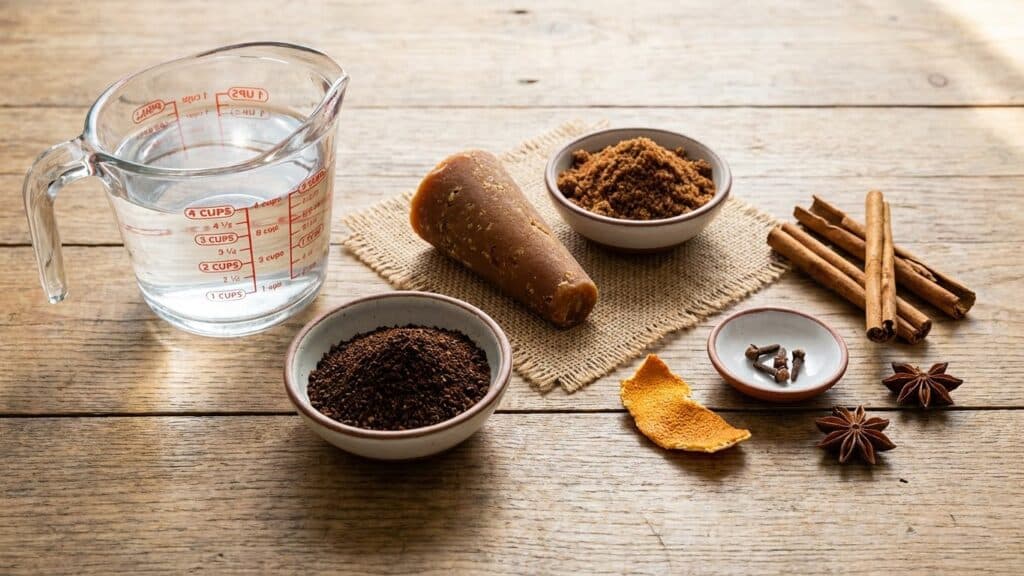
- 4 cups of water
- 4 tablespoons of coarsely ground dark roast coffee
- 1 cone of piloncillo (about 3-4 oz) or ½ cup of dark brown sugar as a substitute
- 1-2 cinnamon sticks (Mexican canela preferred)
- 2-3 whole cloves (optional)
- 1 small piece of orange peel (optional)
- 1 star anise (optional)
Equipment
- A clay pot (olla de barro) or a medium saucepan
- A fine-mesh strainer or cheesecloth
- Traditional clay mugs (jarritos) or your favorite coffee cups
- A wooden spoon for stirring
Barista Tip: If you can find a traditional clay pot at a Mexican market or online, it’s worth the investment. The porous nature of the clay absorbs the flavors over time, making each batch slightly better than the last. Season a new clay pot by boiling water with cinnamon in it a few times before your first brew.
Step-by-Step Café de Olla Recipe
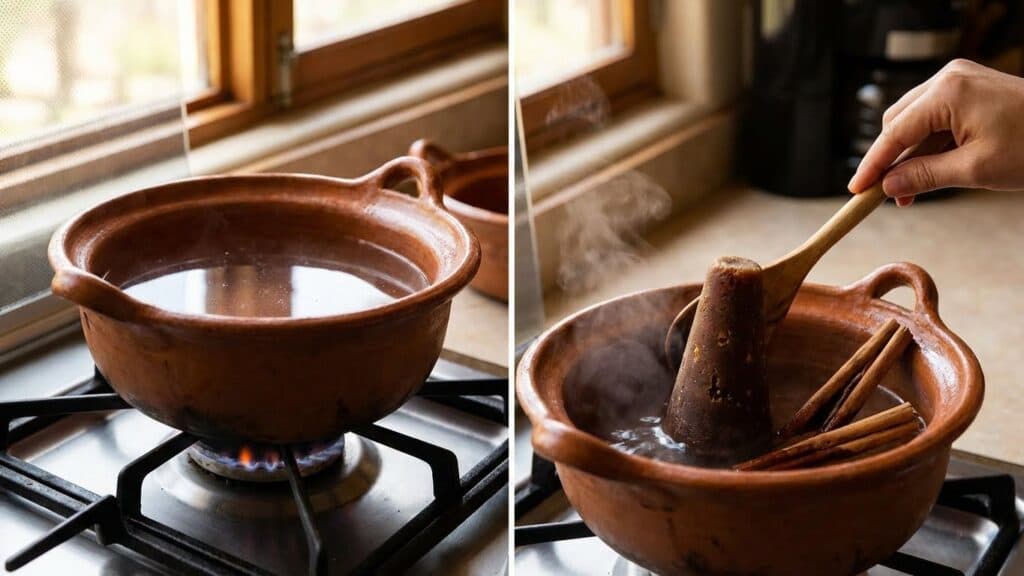
Making café de olla is a slow, meditative process. This isn’t a grab-and-go kind of coffee—it’s meant to be savored. Here’s how to do it right:
- Heat the water. Pour 4 cups of water into your clay pot or saucepan. Place it over medium heat and bring it to a gentle simmer.
- Add the piloncillo and spices. Once the water is warm, add the piloncillo cone, cinnamon sticks, and any optional spices you’re using. Stir occasionally with a wooden spoon until the piloncillo dissolves completely. This usually takes about 5-8 minutes.
- Bring to a boil. Let the spiced water come to a rolling boil. You’ll notice the kitchen filling with an incredible aroma—that’s when you know you’re on the right track.
- Add the coffee. Remove the pot from heat and stir in your coarsely ground coffee. Let it steep for 5 minutes. Don’t rush this step; the coffee needs time to release its full flavor into the spiced water.
- Strain and serve. Using a fine-mesh strainer or cheesecloth, pour the café de olla into your cups, catching all the grounds and spices. Serve immediately while it’s hot.
The whole process takes about 15-20 minutes, but trust me—it’s worth every second.
Taste Profile: What to Expect
Café de olla delivers a flavor experience unlike any other coffee drink. The piloncillo provides a deep, molasses-like sweetness that’s more complex than regular sugar. The cinnamon adds warmth without being overpowering, while the dark roast coffee grounds everything with a bold, slightly smoky backbone.
If you add the optional cloves and orange peel, you’ll get subtle hints of spice and citrus that dance on your palate. The overall impression is cozy, aromatic, and deeply satisfying. I often describe it to friends as “what coffee would taste like if it grew up in a warm kitchen surrounded by spices.”
Barista Tip: The sweetness level is traditionally quite high in café de olla. If you prefer less sweetness, start with half a piloncillo cone and adjust to taste. You can always add more, but you can’t take it away.
Tips for the Best Café de Olla
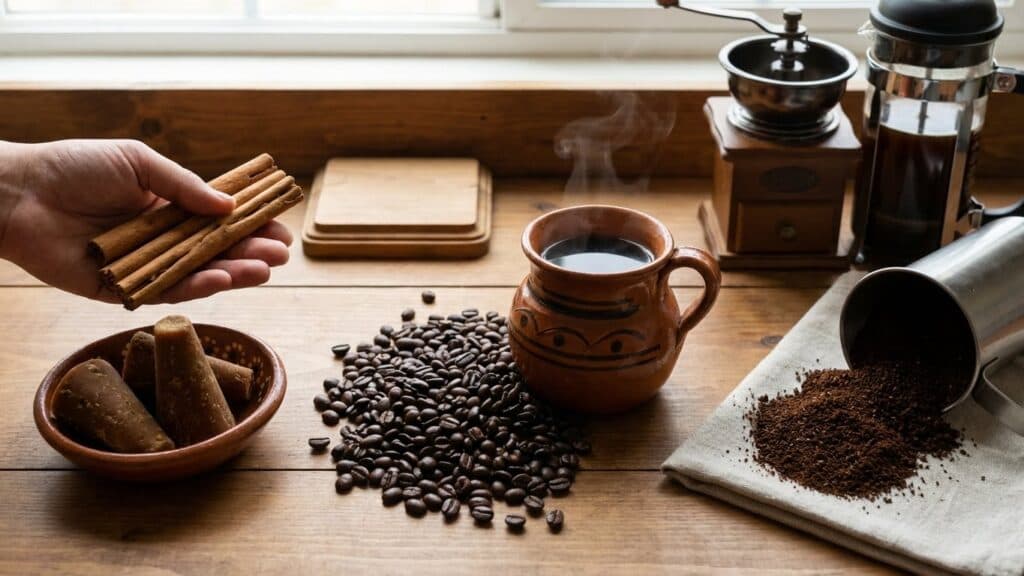
After making countless batches, I’ve learned a few things that can take your café de olla from good to unforgettable:
- Use Mexican cinnamon (canela). It’s softer and sweeter than the Ceylon or cassia cinnamon commonly found in supermarkets. The flavor difference is noticeable.
- Go dark with your roast. A dark or French roast coffee stands up best to the bold sweetness of piloncillo. Light roasts tend to get lost in the mix.
- Grind coarsely. A coarse grind similar to what you’d use for French press prevents over-extraction and keeps your coffee from becoming bitter or muddy.
- Don’t boil the coffee. Add the grounds after removing from heat. Boiling coffee makes it bitter and destroys the nuanced flavors you’re trying to achieve.
- Serve in clay cups if possible. Traditional jarritos keep the coffee warm longer and add to the authentic experience.
Variations to Try
Once you’ve mastered the classic recipe, feel free to experiment. Café de olla is forgiving and welcomes creativity:
- Café de Olla con Leche: Add a splash of warm milk or a dollop of frothed milk for a creamier version.
- Iced Café de Olla: Brew it strong, let it cool, and serve over ice. Perfect for hot summer days when you still want that spiced coffee flavor.
- Chocolate Café de Olla: Add a small piece of Mexican chocolate (like Abuelita or Ibarra) while dissolving the piloncillo. The result is somewhere between coffee and hot chocolate—absolutely divine.
- Boozy Version: For adults-only gatherings, a splash of Kahlúa or mezcal transforms this into a spectacular after-dinner drink.
Frequently Asked Questions
Can I make café de olla without piloncillo?
Yes, you can substitute dark brown sugar or even coconut sugar in a pinch. The flavor won’t be exactly the same—piloncillo has a unique caramel-molasses depth—but it will still be delicious. Use about ½ cup of brown sugar for every piloncillo cone.
What kind of coffee works best for café de olla?
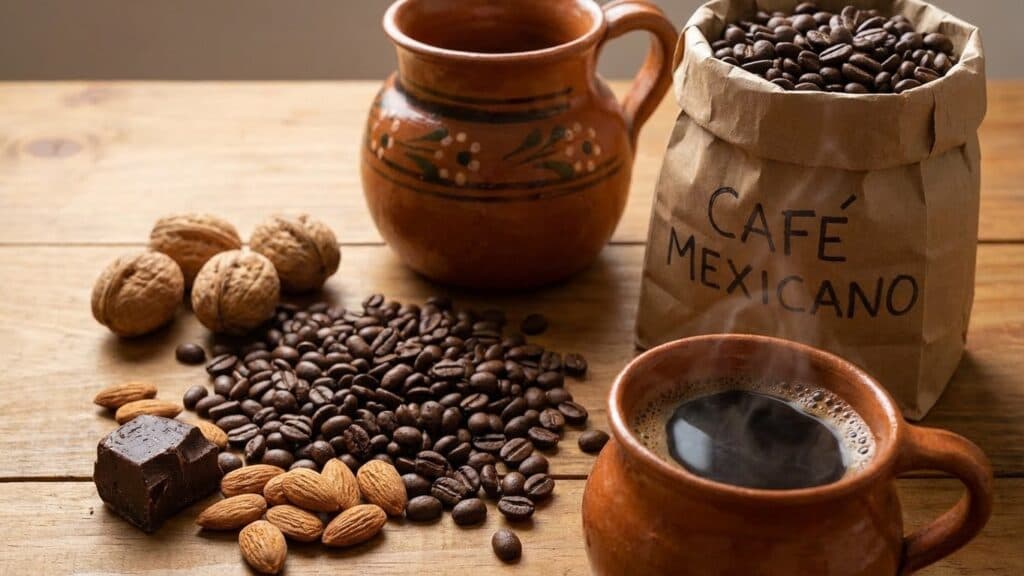
A dark roast coffee with chocolatey or nutty notes works beautifully. Mexican coffee beans are ideal if you can find them, but any quality dark roast will do. Avoid flavored coffees, as they’ll clash with the spices.
Do I really need a clay pot?
While a clay pot adds authenticity and a subtle earthy flavor, it’s not strictly necessary. A regular saucepan works fine, especially when you’re just starting out. The spices and piloncillo do most of the heavy lifting flavor-wise.
How long does café de olla stay fresh?
It’s best enjoyed immediately, but you can refrigerate leftover café de olla for up to 2 days. Reheat gently on the stovetop—avoid the microwave if possible, as it can alter the flavor. Some people actually prefer it cold the next day.
Is café de olla very sweet?
Traditional café de olla is quite sweet, similar to a lightly sweetened dessert coffee. You can easily adjust the sweetness by using less piloncillo. Start with half the amount and add more to taste until you find your perfect balance.
Final Thoughts and Next Steps
Café de olla is more than just a recipe—it’s an invitation to slow down and enjoy coffee the way it’s been enjoyed in Mexican homes for over a century. The combination of piloncillo, cinnamon, and dark roast coffee creates something truly special that you simply can’t get from a coffee shop.
I encourage you to try this recipe on a quiet morning or when you have guests who appreciate something different. Once you’ve made it a few times, you’ll develop your own preferences for sweetness and spice levels. Life is too short for boring coffee, and café de olla is proof that sometimes the old ways are the best ways. Grab your ingredients, put on some music, and let the aroma of Mexican spiced coffee fill your kitchen.


Comments