


Table of Contents
- Why Coffee Pairing With Breakfast Actually Matters
- Understanding Your Coffee's Flavor Profile
- Light Roasts
- Medium Roasts
- Dark Roasts
- Simple Pairing Ideas for Common Breakfast Foods
- Eggs and Savory Dishes
- Toast, Pastries, and Baked Goods
- Fresh Fruit and Yogurt
- Bacon, Sausage, and Heavy Proteins
- Pancakes and Waffles
- Quick Reference: Coffee and Breakfast Pairing Chart
- Three Principles for Perfect Pairings Every Time
- 1. Match Intensity Levels
- 2. Complement or Contrast
- 3. Consider Sweetness
- Common Mistakes to Avoid
- Frequently Asked Questions
- Does the brewing method affect coffee and food pairings?
- Can I pair flavored coffee with breakfast foods?
- What if I only have one type of coffee at home?
- Should I drink coffee before, during, or after eating?
- Do these pairing rules apply to iced coffee too?
- Conclusion: Start Simple and Experiment
Ever notice how some mornings your coffee tastes amazing with your meal, while other times it just feels… off? That’s not random luck. Pairing coffee with breakfast foods is a simple skill that can transform your morning routine from ordinary to genuinely enjoyable. The right combination brings out hidden flavors in both your cup and your plate.
In this guide, you’ll learn how to pair coffee with breakfast foods using straightforward principles anyone can follow. Whether you’re enjoying a quick toast or a full weekend brunch, these ideas will help you create better flavor harmony without any fancy equipment or barista training.
Why Coffee Pairing With Breakfast Actually Matters
Coffee isn’t just fuel—it’s a complex beverage with hundreds of flavor compounds. When you pair coffee with breakfast foods thoughtfully, you create what food experts call “flavor synergy.” The right match enhances both the coffee and the food, while a poor match can make everything taste flat or bitter.
Think of it like music. A great song has instruments that complement each other. Your morning coffee and breakfast work the same way. A bright, fruity Ethiopian roast might clash with heavy bacon and eggs, but it sings alongside a berry parfait.
Key Takeaway: You don’t need to memorize complicated rules. The basic principle is simple: match intensity with intensity, and look for complementary or contrasting flavors that balance each other out.
Understanding Your Coffee’s Flavor Profile
Before you can pair coffee with breakfast foods effectively, you need to know what’s in your cup. Here’s a quick breakdown of common coffee profiles:
Light Roasts
These coffees tend to be bright, acidic, and fruity. You might taste notes of citrus, berries, or floral hints. They’re delicate and work best with lighter breakfast options.
Medium Roasts
The crowd-pleasers. Medium roasts offer balanced acidity with some sweetness and nuttiness. They’re versatile and pair well with most breakfast foods—a safe choice when you’re unsure.
Dark Roasts
Bold, smoky, and sometimes bitter. Dark roasts have low acidity and strong, roasted flavors. They stand up well to rich, heavy breakfast dishes.
Barista Tip: If you’re not sure about your coffee’s profile, check the bag. Most specialty roasters include tasting notes. No notes? Brew a small cup and taste it black before adding anything.
Simple Pairing Ideas for Common Breakfast Foods
Let’s get practical. Here are specific pairing suggestions based on what you’re likely eating at home.
Eggs and Savory Dishes
Scrambled eggs, omelets, and egg sandwiches have rich, fatty flavors that need a coffee with enough body to match. In my experience, a medium-dark roast with chocolatey or nutty notes works beautifully here. The slight bitterness cuts through the richness of the eggs.
- Best match: Medium-dark roast with low acidity
- Avoid: Light, fruity roasts (they’ll taste sour against the eggs)
- Try this: A Brazilian or Colombian single-origin with your weekend omelet
Toast, Pastries, and Baked Goods
Buttery croissants, cinnamon rolls, and toast with jam are breakfast classics. These sweet, carb-heavy foods pair wonderfully with medium roasts that have caramel or nutty undertones. The coffee’s natural sweetness complements the pastry without overwhelming it.
- Best match: Medium roast with caramel or hazelnut notes
- Avoid: Very dark, smoky roasts (they can taste harsh)
- Try this: A Guatemalan coffee with your morning croissant
Fresh Fruit and Yogurt
Light, refreshing breakfasts call for light, refreshing coffee. A bright African roast—Ethiopian or Kenyan—with berry or citrus notes creates a lovely echo effect with fresh fruit. The acidity in both the coffee and the fruit play off each other beautifully.
- Best match: Light roast with fruity, floral notes
- Avoid: Heavy, bitter dark roasts
- Try this: Ethiopian Yirgacheffe with a berry parfait
Bacon, Sausage, and Heavy Proteins
Smoky, salty, fatty—these breakfast meats need a coffee that can hold its own. Dark roasts with bold, smoky flavors create a harmonious match. The coffee’s intensity complements rather than competes with the meat.
- Best match: Dark roast, French or Italian style
- Avoid: Delicate light roasts (they’ll get lost)
- Try this: A Sumatran dark roast with your bacon and eggs
Pancakes and Waffles
Sweet, fluffy, and often drowned in maple syrup—pancakes and waffles are indulgent. A medium roast with chocolate or caramel notes balances the sweetness without adding more sugar to the experience. Some people also enjoy a slightly darker roast here for contrast.
- Best match: Medium to medium-dark roast with sweet undertones
- Avoid: Very acidic light roasts
- Try this: A Costa Rican medium roast with maple-drizzled waffles
Quick Reference: Coffee and Breakfast Pairing Chart
| Breakfast Food | Best Coffee Roast | Flavor Notes to Look For |
|---|---|---|
| Eggs & omelets | Medium-dark | Chocolate, nuts, low acidity |
| Croissants & pastries | Medium | Caramel, hazelnut, butter |
| Fresh fruit & yogurt | Light | Berry, citrus, floral |
| Bacon & sausage | Dark | Smoky, bold, earthy |
| Pancakes & waffles | Medium | Chocolate, caramel, maple |
| Oatmeal & granola | Medium | Nutty, cinnamon, brown sugar |
Three Principles for Perfect Pairings Every Time
Don’t want to memorize specific combinations? These three principles will guide you through any breakfast pairing situation.
1. Match Intensity Levels
Heavy foods need bold coffee. Light foods need delicate coffee. A rich, cheesy breakfast burrito will overpower a subtle light roast. Similarly, a dark French roast will bulldoze a simple fruit salad. Keep the weight balanced.
2. Complement or Contrast
You have two strategies: complement similar flavors (nutty coffee with nutty granola) or contrast opposing ones (bright, acidic coffee with rich, fatty foods). Both work—just pick one approach per meal.
3. Consider Sweetness
Sweet breakfasts pair well with coffees that have natural sweetness or low bitterness. If your breakfast is already sugary, avoid adding more sweetness to your coffee. Let the food and the cup balance each other.
Barista Tip: When in doubt, go with a medium roast. It’s the most versatile option and rarely clashes with anything. Life is too short for bad coffee—but it’s also too short to overthink every pairing.
Common Mistakes to Avoid
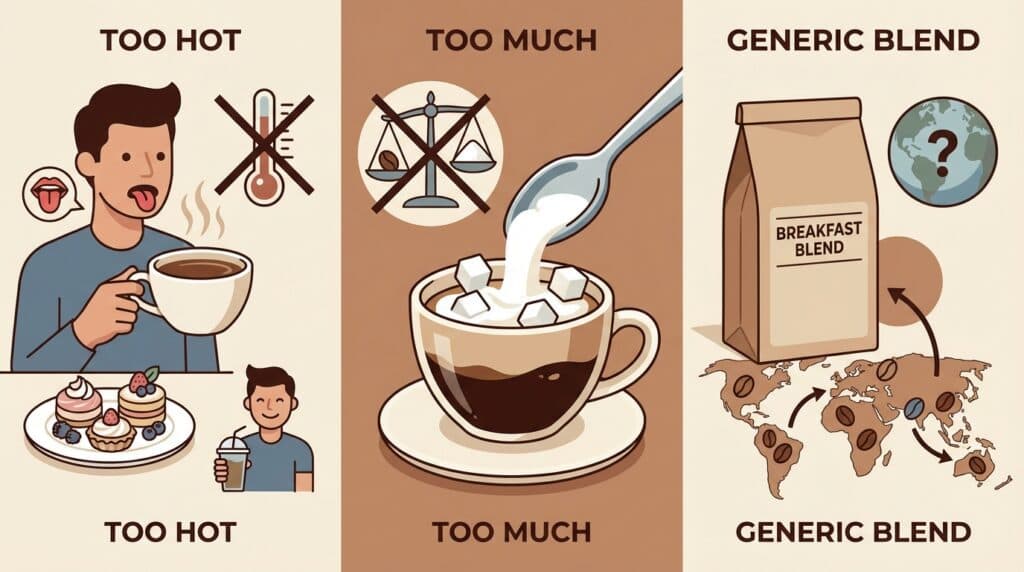
I’ve made plenty of pairing mistakes over the years. Here are the most common ones so you can skip the learning curve:
- Drinking very hot coffee with delicate foods: Scalding coffee numbs your taste buds. Let it cool slightly to actually taste your breakfast.
- Adding too much milk or sugar: Heavy additions mask your coffee’s natural flavors and throw off the pairing. Try reducing them when you’re intentionally pairing.
- Ignoring your coffee’s origin: A generic “breakfast blend” is fine, but single-origin coffees have distinct profiles that make pairing more interesting and predictable.
- Forcing pairings you don’t enjoy: Rules are guidelines, not laws. If you love dark roast with your fruit salad, go for it. Your taste buds have the final say.
Frequently Asked Questions
Does the brewing method affect coffee and food pairings?
Yes, it can. French press coffee tends to be fuller-bodied and works better with heavier foods. Pour-over produces a cleaner, lighter cup that suits delicate breakfasts. Espresso-based drinks are concentrated and pair well with rich pastries or chocolate-based foods.
Can I pair flavored coffee with breakfast foods?
Flavored coffees (like vanilla or hazelnut) can work, but they’re trickier. The added flavors may clash with your food. If you use flavored coffee, keep your breakfast simple—plain toast or a basic pastry—so the flavors don’t compete.
What if I only have one type of coffee at home?
No problem. Adjust your breakfast to match your coffee instead of the other way around. If you have a dark roast, lean toward heartier breakfasts. If you have a light roast, go lighter on the food. Flexibility works both ways.
Should I drink coffee before, during, or after eating?
For the best pairing experience, sip your coffee between bites rather than gulping it all before or after. This lets you notice how the flavors interact. Some people also enjoy a small sip before eating to “reset” their palate.
Do these pairing rules apply to iced coffee too?
Mostly, yes. However, iced coffee tends to taste less bitter and more refreshing, so it pairs especially well with lighter, sweeter breakfasts. Cold brew, in particular, has a smooth, chocolatey profile that works great with pastries and fruit.
Conclusion: Start Simple and Experiment
Learning to pair coffee with breakfast foods doesn’t require a culinary degree. Start with the basics: match intensity, look for complementary flavors, and pay attention to what you enjoy. Over time, you’ll develop an intuition for what works.
Tomorrow morning, try one intentional pairing. Notice how your coffee and food taste together versus separately. That small act of attention can turn an ordinary breakfast into something genuinely satisfying. Your morning routine deserves that little upgrade.


Comments