


Table of Contents
- Quick Verdict: JavaPresse Manual Coffee Grinder
- Why Choose a Manual Coffee Grinder?
- What to Look for in a Budget Manual Grinder
- Burr Type Matters
- Grind Settings
- Build Quality and Ergonomics
- Best Cheap Manual Coffee Grinders Reviewed
- 1. JavaPresse Manual Coffee Grinder
- 2. Hario Skerton Pro
- 3. TimeMore C2 (or C2 Max)
- 4. VEVOK CHEF Manual Coffee Grinder
- Comparison Table: Budget Manual Grinders at a Glance
- Barista Tips for Getting the Best Results
- Conclusion: Start Grinding, Start Enjoying
So you’ve decided to grind your own coffee beans at home—congratulations, you’re about to taste the difference fresh grounds can make. But here’s the thing: you don’t need to spend a fortune to get started. The best cheap manual coffee grinders for beginners deliver surprisingly consistent results without draining your wallet. I’ve tested dozens of hand grinders over the years, and trust me, some budget options punch way above their weight class.
In this guide, I’ll walk you through my top picks for affordable manual grinders, what to look for when shopping, and how to choose the right one for your brewing style. Whether you’re making pour-over, French press, or even espresso, there’s a budget-friendly grinder waiting for you.
Quick Verdict: JavaPresse Manual Coffee Grinder
If you want my honest recommendation, the JavaPresse Manual Coffee Grinder is the best cheap manual coffee grinder for most beginners. It’s affordable (usually under $40), built solidly, has 18 grind settings, and works well for everything from French press to pour-over. It’s not perfect for espresso, but for someone just starting their home coffee journey, it’s hard to beat.
Why Choose a Manual Coffee Grinder?
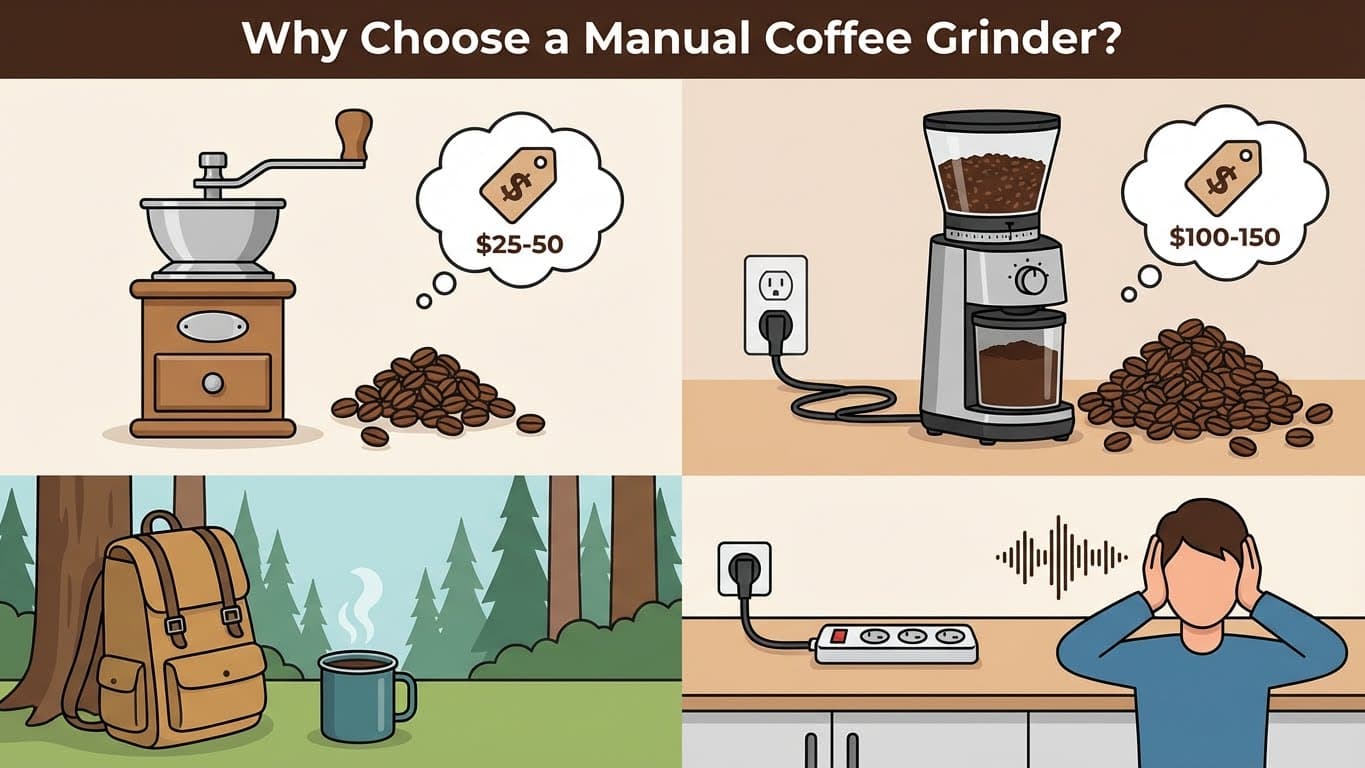
Before diving into specific models, let’s talk about why manual grinders make sense for beginners. First, they’re significantly cheaper than electric burr grinders of similar quality. A decent electric burr grinder starts around $100-150, while excellent manual options exist for $25-50.
Second, manual grinders are portable and quiet. No electricity needed means you can grind beans while camping, traveling, or early in the morning without waking anyone up. In my experience, there’s also something meditative about hand-grinding your morning coffee—it becomes part of the ritual.
- Lower cost for equivalent grind quality
- Portable and travel-friendly
- Quiet operation
- No counter space or outlet required
- Easy to clean and maintain
The main trade-off? Time and effort. Grinding enough beans for a single cup takes about 1-2 minutes of cranking. If you’re making coffee for a crowd, your arm might get tired.
What to Look for in a Budget Manual Grinder
Burr Type Matters
Always choose a burr grinder over a blade grinder. Burrs crush beans between two surfaces, creating uniform particle sizes. Blade grinders chop randomly, giving you a mix of powder and chunks—which leads to uneven extraction and bitter or sour coffee.
At budget prices, you’ll find two burr materials: ceramic and stainless steel. Ceramic burrs stay sharp longer but can chip if dropped. Steel burrs are more durable but may dull faster. For beginners, either works fine.
Grind Settings
More settings give you more control. Look for at least 10-15 click settings to cover different brew methods. Some ultra-cheap grinders have limited or no adjustability—avoid these unless you only use one brewing method.
Build Quality and Ergonomics
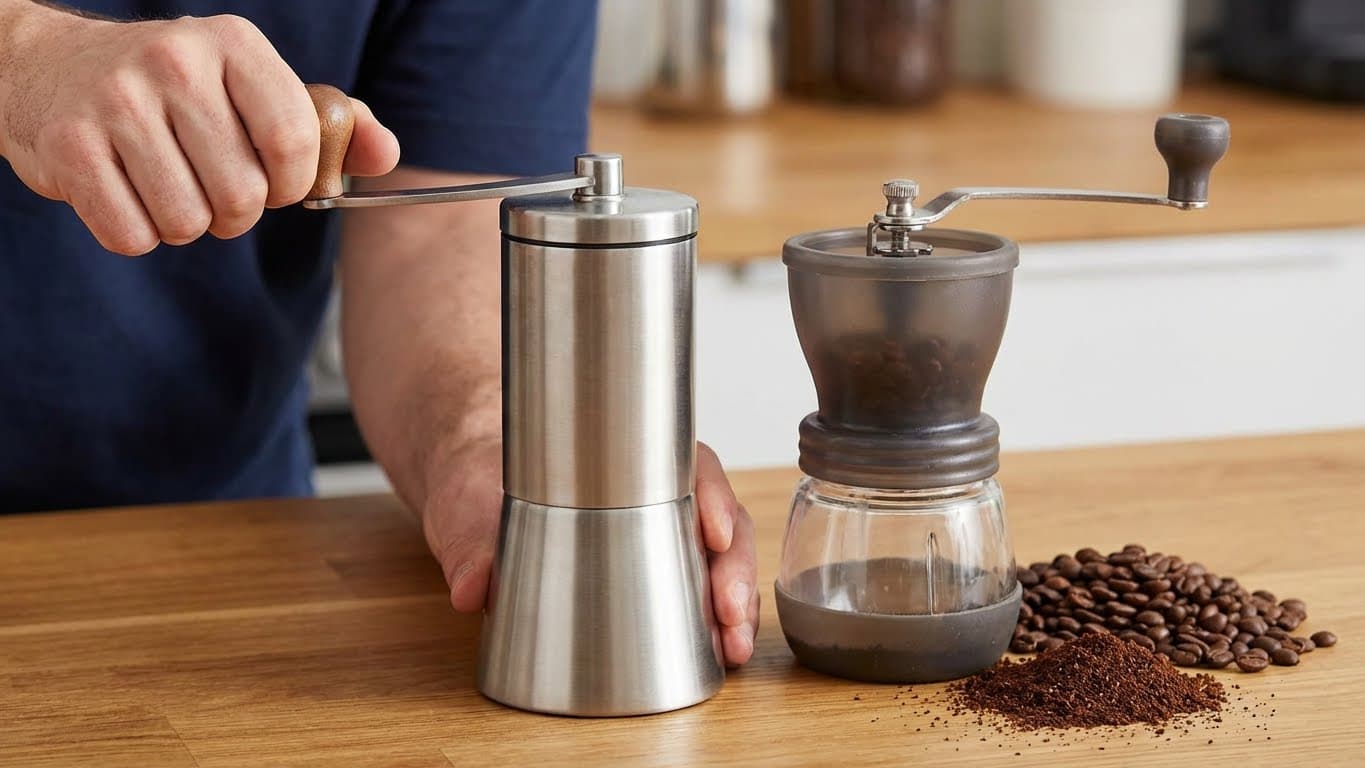
A grinder you’ll actually use needs to feel good in your hands. Check for a comfortable grip, stable base, and smooth cranking action. Plastic bodies are lighter but feel cheaper. Stainless steel or aluminum bodies add durability and a premium feel.
| Feature | Budget Priority | Why It Matters |
|---|---|---|
| Burr Type | High | Determines grind consistency |
| Grind Settings | High | Flexibility for different brew methods |
| Capacity | Medium | How much you can grind at once |
| Build Material | Medium | Durability and feel |
| Brand Reputation | Low-Medium | Warranty and replacement parts |
Best Cheap Manual Coffee Grinders Reviewed
1. JavaPresse Manual Coffee Grinder
The JavaPresse has become almost synonymous with “starter manual grinder,” and for good reason. It’s widely available, consistently affordable, and performs reliably for most brewing methods.
Pros:
- 18 grind settings from fine to coarse
- Ceramic conical burrs
- Compact, travel-friendly design
- Quiet operation
- Usually under $40
Cons:
- Small capacity (about 40g of beans)
- Not ideal for espresso-fine grinds
- Adjustment mechanism can slip over time
Who is this for? Beginners who want a reliable all-rounder for pour-over, drip, AeroPress, or French press. Great for travelers too.
Who is this NOT for? Espresso enthusiasts or anyone grinding for multiple people daily.
2. Hario Skerton Pro
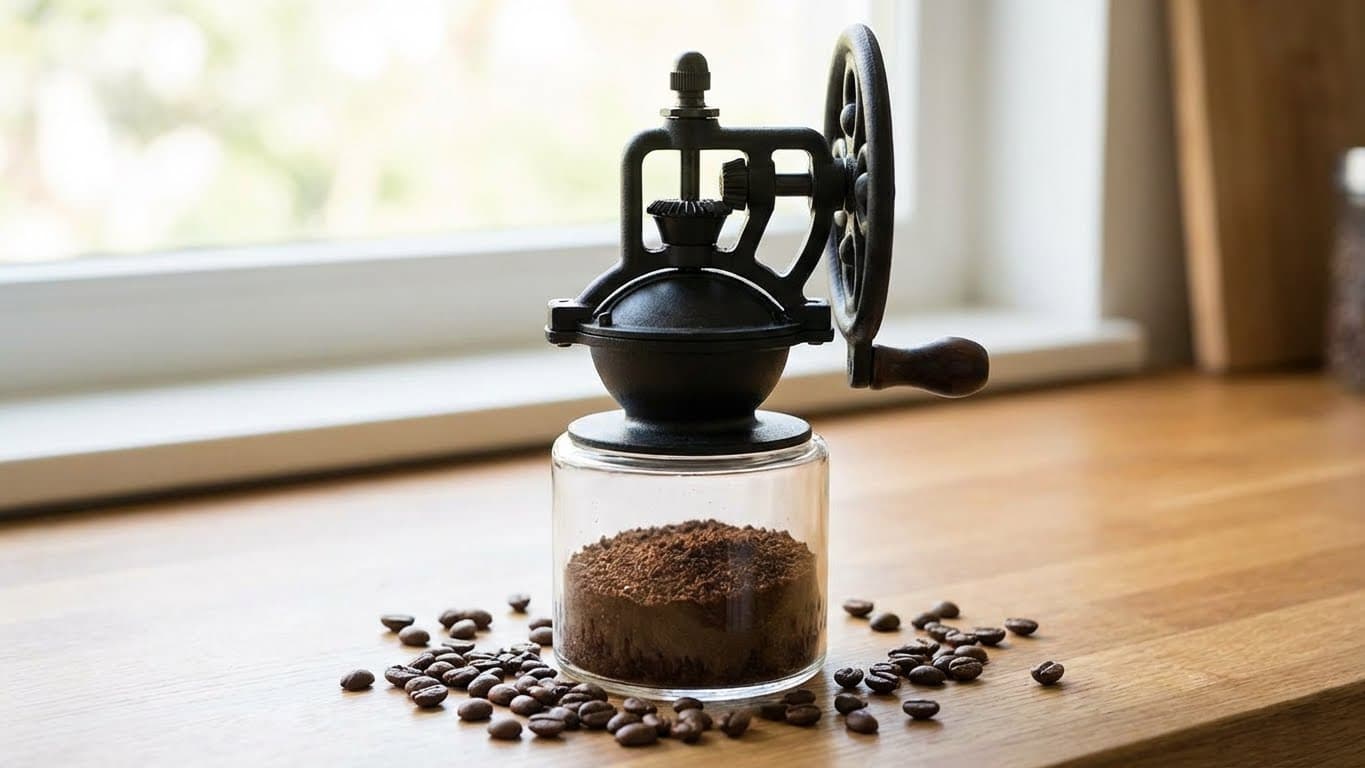
Hario is a respected name in coffee gear, and the Skerton Pro improves on their original design with better grind consistency and a more stable burr mechanism. It’s slightly pricier than the JavaPresse but worth considering if you want something from an established brand.
Pros:
- Improved burr stabilization for consistent grinds
- Larger capacity (100g)
- Glass container shows grounds clearly
- Trusted brand with available replacement parts
Cons:
- Glass base is breakable
- Slightly bulkier for travel
- Costs more than basic options ($45-60)
Who is this for? Beginners who want a larger capacity grinder from a reputable brand and don’t mind paying a bit extra.
Who is this NOT for? Travelers or anyone prone to dropping things.
3. TimeMore C2 (or C2 Max)
The TimeMore C2 represents the sweet spot where “budget” meets “actually impressive.” It uses stainless steel burrs and has a build quality that feels like it should cost twice as much. I’ve found the grind consistency rivals grinders in the $100+ range.
Pros:
- Excellent grind consistency
- Stainless steel burrs (durable and sharp)
- Smooth, fast grinding action
- Sleek aluminum body
- Good for espresso-range grinds
Cons:
- Higher price point ($50-70)
- Fewer grind settings than some competitors
- Can be hard to find in stock
Who is this for? Beginners who want to invest slightly more upfront for noticeably better performance. Also great if you’re interested in espresso down the road.
Who is this NOT for? Those on the tightest budgets or who just want “good enough.”
4. VEVOK CHEF Manual Coffee Grinder
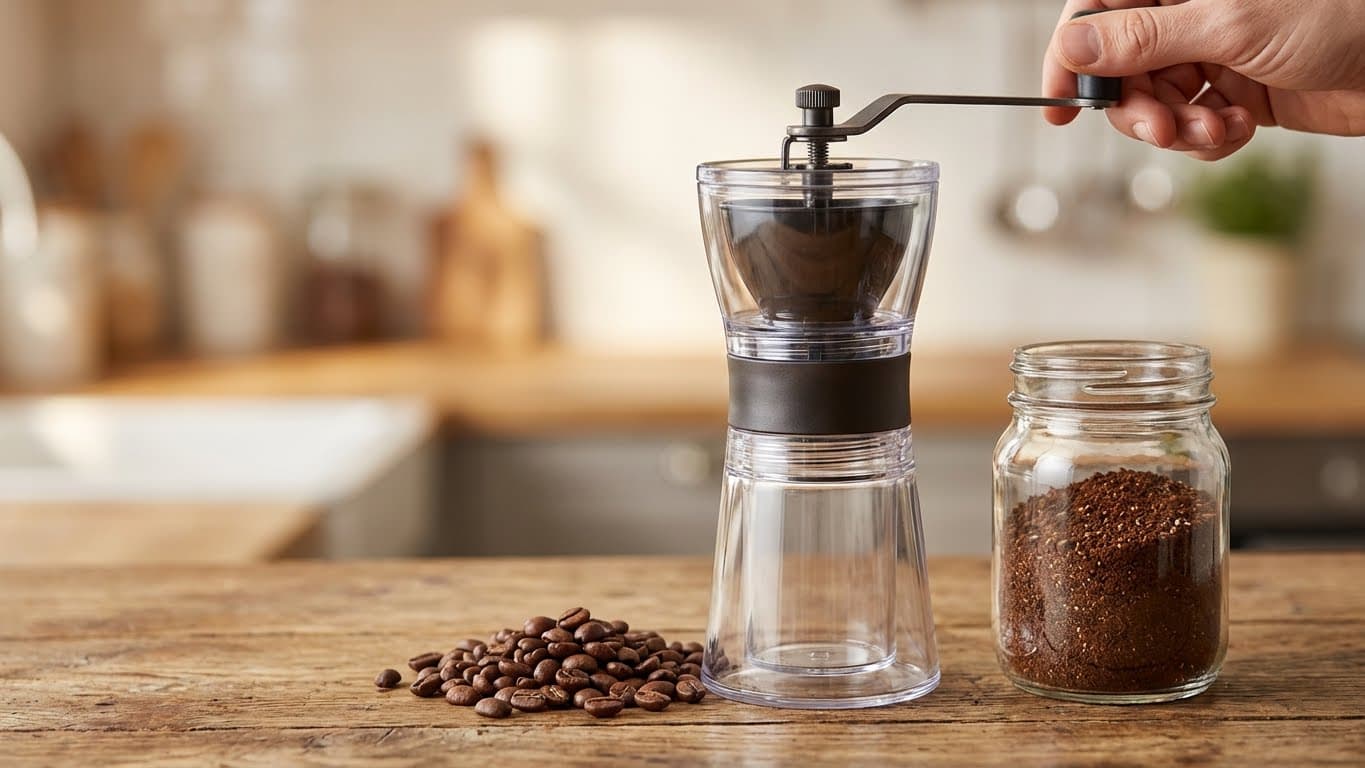
If you’re looking for the absolute cheapest option that still works, the VEVOK CHEF grinder often sells for under $20. It won’t win any awards, but it grinds beans into reasonably consistent grounds for basic brewing.
Pros:
- Extremely affordable (often under $20)
- Compact and lightweight
- Adjustable grind settings
- Gets the job done for casual coffee drinkers
Cons:
- Less consistent grinds than pricier options
- Build quality feels cheaper
- May require more effort to grind
Who is this for? Complete beginners testing whether they even like grinding their own coffee, or anyone on a very tight budget.
Who is this NOT for? Anyone who’s serious about coffee quality or plans to use it daily long-term.
Comparison Table: Budget Manual Grinders at a Glance
| Grinder | Price Range | Burr Type | Best For | Capacity |
|---|---|---|---|---|
| JavaPresse | $30-40 | Ceramic | All-around beginner use | 40g |
| Hario Skerton Pro | $45-60 | Ceramic | Larger batches, brand trust | 100g |
| TimeMore C2 | $50-70 | Stainless Steel | Best grind quality, espresso | 25g |
| VEVOK CHEF | Under $20 | Ceramic | Ultra-budget, testing the waters | 35g |
Barista Tips for Getting the Best Results
Even the best cheap manual coffee grinder needs proper technique. Here are some tips I’ve learned over years of hand-grinding:
- Grind right before brewing. Coffee starts losing freshness within minutes of grinding. Don’t grind the night before.
- Use a consistent speed. Cranking too fast generates heat and can affect flavor. Aim for steady, moderate rotations.
- Start coarser, then adjust finer. If your coffee tastes weak or sour, go finer. If it’s bitter or harsh, go coarser.
- Clean your grinder monthly. Old grounds and oils build up and turn rancid. A quick brush-out keeps things fresh.
- Weigh your beans. A simple kitchen scale helps you dial in the perfect ratio every time.
In short: fresh beans plus consistent grind plus proper ratio equals great coffee. Your grinder is just one piece of the puzzle.
Conclusion: Start Grinding, Start Enjoying
You don’t need to spend hundreds of dollars to experience freshly ground coffee at home. The best cheap manual coffee grinders for beginners—like the JavaPresse for all-around value or the TimeMore C2 for superior performance—deliver real results without the premium price tag. Pick one that fits your budget and brewing style, and you’ll immediately taste the difference fresh grounds make.
Life is too short for bad coffee, but it’s also too short to stress over gear. Grab a budget-friendly manual grinder, start experimenting, and enjoy the journey. Your perfect cup is just a few cranks away.

Comments