


Table of Contents
- What Makes Costa Rican Tarrazu Coffee Unique
- Volcanic Soil and Microclimate
- The Classic Tasting Notes of Costa Rican Tarrazu
- How Roast Level Affects Tarrazu Tasting Notes
- Understanding Tarrazu's Signature Acidity
- Is Tarrazu Coffee Low Acid?
- Processing Methods and Their Impact on Flavor
- Washed (Wet) Process
- Honey Process
- Natural (Dry) Process
- How to Brew Tarrazu to Highlight Its Best Qualities
- A Simple Pour-Over Recipe for Tarrazu
- Frequently Asked Questions
- What does Costa Rican Tarrazu coffee taste like?
- Is Tarrazu coffee good for espresso?
- Why is Tarrazu coffee more expensive than other beans?
- How should I store my Tarrazu coffee beans?
- What's the difference between Tarrazu and other Costa Rican coffee regions?
- Conclusion and Your Next Step
Have you ever taken a sip of coffee and immediately thought, “This is something special”? That’s the experience many coffee lovers describe when they first try Costa Rican Tarrazu. Grown in the misty highlands of Costa Rica’s most celebrated coffee region, Tarrazu coffee has earned a reputation as one of the world’s finest single-origin beans. But what exactly makes it taste the way it does? If you’ve been curious about the tasting notes of Costa Rican Tarrazu and want to understand why this coffee commands such respect, you’re in the right place.
In this guide, I’ll walk you through the distinctive flavor profile of Tarrazu coffee, explain what creates those unique characteristics, and help you understand how to appreciate every cup. Whether you’re exploring specialty coffee for the first time or looking to deepen your palate, these tasting notes will give you a roadmap to truly savor this exceptional origin.
What Makes Costa Rican Tarrazu Coffee Unique
The Tarrazu region sits in the highlands of Costa Rica, nestled in the Cordillera de Talamanca mountain range. Coffee farms here grow at altitudes ranging from 1,200 to 1,900 meters above sea level—some of the highest elevations in Central American coffee production. This altitude is the first key to understanding Tarrazu’s distinctive taste.
At these heights, coffee cherries mature more slowly. The cooler temperatures and dramatic day-to-night temperature swings stress the plants just enough to concentrate sugars and develop complex flavor compounds within the beans. The result is a denser, harder bean that roasters prize for its ability to hold nuanced flavors through the roasting process.
Volcanic Soil and Microclimate
The volcanic soil in the Tarrazu region is rich in minerals and nutrients that the coffee plants absorb throughout their growth cycle. Combined with consistent rainfall, morning mists, and abundant sunshine in the afternoons, these conditions create what many consider ideal growing circumstances for Arabica coffee. In my experience, you can taste this terroir—the sense of place—in every cup of well-prepared Tarrazu.
Costa Rica also has strict quality standards for coffee production. By law, only Arabica varieties can be grown commercially in the country, which means Tarrazu beans come from a foundation of quality genetics. Most farms in the region grow traditional varieties like Caturra, Catuaí, and occasionally heirloom Typica or Bourbon plants.
The Classic Tasting Notes of Costa Rican Tarrazu
When coffee professionals cup Tarrazu, certain flavors consistently emerge. While individual lots vary based on the specific farm, processing method, and roast level, here are the tasting notes you can expect from a typical high-quality Tarrazu coffee:
- Bright, lively acidity: Often described as “brilliant” or “sparkling,” this acidity is reminiscent of citrus fruits—think orange, tangerine, or sometimes green apple.
- Medium body: Tarrazu typically offers a smooth, rounded mouthfeel that’s neither too thin nor overly heavy.
- Chocolate undertones: Fine milk chocolate or cocoa notes frequently appear, especially in medium roasts.
- Caramelized sweetness: Brown sugar, honey, and caramel flavors provide a pleasant sweetness that balances the acidity.
- Nutty hints: Subtle notes of pecan, almond, or hazelnut often round out the flavor profile.
In short, Costa Rican Tarrazu delivers a clean, well-balanced cup with enough complexity to keep your palate interested. It’s the kind of coffee that works beautifully as a morning pour-over but also holds up well in espresso-based drinks.
How Roast Level Affects Tarrazu Tasting Notes
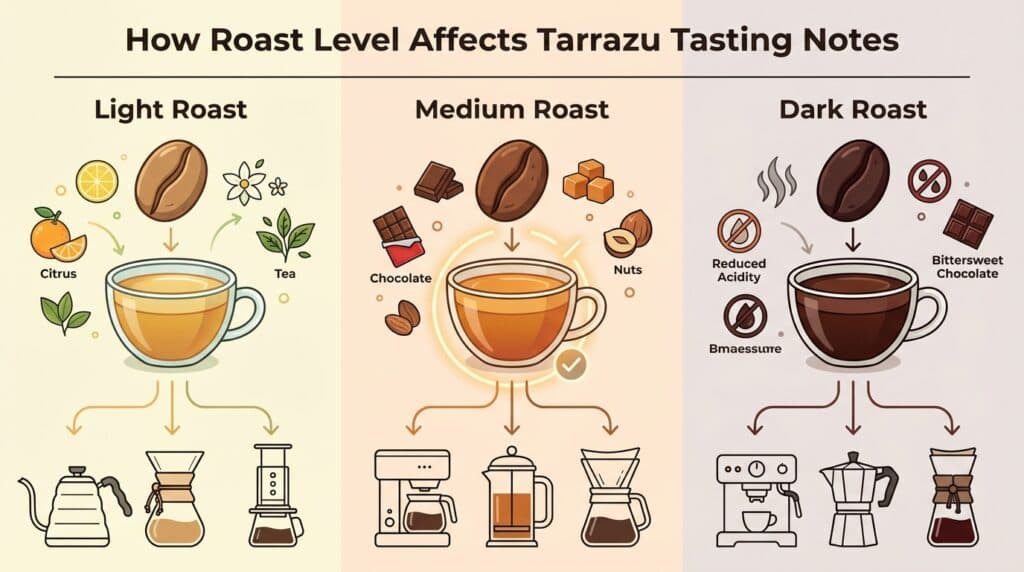
The roast level you choose dramatically influences which tasting notes come forward in your cup. Here’s a quick breakdown:
| Roast Level | Dominant Tasting Notes | Best Brewing Methods |
|---|---|---|
| Light Roast | Citrus, floral, tea-like, bright acidity | Pour-over, Chemex, Aeropress |
| Medium Roast | Balanced acidity, chocolate, caramel, nuts | Drip, French press, pour-over |
| Dark Roast | Bold, smoky, reduced acidity, bittersweet chocolate | Espresso, moka pot, cold brew |
I’ve found that medium roasts tend to showcase the full range of what Tarrazu has to offer. You get enough brightness to appreciate the origin character while the roast development brings out those comforting chocolate and caramel notes. That said, if you prefer a bolder, less acidic cup, a darker roast can still deliver a satisfying experience—just expect fewer of those delicate fruity and floral notes.
Understanding Tarrazu’s Signature Acidity
Let’s talk about acidity, because it’s often misunderstood. When coffee professionals describe Tarrazu as having “bright acidity,” they’re not talking about the sour, unpleasant taste of under-extracted or stale coffee. Instead, they mean a pleasant, crisp quality that makes the coffee taste lively and refreshing on your tongue.
Think of it like the difference between a flat soda and one with perfect carbonation. The acidity in Tarrazu adds lift and dimension to the cup. It’s often compared to the tartness of a ripe orange or the crispness of a green apple. This characteristic comes directly from the high-altitude growing conditions and is one of the main reasons Tarrazu commands premium prices in the specialty coffee market.
Is Tarrazu Coffee Low Acid?
Interestingly, while Tarrazu has pronounced perceived acidity (the brightness you taste), some roasters market it as “low acid” coffee. This refers to the actual pH level of the brewed coffee, which can be gentler on sensitive stomachs compared to some other origins. The slow maturation at high altitude and careful processing contribute to this quality.
If you’ve had trouble with acidic coffees bothering your stomach, Tarrazu might be worth trying—especially in a medium or darker roast. However, everyone’s sensitivity is different, so it’s best to start with a small amount and see how your body responds.
Processing Methods and Their Impact on Flavor
The way coffee cherries are processed after harvest significantly affects the final tasting notes. In Costa Rica, you’ll encounter three main processing methods:
Washed (Wet) Process
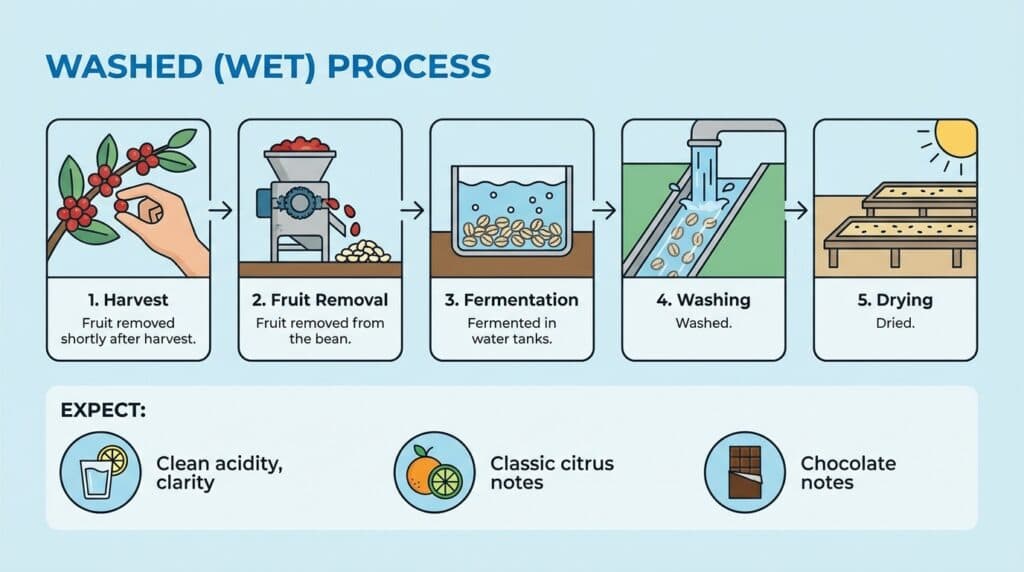
This is the most common method in the Tarrazu region. The fruit is removed from the bean shortly after harvest, and the beans are fermented in water tanks before being washed and dried. Washed Tarrazu coffees tend to have the cleanest, most transparent flavors—you taste the bean and the terroir without interference from the fruit.
Expect: Clean acidity, clarity, classic citrus and chocolate notes.
Honey Process
In honey processing, some or all of the sticky fruit mucilage is left on the bean duringdrying. Costa Rica has pioneered various levels of honey processing—white, yellow, red, and black—depending on how much mucilage remains. The more mucilage, the sweeter and more complex the resulting coffee.
Expect: Enhanced sweetness, fruity notes, fuller body, reduced acidity.
Natural (Dry) Process
Less common in Tarrazu but increasingly popular, natural processing involves drying the whole cherry with the fruit intact. This imparts fruity, wine-like characteristics to the bean.
Expect: Berry notes, tropical fruit, heavier body, fermented undertones.
Barista Tip: When shopping for Tarrazu coffee, check the label for processing information. If you love that classic clean, bright Tarrazu profile, stick with washed coffees. If you want something more adventurous with enhanced sweetness, look for honey-processed lots.
How to Brew Tarrazu to Highlight Its Best Qualities

You’ve invested in quality beans—now let’s make sure you’re brewing them properly. Here are some practical tips for getting the most out of your Costa Rican Tarrazu:
- Grind fresh: Coffee begins losing aromatics within minutes of grinding. Invest in a burr grinder and grind just before brewing.
- Use filtered water: Water makes up about 98% of your cup. Hard water or water with chlorine can mask the delicate notes in Tarrazu.
- Mind your temperature: Aim for water between 195-205°F (90-96°C). Too hot and you’ll over-extract bitterness; too cool and you’ll miss the full flavor development.
- Dial in your ratio: A good starting point is 1:16 (one gram of coffee to 16 grams of water). Adjust to taste from there.
For light to medium roast Tarrazu, I’ve found that pour-over methods like the V60 or Chemex really let those bright, complex flavors shine. The paper filter removes oils and sediment, resulting in a clean cup that highlights the origin characteristics. If you prefer a fuller body, a French press will give you more texture while still showcasing those chocolate and caramel notes.
A Simple Pour-Over Recipe for Tarrazu
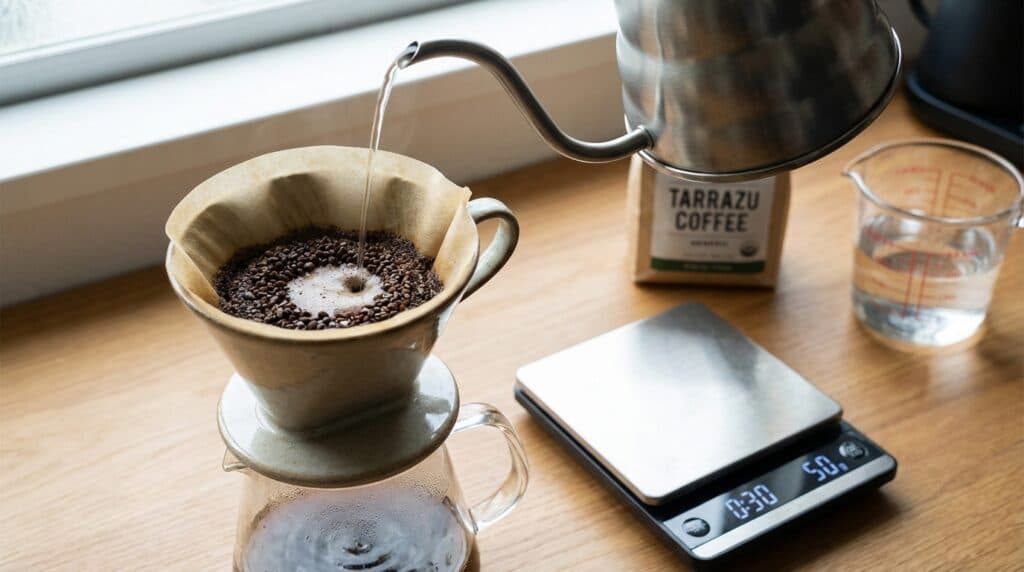
What You’ll Need:
- 22grams of medium-ground Tarrazu coffee
- 350grams of filtered water (plus extra for rinsing)
- Pour-over dripper and paper filter
- Gooseneck kettle
- Scale and timer
Steps:
- Rinse your paper filter with hot water to remove paper taste and preheat your vessel.
- Add ground coffee and create a small well in the center.
- Start your timer and pour 50grams of water in a circular motion to bloom the grounds. Wait 30-45 seconds.
- Pour in slow, steady circles, adding water in stages until you reach 350 grams total.
- Total brew time should be around 3:00-3:30 minutes.
- Enjoy immediately while the flavors are most vibrant.
Taste Profile: Expect a bright, citrusy opening that mellows into chocolate and caramel mid-sip, with a clean, sweet finish.
Frequently Asked Questions
What does Costa Rican Tarrazu coffee taste like?
Costa Rican Tarrazu is known for its bright, lively acidity reminiscent of citrus fruits like orange or tangerine. You’ll also find notes of milk chocolate, caramelized sugar, and subtle nuttiness. The body is typically medium, and the overall cup is clean and well-balanced.
Is Tarrazu coffee good for espresso?
Tarrazu works well for espresso, especially in medium to dark roasts. The chocolate and caramel notes become more pronounced under the pressure extraction, and the natural sweetness balances nicely with milk in lattes and cappuccinos. Light roasts can be trickier to dial in for espresso due to their higher acidity.
Why is Tarrazu coffee more expensive than other beans?
Several factors contribute to Tarrazu’s premium pricing: the high-altitude growing conditions that require more labor-intensive harvesting, Costa Rica’s strict quality standards, and the region’s established reputation for excellence. Additionally, the limited supply from small family farms and the meticulous processing methods add to the cost.
How should I store my Tarrazu coffee beans?
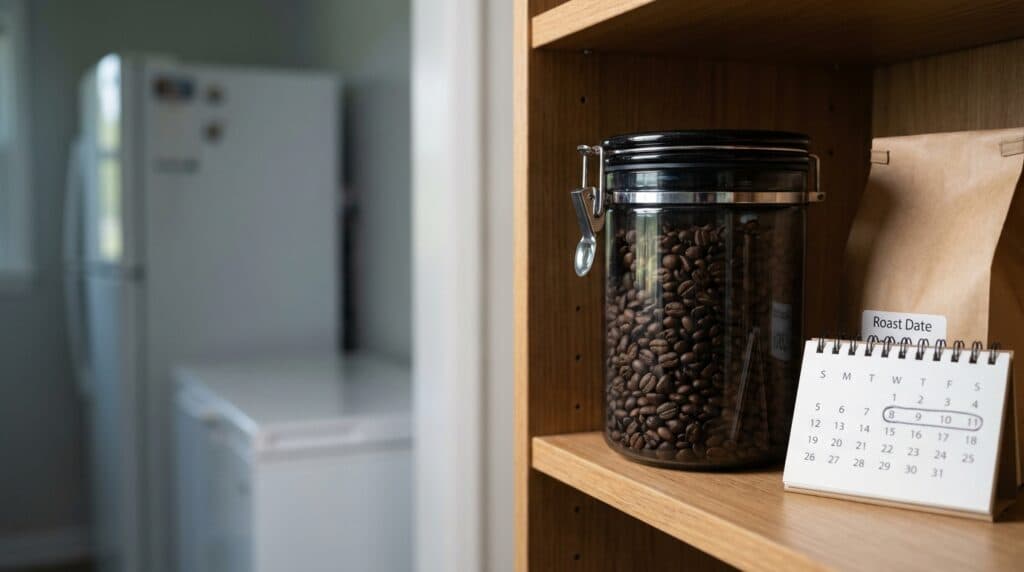
Store your beans in an airtight container at room temperature, away from light, heat, and moisture. Avoid the refrigerator or freezer for beans you’re actively using, as temperature fluctuations can cause condensation and degrade flavor. For best results, buy only what you’ll use within two to three weeks of the roast date.
What’s the difference between Tarrazu and other Costa Rican coffee regions?
While all Costa Rican coffees share some characteristics, Tarrazu is generally considered the most complex and refined. The West Valley region tends to produce sweeter, fruitier coffees, while Central Valley offerings are often milder and more approachable. Tres Ríos, sometimes called “the Bordeaux of Costa Rica,” produces exceptionally balanced cups but in smaller quantities.
Conclusion and Your Next Step
Costa Rican Tarrazu represents the best of what high-altitude, carefully cultivated coffee can offer. Its signature bright acidity, chocolate undertones, and clean sweetness make it a favorite among specialty coffee enthusiasts worldwide. Now that you understand the tasting notes and what creates them, you’re equipped to appreciate every nuance in your cup.
The next time you brew Tarrazu, slow down and really taste it. Notice how the flavor evolves as the coffee cools—often the sweetest, most complex notes emerge when the temperature drops slightly. Pay attention to the finish, that lingering taste after you swallow. Life is too short for bad coffee, and with Tarrazu, you’re holding something genuinely special in your hands. Start exploring different roast levels and processing methods to find your personal favorite expression of this remarkable origin.



Comments