


Table of Contents
- What "Cups" Actually Mean in Moka Pot Sizing
- Why This Matters for Your Morning Routine
- 3-Cup Moka Pot: Ideal Uses and Realistic Expectations
- Actual Yield and Serving Suggestions
- Who Is This For?
- Who Is This NOT For?
- 6-Cup Moka Pot: When You Need More Coffee
- Actual Yield and Serving Suggestions
- Who Is This For?
- Who Is This NOT For?
- 3-Cup vs 6-Cup Comparison: Side by Side
- Common Mistakes When Choosing Moka Pot Size
- Mistake #1: Buying Too Small
- Mistake #2: Thinking Bigger Is Always Better
- Mistake #3: Ignoring Your Drink Preferences
- Mistake #4: Not Considering Multiple Brewers
- Frequently Asked Questions
- Can I make less coffee in a larger Moka pot?
- How many regular mugs does a 6-cup Moka pot fill?
- Is the coffee stronger from a smaller Moka pot?
- Should I buy a 9-cup or 12-cup for a family?
- Does the material affect how much coffee I should make?
- Conclusion: Choosing Your Perfect Moka Pot Size
You’ve finally decided to embrace the rich, intense magic of Moka pot coffee. But now you’re staring at a confusing choice: should you buy a 3-cup or a 6-cup Moka pot? And what do those “cups” even mean? Here’s the thing that trips up almost every new Moka pot owner—those cup sizes have nothing to do with the mugs in your kitchen cabinet. In my experience, this single misunderstanding leads to more brewing frustration and buyer’s remorse than almost any other coffee equipment decision.
In this guide, you’ll discover exactly how Moka pot sizing works, what kind of yield to realistically expect from 3-cup and 6-cup models, and which size actually fits your coffee drinking habits. Whether you’re brewing for yourself or sharing with family, understanding these differences will save you money and ensure you get the perfect amount of coffee every single time.
What “Cups” Actually Mean in Moka Pot Sizing
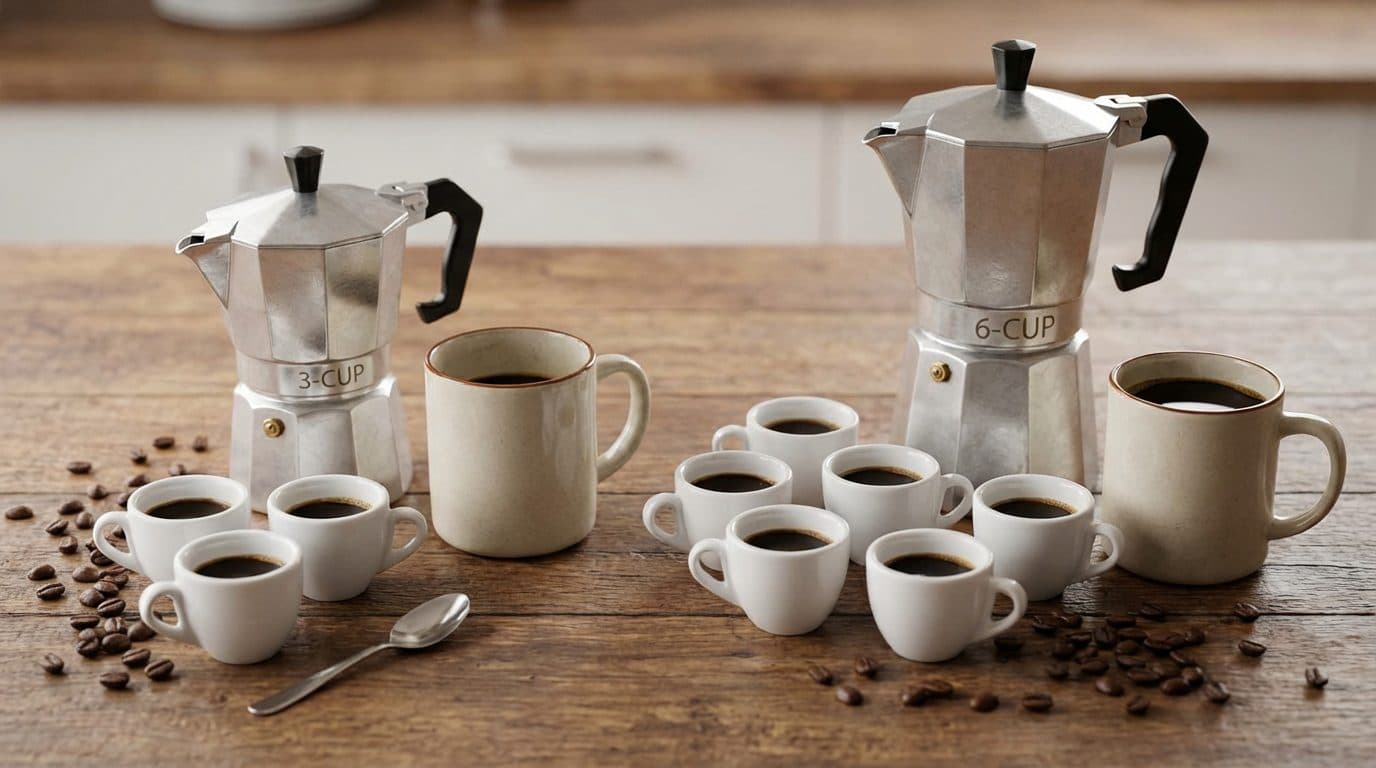
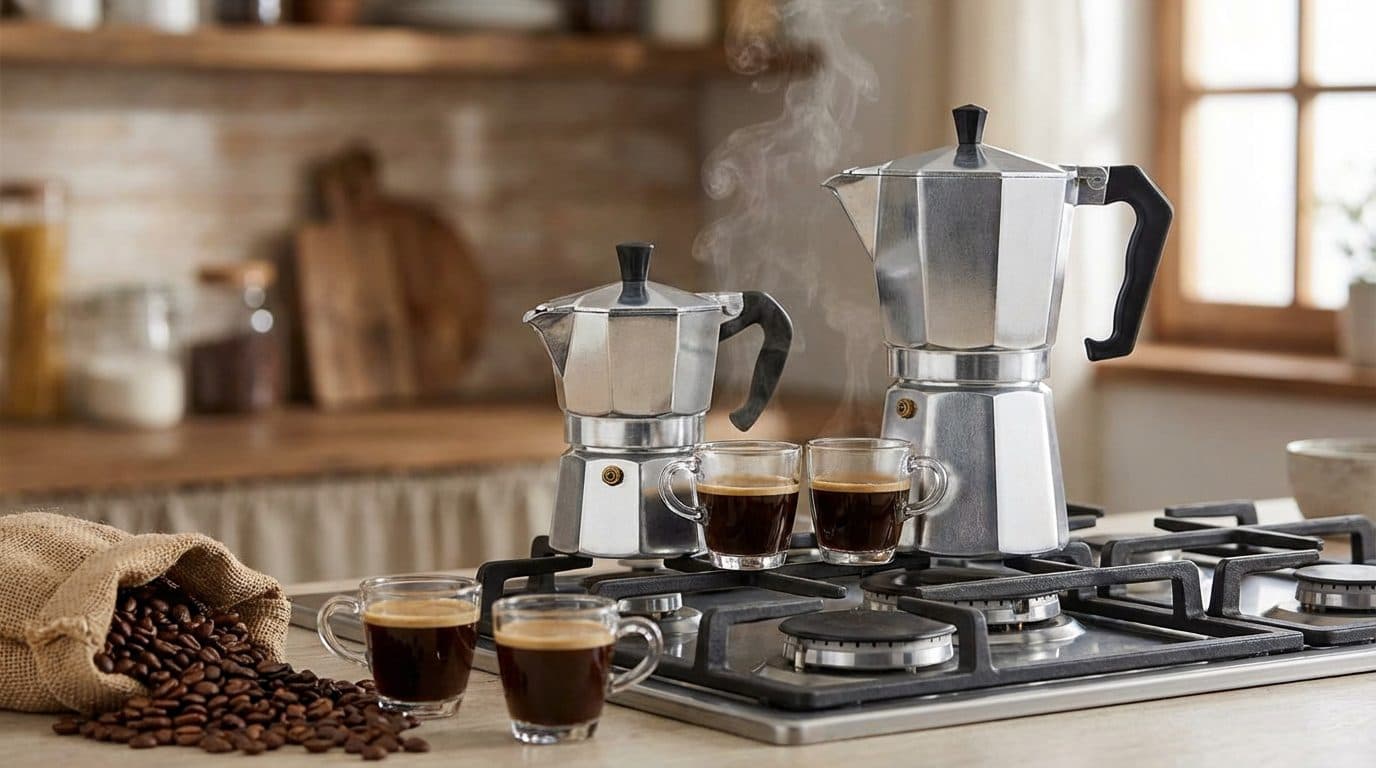
Let’s clear up the biggest myth right away. When Bialetti or any other manufacturer labels a Moka pot as “3-cup” or “6-cup,” they’re referring to Italian espresso cups—not American coffee mugs. An Italian espresso cup holds roughly 50ml (about 1.7 ounces) of liquid. That’s a tiny, concentrated shot meant to be enjoyed quickly.
So when you do the math, the reality becomes much clearer:
- 3-cup Moka pot: Produces approximately 150ml (5 ounces) of coffee
- 6-cup Moka pot: Produces approximately 300ml (10 ounces) of coffee
To put this in perspective, a standard American coffee mug holds around 350ml (12 ounces). This means a 3-cup Moka pot won’t even fill one regular mug completely, while a 6-cup model will give you roughly one full mug or two smaller servings.
Why This Matters for Your Morning Routine
I’ve found that many people buy a 3-cup Moka pot thinking it will make three mugs of coffee for the family. The disappointment when they realize the truth can be brutal. Understanding this sizing convention upfront helps you match the pot to your actual consumption needs rather than a misleading label.
In short: always think in milliliters or ounces rather than “cups” when choosing your Moka pot size.
3-Cup Moka Pot: Ideal Uses and Realistic Expectations
The 3-cup Moka pot is the classic solo brewer. It’s compact, heats quickly, and produces just enough concentrated coffee for one person. But let’s break down exactly what you’re getting and who should consider this size.
Actual Yield and Serving Suggestions
With approximately 150ml of coffee output, here’s what you can realistically make:
- One strong short black coffee (espresso-style)
- One café-style latte or cappuccino when combined with steamed milk
- Two very small espresso-sized shots to share
- One Americano by adding hot water to your brew
The 3-cup typically requires around 15-17 grams of coffee grounds and about 150ml of water in the bottom chamber. Brew time runs approximately 4-5 minutes on medium heat.
Who Is This For?
- Solo coffee drinkers who want one strong serving
- People with limited kitchen or storage space
- Those who prefer fresh coffee each time rather than reheating
- Travelers or campers who need a portable option
- Beginners who want to learn Moka pot technique with less coffee at stake
Who Is This NOT For?
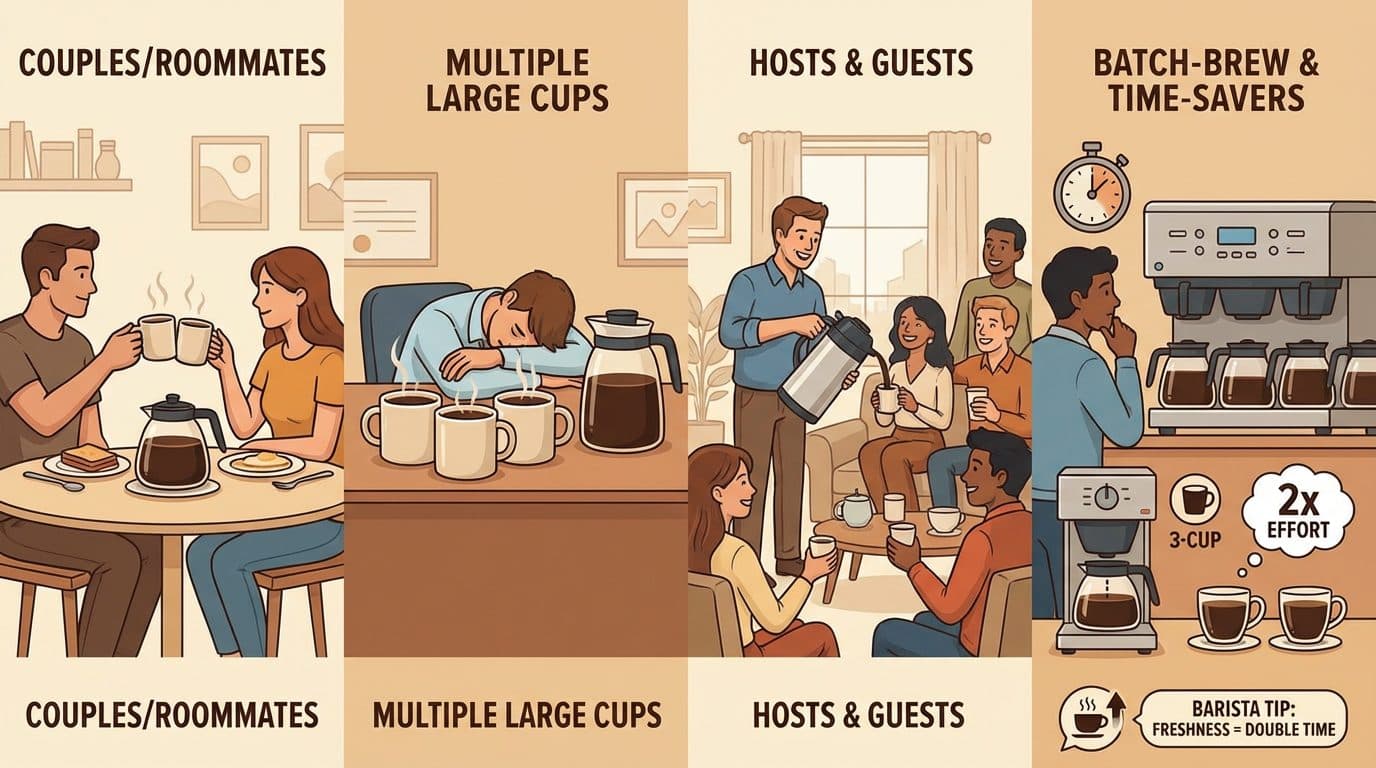
- Couples or roommates who drink coffee together
- Anyone who drinks multiple large cups throughout the morning
- Hosts who regularly entertain guests
- People who batch-brew to save time
Barista Tip: If you live alone but drink two servings each morning, you’ll need to brew twice with a 3-cup. This isn’t necessarily bad—each brew will be fresh—but it does double your effort and time.
6-Cup Moka Pot: When You Need More Coffee
The 6-cup Moka pot is the sweet spot for many households. It produces enough coffee for two people or one person who appreciates a generous serving. Let’s examine what this size delivers in practical terms.
Actual Yield and Serving Suggestions
With approximately 300ml of coffee output, your options expand considerably:
- One large American-style mug of strong coffee
- Two European-sized coffee servings
- Two lattes or cappuccinos when milk is added
- One serving now and one for later (though fresh is always better)
- Enough base for two iced coffee drinks
The 6-cup requires roughly 30-35 grams of coffee grounds and about 300ml of water. Brew time extends to approximately 5-7 minutes due to the larger volume.
Who Is This For?
- Couples who share morning coffee
- Individuals who drink larger servings or multiple cups
- Small families with 2-3 coffee drinkers
- People who make milk-based drinks (more base coffee means proper ratios)
- Those who occasionally host guests
Who Is This NOT For?
- Solo drinkers who only want one small cup (coffee quality suffers when you don’t fill it properly)
- Those with minimal storage space
- Anyone who prioritizes speed above all else
Here’s something important: Moka pots work best when filled to their intended capacity. Running a 6-cup with only enough coffee for 3 cups produces inferior results. You can’t really “half-fill” a Moka pot successfully.
3-Cup vs 6-Cup Comparison: Side by Side
Sometimes seeing the numbers directly compared makes the decision easier. Here’s how these two popular sizes stack up across key factors:
| Factor | 3-Cup Moka Pot | 6-Cup Moka Pot |
|---|---|---|
| Coffee Yield | ~150ml (5 oz) | ~300ml (10 oz) |
| Ground Coffee Needed | 15-17 grams | 30-35 grams |
| Brew Time | 4-5 minutes | 5-7 minutes |
| Best For | 1 person | 1-2 people |
| Standard Mugs Filled | Less than 1 | About 1 |
| Average Price Range | $25-40 | $35-55 |
| Portability | Excellent | Good |
Key Takeaway: The price difference between sizes is usually minimal, but the yield difference is significant. If you’re on the fence between sizes, consider your maximum need rather than your minimum.
Common Mistakes When Choosing Moka Pot Size
In my years of helping home baristas, I’ve seen the same sizing errors repeated constantly. Avoiding these pitfalls will save you from either wasting coffee or making frustrating return trips to the store.
Mistake #1: Buying Too Small
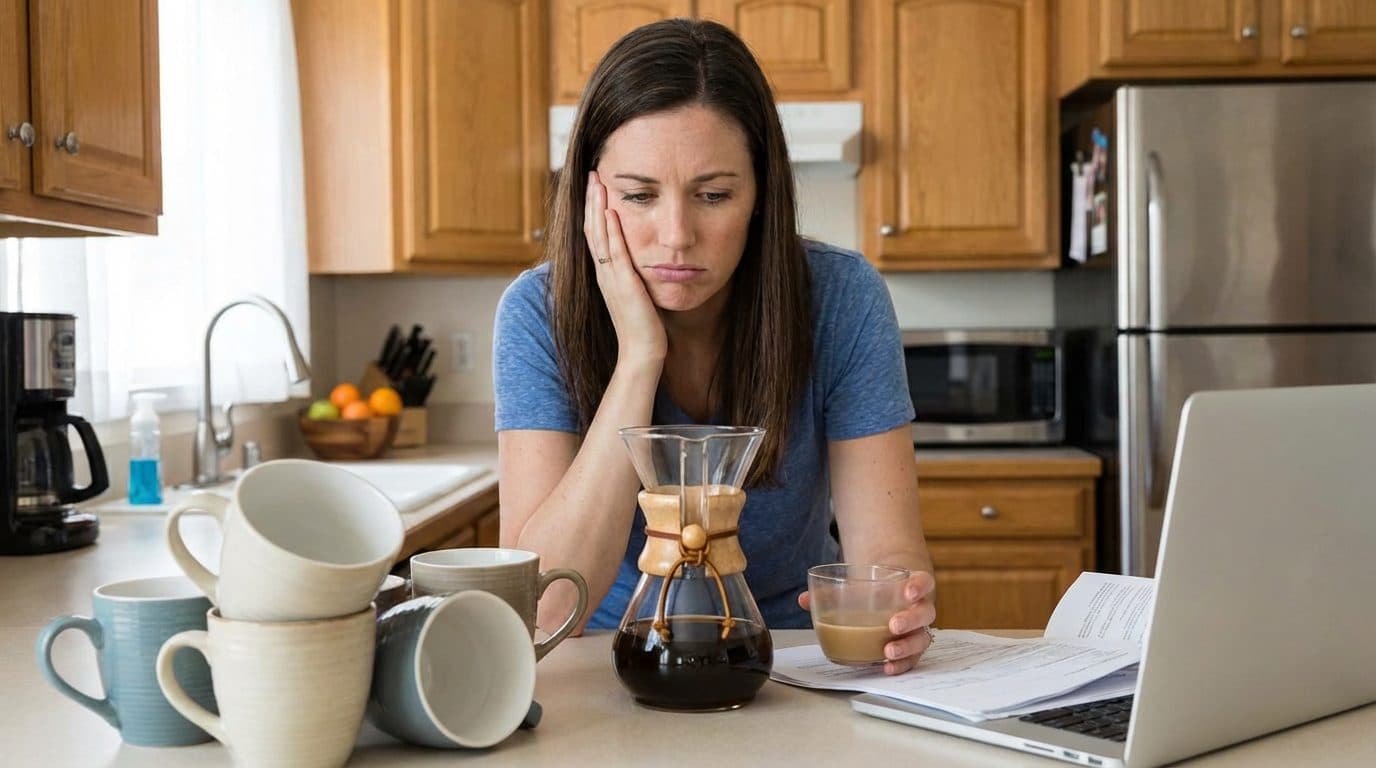
The most common error is underestimating how much coffee you actually consume. People often romanticize the idea of “just a small strong cup” without considering that their current habit might be three large mugs before noon. Be honest about your consumption patterns.
For example, imagine Sarah who works from home and drinks coffee throughout the morning. She bought a 3-cup thinking it would be sufficient for her “one cup habit.” In reality, she was brewing three times before lunch and quickly upgraded to a 6-cup.
Mistake #2: Thinking Bigger Is Always Better
The opposite mistake happens too. Remember, you cannot successfully under-fill a Moka pot. If you buy a 6-cup but only want one small serving, you’ll either waste coffee or produce a weak, disappointing brew. The coffee basket and water chamber are designed to work together at full capacity.
Mistake #3: Ignoring Your Drink Preferences
If you primarily drink milk-based beverages like lattes or cappuccinos, you need more concentrated coffee as a base. A 3-cup might seem adequate, but once you add 200ml of steamed milk to 150ml of coffee, the flavor becomes too diluted. For milk drinks, sizing up usually makes sense.
Mistake #4: Not Considering Multiple Brewers
Here’s a secret many experienced Moka pot users know: owning two sizes isn’t crazy. A 3-cup for solo weekday mornings and a 6-cup for weekend brunches with your partner creates flexibility without compromise. The cost of owning both is still less than many single coffee gadgets.
Frequently Asked Questions
Can I make less coffee in a larger Moka pot?
Unfortunately, no. Moka pots are designed to work at their rated capacity. Under-filling the coffee basket or water chamber disrupts the pressure system and produces weak, improperly extracted coffee. Always fill to the intended level for best results.
How many regular mugs does a 6-cup Moka pot fill?
A 6-cup Moka pot produces approximately 300ml of coffee, which fills about one standard 12-ounce American mug or roughly 85% of a typical mug. For two people sharing, expect smaller European-style portions.
Is the coffee stronger from a smaller Moka pot?
The concentration should be similar regardless of size when using proper ratios and technique. However, smaller pots heat more evenly and quickly, which some users find produces slightly more consistent extraction. The difference is subtle for most home brewers.
Should I buy a 9-cup or 12-cup for a family?
Larger Moka pots exist and work well for families or entertaining. A 9-cup yields approximately 450ml, while a 12-cup produces around 600ml. Keep in mind that larger pots require more precise heat control to avoid over-extraction, so they have a steeper learning curve.
Does the material affect how much coffee I should make?
Aluminum and stainless steel Moka pots of the same “cup” size produce identical yields. However, aluminum heats faster, which slightly reduces brew time. Stainless steel works on induction stovetops if that’s relevant to your kitchen setup.
Conclusion: Choosing Your Perfect Moka Pot Size
Understanding Moka pot sizing comes down to one crucial shift in thinking: forget about “cups” and focus on actual milliliters. A 3-cup produces roughly 150ml—perfect for one person who enjoys a single concentrated serving or espresso-style drink. A 6-cup delivers approximately 300ml—ideal for couples, larger individual servings, or milk-based drinks that need more coffee base.
My recommendation? If you live alone and drink moderately, start with a 3-cup. If you share coffee with anyone regularly, or if you’re a heavier drinker, the 6-cup offers better value and flexibility. And honestly, life is too short for bad coffee or running your Moka pot three times each morning because you bought too small.
Whichever size you choose, commit to filling it properly every time. Your patience will be rewarded with that beautiful, rich, stovetop espresso that makes the Moka pot such a beloved brewing method worldwide. Now go brew something wonderful.

Comments