


Table of Contents
- Why Go Minimalist With Your Coffee Setup?
- The True Essentials for a Minimalist Coffee Setup
- 1. A Quality Manual Brewer
- 2. A Reliable Hand Grinder
- 3. A Kettle (Gooseneck Optional)
- 4. Fresh, Quality Coffee Beans
- What You Can Skip (Without Guilt)
- Building Your Setup: A Practical Example
- Tips for Maintaining a Minimalist Coffee Setup
- Frequently Asked Questions
- Can I make good coffee without a grinder?
- Is pour-over better than French press for minimalist setups?
- Do I really need a gooseneck kettle?
- How much should I spend on a minimalist coffee setup?
- What's the one item I shouldn't cheap out on?
- Final Thoughts: Less Gear, More Coffee
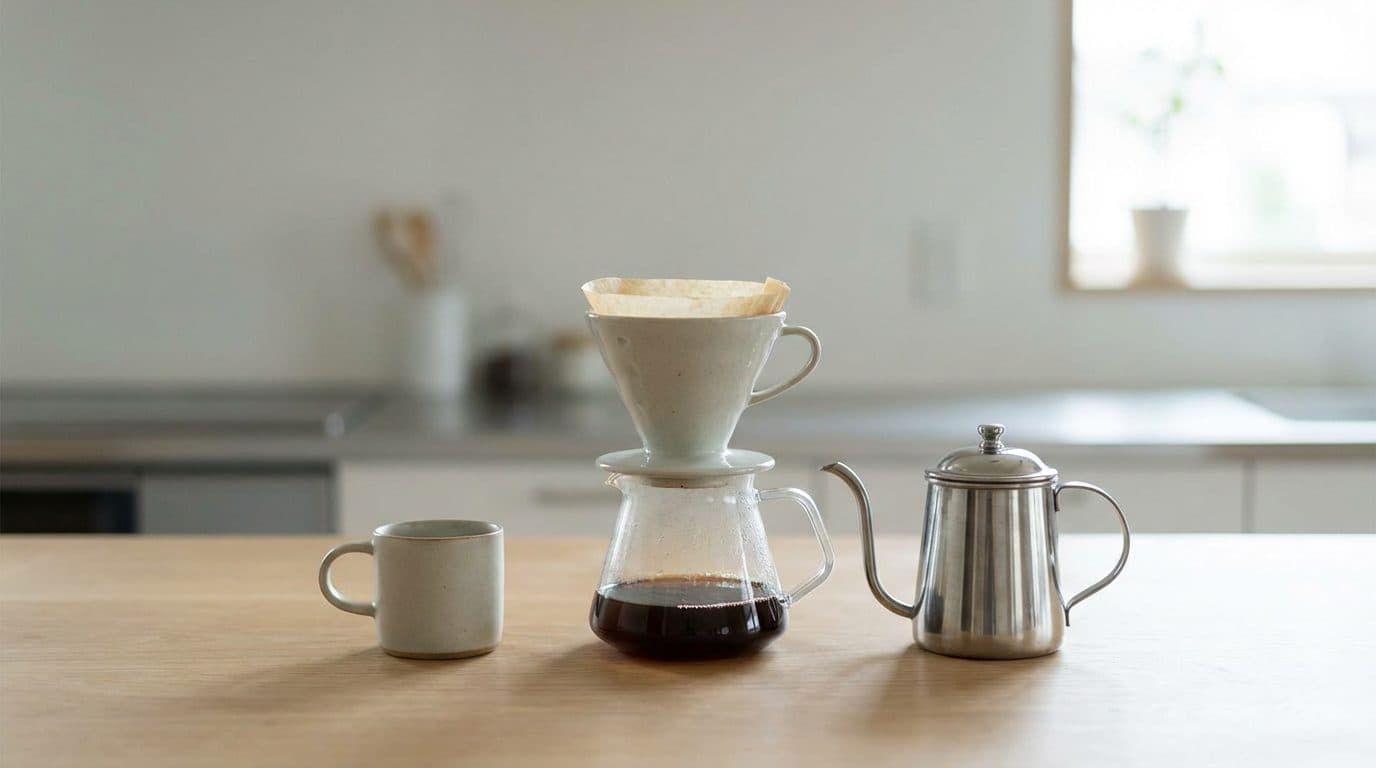
Do you really need a countertop full of gadgets to make great coffee at home? Spoiler alert: you don’t. A minimalist coffee setup strips away the clutter and focuses on what actually matters—quality beans, proper extraction, and a few well-chosen tools. In my experience, some of the best cups I’ve ever brewed came from the simplest setups. Life is too short for bad coffee, but it’s also too short to spend cleaning five different machines every morning.
If you’ve been overwhelmed by the sheer number of coffee gadgets on the market, you’re not alone. This guide will walk you through the true essentials for a minimalist coffee setup, help you understand what you can safely skip, and show you how to brew café-quality coffee without turning your kitchen into a coffee lab.
Why Go Minimalist With Your Coffee Setup?
There’s something liberating about owning less stuff. When it comes to coffee, a minimalist approach means fewer things to clean, less counter space taken up, and—surprisingly—often better results. Many coffee enthusiasts find that simplifying their setup forces them to focus on technique and bean quality rather than relying on expensive equipment.
Here’s what a minimalist coffee setup offers:
- Lower cost: You don’t need to spend hundreds on gear to make excellent coffee
- Easier maintenance: Fewer parts mean less cleaning and fewer things that can break
- Portability: A simple setup travels well for camping, office use, or small apartments
- Better focus: You learn to master one method instead of dabbling in many
In short, minimalism isn’t about sacrificing quality—it’s about being intentional with what you keep.
The True Essentials for a Minimalist Coffee Setup
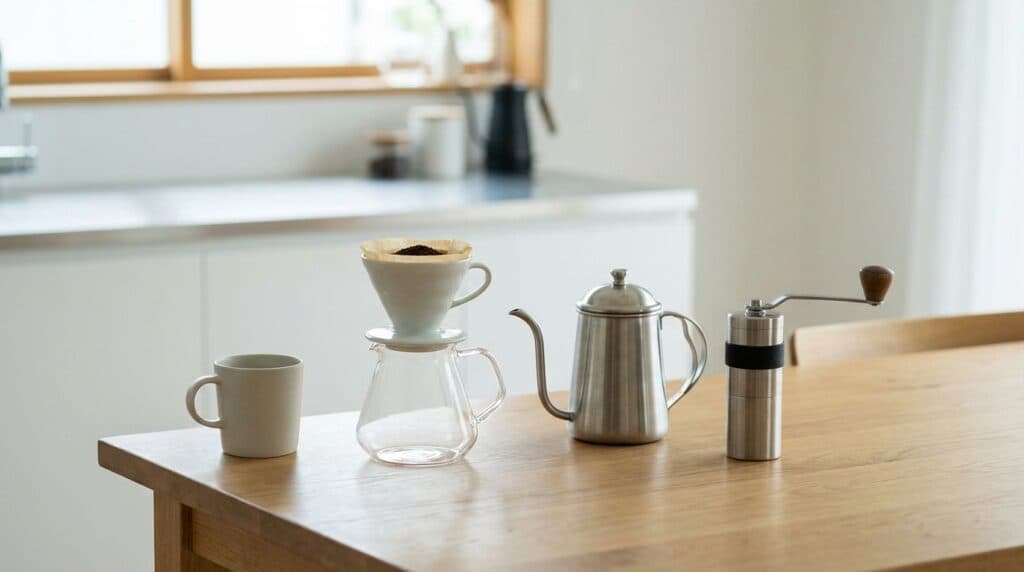
Let’s break down what you actually need. I’ve found that a complete minimalist coffee setup requires just four core items. Everything else is optional.
1. A Quality Manual Brewer
This is the heart of your setup. Manual brewing methods like pour-over cones, French presses, or immersion brewers give you full control over your coffee without electricity or complicated machinery. According to coffee enthusiasts and reviewers, pour-over methods consistently produce clean, flavorful cups with minimal equipment.
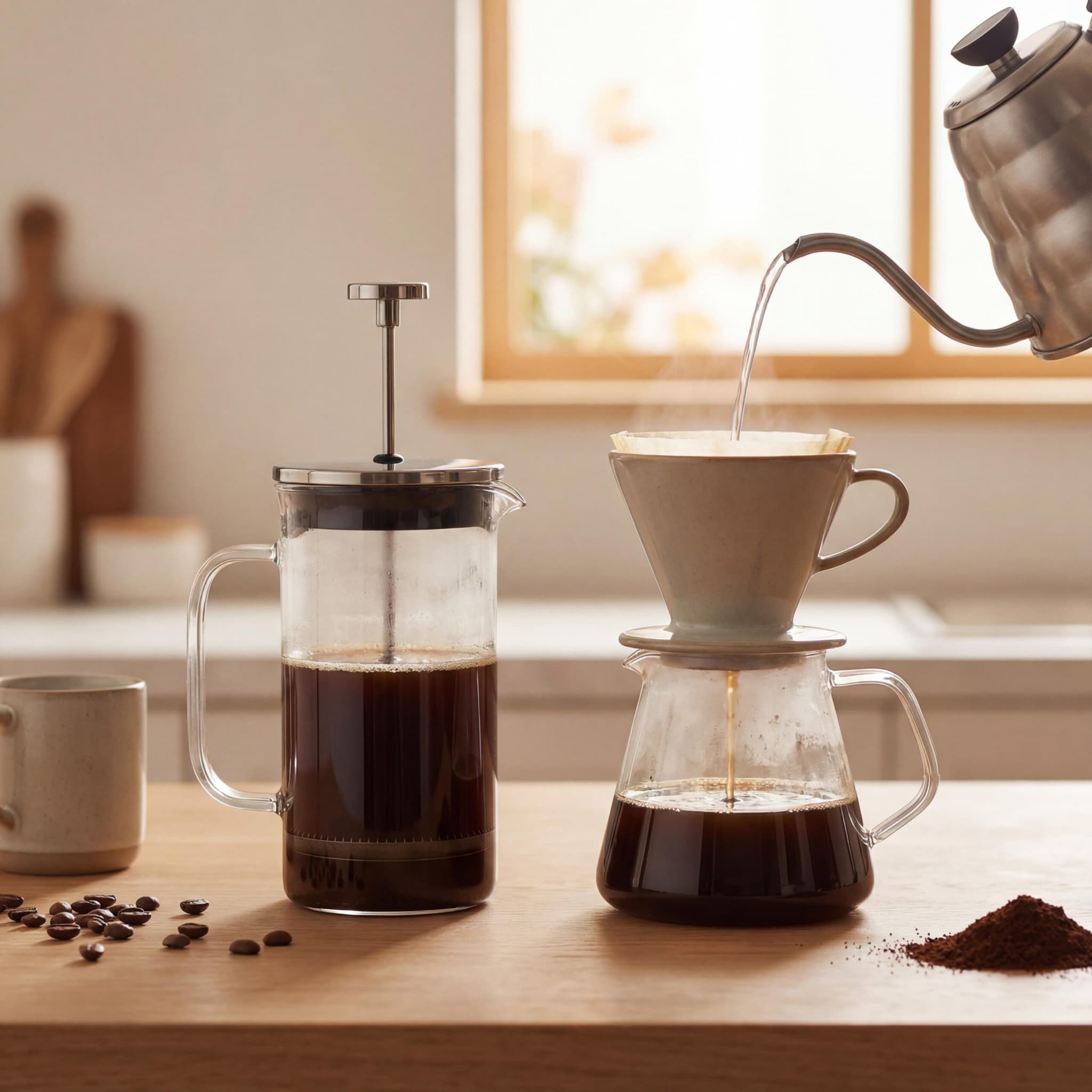
A simple pour-over dripper is my personal favorite for minimalist setups. It’s lightweight, nearly indestructible, and produces exceptional clarity in the cup. A French press is another solid choice if you prefer a fuller body. Either way, you’re looking at a one-time purchase that can last decades.
2. A Reliable Hand Grinder
Here’s a truth that many beginners overlook: your grinder matters more than your brewer. Freshly ground coffee makes a dramatic difference in flavor. Pre-ground coffee starts losing its aromatic compounds within minutes of grinding.
A quality hand grinder gives you fresh grounds without the noise, bulk, or expense of an electric model. Modern hand grinders with ceramic or steel burrs produce consistent particle sizes that rival electric grinders costing three times as much. Yes, it takes a minute of manual effort, but many people find the ritual meditative.
3. A Kettle (Gooseneck Optional)
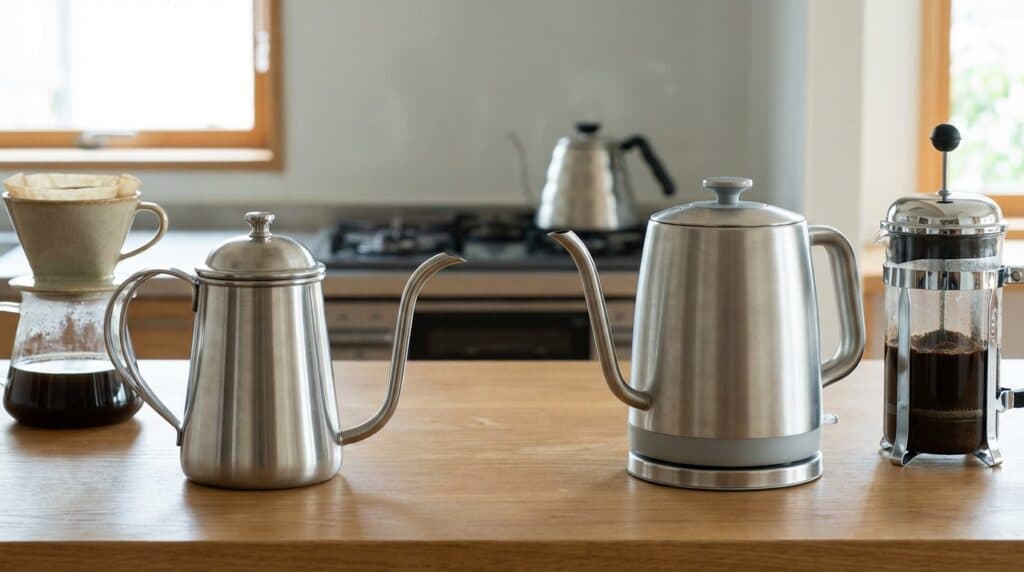
You need hot water—that’s non-negotiable. For pour-over methods, a gooseneck kettle gives you precise control over your pour, which helps with even extraction. However, if you’re using a French press or immersion brewer, any basic kettle works fine.
If you’re truly committed to minimalism, a simple stovetop kettle does the job. Electric kettles with temperature control are convenient but not essential. I’ve made plenty of great coffee by simply boiling water and letting it cool for 30 seconds before brewing.
4. Fresh, Quality Coffee Beans
This isn’t technically “gear,” but it’s the most important element of your setup. No amount of fancy equipment can save stale or low-quality beans. Buy whole beans from a local roaster or reputable online source, and try to use them within 2-4 weeks of the roast date.
Key Takeaway: Invest in good beans before investing in more equipment. A $15 bag of specialty coffee will improve your cup more than a $100 gadget.
What You Can Skip (Without Guilt)
Part of building a minimalist coffee setup is knowing what to leave out. Here’s what you don’t need, despite what marketing might tell you:
- Digital scales: Helpful for precision, but you can learn to eyeball ratios with practice. A simple kitchen scale you already own works fine.
- Thermometers: Boil your water, wait 30-45 seconds, and you’re in the right range. No gadget required.
- Multiple brewing devices: Master one method before adding another. Most people only need one brewer.
- Expensive storage containers: A simple airtight jar or the bag your beans came in (with a clip) works perfectly.
- Milk frothers: If you drink black coffee, skip it entirely. If you want milk, a jar with a lid and some vigorous shaking creates decent foam.
I’ve seen setups with timers, Bluetooth-enabled scales, and apps that track every variable. That’s fine if you enjoy it, but none of it is necessary for brewing delicious coffee.
Building Your Setup: A Practical Example
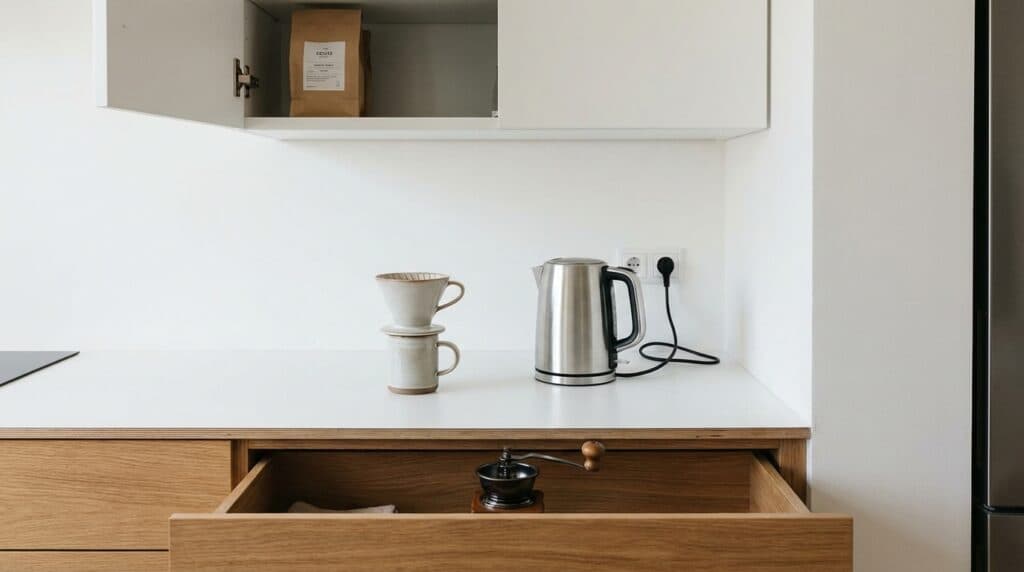
Let me paint a picture of what a complete minimalist coffee setup looks like in practice. Imagine your counter with just these items:
- One ceramic pour-over dripper sitting on your favorite mug
- A compact hand grinder stored in a drawer
- A simple stovetop or electric kettle
- A bag of fresh beans in the cupboard
That’s it. Four items. Total cost? You could put together this entire setup for under $50-80 if you shop smart, or invest a bit more in a premium hand grinder that will last for years.
Here’s a typical morning routine with this setup:
- Boil water while you grind your beans (about 20 grams for a single cup)
- Place the dripper on your mug, add a filter, and rinse it with hot water
- Add grounds, pour water slowly in circles, wait 2-3 minutes
- Remove the dripper, compost the filter and grounds, rinse the dripper
- Enjoy your coffee
Total time: about 5 minutes. Cleanup: about 30 seconds. The simplicity is the point.
Tips for Maintaining a Minimalist Coffee Setup
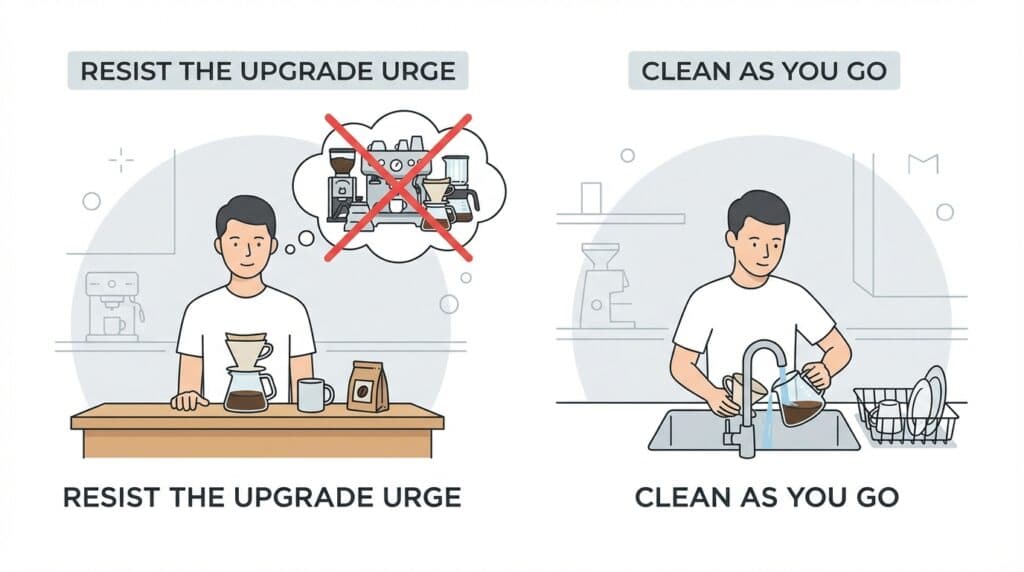
Once you’ve pared down to the essentials, keeping things minimal requires some intentionality. Here are a few strategies I’ve found helpful:
Resist the upgrade urge. Coffee gear can become a hobby in itself, and there’s always something new to buy. Before adding anything to your setup, ask yourself: “Will this genuinely improve my coffee, or am I just bored?”
Clean as you go. One advantage of minimal gear is quick cleanup. Rinse your brewer immediately after use, and it stays ready for tomorrow. Neglected equipment leads to buying replacements.
Buy beans in smaller quantities. It’s tempting to stock up, but smaller bags stay fresher. A 250g bag every week or two beats a kilo that goes stale before you finish it.
Learn your ratios by feel. After a few weeks of measuring, you’ll develop an intuition for how much coffee and water you need. This lets you ditch the scale if you want to simplify further.
Frequently Asked Questions
Can I make good coffee without a grinder?
You can make decent coffee with pre-ground beans, but freshly ground will always taste better. If you’re not ready to invest in a grinder, buy small quantities of pre-ground coffee and use it quickly. Many local roasters will grind beans for you at purchase.
Is pour-over better than French press for minimalist setups?
Neither is objectively “better”—they produce different styles of coffee. Pour-over gives you a cleaner, brighter cup with more clarity. French press produces a fuller body with more oils. Choose based on your taste preference. Both are equally minimalist.
Do I really need a gooseneck kettle?
For pour-over, a gooseneck kettle helps with control and consistency, but it’s not mandatory. Many people start with a regular kettle and upgrade later if they feel limited. For French press or immersion brewing, any kettle works perfectly.
How much should I spend on a minimalist coffee setup?
You can build a functional minimalist setup for $40-80. A quality hand grinder is worth investing in (around $30-50 for a good entry-level option), while pour-over drippers and French presses are quite affordable. Spend more on beans than on gear.
What’s the one item I shouldn’t cheap out on?
The grinder. A consistent grind is the foundation of good extraction. A cheap blade grinder produces uneven particles that lead to bitter, sour, or muddy coffee. Invest in a burr grinder—even a budget-friendly hand burr grinder outperforms expensive blade grinders.
Final Thoughts: Less Gear, More Coffee
A minimalist coffee setup isn’t about deprivation—it’s about clarity. When you strip away the unnecessary gadgets, you’re left with what actually matters: good beans, proper technique, and a few reliable tools. I’ve found that my coffee improved when I stopped chasing gear and started focusing on the basics.
Start with the four essentials: a manual brewer, a hand grinder, a kettle, and fresh beans. Master that setup before adding anything else. You might discover that you never need to add anything at all. Your counter will thank you, your wallet will thank you, and most importantly, your morning cup will be just as good—if not better—than anything a complicated setup could produce.
Ready to simplify? Pick one brewing method, invest in a decent grinder, and commit to buying quality beans. That’s really all it takes to join the minimalist coffee movement.



Comments