


Table of Contents
- What Is Magic Coffee?
- Magic Coffee vs. Other Espresso Drinks
- The Origins of Magic Coffee in Melbourne
- Why Melbourne Specifically?
- How to Order Magic Coffee Outside Australia
- The Simple Explanation
- Common Mistakes to Avoid
- Making Magic Coffee at Home
- What You'll Need
- Step-by-Step Brewing Guide
- Troubleshooting Your Magic Coffee
- Why Magic Coffee Is Worth Trying
- The Perfect Coffee-to-Milk Ratio
- A Gateway to Better Coffee Appreciation
- Practical Size for Daily Drinking
- Frequently Asked Questions
- Is Magic Coffee stronger than a flat white?
- Can I make Magic Coffee with oat milk or other alternatives?
- Why is it called "Magic" Coffee?
- Do all Melbourne cafés serve Magic Coffee?
- How is Magic Coffee different from a cortado?
- Conclusion and Your Next Step
Have you ever walked into a Melbourne café, scanned the menu, and spotted something called “Magic Coffee”? If you’re not from Australia, this mysterious drink might leave you scratching your head. What exactly makes it magic? Is it some kind of secret potion, or just clever marketing? The truth is, Magic Coffee has become one of Melbourne’s most beloved café orders, and it’s slowly making waves in specialty coffee scenes around the world. In this guide, I’ll break down everything you need to know about this iconic Melbourne coffee trend, from its origins to how you can make one at home.
Whether you’re planning a trip to Australia, curious about expanding your coffee horizons, or simply tired of ordering the same flat white every morning, understanding Magic Coffee will give you a new appreciation for Melbourne’s obsessive coffee culture. Let’s dive into what makes this drink so special and why baristas and coffee lovers swear by it.
What Is Magic Coffee?
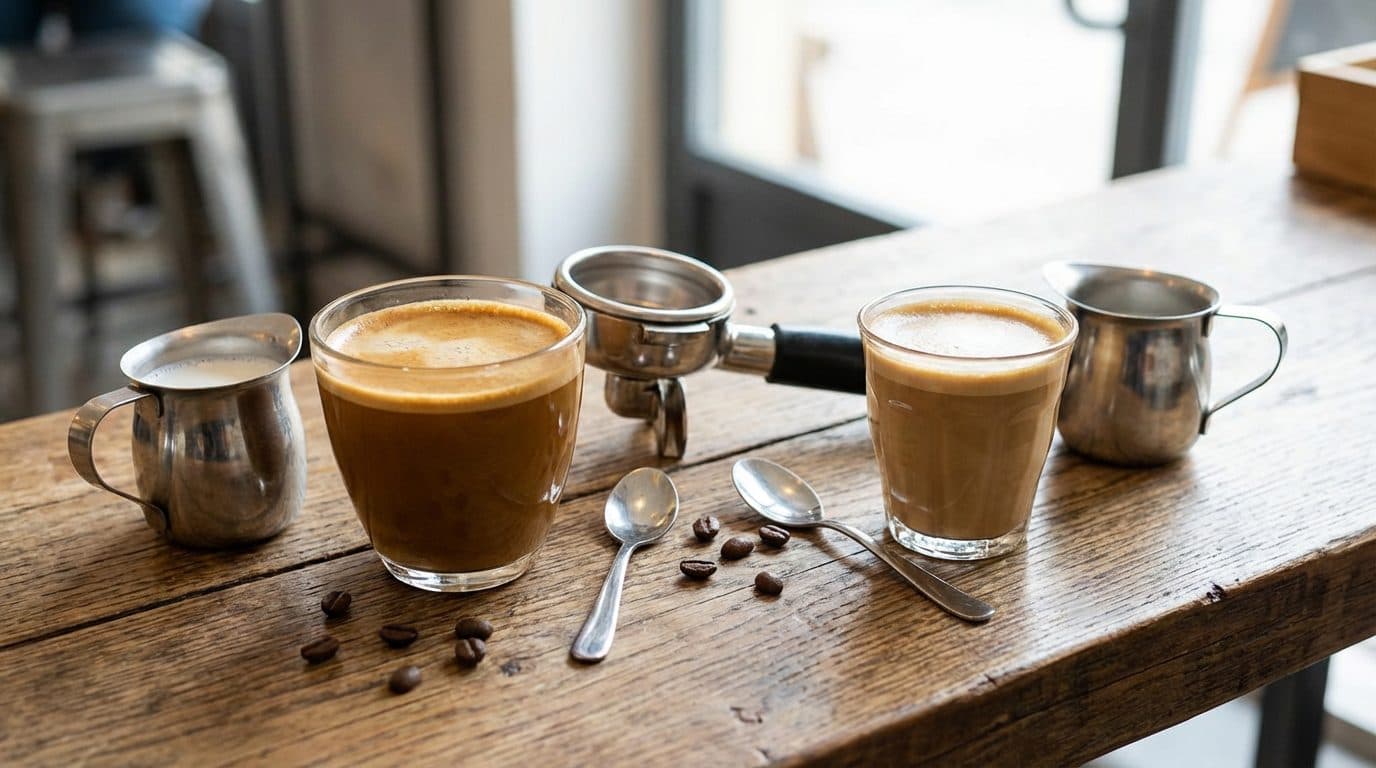
At its core, Magic Coffee is a double ristretto served in a 160ml (5oz) cup, topped with silky steamed milk. Think of it as the love child of a flat white and a piccolo latte. The drink sits somewhere between these two popular options in terms of size and intensity, which is precisely why it’s earned such a devoted following.
The “magic” lies in its perfect ratio. You get the concentrated punch of a double ristretto (roughly 30ml of espresso), combined with just enough textured milk to create a harmonious balance. The result? A drink that’s stronger than a flat white but smoother and more approachable than a straight espresso.
Magic Coffee vs. Other Espresso Drinks
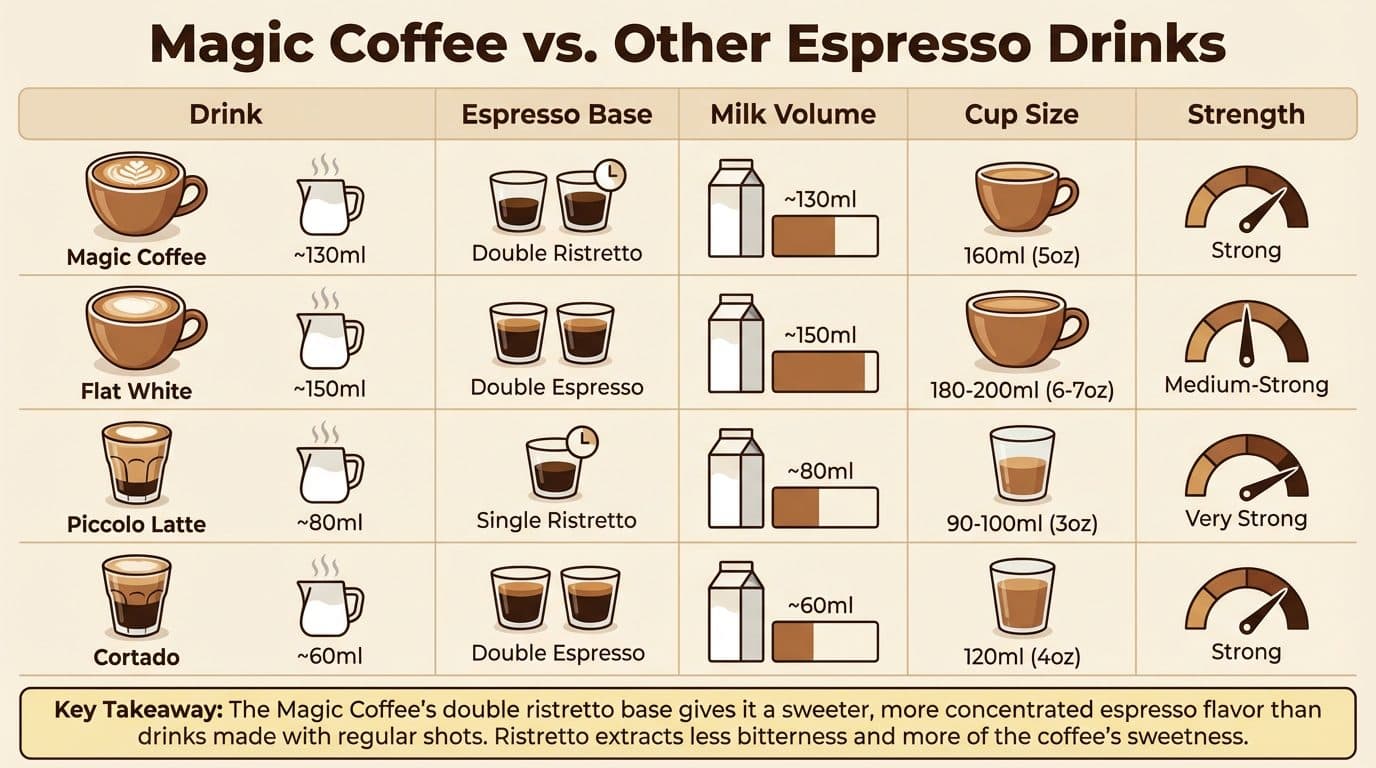
| Drink | Espresso Base | Milk Volume | Cup Size | Strength |
|---|---|---|---|---|
| Magic Coffee | Double Ristretto | ~130ml | 160ml (5oz) | Strong |
| Flat White | Double Espresso | ~150ml | 180-200ml (6-7oz) | Medium-Strong |
| Piccolo Latte | Single Ristretto | ~80ml | 90-100ml (3oz) | Very Strong |
| Cortado | Double Espresso | ~60ml | 120ml (4oz) | Strong |
Key Takeaway: The Magic Coffee’s double ristretto base gives it a sweeter, more concentrated espresso flavor than drinks made with regular shots. Ristretto extracts less bitterness and more of the coffee’s natural sweetness, which is where that “magic” quality really comes through.
The Origins of Magic Coffee in Melbourne
Melbourne has long been considered one of the world’s great coffee cities, rivaling Rome, Seattle, and Tokyo in terms of café culture and espresso quality. The city’s coffee obsession dates back to post-World War II Italian immigration, which brought espresso machines and café traditions to Australian shores.
The Magic Coffee itself emerged sometime in the early 2000s, though its exact origins are debated. Some credit the inner-city cafés of Fitzroy and Carlton, while others point to South Melbourne’s coffee scene. What’s certain is that it developed organically among baristas and regulars who wanted something specific: a drink with more intensity than a flat white but more drinkable volume than a piccolo.
Why Melbourne Specifically?

Melbourne’s coffee culture is uniquely experimental. Unlike cities where Starbucks dominates, Melbourne’s café scene is fiercely independent. Small roasters and neighborhood coffee shops drive innovation, and customers are remarkably knowledgeable about their preferences. This environment allowed the Magic Coffee to evolve through countless conversations between baristas and regulars.
In my experience, Melbourne café-goers are incredibly precise about their orders. They’ll specify not just the drink type but also the temperature, milk texture, and even the roast profile they prefer. The Magic Coffee represents this precision—it’s a drink designed by coffee nerds, for coffee nerds.
How to Order Magic Coffee Outside Australia
Here’s where things get tricky. Walk into a café in London, New York, or Berlin and order a “Magic,” and you’ll likely get a blank stare. This drink remains largely unknown outside Australia, so you’ll need to know how to describe it.
The Simple Explanation
Ask for a double ristretto in a small cup (around 5-6oz), topped with steamed milk and a thin layer of microfoam. Most skilled baristas can work with this description, even if they’ve never heard the term “Magic” before.
Common Mistakes to Avoid
- Don’t ask for extra shots: The double ristretto is essential. Regular espresso shots will taste more bitter and less sweet.
- Specify the cup size: If they serve it in a regular latte glass, you’ll end up with too much milk and lose the magic ratio.
- Request textured milk, not frothy: The milk should be silky and integrated, not foamy like a cappuccino.
Barista Tip: If you’re ordering at a specialty café that understands espresso ratios, simply ask for “a double ristretto flat white in a piccolo cup.” This usually gets you close to the authentic Magic experience.
Making Magic Coffee at Home
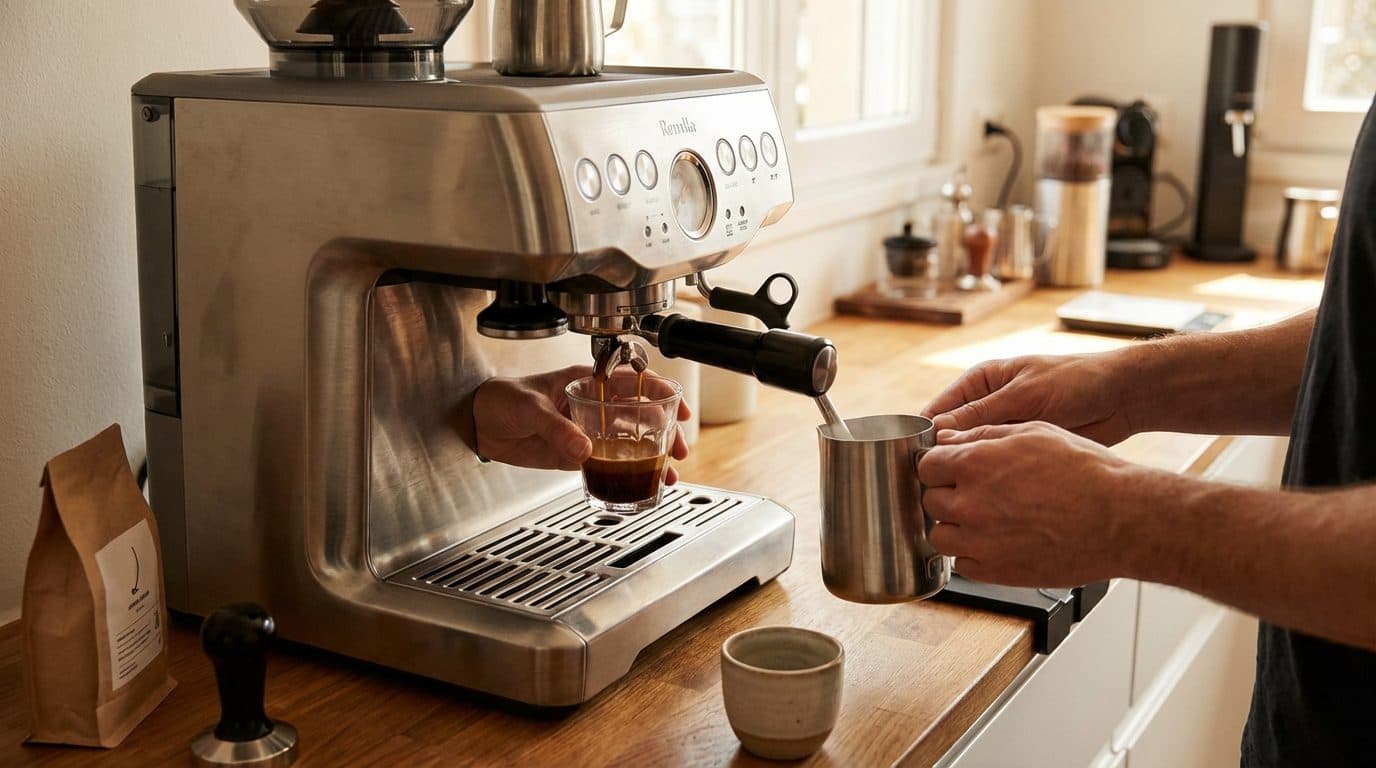
Good news for home baristas: if you have an espresso machine capable of pulling ristretto shots, you can absolutely recreate the Magic Coffee experience in your kitchen. I’ve found that this drink is actually more forgiving than a traditional flat white because the smaller size masks minor milk-texturing imperfections.
What You’ll Need
Equipment:
- Espresso machine with pressure gauge (or a quality manual espresso maker)
- Burr grinder for fresh grinding
- Milk pitcher (small, 350ml preferred)
- 5oz or 160ml cup (a cortado glass works perfectly)
- Kitchen scale for dosing
Ingredients:
- 18-20g of freshly roasted coffee beans (medium to medium-dark roast works best)
- 130ml of fresh, cold whole milk (or your preferred alternative)
Step-by-Step Brewing Guide
- Grind your coffee fine—slightly finer than you would for a standard espresso shot. For ristretto, you want more resistance to slow the extraction.
- Dose 18-20g of coffee into your portafilter and tamp evenly with firm, level pressure.
- Pull a double ristretto shot: Aim for 25-30ml of espresso in about 20-25 seconds. The shot should be thick, syrupy, and golden-brown with minimal crema streaking.
- Steam your milk to 60-65°C (140-150°F) while incorporating minimal air. You want silky microfoam, not stiff peaks.
- Pour the milk directly into the center of the espresso, allowing it to integrate smoothly. Finish with a thin layer of microfoam on top.
- Serve immediately while the espresso and milk are perfectly integrated.
Taste Profile: A well-made Magic Coffee should taste sweet, concentrated, and velvety. You’ll notice chocolate and caramel notes from the ristretto, balanced by the creamy sweetness of the milk. The coffee flavor should be prominent but never harsh or bitter.
Troubleshooting Your Magic Coffee
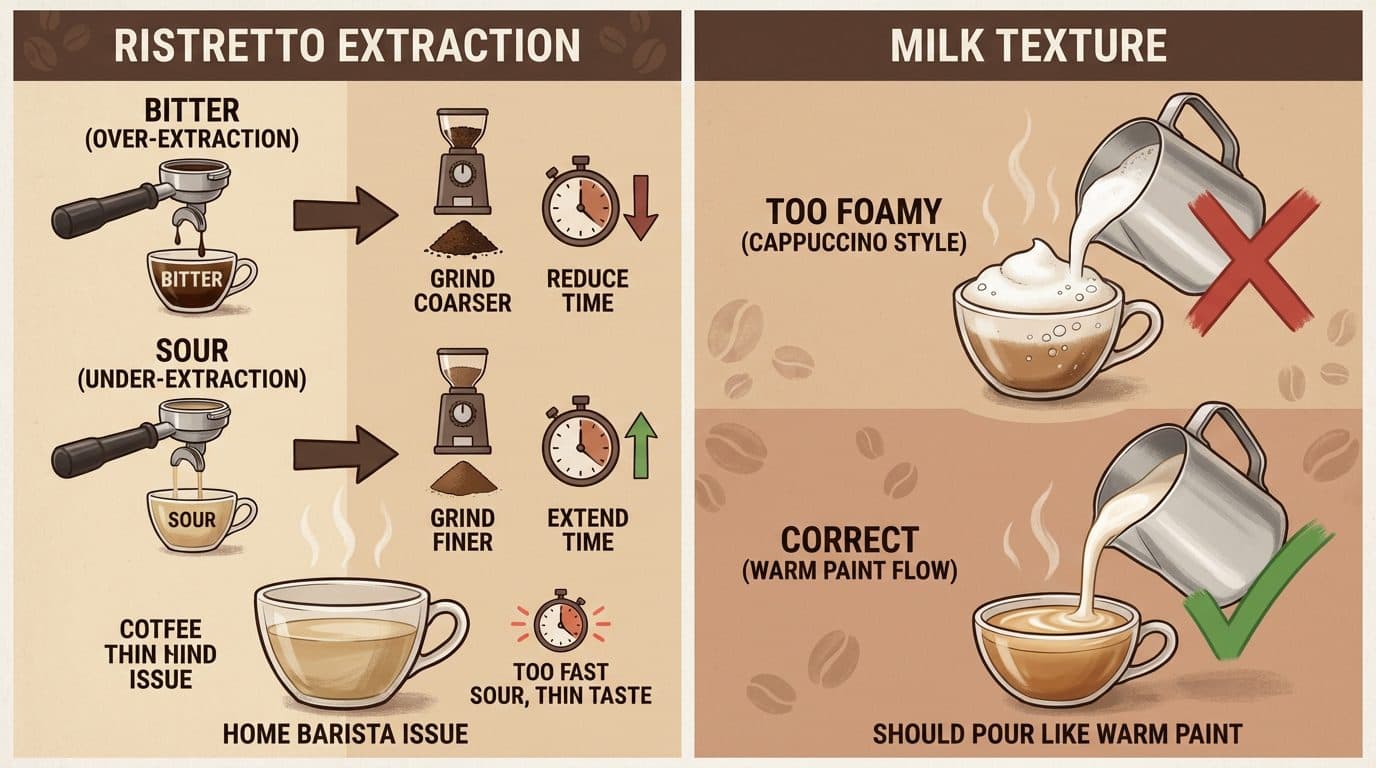
If your Magic tastes bitter or sour, the problem is almost always in your ristretto extraction. Bitter shots mean over-extraction (grind coarser or reduce brew time), while sour shots indicate under-extraction (grind finer or extend brew time slightly). In my experience, most home baristas extract too fast, resulting in a sour, thin-tasting Magic.
Another common issue is milk that’s too foamy. Remember, you’re not making a cappuccino. The milk should pour like warm paint, not plop out in thick foam. If you see large bubbles, tap your pitcher on the counter and swirl it before pouring.
Why Magic Coffee Is Worth Trying
You might be wondering: is the Magic Coffee really that different from other espresso drinks? Is it worth seeking out or learning to make? I’d argue yes, for several reasons.
The Perfect Coffee-to-Milk Ratio
Many coffee lovers find themselves stuck between wanting strong coffee flavor and enjoying the smoothness of milk-based drinks. The Magic solves this problem elegantly. You get genuine espresso intensity without the harshness of a straight shot, and you get creamy texture without drowning in milk.
A Gateway to Better Coffee Appreciation
Drinking Magic Coffee regularly trains your palate to appreciate espresso nuances. Because the ristretto base is so concentrated, you’ll start noticing differences between roasts, origins, and freshness levels more easily than you would with larger, more diluted drinks.
Practical Size for Daily Drinking

Let’s be honest—sometimes a large latte is just too much milk, especially if you’re drinking multiple coffees per day. The Magic gives you a satisfying coffee experience in a compact package. It’s perfect for mid-morning or post-lunch coffee breaks when you want something substantial but not overwhelming.
Here’s a small scenario: imagine you’ve just finished lunch and want a coffee that won’t leave you feeling bloated. A flat white might be too much liquid, and an espresso feels too intense on a full stomach. The Magic Coffee hits that sweet spot beautifully.
Frequently Asked Questions
Is Magic Coffee stronger than a flat white?
Yes, in terms of flavor intensity. The Magic uses a double ristretto base with less milk, so the coffee taste is more prominent. However, the caffeine content is similar to or slightly less than a flat white because ristretto shots extract less caffeine than regular espresso shots.
Can I make Magic Coffee with oat milk or other alternatives?
Absolutely. Oat milk is particularly popular for Magic Coffee because it steams similarly to whole milk and has natural sweetness that complements the ristretto. Just be aware that some plant milks don’t hold microfoam as well, so your texture may vary slightly.
Why is it called “Magic” Coffee?
The name likely comes from the drink’s seemingly magical ability to satisfy coffee purists who want strong espresso flavor and milk lovers who enjoy creamy texture. Some also suggest it’s because the perfect ratio feels like “magic” when you finally dial it in. The true origin of the name remains part of Melbourne café folklore.
Do all Melbourne cafés serve Magic Coffee?
Most specialty coffee shops in Melbourne will know exactly what you mean when you order a Magic. However, chain cafés or less coffee-focused establishments might not be familiar with the term. When in doubt, use the description: double ristretto with milk in a small cup.
How is Magic Coffee different from a cortado?
The main difference is the espresso base. A cortado traditionally uses regular espresso shots, while a Magic uses ristretto shots. This makes the Magic sweeter and more concentrated in flavor. The cup sizes are also slightly different, with the Magic typically being a bit larger than a traditional cortado.
Conclusion and Your Next Step
Magic Coffee represents everything that makes Melbourne’s café culture special: precision, experimentation, and an unwillingness to settle for “good enough.” This deceptively simple drink—just ristretto and milk—rewards those who pay attention to ratios, extraction, and technique. Whether you’re ordering one at a café or attempting to make it at home, understanding the Magic gives you insight into how thoughtful coffee preparation can transform everyday ingredients into something genuinely delightful.
If you haven’t tried a Magic Coffee yet, I encourage you to seek one out at your nearest specialty café or experiment with making one yourself. Start with quality, freshly roasted beans, dial in your ristretto extraction, and pay attention to your milk texture. With a bit of practice, you might just discover your new daily coffee ritual. Life is too short for bad coffee, and the Magic proves that sometimes, the best things come in small cups.


Comments