


Table of Contents
- Understanding How Caffeine Affects Your Sleep
- Common Myths About Evening Coffee
- Timing Your Evening Coffee Right
- Low-Caffeine Alternatives for After-Dinner Coffee
- Decaf Coffee
- Half-Caf Blends
- Coffee Alternatives Worth Trying
- Brewing Techniques That Reduce Caffeine
- Caffeine by Brewing Method
- Practical Brewing Adjustments
- Supporting Better Sleep Alongside Your Coffee
- Frequently Asked Questions
- How late can I drink coffee without affecting my sleep?
- Is decaf coffee completely safe to drink before bed?
- Does adding milk or cream reduce caffeine?
- Will eating food with my coffee help reduce its impact on sleep?
- Can I build tolerance to caffeine so it doesn't affect my sleep?
- Final Thoughts and Your Next Step
You’ve just finished a delicious dinner, and now you’re craving that warm, comforting cup of coffee to round off the evening. But there’s that nagging voice in your head: “If I drink this, I’ll be staring at the ceiling at 2 AM.” Sound familiar? The good news is that enjoying coffee after dinner without sacrificing your sleep isn’t just a dream. It’s entirely possible once you understand how caffeine works and make a few smart adjustments to your evening routine.
In my experience, the key isn’t necessarily giving up your post-dinner coffee ritual—it’s about being strategic. Whether you’re hosting guests, enjoying a quiet evening at home, or simply refusing to let go of life’s simple pleasures, you can have your coffee and sleep too. Let’s explore exactly how to make that happen.
Understanding How Caffeine Affects Your Sleep
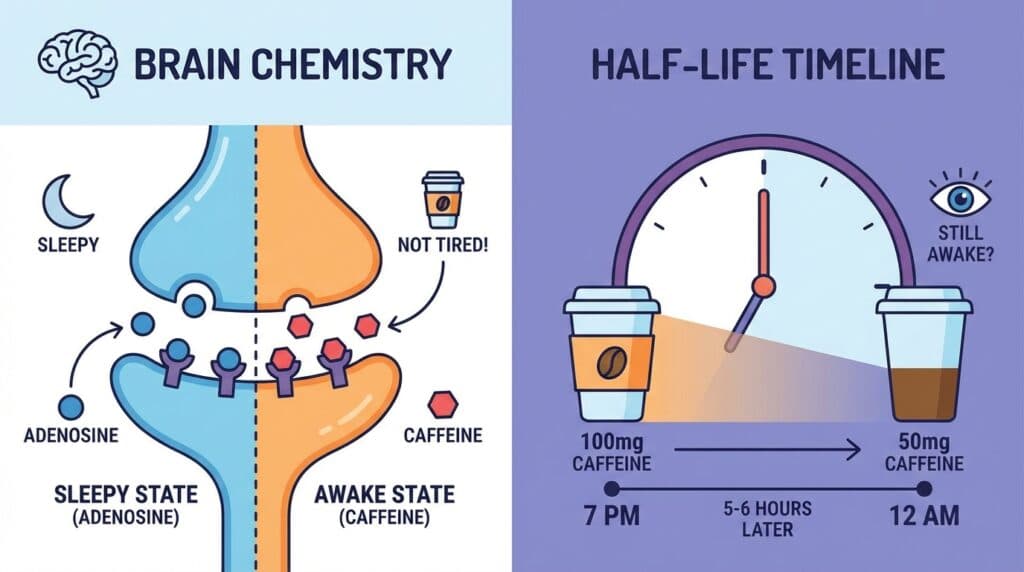
Before we dive into solutions, it helps to understand what you’re working with. Caffeine is a stimulant that blocks adenosine, the chemical in your brain that makes you feel sleepy. When you drink coffee, caffeine essentially tells your brain, “Not tired yet!” This is great at 8 AM, but not so great at 8 PM.
Here’s the thing most people don’t realize: caffeine has a half-life of about 5 to 6 hours in most adults. That means if you drink a cup containing 100mg of caffeine at 7 PM, you’ll still have roughly 50mg buzzing around your system at midnight. For some people, that’s enough to delay sleep onset or reduce sleep quality.
Key Takeaway: Your sensitivity to caffeine is highly individual. Some people can drink espresso at 9 PM and sleep like a baby, while others feel wired from a single cup at lunch. Genetics, age, and even how regularly you consume caffeine all play a role. Knowing your own tolerance is the first step to enjoying evening coffee responsibly.
Common Myths About Evening Coffee
Let’s bust a few myths while we’re here:
- “Decaf has no caffeine” – Not true. Decaf coffee still contains about 2-15mg of caffeine per cup, compared to 95-200mg in regular coffee. It’s significantly less, but not zero.
- “A small cup won’t affect me” – Cup size matters less than you think. A small but strong espresso can pack more caffeine than a large, weak drip coffee.
- “I’ve built up a tolerance, so I’m fine” – Tolerance affects how alert caffeine makes you feel, but it doesn’t eliminate caffeine’s impact on your sleep architecture.
Timing Your Evening Coffee Right
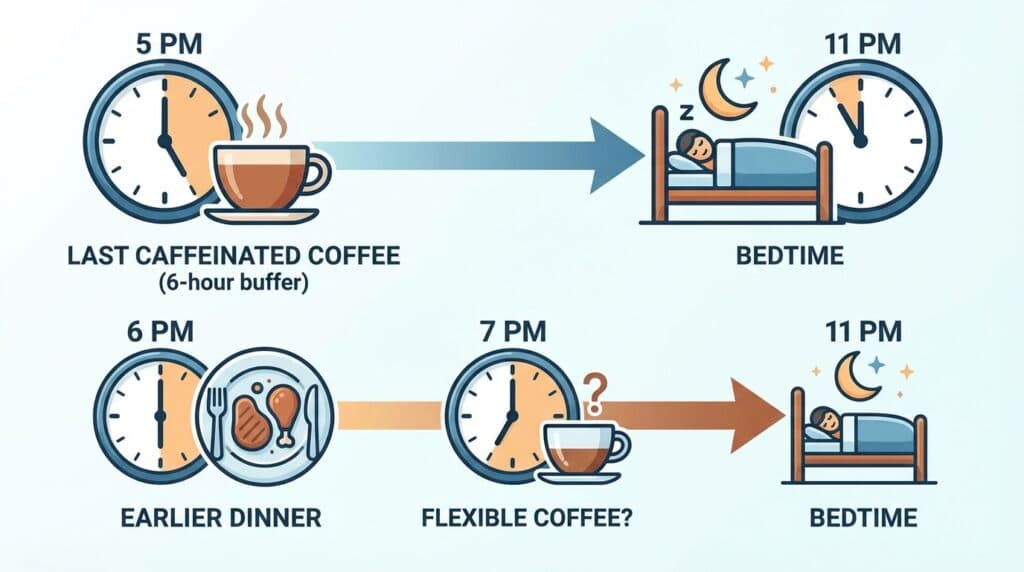
If you want to enjoy regular coffee after dinner, timing is everything. The general rule I follow is the “6-hour buffer”—finish your last caffeinated coffee at least 6 hours before you plan to sleep. So if you typically go to bed at 11 PM, your cutoff would be around 5 PM.
But what if dinner is at 7 PM and you really want that post-meal coffee? Here’s where strategy comes in:
- Eat dinner earlier when possible. A 6 PM dinner gives you more flexibility for an after-dinner coffee that won’t wreck your sleep.
- Consider your sleep schedule. Night owls who go to bed at midnight have more wiggle room than early risers who crash at 10 PM.
- Track your own patterns. Spend a week noting when you drink coffee and how you sleep. You might discover your personal cutoff time is different from the average.
Barista Tip: If you’re unsure about your caffeine sensitivity, try pushing your last coffee 30 minutes earlier each week until you find your sweet spot. It’s a gentler approach than going cold turkey on evening coffee.
Low-Caffeine Alternatives for After-Dinner Coffee
Sometimes the smartest move is switching to a lower-caffeine option. You don’t have to sacrifice the ritual or the flavor—just the sleep-disrupting stimulant.
Decaf Coffee
I know, I know—decaf gets a bad reputation. But here’s the truth: quality decaf has come a long way. The Swiss Water Process and other modern decaffeination methods preserve much of the flavor while removing about 97% of the caffeine. A well-roasted decaf can be genuinely enjoyable, not just a sad substitute.
When choosing decaf for evening drinking:
- Look for beans processed using the Swiss Water or CO2 method for better flavor.
- Choose medium to dark roasts, which tend to have richer, more satisfying profiles.
- Freshness matters just as much as with regular coffee—buy whole beans and grind them yourself.
Half-Caf Blends
If full decaf feels like too big a compromise, half-caf is your friend. It’s exactly what it sounds like: a 50/50 blend of regular and decaf beans. You get roughly half the caffeine with most of the familiar taste. I’ve found this to be the perfect middle ground for early evening coffee, say around 6 or 7 PM.
Coffee Alternatives Worth Trying

For those nights when even decaf feels risky, consider these options that deliver warmth and ritual without the caffeine:
- Chicory coffee – A roasted root beverage with a deep, slightly bitter flavor reminiscent of coffee. Popular in New Orleans-style blends.
- Roasted barley tea (mugicha) – Common in Japan, it has a toasty, nutty flavor that pairs well with dessert.
- Mushroom coffee blends – These combine small amounts of coffee with adaptogenic mushrooms, resulting in lower caffeine and a smoother energy curve.
Brewing Techniques That Reduce Caffeine
Here’s something many coffee lovers don’t realize: how you brew your coffee affects its caffeine content. If you’re committed to drinking regular coffee after dinner, your brewing method can make a real difference.
Caffeine by Brewing Method
Not all brewing methods extract caffeine equally. Here’s a general comparison:
- Cold brew concentrate – Highest caffeine (but you can dilute it significantly)
- Drip coffee – High caffeine due to longer water contact time
- French press – Moderate to high caffeine
- Espresso – High concentration per ounce, but small serving size means less total caffeine
- Pour-over – Moderate caffeine, and you control the brew time
Did You Know? A single shot of espresso contains about 63mg of caffeine, while an 8-ounce cup of drip coffee contains around 95mg. So that tiny espresso after dinner might actually be the smarter choice.
Practical Brewing Adjustments
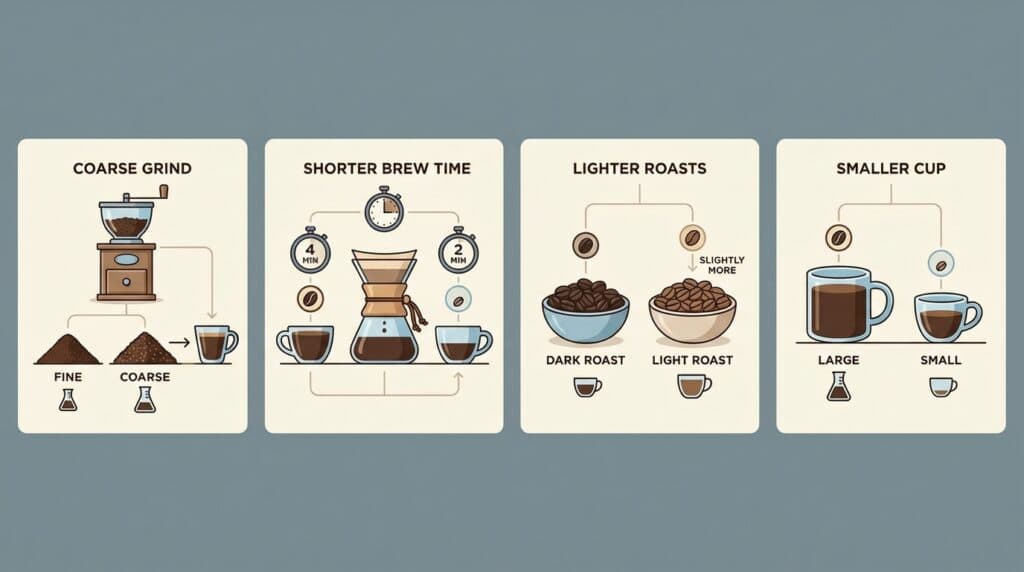
If you want to reduce caffeine without switching to decaf, try these techniques:
- Use a coarser grind. Finer grinds extract more caffeine. A slightly coarser grind reduces extraction.
- Shorten your brew time. For pour-over or French press, a shorter steep means less caffeine in your cup.
- Choose lighter roasts. Contrary to popular belief, light roasts have slightly more caffeine than dark roasts (though the difference is minimal).
- Make a smaller cup. Sometimes the simplest solution is the best one. A 4-ounce cup has half the caffeine of an 8-ounce cup.
Barista Tip: Try making a “lungo” style espresso with more water but the same amount of coffee. You get a larger, milder drink without doubling the caffeine.
Supporting Better Sleep Alongside Your Coffee
Even with all these strategies, your overall sleep hygiene matters. Coffee after dinner is just one piece of the puzzle. Here are complementary habits that help your body wind down, even with some caffeine in your system:
- Dim the lights after dinner. Bright lights suppress melatonin production. Softer lighting signals to your brain that bedtime is approaching.
- Stay hydrated. Coffee is a mild diuretic. Drinking water alongside your evening cup helps your body process caffeine more efficiently.
- Move your body earlier in the day. Regular exercise improves sleep quality, but intense workouts close to bedtime can be stimulating.
- Create a wind-down routine. Whether it’s reading, stretching, or a warm bath, consistent pre-sleep rituals help counteract any residual caffeine effects.
In my experience, people who struggle with evening coffee and sleep often have other factors working against them—screen time, irregular schedules, or stress. Address those, and you might find your tolerance for after-dinner coffee improves naturally.
Frequently Asked Questions
How late can I drink coffee without affecting my sleep?
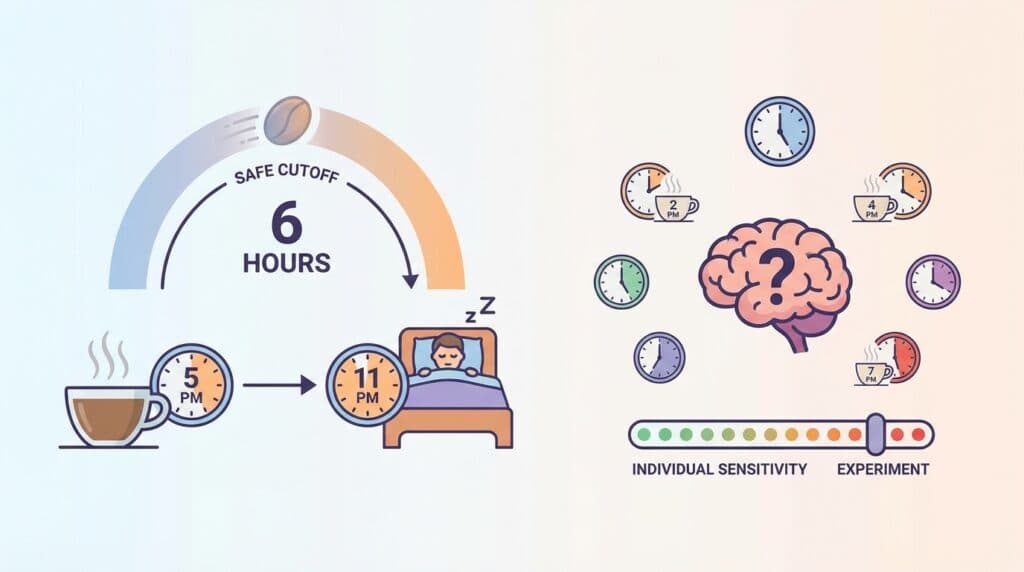
For most people, the safe cutoff is about 6 hours before bedtime. If you sleep at 11 PM, aim to finish your last caffeinated coffee by 5 PM. However, individual sensitivity varies widely, so you may need to experiment to find your personal limit.
Is decaf coffee completely safe to drink before bed?
Decaf is a much safer choice, but it’s not completely caffeine-free. Most decaf contains 2-15mg of caffeine per cup. For highly sensitive individuals, even this small amount might cause issues. If you’re extremely caffeine-sensitive, consider caffeine-free alternatives like herbal tea or chicory coffee.
Does adding milk or cream reduce caffeine?
No, adding milk or cream doesn’t reduce the caffeine content—it just dilutes the concentration per sip. However, the fat in dairy can slow caffeine absorption slightly, which may soften its effects. It’s not a significant difference, but every little bit helps.
Will eating food with my coffee help reduce its impact on sleep?
Eating food alongside coffee can slow the absorption of caffeine into your bloodstream, which may reduce the intensity of its stimulating effects. It won’t eliminate the caffeine, but it can make the experience gentler. A small dessert or snack with your after-dinner coffee isn’t a bad idea.
Can I build tolerance to caffeine so it doesn’t affect my sleep?
You can build tolerance to caffeine’s alertness-boosting effects, meaning you won’t feel as “wired.” However, research suggests caffeine still disrupts sleep architecture even in regular consumers. Tolerance doesn’t make you immune to sleep interference—it just makes you less aware of it.
Final Thoughts and Your Next Step
Life is too short for bad coffee—and it’s also too short for bad sleep. The good news is you don’t have to choose between them. By understanding your own caffeine sensitivity, timing your coffee strategically, exploring lower-caffeine options, and adjusting your brewing methods, you can absolutely enjoy that post-dinner cup without paying for it at 2 AM.
Start by experimenting with one change this week. Maybe it’s switching to decaf for your after-dinner cup, or simply moving your coffee 30 minutes earlier. Pay attention to how you sleep and adjust from there. With a little trial and error, you’ll find the balance that lets you savor every sip—and still wake up refreshed.



Comments